#FirstDraft Planning Day 6: Four Character Building Questions
 Today’s story-prep comes from what was Day 6 in the FirstDraft60 process: Four Character Building Questions.
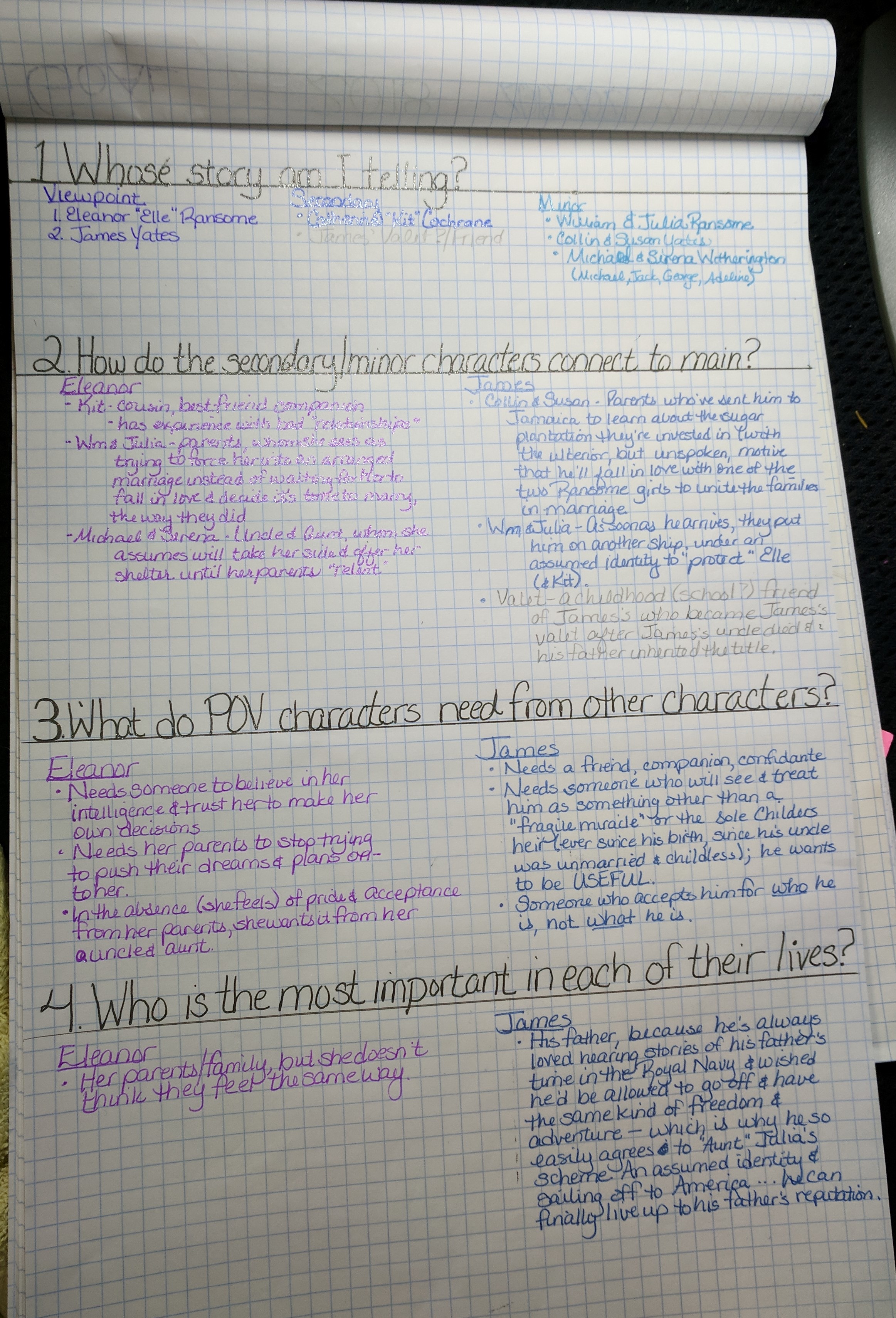
This is really the first time in this process that the tasks haven’t been focused on the more technical aspects of the preparation—getting things set up and in place. Today, I actually spent time thinking about my characters and what’s going on with them just beneath the surface. It’s a good place to get started with character development, as it starts looking at the main characters’ needs and desires, but only in how they relate to the other characters in the story.
Four Character Building Questions
The Four Character Building Questions are:
- Whose story am I telling?
- How do the secondary/minor characters connect to your viewpoint characters?
- What do your viewpoint characters need from the secondary/minor characters?
- As your story opens, who is the most important person in your viewpoint character’s life?
Please visit the original post for further details/information.
I haven’t thought much about Eleanor and James since I wrote the idea for their story nearly a year ago. (I was surprised, too, when I looked at the date on which I posted it—January 23, 2017!) I didn’t think I’d be able to write much about them, as the idea didn’t feel like it was fresh in my mind.
I should have known that Madeleine L’Engle is always right, though:
We must work every day, whether we feel like it or not, otherwise when it comes time to get out of the way and listen to the work, we will not be able to heed it (p. 24).
If the artist works only when he feels like it, he’s not apt to build up much of a body of work. Inspiration far more often comes during the work than before it, because the largest part of the job of the artist is to listen to the work, and to go where it tells you to go. Ultimately, when you are writing, you stop thinking and write what you hear (p. 149, emphasis mine).
I had planned on getting SHAPE started for either James or Eleanor tonight, but I had enough to write/think about with the Four Questions that I ran out of time. So that’s tomorrow’s task!
__________________________________________
Work Cited:
L’Engle, Madeleine. Walking on Water: Reflections on Faith and Art. Wheaton, IL: Harold Shaw Publishers, 1980. Print.
#FirstDraft Planning Day 4: Making Lists–Characters and Settings
Today’s story-prep comes from what was Day 5 in the FirstDraft60 process: Lists. Lists. Lists..
Lists of Characters
Yes. Lists plural. I have a spreadsheet format that I set up more than twenty-five years ago for creating and keeping track of families (and the Real World Templates for them). It’s the foundation for Bonneterre, Louisiana, in the days before it was even called Bonneterre! The original file, which I started using back in the early to mid-1990s and used up through when I was working on A Case for Love in 2009, had more than 650 uniquely named characters (and about 65–70% of them were cast, too) “living” in Bonneterre.
But I digress (as I am wont to do when it comes to making lists of characters and casting them!)
Tonight, I took the lists that I made for the Ransome’s Legacy series last year when I started working on the story ideas and made a master Names list:
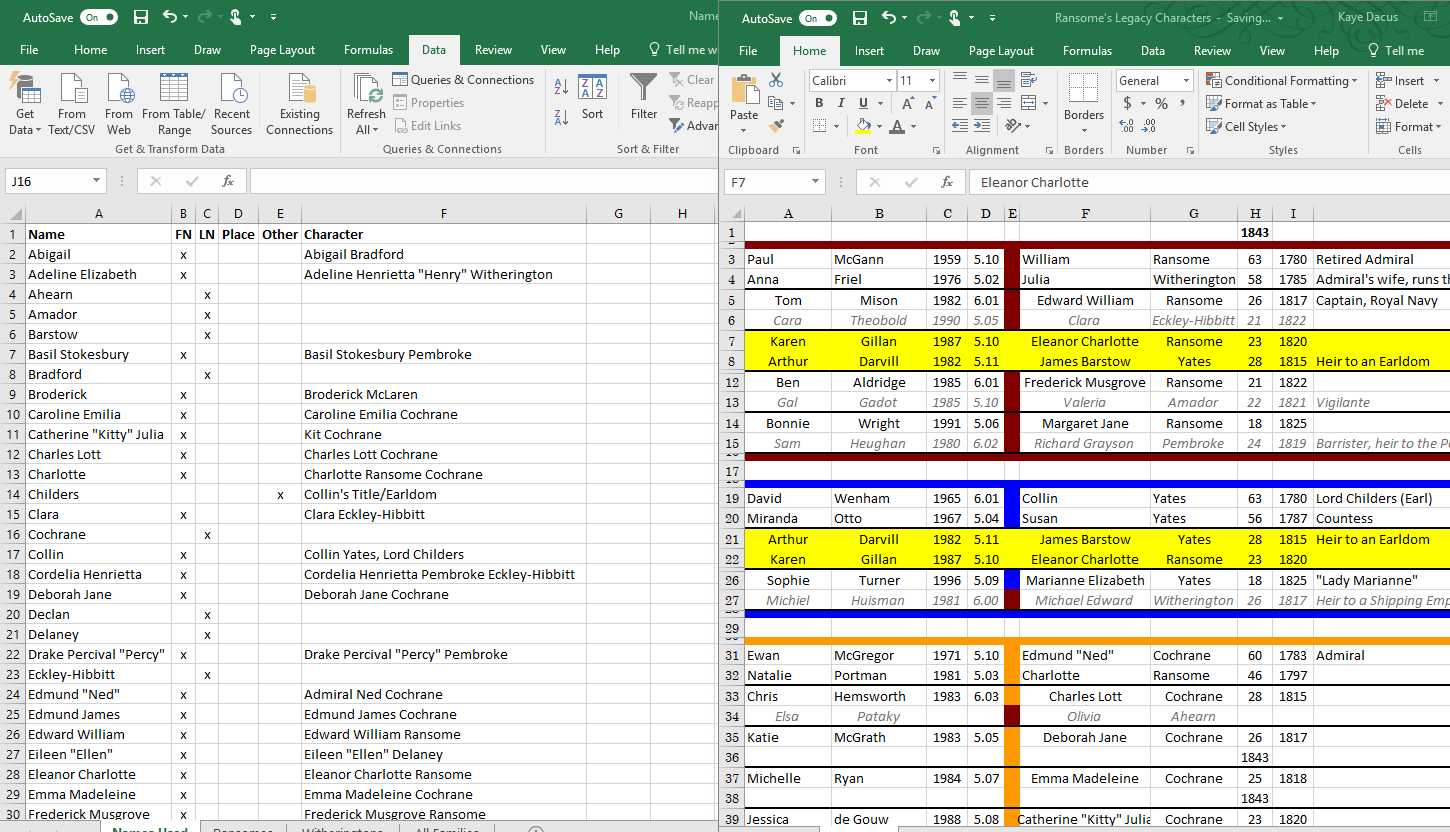
On the right is the original spreadsheet I made with the family groupings for the characters involved in the Ransome’s Legacy stories (at least the main families tied to the original Ransome Trilogy). On the left is the master list of names—first names, last names, place names, and “other” (for example, Childers which is Collin Yates’s earldom title—Lord Childers). [Yes, Adeline Elizabeth changed to Adeline Henrietta when I wrote out the idea for her story.]
As I work on each subsequent story in this spin-off series, I will continue adding to this list—secondary characters, cities, towns, villages, estate/house names, ship names, and so on. This is the main reason I did it in Excel instead of OneNote—because with as long as this list will become, I need an easy way to figure out if I’ve already used a name (or a similar name) or not. And being able to sort this list alphabetically is the best way I’ve found to do it.
Why go to all this work?
Because I’m really bad about remembering if I’ve used a name or not. And because I have written so many stories, it’s hard to remember whether I’ve used it in what I’m currently working on or if it was in a previous book/series.
How do you keep track of your characters’ and place names when you’re writing?
Settings
This wasn’t so much making lists as it was setting up pages in the Settings section of my OneNote notebook for the settings I know I’m going to use as well as potential settings, depending on where the story takes me.
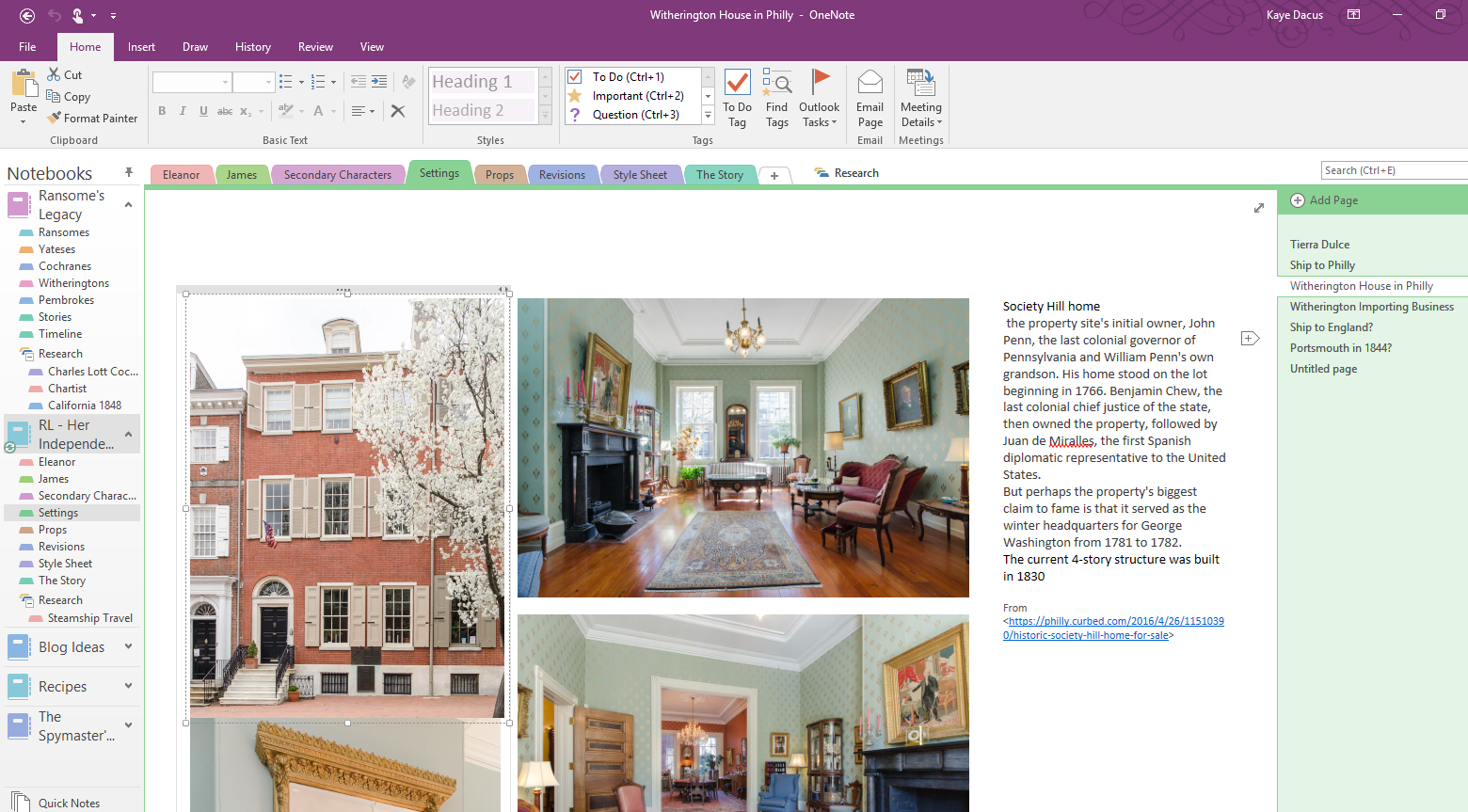
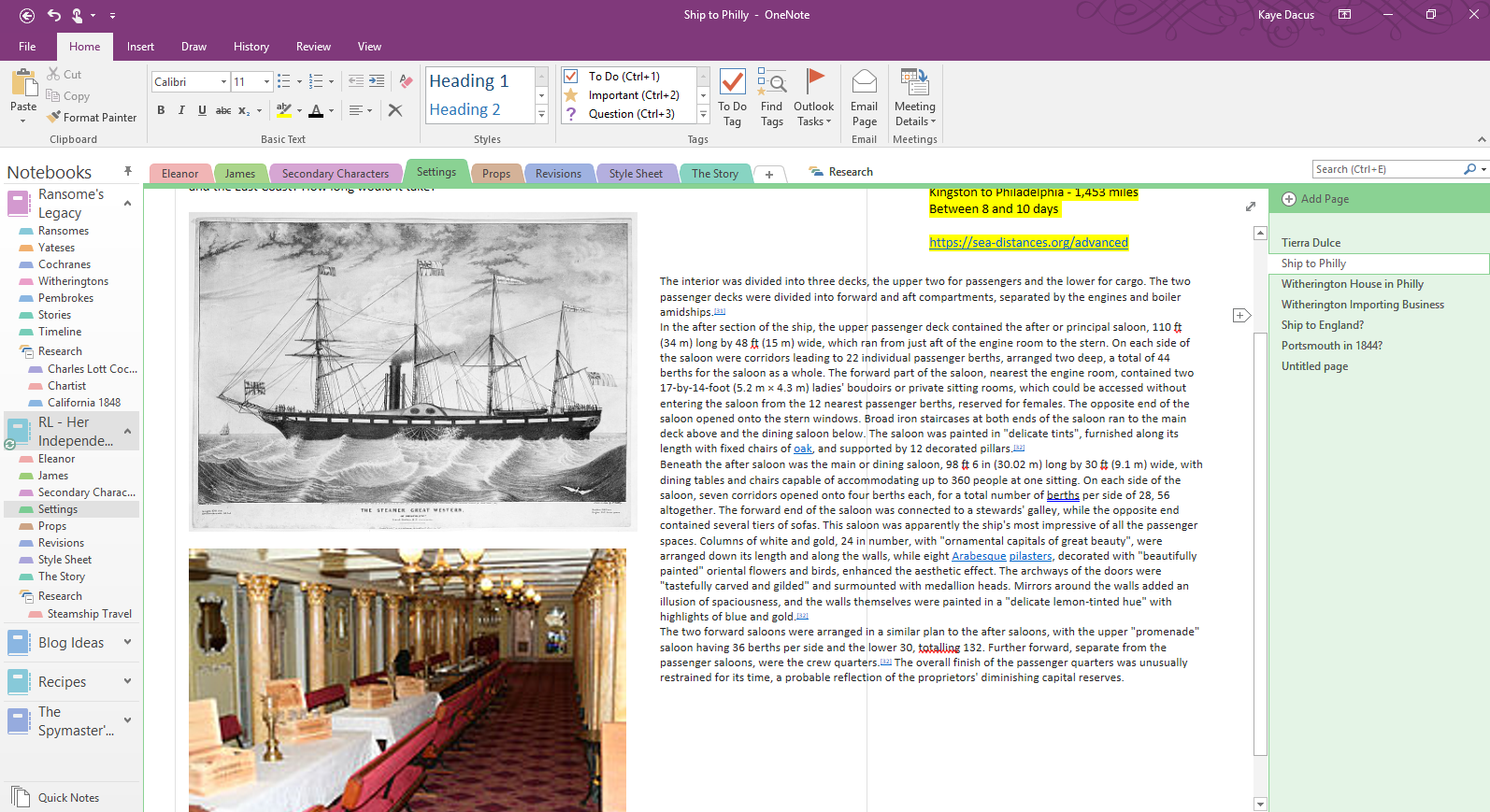
Because my setting is historical, just about any setting I use involves some measure of research. Tonight, that centered on Michael and Serena Witherington’s grand town house in Philadelphia and the sea steamer that will take Elle from Jamaica to Philly. Yes, I used a sea steamer in Follow the Heart and still have all of that research saved in my OneNote story bible for that book. But that takes place eight years after this . . . and technology for sea-going steam engines changed drastically in that time (from side paddle-wheels to screw propellers) which means the look and layout of the ships themselves changed drastically—as did their speed and reliability. Could I have used the 1851 info and just assumed no one else would know the difference? Sure. But I would know. And it would bother me, even if no one else caught on.
As you can see, not only do I collect images, but I also collect details on these settings—even if I’m going to fictionalize them later (as I will with the Witherington house; it won’t be that exact historic home, but based on it). This list-making process gives me a good start on it. And for those pages on which I don’t really have any information yet, I at least created the page to remind myself I was thinking that the story might go in a certain direction.
How do you keep track of not just images but also details of your settings?
_______________________________________
If you’ve never done FirstDraft60 and want to try it, you can see the whole series at the #FirstDraft60 page linked in the header. The tasks do build on each other after the first several days, but you can move them around to best suit your style. Be sure to start with Day 1—Determining Your Commitment and Motivation with Guided Questions.
One Hour of Writing Time per Day
My one hour of writing time is scheduled for each day from 7 PM to 8 PM Central time. I’ll try to remember to send reminders on Twitter, followed by results afterward each day (after all, I do have time for social media scheduled both before and after the writing block).
If you’re playing along at home, you can join me at that time or set your own schedule for when you’ll be writing (or reading, if you’re not a writer!). Be sure to check in below in the comments or on Twitter or Facebook with your results!
#FirstDraft Planning Day 3: Continue Story Structure/Timeline Setup
Today’s story-prep is a continuation of tasks that come from what was originally Day 4 in the FirstDraft60 process: Story Structure & Timeline. You can see in yesterday’s post what I got accomplished and what I need to know/do in order to start working on a more specific chronology for my story.
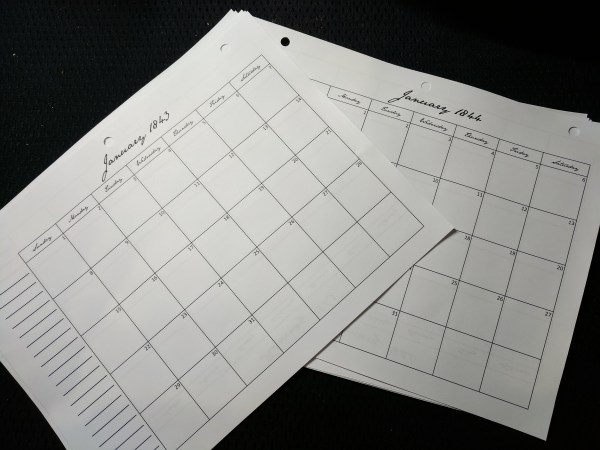
Tonight, I created calendar pages for 1843–1844:
.
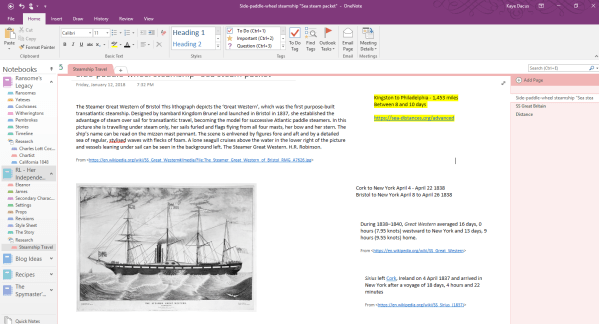
I also did some research on steamships of the 1840s and how long it would take to sail from Kingston, Jamaica, to Philadelphia. I found a great website, Sea Distances, which not only shows the distance between two ports, but calculates the time at sea for an average speed of travel. Using that, I determined that it would take a side-paddle sea steamer packet between 8 and 10 days to travel directly to Philadelphia from Kingston.
.
And tonight, I got so caught up in what I was doing, I was surprised when the timer went off to tell me it was time to stop. I actually had to check it just to make sure I’d set it for a full hour and not half an hour. I LOVE it when I get caught up in story-work stuff like that!!! (Of course, it’s never been prep work or research that’s been the problem for me—it’s the actual writing work that I struggle with falling into and losing myself these days.)
If you’re following along, how are you doing with your prep work?
_______________________________________
If you’ve never done FirstDraft60 and want to try it, you can see the whole series at the #FirstDraft60 page linked in the header. The tasks do build on each other after the first several days, but you can move them around to best suit your style. Be sure to start with Day 1—Determining Your Commitment and Motivation with Guided Questions.
One Hour of Writing Time per Day
My one hour of writing time is scheduled for each day from 7 PM to 8 PM Central time. I’ll try to remember to send reminders on Twitter, followed by results afterward each day (after all, I do have time for social media scheduled both before and after the writing block).
If you’re playing along at home, you can join me at that time or set your own schedule for when you’ll be writing (or reading, if you’re not a writer!). Be sure to check in below in the comments or on Twitter or Facebook with your results!
#FirstDraft Planning Day 2: Basic Story Structure and Timeline Setup
Today’s story-prep tasks come from what was originally Day 4 in the FirstDraft60 process: Story Structure & Timeline. Yesterday, I posted the progress on all of the tasks in the comments; today, I decided to do it as the day’s blog post itself.
Assignment 1: Create a section in your Story Bible for your story outline and synopsis.Have you ever outlined your story before writing? Do you have a favorite outline structure you’d like to share? What are your concerns with trying to outline if you’re a solid seat-of-the-pants writer? What do you think will be the biggest challenge for you if you’ve never outlined ahead of time before? Do you know enough about your story that you can start filling in a structure chart like the Seven Story Beats? If you don’t like the Seven Story Beats structure, what do you think might work better for you?
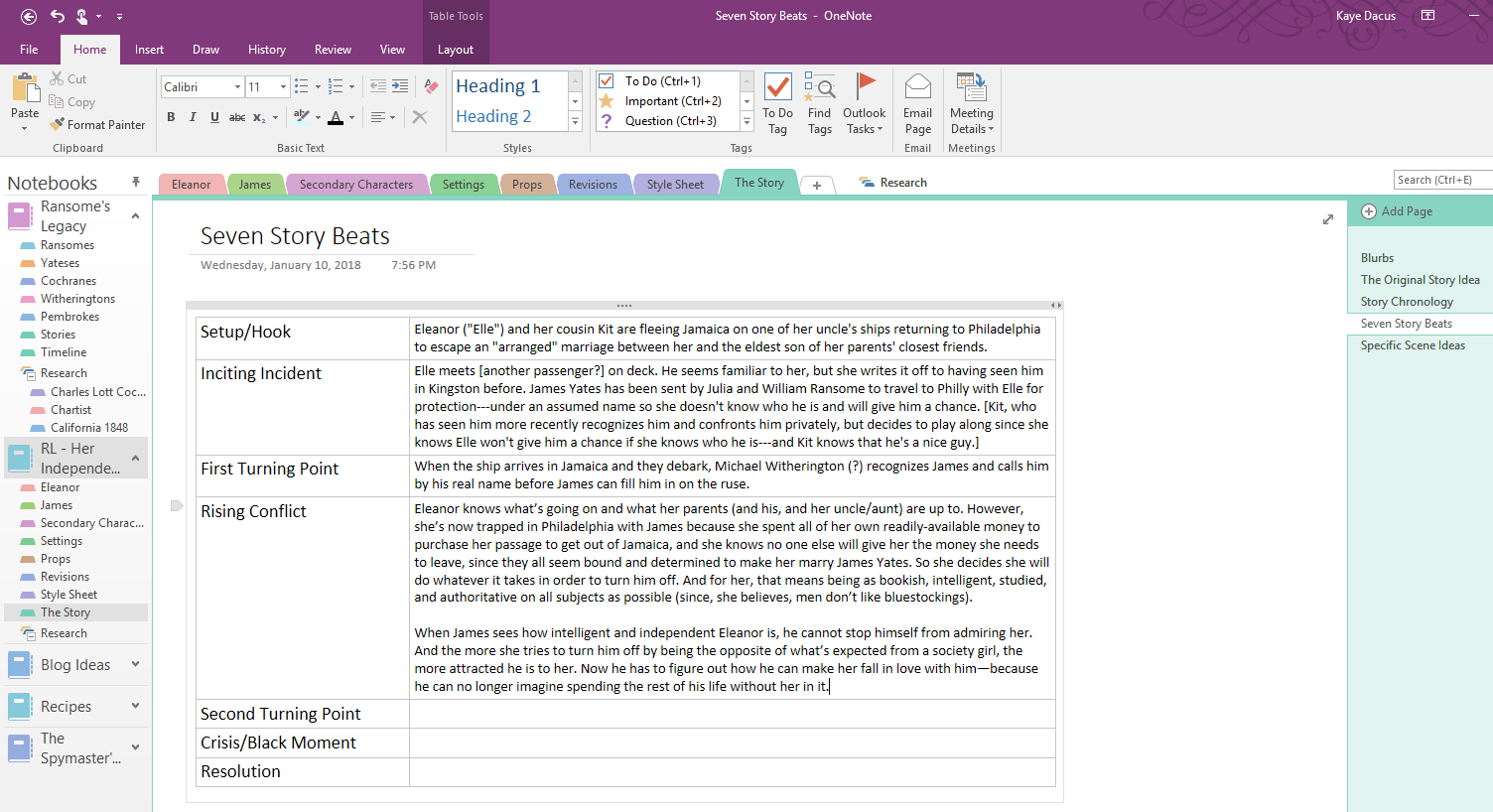
Have I ever fully outlined a novel before writing it? No. Had more than just a vague idea written down before starting to write the manuscript? Yes. As you probably already know, I like using the Seven Story Beats from Billy Mernit’s fantastic craft book Writing the Romantic Comedy (which, according to Amazon, I purchased on April 11, 2008; so you can see just how long I’ve been using it!). So I set up the page and table in my story bible and went ahead and filled in what I have from my brief story idea. As you can see, it gets into the Rising Conflict (Beat 4) part of the story. I always like to know at least that much before I start writing. I may or may not know Beats 5, 6, or 7 before I get there in the writing process, though. I started out as enough of a seat-of-the-pants writer that I find writing more interesting and fun if I don’t know exactly where it’s going before I get there.
Oh, and I’m already changing the opening from what I wrote in the original story idea. It gets the story moving faster. And I do love a hidden-identity plot!
.
Assignment 2: Create or find a calendar/timeline format to use to track the timeline of events for your story.
Have you made a point of tracking (“calendaring”) a story’s timeline before? How did you do it? What method do you think will work best for you with the manuscript you’ve chosen for this challenge? What do you already know about your story’s timeline (such as holidays or historical events that have to fall on certain dates) that you can start plugging in?
Here’s what I know about my story’s timeline: It starts in 1843 and ends by April 1844 (as per the epilogue to Ransome’s Quest). Elle and James will be in Philadelphia through winter/Christmas with James trying to break through her stubborn resistance.
Here’s what I need to research: The length of time it took the steamships of the 1840s to travel from the Caribbean to Philadelphia. How long Elle and James’s engagement will be (because, again as per the epilogue of Ransome’s Quest, there’s somewhere they both have to be in April of 1844).
Here’s what I need to know about my story before I can set a timeline: I need to know some more specific details and scenes that will take place in the midsection of the book (Beats 4, 5, and 6) to know just how long it’s going to take for Elle to fall in love with James and agree to return to Jamaica and marry him. I can, however, go ahead and set up calendar pages in Word (with a link on the Story Chronology page in OneNote) for seven or eight months from mid-1843 to April 1844.
If you’d like to see a much more elaborate example of a story’s timeline tracking, check out the Day 4 post from 2015.
_______________________________________
If you’ve never done FirstDraft60 and want to try it, you can see the whole series at the #FirstDraft60 page linked in the header. The tasks do build on each other after the first several days, but you can move them around to best suit your style. Be sure to start with Day 1—Determining Your Commitment and Motivation with Guided Questions.
One Hour of Writing Time per Day
My one hour of writing time is scheduled for each day from 7 PM to 8 PM Central time. I’ll try to remember to send reminders on Twitter, followed by results afterward each day (after all, I do have time for social media scheduled both before and after the writing block).
If you’re playing along at home, you can join me at that time or set your own schedule for when you’ll be writing (or reading, if you’re not a writer!). Be sure to check in on Twitter or Facebook with your results!
#FirstDraft Planning Day 1: Setting Up a Story Bible
 Having gone through my own First Draft in 60/120 days planning month twice now, I’m approaching it a little differently this time. I know now that some of the tasks take longer than I’ve allowed, and some can be combined with others into one day. Plus, I’m starting this time with a more concrete story idea than I’ve had in the past, so some of the developmental tasks are already done. And I’ve included more days for doing some “pre-writing” to explore opening scenes and character viewpoints and see what might not be working in my story outline/timeline.
Day 1: Setting Up a Story Bible
Even though I already have a main OneNote set up for the entire series (which I’m tentatively calling Ransome’s Legacy), I need to set up a separate story bible OneNote for Her Independent Heart, the story I’ll be working on this year. So I’ll be taking the original #FD60 tasks for Days 2 & 3,:
Day 2: Setting Up a Revisions Notebook, Style Sheet, and Research Repository
Day 3: Characters, Setting, Props
When I went back and looked at it this last time, I realized that there’s really no point in taking a whole day’s writing time (one hour) to set up sections of the story bible that really won’t be used much until after I start the writing process (the Day 2 pages), whereas the Characters, Props, and Settings sections are the ones I can already start filling in.
If you’ve never done FirstDraft60 and want to try it, you can see the whole series at the #FirstDraft60 page linked in the header. The tasks do build on each other after the first several days, but you can move them around to best suit your style. Be sure to start with Day 1—Determining Your Commitment and Motivation with Guided Questions.
One Hour of Writing Time
My one hour of writing time is scheduled for each day from 7 PM to 8 PM Central time. I’ll try to remember to send reminders on Twitter, followed by results afterward each day (after all, I do have time for social media scheduled both before and after the writing block).
If you’re playing along at home, you can join me at that time or set your own schedule for when you’ll be writing (or reading, if you’re not a writer!). Be sure to check in on Twitter or Facebook with your results!
Regaining My Writing Mojo in 2018
 Last week, I posted my Writing and Professional Development Goals for 2018:
- Plan, draft, and self-edit a complete novel/novella manuscript.
- Timed 60 minutes “writing time” each day (writing and/or story-related tasks).
- Schedule at least one time per month (Sunday afternoon?) to write away from home (e.g., coffee shop, library).
- Review all old notebooks and computer files for story ideas.
- Set timelines and a schedule for all writing goals!
The one thing that I didn’t include in that list, but which is really the overarching theme for 2018 is “Regain my Writing Mojo in 2018.”
Now, I am planning on doing a Writing Series on regaining the passion and motivation for writing later this quarter (February or March—as part of my blogging goals (which, no, I haven’t posted yet).
I’ve been working on filling out my planner (self-designed for 2018):
And as I did so, I set some specific dates for myself:
- Story Prep: 30 days of planning and pre-writing from January 10 – February 8, 2018
- First Draft of Her Independent Heart: Completed by May 31, 2018 (with this note-to-self: Do not set a word-count total. The manuscript will be as long as it needs to be.)
- Self-Edit and Second Draft: Completed by August 31, 2018
- Find and start working with critique partners and/or beta readers by September 15, 2018
- Manuscript to agent and/or self-published (to be determined): Completed by December 31, 2018
Obviously, there are still a few technical aspects (primarily the crit/beta reader/agent-or-self-pub parts) that I need to figure out. But I’m about to put all of these dates into my planner and my electronic calendars (I have three—my main Google calendar, the calendar in my work Outlook program, and my personal Outlook calendar; it sounds like a lot to keep track of, but really all I have to do is set it in the Gmail calendar and add the other two addresses as “meeting participants”).
As I’ve mentioned many times before, without specific goals with actionable items and deadlines, it’s nearly impossible to reach our goals.
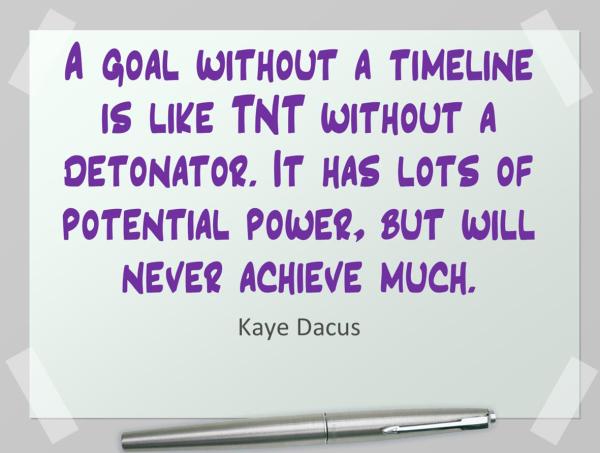
Have you set steps with actionable items and a timeline for your goals for 2018?
Annual Austen Poll!
In 2014, I started a tradition of re-reading one of Jane Austen’s novels. Since then, I’ve re-read Persuasion (twice), Mansfield Park, and Sense & Sensibility. It’s now time for me to start thinking about which JA novel I’m going to re-read this year—and I thought I’d let you all help me decide!
Vote for the Austen novel you think I should read for this year’s Annual Austen—and maybe we can do a read-along!
If you’d like to make a case for the book of your choice—and/or if you’re interested in doing this as a scheduled read-along—please leave a comment below. 😀
2018 Writing & Professional Development Goals
Last year, I started the year by setting some very specific goals—complete with timelines and lots of stuff plugged into my calendar—for the writing I wanted to do in 2017. And then this happened:
This year, I’m revisiting most of those goals and will be recreating a plan to get them accomplished this year. These include goals for actual writing (word count, manuscript timeline, etc.), professional development (study, online courses/workshops, conference attendance), social media strategy, and writing space optimization/organization.
Writing Goals/Challenges
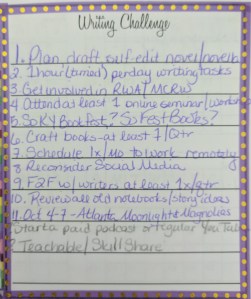 Even though I have several professional development goals mixed in the handwritten list, are the writing goals I’ve set for myself in 2018:
- Plan, draft, and self-edit a complete novel/novella manuscript.
- Timed 60 minutes “writing time” each day (writing and/or story-related tasks).
- Schedule at least one time per month (Sunday afternoon?) to write away from home (e.g., coffee shop, library).
- Review all old notebooks and computer files for story ideas.
- Set timelines and a schedule for all writing goals!
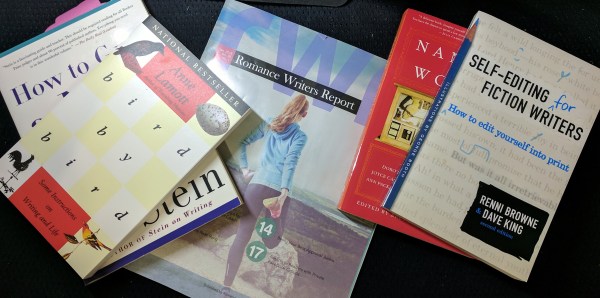
Professional Development Goals/Challenges
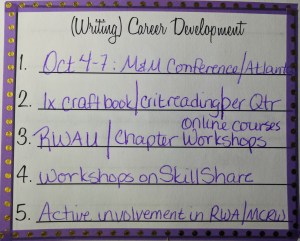 As mentioned, several of my professional development goals are included in my handwritten Writing Challenge list. Here they all are together:
- Get actively involved in RWA/Music City Romance Writers chapter.
- Attend writing/reader-related events as often as possible (Southern Kentucky Bookfest, Southern Festival of Books, local bookstore events, etc.)
- Read at least one craft-of-writing book per quarter.
- Critically read at least one project-related novel/novella per quarter.
- Reconsider/research/rebuild social media strategy.
- Do something at least once a quarter face to face with other writers (group meetings, coffee meetups, workshops, etc.).
- October 4–7: Moonlight & Magnolias writing conference in Atlanta.
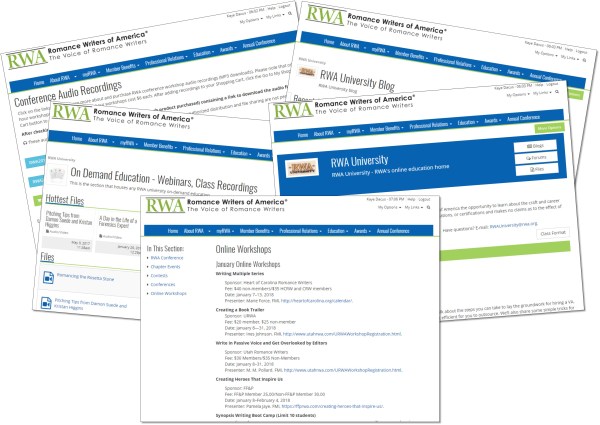
- Attend at least one online seminar/workshop/course (through RWA or SkillShare).
What are your goals for professional (or personal) development and/or writing this year?
2018 Reading Challenge and Goals
It’s only January 4, but time to read is already slipping away!
So, while I’m only now posting my 2018 reading challenge and goals publicly, I’ve actually already completed one book and have two more going. Let’s dive right in, shall we?
2018 Challenge by the Numbers
In previous years, I’ve set the number goal for my challenge by adding one to the total of books read in the year before. However, because I need to set aside time for writing this year, I decided to cut back on the total number, yet still keep it challenging.
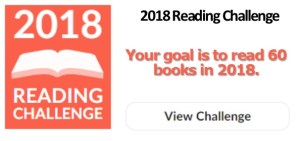
So I decided that averaging five books (books, novellas, short stories, long-form blog series, etc.) per month is challenging without being overwhelming.
2018 Challenge by the Letters
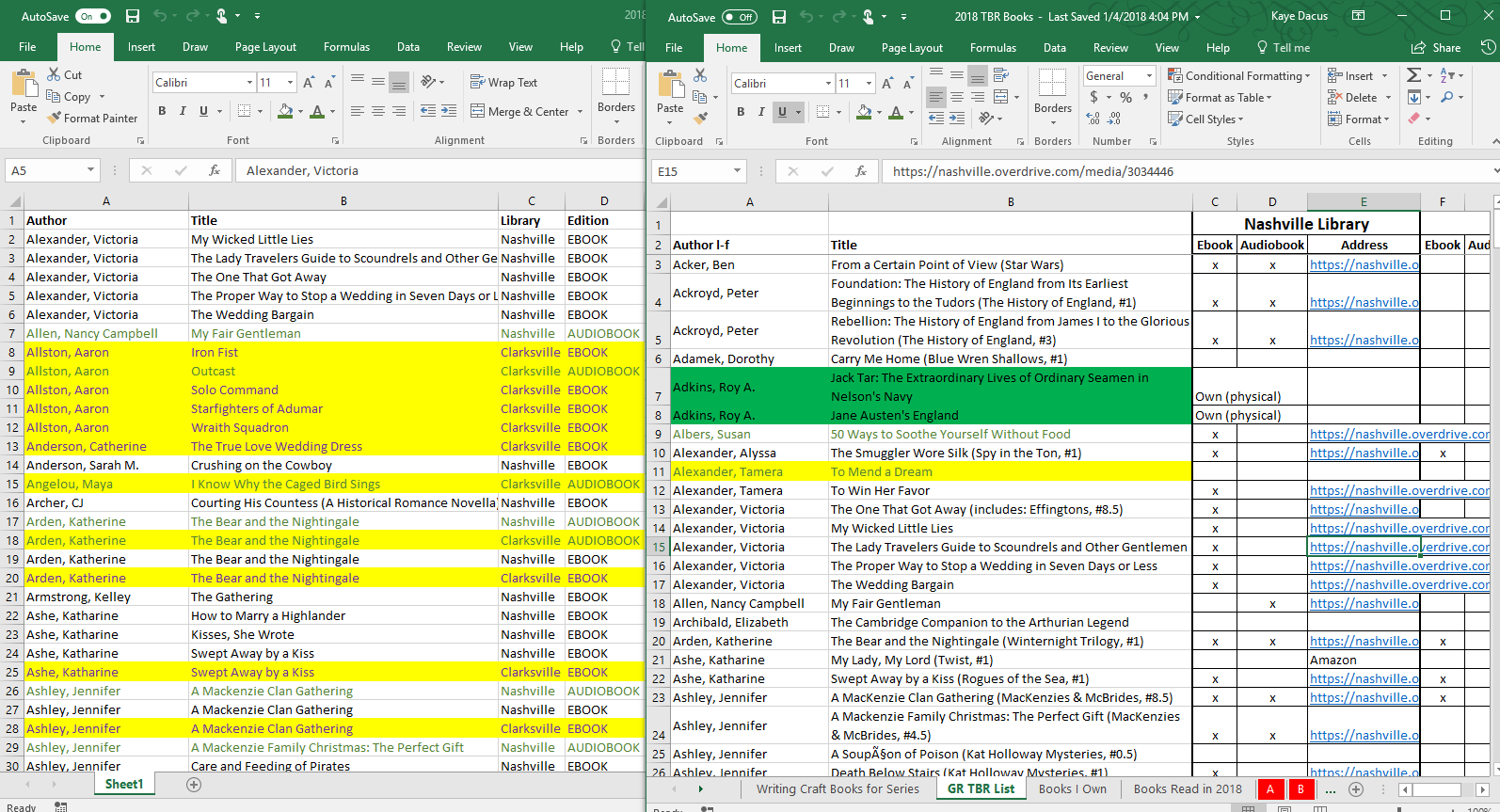
Because it pushed me out of my comfort zone without being too uncomfortable, I’m choosing to do the A to Z challenge, two authors for each letter, again in 2018.
Because it helped me so much last year to keep track of stuff in a spreadsheet, I’ve been working on that for this year, too—downloading my sounds interesting and to read and sequels to read lists from Goodreads as well as my wish lists from the two public library systems I have access to. It’s taking a while to reconcile the two lists with each other (I have some books in my Goodreads lists that I don’t have in my library wish lists, and vice versa), and I don’t know that I need to add all the library wish-list books to my lists in Goodreads. But it’s nice to have them all listed in one place, so I’ll be finishing the spreadsheet tonight.
2018 Challenge Extras
There are a couple of other goals I have set for myself—goals that tie in to my writing/professional development goals for 2018.
Craft books: I’m breaking my planning into quarters this year, so I’ve set the goal of reading/studying at least one craft book per quarter; meaning that of my sixty total books, at least four should be writing-craft books.
Critical reading: With all the reading I’ve done in the past several years, I haven’t made the time or effort to read critically. As another piece of my professional development is to critically read at least one novel/novella that will help with my writing per quarter. Again, meaning, that of my sixty total books, at least four should be for critical reading.
What’s your reading challenge(s) for 2018?
Books Read in 2018: ‘Caroline: Little House Revisited’ (2 stars)
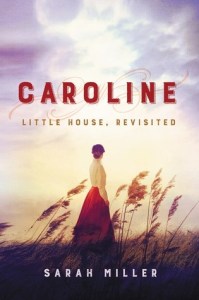 Caroline: Little House, Revisited
by Sarah Miller
Audiobook narrated by Elizabeth Marvel
Genre: Historical Fiction
My rating: 2 stars
Book Summary:
In this novel authorized by the Little House estate, Sarah Miller vividly recreates the beauty, hardship, and joys of the frontier in a dazzling work of historical fiction, a captivating story that illuminates one courageous, resilient, and loving pioneer woman as never before—Caroline Ingalls, “Ma” in Laura Ingalls Wilder’s beloved Little House books.In the frigid days of February, 1870, Caroline Ingalls and her family leave the familiar comforts of the Big Woods of Wisconsin and the warm bosom of her family, for a new life in Kansas Indian Territory. Packing what they can carry in their wagon, Caroline, her husband Charles, and their little girls, Mary and Laura, head west to settle in a beautiful, unpredictable land full of promise and peril.
The pioneer life is a hard one, especially for a pregnant woman with no friends or kin to turn to for comfort or help. The burden of work must be shouldered alone, sickness tended without the aid of doctors, and babies birthed without the accustomed hands of mothers or sisters. But Caroline’s new world is also full of tender joys. In adapting to this strange new place and transforming a rough log house built by Charles’ hands into a home, Caroline must draw on untapped wells of strength she does not know she possesses.
My GR Status Update(s):
12/30. . .Started Reading
01/02. . .Finished Reading
My Review:
2 stars
At about a quarter of the way through, I posted this update:
While interesting, for the most part, the prose is weighed down with overwrought metaphorical language, and the author seems more focused on tedious minutiae like chamber pails and who has to go to the bathroom when rather than what should be the driving force of this book, which is retelling the events of Little House from Ma’s viewpoint.
I understand from reading others’ reviews that they found the writing style “poetic”; I found it distracting. Every time this overworked language was used, it pulled me out of (what little story was in) the book as I did the mental gymnastics to parse the unusual imagery/metaphors out into something more natural and simple, as would befit a retelling of something in the Little House series. With as long as this book was (almost 14 hours in the audio format), I thought it would cover several, if not all, of the books in Wilder’s original series. No. It covers only the events of the second volume, Little House on the Prairie, when the family move from the Big Woods of Minnesota to Indian Territory in Kansas.
There were a few scenes that raised a little bit of tension (e.g., crossing the lake and the rain storm in the first 25% of the book)—until they went on far too long. And that was the biggest problem with this book. Scenes dragged on and on and on (again, focused on minutiae unimportant to the forward progression of the story) and a good 80 to 85% of the narrative took place inside Caroline’s head.
Then, there were the attempts at bringing adult-level sensuality into the story in the relationship between Caroline and Charles. The flashback to their wedding night was completely unnecessary (and icky) as were most of the scenes between them that were supposed to be romantic. (It’s a lot like thinking about your parents or grandparents being intimate—you just don’t want to think about it.
I’m really happy I chose to borrow this from the library before I decided to purchase it to add to my Laura Ingalls Wilder collection, because it’s not worthy of being included on the shelf of honor.
_______
My rating matrix:
5 STARS = one of the best I’ve ever read
4 STARS = a great read, highly recommended
3 STARS = it was okay
2 STARS = I didn’t enjoy it all that much, not recommended
1 STAR = DNF (did not finish)

 KayeDacus.com