100 Random Questions
Fun questionnaire I found online that killed my afternoon. If you use on your own site, please leave a link in the comments!
- Spotify, SoundCloud, or Pandora?
Pandora (usually either on Classic Rock or Instrumental Soundtracks) - Is your room messy or clean?
Controlled chaos - What color are your eyes?
Gray with a hint of olive green - Do you like your name? why?
I go by a nickname I chose (Kaye) and I love my old-fashioned, classic full name, Katherine. - What is your relationship status?
As anyone who knows me should know—lifelong single - Describe your personality in 3 words or less
Sarcastic, pessimistic, supportive - What color hair do you have?
Nice ‘n’ Easy 4W/120B, Natural Dark Caramel Brown - What kind of car do you drive? color?
2013 Ford Escape - Walmart or Target?
Target - How would you describe your fashion style?
Lazy comfort - Favorite social media account?
Pinterest - What size bed do you have?
Full, on an antique bedstead - Any siblings?
One sister, two years older than me - If you could live anywhere in the world where would it be? why?
In a Nashville where there is no rushhour traffic, and where it doesn’t get above 85 degrees in the summer. 😉 - Favorite Snapchat filter?
Don’t use Snapchat - Favorite makeup brand(s)
NYX, Revlon, Cover Girl - How many times a week do you wash your hair?
Since I work from home, usually only every other day - Favorite TV show?
Criminal Minds - Shoe size?
10.5 (US), which is one of the hardest sizes to come by - How tall are you?
5’9″ - Sandals or sneakers?
90% sneakers, 10% sandals - Do you go to the gym?
Um . . . I pay for a gym membership every month. - Describe your dream date.
October 22—a day when it’s clear that fall has good and truly arrived. 😀 - How much money do you have in your wallet at the moment?
$47.21 - What color socks are you wearing?
Bright pink - How many pillows do you sleep with?
One, but it’s a body pillow, so it’s like sleeping with two or three - Do you have a job? What do you do?
My full-time job is as an academic editor for Northcentral University. My part-time job is as a freelance editor and fiction writer. - How many Facebook friends do you have?
223 - What’s the last thing you bought online?
Two Northcentral University T-shirts and an NCU licence plate frame - What’s your favorite candle scent?
Autumn scents (cinnamon, spices) or citrus - 3 favorite boy names
William, David, Andrew - 3 favorite girl names
Julia, Katherine, Caylor - Favorite actor?
Oded Fehr - Favorite actress?
Katharine Hepburn - Who is your celebrity crush?
Which one? - Favorite movie?
Currently, Star Wars: The Force Awakens - Last book you finished?
Dog on It by Spencer Quinn - Money or brains?
Brains - Do you have a nickname?
My grad school friends call me Kiki - Have you ever had surgery?
3x: left wrist, 1998 (remove a cyst from inside the carpal tunnel); lower back, 2003 (ruptured disc L4, bulging disc L5); right ankle, 2010 (twice–once to repair multiple breaks, again to remove one of the screws) - 5 favorite singers/bands
Whitesnake, Queen, Aerosmith, Bon Jovi, Steve Tyrell - Do you take any medications daily?
Too many to list here, both prescriptions and supplements - What is your skin type? (oily, dry, etc.)
Dry with eczema and psoriasis (currently controlled by medication) - What is your biggest fear?
Being alone for the rest of my life. - How many kids do you want?
None - What’s your go-to hair style?
Messy pixie - What type of house do you live in? (big, small; new, old; modern; etc.)
Small, old, without enough closet space—but it’s a house and not an apartment! - Who is your role model?
My mom - What and when was the last compliment you received?
Yesterday, that I have beautiful eyes - What was the last text you sent?
“Chip [my agent] is in my sights. Waiting to talk to him.” - How old were you when you found out Santa wasn’t real?
What? Santa isn’t real?!?! - What is your dream car?
The one I have, but with all the bells and whistles (foot-activated lift-gate, sun/moon roof, backup camera, auto parking assist, etc.—oh, and hybrid, too) - Opinion on smoking?
It’s gross and stupid (oh, and I’m extremely allergic) - Where did you go to college? What is your degree(s) in?
New Mexico State University (1 semester, major: Secondary Ed); Louisiana State University (5.5 semesters, major: Creative Writing, minor: history); Trevecca Nazarene University (BA, English, writing specialization); Seton Hill University (MA, Writing Popular Fiction) - What is your dream job?
Publisher of a university press - Would you rather live in rural areas or the suburbs?
Suburbs (more amenities) - Do you take shampoo and conditioner bottles from hotels?
Only if I’ve opened/partially used them—I find they’re usually a scent I’m allergic to, though - Do you have freckles?
Nope - Do you smile for pictures?
When I can’t avoid them, yes - How many pictures do you have on your phone?
182—most are stored on my computer - Have you ever peed in the woods?
Probably, when I was little and we lived in Alaska and actually had woods to go into. - Do you still watch cartoons?
Nope, ‘cuz they just don’t make them like they used to. - Do you prefer chicken nuggets from Wendy’s or McDonald’s?
I prefer chicken fingers from Zaxby’s - Favorite dipping sauce?
Texas Pete buffalo wing sauce mixed with Marzetti Ultimate Blue Cheese salad dressing - What do you wear to bed?
Tank top or cotton camisole with cotton-knit pajama pants - Have you ever won a spelling bee?
I have a hard time spelling out loud—I need to write it down. - What are your hobbies?
Does binge watching shows on Netflix, Amazon, and Hulu count as a hobby? No? Okay . . . knitting and crocheting, then. - Can you draw?
Yes, sort of. - Do you play an instrument?
I took piano lessons for about six months when I was in junior high. It wasn’t for me. - What was the last concert you attended?
Michael Buble, at least eight years ago. - Tea or coffee?
Coffee in the AM, iced tea the rest of the day, hot tea at night. - Starbucks or Dunkin Donuts?
Starbucks - Do you want to get married?
Yes, eventually - What is your first crush’s first and last initial?
J.A. - If you’re a woman, would you/did you change your last name when you marry(ied)?
Depends on what his last name is. I’ve had my last name for 45 years and counting. It would be hard to learn to go by another name after all these years. - What color looks best on you?
Purple. - Do you miss anyone right now?
My family. - Do you sleep with your door open or closed?
Because I live alone, I sleep with it open. When I’m anywhere else, I close the door. - Do you believe in ghosts?
No. - What is your biggest pet peeve?
Bad grammar. - Last person you called.
Mom and Dad (on Mom’s birthday, via Skype) - Favorite ice cream flavor?
Mint chocolate chip - Regular oreos or golden oreos?
Double-stuff - Chocolate or rainbow sprinkles?
Rainbow - What shirt are you wearing?
“We Are Nashville” T-shirt - What is your phone background?
Pink and purple stripes - Are you an extrovert or an introvert?
I’m an outgoing introvert. - Do you like it when people play with your hair?
Yes, though it never happens anymore now that it’s super short. - Do you like your neighbors?
For the most part, yes. I live in a great neighborhood. - Do you wash your face? at night? in the morning?
Usually only in the morning, except on the rare occasions when I wear makeup, and then I wash it as soon as I get home. - Have you ever been high?
Does laughing gas at the dentist count? - Have you ever been drunk?
Tipsy, but not full-out drunk. - Last thing you ate?
A dill pickle. - Favorite lyrics right now.
“Rise Up” from Hamilton - Summer or winter?
Autumn - Morning or night?
Night, defiitely! - Dark, milk, or white chocolate?
Caramel (with dark chocolate). - Favorite month?
October. - What is your zodiac sign?
Gemini - Who was the last person you cried in front of?
Probably my mom, but it’s been a while.
Books Read in 2016: ‘North and South’ by Elizabeth Gaskell (3 stars)
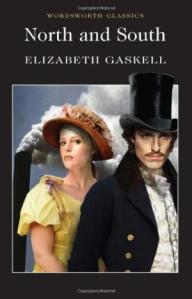 North and South
by Elizabeth Gaskell
My rating: 3 stars
Book Summary:
North and South depicts a young woman discovering herself, in a nuanced portrayal of what divides people, and what brings them together.Elizabeth Gaskell’s compassionate, richly dramatic novel features one of the most original and fully-rounded female characters in Victorian fiction, Margaret Hale. It shows how, forced to move from the country to an industrial town, she develops a passionate sense of social justice, and a turbulent relationship with mill-owner John Thornton.
My GR Status Update(s):
06/10 . . .marked as: currently-reading
06/17 . . .13.0% Instead of a quiet, middle-aged clergyman, a young lady came forward with frank dignity . . . Her dress was very plain: . . . a dark silk gown, without any trimming or flounce; a large Indian shawl, which hung about her in long, heavy folds, and which she wore as an empress wears her drapery. . . . the simple, straight, unabashed look which showed that his being there was of no concern to the beautiful countenance…
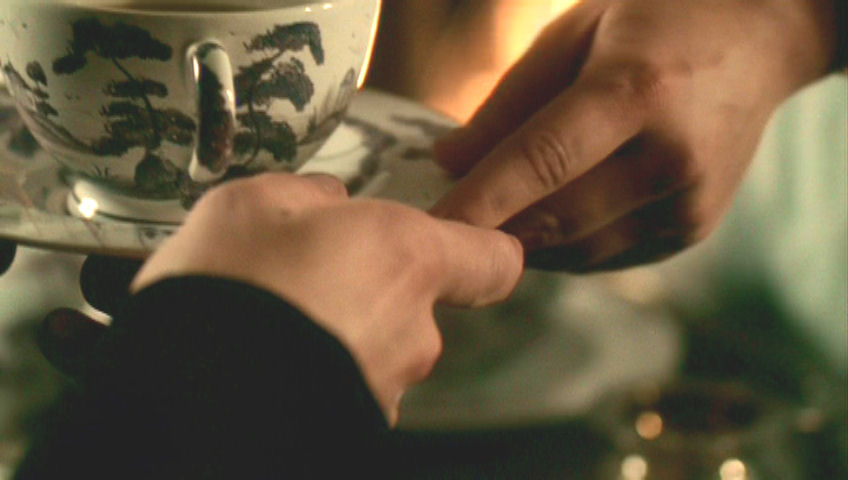
06/19 . . .20.0% This scene. –>
06/22 . . .32.0% “Mother,” said he, stopping and bravely speaking out the truth, “I wish you would like Miss Hale.” | “Why?” asked she, startled by his earnest yet tender manner. “You’re never thinking of marrying her?—a girl without a penny.” | “She would never have me,” said he…
06/23 . . .41.0% “Mother–Mother!” cried he; “come down–they are gone, and Miss Hale is hurt!” He bore her into the dining room, and laid her on the sofa there… looking on her pure white face, the sense of what she was to him came upon him so keenly that he spoke it out in his pain: “Oh, my Margaret—my Margaret! No one can tell what you are to me! Dead–cold as you lie there, you are the only woman I ever loved! …”
06/24 . . .49.0% Death of Bessy Higgins. The character of Nicholas Higgins is much more rough/drunk/violent in the book than how he was written (and portrayed by Brendan Coyle) in the 2004 miniseries.
06/27 . . .marked as: read
My Review:
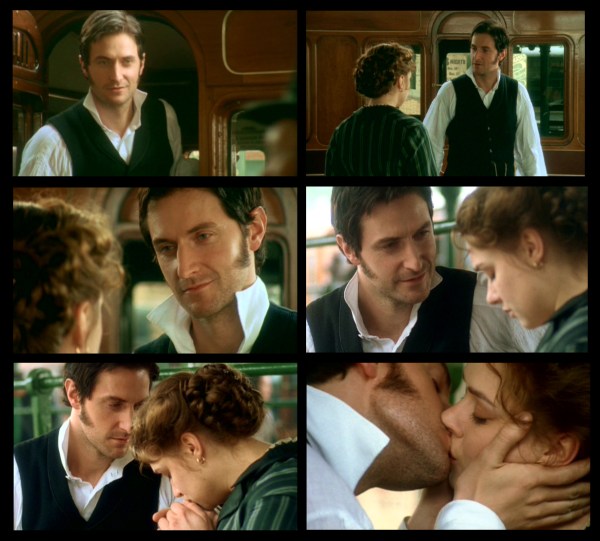
I usually enjoy the book more than the movie, but in this case I much prefer the miniseries to the book. Not only did the film adaptation manage to cut out a lot of info-dumps about the mills and the strike, it also managed to make Margaret a much more likable character.
Time to watch the film version!
_______
My rating matrix:
5 STARS = one of the best I’ve ever read
4 STARS = a great read, highly recommended
3 STARS = it was okay
2 STARS = I didn’t enjoy it all that much, not recommended
1 STAR = DNF (did not finish)
Fun Friday (a little early): The ROGUE ONE Trailer Is Finally Here!
What a Thursday night! Watched Simone Manuel come from behind for a gold medal in the women’s 100-meter freestyle, saw the new Rogue One trailer, and then was immediately treated to seeing Michael Phelps receive his most recent gold medal.
For me, this was the most important part of the evening: 😉
Books Read in 2016: ‘The Curse of Lord Stanstead’ by Mia Marlowe (4 stars)
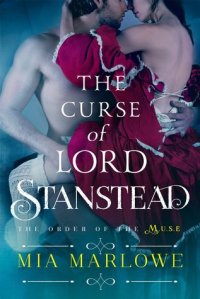 The Curse of Lord Stanstead (The Order of the MUSE #1)
by Mia Marlowe
My rating: 4 stars
Book Summary:
London, 1819When only seduction will do…
Wherever Cassandra Darkin goes, fire is sure to follow. It’s not until she’s swept into the arms of a handsome, infuriating stranger that she learns she’s responsible for the fires. As it turns out, Cassandra is a fire mage…and with her gift comes a blazing desire for sins of the flesh.
With his preternatural ability to influence the thoughts of others, Garrett Sterling is sent to gather Cassandra for the Order of the M.U.S.E. He’s entirely unprepared for his immediate attraction to the comely little firestarter. But it’s an attraction that he must quell, even as his body craves her touch and her fiery, sensual hunger.
For Garrett’s gift has a dark side…and the moment he begins to care too much for Cassandra, he knows he will doom her to an inescapable fate.
My GR Status Update(s):
05/30. . .marked as: currently-reading
06/07. . .60.0%
06/07. . .marked as: read
My Review:
I don’t usually read much paranormal romance—because I don’t really enjoy characters who are vampires or shape shifters or were-whatevers, and because I don’t like the fact that most of the ones I’ve been unfortunate enough to pick up have very little in the way of relationship development and rely on insta-lust and veer over into the erotica category.
So when I heard that this was paranormal romance that was more along the lines of X-Men mutants or superpowered Avengers or Sensory Extraordinaires (as they’re named in this book), I was willing to give PNR another chance.
And I’m so happy I did. I thoroughly enjoyed this book. While it struggles a few times to create its world along with developing its characters, it’s easily overlooked because the characters are so unique and the world Marlowe creates starts to feel as familiar as the worlds of the Marvel superheroes or the X-Men. But even better, it’s a romance and it’s set in the Regency era!
Now, there are a lot of people who read this who couldn’t stand Garrett Sterling, the hero. They felt he was a misogynist pig—but I didn’t see him that way. Even knowing that entering a physical relationship with Cassie (what she needs in order to be able to control her power as a fire mage) could end up consuming him, he’s still willing to make that sacrifice. Plus, his character is well developed enough that there are motivations and reasons for how he behaves, the way he thinks, and what he says—not the least of which is the fact that if he gets close to someone, he starts having nightmares about them that usually come true, resulting in his loved-one’s death. While he’s not a hero that I swooned over for days or weeks afterward (hello, Captain Wentworth), he’s also nowhere near the worst I’ve ever read (The Dragon from Uprooted comes to mind in the running for that title).
While the physical relationship between Garrett and Cassie develops pretty quickly, interestingly enough, Marlowe is able to take time in developing the emotional relationship between them. The physical relationship is a necessity—a safety valve.
Though this is the first book in the Order of the MUSE series, we don’t actually see the formation of this order. It exists prior to the opening of this book. Instead, we learn about the existing members both from seeing them trying to find Cassie and then as she becomes part of them. Lord Camden, the leader of the Order, can sense powered people, so he sends Garrett—Lord Stanstead—to get her. Why? Well, because Garrett’s gift is the ability to “send” his thoughts to others and be able to control them. But, of course, this doesn’t work with Cassie. Yes, it’s a bit cliché, but it still worked because it created a challenge for the overly confident Garrett that he’d never faced before which, in the long run, helped with his character growth and made him and Cassie right for each other.
Cassie has one or two TSTL moments, but those are out of the norm for her. Instead, she handles most of what comes her way with a delicate strength that is only occasionally a slight bit too modern for the era in which this is set (but aren’t most heroines of modern historical romances?).
I really enjoyed the way that both Cassie’s and Garrett’s gifts played into the ultimate climax and resolution of the mystery at the center of the plot. But I don’t want to give too much away here.
Looking forward to reading the other books in this series!
_______
My rating matrix:
5 STARS = one of the best I’ve ever read
4 STARS = a great read, highly recommended
3 STARS = it was okay
2 STARS = I didn’t enjoy it all that much, not recommended
1 STAR = DNF (did not finish)
Book (Partially) Read in 2016: ‘Secrets of a Proper Lady’ by Victoria Alexander (1 star, DNF)
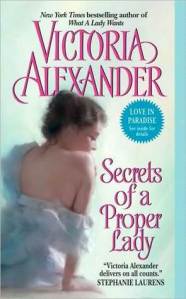 Secrets of a Proper Lady (Last Man Standing #3)
by Victoria Alexander
My rating: 1 star (DNF)
Book Summary:
Lady Cordelia Bannister refuses to wed the man she has not chosen herself, no matter what her father decrees. So, pretending to be her own companion, she seeks out information about the designated groom by meeting with his secretary — a man who soon beguiles her. But Lady Cordelia doesn’t know the truth — the man she can’t resist is really her intended, Daniel Sinclair.
My GR Status Update(s):
04/13. . .marked as: currently-reading
04/21 . . .25.0%
04/30. . .42.0% DNFing at 42%. Finally giving up on this one when the author had the heroine, who is supposed to be an experienced travel writer with articles being published in all the British papers and magazines, call the Great Exhibition of 1851 the Great Exposition. This isn’t the only problem with this book, but it is the one that finally gave me the excuse I needed to stop forcing myself to try to finish it.
04/30. . .marked as: read
My Review:
The status update says it all.
_______
My rating matrix:
5 STARS = one of the best I’ve ever read
4 STARS = a great read, highly recommended
3 STARS = it was okay
2 STARS = I didn’t enjoy it all that much, not recommended
1 STAR = DNF (did not finish)
Books Read in 2016: ‘Tempting Mr. Weatherstone’ by Vivienne Lorret (4 stars)
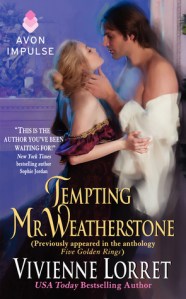 Tempting Mr. Weatherstone (Wallflower Weddings 0.5)
by Vivienne Lorret
My rating: 4 stars
Book Summary:
Penelope Rutledge longs for passion, but only with the man of her dreams: the brilliant, dashing Ethan Weatherstone. If only her longtime neighbor would open his eyes and realize how much she loves him. If only they weren’t best friends with so much at stake. Penelope knows her future—and their friendship—is in her hands, but is she willing to take the biggest risk of all on the man she loves?If it were up to Ethan, life and love would be as predictable as the figures in his ledgers—certainly nothing like the adventures Penelope longs for. Yet his childhood friend has grown into a beautiful, feisty woman blissfully unaware of the danger she causes when near. Ethan knows he must save Penelope and her reputation … but can he save himself from the temptation of her lips?
My GR Status Update(s):
07/10. . .marked as: currently-reading
07/10. . .49.0%
07/13. . .marked as: read
My Review:
I love the friends-to-lovers trope in romance, whether historical or contemporary. One of the reasons I enjoy it so much is that there seems to be a lot more relationship development that happens with this trope—in other words, authors who use it don’t dive straight into the “throbbing members” and “moist-down-there” scenes of insta-lust. They take the time to establish the existing friendship first (even if there is an unrequited attraction on one side or the other) then show it developing into attraction/love.
While the characters here are a little too starkly and simply drawn (hero Ethan Weatherstone is too set in his ways, too rigid, too anti-change to be truly believable), in this case, it works pretty well, since it’s a novella and there isn’t a lot of room for too much nuance in the characterization. Lorret does a good job of establishing her H/H’s characterization and motivations early and then sticking to those throughout.
I keep wanting to use the descriptor “sweet” as I’m writing this, but for me, that term has a specific meaning when it comes to romance—that it’s “clean” (i.e., no explicit sex scenes). While the tone of this is sweet in the general meaning, it’s got some sensuality in it, too, which was well placed and didn’t overwhelm the narrative of the story by taking up too much of the word count.
This is a great introduction both to this author (for me) and to this series, which is now on my radar to be read in the future.
_______
My rating matrix:
5 STARS = one of the best I’ve ever read
4 STARS = a great read, highly recommended
3 STARS = it was okay
2 STARS = I didn’t enjoy it all that much, not recommended
1 STAR = DNF (did not finish)
Books Read in 2016: ‘My Name is Mary Sutter’ by Robin Oliveira (2 stars)
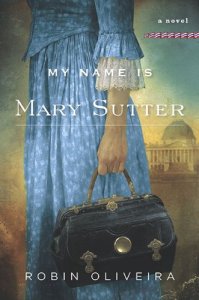 My Name is Mary Sutter
by Robin Oliveira
My rating: 2 stars
Book Summary:
Fans of Caleb’s Crossing by Geraldine Brooks, Cold Mountain by Charles Frazier, and Mrs. Lincoln’s Dressmaker by Jennifer Chiaverini will love this New York Times bestselling tale of the Civil War. Mary Sutter is a brilliant young midwife who dreams of becoming a surgeon. Eager to run away from recent heartbreak, Mary travels to Washington, D.C., to help tend the legions of Civil War wounded. Under the guidance of two surgeons, who both fall unwittingly in love with her, and resisting her mother’s pleas to return home to help with the difficult birth of her twin sister’s baby, Mary pursues her medical career against all odds. Rich with historical detail—including cameo appearances by Abraham Lincoln and Dorothea Dix, among others—My Name Is Mary Sutter is certain to be recognized as one of the great novels about the Civil War.
My GR Status Update(s):
07/13 . . .marked as: currently-reading
07/17 . . .21.0% While the characters have caught my interest, the writing style of this book (headhopping, flashbacks/major backstory dumps for several characters, and I just finished Ch. 4) is taking a little getting used to. So for right now, progress is slow going.
07/20 . . .35.0%
07/20 . . .marked as: read
My Review:
After having thoroughly enjoyed the PBS/Ridley Scott miniseries Mercy Street earlier this spring, I was excited about My Name is Mary Sutter after reading the book summary and a few of the more positive reviews of this book. I was hoping for something very similar in tone to Mercy Street, delving deeper into a character like that story’s Nurse Mary, while also not telling the exact same story.
In fact, the story has a similar set up for what I thought would be the romantic through-line of the story in that Mary Sutter meets a somewhat gruff young(ish) doctor in the first chapter (the rule of thumb for any romance plot to get that part of the plot rolling, even if it’s not technically a romance novel, which this one is not) who seems to be the perfect foil for her—there’s an obvious, growing attraction for her when we’re in his viewpoint, even though he’s married. (It’s quickly revealed that the marriage was a mistake and they’ve been separated almost from the wedding day.)
Mary, a trained midwife, wants to become a doctor. So she takes it upon herself to visit Dr. James Blevens to ask him to take her on as an apprentice, since the medical school in her hometown of in Albany, NY, won’t admit her. She’s read as many books as she can get her hands on, so her knowledge is extensive; but she lacks practical experience, which is what she wants from Dr. Blevens. This seems like the perfect setup for the story to come—he says no, the war starts, and he goes off for his “three-month” stint as an army surgeon (remember, no one expected the war to last long, so Lincoln put a call out for volunteers for three months at first). The war, of course, becomes Mary’s opportunity to learn what she needs in order to become a doctor.
We see “Mary Sutter” and “James Blevens” working side-by-side during a difficult delivery (a little more detailed than I was personally comfortable with, as were most of the medical scenes, but seemed very realistic, so kudos to Oliveira for doing her research) and then later, when Dr. Blevens helps transport this woman and her baby to Mary’s house to convalesce. Naturally, he’s invited to dinner by Mary’s mother, Amelia; and they’re joined at dinner by Mary’s twin sister, Jenny, and Jenny’s beau, “Thomas Fall.”
Let me stop here and address a few issues that came up early on and then continued throughout this novel for me:
1. Lack of Structure. As mentioned in my blog post on Chapter 1 of Scene and Structure, “The problem I’m having with Oliveira’s book is another one of mixed POV and seeming lack of structure. . . . And her narrative jumps around in time, dropping flashbacks into the middle of a scene of dialogue, or jumping back in time to tell someone’s entire backstory after leaving the previous chapter hanging at the end. And because this is not genre fiction (or, at least, it’s not structured as typical genre fiction), I’m having a harder and harder time trusting that the author is actually going somewhere with this story.” (This was around 20% into the novel—it didn’t improve.)
2. Head Hopping. Again, as mentioned in the above-linked blog post, I wrote: “Although I think Oliveira was trying to employ an omniscient POV, it’s actually more of a head-hopping style.” The viewpoint changes randomly from character to character with seemingly no logic or reason, which makes the lack of structure even worse, since as a reader, one cannot settle into a viewpoint and just go along for the ride . . . except for in those flashbacks, especially the ones that go on for far too long.
3. (Full) Name Calling. Oliveira has a weird habit of referring to characters by their full names: Mary Sutter. Amelia Sutter. James Blevens. Thomas Fall. Even within their own viewpoint! And it’s not as if they’re just being introduced at the beginning of a chapter or scene by their full name—it happens multiple times on a page. Then there’s the fact that Mary Sutter not only thinks of her mother by her first name, Amelia, she refers to her by her first name in dialogue.
4. The Sister Cliché. Mary Sutter is tall and gangly and not considered pretty. She’s brusque and has few social graces. Her twin sister (fraternal), however, is petite and pretty and the apple of everyone’s eye. Mary is useful while Jenny is decorative. Mary is practical while Jenny is romantic. Mary is sensible while Jenny is . . . well, you get where I’m going with that one. Not only does this cliché bother me, since there seemed to be no effort to go beyond these stereotypes, but it also bothered me because there was no reason for them to be twins, nor was there the need to set up the sisterly jealousy by having Thomas Fall first seem to be attracted to Mary and then fall for Jenny as soon as he met her.
5. There’s Something About Mary. However, even though Mary is described as too tall, gangly, mannish, unattractive, overbearing, acerbic, etc., every man who comes near her is automatically and inexplicably attracted to her.
As the book continues, even more viewpoints are introduced once Mary arrives in Washington, DC—Dorothea Dix, John Hays (aide to President Lincoln), President Lincoln, and more. Oh, and there’s another army doctor character introduced about halfway through who ends up playing a big role in the story, as well.
There’s a major lack of character development, as well as the development of relationships between characters. Mary Sutter wants to be a doctor because . . . she wants to be a doctor. That’s it. She wants to be a doctor. She does everything she can to learn how to be a doctor. The problem is, there’s no real motivation to it. She doesn’t seem to derive any pleasure out of what she does or what she learns throughout the book. She just wants to be a doctor. The best relationship development happens in about the first third of the book between Mary Sutter and James Blevens—and it’s mostly one-sided, on James’s side. And this isn’t just romantic relationships—there are occasional mentions of other nurses in the field hospitals, yet Mary has little to no interactions with any of them, and with few of the doctors other than Blevens and Stipp, as well. This lack of emotional connections keeps her a two-dimensional character who is at best boring and at worst unlikable.
Then, there are the scenes like this (beginning on p. 277):
In 1864, George McClellan, in his run as Democratic candidate opposite Abraham Lincoln, would complain that the failure of the Peninsular Campaign was due to many factors out of his control, including Lincoln’s great meddling in his plans, his failure to provide crucial reinforcements, the teeming hordes of Confederate troops, the inclement weather, the failure of the navy to properly defend the York River, the idiot mapmakers who mistook a river’s location that forced him to march miles out of his way, his recurring bouts of malarial fever due to the criminal lack of quinine, the abysmal roads which were nothing but a morass of mud, the swampy, nearly oceanic terrain, and finally, the wily Robert E. Lee, who decimated the Union troops in the last hopeless battle of Seven Days as they retreated down the Peninsula after the Union’s failure to seize Richmond. …
This is followed by at least another 200 to 300 words continuing this recitation of the research that Oliveira did. And this isn’t the only place this happens—it starts to happen with regularity throughout the last half of the book.
If I wanted to read nonfiction about the American Civil War, I would pull one of the many (many) nonfiction books on my shelves about the American Civil War (most from my days when I minored in it at LSU).
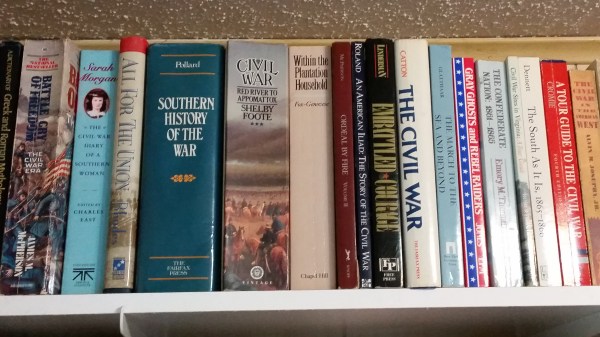
Just a sampling of the books used for the courses I took at LSU.
Then, there’s the ending. So disappointing! (Highlight paragraph to read spoiler) As mentioned before, the setup of this book was that somehow, even though he’s married in the beginning, Mary Sutter and James Blevens would end up together. Not only are their characters perfect for each other, but James is definitely attracted to her before he leaves for the war, and continues falling in love with her after they’re separated—he can’t stop thinking about her. But then the character of Dr. William Stipp comes along—a man more than twice Mary’s age (she’s in her early twenties, he’s in his fifties when we meet him) and for some strange reason, he ends up being the love interest.
Once I realized that was how the book would end, I pretty much gave up on even trying to enjoy it.
_______
My rating matrix:
5 STARS = one of the best I’ve ever read
4 STARS = a great read, highly recommended
3 STARS = it was okay
2 STARS = I didn’t enjoy it all that much, not recommended
1 STAR = DNF (did not finish)
Books Re-Read in 2016: The Harry Potter Series (Books 1–7, Do I Even Need to Put a Star Rating?)
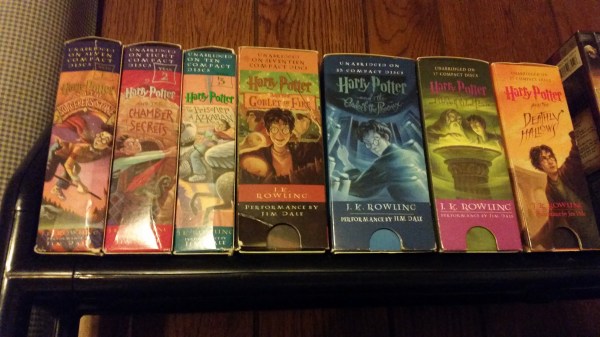 The Harry Potter Series (Books 1–7)
by J. K. Rowling
My rating: 4.25 stars (series overall)
Series Summary:
Orphan Harry learns he is a wizard on 11th birthday when Hagrid escorts him to magic-teaching Hogwarts School. As a baby, his mother’s love protected him and vanquished villain Voldemort, leaving child famous as “The Boy who Lived”. With friends Hermione and Ron, he has to win over the returned “One Who Must Not Be Named”. Not all his friends survive massive war.
Okay, so this is really more of a timeline/celebration of re-reading these books for the . . . sixth? seventh? . . . time. As of earlier this year, I now own these seven books in four separate formats—hard copy (a combination of paperback and hardcover), Audio CD (also “ripped” onto the computer in digital format so I could listen to it on my old-skool MP3 player), Kindle version, and now digital audio through Audible (so I can listen through the Audible app on my phone). (Yes, I also own the movies on DVD; I haven’t watched them in a long time, though, because the books are so much better.)
I’ll be the first to admit that I was a latecomer to the books/movies. I didn’t pick up the books to start reading them until right before #6 came out in 2005. I was in grad school, and was put off by the controversy that started up over this series in the more conservative circles of the writing group I was in at the time. As with most things, I decided I needed to experience it for myself before I could come to a conclusion as to whether I thought it was good or bad. I still had DVD service from Netflix at the time, and somehow, timing conspired that I ended up receiving the disks of movies 1–3 at the same time. So I set aside a weekend (in between grad school terms) to watch all three movies. I was barely halfway through the second movie before I got onto Amazon and ordered a set that contained the paperbacks of books 1-5 (all that were out at the time).
Shortly after that, I also ordered the audiobooks—after all, it was a 13-hour drive from Nashville to where my parents lived in Dallas (at the time) and to Greensburg, PA, where my grad school is located. I fell in love with the vocal talent of Jim Dale, who performed the audiobooks, and enjoyed being able to switch back and forth between audio and print as time allowed.
There’s something to be said for a book series that’s this long that it became an instant classic despite obvious issues with the writing style, not to mention several major plot holes and problems with logic. Rowling managed to create such iconic—and yet relatable and sympathetic—characters and tell a story in such a compelling way, it doesn’t matter that she uses embellished tags after each line of dialogue (she said emphatically) or that certain questions never get answered.
For me, the first three books are okay (thus the reason why there are no Goodreads updates on those), but it really picks up in Book 4 (Goblet of Fire)—and it’s no coincidence that happens to be the first “long” book in the series.
Harry Potter and the Sorcerer’s Stone
My GR Status Update(s):
01/09 . . .marked as: currently-reading
01/12. . .marked as: read
Harry Potter and the Chamber of Secrets
My GR Status Update(s):
01/12. . .marked as: currently-reading
01/18. . .marked as: read
Harry Potter and the Prisoner of Azkaban
My GR Status Update(s):
01/20. . .marked as: currently-reading
01/21. . .“Turn to page 394!”
01/23. . .marked as: read
Harry Potter and the Goblet of Fire
My GR Status Update(s):
01/23. . .marked as: currently-reading
01/25. . .15.0%
01/28. . .26.0% “Bubotubers,” Professor Sprout told them briskly. “They need squeezing. . . .”
02/02. . .33.0% “I’m telling you, that’s not a normal girl!” said Ron . . . “They don’t make them like that at Hogwarts.” | “They make them okay at Hogwarts,” said Harry without thinking.
02/03. . .42.0% “He’s not even good looking!” she muttered angrily, glaring at Krum’s sharp profile. “They only like him because he’s famous! They wouldn’t look twice at him if he couldn’t do that Wonky-Feint thing–” | “Wronski Feint,” said Harry, through gritted teeth.
02/05. . .76.0% “A shallow stone basin lay there, with odd carvings around the edge: runes and symbols that Harry did not recognize. The silvery light was coming from the basin’s contents, which were like nothing Harry had ever seen before. . . . It looked like light made liquid—or like wind made solid—Harry couldn’t make up his mind.”
02/07. . .84.0% “Kill the spare!”
02/08. . .marked as: read
02/08. . .100.0% I understand that Rowling didn’t want to confuse readers by bringing in the thestrals at the end of this book. But it’s odd that the “horseless carriages” are mentioned several times at the end—if she didn’t want to confuse readers, why mention them at all? She could have just not mentioned that method of conveyance and then it wouldn’t be so odd when she introduces the thestrals at the beginning of Book 5.
Harry Potter and the Order of the Phoenix
My GR Status Update(s):
02/10. . .marked as: currently-reading
02/12. . .18.0% “I don’t believe it! I don’t believe it! Oh, Ron, how wonderful! A prefect! That’s everyone in the family!” | “What are Fred and I, next-door neighbors?” George asked indignantly, as his mother pushed him aside and flung her arms around her younger son.
02/13. . .22.0% Something you notice the umpteenth time you read a book: At the end of Chapter 10, Harry has Hedwig in her cage, Ron has Pig in his cage, and Hermione has Crookshanks in her arms when they get into the carriages at the Hogwarts train station. Yet when they get out of the carriage to enter the castle, they go straight into the Great Hall for the feast and sorting and no longer have the animals with them.
02/15. . .30.0% Harry’s third detention passed in the same way as the previous two, except that after two hours the words “I must not tell lies” did not fade from the back of Harry’s hand, but remained scratched there, oozing droplets of blood.
02/20. . .49.0% Ever since the first time I read this book, I always skip right past Chapter 20, “Hagrid’s Tale.” Sorry, Hagrid, but I really don’t care about what you did and said during your time with the giants, since it doesn’t do anything to move the story forward, either in this book or in the series.
02/22. . .74.0% “I should have made my meaning plainer,” said Professor McGonagall, turning at last to look Umbridge directly in the eyes. “He has achieved high marks in all Defense Against the Dark Arts tests set by a competent teacher.”
02/22. . .75.0% I will never understand why, sometime during Harry’s first conversation with Sirius from Umbridge’s fire, Sirius didn’t ask Harry why he hadn’t used the much safer method of the magical mirror he gave him at Christmas. Or at least admonished him to use it the next time instead of risking breaking into her office again. But, then, that would have solved the final conflict too easily. So stupid/forgetful Sirius it is.
02/23. . .87.0% The knot in Harry’s stomach tightened. If Sirius really was not here, he had led his friends to their deaths for no reason at all…
02/24. . .marked as: read
Harry Potter and the Half-Blood Prince
My GR Review/Status Update(s):
It’s amazing to me how annoying Harry’s obsession with Malfoy is in this book—even when I know that he’s right! There are also several scenes/chapters I skip in this book (including the sectumsempra episode). But I’d give anything for even the scenes I skip to have made it unscathed into the movie instead of the mangled mess they made out of it!
READING PROGRESS
02/26. . .marked as: currently-reading
03/05. . .marked as: read
Harry Potter and the Deathly Hallows
My Review/GR Status Update(s):
07/20/2007: Fun Friday–Harry Potter: My Predictions
07/21/2007: Harry Potter—the Event & Reading It
03/05/2016. . .marked as: currently-reading
03/05. . .10.0% “How do you feel, Georgie?” whispered Mrs. Wesley. | George’s fingers groped for the side of his head. “Saintlike,” he murmured. | “What’s wrong with him?” croaked Fred, looking terrified. “Is his mind affected?” | “Saintlike,” repeated George, opening his eyes and looking up at his brother. “You see . . . I’m holy. HOLEY, Fred, geddit?”
03/05. . .11.0% “Well said, Harry,” said Fred unexpectedly. | “Yeah, ‘ear, ‘ear,” said George, with half a glance at Fred, the corner of whose mouth twitched.
03/08. . .63.0% “Harry… Potter…” And then with a little shudder the elf became quite still, and his eyes were nothing more than great glassy orbs, sprinkled with light from the stars they could not see. <– GETS ME EVERY TIME!!!
03/12. . .91.0% Chapter 34, “The Forest Again.” I cried almost all the way through this chapter, which I haven’t done for the last couple of times that I read it. Listening to the audiobook gives that freedom—and Jim Dale’s performance helps, too. I needed that emotional outburst.
03/12. . .100.0% All was well. Sigh
03/12. . .marked as: read
_______
My rating matrix:
5 STARS = one of the best I’ve ever read
4 STARS = a great read, highly recommended
3 STARS = it was okay
2 STARS = I didn’t enjoy it all that much, not recommended
1 STAR = DNF (did not finish)
Books Read in 2016: ‘Dog on It’ by Spencer Quinn (4.25 stars)
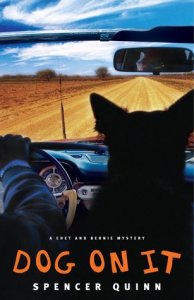 Dog on It (Chet and Bernie Mystery #1)
by Spencer Quinn
My rating: 4.25 stars
Book Summary:
As sidekicks, Maxwell Smart and Agent 99 have nothing on Chet and Bernie. This charming detective duo make their debut in Dog On It, the first volume in Spencer Quinn’s new mystery series.Bernie’s enterprise, the Little Detective Agency, limps along, waiting for the next job to arrive. While Chet freely admits that he doesn’t always understand the humans around him, the mutt who failed to graduate from the police academy quickly establishes that he’s got a nose made for sniffing out trouble — as well as the tasty morsel.
But their luck is about to change. During a nighttime stroll through the neighborhood — an older enclave in the southwestern desert that Bernie fears will soon be eclipsed by new development — the pair encounter a panicked neighbor, Cynthia Chambliss. Waving a wad of bills, she beseeches Bernie to find her daughter, Madison, a 15-year-old who has been missing for several hours.
Bernie heeds the call of cash and the urgency of parental concern, leading Bernie and Chet on a trail of clues that leads them into more danger than they’d bargained for.
My GR Status Update(s):
07/25 . . .marked as: currently-reading
07/26 . . .55% “This is one of those books that I actually had to force myself to stop reading last night because it was almost 3 a.m.”
07/31 . . .marked as: read
My Review:
I’ve actually had this book sitting in my Audible library for a few years, and just never got around to listening to it. But now that I’m knocking out the remaining letters in my A to Z reading challenge for this year, I figured there was no time like the present, since this fit in quite nicely with an author last name starting with Q. And since my library had it as an ebook, which I have more time for these days than audiobooks, I read the Kindle version—and enjoyed it so much I’ll definitely be listening to the audiobook sometime soon!
Chet is our main, first-“person” narrative character in this story. Chet also happens to be a dog. A dog who flunked out of the police K-9 academy at the last minute. And Chet has a very unique perspective on things. Let me let Chet introduce both himself and his human, Bernie, a private investigator, to you in his own words:
Sure. We needed money in the worst way. Our finances were a mess—alimony, child support, Hawaiian pants, and almost no revenue except for divorce work. Bernie went over and over that, almost every night. An ant, one of those juicy black ones, appeared from under the stove and tried to run right by me. What was he thinking? I hardly had to move my tongue. Bernie always stressed the importance of protein in the diet.
While the mystery in this mystery novel isn’t really that intricate or well-hidden (I had it figured out pretty much from the beginning—and I’m not an avid mystery reader—which is what kept this from being a solid 5-star read), it’s actually secondary to just reading Chet’s views on life and what’s going on around him, as well as his view of Bernie’s job:
Stakeouts: I’ve sat through a million. Okay, possibly not a million. Truth is, I’m not too sure about a million, what it means, exactly—or any other number, for that matter—but I get the drift from Bernie. A million means a lot, like “out the yingyang,” another favorite number of Bernie’s, maybe even bigger.
One of the most interesting things about having this mystery written from Chet’s POV is that there are certain things that Chet notices/experiences that he cannot tell Bernie, or anyone else, about. There are also times at which he and Bernie are separated. You’d think this would take away from the forward momentum of the story, but Quinn uses this as a great way of actually upping the tension of the story simply because Chet doesn’t know what’s going on with Bernie when they’re apart. There’s also the frustration, as a reader, of knowing what Chet knows but also knowing that Chet can’t communicate it. All-in-all, it’s a conceit that works quite well in this author’s deft hands.
There’s a cute, ongoing joke that Quinn implements which hints at backstory, roughly sketching in the rich tapestry of both Chet’s and Bernie’s history, apart as well as together. Mention is made of Chet’s failure of his final test at the K-9 police academy—there was a cat involved, but we don’t know specifics. Then there are passages like this:
“Graduated first in his class at K-9 school.”
That was stretching it a little, since I hadn’t actually graduated, which is how Bernie and I ended up together, a long story I’ll go into later if I have a chance.
In fact, there are a few things in this story that Chet will get into “later if I have a chance.” None of which this story actually circles back to. Which has the effect of making it even more fun—and building anticipation to read the further books in the series.
Another interesting thing that Quinn does with Chet is that sometimes his memory of things that have happened just a few chapters before fades—or he’s distracted by something that a dog would absolutely be distracted by. Which, again, adds to the humor.
In closing, I wanted to share the passage that made me laugh the hardest. I don’t know why, out of all of the humorous passages in the book this one struck me funniest, but I had to put my Kindle down, I was laughing so hard.
Bernie was wearing one of his best Hawaiian shirts, the one with the martini-glass pattern. I wore my brown leather collar with the silver tags; I’ve also got a black one for dress-up.
_______
My rating matrix:
5 STARS = one of the best I’ve ever read
4 STARS = a great read, highly recommended
3 STARS = it was okay
2 STARS = I didn’t enjoy it all that much, not recommended
1 STAR = DNF (did not finish)
Blogging Through ‘Scene & Structure’–Chapter 4: “Structure in Larger Elements: The Scene”
 Have you scene it? I’ve scene it. And yet I still sometimes fail to make sure my scenes have all of the elements that Bickham discusses in this chapter.
Let’s dive right in, shall we?
Just as causes result in effects and stimuli result in responses, the scene inevitably—if written correctly—leads to another scene.
What is a scene? It’s a segment of story action, written moment-by-moment, without summary, presented onstage in the story “now.” It is not something that goes on inside a character’s head; it is physical. It could be put on the theater stage and acted out.
(Bickham, p. 23)
Even though I haven’t read this book cover to cover, this may be one of the chapters I’m most familiar with, as I have quoted from it often here on the blog. It’s in this chapter that we get to the crux of what this book is about—scene flow. As writers, we want our stories to flow like rivers—twisting and turning from time to time, but always moving inexorably forward.
However, a lot of the time, we get stuck in whirlpools—having our characters meet with the same conflict over and over and over and never moving forward at all. To illustrate this “circularity,” Bickham gives the example of two little kids having a “did not” “did so” “did not” “did so” type of argument. Although he doesn’t include it here, I would argue that scenes that take place mostly inside a character’s head would fit into this, too—after all, conflict comes from external sources, and it’s conflict that moves the story forward.
Chapter Section: “The Goal”
Bickham further defines the scene as “a dynamic structural component with a definite internal pattern which forces the story to move forward as the scene plays—and as a result of its ending” (p. 24).
As Carol pointed out in a comment on the previous chapter, it was starting to remind her of Goals, Motivation, and Conflict. And, yes, that’s a very apt comparison. Because that’s how each scene should be structured.
The scene should start with the POV character who has a definite, clear-cut, attainable goal: Anne is going to show George potential sites for (what she thinks is) his engagement party. George is going to reveal the identity of his employer to Anne before the man shows up at the site for the party (Stand-In Groom). Meredith is going to the pet store to buy food for the puppy she found. Major is attending his employers’ New Year’s Day open house because they’ve asked him to come to talk to him about something (Menu for Romance). And so on.
Each scene should start out with a goal that is an important step in the character’s game plan—a small goal that gets them one step closer to attaining the main goal of the story (or what the character thinks is their main goal for the story—that’s where the conflict/disaster part comes into play). But the goal cannot be easily attained; it’s your job as the author to make sure your characters suffer.
As far as making your characters suffer . . . that’s something we’ll get into later in the book.
Chapter Section: “Ending the Scene”
Back in 2001, when I was writing what would become my first complete manuscript, after giving the first half (what was at the time completed) to my mother and grandmother for Christmas, I started sending them each chapter as I finished it. Having something of a devilish streak and wanting to elicit a reaction, I started ending each chapter on a “cliffhanger.” I wanted a reaction. I wanted my readers clamoring for more, more, more—emailing me, I CAN’T BELIEVE YOU LEFT IT HANGING LIKE THAT!!!! and WHAT HAPPENS NEXT??? By doing this, I taught myself to structure my scenes this way—to build up to something (a hook) that would leave the reader hanging and wanting to turn the page to find out.
Bickham calls this a “tactical disaster” (p. 26).
“Disaster” in this usage does not often denote an earthquake, a flood, a plane crash, or anything like the things we often term disasters in real life. But use of the term is justified because the character—and the reader—experience the final twist in a scene as thoroughly bad—disastrous to the attainment of the immediate scene goal, and so a terrible setback in the quest for the story goal.
(Bickham, p. 27)
It’s so tempting to really start digging into this here, but I know how much more Bickham delves into this in the remainder of the book. So, instead, I’ve made a flow chart to go with this chapter:

And don’t worry . . . if you don’t quite get it yet, we’ll be going into a lot more detail as we get further into the book.
Chapter Section: “Scene Length”
Bickham gives something of a “wibbly, wobbly, timey, whimey” discourse on scene length here. So I thought it would be a great time to share a post that I wrote about scene length to put my oar in.
SCENE IT! How Long Should Scenes Be?
Finally, although the point has been stated repeatedly and implied even more often, it’s well to emphasize a point that invariably is asked during lectures on the subject of scene structure and its essential component, the conflict.
The question: “Do I have to have the conflict outside the character? Can’t I have the character at war with himself inside his head”
Answer: The conflict has to be on the outside. If you remember the example of writing something which could be put on the theater stage, you will not forget this principle.
(Bickham, pp. 29–30)
_________________________________________
Works Cited:
Bickham, Jack. Scene & Structure. Cincinnati, OH: Writer’s Digest Books. 1993.

 KayeDacus.com