Fun Friday: Another Ransome Spin-Off Story Idea

Over the past few weeks, I’ve been working on story ideas for the “next generation” of characters as a spin-off/sequel series from the Ransome Trilogy. You may not have seen others yet, so here’s what I’ve come up with so far:
Working title: Her Independent Heart
This is the story that’s hinted at in the epilogue of Ransome’s Quest—the romance between Eleanor Ransome (older daughter of William and Julia) and James Yates (only son of Colin and Susan).

James Yates = Arthur Darvill
Eleanor Ransome = Karen Gillan (adjusted for hair/eye color)
Working Title: Secrets of His Heart
The romance story for Edward Ransome (older son of William and Julia), which involves the daughter of Sir Drake Pembroke, Cordelia (Pembroke) Eckley-Hibbitt.

Cordelia Pembroke Eckley-Hibbit = Holliday Grainger
Edward William Ransome = Tom Mison
Clara Eckley-Hibbitt = Catherine Steadman
Working Title: An Antiquities Affair
Telling the story of the eldest child of Ned and Charlotte (Ransome) Cochrane, Charles Lott Cochrane.

Charles Lott Cochrane = Chris Hemsworth
Olivia Ahern = Elsa Pataky
Working Title: My Fair . . . Lady?
Telling the story of the only daughter of Colin and Susan Yates, the Lady Marianne Yates; and the eldest son of Michael (a.k.a., El Salvador) and Serena Witherington, Michael Edward Witherington II.

Michael Witherington = Michiel Huisman
The Lady Marianne Yates = Sophie Turner
And now for the story that I’ve been working on for the better part of the last several days, featuring the fourth child of Ned and Charlotte (Ransome) Cochrane, Catherine Julia (“Kitty/Kit”) Cochrane.
Working Title: When First We Met
[Begin Backstory] Kitty Cochrane = Jessica de Gouw

Kit didn’t mean to stay in Jamaica for four years. In fact, she was certain a year would be long enough. However, occasional sightings of her stalker by the Bow Street Runners her parents hired over the next few years was enough for her to decide to stay put. And then, after a couple of years, she didn’t want to leave. She’d become part of the Ransome family, with her same-age cousin, Eleanor, who quickly became her closest friend and confidante. She even accompanied Eleanor to Philadelphia when Eleanor ran away to escape an arranged marriage. (See Her Independent Heart.) When Eleanor eventually fell in love with James Yates and agreed to marry him, the three returned to Jamaica for the wedding preparations to commence.
When her parents and siblings arrived in Jamaica, Kit learned that the last the detective had been able to track down about her attacker was that he’d been arrested and executed for a crime in the north part of the country. It was now safe for her to return to England. Kit was glad to hear this, since Eleanor had asked her to go with her, since she’d know no one else in Portsmouth when she returned with James.
[End Backstory]
Witherington House in Portsmouth is large enough that Kit has the entire third floor of guest rooms to herself, which alleviates any awkwardness of living with newlyweds. It’s a bit of a culture shock to return to England after so many years away. So much so that she’s almost physically ill at the idea of once again “debuting” into society. But, as her mother, sisters, and Eleanor remind her, at least it’s Portsmouth and not London. To ease the way into society for both of them, Eleanor enlists Kit’s help to plan a “small” card party at Witherington House, at which most of Kit’s family will be in attendance.
The evening goes fine, which helps Kit to set aside some of her anxiety—enough that she accepts an invitation to a ball a few nights later at the lavish home of the Dowager Countess Dalrymple (who was at the dinner) in order to be re-introduced to society. Lady Dalrymple’s guest list is always diverse and wide-ranging–from other aristocrats to many naval officers and genteel but solidly middle-class families like Kit’s. After dancing with James Yates and a few friends of her brothers’, Kit has finally started breathing easier and enjoying herself . . . Until she excuses herself to the ladies’ refreshing room after a couple of hours and finds herself alone and face-to-face with him. Although he doesn’t attempt to touch her, he is menacing and threatening, promising her that either he will have her or no one will.

Philip Grantly = Oliver Jackson-Cohen
When her attendance at social events doesn’t draw the man out, Kit comes up with a drastic plan. She and Philip will pretend to become engaged, with banns read, an announcement in the newspaper, and a ball in their honor held at Witherington House. The ruse indeed draws him out. He sets fire to Kit’s bedroom as he makes his escape. The fire is put out without too much damage, but it’s decided that Kit is no longer safe in the city. However, they still must draw him out somehow.
It’s decided that Colin and Susan Yates, Earl and Countess Childers, will host a house party at their sprawling Hampshire estate. (Colin says that the stalker would be doing him a favor if he burned it to the ground, as the upkeep on the oft-remodeled Tudor manor costs far too much.)
A week passes with no hint of the stalker. It’s decided that the only way to get him to make another attempt is for the men, including Philip, to very publicly put it out that they’re leaving to spend three days at Colin’s hunting lodge half a day’s ride from the main house.
And then . . . some bad things happen. It looks like Kit’s relationship with Philip may end/may never happen/may be torn apart forever. There’s a crisis. And there’s a happy ending. I just haven’t figured all that out yet. (And you wouldn’t want me to give away the whole story, would you?)
Timed, Handwritten, Offline, Remote–It’s THORsday! | #amwriting #2017WritingGoals
 On Thursdays, we do an alternate version of Timer Tuesday—instead of challenging ourselves to sit at the computer and try to crank out as many words as fast as we can, the challenge is to get away from the computer.
What Does THORsday Mean?
It’s pretty simple. Our writing challenge for today is:
Timed
Handwritten
Offline
Remote
What that means is that for the length of time you designate (half an hour, 45 minutes, an hour, etc.), you will write by hand (on actual paper). You will turn off all of your Internet-connected devices (or put them away/get away from them). And you will find a remote spot in which to work—in other words, don’t do this at the same place where you usually write. Go into a different room. Go outside. If you can, get out of the house and go work somewhere else, like your public library or a coffee shop.
Otherwise, try to follow all of the [revised] suggestions that we use for regular 1k1hr writing sprints.
Leave a comment with your THORsday goal—when, where, and for how long do you plan to do your handwritten challenge today? If you’d like to, for accountability’s sake, come back afterward and post an image of your handwritten work.
Writer-Talk Wednesday: Debunking Writing Myths
Never use adverbs. Always show instead of tell. You have to be active on social media. Read as many craft books as you can. Sound familiar? You’ve probably heard these and more taught as “rules” of writing. More often than not, though they’re myths. And I’m here to debunk them.
Originally published Fall 2010–Spring 2011
Debunking Writing Myths: Blogging & Social Media
 You MUST be involved in social media through blogging, Facebook, and Twitter if you want to get published.
 You MUST write a great, well-crafted story, and you must study the market/industry if you want to get published. more…
Debunking Writing Myths: “Write What You Know”
“Write what you know” means you can only write about what you have personally done or experienced in the confines of your own life.
“Write what you know” means you can use everything you’ve experienced in your life to imagine other possibilities, other worlds, other outcomes. more…
Debunking Writing Myths: “Omniscient POV Is Bad”
Omniscient POV is bad—it’s lazy writing, it’s a sure sign of an amateur, it’s the same thing as head-hopping.
Omniscient POV is not the same thing as head-hopping; those who do it well are masters of the craft and work hard at it. more…
Debunking Writing Myths: “First Person POV is the easiest to write.”
I’m going to write my story in first person, because first-person point of view is the easiest to write.
First-person POV may seem to be easier, but it’s actually just as hard to do as any other POV—sometimes harder. more…
Debunking Writing Myths: “Eliminate all WASes and HADs from Your Manuscript”
Eliminate ALL instances of was and had from your manuscript. Those are passive verbs, and that means they’re bad, bad, bad.
Sometimes, you need a good was or had to keep things coherent and easy to read. more…
.
Debunking Writing Myths: “Eliminate ALL Adverbs”
Eliminate every single adverb from your writing because adverbs are bad, bad, bad..
Though adverbs should be used sparingly, sometimes you do actually need them. more…
.
Debunking Writing Myths: “Read, Read, Read”
If you want to be a writer you must “read, read, read” all the time to learn how..
When you are in the throes of creating the first draft of your story, reading fiction may actually work against you. more…
Debunking Writing Myths: Always/Never Use “Said” Dialogue Tags
Never use a “said” dialogue tag. / The only dialogue tag you should ever use is “said.”.
Like anything else in writing overuse of anything is lazy writing and can frustrate readers (and editors). more…
Debunking Writing Myths: The Opening Salvo
Never open with dialogue. / Never open with description. / Never open with introspection. / Never use was and/or had in opening lines. / Always open in media res.
The rules to follow for your opening lines are that they capture the readers’ attention and that they set the tone for your story. more…
Debunking Writing Myths–“Never use fragments, one-word sentences, or one-line paragraphs.”
Never use fragments, one-word sentences, or one-line paragraphs..
If it makes sense, works for the story you’re telling, and flows for you, use it. more…
.
Debunking Writing Myths: “Showing Is Always Better than Telling”
You should always make sure that you’re always writing in an active, showing style, rather than just telling the reader what’s happening. Showing is always better than telling in fiction.
Sometimes, telling is much better than showing. more…
A Valentine’s Day Short Story: “Hearts in Tune”
 After a few hours of unsuccessfully trying to sleep, Lyric got out of the bed and went down to the kitchen and put the tea kettle on. She wished she could write-off her sleeplessness to excitement, but she wasn’t excited. And she couldn’t understand why.
Last year, she’d jumped at the chance to return to the Nashville Symphony Center to fill in for the lead soprano in the Valentine’s Day program. She’d been flattered to have been asked, as she’d recently left the professional music world for the academic. It had kept her from spending the day with absolutely nothing to do.
Three months ago, when they’d called to ask her to come back this year, Lyric had said no. For the first time since she’d left her parents’ home in Rome to come to the US for college, Lyric had had a date for Valentine’s day . . . with Matt.
Matt. His name tasted bitter in her mouth. When Maestro Domingo had personally called two weeks ago and again asked her to come sing, since the soprano had just been taken to the hospital for an emergency tonsillectomy, Lyric couldn’t refuse.
She couldn’t help but feel that Matt had reacted out of jealousy—that he was jealous that she was still occasionally invited to be involved in the world of professional music and he wasn’t. It wasn’t her fault that his album hadn’t been picked up by a record label, even though he’d been a member of one of the most popular boy-bands twenty years ago. It also wasn’t her fault that the other three former members of that boy-band all had albums in the Top 20.
He’d asked her to choose between him and going to Nashville.
Lyric wanted both. She’d told him that if he’d been invited to sing somewhere on Valentine’s Day, he would have dropped everything and done it, trying to get him to be objective about it. She’d asked him to go with her. She’d even promised she’d use her contacts in the Music City to get him meetings with some artist management companies and recording labels.
Matt had refused and told her that if she went to Nashville, he would take it as her saying she didn’t want to be with him anymore.
She was going to Nashville . . . alone.
***
The lines at the curbside check-in were long, but Lyric could tell the lines were even longer at the counter inside the airport. The taxi couldn’t get closer than a few stands down from her airline, but the driver helped her with her suitcase, for which she was grateful.
An hour and a half later, Lyric boarded the plane. She’d treated herself to a first-class ticket and so got to board before the rest of the masses of people waiting to board. She set her earphones into her ears, and closed her eyes, visualizing the sheet music of the pieces she’d be singing as she listened.
Even with the music turned up as loud as she could stand to listen to it, all she could hear were Matt’s accusations and ultimatums. How could he have treated her like this? Why couldn’t he understand and be supportive?
At the airport, Lyric went straight to the rental car counter and secured a car before going to the luggage claim to get her bags. She arrived at the symphony center a few hours early and one of the production staff setting up for the concert found someone who could show her to a dressing room.
Lyric napped fitfully, trying to catch up on the rest she hadn’t gotten last night. When she joined the rest of the company to warm up with the orchestra, her head throbbed and she felt on the verge of tears. She didn’t want to be here. But now, she didn’t have a choice.
She thought about what Matt had told he had planned for their Valentine’s Day together. Hiking in Kisatchie National Forest. Watching the sunset from a hot-air balloon. And, finally, dinner and dancing at Vue de Ciel—the cavernous sky-view event venue at the top of the tallest building in downtown Bonneterre.
Mechanically, she went through the warm-ups, receiving the greetings of her former colleagues with a forced smile.
Throughout the performance that evening, Lyric felt as if she were experiencing everything second-hand. She felt numb, dead inside. The solace and escape she usually found in music was, for the first time in her life, not there. It all seemed empty and meaningless.
Even the applause and cheers from the audience meant nothing to her. She had to see if there was some way she could get back to Bonneterre tonight. There was no way she could spend even one more day away.
She escaped the back-stage crush as quickly as she could and returned to her dressing room—but jolted to a halt in the hallway. The door was slightly ajar, and she knew she’d closed it before. Approaching as quietly as she could, she pushed it open slowly.
Her mouth dropped open and her heart pounded when she saw the interior of the room. Every imaginable surface was covered with vases of roses. And they were the largest, most beautiful white and red roses Lyric had ever seen.
“I’m sorry.”
Tears sprang to her eyes at the sound of Matt’s voice. Slowly, she turned toward the sound—then gasped at the discovery that he was mere inches from her. Before she could give voice to her many questions, Matt drew her to him, one hand at the small of her back, the other winding into her carefully styled hair. Her breath caught in her throat and she almost forgot how to keep herself upright as he kissed her.
“How . . . when . . .?” she whispered when the kiss ended.
“I flew in this afternoon. In fact, I barely got here in time for the performance,” Matt said, reaching up to wipe away the tear that had escaped Lyric’s eye. “You were wonderful.”
“I don’t understand.”
Matt’s smile was gentle and contrite. “I was afraid I was going to lose you. I didn’t want you to come up here and decide you wanted to come back to this. So, I realized I needed to come up here and give you a reason to come back to Bonneterre.” He reached into his pocket and pulled out a small velvet box even as he went down onto one knee. “Lyric, I can’t live without you. Will you marry me?”
© 2017 by Kaye Dacus
Books Read in 2017: ‘Brightwood’ by Tania Unsworth (Middle Grade Suspense, 4 stars)
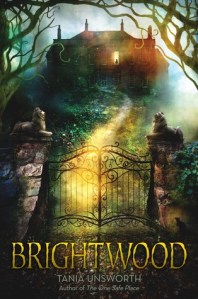 Brightwood
by Tania Unsworth
Genre: Middle Grade Suspense
My rating: 4 stars
Book Summary:
In this spine-tingling tale, a girl fights to save her home and her life from a mysterious stranger.Daisy Fitzjohn knows there are two worlds: the outside world and the world of her home, a secluded mansion called Brightwood Hall. But only Brightwood is real for Daisy—she’s never once set foot outside its grounds. Daisy and her mother have everything they need within Brightwood’s magnificent, half-ruined walls, including Daisy’s best friends: a talking rat named Tar and the ghost of a long-ago explorer who calls herself Frank.
When Daisy’s mother leaves one morning, a peculiar visitor, James Gritting, arrives on the estate, claiming to be a distant cousin. But as the days tick by and Daisy’s mother doesn’t return, Gritting becomes more and more menacing. He wants Brightwood for himself, and he will do anything to get it.
Tania Unsworth takes readers on a twisting, heart-pounding journey through dark corridors and wild woods to a place where the line between imagination and madness is sometimes hard to find.
My GR Status Update(s):
02/06. . .Currently Reading
02/06. . .10.0%
02/11 . . . 51.0% If no one knows that you exist, then how do you know for sure that you really do exist? This story reminds me a lot of Charlotte Perkins Gilman’s “The Yellow Wallpaper”—with all the fascination and creepiness that not knowing if a narrator is unreliable or not can bring.
02/12 . . . Finished Reading
My Review:
What an interesting book! When I first added this to my Goodreads list, based on the summary above, I marked it as Paranormal fiction. However, the use of the term “ghost” is misleading. I don’t want to give anything away, but if you’ve read Charlotte Perkins Gilman’s “The Yellow Wallpaper,” you might have some clue as to why it isn’t truly a paranormal story.
Even though my timeline shows that it took me six days to read this book, it’s really a pretty quick read (about 3–4 hours, depending on how fast you read)—as a novel for middle-grade/tween readers, it’s not overly long. However, the length of the book and the age of the heroine, Daisy, are really the only things that mark this as a story for “younger” readers. Unsworth’s writing sparkles, and she doesn’t “dumb down” the language, style, or complexity of her prose in order to cater to perceptions about what young readers might and might not be able to understand. In fact, were I a middle-school English teacher, this would be a great book for the students to read with assignments to dissect the sentence and story structure, along with a nice vocabulary list to learn!
For example, after Daisy’s mother disappears and James Gritting arrives, he is surprised to find Daisy on the property and tells her that no one knows she exists. Later, speaking to the topiary horse (named True), Daisy poses a deeply philosophical question and receives an equally deep answer in return:
“If nobody knows you exist, how do you know you exist? . . . How do you know if you’re real?”
“You feel the wind,” he suggested. “You see the clouds passing overhead. You hear the hum of the earth turning.”
“But how can you be sure?” Daisy asked. “How can you be sure you’re not imagining it. Or somebody else is. What if someone is just imagining me? Like a character in a book. Do characters in books know they’re only made up?” . . .
“Be still. Listen. Deep inside you, deeper than your mind and deeper than your heart, something lies hidden. Nothing can touch it, not the gardener’s shears, not rain or storm, not even the boxwood blight. Can you feel it?”
Daisy felt the slow surge of her breath and the beating of hear heart. . . . She opened her eyes and stared up at the calm, endless sky until something unfurled within her that was just as calm and just as endless.
“That’s your Shape,” True told her. “That’s how you know you exist. And you have to keep your Shape, Daisy. No matter what happens.”
“I will,” she said. “I promise I will.”
(Kindle loc. 872–882)
In the long run, it’s this idea of “keeping your Shape” that helps Daisy through some of the most harrowing parts of the book. And she’s helped out along the way by Tar, the rat; Frank, a black-and-white apparition of a young woman who supposedly assisted Daisy’s great-great-grandfather on his safaris/adventures; True, the topiary horse; the Hunter, a statue in the garden; and other “friends” around the estate. (Don’t worry, it all makes sense in the book.)
Circling back to “The Yellow Wallpaper”—if you haven’t guessed it from the fact that Daisy has never set foot outside the boundaries of the walls surrounding Brightwood, there is/are (a) character(s) with mental instability in this story. And, like that classic short story, with the narrow scope of a limited Point of View of just one character (in this case in third person, rather than first), it’s hard to be sure if the narrator is 100% reliable all the time—if what’s being reported as happening is really happening. Does the topiary horse really speak? Is Frank real? Is James Gritting truly not so bad, or is he masking some kind of maliciousness? Daisy lets the reader know that “The Crazy” runs strong in the Fitzjohn family. And while, for the eleven years of her life until now, Daisy has taken for granted that the way she and her mother live is normal (in an enormous manor house which Daisy can get around only by climbing over, under, and around furniture, stacks of books, and unopened delivery boxes; knowing they have a stockpile of food that could last them for years; and living life by her mother’s very strict schedule), it isn’t long after Gritting arrives that Daisy is forced to reconcile what she’s learned (home-schooled, of course) about the rest of the world and the life she’s lived up to this point.
It’s her friends (the rat, the topiary horse, the ghost, the statue…) which help her see things that she’s known all along but just didn’t want to admit to. And all the while, she’s in the middle of trying to figure out who James Gritting is, why he’s there, and what he wants—and decide whether or not she should risk venturing into the outside world to get help.
All in all, a wonderful story. I look forward to reading more from this author.
_______
My rating matrix:
5 STARS = one of the best I’ve ever read
4 STARS = a great read, highly recommended
3 STARS = it was okay
2 STARS = I didn’t enjoy it all that much, not recommended
1 STAR = DNF (did not finish)
#2017WritingGoals: Setting Specific, Actionable, Personally Achievable Goals
 One would think that if we’re talking about 2017 goals, we’d already have them set and be working on them, right?
Well, for many of us, not so much. Especially those of us who were still (sort of) doing the FirstDraft60/120 challenge through the end of January. And if you’re like me, you’ve been at sixes and sevens since January 31. Without the structure or accountability of FD120, it was so easy to procrastinate on writing tasks to the point that I wasn’t doing it much, if at all, and rarely on a daily basis.
That’s about to change, and these Sunday posts are a big part of that.
As I mentioned in my comment on Thursday’s post, my writing time that night was spent working on writing out a rough sketch of my short- and long-term goals for the year.
Friday, I posted an image of what that looked like. And I followed that up later in the evening with a couple of posts to Instagram showing the continued process (on bigger paper!):
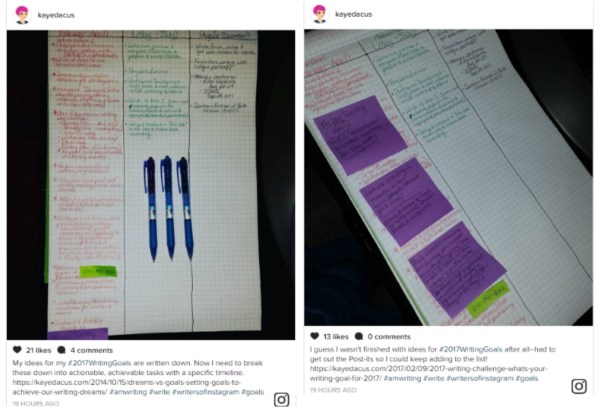
But most of what I’d written down were more ideas and directions for setting goals rather than specific, actionable, personally achievable goals. And as I’m quite fond of telling other people, if you don’t break a big task down into “bite-sized” chunks, set a timeline, and start working toward marking tasks as completed, you’re probably not going to accomplish much. Time to start taking my own advice.
What Is Meant by “Specific, Actionable, Personally Achievable” Goals?
I’m so glad you asked. (You did ask, didn’t you???)
I linked to the series in Friday’s post, but here’s the Goals vs. Dreams post that deals specifically with how to set goals like this:
Dreams vs. Goals: Setting Goals to Achieve Our Writing Dreams
- Don’t be vague.
- Set specific goals with actionable items to be able to measure your success.
- Determine both short-term and long-term tasks.
- Develop a timeline and stick to it.
- Write down your goals (that makes them “more real”).
- Check each item off the list as you complete it.
- (Read the full post for more details.)
How Would I Even Start Setting a Year’s Worth of Goals Like This?
I’m so glad you asked. (You did ask, didn’t you???)
(Click image for larger view)
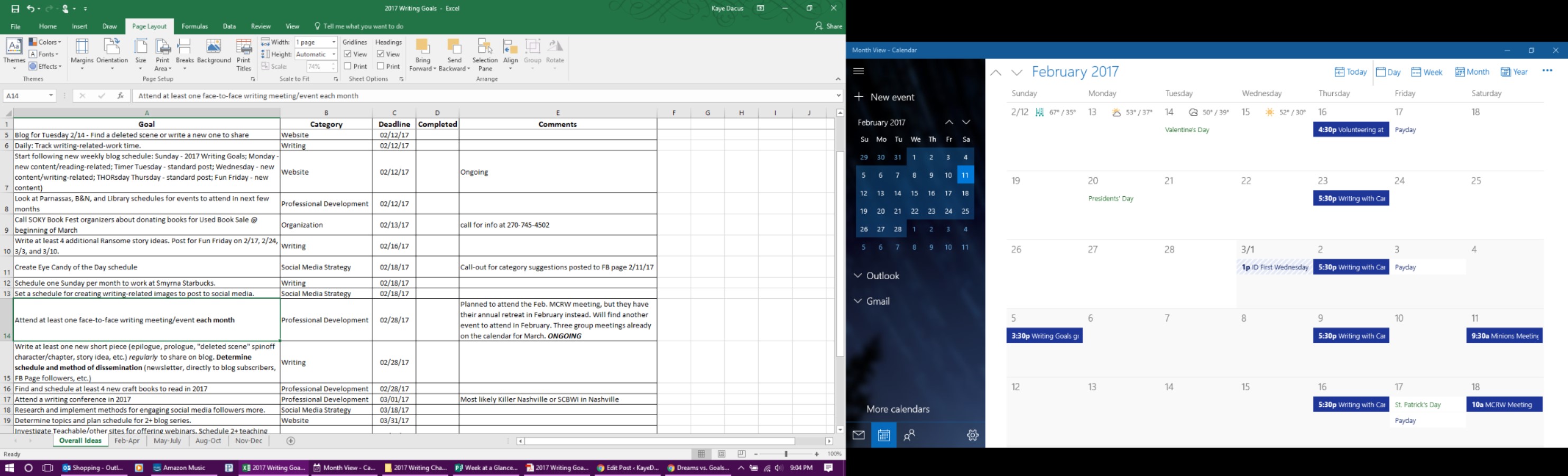
I prefer working with two screens, especially when I’m doing something as detailed as setting up a schedule like this, so that there’s less clicking back and forth between screens (you can see down at the bottom of the left-hand side how many different applications/documents/folders I had open. And I had my handwritten notes beside me on the desk as well. As I typed each of the items in from the handwritten list, I looked at the calendar on the second screen and plugged in a date. I kept doing that with everything on the list until I came up with this:
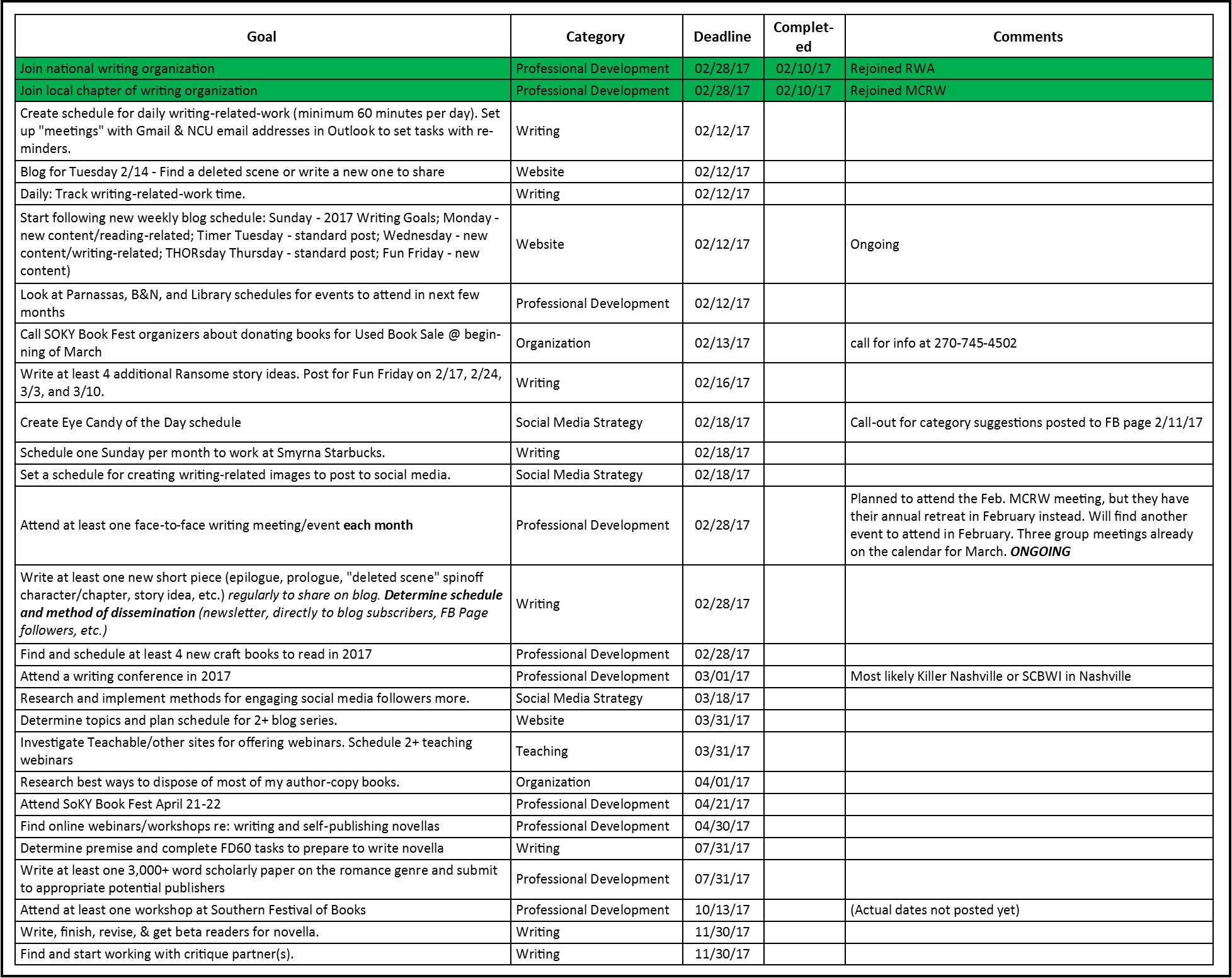
(Click image for larger view)
And look at that—I’ve already completed two specific, actionable, personally achievable goals on the list: joining writing groups!
Most of the specific things on this list are short-term. And most have to do with setting other, more specific goals and/or scheduling tasks throughout the next ten and a half months in order to meet the more vague goals I’ve already written down. And most of that work of breaking these goals down into the specific, actionable items is what I’ll be working on most of the day on Sunday. Which means that by the end of the day, my calendar should look less like the screen shot above and more like this (a week in November 2016 during FD60):
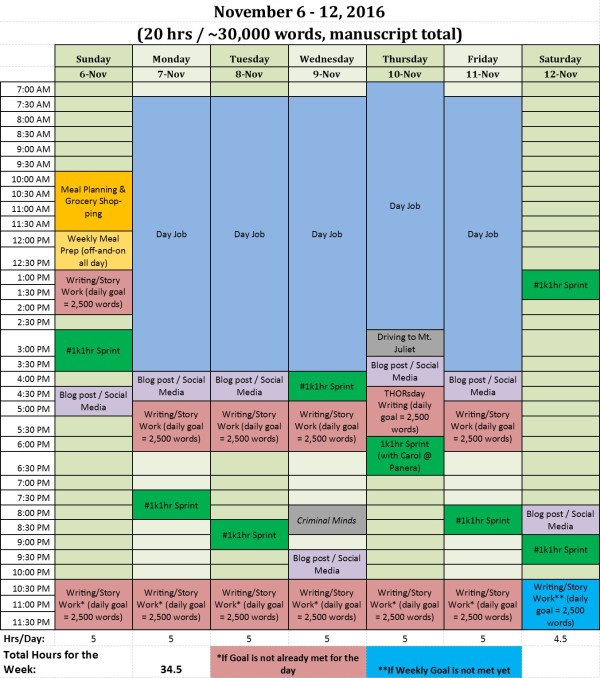
Have you set specific, actionable, personally achievable goals for 2017 yet? Have you written them down? Have you made a timeline? What method for setting, recording, and tracking goals works best for you?
Goals and Checklists
Kind of a boring topic for a blog post, especially at the end of the week, right?
Well, one of my goals for 2017 is to post here regularly, so I’m writing a blog post about goals and my to-do lists.
Today’s To-Do List
| Day job |  |
| 2016 income tax completed and filed | |
| Cancel Hulu subscription | |
| Cancel gym membership | Contacted gym to start process |
| Write 2017 Writing Goals and determine task timelines. | Started (see below) |
| Read for at least one hour before bed. |
Saturday’s to-do list has to do with cleaning the kitchen, laundry, cleaning the bathroom, etc., so I’ll spare you those details.
Last night, during writing night with Carol, we brainstormed and started writing our 2017 Writing Goals lists. Here’s what I have so far:
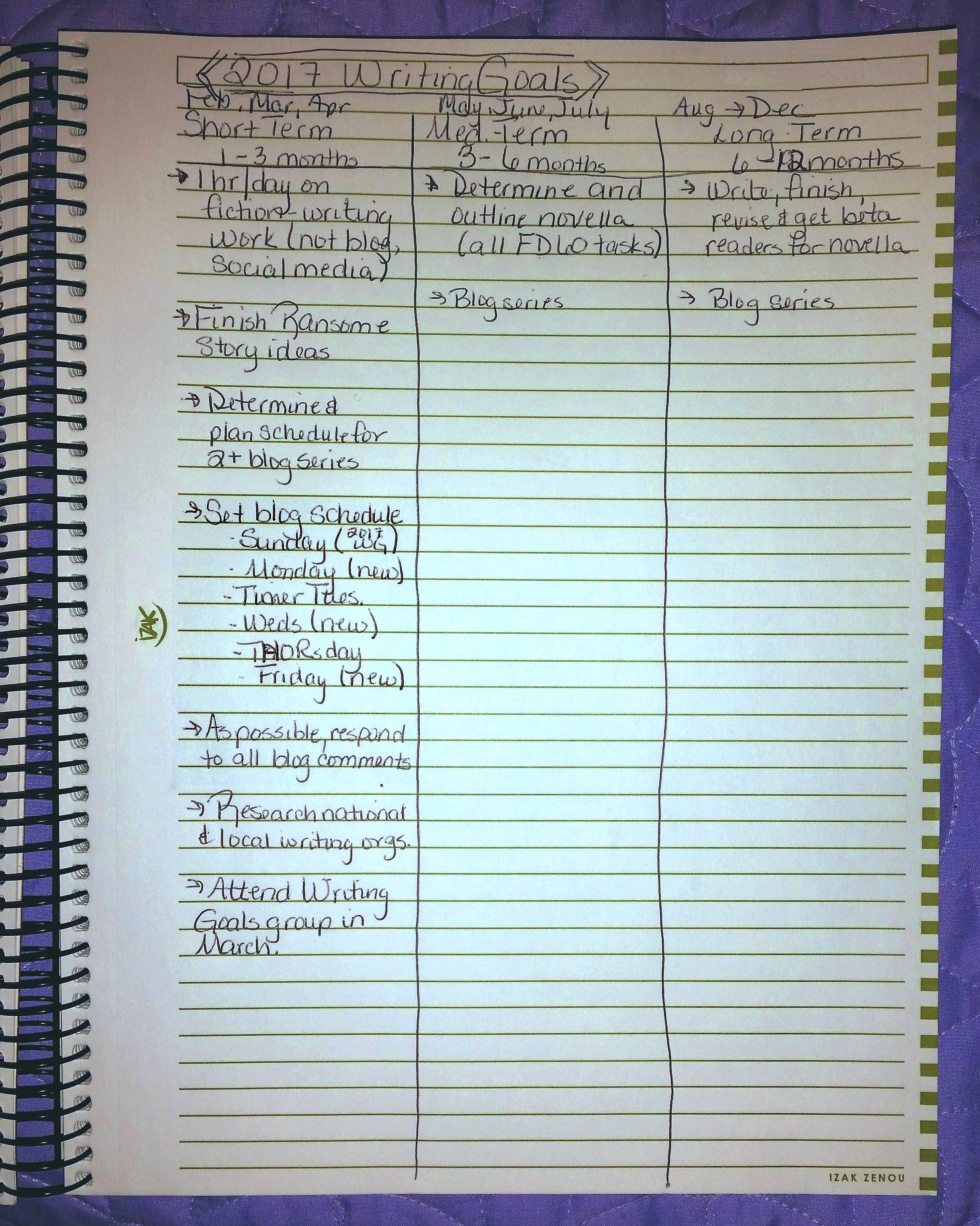
So my tasks remaining for tonight are to finish this list of goals and determine a timeline as well as break everything down into “bite-sized” tasks that will (hopefully) keep me on track, and then to make sure I head to bed at a reasonable time so that I can spend an hour reading.
Don’t forget that on Sunday, we start our weekly 2017 Writing Goals check-ins/updates. I’ll be posting my finished goals/timeline so you can see how I do it, which I hope will help you come up with a process for setting yours for the year.
In case you missed it before, here’s a series that might help you with goal setting:
Dreams vs. Goals: Do You Dream of Being a Writer?
2017 Writing Challenge–What’s Your Writing Goal for 2017?
 Did you find the FirstDraft60/120 challenge helpful? Want to keep that momentum going through 2017? It doesn’t matter if you’re still working on the same project or starting something new. (Or, like me, you’re just trying to do something writing-related on a daily basis to get back in practice.)
If you’re still out there somewhere and want the kind of support and accountability that we had through (most of) the FirstDraft challenge, good news! Starting on Sunday (02/12/17), I’m going to be putting up a weekly 2017 Writing Challenge post reporting my progress for the week and asking you to share yours. And if you found it helpful, I’ll also post a week-at-a-glance calendar with daily activities (like Timer Tuesday, Story Bible Wednesday, and THORsday Thursday) that will help you (me) stay on track with getting something done daily.
And in case you missed it in the final FirstDraft120 post, here’s a list of ideas of writing-related activities you can participate in as part of your 2017 Writing Challenge goal(s):
Ideas for Setting a 2017 Writing Challenge Goal
And I’m even going to set that goal/challenge for you: spend an average of at least one hour per day (seven hours per week) on “writing-related work.” What do I mean by that? Well, for example:
- Brainstorming new story ideas.
- Writing out character sketches for new character ideas.
- Character casting.
- Working on a Story Bible (or several) for new or existing story ideas.
- Writing (yes, actual story writing!).
- Research—settings, locations, time periods, events, other story-related info, etc.
- Creating a story calendar (timeline of events that happen in the story).
- Outlining/plotting a new or existing story idea.
- Organizing/reorganizing your writing-related lists.
- Storyboarding.
- Re-reading what you’ve already written and making notes for revision and for future scenes.
- Writing a synopsis, query letter, proposal, one-sheet/pitch-sheet, or practicing for a face-to-face pitch session at a conference.
What is your writing goal for 2017?
What are some other writing-related-work tasks you can think of that you can do for an hour each day, in order to keep your creative pump primed and to give you momentum to actually write your (current/next) manuscript?
Happy 150th Birthday, Laura Ingalls Wilder!
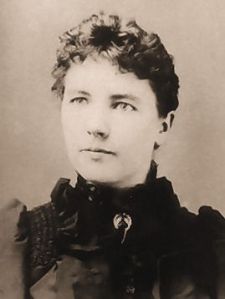
Laura Ingalls Wilder (source)
I consider the first “romance” novel I ever read (and loved) to be These Happy Golden Years. Even though I knew it was wrong at the time, because I’d read the books on my own by the time I was in elementary school when it was on in the late 1970s, I loved the Little House on the Prairie TV show—to the point that I loved wearing long skirts and pretending like my backyard was the prairie and I was a little pioneer girl. (I sort of was. We lived in the “Wild West”—Las Cruces, New Mexico—when I was growing up.)
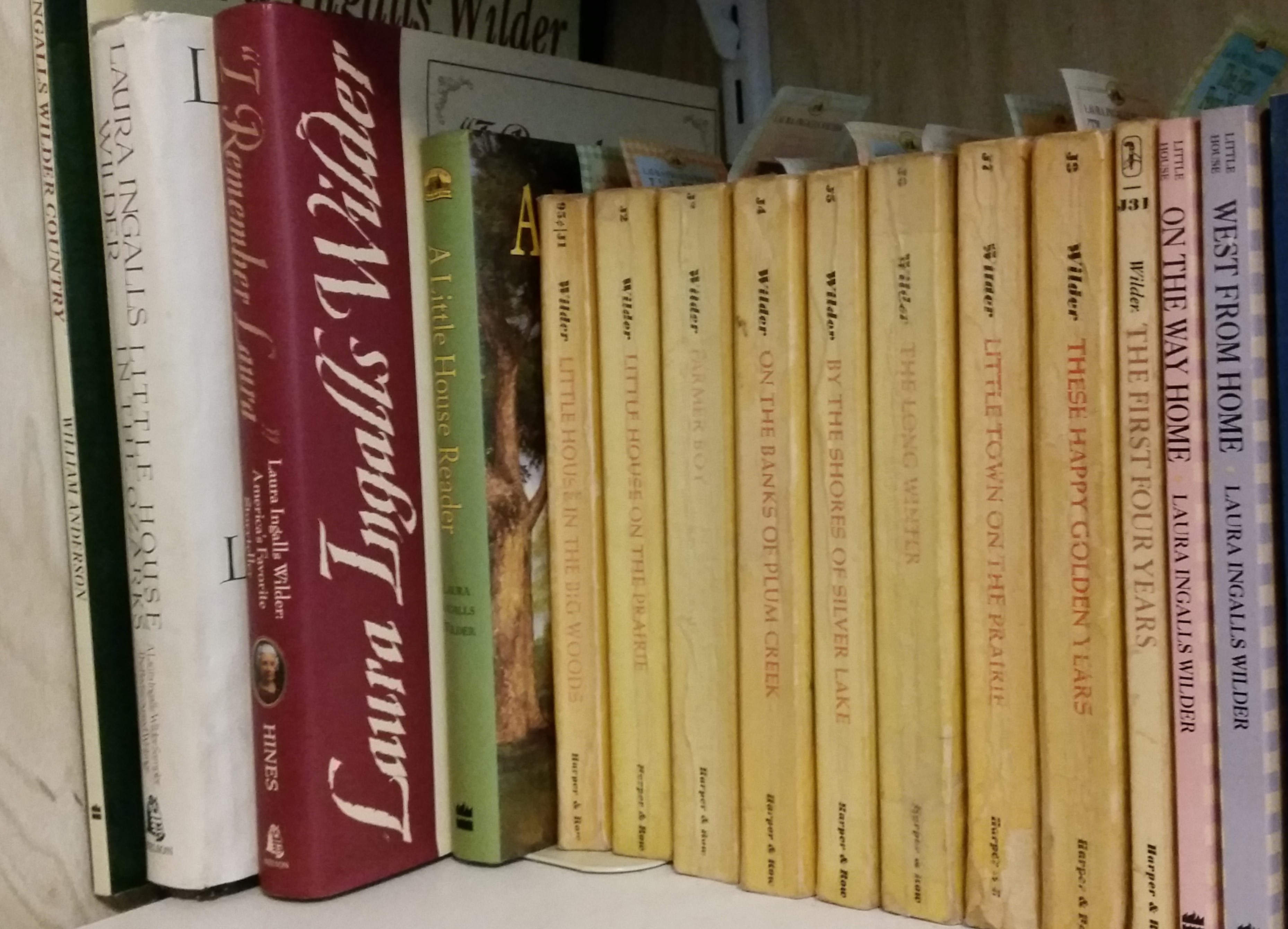
Even into adulthood, I continued to learn more about LIW, the Ingalls family, and their travels. I have several biographies, a few collections of her nonfiction writing, and even a book that’s a collection of the writings of Pa, Ma, Mary, Carrie, and Grace Ingalls.
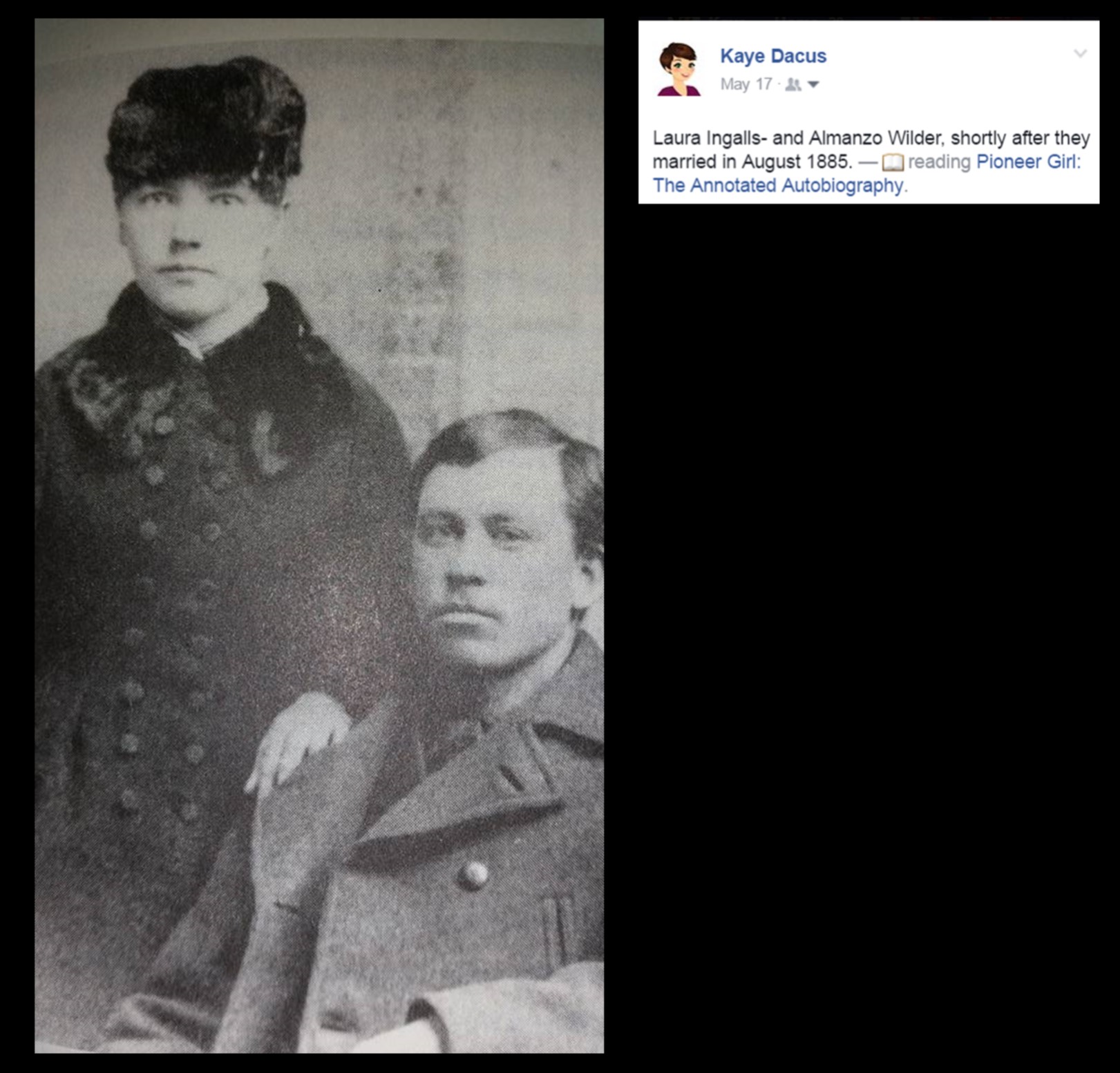
But as with most things that we love as children/young adults, as I grew older, the love for this author/series fell to the wayside as other loves came into my life (other authors, like Jane Austen; my own writing). But LIW was always there—all of those books on their own designated shelf in my office.
And then a few years ago, the book Pioneer Girl: The Annotated Autobiography came out. It took me a couple of years to get around to it, but last year, since I hadn’t re-read the LH series in many, many years, I decided it was time. I read the annotated memoir alongside the original series and recalled again why it was such a huge part of my development.
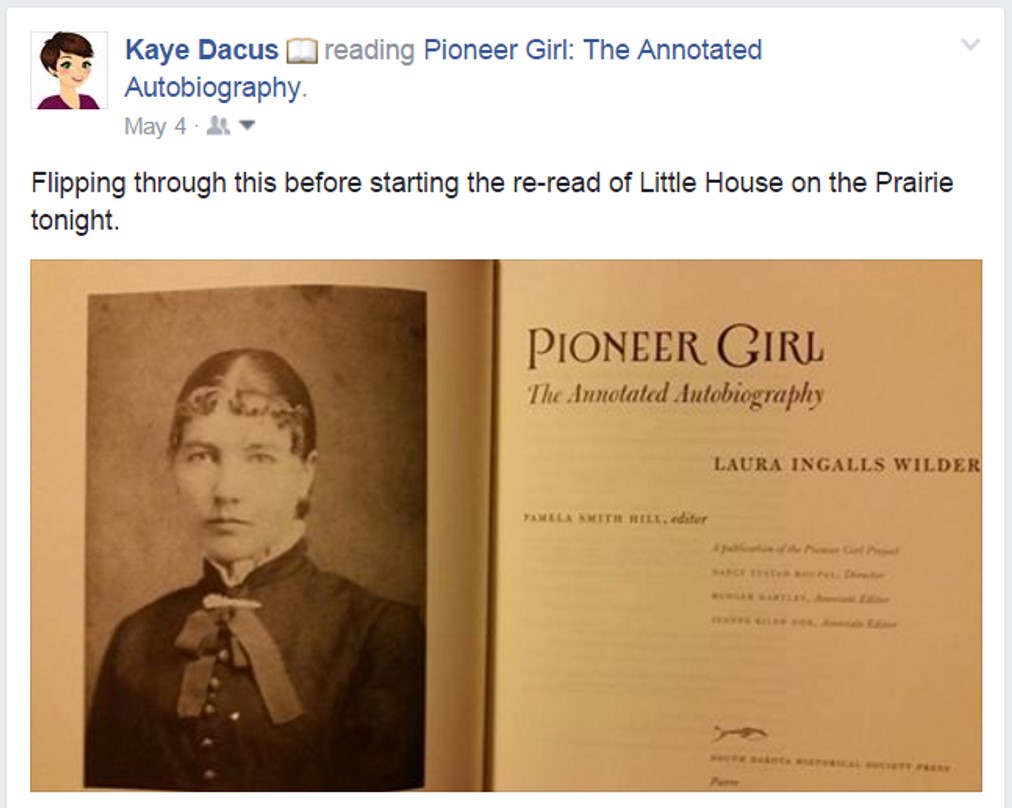
To see more images from the memoir, along with the thoughts and reactions I logged on Facebook and Goodreads as I read through the memoir and the series, here are the posts from last year:
‘Pioneer Girl: The Annotated Autobiography’ by Laura Ingalls Wilder | Part 1
‘Pioneer Girl: The Annotated Autobiography’ by Laura Ingalls Wilder | Part 2
‘Pioneer Girl: The Annotated Autobiography’ by Laura Ingalls Wilder | Part 3
It’s Reading Report Time! (February 2017) | #amreading #bookreview
Happy First Monday of February, everyone.
It’s Reading Report Time!

Open Book by Dave Dugdale
.
Tell us what you’ve finished since the beginning of last month, what you’re currently reading, and what’s on your To Be Read stack/list. And if you’ve reviewed the books you’ve read somewhere, please include links!
To format your text, click here for an HTML cheat-sheet. If you want to embed your links in your text (like my “click here” links) instead of just pasting the link into your comment, click here.
.
- What book(s) did you finish reading (or listening to) since the last update?
- What are you currently reading and/or listening to?
- What’s the next book on your To Be Read stack/list?

 KayeDacus.com