#TBT Cute Boys in Sweaters
Originally published February 20, 2013

Richard Armitage
.

Alex O’Loughlin
.

Ryan McPartlin
.
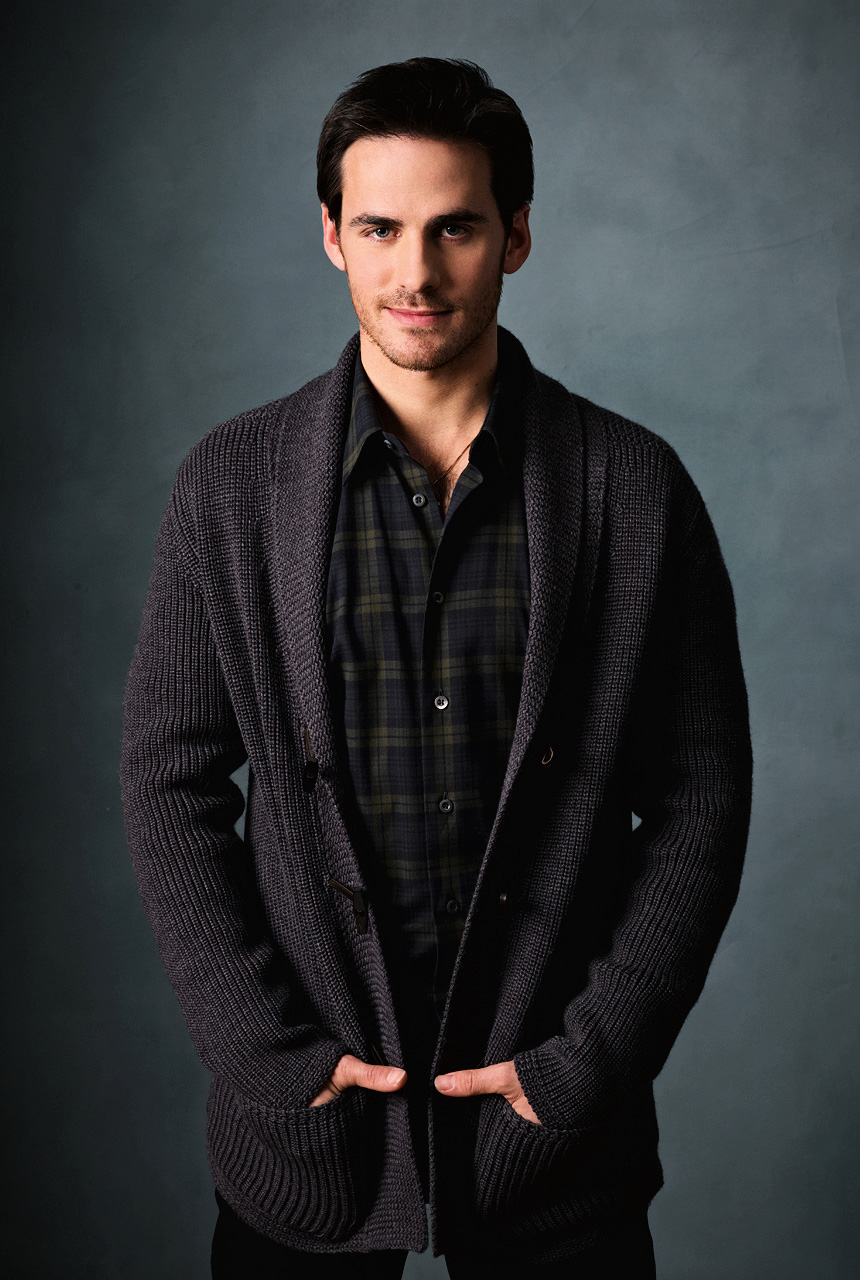
Colin O’Donoghue
.
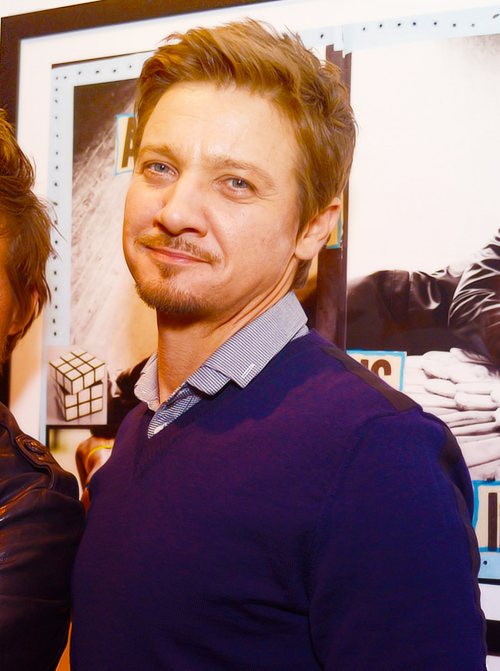
Jeremy Renner
.

Ewan McGregor
.

Gerard Butler
.
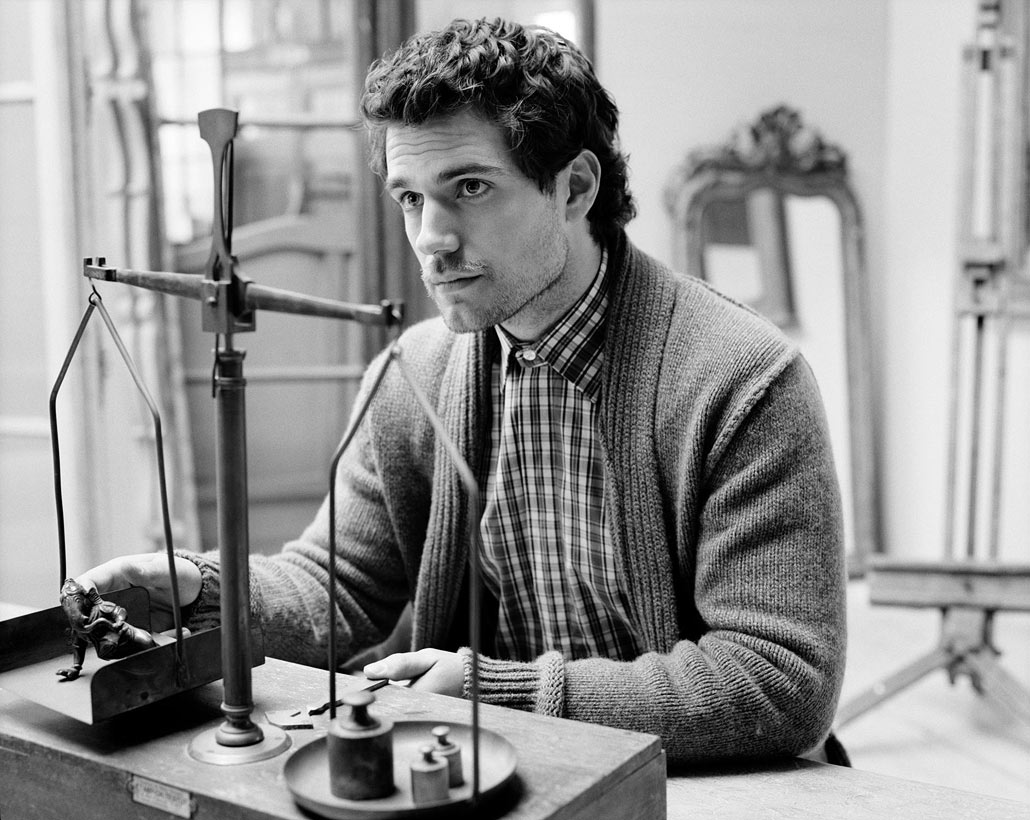
Henry Cavill
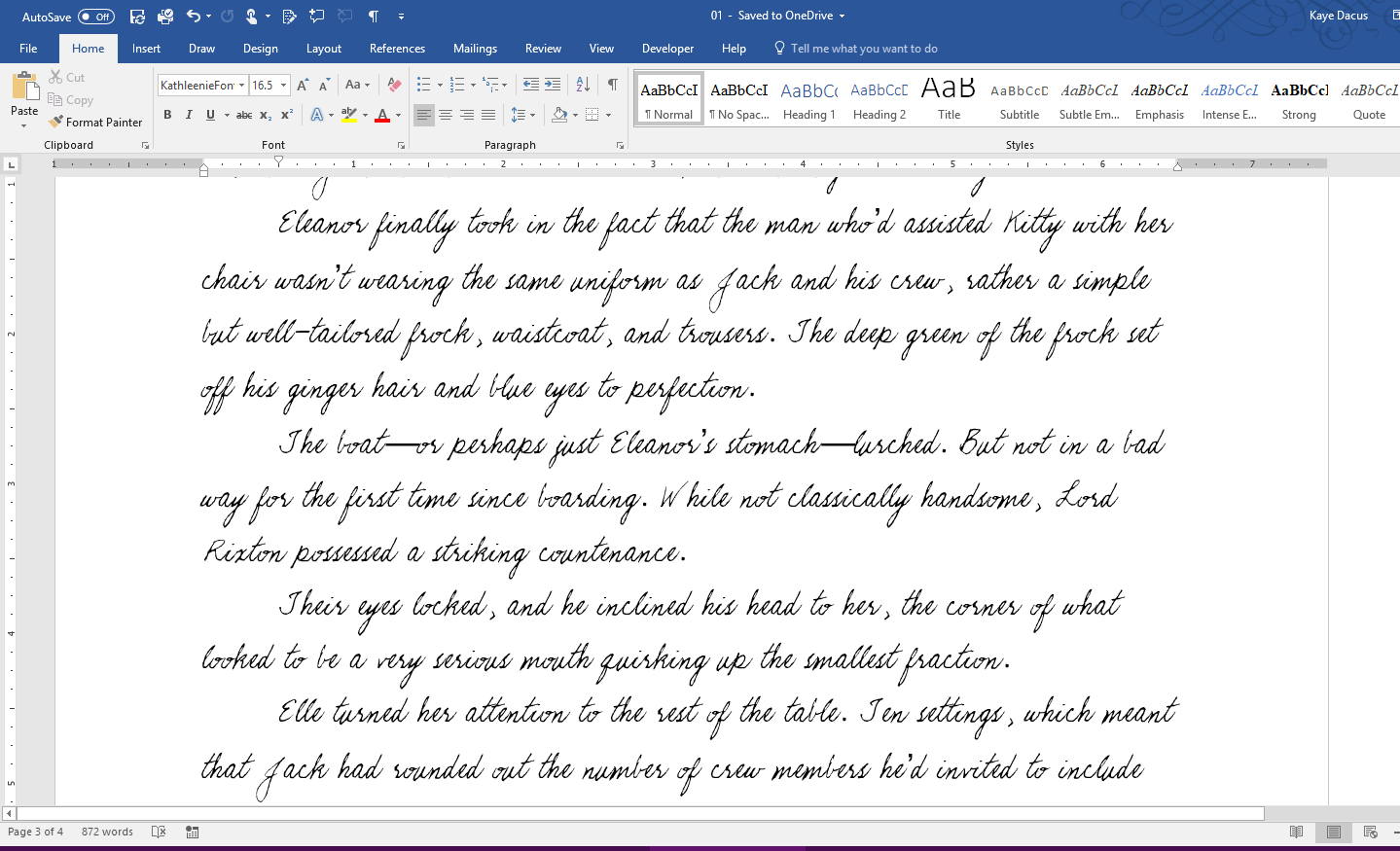
Wednesday Writing Report — 7 February 2018
Time spent: 1 hour (45 minutes writing, 15 minutes researching)
Words written: 872
Talk About It Tuesday: What’s Your Favorite Fairy Tale?

Let’s talk!
Share in the comments what your favorite fairy tale is—and tell us why.
Whether from childhood or something you came to as an adult; whether Disneyfied or the grimmest of the Grimm brothers’ tales. And if it’s a classic that’s available in the public domain (such as on Project Gutenberg), please share a link!
What Did You Read in January 2018? What Are You Reading Now? What’s on Your TBR List?
Happy First Monday of February, everyone!
It’s a new year which means new reading challenges to check in on!
It’s Reading Report Time!

Open Book by Dave Dugdale
.
Tell us what you’ve finished reading last month, what you’re currently reading, and what’s on your To Be Read stack/list. And if you’ve reviewed the books you’ve read somewhere, please include links!
To format your text, click here for an HTML cheat-sheet. If you want to embed your links in your text (like my “click here” links) instead of just pasting the link into your comment, click here.
.
- What book(s) did you finish reading (or listening to) last month?
- What are you currently reading and/or listening to?
- What’s next on your To Be Read stack/list?
Get Motivated: Express Yourself!
You give your body food and drink, and air to breathe. You give your mind nutrition, too, by remaining inquisitive and teachable. But most imiportant of all, you must feed your soul. Praying can feed your soul. Meditation certainly does. Acts of kindness and selflessness are at the top of that list, too. And right up there with them, because often they are vehicles for the others, is artistic expression. Art is born in the soul. It is actually the expression of the soul. So if we don’t make time for that, we are not making time for the most important thing a human can do: express [one]self.
So we must find time to express ourselves.
~Peter Dunne
Emotional Structure: Creating the Story Beneath the Plot
p. 5
#FirstDraft Planning Day 14: Write the Hero’s Backstory
 Day 14’s story-prep is a continuation of Day 13 (Write the Heroine’s Backstory) which comes from the original Day 12 in the FirstDraft60 process: Character Backstories.
Write the Hero’s Backstory
As mentioned yesterday, because this is a “next generation” story, I know that my hero’s backstory opens with:
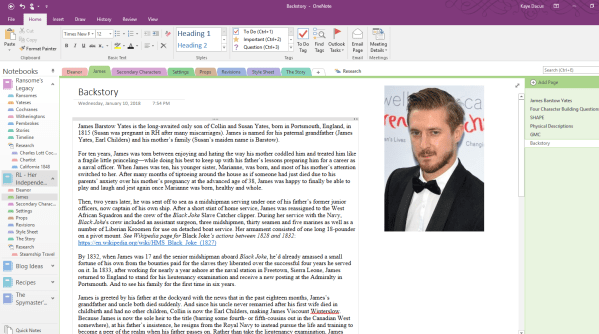
James Barstow Yates is the long-awaited only son of Collin and Susan Yates, born in Portsmouth, England, in 1815 (Susan was pregnant in RH after many miscarriages). James is named for his paternal grandfather (James Yates, Earl Childers) and his mother’s family (Susan’s maiden name is Barstow).
Because I revisited a proposal I’d written many years ago for a potential follow-up series (The Pembroke Legacy) yesterday when writing Eleanor’s backstory, I remembered seeing in it that James had followed his father’s footsteps into the Royal Navy at a young age but that he’d been forced to quit when Collin’s father and brother died within two years of each other and Collin inherited the Earldom. Of course James, as now the sole heir, can no longer put himself at risk as a naval officer.
And that got me rolling. I did a little research on what the Royal Navy was up to during the period known as Pax Brittanica (1815–1914), and not only discovered the perfect posting for James but also the specific ship and actions he’d be part of.
For both of these characters, as I worked on their backstory, I was looking for the “defining moment” in their past—the event or experience that made them who they are when the story opens. And because I was thinking about that, I was easily able to find the specific “moment” for each of them, which will make working with their goals, motivations, and conflicts throughout the story much easier, because I know where each of them is coming from.
.
The rest of the tasks for this week are:
Wednesday 1/24 — Day 15: 1k1hr Writing Sprint—Continue Writing Scene from Last Week, or Write a New Opening Scene
Thursday 1/25 — Day 16: Update Story Bible and Work on Any Incomplete Tasks
Friday 1/26 — Day 17: Write/Update Story Premise; Write Blurbs
Saturday 1/27 — Day 18: Write Detailed Story Synopsis (or scene-by-scene cards); Work on Outline/Seven Story Beats
How are you doing on your 2018 project goals?
_______________________________________
If you’ve never done FirstDraft60 and want to try it, you can see the whole series at the #FirstDraft60 page linked in the header. The tasks do build on each other after the first several days, but you can move them around to best suit your style. Be sure to start with Day 1—Determining Your Commitment and Motivation with Guided Questions.
One Hour of Writing Time per Day
My one hour of writing time is scheduled for each day from 7 PM to 8 PM Central time. I’ll try to remember to send reminders on Twitter, followed by results afterward each day (after all, I do have time for social media scheduled both before and after the writing block).
#FirstDraft Planning Days 12 & 13: Visualizing with Pinterest, and Heroine Backstory
Day 12’s story-prep is a continuation of Day 10 (Character Casting and Physical Descriptions) in that I spent my writing-task hour working on my Story in Progress board on Pinterest. For Day 13, today’s task, it comes from the original Day 12 in the FirstDraft60 process: Character Backstories.
Day 12: Story Visualization with Pinterest
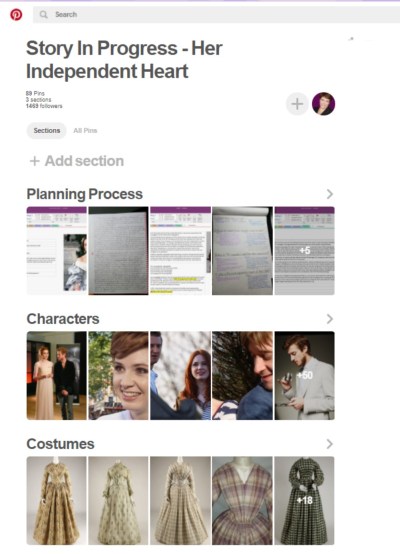
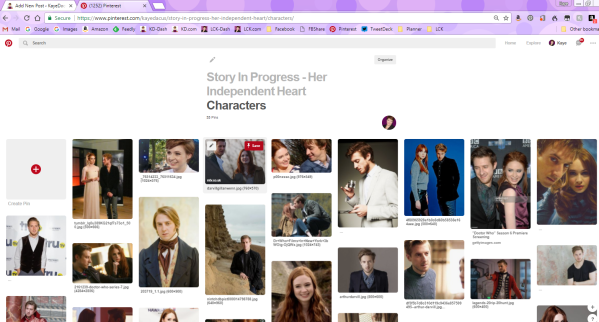
I haven’t really done much with Pinterest over the past several months. I’ve pinned a few things here and there, but I haven’t visited the site at all in quite some time. So I was surprised when I logged in last night to discover that there’s a new feature in the desktop version of the site—and that’s the ability to create sections within a board (I checked the app on my phone, and the sections don’t show up there; this is just a desktop website feature, apparently). So I spent time sorting the images I already had and adding a whole lot more, mostly of my main character templates.
You can see the Pinterest boards by clicking the images below.
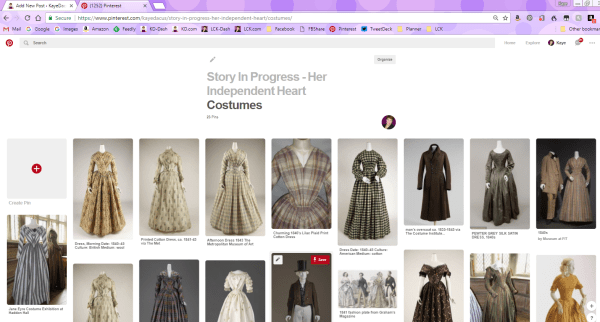
Yes, even though it’s not officially time to work on the costuming portion of the story bible/visualization boards, I went ahead and pulled several things (because, naturally, once I realized there was a way to further organize my boards, I had to go into my historical costuming board for 1840s-1850s-1860s and divide those into decades because I needed to do that for research purposes, after all). And I was surprised what I learned about Elle during the process of pulling costumes for her. She’s practical—she’s not going to have a lot of ruffles and pouffed sleeves. She’s not going to wear the widest skirts possible. She’s not going to wear overly bright colors or bold prints. She prefers linen, muslin, and cotton to silks or satins. And so on.
Day 13: Write Heroine’s Backstory
As mentioned above, this comes from Character Backstories from the 2016 version of FirstDraft60. Because this is a “next generation” story, I know that my heroine’s backstory opens with:
Eleanor Charlotte Ransome is the second child and first daughter born to Julia and William Ransome on Julia’s family sugar plantation, Tierra Dulce, in Jamaica, joining her three-year-old brother, Edward. Eleanor is named for her late maternal grandmother (Eleanor Pembroke Witherington) and her paternal aunt (Charlotte Ransome Cochrane).
Sometimes, it’s the opening that’s the hardest, even when it’s just backstory that no one else might ever see. So once I typed that out, it was easier to push forward and dig into Eleanor’s early years. In fact, in just over an hour, I wrote over 1,300 words of backstory for my girl!
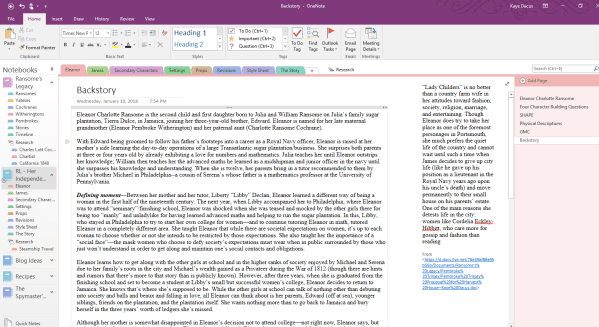
I typed it up in Word and then copied/pasted it into OneNote. I have it saved in both formats, just in case, because I’ve had several OneNote files go corrupt on me in the past—previous versions of the software, yes, but once burned . . .)
The rest of the tasks for this week are:
Tuesday 1/23 — Day 14: Write Hero’s Backstory
Wednesday 1/24 — Day 15: 1k1hr Writing Sprint—Continue Writing Scene from Last Week, or Write a New Opening Scene
Thursday 1/25 — Day 16: Update Story Bible and Work on Any Incomplete Tasks
Friday 1/26 — Day 17: Write/Update Story Premise; Write Blurbs
Saturday 1/27 — Day 18: Write Detailed Story Synopsis (or scene-by-scene cards); Work on Outline/Seven Story Beats
How are you doing on your 2018 project goals?
_______________________________________
If you’ve never done FirstDraft60 and want to try it, you can see the whole series at the #FirstDraft60 page linked in the header. The tasks do build on each other after the first several days, but you can move them around to best suit your style. Be sure to start with Day 1—Determining Your Commitment and Motivation with Guided Questions.
One Hour of Writing Time per Day
My one hour of writing time is scheduled for each day from 7 PM to 8 PM Central time. I’ll try to remember to send reminders on Twitter, followed by results afterward each day (after all, I do have time for social media scheduled both before and after the writing block).
#FirstDraft Planning Day 11: My Story Compass
 Today’s story-prep was originally supposed to come from Day 11 in the FirstDraft60 process: Ambitions, Inducements, & Entanglements (GMC). However, that was before I attended the meeting of my local RWA chapter and got an even better idea—which is to create a story compass.
Creating a Story Compass
This comes from the presentation “The Writer’s Compass: Plotting for the Directionally Challenged” presented by Terri Osburn at the January 20, 2018, Music City Romance Writers meeting.
Now, because this is someone else’s workshop, I can’t share much of the content beyond what she has on her own website promoting it:
Course Description:
Basic plotting techniques for writers who think “plot” is a four-letter word. Whether you’re just starting your story, or like us, you find yourself marooned and cannot imagine there is any way to get back to port (i.e. the end of your book), have no fear. Finding your way to “The End” of your novel is as easy as whipping out your compass and orientating yourself within your manuscript.
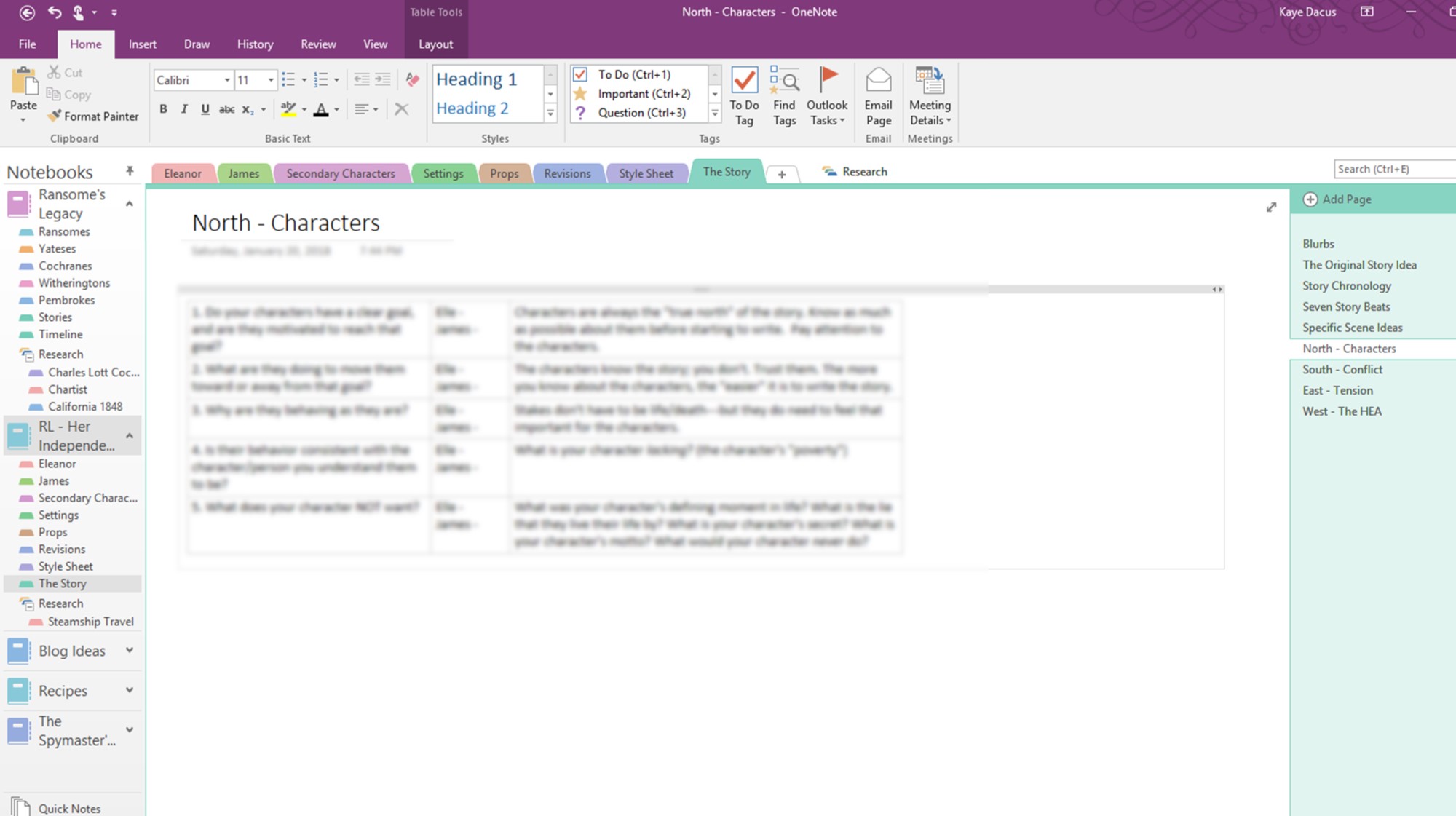
Find NORTH: characters and goals. Your characters and their goals are the most important aspects of the story. They are the story.
Find SOUTH: conflict and irony. Are your conflicts big enough to keep your characters and their goals in sharp focus? Have you injected a bit of irony into your conflict, making your characters do things they’d never do?
Find EAST: love and sexual tension. Love provides conflict for your Conflict since love is never convenient—and neither is sexual tension.
Find WEST: Happily Ever After. Finding a happy ending for your characters is the only cliché that never gets old.
Again, since this isn’t my intellectual property, I blurred out the specific questions that go with each of the compass directions—I just wanted to show how I’ve set this up in my story bible:
How are you doing on your 2018 project goals?
_______________________________________
If you’ve never done FirstDraft60 and want to try it, you can see the whole series at the #FirstDraft60 page linked in the header. The tasks do build on each other after the first several days, but you can move them around to best suit your style. Be sure to start with Day 1—Determining Your Commitment and Motivation with Guided Questions.
One Hour of Writing Time per Day
My one hour of writing time is scheduled for each day from 7 PM to 8 PM Central time. I’ll try to remember to send reminders on Twitter, followed by results afterward each day (after all, I do have time for social media scheduled both before and after the writing block).
If you’re playing along at home, you can join me at that time or set your own schedule for when you’ll be writing (or reading, if you’re not a writer!). Be sure to check in below in the comments or on Twitter or Facebook with your results!
#FirstDraft Planning Day 10: Character Casting and Physical Descriptions
Today’s story-prep comes from Day 10 in the FirstDraft60 process: Your Characters’ Physical Descriptions.
THIS IS MY FAVORITE PART OF THE STORY PREP PROCESS!!!
Part 1: Casting Your Characters
Anyone who’s been around me and/or this blog for any length of time knows that using Real World Templates (i.e., casting my characters with actors, models, public figures, etc.) is an integral part of character and story development for me. There would be no Stand-In Groom without the actor Peter Wingfield, who inspired the hero, George. In fact, I wouldn’t even have this current story idea to work on if it weren’t for Paul McGann in the Horatio Hornblower movies sparking the idea for the entire Ransome Trilogy.
I use a combination of pinning images of the Real World Templates to my story board on Pinterest, as well as placing reference images on the characters’ pages in my story bible . . . and I also usually set up a PowerPoint into which I save images of the characters—these are typically screen shots of the actors with certain expressions or body language that evoke ideas for my characters’ development or even for certain scenes.
For this series of story ideas, I cast the main characters in each one as I wrote out the basic ideas for the stories. So that was something I didn’t have to do for this story:

James Yates = Arthur Darvill
Eleanor Ransome = Karen Gillan (adjusted for hair/eye color)
Part 2: Describing Your Characters
Because so much of how I describe the characters comes out when I’m writing—because I’m describing them through the eyes of the other viewpoint character—I try not to get wrapped up too much in writing out static descriptions of them in this process. I do need to know the basics, though:
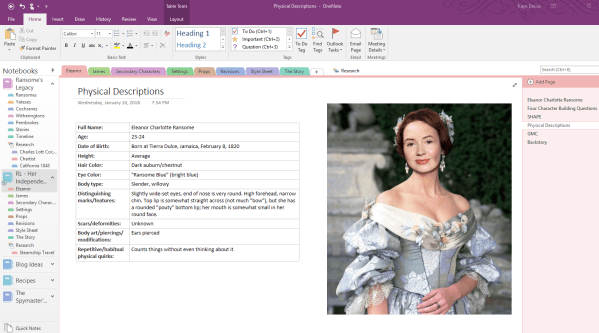
Here are the areas I focus on when creating this part of my story bible:
Full Name:
Age:
Date of Birth:
Height:
Hair Color:
Eye Color:
Body type: (stocky, muscular, athletic, full-figured, slender, emaciated, etc.)—from the character’s viewpoint and in others’ opinions, if that’s important
Distinguishing marks/features:
Scars/deformities:
Body art/piercings/modifications:
Repetitive/habitual physical quirks: (i.e., biting fingernails, grinds teeth, pops knuckles, rolls neck when stressed, leg bounces/can’t sit still, etc.)
I fill out this information while looking at images of my Real World Templates (RWTs). And if I’m changing something about them—or if I need to see them in historical costume but they’ve never been in a costume drama from the right era—I go ahead and adjust the image in my photo editing software (which keeps crashing on me; I was able to use it to get Karen Gillan’s face on Emily Blunt’s photo from Young Victoria, but it crashed on me every time I tried to give her blue eyes). This is where having RWTs already picked out comes in handy—using Google Images, I’m able to look at these templates from different angles, in different clothes, and in high resolution so I can see if there’s anything physically unique to that individual that I can bring out.
How are you doing on your 2018 project goals?
_______________________________________
If you’ve never done FirstDraft60 and want to try it, you can see the whole series at the #FirstDraft60 page linked in the header. The tasks do build on each other after the first several days, but you can move them around to best suit your style. Be sure to start with Day 1—Determining Your Commitment and Motivation with Guided Questions.
One Hour of Writing Time per Day
My one hour of writing time is scheduled for each day from 7 PM to 8 PM Central time. I’ll try to remember to send reminders on Twitter, followed by results afterward each day (after all, I do have time for social media scheduled both before and after the writing block).
If you’re playing along at home, you can join me at that time or set your own schedule for when you’ll be writing (or reading, if you’re not a writer!). Be sure to check in below in the comments or on Twitter or Facebook with your results!
#FirstDraft Planning Days 7, 8, 9: Characters’ SHAPE and Writing the Opening Scene
I’ve fallen a little behind this week—due to laziness and being “snowed-in” (don’t know if it counts when one works from home anyway, but everything here in Clarksville has been shut down since last Friday because of the six to eight inches of snow on the ground from two pretty major snow storms). So Tuesday’s and Wednesday’s story-prep (Days 7 and 8) comes from what was Day 7 in the FirstDraft60 process: Getting Your Characters into S.H.A.P.E.. Then, today (Day 9) is supposed to be a 1k1hr writing sprint in which I work on drafting an opening scene.
I’d planned to give each main character one day’s writing time—the Heroine on Day 7 and the Hero on Day 8. I did get the “S” done for the heroine yesterday, but then allowed myself to be distracted by a puppy who has discovered a love of playing in the snow that’s almost as tall as she is in temperatures well below freezing. And, really, since we rarely get snow like this in Tennessee that lasts as long as it has, I made an allowance for myself. But tonight I’m back to work, because, if nothing else, I need to firmly cement as a habit that from 7 to 8 PM daily, I will turn off all other distractions and spend time working on my writing project.
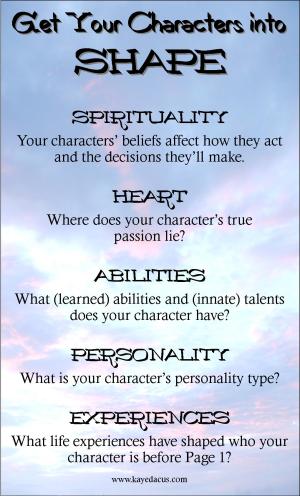 How do you S.H.A.P.E. a character?
As mentioned in the previous post on this topic:
This acrostic is something that I picked up at a retreat fifteen or twenty years ago, and I’ve taught it and used it with different groups many times since then. However, it’s only been in the last few years that I realized it would be great to help in developing/getting to know my fictional characters. It’s a great way to figure out who your characters are, which goes hand-in hand with figuring out their backstory, which we’ll be working on next week.
In other words, it’s a different way of creating a character chart/worksheet, but without feeling like it’s quite so clinical/structured or exhaustive (exhausting?) as most of those are.
As always, you can read the details of this task at last year’s post: #FirstDraft60 Day 7: Getting Your Characters into S.H.A.P.E.
Here’s the SHAPE chart for my heroine, Eleanor “Elle” Ransome:
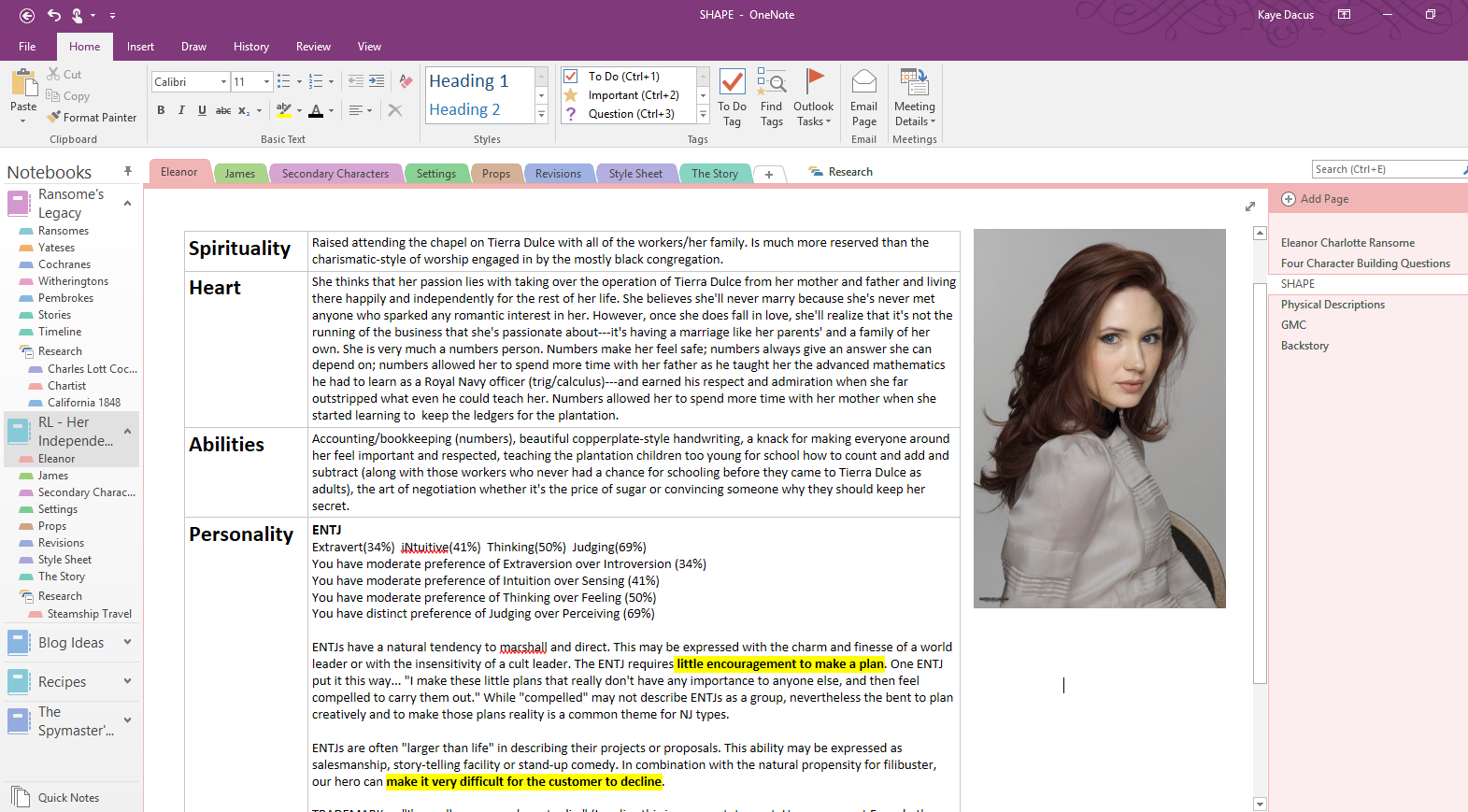
Because I have built in extra time to the schedule this go-round, I’m not going to try to push myself to get James’s SHAPE chart finished today . . . especially since it did take my full hour of writing time to do Eleanor’s. And because I’ve yet to do the Day 9 task.
Day 9: Write an Opening Scene
This is not something that I built into the original FirstDraft process—and that is to take one day’s writing time each week during the prep month and actually spend it writing!
I do already have a head-start on this. Back before the holidays, on a day when my work computer took three or four hours to run updates and system checks, after I finished what work I could for the day, I pulled out a notebook and just started writing by hand.
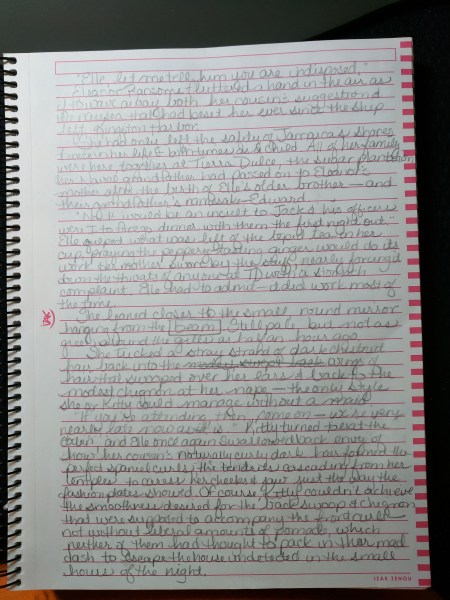
It was the first writing I’d done in over a year, and it felt good. Even though my official one hour of writing-project time is up for today, before I go to bed tonight, I’m going to do a 1k1hr writing sprint and fulfill the Day 9 task to write (or continue writing) an opening scene and see how far I get!
How are you doing on your 2018 project goals?
_______________________________________
If you’ve never done FirstDraft60 and want to try it, you can see the whole series at the #FirstDraft60 page linked in the header. The tasks do build on each other after the first several days, but you can move them around to best suit your style. Be sure to start with Day 1—Determining Your Commitment and Motivation with Guided Questions.
One Hour of Writing Time per Day
My one hour of writing time is scheduled for each day from 7 PM to 8 PM Central time. I’ll try to remember to send reminders on Twitter, followed by results afterward each day (after all, I do have time for social media scheduled both before and after the writing block).
If you’re playing along at home, you can join me at that time or set your own schedule for when you’ll be writing (or reading, if you’re not a writer!). Be sure to check in below in the comments or on Twitter or Facebook with your results!

 KayeDacus.com