Book-Talk Monday: Who Are E-Book Readers?

Last Monday, we talked about e-book lending at libraries. It seems most of us are not only not concerned about it, but like this development and plan to make use of it (I just downloaded my second library e-book over the weekend).
In the discussion, though, the inevitable topic of whether or not someone would ever become an “e-book reader” versus a “real-book reader” came up, which reminded me of something I heard in a workshop a couple of weeks ago, which went something along these lines:
To be a breakout author, you must reach non-readers (these are not e-book readers).
He went on to say that these “non-readers” are people who read at most six books a year (so, in other words, not true non-readers, but rarely-readers). These are people who would buy a book if Oprah recommended it and it struck their fancy in some manner. More often than not, though, even if they buy books from the bestsellers lists, it’s more to have a conversation piece sitting on their shelf during dinner parties (or to have their guests think they’ve read it when they haven’t touched it since they got it home from B&N)—there’s no way they’re going to invest over $100 in an e-reader when they don’t even want to invest that much in books in one year.
So who are e-book readers? Are they technoheads who are just now discovering the world of the written word because they can access it through cool technology now?
Well, I did some rudimentary research and though I tried every iteration of keywords that I could think of, I could only find technical info when it came to the question “who reads e-books?” (more men prefer tablets, more women prefer e-readers; e-reader ownership broke into double-digits percentage-wise this year; e-book sales are soaring; etc.).
My own personal opinion is that avid e-book readers are book *consumers*—not in the capitalist sense of the word, but in the black-hole-in-outer-space sense of the word. They consume books. They are the “so many books, so little time” type of readers who rarely go back and re-read a book just to savor and re-live it. They are the same kind of people who, in decades past, would visit the library once a week and max out the number of books they were allowed to check out each time. AND they would be at the bookstore at least a couple of times a month taking home four or five mass-market paperbacks. AND if one of their favorite authors had a new book coming out, they’d pre-order the hardcover through the bookstore just to make sure they got their copy of it the day it released. AND even before that, they were the kids who pored over the Scholastic book order forms from school and if their allowance wouldn’t cover the number of books they wanted to order, they negotiated with their parents—even going as far as to offer to do more chores, just to score more books. These are the people for whom books are their addiction . . . an addiction that the e-book reader makes that much easier to feed because of instant gratification of less-than-60-second download times; availability of hundreds of thousands of titles, a great number of which are free or priced under $5, making it much more economical; the ease of transport—one’s entire library can be carried in a purse or briefcase or backpack; the intrinsic privacy afforded by the e-reader’s design—no more trying to hide those half-naked women and bare-chested men or Twilight movie tie-in covers from everyone else on the subway; and the wide variety of platforms from which e-books can be read: designated readers, tablet computers, phones, and computers/laptops.
But there are just as many people like this who will give up their traditional pulp-and-glue books only when someone pries them out of their cold, dead hands. Because e-books/e-readers are the topic du jour, it’s pretty easy to find studies on their effect on reading habits.
According to a study conducted by the Nielsen Norman Group (a different Nielsen than the TV ratings people), there is a difference in reading paper books and e-books. They tested three different reading methods (on the PC, on a Kindle, and on an iPad) against reading a paper book. The results were a bit eye-opening . . . those reading any of the three e-book versions were as much as 10 percent slower than those reading a traditional paper book (with PC being the slowest method).
The University of Washington reported on a pilot project they conducted with students using e-books instead of traditional textbooks. “Seven months into the study, less than 40 percent of the students were regularly doing their academic reading on the Kindle.”
The most interesting part to me of UW’s report was this:
The digital text also disrupted a technique called cognitive mapping, in which readers used physical cues such as the location on the page and the position in the book to go back and find a section of text or even to help retain and recall the information they had read.
I ran into this last night. I read the prologue of the library e-book I’d downloaded. It had a date at the top of it. Some time in the late 1700s. The prologue felt long. In the printed book, it may have only been four, five, or six pages. But as I didn’t have the “cognitive map” of how long it was, it felt long. But then I started the first chapter, which also had a date at the top of it. Some time in the early 1800s. I tried using the navigation “rocker” to go back to the beginning of the prologue, but this e-book apparently doesn’t have the “locations” in the book mapped to be able to skip from the beginning of one chapter to another by using the navigation button that way. And that frustrated me, because I knew that if I’d been reading the physical book, it would have been so easy to just flip back a few pages and look at the date at the beginning of the prologue.
After reading the information in these two studies, I’ve come up with my own opinion of why we might read traditional paper books faster than e-books, and it boils down to three things:
1. The visual cue of how far through the book we are. I’m sorry, but the percentage down at the bottom just doesn’t mean much to me. One percent of the first Game of Thrones book might represent seven or eight physical pages, while one percent of Mary Balogh’s Dark Angel (a novella) might be one physical page, maybe a page and a half. It can really start to feel like a chore when you’re reading, reading, reading for what seems like hours and look down and the percentage hasn’t moved, or has only advanced one or two percent. Plus, there are a lot of e-books that have a lot of “spam” at the end of them. Many publishers have taken to putting all of their frontmatter (copyright info, dedication, acknowledgments, review quote blurbs) into the “back” of the e-book along with a bunch of marketing stuff for that author’s other books or other authors’ books. I’ve had a few e-books in which the last page of the actual story fell somewhere around the 90 to 95 percent mark because there was so much backmatter—and there are books in which the first page of the story (whether it’s the prologue or chapter one) starts around the 5 percent mark because there’s so much frontmatter (which may include a five- or six-page table of contents, in books in which the chapters aren’t even named). Seeing how much I’ve actually read—or seeing how much I have left to read (in that chapter or in the book)—can really motivate me to keep reading.
2. This whole “cognitive mapping” thing. There’s definitely something to this—because when I read, I have a tendency to skip lines or phrases and miss things. In a physical book, it’s easy enough to go back and find something I might have missed—or, in the case of books as long and with as many characters as the Game of Thrones series, to flip back to that character’s last chapter to remind myself what they were doing last time they appeared. But this is difficult and time consuming to do in an e-reader.
3. Seeing the actual book, and its cover, sitting there waiting to be picked up again. One thing I most definitely miss with e-books is the loss of the cover. Sure, some e-books come with a black-and-white image of the book’s cover. But many don’t. However, when I pick up my e-reader (which has a purple leather cover), I either pull up a list of titles or it opens to the most recent page I was reading when I last turned it off. I don’t have a full-color cover drawing me in. When I’m going through my list of books to see what I want to read next, I can’t just pull one off the shelf and read the back cover copy. I have to pull it up, turn on the wireless/3G, and go to that book’s page on Amazon just to read the description (which aren’t usually the full back-cover copy—and sometimes, it’s just a list of blurbs from reviews that don’t tell me anything about the story at all). The cover is not only the first piece of marketing for the book, it’s the first thing that draws us into it—especially if it’s a well done cover and reflects the theme, mood, and emotion of the story. Having the visual cue of the cover can be a great motivator to pick up a book and start/continue/finish reading it.
Are you an e-reader? If you are, what are your thoughts on e-books vs. traditional books? What would make you choose an e-book over a traditional paper book (or vice versa)? If you are a sworn traditional-book reader, is there anything that could convert you to becoming an e-book reader?
TFP Contest WINNERS!!!

As promised, the winners of the four prizes have been drawn and notified by e-mail. And here they are:
Grand Prize: CarolM
2nd Place: springraine/Bethany
3rd Place: Lady DragonKeeper
4th Place: Audry
Thank you all for hanging out with me this month and for making this one of the “most commented” months ever!
TURNABOUT’S FAIR PLAY–More Questions Answered

As promised, I’m back today to continue answering questions, as well as to give you one more chance to earn entries in the TFP contest. But I just want to share this first . . . my ninth four-star review from Romantic Times magazine:
Dacus brings a sense of humor to her story, which makes the characters come alive. The relationship between Jamie and Flannery seems realistic and develops at a natural pace. The characters from the previous Matchmaker books weave their way into chapters. Although this book is part of a series, it can be read as a stand-alone. All in all, this is a lighthearted, easy read.
Now, back to our regularly scheduled programming . . .
- Lady DragonKeeper wrote: “. . .how about a reflection on your thoughts about the Matchmakers trilogy (now that they’re all published)? Are they your favorite works so far? Is there anything that you would change or go back to? What did you love about writing the series? What drove you crazy during the writing process?”
One thing I always tell bloggers who want to start interviewing authors: Never ask an author to pick a favorite from everything she’s written. It’s impossible. It would be like asking Michelle Duggar which of her children is her favorite.
That said, I have posted previously that Flannery and Jamie are the most fun couple I’ve written to date. Writing the Matchmakers series was a much different experience than either the Bonneterre or Ransome series. In both of those series, I had all the time in the world to get the first books (Stand-In Groom and Ransome’s Honor) written—three years for SIG from first words written to “final” draft of it for my master’s thesis/what I submitted to Chip MacGregor (my agent) and Rebecca Germany (the senior editor at Barbour) and two-and-a-half to three years for Ransome’s Honor.  I lived with the ideas and the characters for several years before writing the second and third books in each series. With the Matchmakers books, though, I only had a few months from the time the proposal sold until I had to start writing Love Remains. And though I’d written a previous but different version of LR as my third finished manuscript in 2003, I very soon set it aside and didn’t think much about it again because I’d come up with the idea for SIG. And I ended up not being able to use anything but one (heavily edited) scene from the original draft of LR anyway. I didn’t know Zarah, Bobby, Caylor, Dylan, Flannery, and Jamie the way I knew Major, Meredith, and Forbes before I started writing their books (Alaine was somewhat of an unknown quantity for me when I started writing A Case for Love because she was an outsider to the Guidry family). In the Ransome series, I stayed with the same characters for three books, with only a few additions and one deletion. But with The Matchmakers, each book was an almost entirely new cast of characters, so that was a bit more of a challenge to me.
What did I love about writing the series . . . learning more about my hometown through my characters’ movements around Nashville; incorporating the viewpoints of the senior adults; exploring different relationship dynamics between children and parents, grandchildren and grandparents, girlfriends, older women and younger men, women far ahead of men  in their careers; how consequences from choices and mistakes from the past must be dealt with in the present and how those affect romantic entanglements; and, finally, just seeing how much fun I could have with my characters.
What drove me crazy? Not having enough time with each of the books. I had from December 1, 2009 (the day I turned in Ransome’s Crossing) to February 1, 2010, to write Love Remains (I finished writing it and turned it in on March 6, 2010); I had from August 3, 2010 (the day I turned in Ransome’s Quest) to October 15, 2010, to write The Art of Romance (I hadn’t finished it when I broke my ankle on November 4, and with that and the subsequent surgery and recovery, it was January 3, 2011 when I finished it and turned it in—and then, a week or so later, when I got my content edit back, I added almost 10,000 words to it); and I had from then until May 15 to write TFP (the original date was April 1, but I got an extension—and I only missed that deadline by a few hours, e-mailing the manuscript in after midnight, so, technically, I turned it in on May 16, 2011).
- From e-mail: “TFP highlights romances of two generations. Were there differences in writing the romances as a result?”
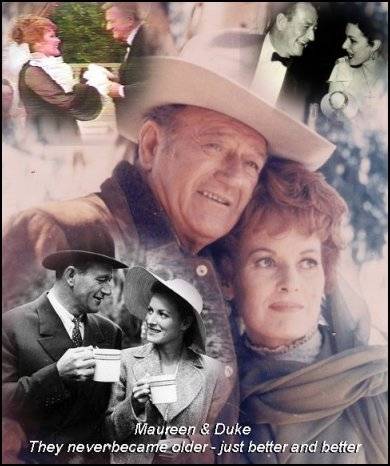 Life experience played greatly in trying to make sure both of the romance storylines worked—especially the romance between Maureen O’Connor and Kirby McNeill. Both lost the loves of their lives many years ago—but those spouses and the lives Maureen and Kirby shared with them couldn’t just be conveniently forgotten. I have to admit, being single at forty myself, it was fun to imagine what it would be like to fall in love at age eighty-five.
- CarolM wrote: “Then I see the massive piles of clothes I’m supposed to be going through and all I want to do is cry.”
 Jamie here . . . Carol, what you need to do is invite your grandmother over. You see, I’ve discovered that when the housework gets to the point at which I don’t want to deal with it, the thing I’ve learned to do is to invite Cookie over. As soon as she sees whatever it is (the overflowing laundry basket in the laundry room, the stacks of books and magazines on the coffee table, the dust on the entertainment center), she can’t help but start cleaning. I tell her over and over she doesn’t have to, but it’s in her nature. 😀
__________________________________________________________________________
Really, Jamie? That’s how you treat your grandmother? Just for that, here’s how I’m going to close out the post:
TURNABOUT’S FAIR PLAY–It’s Out! And I’m Answering Your Questions
We begin today’s post with this:

The picture I took with my phone yesterday afternoon at the Lifeway Store in the Cool Springs shopping area in Franklin, TN, showing Turnabout’s Fair Play on the shelf.
Then, there’s this:

Which means that Amazon also has it in stock. Has anyone else seen it or gotten a shipping confirmation if you pre-ordered it?
__________________________________________________________________________
Your Questions Answered
- Janet Kerr asked: “I am wondering if this Matchmaker series is autobiographical in any way?”
and Audry asked: “You’ve said before that there’s an autobiographical component to at least some of your heroines. Are any of them based in whole or part on other people in your life?”
Any writer who states that there is no autobiographical component in what he or she writes and that they never use people they know in their character development is lying. Or at least very confused and naive. One of the biggest truths behind “write what you know” is that who you are and who you know inform and impact everything you write. Let’s see . . . ways in which the characters in The Matchmakers series are autobiographical . . .
 Like Zarah, I’m most likely to be found in the kitchen during a party or an event. I also don’t like “mixer” games that force me to talk to people I don’t know, I love history, and throw myself wholeheartedly into my work—sometimes to my own detriment. Also, like Zarah, I fell in love for the first time when I was very young—she at seventeen, I at nineteen/twenty. But whereas Bobby also fell in love with Zarah, the man I fell in love with felt only friendship for me.
 Like Caylor, I have an advanced degree in English (Creative Writing), I’m a published romance author, I have short hair, I love to sing (and used to sing in my church choirs and ensembles and do special music on Sunday mornings, but I haven’t done that in a few years now), I love the Reese’s peanut butter Christmas trees (and pumpkins and Easter eggs. . .), and I love teaching and am trying to figure out if going back to school to pursue another M.A. or even a Ph.D. to work toward becoming an English professor is something I can afford to do. Also, like Caylor, I have highly intelligent, successful parents—one in the medical sciences and one in the computer field—from whom I’ve lived at quite a geographical distance ever since my mid-twenties (though nowhere near as far as Switzerland). In fact, Caylor may be one of the most autobiographical characters I’ve written—at least in my published stories!
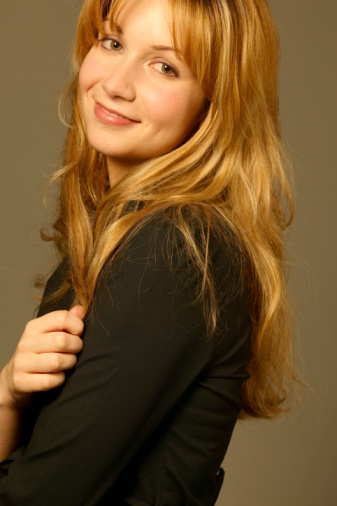 Like Flannery, I’ve worked professionally as an editor in the Christian book publishing industry. Also, like Flannery, I have a few hobbies and leisure activities that I prefer to keep to myself. Unlike Flannery, though, I don’t have a treadmill in my house (and her condo is smaller by far than my house!) and I’m allergic to cats (and not overly fond of them, either).
As far as other people in my life . . . I don’t purposely set out to base characters on people I know. In fact, if I ever feel that a character is reminding me too much of someone I know, then I know I need to start making changes. I can see bits and pieces of friends and family in my characters in ways in which they’d probably never recognize themselves. I have a cousin who works for the World Health Organization in Geneva, Switzerland, so that inspired where I sent Caylor’s mother to work. My maternal grandfather, in addition to being a chemistry professor at LSU, was a painter, so I made Dylan an artist and drew upon some of my favorite memories of my childhood summers, sitting beside my grandfather at his drawing table, watching him paint and listening to him talk about the craft. My parents’ grandparent nicknames are Cookie and Big Daddy, and my dad’s favorite actor is John Wayne, so that inspired not just the names for Flannery and Jamie’s grandparents but also the physical templates for them (since I love the movies Duke made with Maureen O’Hara). So that’s how I incorporate people I know into my writing—by taking inspiration from them and using it to serve my purposes!
- Sarah asked: “Is it difficult to come up with titles for your books? Do you decide the title after the whole draft is done?”
 Because I’m selling my books long before they’re published, and because I’m selling them off of not much more than a summary and some cleverly composed marketing copy based on what I think the book is going to be about when I write the proposal, I have to have the title in place before I can submit it. For me, the title is very important. In most cases, the title of the book is the first marketing copy the consumer ever sees. For my books, because I write romance, I like for readers to know as soon as they see the title that it’s a romance novel—thus the inclusion of the words love or romance in many of my titles. With this current book, however, the title I gave it reflects the theme of the book better than anything else I tried out on it. And that’s something very important to me, too—making sure the title reflects the theme of the book, usually in more than the on obvious way. (For example, with Love Remains, not only is it a story of former lovers [using the word in the purest form] discovering if any of that first love still remains, but Zarah is a historical preservationist, so she literally loves remains.) So far in my career, the only book that’s had its title changed from what I originally named it was the first one, Stand-In Groom, which was originally titled Happy Endings Inc. after Anne’s wedding planning business. The marketing department decided that HEI wasn’t a strong enough title—too much like a few dozen other romance novels on the market—and that we needed something a little more unique. Though it was hard to let go of a title I’d been using for three years (and you can still find blog posts here prior to 2008 in which I talk about that book by the old title), in the long run, I’m so glad they pushed me to come up with something different.
As far as waiting until after the manuscript is finished . . . considering that most of the time, my books are already up on Amazon with the cover designed before I finish writing them—waiting to come up with a title at that point would be a little late in the process. 😉
- Lady DragonKeeper wrote: “. . .how about a reflection on your thoughts about the Matchmakers trilogy (now that they’re all published)? Are they your favorite works so far? Is there anything that you would change or go back to? What did you love about writing the series? What drove you crazy during the writing process?”
Um . . . why don’t I tackle answering these questions on Saturday—which not only gives me more of a chance to think about my answer, but more space in which to write about it (and one more post for people to leave comments on to get one more entry in the contest).
What are your thoughts so far on Turnabout’s Fair Play? What are you expecting when you read it? What do you hope to learn about Jamie and Flannery? And if you’ve read the other two books in the series, what do you hope to see from Zarah/Bobby and Caylor/Dylan? And since I’ve already said I’ll be continuing this tomorrow . . . if you have any other questions you’d like me to answer, post them today and I’ll include them in tomorrow’s post.
Thursday Thought Provoker

Writer-Talk Tuesday: Wrapping Up a Series
 In less than a week, my third “end of a series” book releases. I’ve had nine books, containing over 901,000 words, published. In each individual book, there’s a beginning, a middle, and an end. In each series, there’s a beginning, a middle and an end.
And it takes a different form in each of the trilogies I’ve written. So, here’s a little of what I’ve learned about writing series.
You Can’t Change a Published Book
Before starting a series—whether it’s like my contemporaries, where each story is stand-alone but they’re tied together by the characters from the other books, or whether it’s like the Ransome series in which the story and main characters continue from book to book—it’s best if you know before the first book gets to the galley stage what’s going to happen in the second and third (and more, if your series is longer) books—because once that first book is published, it’s out there. And readers notice things that the author may think is trivial enough to change.
In the first two books of the Brides of Bonneterre series, I mention that Forbes and Meredith are from a family with eight children. Meredith specifically tells Ward in Menu for Romance that she has seven siblings. However, in A Case for Love, a mistake was made and it says that Forbes has six siblings. I actually had a reader contact me within a week or two of the book’s release to point this out—and she named all seven of Forbes’s siblings just to show that she was right. A few of those siblings are mentioned only once or twice by name in the previous two books.
Readers notice details like that—so it’s important to make sure you know where your series is going before getting that first book out there in readers’ hands, because you can’t change a published book!
You Can’t Rely on Your Own Memory
You’re going to forget between 50 and 70 percent of the details from your previous book(s) before you start writing the next one.
When I started writing Turnabout’s Fair Play, I was going to have Flannery driving the convertible BMW that she saved for all through high school and college and bought (used) on the day of her college graduation. But then, when I was re-reading the lead up to the proposal scene in Love Remains to answer a reader’s question, I re-read the conversation in which Zarah and Caylor are teasing Flannery that the only reason she bought a new car is because it serves as an extension of her phone. (Or something to that effect.) If I’d had her driving around in the old BMW she bought on the day of her college graduation, I know at least a few readers who would have called me on that.
Keep a series guide (also known as a bible) in which you record these kinds of details. I didn’t do as good of a job of that with the Matchmakers series because I was on such short turnarounds on these books. And you see where it has and could possibly have led me. Don’t fool yourself into believing you’ll remember everything. It doesn’t matter how much time you spend writing and revising a manuscript—you’ll never remember it word for word. So keep lists and documentation and research and character and setting information in a place where it’s easy to access and update—because you cannot rely solely on your memory.
Learn to Let Go
There comes a point at which series, or characters in a series, are played out. It’s Fonzie jumping the shark. It’s the fourth Indiana Jones movie. The “first” through “third” Star Wars movies. Sometimes, you just have to let go. Yes, for you, the author, you still love the characters and the setting. But there comes a time at which you have to let go and move on to something else.
There’s a reason why I didn’t propose a second contemporary series set in Bonneterre immediately after completing A Case for Love—because no matter how much I love those characters and that fictional city (and I’ve been working with that setting since 1991, so I’ve “lived” there longer than I’ve lived anywhere in the real world) I knew it was time to move on, to challenge myself with a new setting, with a completely new cast of characters, with the dynamics that those can bring. I discovered it’s much harder to use a real city in a contemporary novel—I poured so much of my writing time into researching the city in which I’ve physically lived and worked since 1996 just to make sure what details I was using were correct.
Also, even though I proposed a follow-up series to the Ransome Trilogy as an idea for my next historical series, I was actually relieved when it was rejected—because I knew it was time to move on. I’d already started by choosing a different time period (it, too, was set in the early Victorian era and would have culminated with a trip to England from Jamaica to visit the Great Exhibition) and by using as my main characters the children of the main characters from the Ransome books. But when the rejection came, I was happy—because it meant I was no longer bound by the constraints of the original story/characters, and I was able to get closure and say goodbye to them when I finished writing Ransome’s Quest and move on to something new.
Sticking with the same characters, the same setting, or the same story for too long, for too many books, holds us back in our craft and in our storytelling. Author Heather Hall Martin said: “Writing what you know is good for the soul. Writing what you don’t know is good for the mind.” Letting go and moving on to new stories, characters, settings, themes, and ideas is good for both the soul and the mind.
Let’s talk series. As a writer, how can you tell if your story is a series or not? If it is a series, how do you know how long it should be?
As a reader, what makes you keep reading a series? What makes you give up on a series?
TURNABOUT’S FAIR PLAY Contest Update!
Here’s where people stand in the TURNABOUT’S FAIR PLAY contest as of 10:30 p.m. Sunday 10/23/11—remember, it takes one comment on TEN separate blog posts to earn ONE entry in the drawing. After that ten is reached, each additional comment (one per post) earns an additional entry in the drawing (click on the contest banner at the bottom of the post to go back and read the full instructions on how entering the contest works):
| Name | # of Comments | Comments Needed | Entries Earned |
|---|---|---|---|
| Abigail R |
7 |
3 |
0 |
| Amy R. S. |
2 |
8 |
0 |
| Anne Payne |
1 |
9 |
0 |
| April Erwin |
2 |
8 |
0 |
| Audry |
14 |
0 |
5 |
| ausjenny |
14 |
0 |
5 |
| Barbara |
2 |
8 |
0 |
| Becca |
1 |
9 |
0 |
| Bethany |
4 |
6 |
0 |
| Carol Wong |
1 |
9 |
0 |
| Name | # of Comments | Comments Needed | Entries Earned |
| CarolM |
16 |
0 |
7 |
| Charmaine Gossett |
5 |
5 |
0 |
| Christy |
2 |
8 |
0 |
| Colletta |
3 |
7 |
0 |
| D Ritz |
2 |
8 |
0 |
| Dawn Luellan |
1 |
9 |
0 |
| greyfortLeslie |
1 |
9 |
0 |
| Heather Leach |
4 |
6 |
0 |
| Iola |
1 |
9 |
0 |
| Jennifer |
2 |
8 |
0 |
| Name | # of Comments | Comments Needed | Entries Earned |
| Jo Huddleston |
14 |
0 |
5 |
| Jodie Bailey |
2 |
8 |
0 |
| K. Victoria Chase |
1 |
9 |
0 |
| Kara |
1 |
9 |
0 |
| karenk |
1 |
9 |
0 |
| Kristi |
2 |
8 |
0 |
| Lady DragonKeeper |
18 |
0 |
9 |
| LeAnn Michele Dey |
1 |
9 |
0 |
| Lissie |
3 |
7 |
0 |
| Liz (Roving Reader) |
2 |
8 |
0 |
| Name | # of Comments | Comments Needed | Entries Earned |
| Lori Benton |
5 |
5 |
0 |
| Melissa Ferback |
1 |
9 |
0 |
| Michelle C. |
6 |
4 |
0 |
| Michelle H. |
1 |
9 |
0 |
| Misty |
3 |
7 |
0 |
| OL Shepp |
1 |
9 |
0 |
| Pam K. |
10 |
0 |
1 |
| PatriciaW |
12 |
0 |
3 |
| pepperbasham |
1 |
9 |
0 |
| Piper |
1 |
9 |
0 |
| Name | # of Comments | Comments Needed | Entries Earned |
| Rachel C. |
2 |
8 |
0 |
| Rachel Wilder |
9 |
1 |
0 |
| Rebekah W. |
7 |
3 |
0 |
| Regina Merrick |
13 |
0 |
4 |
| Sally Bradley |
1 |
9 |
0 |
| Sara Aimee Herrick |
1 |
9 |
0 |
| Sarah |
1 |
9 |
0 |
| shelly |
1 |
9 |
0 |
| Sherrinda |
4 |
6 |
0 |
| springraine |
1 |
9 |
0 |
| Name | # of Comments | Comments Needed | Entries Earned |
| Stacey Zink |
6 |
4 |
0 |
| Sylvia M. |
4 |
6 |
0 |
| Terri Whittington-Haynes |
1 |
9 |
0 |
| Tina Butler |
1 |
9 |
0 |
| V.V. Denman |
1 |
9 |
0 |
| Vanya |
1 |
9 |
0 |
.
As of last night, only eight (8) people have posted enough comments to be entered in the drawing. You can still go back and post comments on some, but not all, posts for October if you aren’t yet at 10 or more for the month. Each day, I’ll close comments on one more post, so be sure to get your comments in as soon as possible! And there are still at least five more posts to come this month.
.

Book-Talk Monday: Library E-Books
Friday afternoon, I took two books back to the library. Two overdue books. See . . . this is one of the main reasons why I rarely check books out from the library—my penchant for forgetting to turn them in by the due date. And that’s even with receiving at least one e-mail reminder a few days before they’re due. And it’s not like the library is that far away. Maybe a mile, at most. I just don’t usually drive out that end of the subdivision. (Of course, if I’d actually managed to read them, I might have remembered to take them back when I was finished. But they sat on my endtable for the entire three and a half weeks they were in my house, untouched.)
 So when I got an e-mail notification that the Nashville public library had added Kindle e-book lending to their system, I had to try it out. I went through the “wishlist” on my Kindle for books of which I’ve read the sample chapters and wanted to read more. I picked a Mary Balogh book I thought I’d enjoy and checked it out. I could choose a 7, 14, or 21 day span, so of course I chose 21 days.
What I didn’t realize is that in that 21 days, I’d have two editing projects and two requests for endorsements come in. But unlike the hard-copy library books I checked out, on the day that the e-book was “due,” I didn’t have to do anything. Plus, if I checked the e-book out again, if I’d made any notations or highlights in the e-book, they would still be there.
Now, I know, I know, many of you who read my blog are librarians and this has serious implications for the library system in this country (and others, too, I’m sure). But considering that it had been over two years since I’d checked anything out from the library and in the past month I’ve checked out four books (two real books, which I turned in two weeks late, and two e-books), I’ll now be using the library much more often than in the past few years.
What do you think about the e-book revolution hitting libraries? Will you use that feature? What do you think this means for the future of the public library as an institution?
.
In Contest News . . .
I’ll be posting an update on where you stand as far as number of comments posted and number of entries earned as of 10:30 p.m. Central time on Sunday 10/23/11 later today. And yes—if you comment on this post and on that post, each comment counts toward the contest. It’s not one comment per day, it’s one comment per post that counts toward your entries into the drawing.
IT’S ON PAGE 201!!!!!
HA! I just figured out where the name Liam came from!!!
You see, I’m over at Flannery’s condo and I’ve got my suspicions, right? So I’m leading up to the question in conversation—which is pretty easy, after all, Liam is sitting in my lap. So, finally, I just come out and ask if it’s from the m**********************
.
.
Fun Friday, “Look What Came in the Mail Today” Edition

(Okay, via UPS not “in the mail,” but still . . . you know what I mean!)

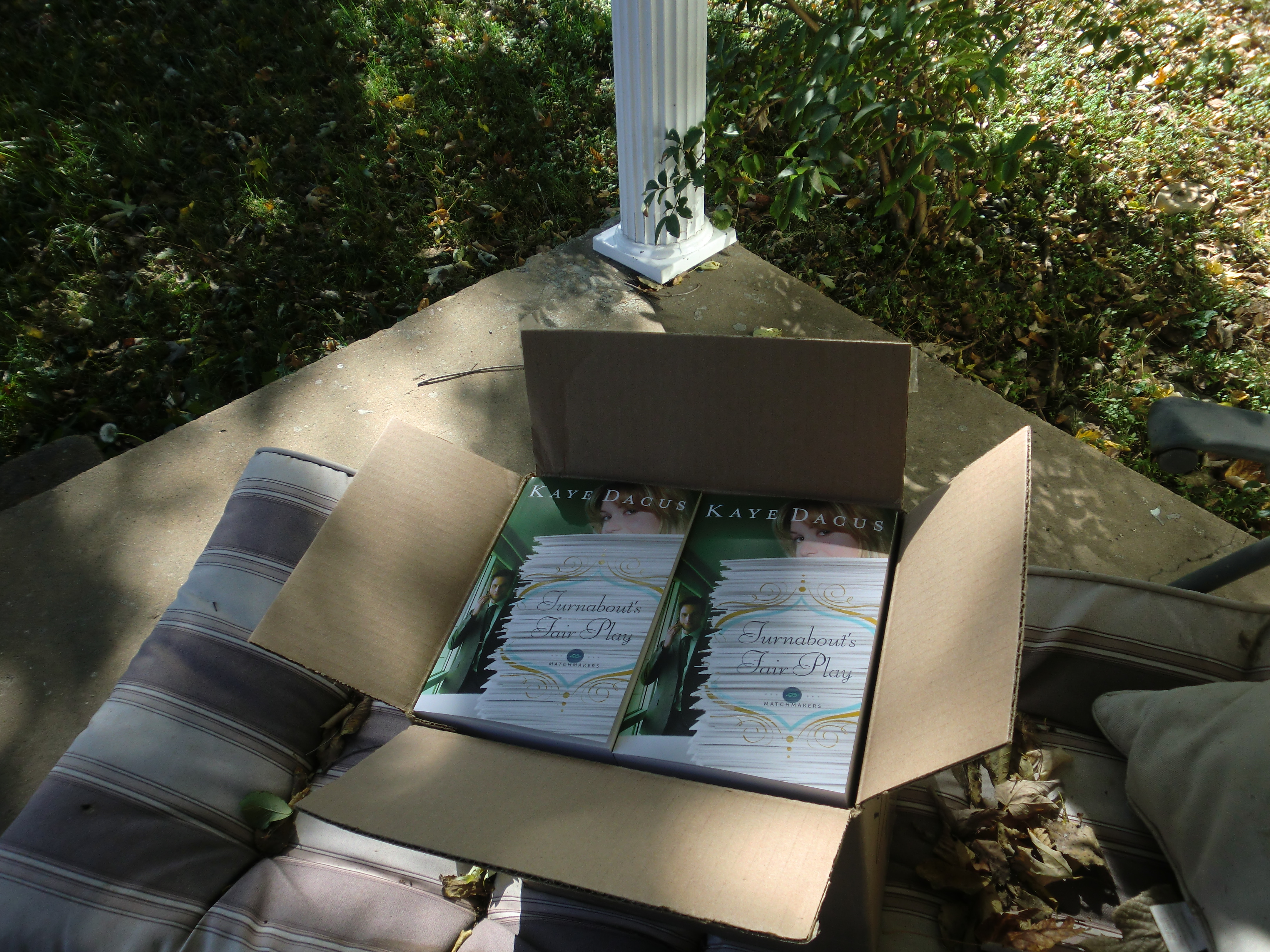

Which reminds me to say . . .
My TFP bookmarks came day before yesterday. If you would be willing to distribute them for me to get the buzz going about Flannery and Jamie’s story, send me an e-mail (see the Contact page) with your mailing address and I’ll get some out to you!


 KayeDacus.com