Writing Contest Prep: Words from a Judge on CHARACTERIZATION
You know what I haven’t done in a really, really long time? Teach a WRITING SERIES here on the blog!!!
Because I’ve had it suggested to me, many times, by many different people, that I should consider pulling together all of my teaching series and publishing them as an e-book, I took some time this afternoon to pull together a preliminary outline of what that might mean—pulling topics from my Writing Series Index as well as from the ever growing list of workshops I teach at the monthly MTCW meetings (and occasionally elsewhere).
The one that stood out to me as appropriate time-wise, as the deadline for entering the ACFW Genesis contest is Friday, is “Writing Contest Prep: Words from a Judge.” And because the deadline is so quickly approaching, each post will contain quite a bit of information. These are actual comments I’ve made over the past six or seven years of contest judging. So buckle in. This is going to be a fast-and-furious series! (Bear in mind, I judge almost exclusively the romance genre.)
CHARACTERIZATION – 15 POINTS (1-5 points each)
- Is the main character identifiable yet unique? Does anything about the character feel clichéd?
- Do secondary characters contribute to the story without distracting from it
- Do characters’ emotions seem believable and/or provide understandable motive?
Here’s where you either dazzle or fizzle. You want the judges (and your future readers) to identify with your characters right off the bat. So make them as strong and unique as possible right from the beginning.
Suggested Reading:
Getting into Character by Brandilyn Collins
Characters and Viewpoint by Orson Scott Card
Men Are Like Waffles, Women Are Like Spaghetti by Bill and Pam Farrel (will help with writing the opposite sex POV)
Also read novels in your genre with characters you love—read critically: https://kayedacus.com/2007/11/26/critical-reading-as-you-read-characters/
Comments I’ve made on past entries:
Having your heroine in such a negative state of mind for the entire entry isn’t the best way to hook a reader. This is a quote from a letter sent to me by an editor when her house was first looking at [The Ransome Trilogy] proposal:

- I found myself slogging a bit through it. Especially the beginning. The writing is fine. It’s clear, crisp, and clean. I think the problem for me was how the book starts. We begin with William and a not very important task. Then we go to a dreary afternoon with a girl who doesn’t want to be where she is and is unhappy with her life. What I wanted was more sparkle to open the story. I shared this with our senior editor, and she suggested I share this with you and ask if you are willing to add a bit to the beginning. We don’t have to necessarily change it, but perhaps we can have a prologue with [the heroine] in a situation in which she is happy. Start the story (a romance) with the heroine in a happier frame of mind.
Once I wrote a new opening scene in which the heroine was in a much happier frame of mind (though it still ended with the rug being pulled out from under her at the end of the scene) and cut the original opening scene in which the hero was going about a “not very important task,” the publishing house bought the series.
___________________________________
The main reason why we read fiction is to escape our dreary, negativity-filled lives. Give us happy characters in the opening scene—before you then start throwing conflicts at them. Just like in real life, we don’t want to spend a whole lot of time with people who are Negative Nancys—and that’s the kind of person [the heroine] appears to be from this short introduction to her—especially the last scene in which she turns on [the ex-boyfriend] for no apparent reason.
___________________________________
 In Characters and Viewpoint, Orson Scott Card wrote: “Just knowing what someone does while you happen to be watching him or her isn’t enough to let you say you truly know that person.” Right now, the reader is just watching your characters, not experiencing what your characters are experiencing (through deep POV) or learning about your characters’ innermost desires and motivations.
No matter how wonderfully complex and well developed a character is, a reader isn’t going to care about them unless they can identify with what the character wants. There are many names for this: goals, motivations, objectives, desires. In Getting into Character, Brandilyn Collins wrote: “What is your innermost Desire that will propel you through this story? . . . All of your main characters and important secondary characters should have a Desire. Conflicts between characters come into play when they are pursuing Desires that oppose one another” (37).
Right now, not only is a reader not going to identify with either of your main characters, they’re most likely going to be turned off by [the heroine’s] constant negativity and volatility and the way she speaks to the only other two characters who’ve been introduced: [the ex-boyfriend] and [her new boss/the hero] (especially [the hero]). Rather than strong, she’s coming across as petulant, rude, and, toward the end, downright mean and hateful.
[The hero], on the other hand, is very flat and unbelievable. He needs more motivation than just “he had to help her through the surgery.” Why? Why does he feel the need to help her? Would he feel this way about anyone in the office, or just her? Why? Go deeper. Why did he come back? Why did he buy this particular station? He says he’s changed from the person she knew twelve years ago, but he doesn’t understand why she’s still mad at him? He needs to feel guilt over who he was before if that change is going to be something important (as in, he wasn’t a Christian then and is now)—he has to not only want to show her he’s changed, but he has to want to make up for whatever he may have done in the past to hurt her. Also, his scenes are coming across as too naïve, too soft, too feminine. Try to “masculine” him up some.
Try to make sure that you’re giving each scene enough time to get established in the character’s POV, to give the character a scene intention, conflict, and either a resolution or a disaster that keeps them from reaching that goal. Short scene hops of less than 700 to 1,000 words are more like head hopping.
___________________________________
You also need some secondary characters, other than just [the ex-boyfriend], to help develop [the hero and heroine]. Just having the characters sitting around thinking about stuff all the time doesn’t make for compelling reading. They need friends they can talk to. [The heroine] especially needs a friend with whom she can be seen as being . . . well, friendly, instead of hateful the way she is with [the hero] and [the ex-boyfriend].
___________________________________
Be sure to keep everything in narrative from the character’s POV. When write things like, “When life as you know it pauses. . .”, that’s author intrusion, not characterization. Find a way to either say those things in dialogue, or put it into the character’s voice by having it be deep-third POV narrative, rather than second-person.
Read more…
Fun Friday–Let’s Talk Movies

Last week, dear friend Ruth and I went to see This Means War, the romantic-comedy-spy-action-adventure movie starring Reese Witherspoon, Chris Pine (the new Captain Kirk), and Tom Hardy (Heathcliff in the most recent version of Wuthering Heights), which is one of the funniest movies I’ve seen in a very, very long time:
.
So I thought it would be fun to look ahead to some movies coming out in March which I really want to see.
John Carter (March 9)
.
Wrath of the Titans (March 30)
.
Mirror, Mirror (March 30)
.
What upcoming movies are you looking forward to?
Thursday Thought Provoker
(If needed, click here to see a full list.)
Writer-Talk Tuesday: The Literary Stuff
 As someone who majored in English, I had terms and concepts like “symbolism” and “theme” shoved down my throat in every class. Maybe my thickheadedness regarding these concepts was a result of my inborn stubbornness, but I couldn’t point out a symbol or tell you the theme of a piece to save my life. (Thank goodness for Cliffs Notes—the way we dullards figured these things out in the pre-Wikipedia years.)
But after so many years of hearing about these concepts and having occasional A-ha moments when I discovered one of these literary nuggets on my own (or “got it” after someone else said something that sparked a connection for me), they actually started taking root.
Then, as I started delving into Critical Reading in grad school (which I mentioned yesterday), I not only started finding it easier to pick out these literary elements, but I realized that I was starting to use them in my own writing as well.
It doesn’t matter if you’re reading a category romance, a sci-fi thriller, or a historical epic, every story contains literary elements—it’s up to us to know what the elements are so that we can recognize them. So here is a very general overview of some of the biggies.
Theme: I was in college before I really got a grasp on what “theme” meant when analyzing literature. At its most basic level, theme is the message of the story—not the subject matter, but the “leave behind” or “moral of the story.” To illustrate, let’s look at Green Eggs and Ham. The subject matter of GE&H is that “green eggs and ham are worth eating, no matter the location,” while the theme is “having an open mind.” Theme can be intentional or unintentional by the author. I know that I, personally, do not set out to write a story with a specific theme; rather, as I write, a theme emerges, sometimes spiritual, usually something that I personally am dealing with at the time. Examples:
- The Wizard of Oz: No matter how far you roam, there’s no place like home.
- Pride and Prejudice: Love is more important than wealth or social status and can overcome all obstacles.
- The Star Wars saga: Everyone deserves a chance at redemption.
Imagery: “In a literary text, [imagery] occurs when an author uses an object that is not really there, in order to create a comparison between it and one that is, usually evoking a more meaningful visual experience for the reader.” What this basically means is the images that are called to mind by the prose. They can be concrete (descriptions of characters/settings) or figurative (feelings, emotions, ideas), sensory (sight, smell, touch, etc.) or kinesthetic (movement).
Figurative Language: This is the author’s way of turning a phrase to convey meaning. If well done, you may not even notice they’re there, unless you train yourself to notice them. However, if they’re not natural to the author’s writing style, they will stand out like a goose in a hen-house.
- Metaphor: comparing two very different things by substituting one for the other or saying one is the other. (“The fog comes on little cat feet . . .”)
- Simile: comparing two things using like or as. (“My love is like a red, red rose . . .”)
- Allegory or Parable: This was Jesus’ preferred method of getting a message across. On the surface, it says one thing, but when you dig deeper, you find there’s a hidden meaning. Or, in other words, something concrete used to explain something symbolic or thematic or amorphous.
- Analogy: This is very similar to metaphor and allegory—it’s the way of using a concrete idea to explain something difficult (such as comparing the first three chapters of the book to a first date).
- Personification: attributing human attributes to non-human objects. (“The rain wept down the windowpanes . . .”)
- Synecdoche: “A figure of speech in which a part is used for the whole (as hand for sailor), the whole for a part (as the law for police officer), the specific for the general (as cutthroat for assassin), the general for the specific (as thief for pickpocket), or the material for the thing made from it (as steel for sword).”
- Paradox: a statement or idea that seems contradictory upon first blush, but may actually be true. The oxymoron is an example of paradox. (A deafening silence, a painful joy).
- Hyperbole/Overstatement: intentional exaggeration. (“He finally picked up, but not until the phone rang five million times.”)
- Understatement: to purposely downplay something to illustrate its significance or importance or grandeur.
- Irony: Saying one thing but meaning the opposite. (Such as the the use of the phrase, “How nice,” when the speaker means “Ewww, that’s awful.”) Using contradictory ideas to portray what the author really means.
Alliteration: Unless you’re very new to my blog, you know how much I like alliteration. I fell in love with this literary device when I was in high school and first learned to put a name to it. There’s simply something satisfying and sonorous about using words that start with the same sound. It’s become such an integral part of the way I write, that most times, I don’t even realize I’ve done it until I go back and re-read my work aloud. Yes, my example in this paragraph sounds forced, because it was just to convey the meaning. But when done well, it flows and you might not even realize it’s there.
Connotation: Most words have both a denotation (the literal definition) and a connotation (the implied or understood meaning). For example: GOLD. The denotative meaning is a yellow, malleable, heavy metal element (Au on the periodic table). The connotative meaning can be anything from luxurious wealth to gaudy bling. Used literarily, the author could write that the woman “slithered” into the room. It doesn’t mean she literally got down on her belly and moved like a snake. It gives the connotation that she is snakelike in her movements, possibly in her intentions.
Unreliable Narrator: This is not found as much in modern literature as in classics. Henry James was a master at using the unreliable narrator. This is the method of writing such that the reader believes everything as the POV character sees it, only to realize later on (perhaps at the climax, perhaps sooner) that everything they’ve learned through that character’s POV isn’t real or true. This is the character who views the world through rose-colored glasses, the character who has an agenda, or the character who is going crazy but thinks she’s completely sane. A great example of an unreliable narrator is in Charlotte Perkins Gilman’s “The Yellow Wallpaper.”
You’re never going to use all of these in your writing—don’t even try! But familiarizing yourself with these will allow you greater insight into other authors’ approach to writing as you read, which will help you to start making these part of your own writing toolbox. And you may discover that you’re already using many of these without even realizing it!
Book-Talk Monday: Do You Review?

When I was in graduate school, each semester we chose five books to read—some could be novels, some could be writing-craft books, some could be critical books on the genre. But no matter which books I chose, be they fiction or nonfiction, I had to write up a response paper on each to turn in at the end of the semester delving into the reasons why I’d chosen the book, what my learning goals were before I started reading, what I got out of reading it, what I learned, and if my goals were met. (Obviously, there’s a lot more that goes into it—you can see some of how detailed it was by reviewing the Critical Reading series, linked on the Writing Series Index page.)
Because of that experience—and then because of becoming a professional editor immediately upon graduation—I had a hard time for the next five years picking up a book and reading it for pleasure. As I’ve mentioned a few times, it’s only been in the last year that I’ve been able to start enjoying reading again. What I haven’t been able to do, though, is bring myself to write reviews.
Let me explain. I can bring myself to write brief recaps of my reaction and general thoughts on a book (such as for the two books I just finished last week, A Tailor-Made Bride and A Kiss at Midnight, which you can see on my Books Read in 2012 Pinterest board).
Because I’m reading for pleasure, I really don’t want to have to stop an analyze a book when I’ve finished reading it. I want to be able to simply decide if I liked it or not, with maybe one or two main reasons why, not have to write a pithy recap of the story followed by a deep, thoughtful dive into the themes and morals and mores.
Also, because I want to be honest with my reactions to what I read—and because I’m very picky with what I like and don’t like and because I’m a published author and I don’t want to unduly influence anyone with my own personal opinions and reactions to what I read—I’m leery of posting anything publicly on Christian books I read which I don’t like. (That, plus the fact that I know too many of these authors personally and if I don’t like their books, I don’t want to hurt them by posting anything negative about their books.)
What about you? Do you review? How in-depth do you go with your analysis of what you read?
Fun Friday—Who Would You Put on the Cover of a Romance Novel?
It’s no secret that modeling for the front cover of romance novels has made someone very famous. And then, there’s Fabio. 😉
Did you know that Corbin Bernsen got his start modeling—and did some covers for Harlequin? Even though I’ve never been able to find an image, I met an author at a conference a couple of years ago whose first Harlequin featured Bernson as the hero on the front cover.
And then there’s this guy:
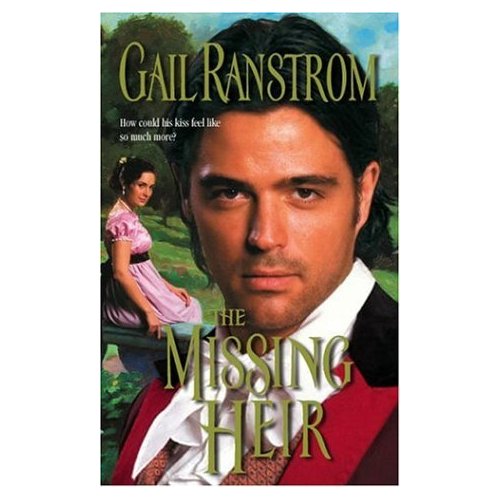
If you’re a fan of HGTV (or if you follow me on Pinterest), you recognize this guy: it’s John Gidding from Curb Appeal.
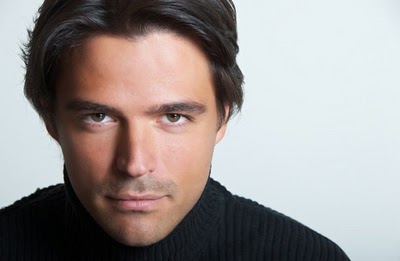
Yes, that’s right, John Gidding got his start as a model and did several romance novel covers (a few more of which you can see here, here, and here).
Of course, in this age of the proliferation of self-publishing—and of authors doing their own book covers, we might find that we see more and more self-designed covers like this:

Does that guy look familiar to you? Maybe because it’s a Photoshopped, flipped rendering of this actor’s headshot:

(How has this author gotten away with such a blatant use of a famous person’s image? Still trying to figure that out.)
Because they’re the key romantic leads in the series I’m working on right now, I’d love to have a “rendering” of these guys on my next three books:

Henry Cavill as Andrew Lawton (Follow the Heart); Chris Hemsworth as Dr. Neal Stradbroke (An Honest Heart);
Daniel Craig as Lord Stephen Brightwell, Viscount Thynne (The Heart That Waits)
So even though we’ve done this before (but it’s been a long time), I thought it would be fun to do it again.
Who would you like to see on the
front cover of a romance novel?
Get creative, get obsessional. And it doesn’t have to be just men, seeing as how images of women are so popular on the front covers of historicals in the Christian market. Be sure to post a link to an image if you can so we can see him/her, too!
Thursday Thought Provoker

Writer-Talk Tuesday: Renaming a Character Halfway Through a Manuscript
On Sunday, I posted this on my Facebook page:
Got to the second page of Julie Klassen’s MAID OF FAIRBOURNE HALL and discovered that not only did we pick the same name for our heroines (Margaret—though mine goes by Meg), we picked the same name for their maids—Joan! Thank goodness I haven’t finished/turned in FOLLOW THE HEART yet, so I can re-name my Margaret’s maid and no one will think I stole these names from the inimitable Julie!
Which I followed up that same afternoon with:
Okay, I have a new name for Meg’s maid. And now I want to write the maid’s book! 😀
(It’s amazing how spending time considering why a secondary character has a certain name can make us invest in that character’s story!)
But then, on Monday morning, I got this e-mail from my friend Ruth:
So I saw you posted something on Facebook about renaming Meg’s maid…and I just read the summary for Maureen Lang’s upcoming Gilded Age book, and her heroine is named Meg Davenport…what is the deal with Megs???
At this point, I was rather dismayed. Not only was there one famous Christian historical romance author with a heroine named Margaret/Meg, whose book was out before mine, now there’s another one. I told Ruth that my inspiration for the name for my heroine in Follow the Heart came from Margaret Hale from Elizabeth Gaskell’s North and South, and that I imagined these other authors were either consciously or subconsciously either influenced by that character and/or by Meg March from Little Women. (But at least we could all be confident that Margaret/Meg was a popular name in the mid-nineteenth century both in England and in America.)
Halfway through writing this e-mail back to Ruth, my character suddenly (and finally—after struggling to connect with her since I signed the contract for this book back in August!) started talking to me. And you know what she told me?
Why have you been calling me Meg when my name is Katharine,
though everyone in my immediate family calls me Kate?
.
So, please allow me the privilege of (re)introducing
Katharine “Kate” Dearing
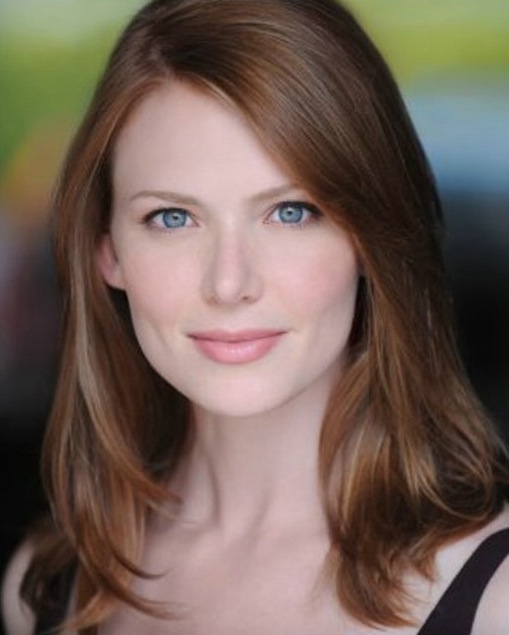
Holley Fain as Katharine “Kate” Dearing
.
What happens when we re-name a main character (not quite) halfway through a manuscript? Well, I’ve written before about how changing the name of the heroine in Stand-In Groom (from Nell to Anne) changed who that character was at a fundamental level.
After going through and changing the Margarets and Megs to Katharines and Kates in my manuscript, I discovered myself changing the ending of Kate’s scene in the first chapter—and suddenly I understood why she was Kate/Katharine and not Meg/Margaret. She explained it to me right there on the page in a revision of the scene ending, despite my determination not to do any revisions/rewrites until I complete the first draft of the manuscript. However, what she revealed to me at the end of that scene not only allowed me to see where I can beef up the interactions between Kate and the romantic interest(s) in the story, it will help me going forward; because I now have a much clearer understanding of her personality.
But rather than try to force myself into dropping this newly understood Kate/Katharine right into where I’d left off last night with my writing, I decided to stop and get my bearings on the story to date.
So I gathered up some supplies . . .

. . . and I started storyboarding what I’ve written of Follow the Heart so far:

The small flower-shaped Post-it Notes are places where I know I need
rewrites/revisions/additions to what I’ve already written. But other than the
ending of the scene in the first chapter, I don’t plan to make any of these
additional changes until after I finish the first draft.
In writing the summaries of the scenes for the first few chapters—the ones I wrote as samples that went out with the proposal more than a year and a half ago—it was hard to remember to write Kate/Katharine instead of Meg/Margaret (she’s called the nickname by immediate family, the full name by everyone else). But then, because I was going from my manuscript—in which I’ve already changed the name (yay for find-and-replace!)—it became easier and easier to write Kate/Katharine. (Though typing Katharine might prove to be difficult—since it is my full name but mine has an E in the middle instead of an A, but I’m using the spelling Katharine in honor of my favorite actress, Katharine Hepburn.)
And now, a couple of hours later, I’m starting to think of her as Kate rather than Meg. And when I look at the pictures of Holley Fain I’ve pulled into my Templates file, I just can’t see her as a Margaret. She looks like a Katharine to me.
Has changing her name changed her personality—no, I don’t believe so. Changing her name has revealed her personality to me.
As a writer, have you ever changed a character’s name? How did that go for you?
As a reader (or movie/TV viewer), have you ever felt like a name didn’t work right for a particular character? That they should have been named something else? How did that affect your enjoyment of the story?
Book-Talk Monday: Wishlists
Two weeks ago, I wrote about how I have my books organized, both the physical books on the shelves in my office as well as the e-books on my Kindle. But what I didn’t talk about was keeping track of the list of books I want but don’t yet have. So let’s talk wishlists.
Online Retailer Wishlist Options
Of course, the most obvious place where I keep track of books I want but which (a) aren’t out yet or (b) I don’t have money to purchase yet, is the place where I buy most of my books: Amazon.
I recently split up my list there into several different categories, including one for just books. It’s so nice to have this ability now, so that I’m not having to sort through DVDs, music, and other stuff that I also want (so many things to want, so little money to get them with).
However . . . now that I have my Kindle, my book wishlist is filled with titles of upcoming books—those not yet released. Because most of the time, if a book is already out and I read a review of it or see it in a list of recommendations based on other titles I’ve purchased, I don’t add it to that wishlist, I do something else.
E-book Samples
I’ve recently had to stop reading several of the book-review blogs to which I subscribe (with Google Reader) because I was finding WAY too many books to add to my various wishlists. And when it’s a book that’s already out, instead of adding those books to my Amazon wishlist, I go ahead and download the sample chapters to my Kindle. Which is why, as I wrote about two weeks ago, I had to split my Historical Romance collection on my Kindle, creating a “samples” collection with more than 95 titles in it.
And since my wishlist on Amazon now contains mostly upcoming titles, I make sure I check it at least once a month to see if anything on it has released—so that I can download the sample chapters. (At which point I do usually leave it on the wishlist. I don’t really have a system in place for whether or not I should remove something from the Amazon list once I’ve downloaded the sample. Maybe I should think about that.)
And then, of course, I have the list on Goodreads that has all of these samples listed as well. But that’s more for record keeping.
At the Library
Because I wasn’t sure I’d ever get around to reading those samples (or the whole books they represent), I took that list of samples from my Kindle and went through the e-book listings on my public library’s website and made a wishlist of all of them which they have available there. Granted, they don’t have a lot of them (fewer than half), but at least they have some, so now when I need something new to read (and don’t have the funds to purchase anything new), I can go to that website, see what’s available, and download it and be reading within a few seconds.
Pinterest
Then there are those books (out or upcoming) I see which grab me with their oh-so-pretty covers or great marketing copy. And it’s so easy just to click that Pin It button on the tool bar. So I have a Books I Want board on Pinterest. And the great thing about this is that it’s public and a friend of mine who works for a bookseller can occasionally get Advanced Reader Copies or spare marketing copies of those books for me, so now she can see which books are on my radar so if she sees them, she can pick them up for me.
_________________________________________________
I must keep lists of books I want to read, because if I don’t, I’ll forget about them—because there are always so many new books coming out. Will I ever get to everything on my lists? No. Not a chance. Because as I just said, there are always so many new books coming out. But at least I’m trying to get to as many of them as I can.
How do you keep track of books you want? Where/how do you keep your wishlists?
Caption the Photo Contest Winners
And the winners are . . .

‘South Schmouth’ he says.
‘I don’t need to stop and ask directions’ he says.
(Keith R.)
.
.
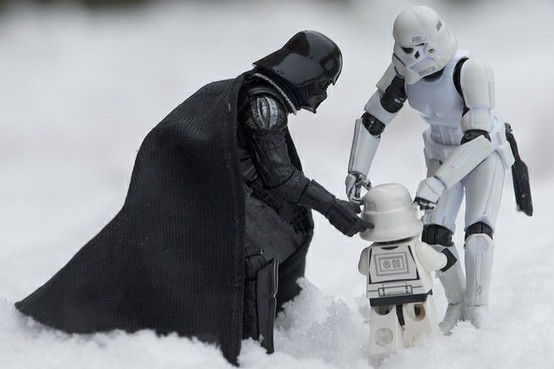
“This is not the child you are looking for.”
(Daphne Tutor Webb)
.
.

Just smile and wave, Carl. Smile and wave . . .
(Amanda)

 KayeDacus.com