Writer-Talk Tuesday: Cover Examples I Used for FOLLOW THE HEART
Thanks for all of your help and suggestions last week. While I didn’t use all of them, some of them did lead me to some books I might not otherwise have seen . . . and I already had a few I wanted to use for possible inspiration. So here are the “Sample Covers to Consider” I submitted to B&H. Now the waiting begins! 😉
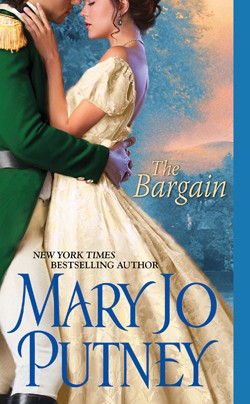
My editor and I discussed the idea that we’d like to see a cover in which the heroine (Kate) and the two men she must choose between (Andrew and Lord Thynne) appear on the cover. So I sent this one with a suggestion that maybe it could be something like this with the “other” man looking on in the background (as happens in at least one scene in the book!).

I really prefer the idea of an image with the heroine’s back to the “camera.”

Another “back to camera” cover. Just imagine something like this with
an English garden or the Crystal Palace in the background!

Or something like this with the image of her in the costume above and the Crystal Palace below.


These covers caught my attention some time ago, so I had to include them,
just for something different.

I love the atmosphere created by this cover—and the iconic image in the background.

This is a photo, not a book cover; but, like Bergren’s cover above,
I love the atmosphere created by this image.
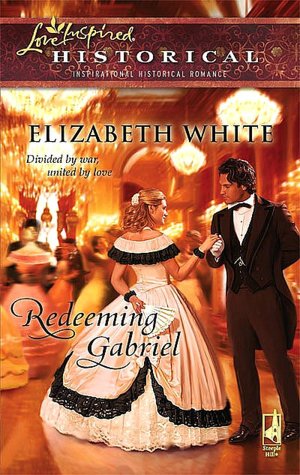
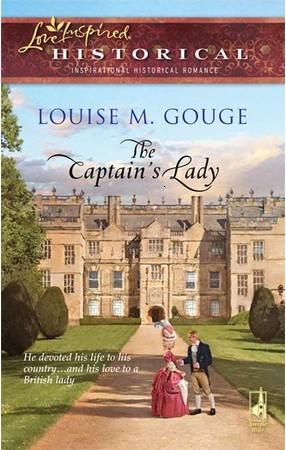

LIH has done a fantastic job evoking both the historical era and the feel of a romance novel with their recent covers, and these were my three favorites.
Book-Talk Monday: Where Do You Read?

I know that for most of us, the answer is: anywhere I find myself with a book in my hands—that’s where I read. But let’s narrow this question a bit:
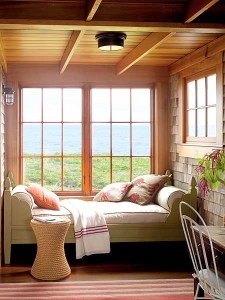
Do you have a certain chair, sofa, swing, rocker, etc., where you look forward to retiring to with a book (or your e-reader)? Is there a certain time of day that’s set aside just for reading in that special reading nook?
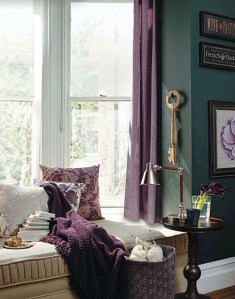
For me, it’s in bed at night. But that’s because I don’t have a reading nook like one of these in my home:


 . . . .
 . . . .
Where’s your favorite place
and what’s your favorite time to read?
Fun Friday–A PINny for Your . . . Pins

It’s no secret. I’m addicted to Pinterest. Because I’m a visually oriented person, this new form of social media plays directly to my strengths . . . and weaknesses (I can’t tell you how many people’s food-related boards I’ve had to unfollow—I just can’t handle food p|o|r|n). So, since I couldn’t think of anything else for Fun Friday (I’m too prone to the immediate gratification of sharing fun/funny things on Facebook as soon as I see them), I figure I’d share some of my favorite images I’ve pinned this week (click to see the pin and learn more) . . .


What are some of your favorite images you’ve seen around the web this week? Be sure to post a link!
Book Cover Help Needed
I need your help! Post links to images of your FAVORITE HISTORICAL ROMANCE NOVEL COVERS—Christian or general-market. I need to turn in my marketing/cover design sheet for Follow the Heart on Friday and they suggest sending examples of covers to get a feel for the type of image for my book.
 Book 1 of The Great Exhibition Series
ISBN: (to come)
B&H Publishing Group
May 2013
Kate and Christopher Dearing’s lives are turned upside down when their father loses everything in a railroad land speculation and they’re shipped off to their mother’s brother, Sir Anthony, in England with one edict: marry money. At twenty-seven years old, Kate is no debutante . . . and has the stigma of being passed over by eligible men many times—and that was before she had no dowry. Christopher would like nothing better than to make his own way in the world; and with a law degree and expertise in the burgeoning railroad industry, he was primed to do just that—in America.
Though their uncle tries to ensure Kate and Christopher find matrimonial prospects only among the highest echelon of British society, their attentions stray elsewhere… to a gardener and a governess.
While Christopher has a chance to make his own way in life—which would enable him to lay his affections where he chooses—he cannot let the burden of their family’s financial situation crush his sister. Trying to push her feelings for the handsome—but not wealthy—gardener aside, Kate’s prospects brighten when a friend of Sir Anthony’s, a wealthy viscount, shows favorable interest in her. But will marrying for the financial security of her family be the right thing to do, when her heart is telling her she’s making a mistake?
Mandates . . . money . . . matrimony. Who will follow the heart?
Writer-Talk Tuesday: Let’s Practice Our Elevator Pitches
 What’s an elevator pitch?
You need to be able to explain the gist of your story in twenty seconds or less—about the length of time you’ll have if you find yourself in an elevator with your dream agent or editor at a conference. You will also hear people call this a one-sentence pitch. Start by figuring out what your main theme and conflict are. Then try to summarize the story from each of your main characters’ viewpoints. You may discover you come up with several sentences that you like.
Here are some examples from my work:
- Falling in love with a client could cost wedding planner Anne Hawthorne her business; learning the true identity of the groom could cost her heart. (Stand-In Groom)
- An American woman is sent to England to marry wealth, but finds herself torn between the poor man she loves and the viscount who offers the wealth and stability that can save her family. (Follow the Heart—the one I just turned in)
- A physician with a secret past falls in love with the daughter of one of his patients. He must choose between revealing his past and risk losing everything or keeping his secret and watching her marry another man. (An Honest Heart—the book I’ll start writing June 1)
- Stephen Brightwell, Viscount Thynne, wants to be loved for himself, not his money or title. Mercy Timperleigh has never married because of the shame of her family’s past. When the aristocrat and the schoolmistress fall in love, is it a love that has been worth waiting for? (The Heart That Waits—the third book on my current contract)
I used all of these on the proposals for these books. (You can see the proposal for my current series here—but be warned: the proposal includes the full synopsis of each book, including how they end.) I also sent all of my “elevator-pitch” ideas to my publishers when it came time to work on the marketing packets for each book—and because I’d already come up with several for each book, that made the task so much easier.
Now it’s your turn. Share your elevator pitch with us. If you’d like help with it, please let us know!
Book-Talk Monday: Do You Read Differently?
I’m in the midst of judging the second round of the ACFW Genesis contest for unpublished writers. Whenever I open up one of the entries, I have to remember that I’m not reading it as a professional editor, but as a mentor, as a critiquer. It may not seem like there would be a big difference, but for me there is. As an editor, I’m very cut-and-dry with my comments—terse almost. I don’t sugarcoat my suggestions for changes; I just point out what needs to be changed and why—and that’s only if I don’t just go ahead and make the change myself. I can’t do that when I’m critiquing. I have to not only look at the structure/technical aspects of the writing and story, but I have to think about the person behind the writing. I know that we all say that writing contests are impersonal, not focused on the writer but on the writing, which is why they’re anonymous. That’s partially true. I’m not trying to figure out who the writer of a submission is. What I mean by saying that I think about the person behind the writing is that as I’m reading, I’m constantly thinking of what guidance that writer needs from me, what experience I have that I learned from others that I can pass on to this person so that they can follow their dream and calling as I did.
So this got me thinking about how the fact that I’ve now started sharing brief “reviews” of the books I read on Pinterest has changed the way I think about the books, especially as I get toward the end of them.
Before, when I finished a book, I didn’t really consciously sit down and think of what I thought about it. I either liked it or I didn’t. If I ended up in a conversation with someone else who’d read the same book, I would then put my thoughts and feelings into words—words shaped by the feelings/reactions of the other person: warmer in praise if we both liked it, more subdued if we are of opposite opinions.
I’ve written on the blog before about the in-depth critical reading process I had to do in graduate school and how, between that and making my living as an editor for almost six years, I stopped reading almost completely for most of that time. It’s only been since last year that I was able to truly start enjoy reading for pleasure again.
But when I think about trying to write real reviews of books for Amazon or wherever, it throws me right back into that “reading means working” mindset that made me quit doing it for so many years. And I realized it’s because I read differently if I know I have to write an analysis/review of what I’ve read afterward. That’s why I’ll keep up with the brief liked-it/didn’t-like-it blurbs on Pinterest (which has a 500-character limit now) and not stress myself out thinking about writing “real” reviews.
Do you read differently when you’re reading something to review than you do if you’re just reading for pleasure?
Thoughtful Thursday
Today, tell someone you know
how much they mean to you.
Then come back here and tell us about it.
.
Writer-Talk Tuesday: May 2012 Update & Summer Writing Goals
 Well, you know what my April was like . . . not much writing for most of it and then a flurry of activity the last week of the month.
I promised myself when I signed this new contract back in August that I would get a first draft knocked out with plenty of time to have MONTHS to do revisions, unlike the last several books for which I had to turn in what amounted to the first draft (edited as I wrote, but still, there are things I would have changed, polished, eliminated, or added in several of my manuscripts if I’d had proper time for revisions).
However, due to unforeseen circumstances—grappling with the decision of whether or not I was going to have to give up my life in Tennessee and, at forty years old, move in with my parents again (which I did after dropping out of college at age 21); then, getting a part-time job at a local church which allowed me to stay in Nashville, but which didn’t offer the income needed for me to stop being in a constant state of panic about finances; then, there’s the health issues I’ve faced and am still dealing with; and, finally, interviewing for and being offered a new, highly anticipated full-time job at the beginning of April and starting the week before my book was due—that just didn’t happen.
There wasn’t a lot of room in my brain left for creativity over the past nine months. And when I did try to write . . . well, the best analogy I could come up with is when you go to bed so exhausted that you’re certain you’ll fall right asleep and enjoy the most refreshing night’s sleep you’ve had in a long time. But then you lie there in the bed staring at the ceiling because your brain just won’t shut down. Your body is relaxed, fatigued. You may even have your eyes closed. But sleep remains elusive. Then, joy of joys, you doze off, and it’s wonderful. But moments later (it seems) you’re wide awake again.
That’s what the experience of writing this book was like for me: I could feel the story right there, and if I could just fall in to it (like falling asleep), I’d get into that “dream state” of writing in which everything else disappears; and my writing wouldn’t be taxing, it would be refreshing, invigorating, even. Instead, I was like that fatigued person, wishing, begging, for sleep to come, but only experiencing small “cat-naps” which left me more frustrated and fatigued than I was before. I would write a few hundred words, and it was a horrible, wrenching chore. I did, on occasion, manage to lose myself in a scene—actually picturing it in my head (which was the most difficult part of the process of this book, which is highly unusual for me) as I was writing. In the past, that always led to momentum, to being able to pick right up with the next scene, and the next. This time, I’d finish the scene and I was “wide awake” again, knowing “sleep” would remain elusive.
Unlike with my first manuscripts, where I was very much like a baby learning to walk, this book made me feel more like a stroke or traumatic-brain-injury patient who was having to re-learn to talk, walk, and eat. Every word was a painful struggle to get it out of my head and on paper.
But now that I am working full time again, there’s something I absolutely cannot do. I cannot allow myself to get into the position again in which I’m a few weeks out from deadline and tens of thousands of words short of getting the book finished.
So here’s my summer writing goal, and I need some accountability partners to help me stick to it.
My goal for An Honest Heart, Book 2 of the Great Exhibition Series, which is due October 15, is to begin writing it on June 1, write at least 1,000 words every single day and have the first draft finished by August 31. That, then, will give me until the due date to work on revisions/edits/rewrites. And to possibly even turn it in a little early.
Other than an overnighter to Birmingham, Alabama, in July to speak to the RWA group down there, I’m not going on any trips/vacations this summer (no vacation time until I hit my 1-year anniversary at work), so there should be no major interruptions/distractions. (And it’s about a 2.5 hour drive to Birmingham, and we all know how much I love to write in the car!)
That means I need to spend considerable time this month doing research on mid-Victorian seamstresses and doctors (as well as the part the Australians took in the Great Exhibition). But I hope that a focused, concerted effort on research will not only mentally prepare me, but it will get the story ideas flowing.
And I’m hoping, now that I’m working full time again, that writing will once again become something I need to do—to clear my head from work, to decompress after a long day, to work things out in fiction—rather than something I have to do because I need the money so I don’t get evicted or starve.
What are your writing goals for the summer? How do you intend to stay accountable for keeping those goals?
Book-Talk Monday: What Are You Reading (May 2012)
It’s the first Monday of the month, so it’s time to share what we’re reading!
.
- What is the most recent book you’ve finished reading? (Please tell us a little about it, and whether or not you enjoyed/would recommend it.)
- What are you currently reading?
- What’s the next book on your To Be Read stack?
Fun Friday–STICK A FORK IN IT . . .

This week, I turned in Follow the Heart to my editor, Julie Gwinn, at B&H Publishing. I cannot begin to express just how relieved I am to have it in her very capable hands!
As the image above shows, what I turned in is a little “undercooked.” Now, that’s how I like my steaks, but not how I like my books. But I know that the brilliant editorial team at B&H will grill that book (and me) until it’s WELL DONE. 😀
As I neared the end of the book, I had an idea for a potential follow-up series to this one—a series set at Mrs. Headington’s Home for Wayward Women. A place where women from wealthy families go when their reputations have been compromised and they need to be “reformed.”
I thought I’d share a few images that really helped me out in writing this book, especially toward the end.

The Orangery at Dumbarton Oaks

Day dress, early 1850’s United States, MFA Boston
(It’s actually blue, but I changed the color)
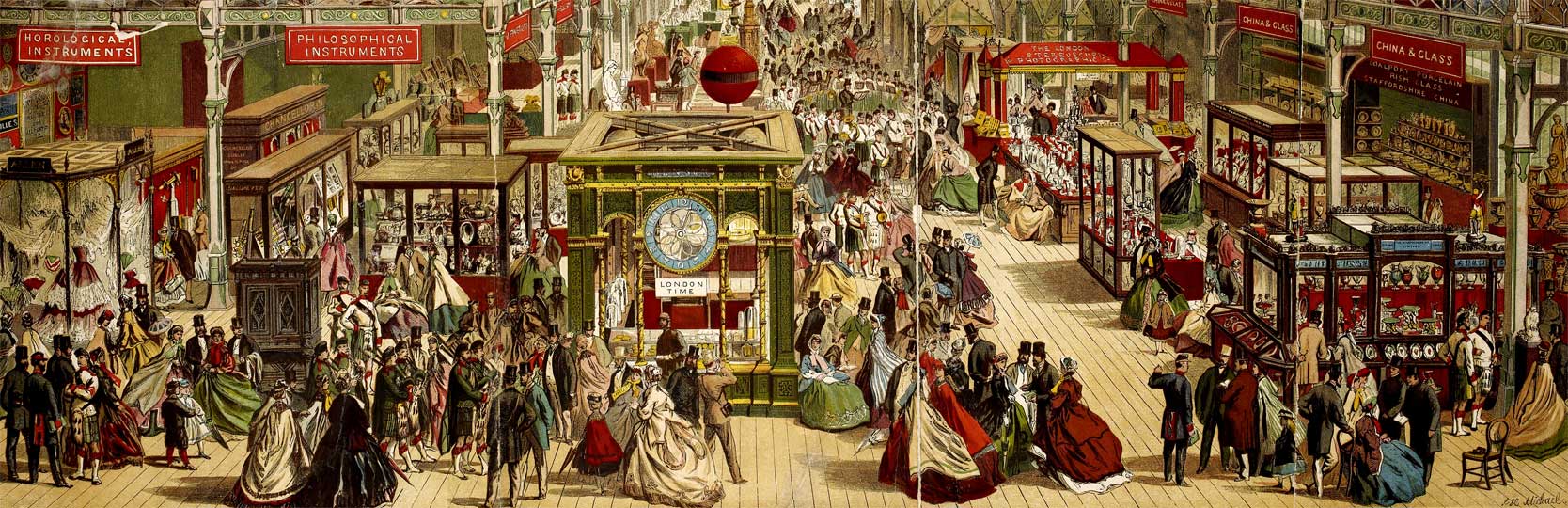
Panoramic view inside the Crystal Palace at the Great Exhibition (click to enlarge)
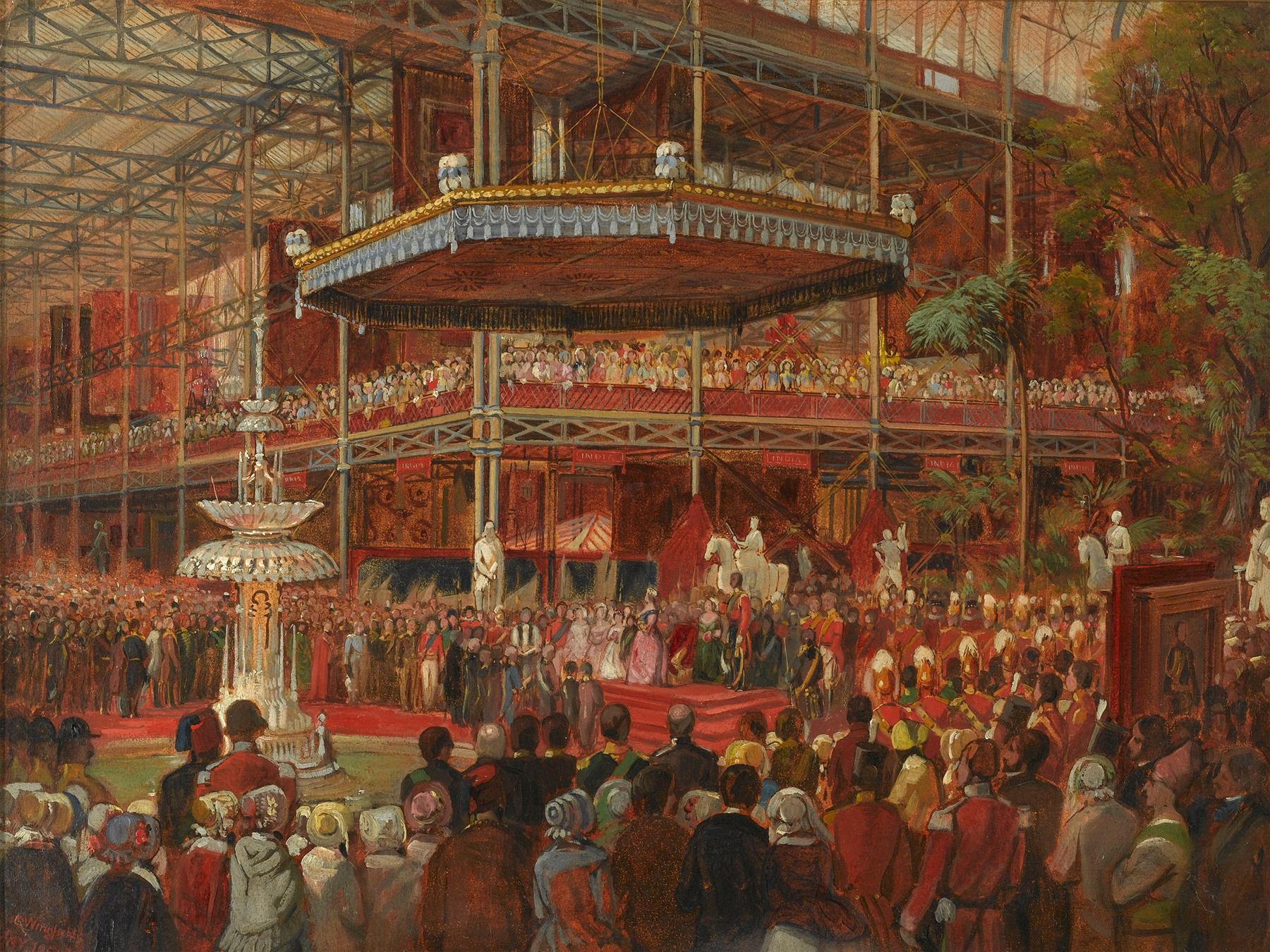
The opening ceremony of the Great Exhibition, May 1, 1851
(click to see full size)

Queen Victoria (in pink), Prince Albert (in uniform),
and other dignitaries at the opening of the Great Exhibition, May 1, 1851
(click to see full size)
Have a great weekend—I know I will!

 KayeDacus.com