Big Sister vs. Little Sister–Working with the Analytical and Creative Sides of the Brain
Are you RIGHT BRAINED or LEFT BRAINED?
Hop over and take this quiz to find out for sure:
Are You Right or Left Brained?
It’ll open in a new tab/window, so it’ll be easy to come right back over here once you’re done.
Got your results?
As I have known for quite a long time, here are my results:
You Are 50% Left Brained, 50% Right Brained
It’s a Sister Act
At the Think Tank meeting for members of my local group on Saturday, I hit upon an analogy on how to describe the whole left-brain, right-brain thing: Sisters. (With sincerest apologies to my own Big Sister.)
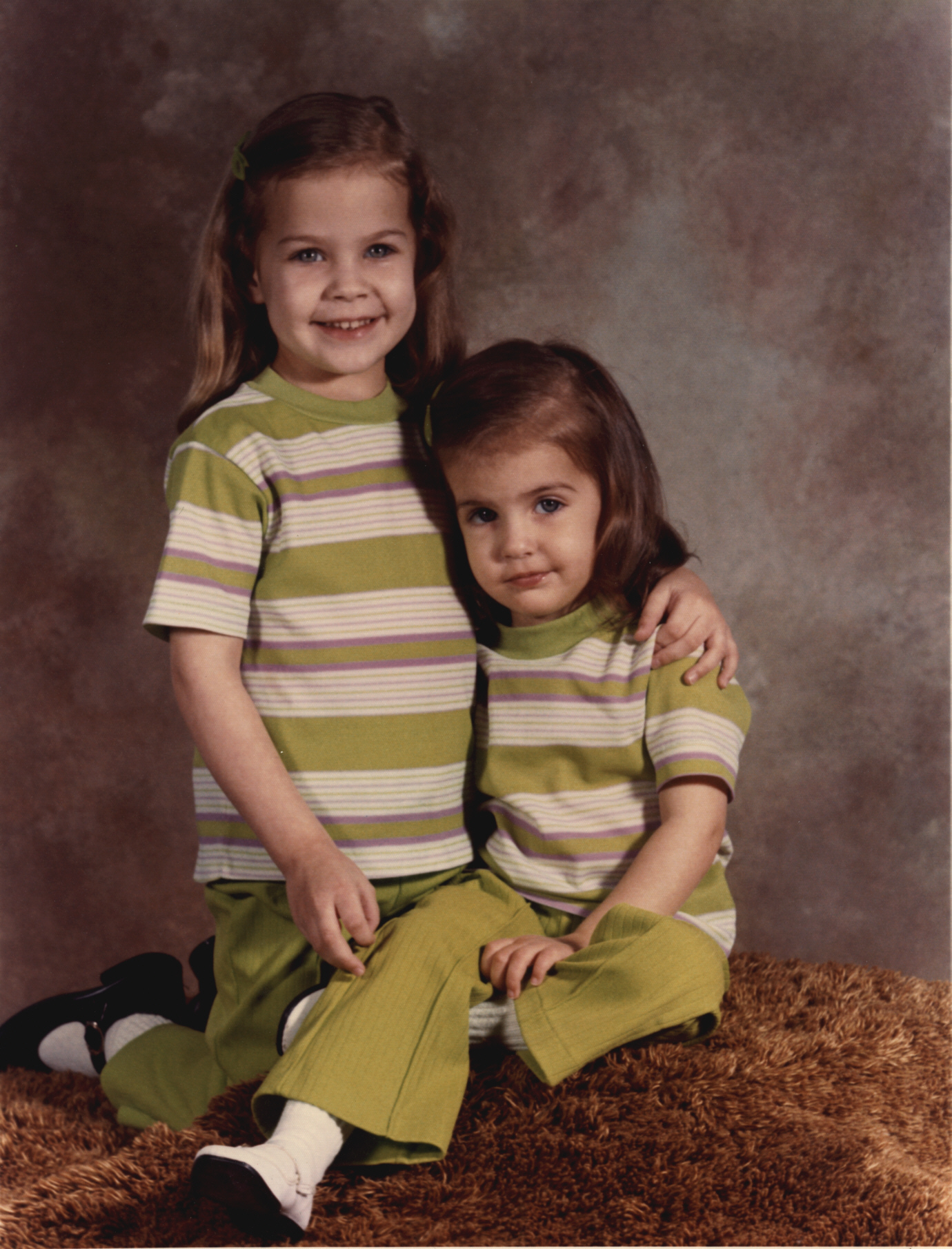
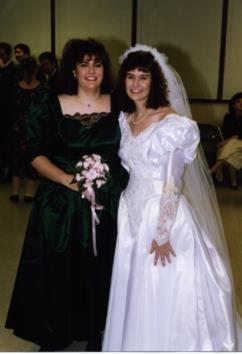
My big sister and me right before my parents discovered I had chicken pox.
The right brain is more like the Little Sister—the one who wants to emulate her Big Sister . . . until she realizes she doesn’t like playing school or playing house, and would rather take her Barbies into her own room and play by herself because Big Sister doesn’t understand the storyline that’s running through her head. Little Sister is the one who slips around, over, and under the rules—not because she doesn’t respect or love the rule givers (the parents in this analogy) but because the rules infringe upon and chafe her spirit. She wants to do her own thing, to be her own person. “Getting it right” and “playing by the rules” aren’t her main focus, though she’ll do it because she wants to make others happy. She instead seeks out opportunities in which she can express herself freely.
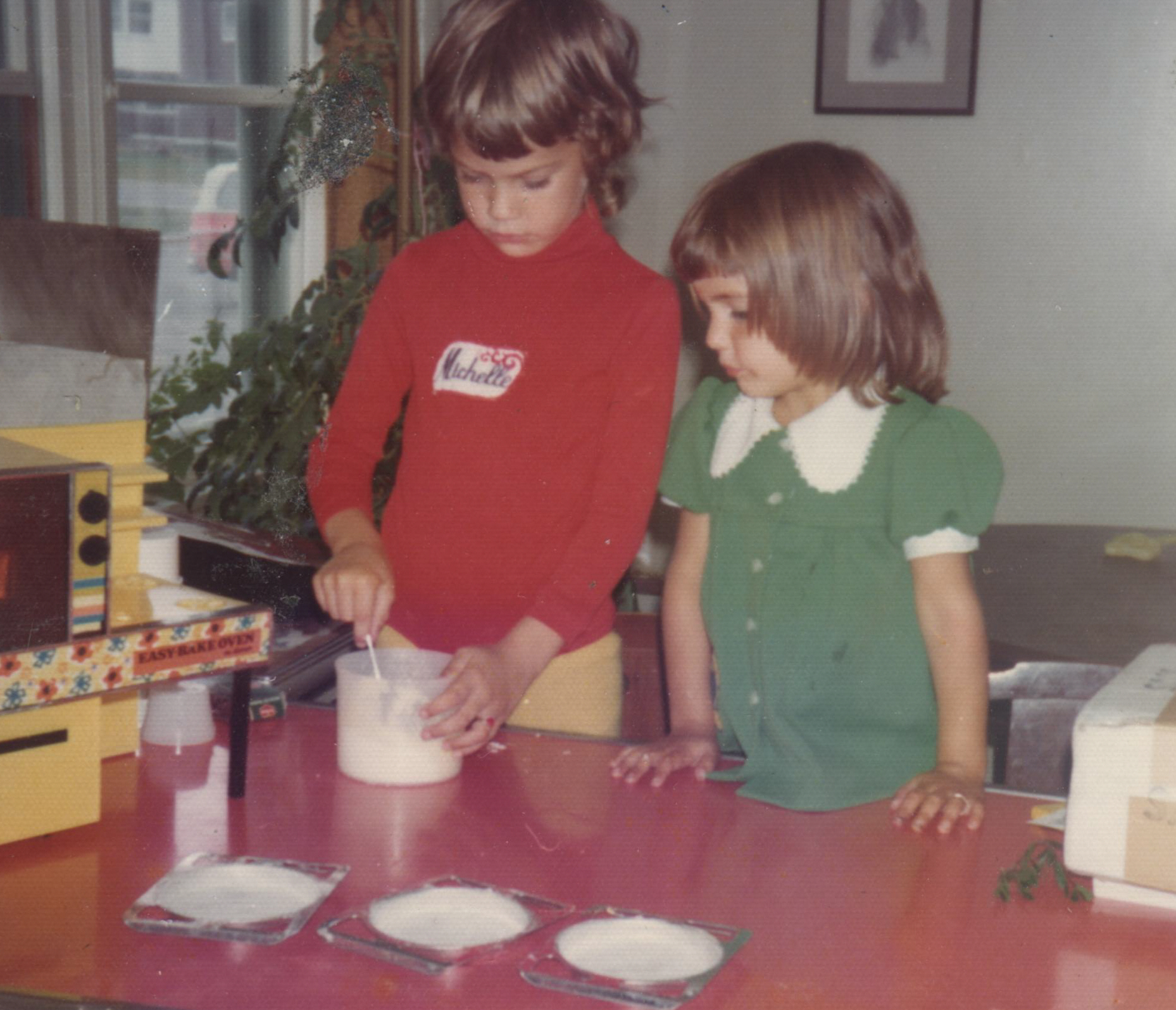
Michelle and Kat and the Easy Bake Oven, c.1974
For a while, things are good. Throughout childhood, there seem to be opportunities for both sisters to exercise and express their strengths. Big Sister excels at school. Little Sister excels at playing at recess and in the backyard after school. Big Sister does well at math and penmanship. Little Sister excels at art and story telling/writing. Sometimes, they enjoy playing together. Most of the time, though, they stick to their own favorite things to do alone.
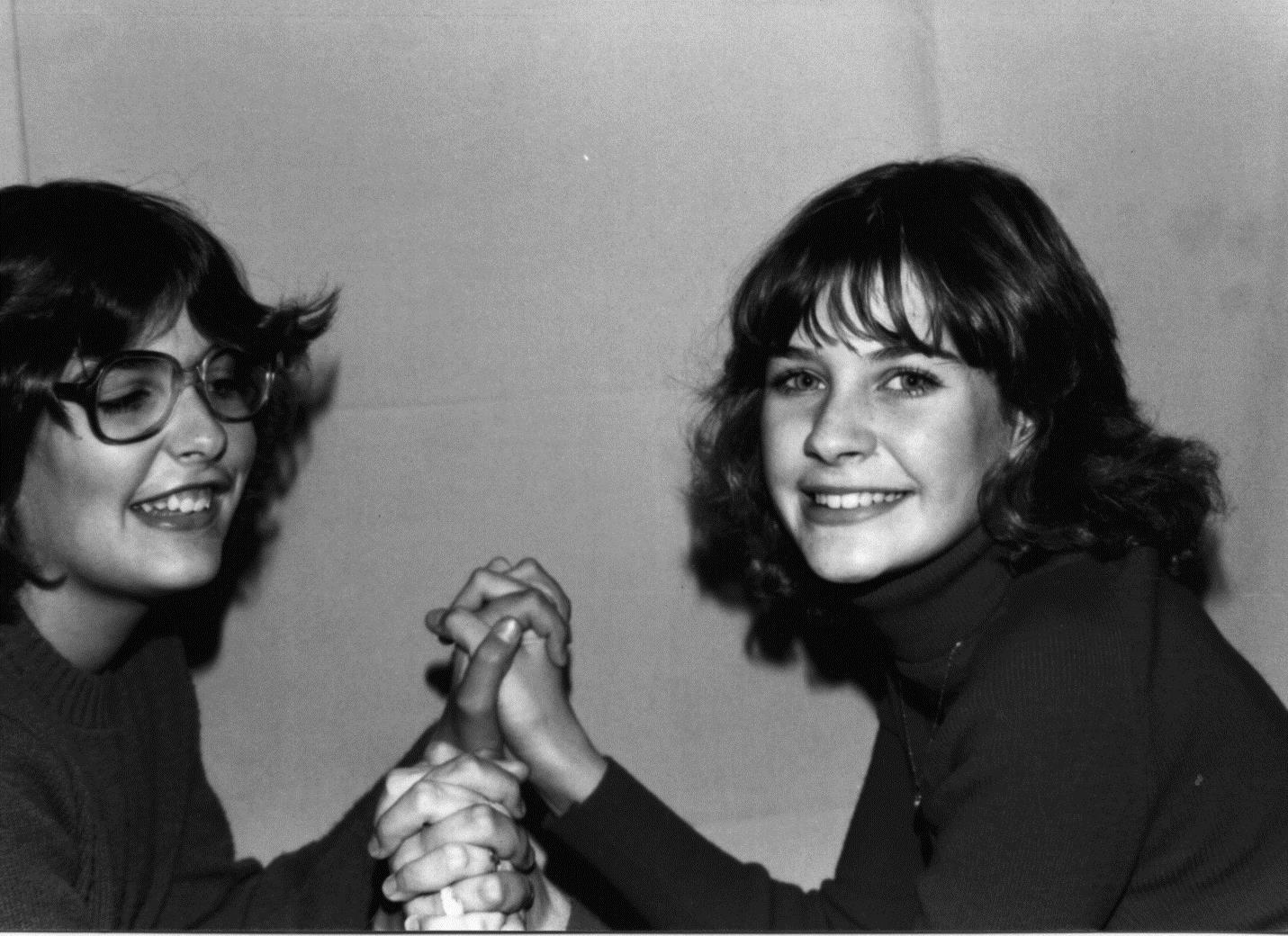 Eventually, though, there comes a time when one of the sisters starts to take more of the spotlight than the other. If Big Sister is a straight-A student and gets into honor societies and joins the student government and gets offered scholarships from all kinds of big schools, then Little Sister, with her drawings and her stories, is somewhat forgotten. Little Sister is pressured to be more like Big Sister—“Why can’t you do better in school? You just need to apply yourself. You’re as smart as she is—why can’t you get good grades, too?”
If the Little Sister excels—she’s a dancer or an artist or a writer who wins awards and contests and gets into exclusive clubs and groups—it’s the Big Sister who gets the pressure to be more like her sibling.
If both sisters have good self-esteem and a strong sense of confidence in her own uniqueness and her own individual talents, they learn to support and encourage each other—and to share the limelight with each other by shining it on her sibling’s accomplishments.
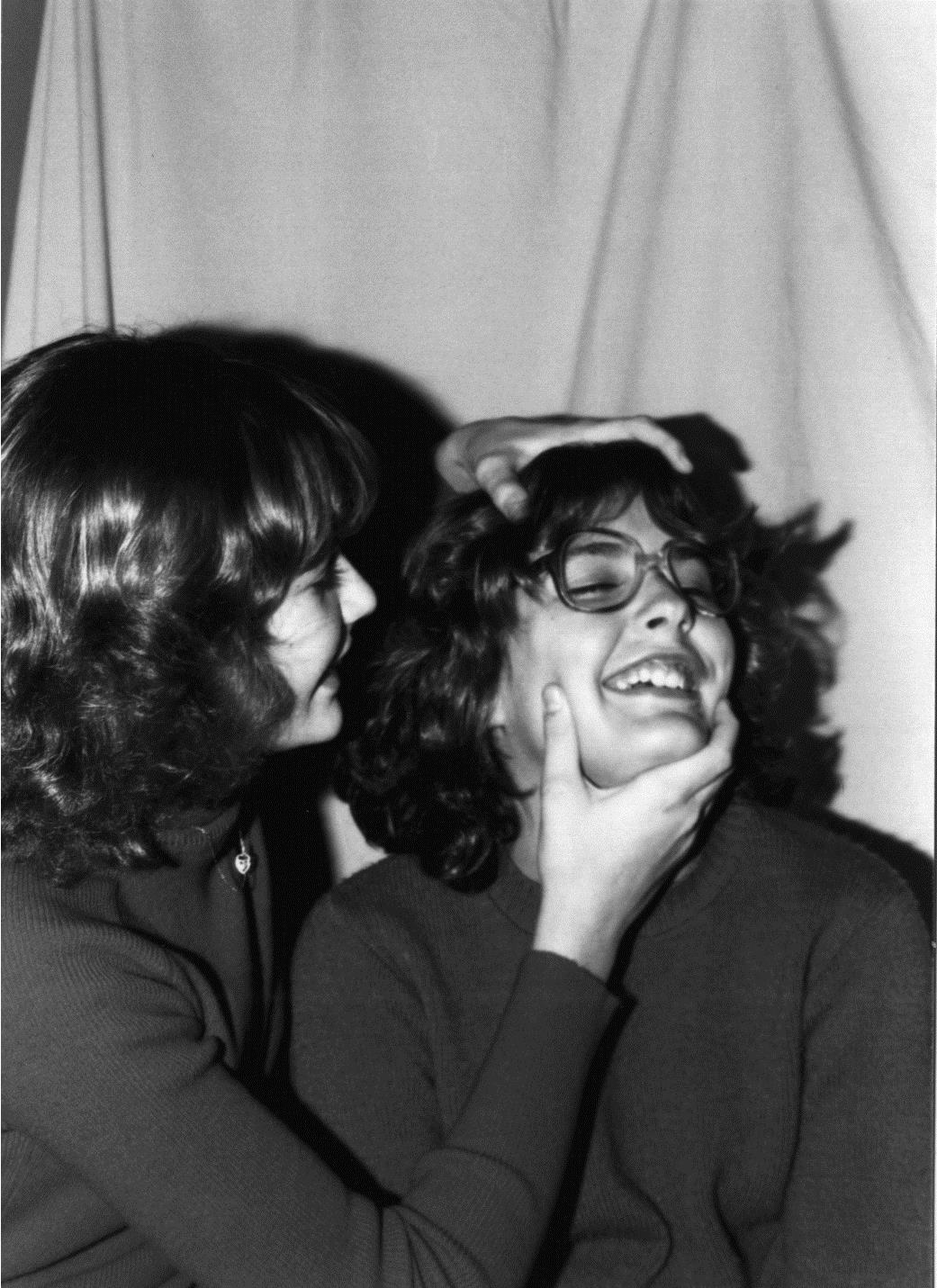 However, if one sister’s personality is stronger than the other’s, or if one is given more freedom of expression or latitude in which to practice/exhibit her talents, it creates friction. In the worst-case scenario, the sister with the weaker personality or less self-esteem shrinks into the background and, quite possibly, estranges herself from the family.
What Does This Have to Do with Writing?
When we talk about being right-brained or left-brained, we’re looking at a similar relationship to Little Sister and Big Sister. The right hemisphere of the brain is the creative side: art, music, storytelling, self-expression—like Little Sister. The left side controls logic, reason, and analysis, like Big Sister. When Big and Little sister have a good, harmonious relationship and work well together, both succeed, both can do more than one alone is capable of. When one side begins to take precedence, begins to get the spotlight and the praise and the encouragement, the other side suffers or shrinks into the background or moves away from home (okay, not literally when it comes to our brains, but you get where I’m going with the analogy).
Those of us who are 50-50 left/right, have more of an Identical Twin situation going on. But even with twins, you find that at any given time, at whatever task, one of the siblings is going to be a little stronger in it, will excel just a bit more than her sister. So, again, a balance is needed.
Parents know that they shouldn’t prefer one child over another. In a perfect world, this would always be the case. While praising and showcasing the strong sibling, they should also be encouraging and supporting the weaker one. It’s the same way with how our brains work.
If You Are Right-Brain Dominant
For those who are right-brain dominant, don’t shine the spotlight solely on the creative side of your work. Don’t spend all your time creating and no time revising or editing or studying, no matter how much you don’t like doing the analytical stuff. Spend time reading craft books, doing critical readings of your work and others’ books, study the market, do research.
The danger for the Little Sister is that she spends all of her time dancing and singing and storytelling and no time learning skills for life—how to pay bills or grocery shop or cook or do laundry. As a writer, you need to make sure that you are doing left-brain type things to make sure you are balancing what you love to do with what you need to do to take your writing to the next level and become a professional.
Left-brain tasks to practice:
.
If You Are Left-Brain Dominant
Those who are left-brain dominant tend to enjoy many of the tasks I just listed. It’s the actual writing process that’s hardest. Big Sister wants to “have written” instead of to “be writing.” Being creative can be draining for her if she hasn’t achieved a balance—learned how to play well—with Little Sister.
The danger for Big Sister is that she gets caught up in the analytical. She can’t silence the internal critic who tells her what she’s writing isn’t good enough—will never be good enough. Once she has finished a manuscript, she’s in grave danger of getting caught in a revise–edit–rewrite loop instead of moving on to a new story. It’s not because she doesn’t have any new story ideas, but because starting something new isn’t logical. Starting something new means a chance of failure to finish it. It also means expending creative energy that she has a hard time mustering—mainly because the voice of “logic” from the left side is so much louder than the voice of her characters/story from the right.
Right-brain tasks to practice:
.
For Discussion:
Are you right- or left-brained?
Have you found a balance between the creative and analytical, or are your “sisters” still fighting with each other (and with you)?
What tasks (from those listed above or others you can think of) can you do to get a better balance between the two?
So You Want to Be a Writer: Imagine That!
“All my seven Narnian books . . .began with seeing pictures in my head.
At first they were not a story, just pictures. The Lion all began with
a picture of a Faun carrying an umbrella and parcels in a snowy wood.
This picture had been in my mind since I was about sixteen.
Then one day, when I was about forty, I said to myself:
‘Let’s try to make a story about it.’”
~C. S. Lewis
What is Imagination?
Well, if you go to the dictionary, you’ll read this:
- the faculty of imagining, or of forming mental images or concepts of what is not actually present to the senses.
- the action or process of forming such images or concepts.
- the faculty of producing ideal creations consistent with reality, as in literature, as distinct from the power of creating illustrative or decorative imagery.
If you do a little more research and go to the encyclopedia, you’ll find concepts like these:
- the process or form of images or concepts
- plays a key role in the learning process
- the ability to invent partial or complete relative realms within the mind
- the process behind invention
- helps in problem-solving
- helps us develop our perception of the world
The ancient Greeks defined art as an imitation of reality. This precept stood for nearly two thousand years; however, by the 19th century, philosophers and artists alike questioned that if art really were merely a reflection of reality, then why did art so often diverge from reality, forming the basis of the Romantic movement. The concept of imagination replaced imitation.
“None of our conscious interaction with the world
around us is free from the imagination’s input.”
~Janine Langan
Imagination gives us the ability to distance ourselves from oppression or stress. Over the past twenty years, multiple studies have been conducted on the efficacy of creative writing as therapy. Results have shown that college students’ test scores increased an average of about one letter-grade; blood pressure and heart rate can decrease; it can improve immune function and reduce the rate of minor illnesses such as colds and flu; it can reduce psychological distress over a traumatic experience by reducing “intrusive” thoughts about the event; and so on.
Other things imagination helps us with:
- empathizing with situations different from our own
- seeing other points of view/making compromises
- generating hope—allowing us to create optimistic goals and actions even when circumstances are dire
- defying the idea of fate/destiny
.
Where Does Imagination Come From?
I cannot define where imagination comes from any better than C. S. Lewis did. But I do know that the more I pay attention to those “pictures” that come into my head, the more I allow myself time to think about them and let them ferment and develop, the more frequently and clearly they come.
Do We Use Our Imaginations Enough?
Is imagination necessary to life, or is it the ice-cream sidecar to the birthday cake of life? So often, as adults when we hear the word imagination, we think of it as a distraction—a charming distraction—but nonetheless something we should label as “childish” and to be put aside in favor of reason, logic, and responsibility.
Do you know why TV shows—whether scripted or unscripted (so-called “reality” shows)—take commercial breaks right at the pivotal moment of the story/right before the winner is announced? Because if they’ve done their job right, they’ve worked our imaginations into a fury, and we have to stay tuned to see if it’ll turn out the way we imagine.
In this busy world, when, at any given time during the day, there are at least five things vying for our attention—between work, e-mail, phone, blog, writing, bills, family, and so on—allowing time for the free-flow of the imagination doesn’t get priority.
But the good thing about imagination is that it can happen anytime. So instead of listening to the radio in the shower or in the car, turn it off and turn on your imagination. Same goes for the TV.
If you have a set amount of time to write every day, take fifteen minutes at the beginning of it to just let your mind wander; try to remember what you dreamed about last night, or take a snippet of a conversation you had earlier in the day and imagine it went in a totally different direction, or imagine you’d made a decision differently earlier in the day. Anything to tap into your imagination.
For Discussion:
Is imagination necessary to life?
Do you consider yourself an imaginative person?
How do you exercise your imagination outside of writing?
Do you ever give yourself time to lose yourself in a daydream?
So You Want to Be a Writer: Where do stories come from?
For Discussion:
What experiences can you trace your story ideas to?
What’s the most unique way you’ve gotten a story idea?
Have you ever built an entire story around a celebrity crush? 😉
What do you do to keep track of your story ideas?
—————————————————
If you have children, you are probably familiar with this question: “Mommy/Daddy, where do babies come from?”
The age of the child asking the question probably determined how you answered this question—whether you told them about the stork or about the “birds and the bees” in full disclosure mode.
Answering the question, “Where do story ideas come from?” is very much like answering the baby question. There’s the stork-like answer we give to non-writing friends and then there’s the full disclosure we discuss amongst fellow writers.
The “stork” answer would be: [shrug] “I dunno. They just come to me.”
When we’re amongst writers, though, when we can really analyze where our ideas come from, this is when we allow ourselves to get into full-disclosure mode.
My stories often come to me through the characters that I come up with—usually because I’ve developed a crush on a certain actor or celebrity. For example: the Ransome Trilogy came from my obsession with Paul McGann in the Hornblower movies. The idea for The Art of Romance came from my crush on Top Chef Season 2 cheftestant Sam Talbot—only, I’d already written a book featuring a chef main character (Menu for Romance) so I decided, given Sam T.’s tattoos, earrings, and overall style, to make him an artist instead. And a romance-novel cover model. Because Sam Talbot.
The Big What If?
Once I have my characters (which, obviously, is usually the hero of the story), the first thing I do is start asking what if questions. What if a wedding planner started falling in love with the groom of a wedding she was planning? What if a romance novelist, who’s always had a crush on the model from her book covers, meets him in real life—but doesn’t realize right off that it’s him? What if a Royal Navy officer who’s dead-set against marriage falls in love with his admiral’s daughter? What if a spinster has to choose between marrying for money to save her family or marrying a poor man for love?
And, from thence, I start plotting.
Many other character-driven writers (whether they write character-driven or plot-driven stories) have similar experiences when it comes to their story ideas: the character comes first, followed by the “what if” scenario that leads to a story.
Where Do Ideas Come From?
Dreams—If you are a vivid dreamer like me, start keeping a dream journal—or at least have a notebook beside the bed so you can make notes before you forget. I have several “idea” files on my computer with story seeds that came from dreams—including the sci-fi idea that I’m determined to write one of these days.
Overheard Conversations—Several years ago, when I still worked at the newspaper, I briefly toyed with the idea for a suspense novel, based on something someone said. I was out at lunch with one of the sales reps I worked with. She got a phone call from someone back at the office, which was pretty much a one-sided conversation (the other person doing most of the talking). When she hung up, she looked at me and said, “We’re going to have to kill Meyers when we get back to work.” Now, I knew she was talking about killing a newspaper advertisement we’d scheduled right before we’d left the office. But could you imagine being someone sitting at the table behind us, seeing two professionally dressed women having lunch and hearing a comment like that? Especially if he were prone to be suspicious—as in, if he were a cop or some kind of law-enforcement agent? And there you have the seed for a story.
Art—If you have an art-museum/gallery anywhere near you, take a few hours and a notebook and go spend some time losing yourself in images. It can be any kind of art—from realistic portraits to modern art to sculpture. Find something that speaks to you. Write down the words that come to mind as you look at the art. If you can take photos of it, do so. If you can’t, take as many notes on it as you can.
Other Authors’ Work—I’m not advocating plagiarism. Nor am I telling you to go out and write spinoffs or sequels to your favorite books. What I am saying is that whenever you sit down to read, keep a notebook and pen nearby, because something you read may spark an idea for your unique story—even if your story has nothing to do with what you’re reading. Do the same when you’re watching TV or movies.
From Life—There isn’t a day that goes by when I don’t have at least one new story idea sparked by something that happens around me. Whether it’s something we read in the newspaper, see on TV, or see others around us doing, there is story potential in everything around us. Make a habit of going into a public place—like a busy coffee shop, a mall, or an airport—and just sitting and watching people. Pay attention to how they interact, how they greet/farewell each other, let your imagination run wild and make up backstories for them based on how they’re dressed, how they talk, how they move, how they react to others around them.
From Your Family—This one can get a little dicey. Most of our family members, once they know we’re writers, are afraid they’re going to end up in our books one day, moles and flaws fully exposed to the world. They may also assume that everything you write about is autobiographical. If you know that using something from your family’s history will create problems in your relationship(s) with them, don’t do it—no matter how compelling it is. But talk to your family—especially the older generations—and see if, way back in the recesses of time, there aren’t some interesting tidbits of family history just ripe for writing about. If nothing else, you can get some great, unique, names. Family names I’ve used: Major, Caylor, Bradley, Julia, William, Michael, Katharine, Andrew, and many, many secondary characters.
So You Want to Be a Writer?
One of the comments I hear most often when people find out I’m a published author is: “Oh, I’ve always wanted to write.” Or something similar: “I have a story I’ve been thinking about writing for a long time. How do I get started?”
In my mind, what separates true “writers” from those who “want to write” is the compulsion to actually put words on the page. This goes for every type of writing there is: fiction, nonfiction, poetry, drama, essay, memoir, etc. If you truly are going to be a writer, there must be somewhere within you the drive, the desire, to put pen to paper, fingers to keyboard, and actually write.  The need to share whatever story, information, image, or experience that’s burning a hole in the pocket of your mind must be so consuming that you can’t help but write about it, whether it’s blogging, writing about it in a journal, writing snippets of scenes/dialogue on fast-food napkins, or stealing moments during the Sunday sermon to write a stanza on the back of the bulletin. Because if you don’t have that burning desire to see your ideas put into black-and-white, hard-edged text, you’ll never succeed as a writer.
Second, but of almost equal importance to the compulsion to put words on paper, is your ability to live life to its fullest, to seek out “new life and new civilizations. To boldly go where no one has gone before.” No, this doesn’t mean you have to be a thrill-seeker, nor a world traveler, nor even someone who is outgoing and adventurous. What it means is that you have to be an observer. You have to immerse yourself in life, to catalog your experiences and those you observe in people around you. In a 1962 article for The Writer (reprinted in the May 2008 edition), best-selling author Sloan Wilson (The Man in the Gray Flannel Suit) put it this way:
The important thing of course is to learn to live fully, to love with kindness as well as passion, to hate the right things and even the right people effectively rather than self-destructively, to worship well. . . . Writing is, in general, no better than . . . other kinds of activity; it is only better for certain people, those whose emotions and ideas take the form of words more easily than patterns of color, sound or other methods of expression. For those, the typewriter is a blessing. But it can be used well only if one is constantly aware that it is only a tool for the expression of life or the reporting of life—by itself, the typewriter has nothing to offer but an annoying metallic clatter.
One of my favorite books to pull out and read segments from whenever I’m doubting my calling to write, or am just exhausted by the process, is Madeleine L’Engle’s Walking on Water: “If the work comes to the artist and says, ‘Here I am, serve me,’ then the job of the artist, great or small is to serve. The amount of the artist’s talent is not what it is about.” So the third part of being a writer is not talent but obedience.
Eh? What’s that you say? OBEDIENCE?
Yes, obedience. Obedience to the calling of the story inside you longing to be written. Obedience to yourself when you set a writing schedule. Obedience to pick up a pencil and scrap of paper to write down the scene, line, or idea that pops into your mind at the least opportune moment. Obedience to make time to write a priority in your life. Obedience to learning the craft of writing. And obedience to stop if it becomes apparent writing is not the path you are supposed to be following right now.
Something that is of vital importance to both the dabbler and the writer seeking publication is the fourth guidepost on this journey: the ability to let go. This is a two-fold step. The first half, as Obi Wan Kenobi put it in Star Wars IV: A New Hope, is to “let go of your conscious self and act on instinct.” As you are creating, in the composing process, there can be nothing self-conscious about the act of writing. There can be no fear of embarrassment, no worry of what others will think of it.
Stephen King puts it this way in On Writing: “write with the door closed . . . Your stuff starts out being just for you.” Even if you are intent on the pursuit of traditional publication, you cannot be thinking about that when you’re in the creative process. You have to let go of every outside influence but the story. You have to let yourself go and allow yourself to become immersed in your characters, in your setting, in your plot. You have to let go of everything your internal editor is trying to trip you up with and, as already mentioned, be obedient to the story wanting to be told. Let go of the voices (internal or external) telling you that what you write will never be good enough. Let go (and banish forever) the thought that if people knew what you were doing, they’d laugh at you (again, just think about those hoards of people out there who “want to write”). Let go of the notion that you have to write within certain genre guidelines or in the certain manner of a highly touted author or a particular publisher’s expectations. Let go of anything that limits you.
The second half of letting go comes after you’ve completed the composition process. Let go of the idea that your “baby” is perfect just as it is. Let go of the idea that it’s the most wonderful thing ever written and publishers will be fighting to get their hands on it. Let go of the dream of a smooth, easy road to publication. Let go of your favorite scenes, your favorite pieces of dialogue, your favorite characters. Let go of the belief that everyone who reads it will love it. Again, returning to Steven King: “rewrite with the door open. . . . Once you know what the story is and get it right—as right as you can, anyway—it belongs to anyone who wants to read it. Or criticize it.” Let go and take criticism—from contest judges, from critique partners, from mentors, from editors. Let go and be willing to change—be willing to learn, be willing to edit, be willing to grow, as a person and as a writer.
So You Want to Be a Writer?
- Have the desire to actually put words on the page. Then actually put words on the page regularly.
- Live life to its fullest. Seek new knowledge and experiences.
- Be obedient to the voice of your story and to your commitment to write.
- Learn to let go. Let go of anything that limits you while you’re writing. Then let go of your “baby” and be willing to learn, change, and grow once you’re finished and you put it out there for others to read.
Do you have a grasp of all four of these? Or is there a certain area you need to work on a little more?
So You Want to Write? The Prequel: My Road to Publication
On Monday, I’ll begin my reboot of the writing series in earnest with “So You Want to Write?” But I thought I’d get the preliminary (prequel) info out of the way by offering this (not so concise) timeline of my writing career. I’d love it if you’d share yours in the comments section!
| Year | Event |
|---|---|
| 1971 | Born (Baton Rouge, Louisiana) |
| 1976ish | I start learning how to read |
| 1977 | I see Star Wars and it changes my life. 😉 I fall in love with stories. |
| 1981ish | I start reading the “girl and her horse” books (or “boy and his horse” with the Black Stallion books) |
| 1983 | I read Velvet Song by Jude Deveraux for the first time. I am forever hooked on romance novels. |
| 1985 | I see a book called Kathleen on the Scholastic book order form at school and spend my allowance on it, because my name is Katherine and it’s as close as it’s going to get. Also, there’s a girl on the cover with long, luxurious red hair, which I’d always wished I had. I’m now hooked on the Sunfire Romance (YA) series. In collecting all of these books, I get Victoria by Willo Davis Roberts, which quickly becomes my favorite book of all time (to this point). But I’m not content with leaving Vicky and Cade with the kiss at the end. So I start writing my own “sequel.” This is not the first time I’ve ever made up a story, nor the first time I’ve ever written down something I made up. But it is the first time I do more than write a few lines of summary and actually attempt dialogue and narrative, plot and character. |
| 1986–1988 | I quickly abandon writing the sequel to Victoria in favor of writing my own story ideas. I don’t finish anything before moving on to a new idea, and I not only don’t share what I’ve written with anyone, I don’t tell anyone what I’m doing. |
| 1988 A Dream Is Born |
I take Creative Writing as my high school senior English class. My teacher tells me that I have the makings of a great writer. |
| 1989 | Though I start college as an Education major, I quickly switch to Creative Writing once I learn of that program’s existence. |
| 1992 A Dream Is Squelched |
After horribly negative experiences in the two Creative Writing classes I take, leading to a major depression, I drop out of college. I swear I will NEVER let anyone read my writing EVER again. |
| 1992–1999 | Some of the most prolific writing years of my life. I spend almost all of this time developing a fictional setting (through the stories of dozens of characters) that would eventually become Bonneterre, Louisiana. This is also when I started developing my method (and resources) for character casting. |
| 1999 | I return to college part time to finish my degree. My first class: Creative Writing. This time, the professor and other students are 180-degrees different than in my previous experience, with so much encouragement that I finally start to see my writing as something other than my “dirty little secret.” |
| 2001 A Dream Rekindles |
I “mysteriously” receive a brochure in the mail for the Blue Ridge Mountains Christian Writers Conference. My parents send me as my 30th birthday gift. I meet Rachel Hauck and Patty Smith Hall, who encourage me to join their writing organization. I become member #121 of American Christian Romance Writers. I begin to think that maybe God wants me to consider pursuing publication. If I can ever work up the courage to let anyone read my writing. For Christmas, I give my mother and grandmother a copy of what I’ve written (about half) of what will become my first completed manuscript. Over the next several months, as I send them a chapter at a time as I finish writing it, I learn the joy of writing each chapter to a “hook” ending—that joy being the emails from each of them wanting more, more, more and wanting to know what happens next. However, I do not let them give me true “feedback” on my writing. I’m still not ready for that. |
| 2002 | At the (almost) literal last minute (a few hours before the midnight deadline), I relinquish the envelope containing my entry into the ACRW Noble Theme contest—the first pages of my first completed manuscript. If I’m going to let someone read and give feedback on my writing, better that it’s done anonymously, right? The feedback is constructive and encouraging, leading me to want to do even more—and to share even more. October—I attend the first national ACRW (now ACFW) conference in Kansas City. I receive an “honorable mention” certificate for entering the contest. I meet so many people who become as close as family—my writing family! I finish my second completed manuscript shortly after the conference ends. |
| 2003 | Close to finishing my bachelor’s degree, and as I’m finishing my third manuscript, I start looking at grad school programs, but none want anyone who writes romance (and I don’t want to move). By divine accident, I see a quote in a magazine article from Dr. Lee McClain, founder of the Writing Popular Fiction graduate program at Seton Hill University. I decide to apply to the program. September—I meet my first critique partners, Cindy Woodsmall and Marci Burke, at the ACRW conference in Houston, TX. These two women got to see the first two rounds of ten chapters of a manuscript titled Happy Endings, Inc.—a little something about a wedding planner set in a fictional city in Louisiana. |
| 2004 | June—I enter grad school in the low-residency Writing Popular Fiction program at Seton Hill University, with Happy Endings, Inc. as my master’s thesis novel. I spend my first semester rewriting the first ten chapters for a third time. September—I pitch HEI to Anne Goldsmith who acquired for the Heart Quest trade romance line for Tyndale at the ACFW conference. She asks to see the full. I only have ten chapters and never submit it (it’s a good thing, too, because it went through a massive plot change—George pretending to be the groom—shortly after this meeting). |
| 2005 | While working full time and serving as vice president of ACFW (an almost 30-40 hour/week volunteer job), I am forced by my “contract” for the semester to “finish” Happy Endings, Inc.. I learn what it is to spend a weekend on an adrenaline-fueled-panic high while trying to finish the last 10-15,000 words in order to meet my deadline. I write what would be some of my favorite scenes in the book (which are still in there!). |
| 2006 | After spending my second year of grad school rewriting and revising HEI (and starting Ransome’s Honor), I receive my master’s degree. I enter HEI in the ACFW Genesis contest and take 2nd place in the Contemporary Romance category. I submit the proposal for HEI to two agents. |
| 2007 | January—I sign with literary agent Chip MacGregor. I decide not to enter Ransome’s Honor in the Genesis contest that year because Chip assures me that HEI should sell quickly. September—At the ACFW conference, I pitch HEI to Becky Germany at Barbour and RH to Kim Moore at Harvest House (after having had a contemporary women’s fiction sample go to pub board with them a few weeks before). December 7—I receive a phone call from Chip that Barbour wants to acquire HEI. I wait until Christmas to tell my family (and to announce publicly) that I’ve received a publishing contract. |
| 2008 | We rename HEI Stand-In Groom. I am in a weird limboland of being contracted but not published. I sign an additional contract for Menu for Romance, and A Case for Love. November—After a requested rewrite (in April), being laid off my full-time editing job (July), and a lot of waiting, I receive an offer from Harvest House for the Ransome Trilogy. Book 1, Ransome’s Honor, goes up on Amazon before I’ve even received, much less signed and returned, the contract! |
| 2009 | December 2008/January 2009—Stand-In Groom releases. I begin to learn that being published is not a lot different than being unpublished, except now there’s a lot more work that has to be done instead of just being able to concentrate on writing the next book(s).
June—Menu for Romance and Ransome’s Honor release. I write A Case for Love, Ransome’s Crossing. I sign a second contract with Barbour and begin Love Remains. |
| 2010 | Releases: A Case for Love, Ransome’s Crossing, and Love Remains. Writing: Finish Love Remains; write Ransome’s Quest; start The Art of Romance, which is due October 15, 2010. On November 4, 2010, when I fall and break my ankle, Art is not finished. I relocate temporarily to Arkansas to convalesce in my parents’ home and write. |
| 2011 | January 3: Turn in The Art of Romance; spend next months rewriting/revising it and researching the Great Exhibition and writing the proposal and sample chapters for that series. Releases: The Art of Romance, Ransome’s Quest, and Turnabout’s Fair Play. August: Sign contract with B&H for The Great Exhibition Series. Start writing Follow the Heart in earnest. |
| 2012 | April—After four years of self-/un-/part-time employment, lots of anger toward God, and severe depression, I start work full-time—about a month before Follow the Heart is due. After almost a year of not having a new story idea and feeling completely burned out, I come up with the Five Golden Rings idea. Would rather work on that, but turn my attention to GE #2, An Honest Heart. |
| 2013 | I turn in the manuscript for An Honest Heart (a few months late) and force myself to start on the third book. Follow the Heart releases May 1. On May 2, I learn through the writing-group grapevine that B&H is closing their fiction line. It is almost 48 hours before I officially hear (from my agent) that I do not have to keep writing the third book—which is good, because I was sitting on about 20,000 words with only a month left before deadline. August/September—I have a sudden flash of inspiration for the story my readers have been asking me about for a long time—that of Jennifer Guidry, younger sister/cousin of Meredith, Forbes, and Anne from the Bonneterre series. At the ACFW conference in September, I get even more excited about it after talking to my former B&H editor, Julie Gwinn, and my agent. |
| 2014 | Um, I think I’ll keep these plans under wraps for now . . . 😉 |
.
What’s your writing timeline?
A “Reboot” of the Writing Series Index
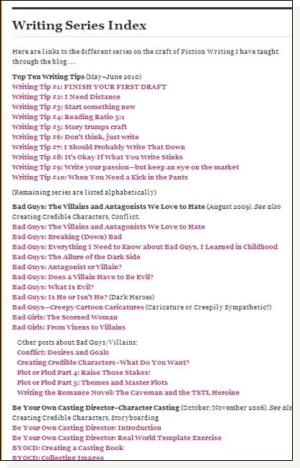 With all of the entertainment-focused blogs/ezines I read, there’s hardly a day that goes by that I don’t hear of some movie or TV show that’s being rebooted/remade (The Sound of Music with Carrie Underwood and Stephen Moyer? Really?), so I decided to jump on the trendwagon. I’ve decided that since most of the series that are archived over on the Writing Series Index page are more than four years old—the majority were written before I was published—I thought now would be a great opportunity for me to take the time to review, revise, and revamp those. Since writing most of those, not only have I completed four publishing contracts with three different publishers and have eleven books on the market, I’ve also worked in the publishing industry, both full-time and as a freelancer. I’ve taught more than 100 workshops around the country to writing groups and at writers’ conferences. I’ve read more (different) books and seen more (different) movies and TV shows to use as examples. 😉
Here are the series I know I’m going to redo, and the tentative order in which I plan to redo them (I will most likely rename them, as well):
- Becoming a Writer
- Be Your Own Casting Director/Character Casting
- Creating Credible Characters
- Point of View/Make POV Work for You
- World Building/Setting/Writing Descriptions
- Plot/Subplot/Conflict
- Plotting for Seat of the Pants Writers
- Dialogue
- Hooking the Reader/Scene & Story Structure
- Showing vs. Telling
- There and Back Again: Finding “The End” in the Beginning
- Finding Your Voice
- Beyond the First Draft
- Critiquing
- Manuscript 101/Are you Ready to Submit
- Entering Writing Contests
I’m going to start next week. I’ll still have posts like the monthly reading check-in, Fun Friday, and other fun stuff, but I really feel the need to get back to basics—and to bring those basics up to date.
In looking at that list, what are your suggestions for additional topics—or for sub-topics within the ones I have listed? What would you most like to see me delve into as I refocus on the craft and business of writing?
What Are You Reading (September 2013)
Open Book by Dave Dugdale
Since the first Monday of this month was Labor Day here in the U.S., I didn’t post this then, but we can’t skip our monthly update! It’s time for your book report. Tell us what you’ve finished, what you’re reading, and what’s on your To Be Read stack/list. (And if you’ve reviewed the books you’ve read somewhere, please include links!)
.
- What book(s) did you finish reading (or listening to) since last month’s update?
- What are you currently reading and/or listening to?
- What’s the next book on your To Be Read stack/list?
Fun Friday–25 Questions
If you’ve been around this blog for any length of time, you know I can’t resist these–and I thought this might be a fun way to get back into blogging regularly. (Adapted from the questionnaire found here.)
1. What are you listening to right now?
2. If you were a crayon, what color would you be?
3. Who is your current celebrity crush?
4. What’s your favorite season of the year?
5. What’s your favorite month?
6. What’s your favorite day of the year?
7. What was the last movie you watched?
8. When is the last time you had a good cry over a movie?
9. Do you introduce yourself or do you wait for others to speak first?
10. Can you do a headstand (not using the wall)?
11. What’s your favorite Hershey’s product?
12. Do you prefer texting or email?
13. Facebook or Twitter?
14. Pinterest or Instagram?
15. Do you have any piercings (including ears)?
16. Do you prefer buttered, kettle, or plain popcorn?
17. Are you a dog person or a cat person?
18. What’s your favorite flower?
19. Have you recently been caught doing something you weren’t supposed to do?
20. How old were you when you experienced “first love”?
21. Do you believe in love at first sight?
22. Are you still friends with people from elementary school?
23. Are you right-handed or left-handed?
24. How many pillows do you sleep with?
25. What’s your normal “bedtime”?
ACFW Friends & Minions Dinner Saturday September 14, 2013
It’s just TWO WEEKS until the ACFW conference! If you’re going to be there and don’t already have dinner plans for Saturday night (9/14/13), I’d love to have you join me at a “Kaye’s Friends & Minions” dinner. (Is that egotistical or what? 😉 ) DM me through Facebook or email me to let me know that you’re interested so that I can start looking into making a reservation at one of the (many) restaurants within walking distance of the hotel.
If you can’t do dinner Saturday, I’d still love to see you there. I’ll be hanging out in the downstairs lobby (probably somewhere near the Starbucks) most of the time as I don’t plan to attend many, if any, workshops. Please come by and find me to say hi!
What Are You Reading? (August 2013)
Open Book by Dave Dugdale
It’s the first Monday of the month. Even though I’m officially on a hiatus on this blog, I couldn’t skip our monthly reading reports. (And if you’ve reviewed the books you’ve read somewhere, please include links!)
.
- What book(s) did you finish reading (or listening to) since last month’s update?
- What are you currently reading and/or listening to?
- What’s the next book on your To Be Read stack/list?
~~~~~~~~~~~~~~~~~~~~~~~~~~~~~
Since last month’s update, I finished reading:
- Under The Dome by Stephen King, audiobook read by Raul Esparza. 4.5 stars. I got about 12 hours into this 35 hour book before watching the first episode of the TV show (loosely) based on it. I decided to finish the book before watching the show. It was a 35-hour long book, so it took me a few weeks to get through it, but I absolutely loved it (despite the gratuitous use of four-letter words). You can click on the title for my full review. After I finished it, I watched the first three of the four episodes of the show that were sitting on my DVR, and I ended up deleting the fourth episode unwatched—they just made too many changes to the characters and the story for me to enjoy the TV show.
- Angelfall (Penryn & the End of Days #1) by Susan Ee. 3 stars. Though I enjoyed the beginning of this book, it lost me about halfway through. I won’t be reading the rest of the series.
- Romancing Mr. Bridgerton (Bridgertons, #4) by Julia Quinn. 4.5 stars. This may be one of my favorite historical romances I’ve read in a very, very long time.
- To Sir Phillip, With Love (Bridgertons, #5) by Julia Quinn. 4 stars. Obviously, I didn’t enjoy this one quite as much as #4—and that came mainly from the fact that the hero and heroine don’t spend a lot of time together on the page, which results in page after page of inside-the-head narrative, which even JQ’s usually scintillating writing couldn’t save. At times, I found myself clicking past page after page of narrative (short pages on the Kindle) just to get to the next scene where there was interaction between the characters. Still, a much better read than some of the other stuff I’ve read this year!
- The Tudor Secret (The Spymaster Chronicles #1) by C.W. Gortner, audiobook read by Steve West. (Re-listen) 4.5 stars Still one of my favorite Tudor-era novels . . . I re-listened to it in preparation for reading the (newly released) second book in the series.
I am currently reading:
- The Tudor Conspiracy (The Spymaster Chronicles #2) by C.W. Gortner. Loving it so far.
I am currently listening to:
- The Dead Travel Fast by Deanna Raybourn, audiobook read by Charlotte Parry. This is a re-listen of an audiobook I haven’t “read” since early 2010. It’s a gothic romance that’s a tribute to Dracula. I remember enjoying it last time, so I’ll see if it holds up upon a second reading.
Next on my TBR list:
- The Hero’s Lot (The Staff and the Sword #2) by Patrick W. Carr.
- When He Was Wicked (Bridgertons #6) by Julia Quinn

 KayeDacus.com