Fun Friday–Favorite Bad Guys

Last Friday’s post about favorite settings on film gave me the idea for this week’s Fun Friday post: my favorite Bad Guys from TV and movies. Although I could go so far as to say it’s good to study the antagonist characters in books and on film to get an idea of how to develop them, really I’m just posting it because it’s fun. So here goes (and this is a fluid list—depending on what movies/tv shows I see, it could change next week) . . .
He went from brooding hero (as John Thornton in North & South) to medieval-bad-boy Sir Guy of Gisborne in the BBC-TV series Robin Hood: Richard Armitage.

Another one who “switched sides” from the heroic Third Marshal of the Riddermark Eomer in Lord of the Rings to the silent-but-deadly assassin in The Bourne Supremacy: Karl Urban.

It’s a trend . . . another actor known for his “hero” roles, notably in Gosford Park and King Arthur, as another silent-but-deadly assassin in The Bourne Identity: Clive Owen.

This one is a tie between two actors portraying the same character: the Sheriff of Notthingham. First is Alan Rickman who was the ONLY reason for watching the Kevin Costner vehicle, Robin Hood: Prince of Thieves. Rickman brought a humor to the role never before seen in the Sheriff character. The second is Keith Allen in the BBC-TV Robin Hood series, whose Sheriff has a tendency to run around the castle in black silk pajamas and flipflops.


It doesn’t matter what role this actor plays, I’m going to love him, but he really burned up the screen as the leader of a terrorist cell in Showtime’s original series Sleeper Cell (in fact, he’s the only reason I watched it): Oded Fehr.

In the recent Mummy movies, Oded (#5) played a good guy who got to eventually defeat this bad guy in a sword fight in the middle of a pigmy-infested oasis. From The Mummy Returns: Adewale Akinnuoye-Agbaje.

Maybe I should have listed him first, as he was in both of the Mummy movies. The mummy himself: Arnold Vosloo.

Although my favorite role this actor has filled is as Bobby Goren on NBC’s Law & Order: Criminal Intent, there’s no denying his comic genius as the Bug threatening Tommy Lee Jones and Will Smith in Men in Black: Vincent d’Onofrio.

This guy seems to bring his sinister side to most roles he plays, whether he’s a morally corrupt plastic surgeon on Nip/Tuck, a demon on Charmed, or the dastardly comic-book baddie Victor Von Doom in The Fantastic Four: Julian McMahon.

The cloak. The voice. The great moves in a fight to the death. The ultimate redemption. How can this character not be on everyone’s list of favorite bad guys: Darth Vader.

Stir Up Your Setting–Finding a Happy Medium
Yesterday, I finished judging the last of TWELVE entries for the American Christian Fiction Writers Genesis Contest for Unpublished Authors. I judged two categories, and was impressed by the level of craft I saw in most of the seven YA entries—more than in the five romance entries. Because of this series on Settings, I really paid close attention to how each writer developed his/her setting in the twenty-five pages I saw . . . and they fell pretty evenly into thirds:
Not enough setting. Writing that falls into this segment doesn’t give enough information about the setting—the geographic location (especially important for scenes occurring outside, when there is “unseasonable” or “strange” weather, or when a character has moved to a new city/state and we know where they came from but not where they now are), the physical location (it’s a school, but what does it look like? A suburban neighborhood—but is it full of small 1940s saltbox houses or 1990s starter mansions?), or location of the character or objects in the environment (first she’s leaning over the edge of a precipice looking down, then she’s climbing up to escape something chasing her). I found myself writing comments like “Where is this taking place?” and “How did he get from (point A) to (point B)?” Or the entry had confusing descriptions—sparse in several places and then suddenly laden with adjectives and poetic descriptions of landscape which then ended up being confusing because I didn’t know whose POV it was being seen through and didn’t know what the characters were doing.
Too much setting. Much of this came in the form of what I’ve mentioned in this discussion already: stopping the forward momentum of the story to give an inventory of everything in the room or the vista the characters see as they top the last hill. This is where we can also get into trouble taking the “be specific” advice to the extreme. Instead of just writing “she jumped in the car and peeled out of the parking lot,” it’s more along the lines of: “She ran to the car and fit her key into the keyhole in the door of the dark green Pontiac G6 coupe. The lock clicked open and she lifted the door handle to yank the door open. She turned and slid her right leg in the car first, her rear-end sliding across the leather seat with ease, drew her left foot in, and slammed the door–in which was the panel holding the controls for the power windows, door locks, mirrors, and driver’s seat adjustments. She poked the key into the ignition, turned it to the right, and engaged the engine. With her foot on the brake—because the car required the brake be engaged to be able to put it into gear—she pressed the button on the gear shifter with her right thumb and jerked the stick down to the R-position. Without looking behind her, she took her foot off the brake and positioned it on the accelerator and pressed down hard. The car backed out of the space faster than was safe. Once out of the space, she put her foot on the brake again and shifted the car into drive. She stomped her foot on the accelerator and the car lurched forward, tires making a squealing sound against the pavement.” (Did you make it reading this far? If so, good on ya!) That’s an exaggeration, of course, but I think you get my point. In some instances, we need to give the reader the benefit of the doubt that they understand what it means when we write that the character got in the car and peeled out of the parking lot. (This ties in with Showing vs. Telling too. Sometimes, it’s okay to tell when it’s the difference between a twelve word sentence that keeps the action moving and an entire paragraph that brings the action to a screeching halt.)
I have a tendency to be a “too much setting” writer. Almost everything I’ve written in the past twenty or so years has been set in my fictional Louisiana city. When I first started letting anyone (my mom and grandmother) read what I’d written, one of my mom’s comment was that she wished I would include more about the setting because she wasn’t getting a good feel for it. That’s when I started studying this element of craft. I started finding places where I could interject tidbits about the setting. And then, once people started commenting on how much they liked it, I wanted to put more in (you know, if they like it a little, they’ll like it a lot, right?). This happened as I started writing my historical which is set partially aboard a ship-of-the-line in the Royal Navy and partially in Portsmouth, England, of 1814. I’d done my research, and I wasn’t going to let it go to waste. The problem with it turned out to be that I used too much authentic setting and the terminology and importance placed on certain locations or objects detracted from the story. So I learned there has to be . . .
A happy medium. This is when there’s just enough setting to really ground the reader in the “here and now” of the story so they can picture the action in their head, but not so much that it becomes overwhelming or confusing. This varies from genre to genre. A happy medium of setting in a Fantasy novel is going to be much different than a happy medium of setting for a Romantic Comedy. Some genres naturally call for more description of the setting (incorporated into the narrative appropriately, of course), such as Fantasy, Science Fiction, Historicals (including Historical Romance), and Crime/Mystery.
How do we reach this happy medium? Two ways:
Read, read, read. Read your favorite novels over again, taking note of how the author handles giving information about the setting. Caution: if it is a book that was not published in the last five to ten years, you are more likely to find the “block style” descriptions (walk in a room and give an inventory) than you will in more recent books as the industry has hightened the standards on this area of craft. Find newly published novels in the genre you’re writing (preferably by lesser-known authors than someone like Steven King, Tom Clancy, or Danielle Steele—meaning they’ve had to go through a more strenuous editorial process) and compare how different authors incorporate setting. Do you like it? Would you have done it differently? Was it too much? Not enough? Just right?
Join a critique group. While we all hope we’re good judges of our own writing, the truth is WE’RE NOT. Just like parents can’t see when their own children are little heathens, but are quick to point it out in other families, it’s hard for us to see our own work criticially and with an objective eye. That’s what critique partners are for. Want to know more about the benefits of being in a critique group? Check out my series on critiquing.
Before closing this topic, I’d like to make sure I haven’t forgotten anything. If there’s a specific aspect of setting you’re having difficulty with, please leave a comment and we’ll continue on. If not, I’ll be starting a new series: Back to Basics—Common Mistakes in Grammar and Manuscript Formattting. (If you have any questions on that topic, please post those too.)
Stir Up Your Setting–Finding a Happy Medium
Yesterday, I finished judging the last of TWELVE entries for the American Christian Fiction Writers Genesis Contest for Unpublished Authors. I judged two categories, and was impressed by the level of craft I saw in most of the seven YA entries—more than in the five romance entries. Because of this series on Settings, I really paid close attention to how each writer developed his/her setting in the twenty-five pages I saw . . . and they fell pretty evenly into thirds:
Not enough setting. One-third didn’t give enough information about the setting—the geographic location (especially important for scenes occurring outside, when there is “unseasonable” or “strange” weather, or when a character has moved to a new city/state and we know where they came from but not where they now are), the physical location (it’s a school, but what does it look like? A suburban neighborhood—but is it full of small 1940s saltbox houses or 1990s starter mansions?), or location of the character or objects in the environment (first she’s leaning over the edge of a precipice looking down, then she’s climbing up to escape something chasing her). I found myself writing comments like “Where is this taking place?” and “How did he get from (point A) to (point B)?” Or the entry had confusing descriptions—sparse in several places and then suddenly laden with adjectives and poetic descriptions of landscape which then ended up being confusing because I didn’t know whose POV it was being seen through and didn’t know what the characters were doing.
Too much setting. Much of this came in the form of what I’ve mentioned in this discussion already: stopping the forward momentum of the story to give an inventory of everything in the room or the vista the characters see as they top the last hill. This is where we can also get into trouble taking the “be specific” advice to the extreme. Instead of just writing “she jumped in the car and peeled out of the parking lot,” it’s more along the lines of: “She ran to the car and fit her key into the keyhole in the door of the dark green Pontiac G6 coupe. The lock clicked open and she lifted the door handle to yank the door open. She turned and slid her right leg in the car first, her rear-end sliding across the leather seat with ease, drew her left foot in, and slammed the door–in which was the panel holding the controls for the power windows, door locks, mirrors, and driver’s seat adjustments. She poked the key into the ignition, turned it to the right, and engaged the engine. With her foot on the brake—because the car required the brake be engaged to be able to put it into gear—she pressed the button on the gear shifter with her right thumb and jerked the stick down to the R-position. Without looking behind her, she took her foot off the brake and positioned it on the accelerator and pressed down hard. The car backed out of the space faster than was safe. Once out of the space, she put her foot on the brake again and shifted the car into drive. She stomped her foot on the accelerator and the car lurched forward, tires making a squealing sound against the pavement.” (Did you make it reading this far? If so, good on ya!) That’s an exaggeration, of course, but I think you get my point. In some instances, we need to give the reader the benefit of the doubt that they understand what it means when we write that the character got in the car and peeled out of the parking lot (This also ties in with Showing vs. Telling too. Sometimes, it’s okay to tell when it’s the difference between a twelve word sentence that keeps the action moving and an entire paragraph that brings the action to a screeching halt.)
I have a tendency to be a “too much setting” writer. Almost everything I’ve written in the past twenty or so years has been set in my fictional Louisiana city. When I first started letting anyone (my mom and grandmother) read what I’d written, one of my mom’s comment was that she wished I would include more about the setting because she wasn’t getting a good feel for it. That’s when I started studying this element of craft. I started finding places where I could interject tidbits about the setting. And then, once people started commenting on how much they liked it, I wanted to put more in (you know, if they like it a little, they’ll like it a lot, right?). This happened as I started writing my historical which is set partially aboard a ship-of-the-line in the Royal Navy and partially in Portsmouth, England, of 1814. I’d done my research and I wasn’t going to let it go to waste. The problem with it turned out to be that I used too much authentic setting and the terminology and importance placed on certain locations or objects detracted from the story. So I learned there has to be . . .
A happy medium. This is when there’s just enough setting to really round the reader in the “here and now” of the story so they can picture the action in their head, but not so much that it becomes overwhelming or confusing. This varies from genre to genre. A happy medium of setting in a Fantasy novel is going to be much different than a happy medium of setting for a romantic comedy. Some genres naturally call for more description of the setting (incorporated into the narrative appropriately, of course), such as Fantasy, Science Fiction, Historicals (including historical romance), and Crime/Mystery.
How do we reach this happy medium? Two ways:
Read, read, read. Read your favorite novels over again, taking note of how the author handles giving information about the setting. Caution: if it is a book that was not published in the last five to ten years, you are more likely to find the “block style” descriptions (walk in a room and give an inventory) than you will in more recent books as the industry has hightened the standards on this area of craft. Find newly published novels (preferably by lesser-known authors than someone like Steven King, Tom Clancy, or Danielle Steele—meaning they’ve had to go through a more strenuous editorial process) and compare how different authors incorporate setting. Do you like it? Would you have done it differently? Was it too much? Not enough? Just right?
Join a critique group. While we all hope we’re good judges of our own writing, the truth is WE’RE NOT. Just like parents can’t see when their own children are little heathens, but are quick to point it out in other families, it’s hard for us to see our own work criticially and with an objective eye. That’s what critique partners are for. Want to know more about the benefits of being in a critique group? Check out my series on critiquing.
Before closing this topic, I’d like to make sure I haven’t forgotten anything. If there’s a specific aspect of setting you’re having difficulty with, please leave a comment and we’ll continue on. If not, I’ll be starting a new series: Back to Basics—Common Mistakes in Grammar and Manuscript Formattting. (If you have any questions on that topic, please post those too.)
Stir Up Your Setting–Making Setting a Character
In the list of movies I posted Friday, something that is a key element to why they all stand out as having wonderful settings is that, in a way, the setting becomes a character in the film.
Think about the difference between the setting of a stage play and the setting of a modern, big-budget movie. No matter how much money a production pours into building sets for the stage, it’s always going to look like a set. Why? Because the environment isn’t real. There are no elements, no weather, no sunlight, no wind. When movies are filmed on location, they have so much more realism—and actors will tell you that they can get into their roles better when away from soundstages or backlot locations. For example, the location Peter Jackson & crew found for Edoras for the second and third Lord of the Rings films: a hill rising up out of a flat valley, surrounded by a ring of huge, snow-covered mountains. The actors all agreed that their performance was different because of the location—better—because they felt they were truly in this medieval kingdom atop a hill.
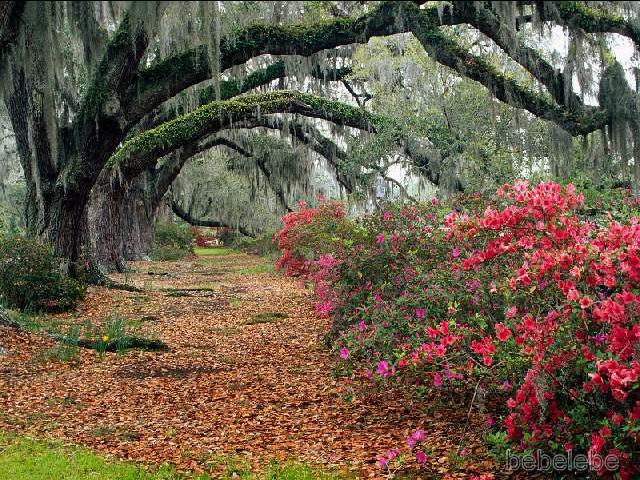
The first way setting starts becoming a character is through its culture. Books set in the South but written by someone who’s never lived in the South may get all of the details right when describing what things look like, but they aren’t going to be able to describe what the air smells like after a rainstorm; how in the height of summer, the clouds roll in during the hottest part of the afternoon and release a quick, drenching downpour that does nothing to lower the temperature, but raises the humidity to armpit-of-Satan levels; when the azaleas start to bloom—and what they look like lining most residential streets and the campus of LSU; the electric anticipation of the entire campus on Saturday afternoon as everyone makes their way to Tiger Stadium; the way that 50 degrees with 75% humidity can be bone-chilling; or local idioms like, “How y’all are?” or “‘Preciate ya!” or that we don’t all walk around calling each other “Hon'” all the time. Incorporating the local culture—the flavor, the uniqueness of social customs, language, and the “this is how things have always been done here”-ness—pulls it into the forefront of the writing without its overwelming the characters or the story.
A second way to incorporate setting as character is through specific, unique details. Did you know that in Baton Rouge, almost all of the streets are concrete and not asphalt? Whereas in Nashville, almost all of the roads are asphalt—a major exception being the I-440 loop that bypasses downtown (although they patch it with asphalt, which really just makes it worse). When you think of azaleas, do you picture a small bush with little blossoms? Then you’ve never seen Louisiana-style azaleas. Springtime in Baton Rouge was one of my favorite times of year when these huge shrubs that lined most residential streets (and the LSU campus, as mentioned above) burst into large white, pink, and fuscia blossoms.
A third method of making setting into character is to have the setting create conflict for the characters. A rainstorm that knocks out the electricity (can happen anywhere). A tornado that hits downtown Nashville (happened in 1997—could happen again any time. Think about The Wizard of Oz. The story wouldn’t have happened if there hadn’t been a tornado). A flash flood that keeps the characters from being able to get to the hospital when one is bleeding to death. Have the elements of the location affect your characters. Is it hot outside? How hot? Does your character like hot weather or hate it (like me)? Is the air conditioner inside working? I, personally, am so sensitive to temperature that I will wake up in the middle of the night if my house gets over about 71 degrees. Why? Because when the house gets warmer than that, my sinuses solidify into a concrete block and I can’t breathe. Are there allergens in the environment that your character(s) could react to? (Nashville is one of the top five worst cities for allergies.) Though allergies might seem like something inconsequential to think about, it is a conflict for the character because allergies make the sufferer feel absolutely rotten, which then affects everything in that person’s life.
Fourth, use specific locations/names. Use street names, names of local businesses, or names of national chains you know exist in that location. To add local flavor to my fictional city in Louisiana, I don’t have them go to Starbucks for coffee. They go to Beignets C’est Vou Plait (like Cafe DuMond in New Orleans). I don’t have them shop at Kroger or Publix. They shop at Bordelon’s. They don’t eat at Olive Garden, they eat at Palermo’s Italian Grill—which serves Cajun-inspired pasta dishes like crawfish ravioli. The sister of my heroine in A Major Event Inc. owns a seafood restaurant that has a pirogue (PEE-ro) hanging from the ceiling. The bookstore where my characters like to go to read and have coffee is Blanchard LeBlanc, not Barnes & Noble. One of the main residential areas of my city features names of Louisiana plantations such as Oak Alley, Destrehan, and Rosedown. The tallest building in downtown is Boudreaux Tower, and the glass-enclosed, huge event venue at the top of it is Vue de Ceil, not the Skyview. If you are using a real location, you must make sure you do your research really well. Nothing will betray your lack of familiarity with a place than getting something out of place which is familiar to locals. For example, I read something supposed to be set in Nashville which had the character looking out of the Bluebird Cafe onto Music Row. I immediately knew the author had never been to Nashville—nor had he or she even looked at the location of the Bluebird on a map—because it’s several miles away from Music Row and looks across at a strip shopping center in Green Hills.
Finally, the setting can affect the mood of the scene. In the movie list, I mentioned how the weather reflects the emotions of what’s happening in the Bourne movies: “The weather also helps set the mood—as it’s usually either raining, snowy, or cloudy for most of the movie. The three main scenes that are bright and sunny are (a) the end of the first film when he joins Marie at her shop on the beach, (b) the opening of the second film when they’re happy together in India (before the assassin* shows up), and (c) the end of the second film when Bourne calls Landy and she tells him his real name and where he was born—emphasizing the happiness, the optimism of those scenes.” It doesn’t have to be the weather—it can be the delapidated state of a building that reflects the broken-down feeling of someone who’d just experienced a loss. Or it can be the opposite—the character is euphoric despite the foul weather, bad traffic, dirty kitchen. How the character bounces around washing dishes, singing while she scrubs at the crusty spots on the floor can emphasize just how happy she is.
The easiest way to start incorporating Setting as Character is to have the character interact physically and emotionally with the setting. Look at some scenes you’ve already written. Can you add a phrase here, a sentence there where the character interacts with the setting—picks something up, dusts off a windowsill, sees a new restaurant—without pulling the character out of the forward momentum (and without adding anything unnecessary)? Is there a way you can use the location of your setting—weather, climate, geography, topography—to create conflict for the characters?
Favorite Settings on Film

Thinking and writing about Settings this week has brought to mind both books and movies with settings I love. As I’ve mentioned, a lot of times, it’s easier for movie makers to portray the setting, whereas in print it may be harder.
Anyway, I’m not supposed to be getting into any deep discussion here, but just posting something fun. It’s Fun Friday, after all—the weekend is almost here, and I’m looking forward to the Middle Tennessee Christian Writers monthly meeting tomorrow, where we’ll be discussing “Sagging Middles” (in our writing of course!).
So, here are some of the movies that I love for the settings:
1. Lord of the Rings trilogy. Whether digital, “big-ature” models, or the sweeping landscape of New Zealand, when I watch those movies, I believe in a place called Middle Earth. Though The Chronicles of Narnia was also filmed in New Zealand, I don’t think it did quite as good a job of really using the real settings as LOTR.
2. First three/original Star Wars movies. Each film had a theme for the settings: Star Wars was monochromatic, whether it was the black-and-white of the Imperial sets or the tan-and-white of Tatooine. Empire Strikes Back was lush, but dark, with the swamps of Degoba or the pristine interiors of Cloud City. Return of the Jedi incorporated the browns and greens of California’s giant sequoia forest juxtaposed against the black-and-white of the Empire. Because of the way these films were made, the settings are realistic—not overly processed and digitalized like the later three films (or like the re-releases of the first three).
3. North & South. This BBC miniseries adaptation of Elizabeth Gaskell’s early Victorian novel captures the dank, dark streets of an industrial town in the North of England at the genesis of the Industrial Age. From the crowd scenes during the mill workers’ strike to the purple river (from the runoff of fabric dye from one of the factories), the film creates a stark contrast between this part of the country and the more genteel South: London and Hampshire, which are seen as clean and bright and pastoral—thus serving to visually explain one of the the themes of the book: the way where we live affects how we live.
4. The Bourne Identity and The Bourne Supremacy. These films, while also being great action films, give a visual tour of Europe unlike any other modern movie I can think of. I especially love the scenes in Moscow in Supremacy. The action sequences (especially the car chases) chew up the scenes, and yet the setting gives them their sense of urgency—from the narrow streets of India to the crowded streets of Berlin. The weather also helps set the mood—as it’s usually either raining, snowy, or cloudy for most of the movie. The three main scenes that are bright and sunny are (a) the end of the first film when he joins Marie at her shop on the beach, (b) the opening of the second film when they’re happy together in India (before the assassin* shows up), and (c) the end of the second film when Bourne calls Landy and she tells him his real name and where he was born—emphasizing the happiness, the optimism of those scenes.
*These movies also top my list of hottest bad guys ever, with Clive Owen and Karl Urban. I can’t wait to see what up-and-comer hottie is the villain in this summer’s The Bourne Ultimatum.
5. Master and Commander and the Hornblower series. While there was some creative license taken with these movies, for the most part, the research was impeccable, and I watched these movies over and over and over when writing my 1814 Royal Navy/Regency romance.
6. Anna and the King. When this remake was released in 1999 with Jodi Foster and Chow Yun Fat, I was enthralled, not just by Chow Yun Fat being able to take the role quintessentially identified with Yul Brynner and make it completely his own, but by the lushness of the settings (including the costumes). While the 1950s film version of The King and I didn’t stray far from its roots as a stage show—which, for a musical, isn’t a bad thing—Anna and the King wasn’t about the music and dancing. It was about the culture shock Anna Leonowens, a Britishwoman, has when she arrives in Siam to teach the king’s many children in Western ways.
7. Serenity and the television show for which it served as the capstone, Firefly. Joss Whedon, the creator, painted a grim-but-hopeful picture of humankind five hundred years in the future. Having outlived Earth’s resources, humans have expanded out into the galaxy. Those living on core planets live in the opulance of settings that look like New York, Tokoyo, or Hong Kong—big, modern, full of technology and artificial light. Those living out on the rim have reverted back to pioneer days—horses, dusty streets, wooden sidewalks, covered wagons—and a few touches of futuristic technology here and there. But the best setting of all is Serenity itself, the ship on which our band of heroes sail between worlds, plying their trade as good-hearted pirates.
8. Persuasion (1995), Sense and Sensibility (1995), (and even though I haven’t seen them yet, I’m sure the new BBC miniseries versions of Northanger Abbey and Sense and Sensibility—both of which have been adapted for the screen by the incomparable Andrew Davies), Pride and Prejudice (1995 and 2005), Bleak House (2005), and Wives and Daughters. What can I say? I love British costume dramas. And these make particularly good use of not just the costumes but the settings.
9. Mr. & Mrs. Smith. Maybe it’s because I’m not a fan of Brad Pitt that I actually noticed the setting in this movie. But even though they end up either blowing up or shooting to smitherines whatever setting they find themselves in, the filmmakers did a clever job of finding seemingly innocuous places for the action scenes to take place: the perfect suburban house, a car chase when our heroes are driving the neighbors’ minivan (and their loving the automatic tailgate that allows them to shoot at the bad guys chasing them in sleek, black Mercedes—or were they BMWs?), and the final showdown in a home-furnishings megastore (especially the lull between shooting scenes when they’re on the elevator listening to the elevator music).
10. Steel Magnolias. Aside from this being the most quotable movie EVER, you always know exactly where you are when watching this movie: Louisiana. Filmed on location in Natchitoches (NA-kih-dish–first syllable is a short “a” like in “apple”) they made the most of the picturesque Victorian architecture of the town, the riverfront park, the Christmas Festival of Lights, and in showing the difference in status between where Dolly Parton’s character lived/worked, and where Sally Field’s character lived—showing just by their homes their place in the town’s social stratus. As I’ve mentioned many times before, Natchitoches is one of the many places which has inspired my fictional city of Bonneterre.
What are some of your favorite setting movies?
Stir Up Your Setting–REAL Fictional Settings
Where does the line between FACT and FICTION get blurred in our writing? Is there a line? How FACTUAL does our FICTION have to be?
Over the past fifteen years, I have developed a fictional city in Louisiana where most of my contemporary novels are set (I have set two in Nashville, but even in one of those, one of the main characters is from the fictional city and goes there for a visit). When I started out with it fifteen years ago, it was a small, sleepy town where the biggest thing going was the state university (the University of Louisiana—go Pirates!). Why? Because I was in college at the time so the thinly veiled fictional story I was writing about me and all my college buddies centered around activities at school.
But after I left college and my personal focus changed, the focus of my town changed. I moved to the Washington DC area. As I experienced more of life, I needed more things in my fictional town for my characters to experience (they couldn’t be driving 3 or 4 hours to Baton Rouge or New Orleans all the time, after all!). In fact, my town has grown into the “third largest” city in the state—what with the influx of people relocating there from New Orleans. (See how real life can affect our fictional settings?)
In using a fictional setting, I have been able to introduce new stores, streets, companies, etc., as I need them in my stories. I do, however, keep a detailed street map so that I don’t have Spring Street running north to south in one book and east to west in another. I also have what I’ve titled a “visitor’s guide” in which I list all my restaurants and where they’re located (three primary locations: downtown, Old Towne/Town Square, or University Avenue near the mall), shopping, grocery store names/locations, schools, city/parish government structure, population (including diversity), top employers, churches, and so on. I even keep track of the socio-economic status of neighborhood/subdivision in town; that way when I need to “visit” a working-class character’s home, I have them living on Oak Alley Drive in a rental house, rather than in Acadiana Park which is full of huge old Victorians and newer starter-mansions.
Because I am a very visually-oriented person, one thing I’ve done that has helped in describing my setting and keeping the descriptions consistent throughout my stories is finding photos online. Yes, my city is fictional, but it incorporates pieces of a lot of other places I’ve been: a Riverwalk like San Antonio, TX; a revitalized Old Towne/Town Square area like Natchitoches, LA (the town where Steel Magnolias was filmed) or Savannah, GA; a major commercial mall/shopping area like Cool Springs Galleria in a Nashville suburb; a century-plus old college campus like LSU; and neighborhoods built during different periods: Victorian, arts and crafts, 1960s/70s ranch styles, etc. These are things I can find photos of–and I find as many of them as I can to make my readers truly believe Bonneterre, Louisiana, exists.
Here are a few examples of setting description from the first chapter of Happy Endings Inc.:
Anne Hawthorne . . . crossed her office to the gilt-framed mirror that reflected the view of Towne Square from the converted row-house’s front windows.
The heat and humidity typical for the first day of June in central Louisiana wrapped her in a sweaty embrace.
She . . . entered the newest five-star restaurant in Bonneterre.
Winding through the crowd of patrons awaiting tables . . . Anne’s right heel skidded on the slate-like tile and she wobbled, her foot sliding half out of the black mule. . . . A young woman in a white tuxedo shirt and black slacks came out from behind the high, dark wood stand and threw her arms around Anne’s waist.
George Laurence perused the menu, surprised to find the wide variety of dishes listed. His experience with Italian restaurants in mid-sized American cities primed him to expect spaghetti, lasagna, and fettuccini. So far, Palermo’s Italian Grill in Bonneterre, Louisiana, appeared promising.
The chair across the table scraped against the ceramic tiles.
Anne juggled her duffel bag, attaché case, purse, stack of files, and cup of gourmet coffee she’d stopped for on the way home as she climbed the back stairs to her apartment.
I just started a WIP set in a little town in the foothills of Tennessee. It’s a contemporary, but I wanted it to have the feeling of antiquity that is important to the story. So, Saturday a few weeks ago, I went and picked up a map of the Middle Tennessee area and charted a route to drive through several little towns in the general area where my fictional town is supposed to be located, wanting to see if the layout and style of the buildings I had in mind would actually work. After a couple of hours and a few misses, I finally hit a home run: Charlotte, Tennessee (which is where one of my very dear friends lives, or else I never would have thought of going there!). It has the perfect feel for the town I’m creating—it’s not quite nestled into the valley I’ve envisioned, but that’s okay, because it’ll keep my town from “looking” just like Charlotte. I parked at Courthouse Square and sketched a map of the town’s center (an important aspect of my story—okay, yes, I like town squares!), then went and got some posterboard that has hairline blue gridlines on it and started mapping my fictional town: what buildings are on the square and what businesses they house. What’s on the opposite side of the valley from the college on the eastern bluff, etc. I’ve had to set it aside for a couple of weeks to work on other projects, but when I get back to it, I plan to go online—or find some old architecture books for a dollar or so apiece—and paste images of each of the buildings on the posterboard for visual reference. And I’ll go back to Charlotte and get my friend to give me a tour.
Describing a fictional setting for readers is like giving someone directions how to get somewhere. If it’s a place we’ve never been or only been to once or twice, it’s going to be hard for us to explain with confidence how to get there, where to turn, how long it will take. If we’ve lived there many years—or all our lives—we can do it turn-by-turn (“take Highway-22 West to exit 52/College Ave. Turn left at the top of the exit, and stay straight on College Ave.—it will become Oak Alley Lane after the next light”), with lots of landmarks (“turn right on Bocage Avenue–there’s a service station–Buddy’s–on the near corner and a library on the far corner . . . if you get to Tezcuco Place, you’ve gone too far.”), and down-to-the-minute time estimates (“it takes me about fifteen minutes to get home from downtown if I take the freeway, twenty if I take surface streets.”).
What do you know about your fictional setting? How confident are you in knowing every nook and cranny of it? Is it like the town where you’ve lived your whole life, the streets where you learned how to drive—and learned every shortcut to get to all your favorite spots? Or are you feeling like a new resident, still figuring out your way around? Do you know things about it that you’ll never include in your story?
Eight Random Things
Yesterday I was tagged by Georgiana Daniels for 8 Random Things. Here are the rules:
1. Each player starts with 8 random facts/habits about themselves
2. People who are tagged write a blog post about their own 8 random things and post these rules
3. At the end of your blog you need to tag 8 people and post their names
4. Don’t forget to leave them a comment and tell them they’re tagged, and to read your blog.
Are you ready? Here are my 8 random things/habits:
1. For two years, I sang in a southern Gospel quartet that did several concerts around the Nashville area. I sang the high-tenor part, of course.
2. I have 1 sister (plus the brother-in-law appendage), 5 nephews, 1 niece, 1 grandmother still living, two parents married 42 years this coming December, 13 aunts and uncles, 21 first cousins, and 7 second cousins (or whatever you call my first cousins’ kids)–and I know all of them pretty well.
3. I have to have my coffee in the morning—and I like it with plenty of half-and-half and Splenda. But since I’m on the first week of Induction with Atkins this week, I’ve had to switch to tea, because I can’t afford the carbs in the half-and-half, and I’m limited to 3 packs of Splenda per day. So, I’m pretty grumpy about right now (that, plus the sugar withdrawal).
4. In an otherwise all-white-appliance kitchen, I have a RED microwave. I wanted PURPLE, but all Target had was RED and I was desperate.
5. I’ve been in love once in my life—about 15 years ago—but have never dated.
6. I started wearing glasses in 4th grade. I got contact lenses in 8th grade and wore those for 20+ years. I had my vision laser corrected in February 2005 and see a little better than 20/20 now.
7. I love wearing men’s button-down shirts–either over knit-pants/jeans lounging around the house or as an over-shirt/jacket. I’m currently wearing one as a jacket to ward off the chill of the air-conditioner here in the office. They have to be over-sized, though, which are hard for me to come by right now. That and the fact that if I’m going to wear one, I have to go out and buy it, because I don’t have a man at home I can steal one from.
8. I’ve never been kissed.
OK, now it’s your turn!
Ruth
Jennifer
Kristy
Patricia
Amy Jane
Austin
Josh
Tiff
Be sure to post a comment when you get yours posted!
Stir Up Your Setting – Part 2: Using All Five Senses
In the Showing vs. Telling series, I wrote at length about how to show what our characters see, hear, smell, taste, and touch to deepen POV. These are also important aspects of showing the setting as the characters interact with it through their five senses.
In Setting, Jack Bickham writes:
Psychologists have repeatedly shown that sight is the dominant sense for most normal people. Therefore, it stands to reason that your sense descriptions most often will be dominated by how things appear. Hearing impressions usually rank second, but one can easily imagine circumstances in which tactile impressions might rank higher in story importance.
Obviously, our characters are going to “see” the setting. But the worst way for them to do this is to walk into a room and immediately mentally inventory everything about the room:
She entered the front parlor. The parquet floors gleamed in the midday light. Blue chintz fabric covered the settee, arm chairs, and chaise lounge which sat in a conversation circle near the exquisite, enormous, Egyptian-marble fireplace. The ceiling soared twenty feet above, painted a deep salmon accented by the white coving that ran along the junction of the wall and ceiling. The windows at the far end extended nearly floor to ceiling . . .
We’ve completely stopped the forward movement of the story to describe the room—to TELL what it looks like—just like when we describe our characters by having them look at themselves in a mirror. Instead, have the characters interact with the setting:
She entered the front parlor. Lady MacDougall sat enthroned like Queen Victoria on a blue chintz-covered settee and motioned Elizabeth to take the matching arm chair opposite. The salmon-painted walls made the dutchess’s white hair glow pink. Elizabeth flinched when a log shifted in the blazing fire in the enormous fireplace surrounded by the marble the previous Lord MacDougall had brought back from Egypt himself. Elizabeth looked past the dutchess at the promise of freedom beyond the floor-to-ceiling windows on the distant end of the room. . . .
Both paragraphs describe the same room. But which one gives more of a sense of setting—more of a feeling that you’re there in the room with the character? (And notice, I also incorporated a second sense in this example: her hearing the log shifting in the fireplace to draw her attention to it.)
Just as character descriptions should be gradually peppered throughout the introductory scene, the description of the scene shouldn’t all come at once . . . unless there is something vastly important about the look of the setting—such as a pauper entering a palace for the first time, but even then, be sure to tie emotion and the five senses to the experience of the setting.
Here’s an example of showing a setting through the sense of smell and touch:
The heavenly aroma of garlic, basil, and oregano mixed with the unmistakable yeasty scent of fresh bread and wafted on the cool air that blew in her face when she opened the door. Anne’s salivary glands kicked into overdrive and her stomach growled. She really needed to stop skipping lunch. (Kaye Dacus, Stand-In Groom)
Try this exercise. Close your eyes (after you finish reading this, of course!). What do you hear? What do you smell? Breathe through your mouth a few times. What does the air taste like (or what does the gum you have in your mouth taste like? or the coffee you’re drinking?)? Open your eyes and write down these descriptions of your current setting. Then, stand up and close your eyes again. Carefully walk around the room and feel things. What does the upholstery on your desk chair feel like? Is it a hard wooden chair, a firm ergonomic chair, or a cushy papasan chair? Don’t think about what it looks like—describe what it feels like.
In most of the novels you’ve read, do you find the author has tended to use sight and sound descriptions of the setting almost to the exclusion of all the other senses? Would the story have been stronger if the author had used more of the senses? On the other hand, have you ever read a story/novel in which the author went overboard in using the “subordinate” three senses (touch, smell, taste) and it distracted from the story?
Using only sight and sound senses to develop your setting is like watching the Lord of the Rings or Star Wars movies in “fullscreen” mode versus in “widescreen” mode. TBS was running the LOTR movies this weekend. I’ve had the extended editions of these films since their release, therefore, I’m used to watching them in the widescreen version. Just watching a few minutes of it on TBS in fullscreen mode, I felt like I was missing important pieces of the movie, simply because I was losing 50% of the setting—and that was just visual. If, as Emeril Lagasse would say, we had “smell-o-vision” and could smell the setting as well as seeing and hearing it when we watch movies, how much deeper into the world of the film would we be? Therefore, if you include smell, taste, and touch sensations in your story, you’re drawing your reader deeper into your world.
How have you incorporated hearing, taste, touch, and smell into your writing? Please share an example!
SUYS – World Building…A Step Further
Because of the genre, Speculative Lit writers (science fiction, fantasy, allegory, etc.) have both an advantage and a disadvantage when it comes to setting. Spec Lit readers expect much more detail when it comes to the setting. They want the author to do the cinematic sweep of the landscape (through the lens of the character observing it) and describe it in detail. But that means the Spec Lit author must know his world(s) intimately and be able to use captivating, picturesque language to describe the setting. To a lesser extent, readers of historicals/historical romances expect a larger measure of setting description (including costuming and props) than we typically see in contemporary fiction.
In the last post, I took setting signposts out of my chapter and made a list, and hopefully you did the same. When we take these words out of the context of the prose, do we still get a feel for the place, time, and character?
In The Complete Guide to Writing Fiction (Barnaby Conrad, ed.), we see that “a setting, deftly protrayed, not only tells us where we are but gives the story a sense of truth, the credibility we speak of as verisimilitude. It does wonders for that troublesome disbelief and the reader’s willing suspension thereof… But the real purpose of scene is its contribution to the story’s total, emotional effect.”
Are you using unique/specific descriptions and words rather than generic terminology to bring about the reader’s willing suspension of disbelief—so that the reader trusts that you know intimately the place about which you’re writing? Does your setting contribute to the emotional effect of the story? From my examples:
generic: the distant ship
specific: the French schooner
generic: ship
specific: Man o’ War or 98-gunner
generic: sail
specific: jigger staysail
What specifications have you designed your “world” by? Are you writing a contemporary? Although some editors will take them out, as you’re writing your drafts, use specific names people will recognize. In my contemporary romance, Happy Endings Inc., I gave the hero and heroine specific cars (he a Mercedes Roadster, she a Chrysler Sebring convertible). They have specific ringtones on their phones (his rings to the tune of “I Can’t Give You Anything But Love, Baby” when she calls him, hers plays “That’s Amore” when he calls or the Wedding March when any of her clients call. Using these specific songs help characterize them too). In the first chapter, I have my heroine at a new Italian restaurant in the fictional town where the specials the waiter tells her about all have a Cajun twist to them, because it’s set in Louisiana. (We’ll look at making fictional settings “feel” real in another lesson.)
Take another look at the list of your setting descriptors. Then, try to find a more specific word or phrase to make your setting unique and special.
America’s Most Literate Cities
We like ranking things in our country, so here’s another way to see how our cities stack up against each other. The study was conducted for cities with populations of 250,000 and up and looked at factors such as average education of the population; number of periodical publishers in the city; newspaper circulation; library support, holdings, and use; and number and sales figures of bookstores. So here they are . . . is your city amongst them?
The 50 most literate US cities*
1. Minneapolis, MN
2. Seattle, WA
3. Pittsburgh, PA
4. Madison, WI
5. Cincinnati, OH
6. Washington, DC
7. Denver, CO
8. Boston, MA
9. Portland, OR
10. San Francisco, CA
11. Columbus, OH
12. Kansas City, MO
13. St Louis, MO
14. Cleveland, OH
15. Atlanta, GA
16. St Paul, MN
17. Louisville, KY
18. Birmingham, AL
19. Scottsdale, AZ
20. Colorado Springs, CO
21. Tulsa, OK
22. Austin, TX
23. Rochester, NY
24. Norfolk, VA
25. Baltimore, MD
26. Akron, OH
27. Indianapolis, IN
28. Charlotte, NC
29. Nashville-Metropolitan Davidson Co., TN (This is my home!)
30. Baton Rouge, LA (and this is where I was born/went to college!)
31. Tucson, AZ
32. Omaha, NE
33. Sacramento, CA
34. Honolulu, HI
35. Milwaukee, WI
36. Tampa, FL
37. Miami, FL
38. Montgomery, AL
39. Oklahoma City, OK
40. Toledo, OH
41. Albuquerque, NM
42. Lincoln, NE
43. New Orleans, LA
44. San Diego, CA
45. Fort Wayne, IN
46. Philiadelphia, PA
47. Las Vegas, NV
48. Virginia Beach, VA
49. New York City, NY
50. Shreveport, LA
*2004


