Fun Friday–A Movie Meme

Does it seem like my Fun Friday topics have leaned toward movies a lot recently? Well, that’s probably because after writing, watching movies is one of my favorite things to do.
A couple of days ago, I filled out a meme on Erica‘s blog–it was all about reading: what’s on the TBR pile, what we’ve read recently, what we’ve borrowed, etc. So, I thought I would adjust it for my other favorite pasttime. Feel free to use this on your blog, just be sure to leave me a comment with a link. Or, just post your answers in your comment!
First five movies in my Netflix queue:
1. Miss Potter
2. Middlemarch
3. Children of Men
4. Night at the Museum
5. Happy Feet
The last five movies I’ve watched at home:
1. The Illusionist (very good–reminded me of an M. Night Shyamalan movie)
2. Pirates of the Caribbean 2 (I own it)
3. Freedom Writers (from Netflix–good, but Stand & Deliver was better)
4. The Queen (from Netflix–better than I expected)
5. Dreamgirls (the night I bought it)
The last three movies I’ve seen at the theater:
1. Pirates of the Caribbean 3
2. Amazing Grace
3. Dreamgirls
The last documentaries/nonfiction films I’ve watched:
1. Unseen Worlds (a PBS documentary about microbiology–my mom is so proud!)
2. An Inconvenient Truth
Three upcoming new releases I’ll go see at the theater:
1. Harry Potter and the Order of the Phoenix (July 13)
2. The Bourne Ultimatum (August 3)
3. Becoming Jane (August 3)
The one film I think everyone should see at least once:
Farenheit 911
Manuscript 101–Comma, wherefore art thou?
Standard Accepted Guidelines for Comma Usage
Based on the Chicago Manual of Style, Bedford Handbook, Harbrace College Handbook, and Words into Type.
This is not a comprehensive list—just the most common usages you might run across. As a writer, you can choose whether or not to apply these rules to your writing. Just make sure whichever you choose to do, do it consistently. Don’t use a serial comma sometimes and not others. Either always use it or never use it. That way, when an editor sees your work, they will know you have made a deliberate choice instead of thinking you don’t know grammar well.
1. The Serial Comma. You might also hear this referred to as the Oxford comma. In a list of three or more items, a comma should precede the and:
Please go to the store and get apples, bananas, and pears for the fruit salad.
We came, we saw, and we conquered.
She got up, got dressed, brushed her teeth, put on makeup, dropped the overdue books off at the library, went to the grocery store, got gas, and arrived home before her kids got out of the bed.
Exception 1: Do not use commas when all items in a series are joined by a conjunction:
We are going to Bermuda or Jamaica or Barbados.
Exception 2: No comma is used with an ampersand (&):
He stepped into the offices of Folse, Bordelon & Guidry.
2. Independent Clauses. When two independent clauses (two complete thoughts that could stand alone as sentences) are joined by a conjunction (and, but, or, nor, for, so, yet, if, because*), a comma precedes the conjunction.
The reporter turned in her story, but she missed the deadline.
We didn’t get to go to the park, because* it was raining by the time Dad got home.
Do you want to go swimming, or do you want to go horseback riding?
Exception 1: If the clauses are very short and very closely related, no comma is needed:
She knelt down and she prayed.
Exception 2: If one or both of the clauses contain internal commas, use a semicolon before the conjunction:
If you want to continue working here, Jim, we would like to keep you; but we can no longer put up with your greasy hair, ratty jeans, and Moses sandals that show off your nasty toe-jam.
*Because is a recent addition to this list and currently has the status of a style choice rather than a rule. The rule used to state that no comma came before because in a sentence, whether or not what followed it was an independent clause. However, by definition, because is a conjunction and most copy editors are beginning to treat it as such. Be careful, though, that you do not confuse it with because of, which is a preposition.
3. Introductory Phrases. Use a comma after an introductory phrase at the beginning of a sentence. These are typically adverbial (beginning with adverbs such as before, after, never, always, not, very, or –ly words) or participial (beginning with the participial form of a verb) phrases:
At the stroke of midnight, the coach turned back into a pumpkin.
Hoping to stop the horses, he jumped on the near one’s back and pulled the reins as hard as he could.
Exception 1: A single word or very short (2–3 words) phrase does not require a comma unless a pause is intended (when read aloud) or to avoid misreading.
Before eating, the family always says grace.
(not Before eating the family . . .)
Before eating we always say grace.
Exception 2: A comma is not used after an adverbial or participial phrase that immediately precedes the verb it modifies (in other words, the phrase becomes the subject of the sentence):
Out of the cave came the most horrific shriek.
Growing in the median are some pretty wildflowers.<
4. Oh, Ah, Yes, No, Well, and Direct Address. A comma follows the exclamatory oh or ah at the beginning of a sentence (before and after if it comes in the middle). A comma follows yes, no, well, or other such words at the beginning of a sentence. A comma precedes and/or follows a name/title used in direct address.
It is, oh, such a wonderful thing!
Well, I thought so.
What is it, Lassie? Timmy fell down the well?
I wonder, sir, if you would please refrain from stepping on my foot again.
Exception 1: No comma needed if it is a short phrase:
Ah yes! Oh no! Oh well.
Exception 2: No comma is needed with the poetic O:
O Lord, how wonderful are thy ways.
5. Restrictive and Nonrestrictive Phrases. This element includes Parenthetical Elements, Interjections, Dependent Clauses, Relative Clauses, Appositives, Not…But. If a phrase is Restrictive (i.e., necessary to the meaning of the sentence) it should not be enclosed in commas. If a phrase/clause is Nonrestrictive (i.e., supplemental information, can be left out without changing the meaning of the sentence), it is enclosed in commas.
Brandilyn Collins, the best selling author, will be here for a book signing tomorrow. (nonrestrictive)
Richard Armitage the British actor is young and good looking. Richard Armitage the former U.S. Deputy Secretary of State is older and not so good looking. (restrictive)
Starbucks, which has really expensive coffee, is a national chain. (nonrestrictive)
The book that I had to read for class is due back to the library today.(restrictive)
(Which is typically nonrestrictive, That is usually restrictive)
My sister, Michelle, is two years older than me. (nonrestrictive—I only have one sister)
My mother’s sister Rinn lives in Florida. (restrictive—her sister Becky lives in North Carolina)
It is, indeed, the most wonderful time of the year. (interjection)
This, I think, is where we turn. (interjection)
6. Coordinate and Cumulative Adjectives. Remember these from the quiz? Coordinate adjectives are those whose order can be changed (or that can be joined by and) without changing the meaning of the phrase and they need a comma. If changing the order of the adjectives changes the meaning of the phrase, they are cumulative (or compounding) adjectives and do not need a comma.
He was a mad, bad, dangerous-to-know man.
He was mad, bad, and dangerous to know.
We marveled at the enormous blue diamond necklace.
Repeated Adjectives also get a comma:
You’re a bad, bad boy.
There are so many more rules and guidelines when it comes to commas usage (and don’t worry, we’ll get into where they go when there are quotation marks and other punctuation in a later post). This barely scratches the surface, but are most likely the most standard scenarios in which you’ll use commas in your writing. Is there a comma usage you struggle with that I haven’t listed? Something marked on your contest entry you don’t understand or disagree with? Let me know, and we’ll look into it.
A special anniversary . . .
Today marks the 20th anniversary of getting my first driver’s license. On my sixteenth birthday, May 31, 1987, my mom took me to the DMV in Old Mesilla, New Mexico (the small, 400+-year-old town on the western outskirts of Las Cruces), and I took my driving test in my dad’s brand-new Plymouth Sundance car with a standard transmission. With a stop sign on nearly every corner of the tiny Old Town, the man adminstering the test gushed on and on about how impressed he was that I knew how to drive a stickshift, and that because I could, I would be able to drive any kind of vehicle. Needless to say, he passed me.
My first solo trip? Mom sent me to the grocery store to pick up a few things for my birthday dinner.
Manuscript 101–Commas Pop Quiz Answers 6-10
Here are the rest of the answers (and explantions) for the pop quiz:
6. The Declaration of Independence, which was signed on July 4, 1776, served as the catalyst for the Revolutionary War.
d. Comma needed after 1776.
Comma needed after 1776: While only one answer was correct on this question, there are two explanations for why the comma is needed. The first would be because the phrase which was signed on July 4, 1776 is an interjection, which is explained in the answer to question 1. It is also a rule that when a date is used in text, a comma comes before and after the year (Bedford 32i, CMS 6.48).
7. I went to the store and got asparagus and cauliflower and broccoli.
d. No commas needed.
Items in a series joined by conjunctions: We saw a couple of examples (numbers 1 & 3) of the need for the serial comma before the and when we have a list of three or more items. However, when a series of items are all joined by conjunctions, no commas are needed (Bedford 33h, CMS 6.20). In this case, the and serves the same function as a comma in separating the items in the list, making the use of the comma unnecessary.
8. The spy betrayed not only his country but his comrades.
d. No commas needed.
Antithetical elements: Not . . . but is one of the most difficult sentence constructions when it comes to figuring out if it needs a comma or not. The general rule of thumb goes back to the rule about restrictive and nonrestrictive phrases. If the meaning of the sentence is dependent upon the not . . . but phrases, no commas are needed. Conversely, if the not . . . but phrase is supplemental to the meaning of the sentence, two commas are needed, before the not and before the but (Bedford 32e, CMS 6.41):
The spy’s crime was unforgivable, not only betraying his country, but also his comrades.
9. When she entered the room, she was dressed in black velvet, and she was wearing a huge, sparkling diamond necklace.
d. Both (b) and (c).
Comma needed after room: This is the introductory phrase comma (see explanation on #2). Comma needed after velvet. This is the independent clause comma (see explanation on #2).No comma needed after sparkling. This is the cumulative adjective rule (see explanations for #s 4 & 5). The name of the object is “diamond necklace”: a diamond, huge, sparkling necklace doesn’t make sense, therefore, no comma is needed after sparkling.
Actually, this sentence would be more correct with a semicolon after velvet, but for our purposes today, the comma is fine.
10. The writer who was recently signed to a multi-book contract will be here for a book signing on August 28.
10. The writer, who was recently signed to a multi-book contract, will be here for a book signing on August 28.
Ha ha—this was a trick question! The answer could be (a) or (b). Whether or not commas are needed depends on what you mean when you say the sentence—on whether or not the phrase who was recently signed to a multi-book contract is restrictive or nonrestrictive. Maybe using names will help illustrate it better:
The John Smith who was recently signed to a multi-book contract will be here for a book signing on August 28. The John Smith who has sold only one book will be here to sign it on September 1.
In this example, the two phrases are restrictive—they provide differentiation between two writers both named John Smith.
Johanna Smith will be here for a book signing on August 28. Did you know she recently signed a multi-book contract? John Smith, who has sold only one book, will be here to sign it on September 1.
A little exaggerated, but in this example, I think you can see how the information has now become nonrestrictive, or supplemental, to the meaning of the sentences.
So, how did you fare? Do you know more about commas than you thought you did?
Tomorrow . . . the LIST—the standard rules for comma usage!
Manuscript 101–Commas Pop Quiz Answers 1-5
Here are the answers (and explantions) for the pop quiz:
1. Football, which is called soccer in America, is very popular in South America, Europe, and Africa.
d. Commas needed after America and Europe.
Comma needed after America: The phrase which is called soccer in America is what is called an “interjection” (CMS 6.30-31, 6.38)—basically, it’s an additional piece of information about the subject of the sentence (football). To determine whether or not a comma is needed, we first have to determine if the phrasal adjective is necessary (“restrictive”) or supplemental (“nonrestrictive”) to the sentence. If we drop the entire phrase, does it change the meaning of the sentence? Football is very popular in . . . No. So this is a nonrestrictive phrase. According to both CMS and Bedford, nonrestrictive phrases need to be enclosed in commas (or preceded by a comma if it comes at the end of the sentence). Therefore, a comma is needed after America, to enclose this nonrestrictive phrase.
Comma needed after Europe: This is a rule that is most controversial when it comes to commas: the serial comma. Many people probably did not think that a comma was needed here. If this sentence appeared in a newspaper or magazine, you would be right. It is journalistic style (AP Stylebook) to drop the serial comma. However in academic and fiction writing, 99% of the time, you will find the serial comma is expected (Bedford 32c, CMS 6.19). What is the definition of a serial comma? It is the comma that comes before the and in a list of three or more items: apples, bananas, and oranges. In an example below, we will see how the omission of the serial comma actually changes the meaning of the sentence!
2. After lunch, the jury was called back to the courtroom, and they heard testimony on behalf of the defendant.
d. Commas needed after lunch and courtroom.
Comma needed after lunch: Introductory phrases are followed by commas (Bedford 32b, CMS 6.25). Why? To quote from Bedford: “A comma tells readers that the introductory clause or phrase has come to a close and that the main part of the sentence is about to begin” (pg. 427). To give another example:
After she finished eating her dog got all the scraps.
She ate her dog???? Of course not! It should read:
After she finished eating, her dog got all the scraps.
See how one little piece of punctuation makes all the difference?
Comma needed after courtroom: This is the “independent clause” comma. When two independent clauses (two clauses that could stand alone as complete sentences) are joined by a coordinating conjunction (and, but, or, nor, for, so, yet, and because), a comma should precede the conjunction (Bedford 32a, CMS 6.32). The comma signals the end of one complete clause and the beginning of the next. Exception: if the sentences are very short and very closely related, the comma can be omitted. (e.g., We came and we saw him.)
3. We went to the store, ate, and got gas.
b. Comma needed after ate.
Serial comma needed: Remember above when I said we’d see how a serial comma can change the meaning of a sentence? With no serial comma in this sentence, the and joins got gas only to ate-–it indicates that the we subject of the sentence only did two things (went to the store and ate) and that the last piece (got gas) is part of the second (ate). Hopefully whoever this “we” is carries some Beano around with them! I wonder if they had Mexican food.
4. It was a dark, stormy night.
a. No changes needed; sentence is correct.
5. We saw an endangered black rhino.
a. No changes needed; sentence is correct.
More than one adjective: Whether or not to put a comma between adjectives can be super-confusing . . . unless you learn the secret grammarians (and English majors) around the world learned long ago: switch the adjectives around. If you can change the order of the adjectives without changing the meaning of the phrase, then they are coordinate adjectives and need a comma. If changing the order of the adjectives changes the meaning of the phrase, they are cumulative (or compounding) adjectives and do not need a comma. (Bedford 32d, CMS 6.39)
It was a dark, stormy night is the same as It was a stormy, dark night. Therefore, the comma is necessary.
We saw an endangered black rhino is not the same as We saw a black, endangered rhino. “Black rhino” is the name of the animal, which is actually a brownish gray color, therefore, the second sentence changes the meaning.
Reading over these explanations, do you want to change any of your answers for numbers six through ten?
Manuscript 101–Commas Pop Quiz
Commas seem to be one of the most daunting pieces of the grammar landscape that any writer deals with. And depending on whether you’re writing academic papers, novels, non-fiction, or newspaper/magazine articles, the rules can differ. However, using a “strict” method will never steer you wrong. For the discussion of punctuation, especially commas, I’ll be referring to rules in the Chicago Manual of Style 15th Edition and the Bedford Handbook 5th Edition and using examples inspired by the book Eats, Shoots & Leaves.
Let’s start out with a pop-quiz, just to see where everyone is. You can post a comment with your answers or you can keep them to yourself, if you’d like. Answers will be posted tomorrow.
1. Football, which is called soccer in America is very popular in South America, Europe and Africa.
a. No changes needed; sentence is correct.
b. Comma needed after Europe.
c. Comma needed after America.
d. Commas needed after America and Europe.
2. After lunch the jury was called back to the courtroom and they heard testimony on behalf of the defendant.
a. No changes needed; sentence is correct.
b. Comma needed after lunch.
c. Comma needed after courtroom.
d. Commas needed after lunch and courtroom.
3. We went to the store, ate and got gas.
a. No changes needed; sentence is correct.
b. Comma needed after ate.
c. No comma needed after store.
d. Comma needed after and.
4. It was a dark, stormy night.
a. No changes needed; sentence is correct.
b. Comma needed after stormy.
c. Comma needed after was.
d. No comma needed.
5. We saw an endangered black rhino.
a. No changes needed; sentence is correct.
b. Comma needed after saw.
c. Comma needed after saw and endangered.
d. Comma needed after endangered.
6. The Declaration of Independence, which was signed on July 4, 1776 served as the catalyst for the Revolutionary War.
a. No changes needed; sentence is correct.
b. No comma needed after Independence.
c. Comma needed after signed.
d. Comma needed after 1776.
7. I went to the store and got asparagus, and cauliflower, and broccoli.
a. No changes needed; sentence is correct.
b. No comma needed after asparagus.
c. No comma needed after cauliflower.
d. No commas needed.
8. The spy betrayed, not only his country, but his comrades.
a. No changes needed; sentence is correct.
b. No comma needed after betrayed.
c. No comma needed after country.
d. No commas needed.
9. When she entered the room she was dressed in black velvet and she was wearing a huge, sparkling, diamond necklace.
a. No changes needed; sentence is correct.
b. Commas needed after room and velvet.
c. No comma needed after sparkling.
d. Both (b) and (c).
10. The writer who was recently signed to a multi-book contract will be here for a book signing on August 28.
a. No changes needed; sentence is correct.
b. Commas needed after writer and contract.
c. Commas needed after writer and signing.
d. Commas needed after contract and August.
Fun Friday–Heartthrobs
I was just over on the boards at ACFW writing a post about how, way back when, I was in L-O-V-E with Shaun Cassidy, of Hardy Boys TV fame. So I thought, what a fun topic for Fun Friday: my childhood heartthrobs.
1977—I was six years old, and there were three men in my life . . .


Shaun Cassidy, Luke Skywalker, and The Fonz
1983—I was twelve years old. Return of the Jedi came out and Luke Skywalker had been replaced by . . .

Wedge Antilles (see, this is the beginning of my long love-affair with secondary characters)
1985—Two men on TV overtook dear Wedge as my heartthrobs . . .


MacGyver and Templeton Peck (from the A-Team)
1988—The summer between my junior and senior years of high school and two very disparate crushes. I worked as a “nanny” for the summer, and the family I worked for had cable TV (we didn’t). At that time, Nickelodeon was rerunning a show from the 1960s that the girl I watched got me hooked on. We also went to see a movie every week on Fridays, and in one of the movies, I absolutely fell in love with a character, as portrayed by a certain actor . . .


The Monkees (especially Peter Tork) and Dick Brewer (as portrayed by Charlie Sheen)
1989—the year I graduated from high school, and the last celebrity crushes I’ll admit to (here anyway).

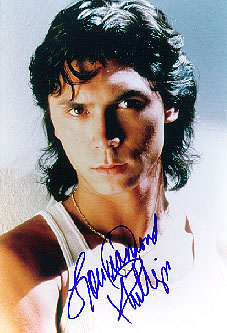
Andrew McCarthy and Lou Diamond Phillips—not necessarily because of anything they were in that particular year (LDP was in a movie called Dakota from the previous year that I had on video, and, of course, Andrew McC in the mid-80s teen-angst films with Molly Ringwald)
Who were your heartthrobs growing up?
Manuscript 101–Introduction & Basic Manuscript Format
Who is this Kaye Dacus and why should I believe what she has to say on this topic?
Well, I’m glad you asked. Please check out my ABOUT page to find out why I’m so passionate about the subject of writing.
One caveat. Even though I work as a copy editor, I am not posting any of this material as a representative of the publishing house. This is completely on my own and is no reflection on the house where I work (which is why I am not mentioning the name). The house where I work publishes everything from children’s board and picture books, young adult fiction and nonfiction, educational materials, to adult fiction and nonfiction, and I work with it all. Occasionally I may refer to the “style” we prefer at my house—this will be in instances where the “rules” might be vague, and the place where I work has chosen to do it a specific way. Other publishers may do it differently.
Also, please understand that no one is ever an “expert” at any of this. It’s always a learning process, as our language is constantly in a state of flux, and what might have been a “rule” five years ago (such as “always put a comma before the word too at the end of a sentence”) is now no longer the accepted norm (most houses are starting to eliminate the comma before too).
For the most part, I will be speaking in general terms—especially when it come to formatting—as there really are no hard-and-fast rules, just accepted practices. That said, let’s get some of the most basic “accepted practices” out in the open . . .
(CMS=Chicago Manual of Style)
Basic Manuscript Format
For the most part, if you follow these guidelines, your manuscript will have an acceptable layout for submission:
- 8.5 x 11″ paper size, portrait layout
- 1″ to 1.25″ margins (top, bottom, right, left). Do not go wider than 1.25″ (this is what MS Word defaults to, unless you change it)
- 12 point font, Courier or Times New Roman (Times New Roman is now the industry standard, so use that unless the house you’re submitting to specifically indicates they want the manuscript in Courier). Do not use any other fonts in the file–such as a scripty font for a letter a character writes (just italicize your chosen font). Let the publishing house decide how to format it.
- LEFT justify your document; do not full justify. This means the right margin will be jagged, not straight.
- Do not allow your word-processing software to automatically hyphenate your document. It’s okay if long words fall onto the next line. The reason is that sometimes, when the publisher imports a text file into the design software, it will read the hyphen as a character and keep it in the middle of the word, but now that word isn’t broken over a line, but in the middle of it. So you end up with something like news-paper or cli-mate in the middle of a line.
- In the header:
LastName/Title of Novel–flush to the left margin
Page number–flush to the right margin (you can set up a right-aligned tab)
The LastName/Title can be in ALL CAPS or in Sentence Case (not in italics). All that is necessary for the page number is the numeral–you do not have to put “page” before it, or set it off with -1- hyphens or anything like that - Double line spaced, with widow/orphan control turned off. (In MS Word, this is accomplished by clicking FORMAT–>PARAGRAPH and then in that dialogue box, clicking the LINE & PAGE BREAKS tab. Once on that screen, click off the checkmark beside Widow/Orphan control.) Turning off the widow/orphan control lets the text break naturally across the page breaks—it keeps the program from automatically forcing paragraphs to stay together at the end of a page, thus creating big gaps of space at the end of pages.
- Single spaces between sentences. (CMS 2.12) No extra space at the end of a paragraph. (This can become an issue once your manuscript is accepted for publication and is imported into Quark or other design programs.)
- Smart Quotes. I saw several entries in this year’s Genesis contest that had a mix of smart (curly) and straight quotation marks. There is an easy way to fix this in MS Word. Do a find and replace: Find ” and replace with ” (the same mark) and click Replace All. Then do the same with the single ‘ quote mark. This should change them all to the smart-quote format.
- Paragraph indentation. Two ways of doing this. Some people (like me) prefer the old-fashioned way of hitting the TAB key at the beginning of each paragraph, which tabs the line over 0.5″. (Do not use spaces, always use the TAB.) Others prefer to let the word processor do it for them, which is done either automatically, if this “auto correct” option has not been disabled, or by changing it in the FORMAT–>PARAGRAPHS menu. It should never be more than 0.5″, no matter which method you prefer to use.
- Italics vs. underlining. CMS 2.17: “Unless your publisher decrees otherwise, use italics, not underlining, for words that are to be italicized in the printed version.”
- Space at the beginning of chapters. Chapters should begin 1/3 to 1/2 the way down the page. This means that the highest your chapter header (CHAPTER ONE) should be on the page is 3.63″. Watch the info bar at the bottom of your word processor’s window—it should show you where you’re located on the page. I start my chapters at 4.6″. No particular reason. I just like the way it looks when I print it out. The lowest you’d want to go is about 5.5″, which would be exactly in the middle of the page. Start each chapter at exactly the same measurement.
- Use hard page breaks at the end of your chapters if you have all of your chapters in one document. You can do this in MS Word by clicking on INSERT–>BREAK and selecting PAGE BREAK, or by using the keyboard shortcut of CTRL-ENTER. This ensures that no matter how much editing you do on individual chapters within the document, the chapters following will always start at the right place on the page.
- Where does the chapter header go? That’s a really good question. CMS says it should be flush left, but they really aren’t focused on FICTION manuscripts. The standard I have always seen and heard of as acceptable is CENTERED one double-spaced line above the text. They can be ALL CAPS (CHAPTER ONE) or Sentence Case (Chapter One) or you can use numerals (Chapter 1)–just make sure they’re all consistent. They should be set in roman (not italic) text, and regular (not bold) face. I’ve sent a couple of e-mails out to find out if this is still the correct, accepted format, so stay tuned.
- PLEASE run a spell check on your manuscript. You can add unique names so that they don’t come up every time you run it. Even though the red-squiggly line is there, we don’t always see it. While the grammar tool with the spell check can be helpful in pointing out run-on sentences and passive voice, DO NOT take everything it says as gospel truth. It’s wrong at least 50 percent of the time (at least from my experience with it).
I’m sure I’ve forgotten something very important. Does this cover basic formatting? Let me know what I’ve left out.
MY CRIT PARTNERS ARE FINALISTS
I just had to post this to say how very proud I am of my crit parnters who are both FINALISTS IN THE 2007 ACFW GENESIS CONTEST.
Georgiana Daniels is a finalist in the Chick Lit category
Erica Vetsch is a finalist in the Historical Fiction category
Please visit their blogs and leave them a note of congratulations!
My crit partners ROCK!!!!!!!
Here is the full list of finalists:
Contemporary Romance (includes romantic comedy)
Jennifer Lynn Cary
Audra Harders
Catherine Hershberger
Roxanne Sherwood
Jennifer Hudson Taylor
Historical Romance
Linda Fulkerson
Audra Harders
Pam Hillman (double finalist in Historical Romance)
Jennifer Hudson Taylor
Romantic Suspense
Sally Bradley
Marci J. Burke
Dineen Miller
Dani Pettrey
Suzan Robertson
Sci-Fi/Fantasy/Allegory
Sally A. Apokedak
Valerie Comer
Rebecca Grabill
Shannon McNear
Chris Mikesell
Historical Fiction (not romance)
Yvonne Anderson
Marcia Gruver
Tina Helmuth
Carla Stewart
Erica Vetsch
Young Adult
Sally A. Apokedak
Leigh DeLozier
Linda Fulkerson
Charlene Glatkowski
Rachael Phillips
Contemporary Fiction
Michael Ehret
Jennifer Griffith
Kathy Harris–a member of MTCW!
Myra Johnson
Angie Poole
Women’s Fiction
Lynne Gentry
Ane Mulligan
Kristine Pratt
Kathleen Sprout
Ginger Vaughan
Mystery/Suspense/Thriller
Martha Pope Gorris
Gina Holmes (double finalist in Mystery/Suspense/Thriller)
Janet Robertson
Janet Rubin
Chick/Mom/Hen/Lady Lit
Georgiana Daniels
Annalisa Daughety
Sabrina Fox-Butcher
Carrie Padgett
Jenness Walker
Manuscript 101–the Book List
Here it is, as promised, the start of a new series: Manuscript 101: Common Mistakes and How to Avoid Them. Before I get started listing them, though, there are a few books I recommend every serious writer should have on hand. You can buy all of these books used–see the “more buying choices” at Amazon (linked) or you can look them up on www.alibris.com
The absolute, #1, must have reference book all writers should OWN is the Chicago Manual of Style 15th Edition. This is the “bible” that nearly every single publishing house goes by when it comes to formatting manuscripts for publication. Each house will have its own unique, internal style, yes, but if you make sure your manuscript is in CMS format, you’ll be in good shape. You can also get an online subscription to the CMS—but I have not used it to know how helpful/useful it is. I like having my hard-cover book sitting on the shelf right beside me so that I can immediately go to the sections where I know certain topics are covered (such as numbers in chapter 9, capitalization in chapter 8, dialogue and quotations in chapter 11) and pages are marked for rules I have the most trouble remembering.
Another super-important reference book to have on hand is a grammar handbook. I recommend the Bedford Handbook of Style, which is what I used as an undergrad (and taught from as a T.A.). Don’t get anything older than the 5th edition (1998). This is the version I have at home, and as long as you’re not going to be writing research papers, the grammar info (which is what you’re getting it for) is all still accurate. Find the Instructor’s Annotated Edition if you can—it has the answers to the exercises listed in the student version, as well as additional notes. The Harbrace College Handbook is good, but isn’t as well laid-out as Bedford. (The most recent one I can find online is the 13th edition, which was published in 1998—it’s what I have on my desk at work, so it is still useful).
As a backup to the CMS, I also occasionally refer to Words into Type. It was published in 1974, but is still useful in that it explains the WHY of certain rules better than the CMS.
The reason I HIGHLY RECOMMEND a grammar handbook in addition to the CMS is that the CMS is not a grammar guide. It’s a formatting/style guide. Yes, it has rules about punctuation and usage, HOWEVER, it also says things like “a comma usually precedes” that don’t give absolute yes or no answers to the questions that will come up. If you did not major in English or take at least one senior-level grammar class in college, having a grammar handbook at your fingertips is going to be one of your best writing tools available.
You also need a good dictionary: American Heritage, Merriam-Webster, or Random House dictionary, preferably other than a collegiate edition—though it doesn’t have to be unabridged (The AHD dictionary is not unabridged, but I’ve never looked up anything not in it)—with usage notes and other peripheral information included. If you cannot afford the most recent edition of a full dictionary (to make sure you know the currently accepted forms of words like Internet and online or the appropriate conjugation of the verb blog), an acceptable alternative is www.dictionary.com, which accesses the AHD and RHD, and www.m-w.com which is the online version of Merriam-Webster—however, some of their content is subscriber-only. Update: In answer to Amy’s question in the comments below, collegiate dictionaries aren’t bad if that’s what you already have on hand, but they do have a limited focus. Further, I recommend purchasing a good dictionary because it frees you from having to write/edit at a computer connected to the internet.
A usage book like Merriam-Webster’s Dictionary of American Usage or Right, Wrong, and Risky: A Dictionary of Today’s American English Usage can also be very helpful, especially if you’re using regional/colloquial dialogue you’re not quite sure about—or if you want to make sure you aren’t using it!
Now, I’m not saying you need to go out and buy all of these tonight or else you won’t be able to follow this series. But I will be referring to especially the CMS and Bedford handbooks quite a bit, and to keep from infringing on copyright issues, I will not be able to include more than just a couple of quotes here and there.
So—I know which errors I want to make sure to expose . . . I mean expound upon in this series, but I want to make sure that your needs are being met. What are some problems you have with grammar or formatting? Have you gotten some critiques or contest feedback that have left you scratching your head wondering why they took off points for grammar, layout, or formatting? Are you lost when it comes to commas—or even worse, semicolons, colons, and em dashes?
What can I help you with?

 KayeDacus.com