Turning Question Marks into Exclamation Points!

On my way to the MTCW Think Tank meeting Saturday, I heard an interview with Philippe Petit, the performance artist featured in this year’s Academy Award–winning documentary Man on Wire—the high-wire walker who walked a wire suspended between the World Trade Center towers. He was interviewed by NPR host Scott Simon, and there was one section of the interview that really resonated with me:
Simon: Can I get you to recall what that first step was like?
Petit: That moment, the slow-motion shifting of my weight, from the position where I have one weight anchored on the building and one weight—one foot touching the cable to turn the page from pedestrian and to open the page to life, to a short life as a bird, is of course for the wire-walker a point of no return. And for me, it was stepping into the live moment of living my dream after six-and-a-half years of dreaming my dream.
Simon: …What would have happened if you’d slipped?
Petit: That’s a very wrong question, because it doesn’t apply to me. I do not put myself in a state of question mark on the wire. Actually, the question mark, I transform it in[to] an exclamation point. And, again, when I say I’m writing in the sky, it’s not a beautiful image, it’s actually exactly what I’m doing. I have composed my text in my head, and I’m just now writing. I force my body to follow my will; and I will never put myself in a state of risk, only a state of ‘I hope the wire is strong enough; I hope I have enough training to do…to walk on that wire.’ And, at the same time, what I am sharing with you, this solidity, I am completely lying because here I am in the most fragile state and the most fragile universe there is. But this combination of extreme, the solidity in my heart and in my body, and the fragility of being a man on a wire, is actually the beauty of the miracle of wire-walking. So let’s not try to explain it further than that.
[The entire interview can be heard here.]
Petit’s statement about turning the question mark into an exclamation point struck me—especially since he reinforced it with the image of himself as a writer (and later in the interview as a poet). How many times when we sit down to write do we do it in a state of Question Mark instead of a mind set of Exclamation Point? For example:
- Can I do this?
Am I really called to be a writer?
What if my story isn’t good?
What if no one likes my writing style?
What if everything I write gets rejected?
What if it’s never good enough?
Am I following the rules?
How am I ever going to get to 50,000 (100,000) words?
Sitting down to write in a state of Question Mark can paralyze us—we, like Petit, are at the point where we have one foot on the solid surface of “real world” (for him, the building) and “writing world” (the high wire). To be able to step out into that writing world, we have to turn those paralyzing questions into Exclamation Points:
- I can do this!
I am called to be a writer!
My story is good!
I like my writing style!
Rejection isn’t the end of the world!
It’s good enough for me!
I can worry about the rules later!
All I have to write today is one page…one paragraph…one sentence…one word!
Self-doubt never led anyone into success. If you read/listen to interviews with successful people—whether they’re successful in business, the arts, raising their families, philanthropy, or whatever area of life in which they’ve applied themselves—you’re going to find out that though doubts may have surfaced, they didn’t listen to them, didn’t give them any ability to take a foothold in their lives.
If Petit stood at the wire thinking, What will happen if I slip?, he would never get that anchor foot off the solid ground. He doesn’t allow himself to think fatalistically—and yet at the same time, he recognizes the fragility of life. He’s not going out on the wire with a casual disregard for his own mortality. For him, it is the combination of the fragility of life and the solidity of the confidence he has generated in his own heart and mind as to his calling that allows him to pull that anchor foot off the building and onto the wire. To live life, as he said, for a short time as a bird in flight.
I wrote last week about the difficulty I have in shutting off that left-brain side of my mind when I sit down to write. Today, as I wrote this post, I realized it may not be physiological, but emotional—I may have reached a point where I’m living in the realm of Question Mark instead of Exclamation Point. I’ve allowed so many Question Marks to permeate my mind that it’s made me afraid to take my anchor foot off the solid ground and put it on the wire. So that’s my goal from now on. No more Question Marks. Only Exclamation Points.
In closing, I’d like to share this quote from Norman Vincent Peale, author of The Power of Positive Thinking and founder of Guideposts:
Formulate and stamp indelibly on your mind a mental picture of yourself as succeeding. Hold this picture tenaciously. Never permit it to fade. Your mind will seek to develop the picture… Do not build up obstacles in your imagination.
~Norman Vincent Peale
What Question Marks are you dealing with in your life (writing, work, family, etc.)? How can you change them into Exclamation Points?
Fun Friday–A Cover to Cover Comparison

For those of you who haven’t already seen it over on my fan page at Facebook, here’s the cover for Ransome’s Honor, Book 1 in the Ransome Trilogy, slated to release July 1, 2009:

(Isn’t it amazing how, even though it’s by a different publisher, the colors coordinate with my other two covers?)
After hearing all kinds of feedback on it, I thought it might be interesting to compare it to some of the other more recent covers of historical novels with which it will be competing. Granted, they’re not all from the same time period nor the English setting, but I personally think it fits in quite well! (And since many of these authors are friends/acquaintances of mine, I’ll ask that no one leave any disparaging remarks about any of these covers.)


Title Goes Here
Once again, great thanks to Alexandra for giving me an idea for a blog post!
Alexandra commented:
“…what would you suggest to people (me) who have finished their novel but haven’t the faintest idea for a title? What do you do for ideas? It’s beginning to make me very nervous. I normally don’t think up the title until I’m halfway through the story, but this is a little ridiculous. I’ve all ready given it two, and neither one was right for it. It goes by ‘Story’ around here, and I’ve had nightmares of seeing it published in bookstores with the title ‘STORY’ emblazoned across the cover.”
Titles are something that have given me trouble since I started seriously pursuing the craft of writing. So, as I do with all aspects of writing, I started studying it. And the way I did that was by pulling out all of my CDs (this would be so much easier now that all of my music is on the computer!!!) and making a list of the song titles that resonated with me, such as:
Walk on Faith
Love Remains (still using this title for a book I’ll be proposing soon)
Not a Moment Too Soon
What Matters Most (title of my first complete novel)
Not on Your Love
The Way You Love Me
Blame It on Your Heart
In This Life
Time Marches On
How Forever Feels
There’s Your Trouble
(I couldn’t find my original list, so I went online and searched for “Top Country Songs of the 1990s” and found this link. Country songs are great if you’re looking for a romance title.)
Looking at those titles, do they make you start thinking of situations, characters, or stories? That’s what you want a story title to do.
Of course, you don’t just want to assign any title to your story. One of the most important things you can do is figure out what the main theme of your story is. What’s your story about? Forgiveness? First Love? Surprises? Overcoming Bitterness?
As most of my regular readers know, the original title of Stand-In Groom was Happy Endings Inc. and the proposed title for the second book was A Major Event Inc. But when Barbour asked me to come up with a different title for the first book, I was quite taken aback—that book had been entitled Happy Endings Inc. for more than three years. That’s the title that’s imprinted in gold letters on my bound master’s thesis copy of it. But I wasn’t going to argue. So I sat down and started thinking of all the possibilities I could, by thinking about what the important themes and ideas in the book were. The three we finally narrowed it down to were:
- Once Upon a Wedding
Wedding of the Year
Stand-In Groom
And you know which one won.
I was actually thinking about movie titles the other day and about how they’ve kind of gotten strange or have gone for a snappy sound without really telling us much about what the movie might be about. Like Push or Eleven Minutes or Seven Pounds.
You don’t want to go with something that’s such an obscure theme in the story that it doesn’t give readers a feel for what your story’s about. But you also don’t want a title that’s so descriptive that it’ll have to be in 10-point font on the front cover.
So, how do you figure it out?
–Figure out the main themes of your story (as already mentioned).
–Go to Brainy Quote or The Quotations Page or The Quote Garden and do a search for the one or two key words in the themes you come up with (forgiveness, love, anger, fear, etc.). Do any of the quotes you find there give you an idea for a three to four word title. For example, my second completed novel features an architect, but also features four characters who have their own ideas of where their romantic futures lay—and find out God has other ideas for them, so I entitled it The Best Laid Plans.
–Look at every single title of every single song on every single CD you own and write down the ones that resonate with you/your story.
–Study books you’ve already read. How does the title tie in with the story? Does it make sense?
–Write back cover/marketing copy. Write your one-sentence pitch. (See this post for suggestions on how to do this if you’ve never done it before.) Keep whittling that one sentence pitch down until it’s as short as possible. Does it suggest a title to you?
–How does your story end? What I like to do is tie the title in with either one of the major themes of the story (as with Stand-In Groom and Ransome’s Honor) or with something that happens that’s important to how the story ends (as with Menu for Romance).
Now, get to work, and if you want help, post your options, themes, one-sentence summaries, etc., here, and we’ll all help!
Can My Write-Brain Come Out to Play?
Monday night at the Ted Dekker book-signing event at the Lifeway in Cool Springs, I had the opportunity to chat with several fellow MTCW members. One of the topics that came up is how it seems like recently we’d much rather re-read a book than pick up a new one, and how we (or at least I) would rather revise than compose when it comes to writing.
I used to love to go to the bookstore and buy five or six new novels. And I’d be back in two or three weeks to get more, having devoured those in just a few days each. Now, I go to the bookstore and (after looking to see if they have Stand-In Groom and how many copies are on the shelf) after looking at the covers and reading back cover copy, I put the books back on the shelf thinking, I’d probably really enjoy that story; but I know if I buy it, it’ll just sit on a shelf for a couple of years unopened, unread, so what’s the point? (Yes, I think with semicolons.)
Excuse me? What’s the point of buying new books to read? When did I sink so low? I used to read 50+ new books every year! I could lose myself in just about any book. And there were very few that I would put away unfinished. If I started reading it, I finished it, even if it wasn’t the most interesting/enthralling story. I had favorite authors whose books I bought without even reading the cover copy, simply because it had the author’s name on the cover.
Then, when it came to writing, it used to be that I constantly had folded up pieces of paper or napkins or church bulletins in my purse or in a stack or folder beside the computer waiting to be typed in, because I so enjoyed writing that I did it anywhere/everywhere I went (including at work, waiting for appointments, at concerts, etc.). It was what I looked forward to getting home from work to do in the evenings. I completed first drafts of novels in months instead of years. And even if I didn’t “feel” like writing, I powered through and did it anyway, because I knew I couldn’t let a little thing like apathy keep me from doing it. Once I completed one manuscript, I couldn’t wait to go on to write the next story. I loved the composition process. I loved getting lost in the world of my story. I loved spending time with my characters. I loved sitting down each day to discover what they were going to do/where the story was going that day.
Now, I have to force myself to sit down to write. And even when I do, all I can think about is everything else I’d rather be doing. (Of course, maybe part of the problem is that I always was the most prolific when I didn’t logically seem to have time to write—like my second-to-last semester of college when I was working full-time, taking 9 semester hours of senior-level classes with tons of reading and papers, and serving as an officer with ACFW for an additional 10-15 hours per week, not to mention a couple of physical therapy appointments each week for the ruptured disc in my lower back—and I wrote a 75,000 word manuscript.) (Wow, that was a long parenthetical statement.)
The more I started thinking about how things used to be, the more I started analyzing how I’ve changed since then that precipitated this turn-around in attitude.
And it comes down to one thing: knowing the rules.
Learning about and continuing to study the craft of writing brought about a fundamental change in the way my brain works when performing the functions of reading and writing.
We’ve all heard that analytical functions (math, science, accounting, taxes, rules, regulations, calorie counting, etc.) are done with the left-side of the brain, while creative functions (art, crafts, music, creating, singing, painting, dancing, day-dreaming, laughing, entertainment, etc.) are done with the right-side. So, it’s logical to follow that when reading and writing, we’re using mostly the right-side of the brain (with a little help from the left brain to control interpretation of the symbols on the printed page, comprehension, choosing the right words, spelling said words, and using whatever punctuation it wants to throw in for good measure.!$,.
However, once I started learning the rules, once I started getting feedback on my own writing, whenever I sat down to write, I had all these things that the left-side was trying to impose on the right-side (the write-side) that kept me from slipping fully into that creative slip-stream that used to carry me away when composing. But this is also what makes the revision process so rewarding for me: because at least in that process, having both sides operating at about equal strength is a benefit. Not only do I need the creative side for rewriting, but I need the analytical side for telling me what needs to be revised, how, and why.
This equilibrium between the hemispheres of gray matter has wreaked equal havoc with my enjoyment of reading. Again, I used to be able to slide very easily into the right-brain slip-stream and lose myself in someone else’s world, with someone else’s characters. Now, though I might enjoy the story I’m reading at a visceral level, my brain is constantly working, analyzing the plot structure and trying to think ahead and figure out what’s going to happen next, analyzing the characters, analyzing the style and voice and tone, analyzing the author’s choice of POV and tense and pacing, and so on. And that’s a lot of effort, even if it is on more of a subconscious level (if it’s a book I’m really enjoying) or more to the surface (if it’s a book I’m reading critically). However, one of the reasons I’d much rather read an old favorite is because, for some reason, the left-brain shuts up and doesn’t bother me, letting me enjoy the process of reading.
Is there a way to go back, to quiet the left-brain and let the write-brain out to play with no rules again? Probably not. But just as stroke or brain-injury victims often make miraculous recoveries when their brains figure out how to redirect/reconfigure the way messages get sent from one side to the other as well as to different parts of the body, there has to be a way for me to silence the left-side whenever I need to and find the slip-stream and enjoy the composing process once more.
Have you noticed a change in your attitudes toward writing/revising/reading in the time you’ve been studying the craft of writing? How do you deal with it?
A Sticker in the Middle of the Floor
In an effort not only to make myself a better housekeeper, but to keep my house in such a condition that anyone could drop by at anytime (though no one does, and I do prefer a little notice) and I wouldn’t be embarrassed by it, I’ve set myself a daily housekeeping task. So far, I haven’t been great at keeping up with most of them, except for the Monday (Kitchen) and Friday (Laundry and change bedding) tasks. I’m getting really good at making those a habit, so maybe it’s just a matter of adding each additional room one at a time on its specified day to make them all habits.
But anyway, that’s not the point of this post. Yesterday, as I mentioned, I had an onsite at a client, which threw my whole Monday routine into chaos. This was compounded by going out last night: down to the Cool Springs area to (a) stop at Barnes & Noble to see if they have Stand-In Groom yet (THEY DON’T!!!!) and (b) to go over to Lifeway for Ted Dekker’s book signing. I’ve been to several book signings that that particular store many times—usually on a Saturday afternoon—and they’ve never had a ton of traffic. So I always like to show up, even if I’ve never met the author nor read his books before, just so that someone’s there. Plus, I’m almost always likely to run into one or more members of MTCW at these events.
All that to say: I didn’t get around to my housekeeping task yesterday.
Today, I wasn’t really sure what to blog about. I thought about giving y’all another refresher post, but I’m as tired of those as I’m sure you are. But until I knew what I wanted to blog about, there was no point in trying. So, instead, I decided if I wasn’t going to do my Tuesday housekeeping task (clean up, dust, sweep, and mop in the living room), I would do the kitchen. (It’s also so much easier to lose weight with a kitchen that’s always clean, but that’s a post for my other blog.)
Because of cleaning the kitchen, including wiping down all surfaces (when was the last time you wiped off the top of your fridge?), it’s made it a lot easier to keep it clean throughout the week—in fact, it’s made it so that I don’t like leaving anything out because I know if I do, it’ll just make my Monday task that much harder (see, this is what I’m going for—and hope to get to with the rest of the house). For many, many years, I’ve been the kind of housekeeper where, if it’s out of my line of sight, or if I don’t have to look at it often, I didn’t worry about it. And “out of my line of sight” includes everything from about the waist down. One of the (very many) downsides of being overweight is that leaning over to pick something up or clean it is highly uncomfortable—between the back hurting and not being able to breathe, it’s just hard to get down there. Now that I’m losing weight, this excuse is waning somewhat, as it’s much easier to just bend over and pick something up (or wipe up a spill) as soon as it falls.
So as I’m mopping the floor today (I usually use the Swiffer Wet Jet, but it’s amazing how much cleaner the mop gets the floor, and how things I have to scrub at with the Swiffer come up with one swipe of the mop), I remember for the umteenth time that there’s a produce sticker stuck to the floor.

Now, I don’t see it every day to be reminded of it, because it’s usually covered up by the rug that I have on the floor at the sink. But I’ve seen it every week for the past several that I’ve been doing this. Yet by the time I think that I need to scrape it up, I’m already tired from sweeping and mopping the whole kitchen (no, it’s not really that large).
But it made me start thinking about writing.
(You knew it would, right?)
As writers, we all have our little pet/favorite things in our story, whether it’s an opening line/scene, a certain word used repetitively, a character who doesn’t add much but we love him, info dumps, or whatever it may be. Or it could be that there’s a certain place in our story we know could be stronger if we put a little more effort into it, but we just don’t feel like it.
Critique partners or contest judges may ding us on these “stickers” in our writing. But we stubbornly go along, either not wanting to get rid of it or not wanting to put the effort into fixing the problem. Or we try to cover it up. We move it, we revise the scene even though we’ve been told to cut it, or we throw a couple of “showing” verbs into a passage we’ve been told is passive/telling.
The sticker’s still there. It’s just under the rug.
As writers, we have to be willing to face the pain that comes from removing the sticker. The shortness of breath that comes from cutting those little pet scenes/words/characters. The back pain from applying butt to chair to spend the time necessary to revise or completely rewrite those passages that aren’t working. Or, in my case, applying butt to chair and getting the first draft written!
Now, while I go scrape up that sticker, I want you to tell me what your “sticker” in your writing is and how you’re prepared to deal with it.
Be Your Own Casting Director Refresher
Because I found out late last week that I’m needed to do some more on-site editing work Monday, you’re getting another refresher today.
Be Your Own Casting Director–Character Casting (October/November 2006). See also Creating Credible Characters, Storyboarding
Be Your Own Casting Director: Introduction
- “…Do you have pictures hanging off the sides of your computer monitor? Maybe tacked to a bulletin board? In a notebook or folder? Or (like me) electronically stored on your computer? Let’s talk about how to use those images for deeper character development and inspiration for our writing. …”
Be Your Own Casting Director: Real World Template Exercise
- “…I have used Real World Templates for my characters for as long as I’ve been writing. The romance genre, probably more so than any other, requires specific and detailed physical descriptions of the characters. Because I’m visually oriented, I find it much easier to remember what my characters look like if I have a picture—or series of pictures—to go from. That way, I can be sure that my character descriptions remain consistent. …”
BYOCD: Creating a Casting Book
- “…Always be on the lookout for images of people who strike a creative nerve inside you.
- Go online to clothing sellers such as Land’s End, LL Bean, J Crew, Eddie Bauer, etc., and request to receive their mailed-out catalogs.
- Buy magazines such as People or other publications that focus more on photos of people and less on articles. (Entertainment- and fashion-focused mags work best.)
- Watch for actors in movies – especially those in secondary roles – and find out their names by watching the credits or looking the movie up on IMDb.com (Internet Movie Database). Then do a Google Image Search for the actor/actress.
- You can also use real people, and in this day and age of camera phones it’s easier to capture an image of someone you happen to see who strikes that creative nerve, but just make sure that you aren’t describing someone whose features are so unique they’ll be able to pick themselves out. …”
- “…The inspiration for this historical romance involving a Royal Navy captain and the spinster daughter of his admiral came through an actor in a secondary role in the A&E movies based on the Horatio Hornblower novels. While watching these movies, I became enamored with the somewhat stiff and stodgy—but loyal and good-hearted—Lt. William Bush, portrayed by an actor with the most amazing light-blue eyes I have ever seen. (I’m an eye-girl, what can I say?) After seeing the movies the first time, I knew I wanted to add several of the actors to my casting book. (Upon multiple viewings, I started focusing on Lt. Bush as inspiration for my Captain Ransome.)…”
BYOCD: Putting RWTs to Work for You
- “…Once you have cast your characters and begun the process of collecting images, you may find yourself thinking of scenes inspired by the images you see. Just like there are two ways to cast characters, I employ two methods of collecting images—those that seem to fit with the actions or emotions of scenes I’ve already written, and those that generate ideas for potential scenes. …”
BYOCD: Guided Brainstorming with RWTs
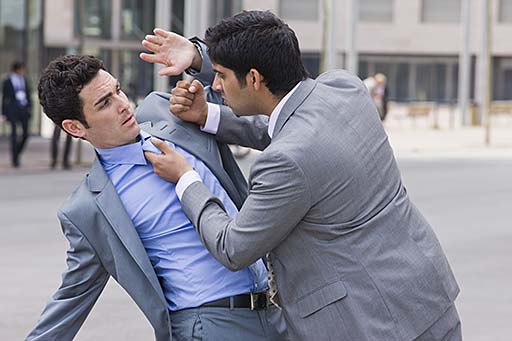
“…What is going on in this image? Who are these two men? Where are they? What is their relationship to each other? Now, imagine these two are characters in your story. What’s the setting? What is going on between them? What is being said as this “snapshot” was taken? What will happen immediately after this? Is one the good guy and one the bad guy? How will what’s happening in this moment influence the rest of the story? …”
Other posts about using Real World Templates/Character Casting:
Virtual Barbies and Paper Dolls
- “…My stories are always character driven, and those characters come to me in a variety of ways, most especially through the “what if” process—what if I ran into a member of one of the popular boy-bands of the eighties. I would never recognize him because I did not listen to that kind of music nor did we have cable/MTV. Thus begins the premise of a novel involving a former boy-band member and an opera diva. Another major source of characters for me is from secondary characters in movies and/or TV shows that intrigue me (which I’ve written about in recent posts). …”
- “A couple of days ago, I wrote about using visuals for creating my characters and getting inspiration for scenes. I wanted to share the storyboards I’ve been working on for Ransome’s Honor to give an example of what I’m talking about. Each image includes a background of the setting as well as major characters who have named/active appearances in the scene. …”
For Discussion:
Do you cast your characters when you’re writing? If so, who are you using right now? What led you to use him/her for your character’s template?
Fun Friday–Top 5 Fun Friday Posts Ever
Continuing with the theme for the week of going back and reviewing series, I thought I’d let y’all in on a little secret today . . . the five Fun Friday posts that get the most hits on my blog. Almost every day (with a few exceptions as has happened this week when I mentioned a particular link in an e-mail to the ACFW loop), there are two posts that vie for the top spot of the most clicked-on posts on my blog. As a matter of fact, I get as many or more hits each day on these two posts (individually) as I did on my entire blog the first six or seven months I was doing it!
So here, according to the average number of hits per day, are the top five Fun Friday topics I’ve ever posted.
5. Best On-Screen Kisses (Friday June 15, 2007; Averages 10 hits per day)

- …Navarre and Isabeau in Ladyhawke. Navarre and Isabeau were cursed for loving each other—Navarre becomes a wolf by night while Isabeau becomes a hawk by day. Forever together, yet always separated. Therefore, when the curse is lifted, their reunion at the end is amazing. …
4. Favorite British Actresses (Friday March 14, 2008; Averages 12 hits per day)
- …Daniela Denby-Ashe. Fans of North & South
 know exactly why Daniela is on my list! She’s the actress who played the character that reformed John Thornton and made us all fall in love with Richard Armitage. One of the things I really like about her is that she (like many other British actresses) isn’t the epitome of high-fashion beauty—like most American actresses. And it made us love John Thornton even more that he’d fall in love with the somewhat plump brunette instead of the skinny blonde. Although we don’t get the series here, she has also been a series regular on the BBC staples East Enders and My Family (with Sir Robert Lindsay—on last week’s list). She also doesn’t have any works-in-progress listed on her page, but I’m sure whatever she chooses to do next, she’ll be great in it. …
3. Great Movie Costumes (Monday October 1, 2007—in lieu of a Fun Friday post; Averages 13 hits per day)
- … Persuasion, Master & Commander, and the Hornblower series. These films help me out so much in visualizing the uniforms and costumes as I work on the Ransome series (even though these are all pre-1812, when the uniform codes changed slightly), so I had to do two images:


2. Pride & Prejudice (Part 1) (Friday February 8, 2008; Averages 35 hits per day)
- … Mr. Fitzwilliam Darcy, gentleman. Age 28. Inherited an enormous estate in Derbyshire from his father. Is worth a rumored 10,000 pounds/year (about 5–600,000 in today’s currency!). Described by Jane as being a “fine, tall person” with “handsome features [and] noble mien.”
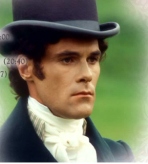
1980: David Rintoul, my favorite Mr. Darcy. Yes, he was stiff. But David Rintoul pulls off the stiffness while making it look like it’s because he’s uncomfortable in the situation, as the introverted Darcy would have been. And David Rintoul looks really good in the Regency-cut coats and trousers!

1995: Colin Firth, everyone else’s favorite Darcy. For me, he’s too jowly and doughy-looking to fit my mental image of Mr. Darcy, developed, as I’ve already mentioned, for many years before Colin Firth was ever cast in this role. …
And finally, the #1 post on my blog. The post that has gotten more hits since it originally “aired” than any other single post or page on this site . . .
1. Favorite Medieval Movies (Friday November 2, 2007; Averages 40 hits per day, with a total of 13,252 page views—and counting)
- … A Knight’s Tale. If Chaucer were alive in the 21st century, what kinds of stories would he be writing? All hail to A Knight’s Tale for bringing us a campy, fun, hysterical movie that at once pays homage to the medieval pasttimes of tournaments and chivalry while also making fun of them. This may be Paul Bettany’s best role to date, as Chaucer—the writer who gives “the truth scope.” Oh, and look—it’s another medieval featuring Rufus Sewell, this time portraying the villain, which he does with aplomb. The major flaw of this movie is the ill-concieved romance storyline. Neither the character nor the actress playing Will’s love interest is at all likeable, which makes that part of the film fall flat. But that’s easily ignored for all of the other wonderful parts of the movie. …
Conflict Series Refresher
What’s a story without good conflict? Well, not much of a story at all! So here’s a little refresher on putting some conflict into our stories.
Conflict (October 2006)
It’s Good to Be Conflicted
- “…When we write our middles, we want to take our characters off the safe path. We want to write them into corners we’re not sure they’ll be able to get out of—and then let them figure out how to do it. We cannot let them walk away from conflict. …”
- “…Thematic conflict is the overall theme of the story. For example, in Chariots of Fire there are the conflicts of Man vs. Man (the two racers against each other) and Man vs. Society (the Jewish character against the Protestant society). In Raiders, we see Man vs. Man (Indiana Jones vs. the Nazis). In Castaway it is Man vs. Nature, which is also seen in environmental disaster movies such as Earthquake or Firestorm. In 2001 it is Man vs. Machine (remember H.A.L.?). Frankenstein, The Matrix, and Terminator are all prime examples of Man vs. Technology. …”
- “…Think about The Wizard of Oz. The whole story, once she arrives in Oz, is Dorothy’s desire to go home to Kansas. If she followed the yellow brick road all the way to the Emerald City with no one to stop her—even if she did meet interesting folks along the way—it would not be a very interesting story (nor take very long to tell!). But along her journey she meets with one conflict after another brought upon her by her nemesis, the Wicked Witch of the West. But the witch wasn’t thwarting her just to thwart her. She had a desire as well: to retrieve the magical ruby slippers which were on Dorothy’s feet and held the key for Dorothy’s return home. …”
- “…Conflict keeps our readers reading out of anticipation. If their anticipation is not rewarded with the relief of a resolution, that anticipation will turn into annoyance and disappointment. It’s why TV shows end their season with a cliffhanger—the anticipation from the conflict the characters are in the middle of when the show ends in May is what gets the viewers back in September—for the payoff. When you give your characters an easy out, when you resolve a major conflict off stage, or when you do not resolve a conflict, your readers lose trust in you as a writer. …”
Other posts about Conflict:
Torture Can Be So Fun!
- “…I have just written what is probably my favorite scene ever! It’s one that I visualized and planned out nearly two years ago when I started writing Ransome’s Honor. It’s the scene that I have been writing toward since then as I’ve crafted this story into an actualized manuscript. It’s the second-to-last chapter of the novel and does what I want the almost-last chapter of every book I write—as well as every book I read—to do . . . seem to be bringing everything to a resolution, then rip the carpet out from underneath the characters. …”
(Narrative) Debt and Simple vs. Compound Interest
- “…When we write, every time we introduce a question or a conflict to the story, we are incurring what’s known as narrative debt—in other words, we are building up toward the payoff at the end in the climax, where all of the reader’s expectations will be (or should be) paid in full. When we incur this debt, we have two choices when it comes to the “interest” that goes along with it: simple or compound. …”
Stir Up Your Setting Refresher
I love writing and reading stories that have great settings—to a point. I want the setting to be there, to be realistic, and yet I don’t want the description of the setting to so overwhelm what’s going on that I end up skipping long passages of description (as is happening with one of the books I’m currently reading, Charles Dickens’s Bleak House). So here’s a little refresher on setting, which is one of the very first series I did.
Setting (May 2007)
Stir Up Your Setting
- “…What cinematographers can do with cameras, lighting, and computer-generated graphics, we writers must do with words on a page. And not only that, we must do it in a way that incorporates the grittiness of a New York street or the relaxed, honey-filled air of a small Midwestern town into the action of our stories without being intrusive. Movies are allowed wide, sweeping angles of an Arizona desert at sunset. We aren’t. …”
Stir Up Your Setting – Part 1: World Building
- “…World Building isn’t just for SciFi/Fantasy writers! Even if you’re using a contemporary, real place like New York City or London, the setting is just as important as if you’re writing about a fictional city or another place/time/world. Your job as author is to bring the reader into your world, not just assume they’ll know your setting without being shown. …”
SUYS – World Building…A Step Further
- “Because of the genre, Speculative Lit writers (science fiction, fantasy, allegory, etc.) have both an advantage and a disadvantage when it comes to setting. Spec Lit readers expect much more detail when it comes to the setting. They want the author to do the cinematic sweep of the landscape (through the lens of the character observing it) and describe it in detail. But that means the Spec Lit author must know his world(s) intimately and be able to use captivating, picturesque language to describe the setting. To a lesser extent, readers of historicals/historical romances expect a larger measure of setting description (including costuming and props) than we typically see in contemporary fiction. …”
Stir Up Your Setting – Part 2: Using All Five Senses
- “…Just as character descriptions should be gradually peppered throughout the introductory scene, the description of the scene shouldn’t all come at once . . . unless there is something vastly important about the look of the setting—such as a pauper entering a palace for the first time, but even then, be sure to tie emotion and the five senses to the experience of the setting. …”
Stir Up Your Setting–REAL Fictional Settings
- “…Describing a fictional setting for readers is like giving someone directions how to get somewhere. If it’s a place we’ve never been or only been to once or twice, it’s going to be hard for us to explain with confidence how to get there, where to turn, how long it will take. If we’ve lived there many years—or all our lives—we can do it turn-by-turn (“take Highway-22 West to exit 52/College Ave. Turn left at the top of the exit, and stay straight on College Ave.—it will become Oak Alley Lane after the next light”), with lots of landmarks (“turn right on Bocage Avenue–there’s a service station–Buddy’s–on the near corner and a library on the far corner . . . if you get to Tezcuco Place, you’ve gone too far.”), and down-to-the-minute time estimates (“it takes me about fifteen minutes to get home from downtown if I take the freeway, twenty if I take surface streets.”). …”
- “…The Bourne Identity and The Bourne Supremacy. These films, while also being great action films, give a visual tour of Europe unlike any other modern movie I can think of. I especially love the scenes in Moscow in Supremacy. The action sequences (especially the car chases) chew up the scenes, and yet the setting gives them their sense of urgency—from the narrow streets of India to the crowded streets of Berlin. The weather also helps set the mood—as it’s usually either raining, snowy, or cloudy for most of the movie. The three main scenes that are bright and sunny are (a) the end of the first film when he joins Marie at her shop on the beach, (b) the opening of the second film when they’re happy together in India (before the assassin* shows up), and (c) the end of the second film when Bourne calls Landy and she tells him his real name and where he was born—emphasizing the happiness, the optimism of those scenes. …”
Stir Up Your Setting–Making Setting a Character
- “…Think about the difference between the setting of a stage play and the setting of a modern, big-budget movie. No matter how much money a production pours into building sets for the stage, it’s always going to look like a set. Why? Because the environment isn’t real. There are no elements, no weather, no sunlight, no wind. When movies are filmed on location, they have so much more realism—and actors will tell you that they can get into their roles better when away from soundstages or backlot locations. …”
Stir Up Your Setting–Finding a Happy Medium
- “…I have a tendency to be a ‘too much setting’ writer. Almost everything I’ve written in the past twenty or so years has been set in my fictional Louisiana city. When I first started letting anyone (my mom and grandmother) read what I’d written, one of my mom’s comment was that she wished I would include more about the setting because she wasn’t getting a good feel for it. That’s when I started studying this element of craft. I started finding places where I could interject tidbits about the setting. And then, once people started commenting on how much they liked it, I wanted to put more in (you know, if they like it a little, they’ll like it a lot, right?). …”
For Discussion:
A. What’s one place you want to visit because you saw it in a movie or read a book set there? (Even if it doesn’t really exist—like Middle Earth or Avalon)
B. What’s your favorite setting you’ve ever used for one of your stories?
Creating Credible Characters Refresher
The thing that led me into writing was the constant flow of ideas for characters that was (and is) always running through my head. But having an idea for a character is one thing; creating characters that are credible, that readers will connect with and remember after they finish reading the book, takes lots of work. So here’s a refresher on the Creating Credible Characters series. (There’s a discussion question at the end of this post.)
Creating Credible Characters (June 2007). See also Be Your Own Casting Director, Point of View
Creating Credible Characters—Introduction
- “…When it comes to my own writing, choosing a favorite character is equally if not more difficult. The hero of whatever story I’m writing at the time is my favorite ever as I, along with the heroine, fall deeper in love with him as the story unfolds. …”
Creating Credible Characters—Where Do Characters Come From?
- “…Answering the question, ‘Where do characters come from?’ is very much like answering the baby question. There’s the stork-like answer we give to non-writing friends and then there’s the full disclosure we discuss amongst fellow writers. There are no storks here (well, maybe just one). …”
Creating Credible Characters–Who Are You?
- “…One of the worst things we can do in our writing is not develop our characters well. This comes either from a lack of knowledge of how to do it or not spending enough time getting to know the characters at a deeper level. …”
Creating Credible Characters–Culture Clash
- “…As humans, we are most comfortable around ‘our own kind.’ This can be taken to extremes (the holocaust, slavery, ethnic cleansing), but it is something that is hard-wired into our psyches. When we are forced into situations (or choose to go into them) where we are the lone ‘one of our kind’ amongst a vast array of ‘otherness,’ this is when our true character comes to the forefront. It can be something as simple as starting a new job where everyone else is more experienced than I am, or as extreme as going to a foreign country where I do not speak the language and look physically different from everyone surrounding me. How I act/react in these situations are the truest test of my character. …”
Creating Credible Characters–Let’s Get Personal
- “…This is where knowing a little about psychology helps. You’ve answered the interview questions, filled out the character profile worksheets. Now it’s time to go back and look at the answers and act like a four year old and ask one of two questions: ‘Why?’ or ‘So what?’ …”
Creating Credible Characters–Mannerisms and Quirks
- “…The level of quirkiness Johnny Depp brought to that character [of Captain Jack Sparrow] most likely would not translate well to the written page. It works fine in the movies because they are physical gags that we quickly interpret visually and understand. But if you tried to describe his facial expressions, it would take too many words and would slow the pace of the story too much. Our characters’ mannerisms and quirks will arise out of who they are—so as you go through the personalization process with them, be looking for things that can become something unique to help define your character for the reader. …”
Creating Credible Characters–What Do You Want?
- “…Before you can develop that conflict, you have to delve into what each character’s desire is. We have a tendency to define characters as ‘good guys’ and ‘bad guys,’ but when we start developing real, multi-dimensional characters, we have to move beyond these epithets into the knowledge that no one is ‘all good’ or ‘all bad’ (unless, of course, you’re writing fantasy or allegory with ‘evil’ characters such as Sarumon and Orcs). …”
Creating Credible Characters–What’s in a Name?
- “…Sometimes, we name our characters one thing and halfway through our novels, they stop, throw a temper tantrum and refuse to cooperate until we change their names to something else. Or sometimes we try to change the name when we think it doesn’t fit any longer, and then the character refuses to cooperate any longer—stops talking to us or doing anything he should—until we go back to the original name. …”
For Discussion:
This is actually a two-parter.
A. Who’s your favorite fictional character (only one) from a book, movie, or television show. Why?
B. Who’s your favorite character you’ve ever created? Why?


