MENU FOR ROMANCE: Settings
I’ve mentioned many, many times on this blog about working with the fictional setting of BONNETERRE, LOUISIANA (pronounced Bon-terra, though Bone-terra would be appropriate as well), and today, I’ll be sharing the inspiration behind the creation, development, and population of this wonderful city.
In the summer of 1992, when I was a student at LSU, my then–best friend Amy and I were out running errands one evening. We were discussing our friends and acquaintances and Amy made the fateful remark: “I wonder where we’ll all be in five years.” For anyone not in the know, this is a very dangerous thing to say in front of a writer, especially one that, until that moment in time, had no focus to her writing, but just dithered here and there as the mood struck. I’d always thought I would only ever write historical-set novels. I didn’t read contemporaries, so why would I write them?
That night, and for the next several weeks, I immersed myself in writing A Shared Dream, my vision of where Amy and I and five or six of our closest friends would be and what we would be doing five years down the road. It was the first time I’d ever shared my writing with anyone, and because Amy liked it, I kept on going. After a few months of this, though, I realized that I was going beyond just amusing my friend with a few speculations of what we’d be when we “grew up.” So I changed it from first person (my perspective) to third person, re-named everyone, and changed the location from LSU/Baton Rouge to the University of Louisiana/College Park (no, not a very creative name). And thus, what would become Bonneterre was born.
At first, it was a relatively sleepy college town—I pictured it being a place in which everything revolved around the University of Louisiana and their Marauding Pirates sports teams. Why? Because that was my perspective of Baton Rouge when I was in school there. I didn’t need for the city to branch out much from the university, because when I first created the town, I was writing about characters who were in college (I went back and re-started my story with my main character, Ash’s, first day at ULa). I didn’t need office buildings and corporations in a downtown area. I didn’t need major retail shopping areas (college students at a state college are notoriously poor). I needed a campus. I needed restaurants and shops surrounding a campus. I needed a church. I needed my character’s grandparents’ home out in the country. So College Park was small.
And then I dropped out of college and moved to Northern Virginia. The first year I was there, I worked in downtown Washington DC. The next two years, I worked in Fairfax and Vienna, Virginia. I wrote voraciously (it not only helped me conquer the depression I was in that was part of what led me to dropping out of college, but it was how I, in a round-about way stayed “in touch” with my closest friends I’d left behind in Baton Rouge back before there was such a thing as e-mail or Facebook). My characters grew up and graduated from college. They got jobs—and College Park grew beyond the university campus.
Because I’m constantly developing characters in my head, with each new character I got an idea for, I started making a database of people who populated College Park—their families, their businesses/professions, their connections. I worked at a newspaper. College Park gained a newspaper and some TV stations. I worked at an advertising agency in a major corporate area of NoVA. College Park gained a downtown where businesses like that could exist. I went with a friend to the county courthouse for her divorce proceedings. College Park gained a Parish Courthouse and lawyers.
By the mid-1990s College Park had about doubled in size from what it had been when I first created it. But by then, I was already breaking away from that original, and still unfinished (at 200,000 words) manuscript. While it had been a good project while it lasted, I needed to grow as a writer, and that meant working with other characters, other stories. And then, in 2001–2002, I wrote my first full manuscript: What Matters Most. I’d been developing the characters—main and secondary—for years, and as I got into the intricacies of the story, I realized just how much bigger College Park needed to be. It needed to be, well, bigger than Las Cruces (where I grew up) and smaller than Baton Rouge (otherwise, how was I going to “hide” it in the middle of the state?). Small enough that there could still be scandals about a newscaster on the local news channel that would make headlines yet large enough that she could lead a normal life otherwise.
Both of my first two finished manuscripts were set in College Park. The third, I set in Nashville, just for a change of scenery. But when I started my fourth manuscript, what would become Stand-In Groom, I realized I needed to go back to my fictional town, because it was the only logical setting. Nashville wouldn’t work, because a celebrity’s wedding wouldn’t be (isn’t) that big of a deal here. I wanted it to be set in the south, but I’d been away from Baton Rouge for almost fifteen years, and every time I went back I realized how much had changed. Plus, it was still a little too big for what I needed. My other main reason for using my already-existing fictional setting was so that I didn’t have to do a lot of research on a city I wasn’t very familiar with. I already knew College Park. I’d “lived” there for so many years.
I submitted the first ten pages of Stand-In Groom for workshop my first residency at grad school. I don’t remember who made the comment, but someone remarked on how “College Park” didn’t sound like a very Louisiana-ish name. And they were correct. So one of the things I worked on that first semester was renaming the city. I wanted it to be something that sounded vaguely familiar, as if someone might have heard the name before, but just couldn’t remember where. So I got out my old road atlas, flipped to the index of towns/cities and parishes in Louisiana and started reading. And I found it. Terrebonne Parish. Beautiful land in the French. So College Park, Louisiana, was re-named Bonneterre, Louisiana, in the fictional parish of Beausoleil on a river that I have yet to name (could be an existing one, could be a fictional one. I haven’t decided, and I haven’t been forced to, so I don’t think I will). ULa, which was not only confusing to readers who weren’t familiar with UVA (the University of Virginia), now had to be renamed because the public university system in Louisiana renamed two colleges in the state to the University of Louisiana at ______ (Lafayette, Monroe—or ULL and ULM). ULa, even with the lowercased a might be misconstrued as University of Louisiana at Alexandria, since Bonneterre is supposed to be in the mid-state region. So I tweaked the name to the University of Louisiana at Bonneterre, or ULB.
Where exactly is Bonneterre supposed to be located? Basically in the middle of a swamp. If you look at the map of Louisiana on Google Maps, I imagine Bonneterre being east and slightly north of Alexandria, in the triangle created by Catahoula Lake, Saline Lake, and Honey Brake Lake. Or, in other words, about halfway between Alexandria, Louisiana, and Natchez, Mississippi.
 What does Bonneterre look like? Well, since it’s a conglomeration of many different places I’ve been or lived and not just based on one place, I’ve collected many different images of different cities when I’ve seen something that resembles my image of places/locations in Bonneterre. Here are some of the important locations in Menu for Romance:
Boudreaux Tower, the tallest building in Bonneterre (and it looks like in Shreveport, too) at the top of which is Vue de Ceil, the sky-view event center that not only plays a major role in Stand-In Groom, it’s where Major’s office is located. Meredith’s office is on the fifth floor in the Boudreaux-Guidry Enterprises Corporate offices, in which we also get to spend some time in the executive dining room.
The kitchen in Major’s condo is not only inadequate for him, but creates a big problem for him once we get into the story.
And then, of course, there’s Meredith’s house that, at the beginning of the novel, she’s in the process of refurbishing.
And for more images of settings in Bonneterre, check out the Bonneterre Set on Flickr.
Fun Friday–A Literary ABC Meme

I wrote my own meme for today’s Fun Friday. If you like it, feel free to re-post on your blog or Facebook page, and be sure to come back and share the link in a comment!
The Literary ABCs
List your favorite . . .
Austen (Jane) novel: Persuasion
Brontë sister’s novel: Jane Eyre
Clancy or Crichton novel and/or movie: Jurassic Park (book & film adaptation)
Dickens novel and/or film: Bleak House (it’s the only one I’ve read through, and I love the 2006 miniseries adaptation)
English class you took: History of the English Language
Frequently read author: Currently, Julie Garwood (I’m re-reading her romance novels from the early 1990s)
Grisham novel and/or movie: Novel—The Rainmaker; film—A Time to Kill
Historical novel or era*: Lieutenant Hornblower by C. S. Forester
*Written at a time well after that in which it’s set.
Iconic fictional character: Harry Potter
James Joyce or Henry James? Henry James—Turn of the Screw especially
King in literature (i.e., a character who’s a king, real or fictional): King Henry V of England (Shakespeare’s version)
Lord of the Rings character: Éomer (was there any doubt?)
Movie made from classic literature: Persuasion 1995
Newberry Medal–winning book: Sarah, Plain and Tall (1986)
Oldest book you own (not necessarily “favorite,” just oldest): The entire Harvard Classics set, © 1909
Pirate in literature: Tie: “El Salvador” and “Shaw” (Ransome’s Quest)
Quiet place to read: In bed
Robin Hood version (which film/TV series?): Disney’s animated version
Shakespeare play or poem: Much Ado about Nothing
Twain (Mark) novel/story/essay: “The Celebrated Jumping Frog of Calaveras County” (short story)
USA Today Bestseller: Harry Potter and the Goblet of Fire
Villain: Voldemort
Walt Whitman or William Wordsworth? Whitman (Leaves of Grass is one of my favorite works of literature)
Xanthippe (an ill-tempered woman, a shrew): Lady Beatrice from Much Ado abuot Nothing
Yawn-inducing bedtime read: Something by Dickens
Zealously protected book you’ll never part with: Victoria by Willo Davis Roberts—I’ve had it since I was fourteen or fifteen, it was what really got me motivated to start writing, it’s taped together, and I haven’t read it in years, but I’ll never part with it.
RANSOME’S HONOR: The Character Casting Process
As I detailed in Tuesday’s blog post, the idea for the Ransome Trilogy came from my enthrallment with the character of William Bush in the Horatio Hornblower movies (and the novel Lieutenant Hornblower). However, I don’t think he would have caught my eye quite so much if the role hadn’t been played by the actor Paul McGann. While he’s hardly known at all on this side of the pond, he’s got a pretty good following in England, given the number of fansites and forums there are dedicated to him. (And if you want to see the scene that got me started on this story, click here and scroll up to 1:45 to see Paul deliver the line that sent me on this journey.)
Captain William Ransome
1802~~Tall and slender, his brown hair falling onto his forehead in loose curls, Lieutenant William Ransome straightened from bowing in greeting to her mother. His vivid blue eyes, pale yet impossibly fathomless, met Julia’s.
1814~~The intensity in William’s blue eyes pierced her, even from across the large room. Though more weather-worn, the years had been kind to him. He moved with the confidence of an experienced captain instead of the more submissive scurry of a lieutenant.

Paul McGann as William Bush in the Hornblower films
Admiral Sir Edward Witherington
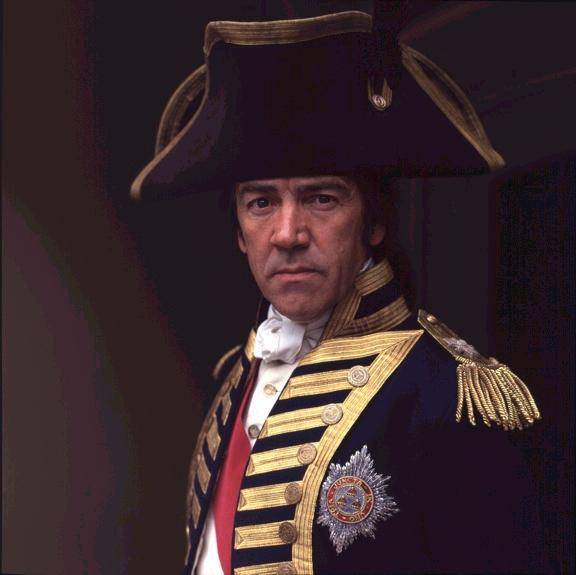 To get to the woman who would eventually win Captain William Ransome’s heart, I had to start with her father, William’s flag admiral. Who better to be the gruff commander with a twinkle in his green eyes than the actor who’d played Hornblower’s commanding officer throughout the films: Robert Lindsay? (And if you watch from 8:40 to 9:28 in this clip, you’ll see the only scene Robert Lindsay and Paul McGann played opposite each other in the entire Hornblower series.)
Julia Witherington
Julia Witherington was the very image of an Athenian statue—but not of cold white stone. Her gown looked as if it had been made of liquid bronze, hair done up with gold ribbon woven throughout the mass, while several mahogany curls bounced around her shoulders. . . . Her green eyes seemed depthless in the glow of dozens of candles. . . . A hint of dimple appeared in her left cheek. . . . William’s focus strayed beyond the two couples ahead of him to the reddish-brown curls that skimmed Julia’s skin as she took the stairs on Admiral Glover’s arm. The curve of her shoulder up to the column of her neck reminded him of the refined lines of the bow of a Man-o’-War.
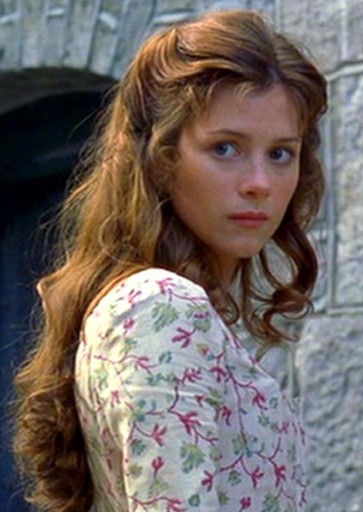
Anna Friel as Flora in St. Ives (1998)
Sir Drake Pembroke, Baronet
Halfway down the stairs, Drake glanced over his shoulder and gave Julia a smile that sent a cold chill down her spine. Though handsome, his slightly hooked nose and thick, dark brows that hooded his eyes gave him an air of menace.
 Maybe it’s cliché to have the antagonist have black hair and dark, hooded eyes, but I knew I wanted Adrian Paul to be the unscrupulous cousin Julia’s trying to avoid marrying. Now, if you’re keeping score, those of you who’re familiar with Adrian Paul’s best-known role, as Duncan McLeod on Highlander will notice that I cast the sidekick, Methos (Peter Wingfield), as the hero in Stand-In Groom and the “hero” of the TV show as the bad guy in Ransome’s Honor. That’s how far my secondary-character mania goes, I guess. And when I was writing, I could visualize Adrian Paul as Sir Drake more clearly than I could visualize the templates for any of the other characters. Of course, Sir Drake is one of my favorite characters I’ve ever written, not only due to the fact that as the bad guy, he could pretty much do or say anything no-holds-barred, but also because he was so clear to me when I was writing his viewpoint scenes.
Miss Charlotte Ransome
Beside her sat Charlotte, no longer the young girl he’d last seen but a stunning woman of seventeen. . . . “Charlotte.” He kissed her forehead after he helped her down. “I hardly recognized you.”
Mrs. Ransome laughed. “Hardly recognized? With her dark hair and blue eyes just like yours?”
 Anyone who knows me will be gobsmacked by this casting choice. And if you aren’t already in the know, let me explain: I think Natalie Portman is one of the worst actresses I’ve ever seen—and her fake British accent is even worse than her acting. However, give her blue eyes (like I did in this picture), and she has the right look for William’s little sister—the one who, when I was in the middle of the first draft, burst onto the scene and demanded a viewpoint and a main role in the second and third books. This is one of the rare cases in my vast experience with using the technique of casting that I don’t want to to see (or hear) the template in action—because if I did that, I’d end up hating this character. And there’s another reason why I chose Natalie Portman as the template for Charlotte . . . but that’ll have to wait until Book 2 comes out for me to explain why!
A few secondary characters of note:
 Captain Collin and Susan Yates—Yes, that’s right, William’s best friend, Collin Yates, and Julia’s best friend, Susan Barstow Yates, are none other than Faramir and Eowyn from the LOTR movies, David Wenham and Miranda Otto! I’ve made Collin much stockier than David Wenham, but after falling in love with Faramir and Eowyn’s romance in Return of the King (mostly from the book), I knew I had to use them as an already-existing couple somewhere, so it was a perfect fit.
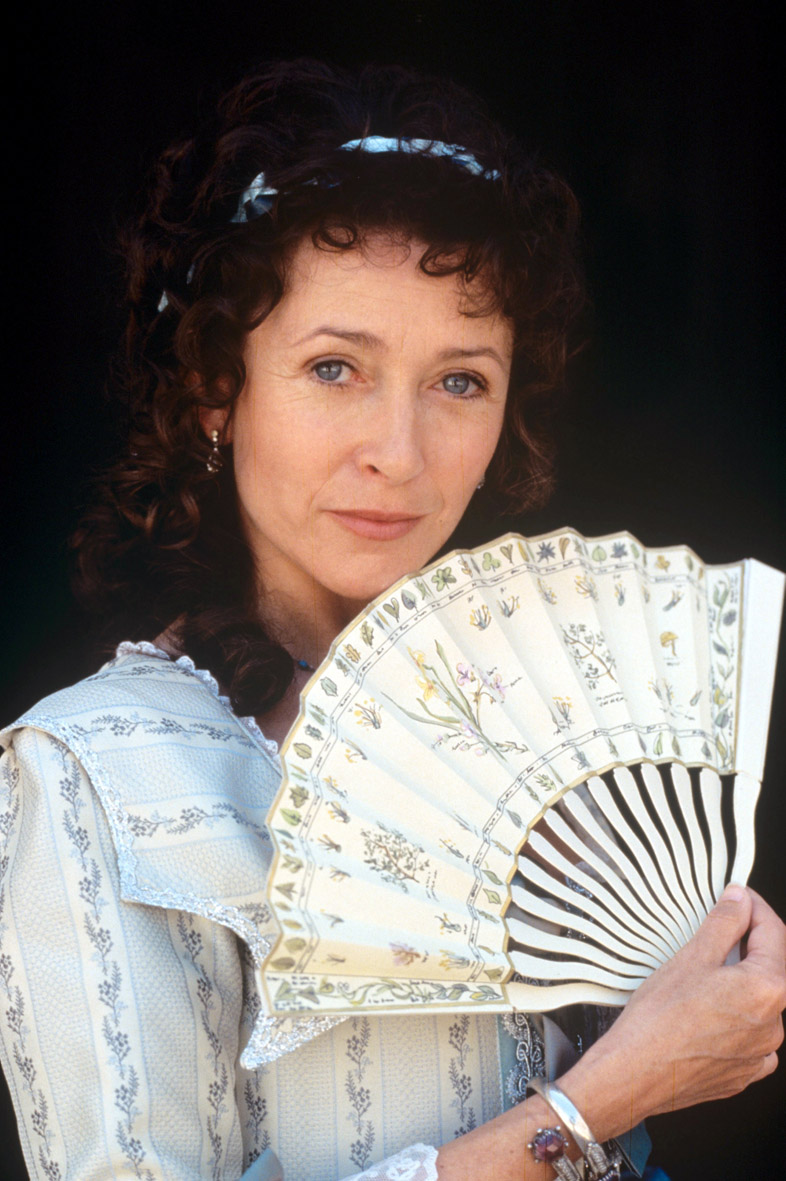 Lady Augusta Pembroke—Sir Drake’s mother, Julia’s scheming aunt, Cherie Lunghi is another one who was cast because of her role in one of the Hornblower films (The Duchess and the Devil). Though most of the roles I’ve seen her in, I’ve really liked her, she just seemed perfect for this role—even when she was Julia’s mother/Sir Edward’s wife instead of her aunt/his sister-in-law. Interesting tidbit of trivia: in addition to playing scenes with each other in Duchess/Devil, Robert Lindsay and Cherie Lunghi played opposite each other as Benedick and Beatrice in a 1984 BBC staged-for-film production of Much Ado about Nothing, my favorite romantic couple from all of Shakespeare’s works!
.
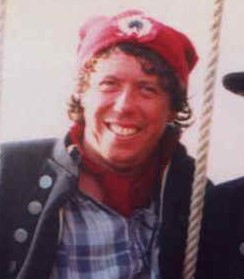 Dawling, William’s Steward—For those who are very familiar with the Hornblower movies, the choice of Sean Gilder for William’s steward aboard Alexandra (like a combination butler/valet) is a bit ironic, as Bush and Stiles most definitely didn’t work well together in the films. I’ve made Dawling younger than Gilder, but I enjoyed the character of Stiles so much—as well as the interplay between Bush and Stiles in the films—that I had to use him, just to have someone who’s always inadvertently putting William’s world slightly off-kilter.
 Creighton, the Witheringtons’ Butler—Yes, I cast Mr. Darcy 2005 (Matthew Macfadyen) as the butler. I loved his stiffness in the movie, which immediately translated to butler in my mind. Creighton (CRAYT-un—at least, that’s how I pronounce it, not sure how anyone else does) was Sir Edward’s steward aboard his flagship before Sir Edward struck his colors and took his position on land at the port admiralty in Portsmouth, which is how he came to be Sir Edward’s butler.
.
.
 Elton, the Witheringtons’ Driver—Yes, this is Rupert Friend, who played Wickham to Macfadyen’s Darcy in P&P 2005. I guess it says something about my feelings for the way these two characters were portrayed in that film that I immediately saw them as characters who would be dressed in “uniforms” (for Creighton, it would be a somewhat formal black suit; for Elton, his driver’s livery) and staying pretty much in the background.
.
.
There are so many other characters that this post could go on and on and on—but I believe I can leave some of that for next year when Book 2, Ransome’s Crossing releases. In the meantime, you can check out more images on my Ransome Trilogy board on Pinterest.
* * * * * *
If you like what I do here and want to keep this content free,
consider supporting me and my work by buying me a coffee.

MENU FOR ROMANCE: The Character-Casting Process
Anyone who’s heard me talk about writing at all, or who’s been reading the blog for any length of time, knows one of my writing tools that I use, probably to excess, is the character-casting process. For an in-depth discussion on what this process is, check out the Be Your Own Casting Director section on the Writing Series Index page.
Being a visually oriented person, I have to know what my characters look like before I start writing. Maybe immediately turning to a “casting book” and finding someone who fits a vague mental image of a character is the lazy way of doing things, but it works for me. And in actuality, most of my characters (the heroes) come into being for me because I have the innate ability to spontaneously develop a crush on someone I’ve seen, be it on TV, in the movies, or even in real life (which is harder, because I typically won’t be able to get pictures to remember the exact details later—so that’s why I stick to “personalities” like actors/actresses/sports stars/newscasters, etc., so I can find lots of pictures of them). Okay, I know, I digress. I said I wasn’t going to go into the process in this blog.
For those of you who may not know, while the idea for the storyline of Stand-In Groom was inspired by my discontent with the storyline of the movie The Wedding Planner, the inspiration for George Laurence came from the actor Peter Wingfield (best known for his role as Methos in the Highlander TV show). And because I wanted a nontraditional physical presence for the heroine, I chose the first plus-sized supermodel, Melissa “Emme” Aronson, for Anne Hawthorne.
Since the characters for Menu for Romance and A Case for Love are introduced in Stand-In Groom, I had to know who they were while I was writing it. So most of the main characters in those two books I had already cast before I started writing their books. In fact, by the time I was well into the first few “false starts” on SIG, I had cast Anne’s entire extended family. So this is sort of the character-casting process for the whole series.
I do have to add this one little tidbit that I forgot to share in Monday’s “Inspiration” post. When I first started writing Menu I had only a vague idea of what might be the storyline of the third book. Actually, all I really knew about it was that it would be Forbes’s story. I had no idea who his heroine would be . . . until she walked onto the stage in Menu for Romance and announced she was not only a potential foil for Major and Meredith’s romance, but she was Forbes’s perfect match. And fortunately, this happened in time for me to be able to work her name into Stand-In Groom (just once, but she’s there!) as if I’d known who she was from the very beginning.
Meredith Guidry
Meredith, stately and graceful, light hair set off to perfection by her brown velvet dress—like strawberries served with chocolate ganache—swept into the kitchen, drawing the attention of every man present.
 Let’s start with Meredith, since she was cast long before Major was even a twinkle in my eye. Because I started the casting process with Anne and worked my way back into her extended family from there, I already had some basic genetics to go by. So while I may not look enough like my cousins that you’d know we’re related just by looking at us (for example click here to compare me with my first cousin Caleb Abel—especially the photo at the end of the post), there are definitely some similar genetic markers there, which is what I wanted for my characters. (Yes, I was corrupted by having two scientists as parents, one of whom has taught units on genetics in her biology courses for several years and passed along enough to be dangerous and annoying—because now I always have to wonder: is that genetically possible? before I can make a decision on what a character looks like.) So, once I’d picked out Meredith’s father (Lawson Guidry, real-world template: Alan Rickman) and her mother (Mairee Guidry, real-world template Anne Archer), I was able to start choosing their offspring—some of whom have Lawson’s light brown eyes (like Meredith) and some of whom have Mairee’s blue-gray eyes (like Forbes). And while in the picture of the real-world template for Meredith, Julie Bowen, she has sort of dishwater blond hair, in the books, I’ve given her strawberry blond hair, picking up the blond from Alan Rickman and a little of the auburn from Anne Archer. Other characters in the books whom you might like to take a peek at are Meredith’s older brother Forbes Guidry (real-world template: Julian McMahon), a younger sister Jennifer “Jenn” Guidry (real-world template: Josie Bissett, again with much redder hair than the template), and a younger brother Rafael “Rafe” Guidry (real-world template: Luke Mably). In choosing Julie Bowen for Meredith’s template, I was getting a woman of about average height, of about average build (well, she looks average in pictures, I’m sure she’s rail-thin in real life, as most actresses are), and who had an expressive face and distinctive eyes. Perfect for Meredith who, while she doesn’t mind dressing up in very tailored (and expensive) suits for her office job, as well as evening dresses for the events she plans and does on-site coordination for, her favorite thing to wear is paint-splattered jeans, work boots, and a ratty T-shirt, with no makeup and her hair pulled up in a ponytail, so she can work on renovations of her house.
Major O’Hara
A soft smile hinted at Major’s dimples; Meredith ignored her squirmy stomach—just as she tried to ignore the fact that the dark green shirt he wore made his eyes a vivid violet-blue.
 Let’s get to the yumminess that is Major O’Hara, our executive chef whom Meredith has been in love with for the past eight years. It’s hard to tell because of the lighting in this picture, but Tyler Florence, the real-world template for Major O’Hara, has eyes that are almost a violet blue. How do I know this? Because during the time when I was writing Stand-In Groom and needed a template for a chef/caterer character, I was addicted to a show on Food Network called Food 911 hosted by, you guessed it, Chef Tyler Florence. As time moved on in the writing of these stories, so did Tyler, to his own show, Tyler’s Ultimate, which, of course, is what gave me the idea for Major O’Hara to be asked to host a cooking segment on the noon “news magazine” program on one of the local TV stations. One thing I noticed about Tyler Florence that I worked into Major’s character: Tyler is almost always in some shade of blue or gray. I also give a nod to some of Tyler’s more annoying speech patterns in the book the first time Major shoots a segment (like saying “all right” way too much). Now, the only family member Major has is his mother, Beverly O’Hara (real-world template: Gates McFadden) with white hair instead of red, chosen primarily because of the image I linked to. Why her? Possibly because I’d seen an episode of Star Trek: The Next Generation on which she thought she was losing her mind? I don’t exactly remember how I came across her, but I remember that as soon as I saw that photo, I knew she was Major’s schizophrenic mom.
Secondary Characters
Of course, Anne, George, Forbes, and Jenn all play roles in Menu for Romance, but there are a couple of other secondary characters of note:

 Ward Breaux, a contractor whom Meredith meets on New Year’s Day at the hardware store after praying her prayer that she won’t still be alone at New Year’s next year (real-world template: Eduardo Xol, from Home Makeover). And Alaine Delacroix, the gorgeous TV social-scene reporter who asks Major to do a cooking segment on her noontime news program (real-world template: Morena Baccarin, best known for her role in Firefly/Serenity).
For more images, check out my “sets” for each book on Flickr:
Stand-In Groom
Menu for Romance
A Case for Love
RANSOME’S HONOR: The Inspiration & Road to Publication
There have been quite a few times on the blog when I’ve mentioned what initially inspired me to write a story set in late Georgian England (1814—three years after the man who would become King George IV became Prince Regent, a.k.a. The Regency Period), but I don’t know that I’ve explained the entire process all at one time.
At the end of my first year of graduate school (spring of 2005), after I’d gone through a massive push to get the first draft of Stand-In Groom finished (by writing the last 25,000 words of it in one three-and-a-half-day weekend, with only about six hours of sleep the entire span—and most of that is still in the book, and some of my favorite material!), I needed something totally different to work on, since I knew I’d spend the next year working on rewrites and revisions of SIG. About a year earlier, I’d seen the final two movies A&E produced based on C. S. Forester’s Horatio Hornblower series (Duty and Loyalty) on TV. I was enthralled by them, not only because my love of Jane Austen’s novels gave me a love (and knowledge) of the era, but because Persuasion is my favorite Austen novel so I already had a somewhat romantic view of officers in His Majesty’s Royal Navy. (We’re talking romance novels here, people, not “reality.” Rose-tinted glasses are required.) I rented the first six through Netflix before making the decision to buy the set of eight DVDs (which I eventually did). The first four were okay. Interesting enough to keep me watching and eagerly anticipating the next disc in the mail. Then I watched the fifth entry in the series.
What’s split into two movies, Mutiny and Retribution, is actually one continuous story. And it introduces the character who would become vitally important . . . to me, anyway. The character of Lieutenant William Bush. But had that character been played by just any actor, he might not have made such an impact on me—ah, but I’m getting ahead of myself. We’ll get into that in another post.
The character of William Bush changed the dynamics of how things worked for dear Horatio. William is an older, more experienced character, with a reserve and caution Hornblower doesn’t (yet) possess. In fact, the character of Lt. Bush in the movie so intrigued me that I went out and bought the book upon which this duplex of movies is based, Lieutenant Hornblower. Imagine my surprise when I opened it to discover that it’s written from William Bush’s viewpoint! And right from the very beginning, Forester’s narrative in Bush’s POV began to give me a much fuller picture of the character from the films:
- The duplicity—play acting—of the young lieutenant aroused a momentary suspicion in Bush’s mind. A man who could assume an appearance of wrath and abandon it again with so much facility was not to be trusted. Then, with an inevitable reaction, the twinkle in the brown eyes called up a responsive twinkle in Bush’s frank blue eyes, and he felt a friendly impulse towards Hornblower, but Bush was innately cautious and checked the impulse at once, for there was a long voyage ahead of them and plenty of time for a more considered judgment. . . .
Every lieutenant could at least dream, even lieutenants like Bush with no imagination at all. . . .
~Chapter One, Lieutenant Hornblower by C. S. Forester
But it was upon a second viewing of the two final movies in the series that I completely fell under William Bush’s spell. It’s in his observation of and remarks upon Horatio’s relationship and marriage to Maria, a woman well below his station—in life and in intellect. And once again, the novel made it all the richer:
- This was something Bush could not endure. . . . What he was looking at now jarred on him unbearably—perhaps it rasped his aesthetic sensibility, unlikely though it might seem that Bush should have such a thing. Perhaps he was merely irritated by the spectacle of uncontrolled hysteria, but if that was the case he was irritated beyond all bearing. He felt that if he had to put up with Maria’s waterworks for another minute, he would break a blood vessel.
[From the end of Lieutenant Hornblower]
In the movie Duty, when Horatio remarks to Bush about how he knows Bush thinks this is a bad time to get married (when England is about to go to war again in 1803 after a year of uncertain peace during the Peace of Amiens), Bush responds with a remark wondering if there is ever a good time to marry.
Which instantly got me thinking: what kind of woman would it take to make a man like that change his mind?
Well, because I loved the character of Admiral Sir Edward Pellew (based on a real-life person) in the movies so much, it only seemed natural to make the woman who could win William’s heart be his admiral’s daughter—which would give me logical opportunities to throw them together, even when he doesn’t want to be around her. I spent a couple of months just thinking and toying with coming up with characters and interactions, each of which generated so many ideas for the ways I could take the story that I got more and more excited about it, and could hardly stop thinking about it, even when I had to set the brainstorming part aside to finish SIG. But once I got that draft finished and turned in to my grad school mentor, it was full sail ahead on Ransome’s Quest.
Yep, I thought it would be a single, stand-alone novel, taking William and Julia all the way from their reunion in England through to Jamaica and everything that happens there. I wrote the first chapter in one sitting and turned it in, with almost no revision, for workshop critiques at school that summer. I was so proud of that first chapter! It was the first first chapter I’d ever been proud of! It was going to be the first first chapter of mine that stayed the first chapter and didn’t get rewritten/cut/replaced! And everyone who critiqued it loved it.
But just like with Stand-In Groom before it (and Menu for Romance after it), once I got eight or ten chapters into it, I realized it wasn’t going where I wanted it to go. The characters weren’t deep enough, there wasn’t enough conflict—and there was no way I could tell the entire story I was envisioning in one novel, even if I took it to an unpublishable 150k word count. There was just too much story. So I started over again.
I kept the first chapter! But now it was going to be the first chapter in Part 2 of the first book, Ransome’s Honor, because I had the brilliant idea to start Book 1 with the first time Julia and William meet: when she’s ten and he’s fifteen and they’re on her father’s ship on the way to Jamaica for the first time. I got about four chapters written . . . and then I was so anxious to get on to the point where they’re adults and come back together that I realized I wasn’t going to be able to sustain a reader’s interest in them as children if I couldn’t stay interested in it myself. (To read what would have been the first chapter of this version, click here.)
So I re-started it with the original first chapter! and moved forward from there. Once I finished the first draft, however, I had run into a couple of problems. First, Julia’s mother was one of the main antagonists—giving me two viewpoint antagonists . . . and a very unlikeable mother character for whom there was no redemption and very little reason to believe she would be so hateful toward both her husband and her daughter as she was, while kissing up to the male antagonist, who is merely her nephew. So Augusta was changed into Julia’s aunt, Sir Drake’s mother now, which gave her good motivation to try to force a match between the two of them. And then something quite interesting had happened. I had mentioned in passing in the beginning of the novel that William’s mother and little sister were going to come to Portsmouth to visit him. When I got to the unruly middle of the novel and was trying to figure out which way it was supposed to go next, I re-read the first part and saw that reference and remembered I needed to bring them onto the scene.
And in walked Charlotte Ransome, William’s little sister, demanding her own viewpoint scenes and showing me that her story would be one of the primary conflicts for the second book in the series! So after the first draft, I needed to work her POV in from the beginning and start delving into her backstory to see where she was taking me.
And once I finished my revisions, I sent it off to Chip with the proposal—and with the original first chapter!—and waited for the bidding war to begin. (This was shortly before receiving my first contract from Barbour, for Stand-In Groom.)
But no one instantly snapped it up. One publisher told me that if I took all the “seafaring” stuff out of it—made it into a sitting-room romance—they might look at it. (Uh . . . not going to happen. Thanks.) But everyone else passed. Except . . .
In February 2008, we received an e-mail from Kim Moore, an editor at Harvest House, whom I’d talked to about the story at conference in September 2007—because we share a love of all things Austen and Hornblower. She sent a long letter detailing some of the problems she saw with the manuscript, but said that if I worked on those areas, she would be interested in looking at it again.
One of the primary problems: the original first chapter! It opened too slowly. And in Julia’s first scene, she was too melancholy, which started the story out in a much darker place than the tone of the rest of the book. Could I add a prologue in which Julia was in a happier frame of mind and then get the story started quicker—bringing William and Julia face to face (instead of just thinking about each other because of other characters talking about them) before the end of the third chapter?
Why, yes. Yes I could!
Buddy, you never saw the first scene of a chapter chopped off faster than I cut that original first scene I was so proud of. Okay, I’ve teased you enough. Click here to read it.
I thought I could use the scene of William and Julia meeting as children as the prologue. Easy-peasy, right? But . . . what if that hadn’t been the last time William and Julia saw each other? I mean, after all, there was the Peace of Amiens in 1802–3 when it’s very likely that then-Captain Edward Witherington would have brought his wife and daughter back to England, now that the war was “over,” for a visit. And all of his crew would have been turned out on land, but maybe still in Portsmouth hoping maybe to be able to sign on to another ship in the greatly reduced Navy. And of course, when Edward received his knighthood, someone in Portsmouth would have thrown a ball in his honor. And of course it would be at that ball at which seventeen-year-old Julia would have expected the man she’d loved since she was ten years old to ask her to marry him. So that’s the prologue I ended up writing (which I posted Friday). I then pulled an idea for a scene from the very original one-book version of the story which brings William and Julia together—along with Augusta, Sir Drake, and Admiral Sir Edward Witherington—in the second chapter.
And in April, I sent in the revised version of Ransome’s Honor.
And I waited.
Shortly after turning that in, I received the contracts for Menu for Romance and A Case for Love. And I started wondering . . . if I got another three-book contract (for the Ransome Trilogy) while I was still trying to write these books for Barbour and was working full-time, how was I going to get all these books written?
I started working on a second or third (and final) version of Menu and tried to forget that Ransome was back out there, sailing uncharted seas in Oregon at Harvest House.
Kim, bless her heart, kept in touch. Each time I got an e-mail or phone call from her, I thought it was the call. But it wasn’t. She needed a bio, or a new synopsis, or just wanted to chat (have I mentioned Kim and I are close buddies now?).
On July 21, 2008, I found out I was being laid off from my full-time job. Okay, now I’d have time to write multiple books a year . . . if only I would get an answer!
Then, in early September, Kim told me she was taking the proposal to pitch to the publishing committee. If I could send her a one-page synopsis, she’d get it in before the ACFW conference instead of after. I think I sent it to her at 2 a.m. so she’d have it the next morning. When I saw her at conference a couple of weeks later, of course there was no news yet.
So I kept waiting.
Then, the week before Thanksgiving, I received a phone call from Kim. I really didn’t think much of it. We were talking by phone so often by that point that I figured the publishing committee just had another question or needed something else from me. But Kim asked: “Are you sure you don’t want to wait until conference next year so we can announce your contracts there?”
It took some negotiating (yay for having a superb agent to handle all of that), including some phone calls from Chip while I was in Arkansas during Christmas. And surprisingly, Ransome’s Honor went up on Amazon with a July 1 release date a couple of weeks before I received even the first draft of a contract to review. I hadn’t heard the first hint of a timeline or a release date until I saw it on Amazon.
So that’s how Ransome’s Honor and the Ransome Trilogy came to be.
And now, if you’ve stuck it out this long, here’s a treat for you. Yesterday, Harvest House sent me a link to a video trailer they created for Ransome’s Honor:
Fun Friday–Getting Ready for the Twins*

At dear friend Ruth‘s suggestion, I’m going to spend the next few weeks giving y’all some insights into the conception and gestation of the Twins* as we all eagerly await their delivery due date.
- *Menu for Romance and Ransome’s Honor
Some of the topics I’ll be covering over the next fifteen to twenty days will be:
- Story/character inspiration
- Character casting process
- Settings
- Costuming
- Research
- Storyboards
- Writing/revision process
I’ll probably also do another “Ask Any Question” day closer to the end of the month in which you’ll be encouraged to ask questions about anything I haven’t already covered to that point (and, as usual, you’re always welcome to post any questions in the comments at any time, but sometimes it’s just nice to have a focus on a time for those questions to all be asked/answered in one fell swoop).
To start with, I wanted to point you toward a couple of things that are already posted here on the blog. . .the first chapters!
 MENU FOR ROMANCE
© 2009 by Kaye Dacus
Chapter One
“Happy New Year!”
Her thirty-fourth New Year and still no kiss at the stroke of midnight… or any other day or time. Meredith Guidry stood in the doorway leading into Vue de Ciel—the cavernous sky-view event venue at the top of the tallest building in downtown Bonneterre, Louisiana—and swallowed back her longing as she watched hundreds of couples kiss.
A short burst of static over the earpiece startled her out of her regrets.
“Mere, we’re going to set up the coffee stations and dessert tables,” the executive chef’s rich, mellow voice filled her ear.
Click here to read more.
Now, over on the right-hand side, I have a link to where I posted Chapter One of Ransome’s Honor, but it doesn’t include the prologue. So today, for the first time, you’ll get the full prologue, which will be followed by a link to the first chapter. Hope you enjoy!
 RANSOME’S HONOR
© 2009 by Kaye Dacus
Prologue
Portsmouth, England
September 1802
“Julia, do stop fidgeting. One would think this evening were about you, not in honor of your father.”
Seventeen-year-old Julia Witherington immediately stilled her hands and clasped them in her lap. “I am sorry, Mama. I am excited for Papa to be announced for the first time as Sir Edward, and you as Lady Witherington.”
In the dim light of the carriage, the new crest on her father’s Royal Navy coat vied for attention with the gold braid and sparkling epaulets indicating his rank of captain. If the war had lasted a few months longer, his posting to admiral would have been confirmed.
But if the Peace of Amiens had not come when it did, Julia would still be on the sugar plantation in Jamaica, not on her way to a ball in Portsmouth. A ball at which she expected something momentous to occur. Something she’d dreamed of for the past seven years.
Julia twisted the fabric of her glove around her left thumb. They’d been in London this fortnight past for her father to receive his knighthood. “You are certain all of your former officers will be in attendance, Papa?” She pressed her cheek to the carriage window as the assembly hall came into view.
“Aye, Julia, as I have already confirmed twice. Why do you have so much interest in former officers of the Indomitable?”
She turned to gape at him, surprised. Was he merely pretending not to know? What else could his private conference with Lieutenant William Ransome have been about this afternoon? “I know I was only ten years old when you took us to Jamaica on the Indy, but even after seven years, I well remember how kind the officers—and midshipmen—were to me and Michael.” Her voice cracked on her brother’s name; and, as always, she sent up a quick prayer that somehow, somewhere, he was still alive. After two years, her heart still refused to believe him dead. Lost at sea simply meant lost. Not necessarily dead.
Mama gave her a reassuring smile. Thank goodness Mama did not keep her emotions hidden the way Papa did. But Julia had no cause to worry about her father’s dismissive attitude. William Ransome was one of her father’s favorite young officers, given the frequency with which his name appeared in her father’s letters. Papa had no doubt approved the match and given William his blessing.
The carriage rattled to a stop on the cobblestone drive of the assembly hall. Julia’s heart felt fit to burst through her stays. Tonight. She was certain. Tonight William would make his intentions known, and tomorrow the paper would carry the news of their engagement.
Walking sedately behind her parents and waiting to be announced proved a Herculean task, but Julia managed it—also managed not to look about the crowd with too much eagerness. William would come to her; she need not seek him out.
After the applause died away at her parents’ introduction, she followed them into the press of well-wishers. She jumped when a hand slipped through the crook of her elbow.
Susan Barstow, her closest acquaintance in Portsmouth, beamed up at Julia, blue eyes twinkling. “I am so happy you’ve returned, Julia. Portsmouth has been a positive bore without you. Later, you must tell me all about London. But first . . . I shall set your mind at ease and tell you he is here. He and my dear Collin have vanished into the card room with many of the other officers; but now your father is here, they should reappear, since the dancing will start soon.”
Even as Susan spoke, several young men in Royal Navy uniforms entered from a side door. Taller by several inches than Susan, Julia stood on her toes. There—speaking to her father. Julia moved through the forest of people to rejoin her parents, Susan trying to keep up with her.
She arrived just in time. Tall and slender, his brown hair falling onto his forehead in loose curls, Lieutenant William Ransome straightened from bowing in greeting to her mother. His vivid blue eyes, pale yet impossibly fathomless, met Julia’s. Anticipation of the event she foresaw this evening heated her cheeks. She controlled the size of her smile with enormous effort and bent her knees in a curtsey.
“Good evening, Lieutenant Ransome.”
“Good evening, Miss Witherington.” His baritone voice tickled her ears. “If you are not already engaged, might I request the honor of the first two dances?”
“I am not engaged. I would be honored.” She settled her hand atop his proffered arm. Turning to walk with him, she caught the dimple in her mother’s cheek, even as Lady Witherington curtseyed to a baron’s wife. Yes, Mama also suspected what this evening would bring.
Throughout the first dance, Julia could hardly keep her eyes off William. Even though his uniform coat showed a bit of wear at cuffs and collar, to her, he was the most resplendent officer in the hall. The intensity of his gaze outshone even the admirals’ uniforms.
As they awaited their turn to join in the complex figures of the allemande, Julia could not ignore the voices around her. The matrons made no attempt to hide their questioning of why someone of Sir Edward’s importance and wealth would allow his daughter to waste her affections on an officer who sent all his earnings home to support his family; an officer who depended on the charity of his friends to stay in Portsmouth; an officer who was clearly courting Julia for her thirty-thousand-pound dowry.
If William heard the malicious rumors, his face betrayed no reaction. Finally, they joined hands and took their part in the dance.
“You realize, Lieutenant,” Julia whispered, “that everyone will think you are not enjoying our dance if you continue on with so grave a countenance.”
The left side of his mouth twitched, and some of the tightness around his eyes eased. “And we would not want to be the subject of any gossip, would we, Miss Witherington?”
Read more…
Questions Answered (Part 2)
Carman Boley asked:
What color are your eyes? (I’ve been wondering as they look green in your new pic.)
- My eyes are gray with a hint of olive green. According to my graphics program, it’s HEX #858477, or Red 133/Green 132/Blue 119 (RGB), or Cyan 122/Magenta 123/Yellow 136/Black 0 (CMYK), which is the color this font is in. Depending on what color I’m wearing or what background I’m up against, they can look green, gray, or blue, but this sample color is from doing a color swatch in a graphics program and having it tell me what color they really are. Here’s a closeup, just in case you’re still not convinced.
If you were to compare your writing style to any other well known Christian Romantic Fiction author, who would it be? (Can be more than one). Or, what book would it be?
- Funny, I just had to answer this question for my editor yesterday. The three Christian romance authors I would compare my style to would be Susan May Warren (especially her Deep Haven series), Linda Windsor (her contemporary romances, especially It Had to Be You and Along Came Jones), and Catherine Palmer (her contemporaries and historicals).
Should the contest winners contact you, or will you email them for their info? Also, when should the winners expect to get their prizes?
- E-mail me and I’ll answer this for you.
Do your books have kissing scenes?
- Yes, but only one or two. Why? Because I’ve never been kissed, and I don’t like writing scenes that will show my extreme ignorance of something like that. For me, the genuine intensity of the romance is more about the intellectual, emotional, and spiritual connection between the characters, not the physical. Plus, I like keeping my characters apart as much as I can throughout the novel so that, just like in all the great BBC costume dramas, when they finally do kiss at the end, it’s all the sweeter because of all the tension and anticipation leading up to it.
Will you be coming to Tulsa, Oklahoma, for a book signing anytime soon?
- Probably not, unless one of the publishing houses picks it as a spot for a book tour for me and a few other authors. But you never know!
Also, how do you pronounce your first and last name?
- First name is just like the letter K. When I adopted this new nickname (for Katherine) when I was in my early 20s (after having grown up as Kathy), I decided I preferred the way it looked with an E on the end of it (like Ann-with-an-E from Anne of Green Gables). My last name is pronounced DAY-cuss. Long A (rhymes with my first name), stressed first syllable: so it’s KAY DAY-cuss.
Liz Johnson asked:
What’s been your favorite book to write and why? Is it still your favorite completed book?
- I don’t have kids, but I always compare this question to asking a mother which child is her favorite. I think, though, out of all that I’ve written so far (seven, counting A Case for Love, which technically is only half finished), Ransome’s Honor has been the most fun. Not only did it afford me the opportunity to do more research on one of my favorite historical eras, but I included the antagonist as a viewpoint character, which allowed me to write with very few limitations (mostly just choice of language).
Jess asked:
What d’you think of “Dollhouse”?
- LOVE it! I missed the first few episodes of it due to forgetting it was coming on this spring, but got caught up with them on Hulu, then set up a series recording on my DVR so that I caught the rest of the season. I’ve already pre-ordered the Season 1 DVD set. Click here for more of my thoughts on Dollhouse.
Ruth asked:
I know this is a ways down the road (*grin*), but what contemporary and historical series do you have planned/would you like to see happen after the Bonneterre and Ransome trilogies conclude?
- This is a bit of a self-serving question for Ruth, because she’s already heard a little about my ideas for new series after the Brides of Bonneterre and Ransome Trilogy conclude, but I’ll share anyway.
Contemporary: The Matchmaking Grannies series. A trilogy of contemporary romances set in Nashville in which each late-20s/early-30s couple’s romance is helped along by well-meaning but interfering grandparents. I haven’t completed the proposal yet, but plan to do that within the next few weeks and get it turned in along with the manuscript of A Case for Love. Hopefully Barbour will like it. As mentioned in the Dollhouse post linked above, Tahmoh Penikett from Dollhouse is the template for the hero of the first book, Bobby Patterson, a Tennessee Bureau of Investigation agent, who is thrown back together with the girl he wanted to marry when he was nineteen—Zarah Mitchell, who works for the government agency his fraud taskforce is investigating. The second book features Sam Talbot (who should have won season 2 of Top Chef, I’m just sayin’) as artist Dylan Bradley who falls for the author who formerly wrote the steamy romances he formerly drew the covers for (and used himself as the cover model), Caylor Evans, who also happens to be about eight years older than him. And the third book features none other than the Young Indiana Jones himself, Sean Patrick Flannery, as Jamie O’Connor, the Marketing/Advertising exec with a bit of a Napoleon-complex over his 5’8″ stature. The heroine, Flannery McNeill, is two inches taller than him and a publishing executive; they decide that turn about’s fair play and turn the tables on their widowed, interfering grandparents, so it’s a dual romance. (And yes, when they get married, she’ll be Flannery O’Connor).
Historical: The Pembroke Trilogy, a.k.a., Ransome: The Next Generation. The children of the characters in the Ransome Trilogy carry forward some of the conflicts from Ransome’s Honor and finally resolve them, while getting into their own scrapes along the way. I know Ruth is excited about this one, because the template for the hero, Henry Grayson Pembroke, is none other than Sir Guy/John Thornton, Richard Armitage. It will take place in the late 1840s/early 1850, up to and including Victoria and Albert’s Great Exhibition in 1851. While some of it will take place at the plantation in Jamaica, much of the trilogy will take place in England and will be more of a “drawing-room” style romance than the action/adventure I have planned for the second two books of the Ransome Trilogy.
Renee asked:
Which books did you do more research for, Brides of Bonneterre or the Ransome trilogy?
- The Ransome Trilogy, no contest. Though I’d done a lot of research into the era before beginning to write it, through my senior literary criticism thesis I wrote as an undergrad (on money and social status in Pride and Prejudice) and my extensive reading of Jane Austen’s works, I didn’t know much about the Royal Navy beyond what I’d seen in the Horatio Hornblower/Master & Commander movies. I still make no claims toward expertise in any of it, and am constantly finding out new information that could have been interesting tidbits to have included in the first book (such as the fact that townhouses were rated the same way ships were, which I learned just yesterday on the Jane Austen’s World blog). And even though I haven’t started writing the second book in the series yet, I’ve been collecting research books on the Royal Navy and life at sea in preparation for writing a book set almost entirely on the ships traveling from England to Jamaica.
That’s not to say that I haven’t done any research for my contemporary novels, just not to same intensity, as I don’t have to research everyday life or customs or costuming or furnishings or modes of transportation the way I have for the historical series.
Carman Boley asked:
Follow-up question- Talking about publishers made me think of it. Have you had any trouble with the covers of your books? Do they let you have any say in the design? Are all the covers of your books the original covers, or did they change them before publication?
- Barbour has a worksheet to fill out eight months to a year before the book is released for the graphic designer to work from. We’re also invited to send along any reference images we like to give the designer a better idea of what we’ve envisioned for our books/characters. Here’s the file of reference images I sent along with my worksheet for A Case for Love. And here’s the preliminary cover they sent me yesterday:

Have I had problems with covers? Not problems, per se, but there have been tweaks I’ve asked for, some of which have been made, some which haven’t. I asked if they could find a model for Menu who better fit the description of Major, who’s about 30-40 lbs. overweight, but they couldn’t. While I loved the original background of the cover, they ended up having to change it at the last minute, due to some licensing problems (probably because there were wine glasses and a wine bottle on the table in the background they wanted to remove, but the copyright holder might not have wanted them to alter the photo in any way).
When I uploaded the Case cover to Facebook yesterday, a couple of people commented on the continuity they gave me with the series, which I’m also thrilled about. When I met several of the top marketing and sales people on the book tour back in March, I was told that they’ve gotten A LOT of positive feedback on my covers and they’re thinking it’s going to be a good branding image for my books.
With Harvest House, there was no worksheet to fill out, but I did send them a file of reference images as well. When they sent the initial cover, the model was in white, and since I have Julia make the comment about halfway through the book that she chooses not to wear white (and because it looked like one giant white blob on the front of the cover), I asked them if they could change it to a color that’s mentioned—so they changed it to pale green. Since I think it’s the prettiest cover HH has produced, I’m quite pleased with it. And they did a really good job of finding a model who looks like the actress who’s the template for Julia. (Starting next week, I’ll be talking a lot more about the templates and reference images for Menu and Ransome’s Honor so be sure to come back for those!)
~~~~~~~~~~~~~~~~~~~~~~~
This was fun. Thanks for thinking of it, Carman! I may make this a regular monthly feature! Of course, you all know that you’re always free to post questions you think will be of general interest, or even e-mail me directly if you have questions about anything (link to my e-mail is on the “About” page).
Questions Answered (Part 1)
Sherrinda asked:
- Your new picture on your banner showcases you with a new sassy, cute hairdo! When did you get it cut and what prompted you to cut off all your curls? You look great with both styles, btw!
Thanks, Sherrinda. I’ve always gone back and forth between long and short hair—and usually right after getting pictures made! I had the old headshots done in February 2008, when my hair was just about as long as I ever let it get (though not the longest it’s ever been). So in April 2008, knowing we were in for a long, hot summer, I got it cut to shoulder-length. I got it trimmed a couple of times just before the ACFW conference in September 2008, but ended up wearing it up in a clip almost the entire conference—though it was nice to be able to do a quick updo with a few loose curls for the semi-formal banquet. But after wearing it up for the entire conference, and now working from home and wanting something quick and easy, in October 2008, I got my first short cut. But even that was still a little too fussy—required styling if I didn’t want to look like I had seaweed stuck to my head. So before I went to Michigan in March 2009, when I went in for my haircut, I told my stylist I wanted it short enough that it didn’t touch my ears and that all I had to do was run my fingers through it. And my current headshot is the result! Will I ever grow it back out again? I’m not sure. It’s a drag having it get shaggy after just four or five weeks and having to get it cut so often; however, now that I’ve seen myself with this haircut and what it does for my face and eyes, I don’t know if I could go back to long hair, even though I do miss it occasionally.
Carla asked:
- When writing the black moment can I reveal a secret that the heroine has been covering up without having previously shown her inner turmoil about it. The situation has been implied throughout the story, but the reader will assume what the hero has also been led to believe. When she is finally convicted to reveal the truth, facing her greatest fear, consequently it forces him to confront his own fear. In short, will the reader think they’ve been duped? Is that a bad thing?
Carla, while it’s okay to keep secrets from readers, even in your character’s viewpoint scenes, the reader has to know that there’s something going on—there have to be hints that the character is keeping something from the reader. Can you sustain that for a whole novel? Well, it would be hard. Because if you hint enough that the character has a secret so that it doesn’t seem like a cheat or that you were holding out on the reader for the entire book, they’re going to get tired of just seeing hints and not knowing what the secret is—and then, if it’s not dramatic enough when it is revealed, the reader is going to be very frustrated with you. There are authors who’ve done it mixed success. My suggestion would be to write it the way you want to, then get feedback from several readers and find out how they react to it. Because no matter how successful other authors have been with the technique, your story is different from theirs, so the technique has to work within the story you’re telling.
Becky Castle Miller asked:
- What have your publishers done to promote/market your books, and what have you had to do? How much have they spent/how much have you spent? (I understand if you don’t want to / can’t answer that part)
It seems like authors have to do so much of the promotion themselves. Do you ever wish you had self-published?
When I first found out I was getting published, I was worried about what might be expected of me as far as marketing my own work. Would I need to be spending a lot of money on advertising and marketing? Did I need to go ahead and get a big, expensive website? What was I going to have to do?
I have to tell you, I’m so happy that my first publishing experience has been with Barbour Publishing. They are so on top of the marketing aspect that I’ve actually had to do very little except just be available for whatever opportunities they send my way. I know a lot of authors spend exorbitant amounts of money on websites and book trailers and stuff like that, but I don’t know if they really see a return on that investment. If the publishing house isn’t behind the author and having their sales people get the books out into bookstores, all the self-marketing in the world isn’t going to help that author.
How much have I spent? Well, I pay less than $20/year for my domain name, and, obviously, I take care of all the content here. I haven’t had to pay for headshots—because the ones I had done last year were taken by a coworker who wouldn’t let me pay her and these new ones I did myself (a sheet tacked to the wall and my digital camera propped up on a book hanging off a book shelf at the appropriate height). HOWEVER, professional headshots are one of the best financial investments you can make! The bulk of money I’ve spent on marketing has gone to postage (mailing signed books to winners of drawings for blogs where I’ve done interviews/guest blogs; and just today, I mailed about 150 Ransome’s Honor post cards out—to churches in the area, to classmates from my high school graduating class who had their addresses listed on our private web community, to key media contacts I have here in town, etc.) and to travel expenses for the book signings I did in Louisiana last month. All I did was let Barbour know where I would be and when and they set the signings up for me. Barbour, on the other hand, flew me and three other authors to Michigan for a week-long book signing tour, and they’re flying several of us out to Denver for ICRS in July to do book signings and meet media contacts as well as booksellers. And because I’ll already be there, I got Harvest House to set up a signing for me with them as well.
This has been my experience. I can’t say that this is how it happens with all new authors—in fact, it’s probably the exception, not the rule. But that’s the only answer I can give you.
Do I wish I’d self published? Not at all. I know there are a few success stories of authors who couldn’t get published the traditional way and ended up becoming breakout bestsellers (Grisham, Clancy, and Young). However, theirs are very unusual situations. It’s hard to get anyone to take self-published books seriously, no matter how well written they are (because most aren’t, which is why they weren’t picked up by traditional publishers in the first place). For me, self-publishing never entered my mind. When we thought Stand-In Groom had been rejected by all the publishing houses, my agent and I were already discussing other ideas that we could start pitching to publishers (in fact, I had a small-town fiction series proposal go to pub board at Harvest House three months before I got the contract for Stand-In Groom). If Barbour hadn’t picked it up, I would have shelved it and moved on.
Caleb asked:
- Do you like Star Trek more than Star Wars? And if so, why are you insane? 😉
But more seriously:
When you find the love of your life and get married and live happily ever after, might your writing eventually start turning towards other genres or will you always strictly stick to romantic fiction? If so, what genre would you be most likely delve into?
On Star Wars vs. Star Trek, the best way I can describe it is with this analogy: Star Wars was my first love, my abiding love, from childhood, the love that would always be there, no matter what, the love I forgave when “he” tried to change himself from something classic to something techy and flashy. But still my first true love. Star Trek is the best friend I met as a teenager, sometimes moody and petulant, but there with me through many changes in life, teaching me things about myself and about the world around me as I transitioned from girl to woman.
But more seriously, I’ve wondered the same thing about whether I would still want to write romance if I ever fall in love and get married. Considering I’m now thirty-eight (as of Sunday!) and there are absolutely no romantic prospects on the horizon for me, I see myself writing romance for many years to come. If I ever did write something other than romance, it would probably be something similar—like the small-town series I pitched to publishers a couple of years ago that’s still burning a hole in my imagination (but a small one). It will most likely feature ensemble casts who, if they’re not actually family, will behave with family-like relationships and interactions. Still light-hearted, though touching upon serious topics and issues, but in keeping with who I am and what my writing has always been—something for entertainment first and foremost.
Eileen Astels asked:
- What is the single most important piece of advice you would give a Christian writer trying to perfect their stories for publication? And please, you can’t answer patience or perseverance, something more tangeable to help him/her work on in perfecting their writing is more what I’m looking for.
For new writers wanting to get published, the advice I give is the advice that meant the most to me when I was starting out on this journey: Above all else, get the first draft finished! With each manuscript we write, we’re learning important lessons about the craft of writing. With each manuscript we finish, we’re learning more about ourselves and what we can accomplish.
I may not be the best person to be giving advice to more seasoned unpublished authors who’ve been submitting for a while—after all, the first thing I ever submitted got me an agent and got published. But I’ll do my best. . . For authors who’ve been around awhile, who’ve finished multiple manuscripts, who’ve finaled in and/or won many contests, the advice I would give would be similar to that I’d give new writers: Keep writing—but more importantly, learn how to revise. Learn how to let go. Learn how to cut. Learn how to figure out when it’s time to move on to a new project. Work with critique partners—and try to find at least one who’s much further along the writing journey than you are, a mentor of sorts. Find people who’ll challenge you, who’ll point out any bad writing habits you might have, who’ll be honest with you and let you know when your story isn’t working. And when you get rejection letters or when you receive mediocre scores and harsh comments back from contests, learn from the criticism you receive. Don’t take it personally, but take it to heart—to make yourself a better writer. And though you said I couldn’t use it as my answer, it’s still a viable answer: persevere. Keep at it. But do so only if you’re certain your writing is the best you can make it right now.
But never, ever, ever forget that the most important thing is your story. Don’t let the pursuit of the “craft of writing” become more important than your storytelling ability. Write from the heart; don’t worry about craft when you’re composing. That’s what the revision process is for. Be true to your story and don’t write it thinking about possible publication. Write it for you, first and foremost.
~~~~~~~~~~~~~~~~~~~~~~~~~~~~~~~~~
Okay, that’s a long post for one day, so I’ll have to answer the rest of them tomorrow. But if anyone has follow-up questions generated by these answers, or if I didn’t answer the question satisfactorily, please feel free to post a comment asking for clarification.
Ask a Question, Any Question
 Carman Boley wrote: “I was wondering if sometime you could have a question day? Where your blog followers, and readers, could ask you questions by commenting. Then the next day you could answer the questions on your blog entry for the day. I thought it might be a fun way to get to know you better. Just an idea though. Thanks!”
Well, so here we are, the first ever “Ask a Question” day. Today, the comments are the place for you to post the questions you’d like for me to answer (or try to). Ask anything you’d like—within reason, of course (and I always reserve the right not to answer if it’s too embarrassing!)
Depending on the number of questions I get, I’ll answer them on Wednesday and into Thursday if necessary.
The floor is open. Ask away!


