New Blog Series?
Between the all-nighter I pulled last week to finish writing A Case for Love and now concentrating on revisions/edits, I’m pretty brain-dead right now. But within the next couple of weeks, I’d like to start a new craft-of-writing series. Back in January, I posted the list of topics I’d already thought of for the year. I’ve done the “Becoming a Writer” and the POV topics. That leaves Plot and the series about Writing Bad Guys from that list. But since my goal was to do NINE teaching series this year (I think I’m going to count the MFR/RH background posts from June as a series), I need to do one a month every month through the end of the year. Some of will necessarily be shorter than others, but I wanted to get feedback from y’all to see what topics you might be interested in. Or if there’s a series I’ve already done (check on the Writing Series Index) that you’d like to see a further study on.
So what topics of fiction writing would you like to study this year?
Fun Friday–Whom Would You Love to See on the Cover of a Romance Novel?

My status update on Facebook yesterday around 6:30 p.m.:
99,750 WORDS. STICK A FORK IN IT–A CASE FOR LOVE IS DONE! (Now, to get it “finished” with some editing and revisions.)
Of course, now I’m thinking it might need an epilogue, since it is the last book in the series, just to tie things up in a neat little package. But I’m not sure. As of the time I’m writing this (9:30 on Thursday evening) I haven’t slept in about 36 hours, so I’m not going to think about it tonight. I’ll think about it tomorrow.
Sylvia gave me an idea for a fun post to get some participation from y’all. Whom would you love to see on the cover of a romance novel?
With as much detail as I’ve gone into with my character casting processes for Menu and Ransome (has anyone seen them on the shelves yet? Ruth says they’re starting to appear in some LifeWay stores.), hopefully that’s gotten you thinking about and looking for images of Real World Templates to help you in building your characters. But let’s face it, we’re never all going to use every single one we come up with. So today you can play one of two ways:
Leave a comment, including a link to an image if you can find one online, for one of the following:
1.) A Real World Template you’re currently using as a hero or heroine of YOUR story
2.) A Real World Template you’re not using but you think would be a great hero or heroine of SOMEONE’S story.
For example, here are the two comments that Sylvia left, just to help get you started:
I was looking up information for something else and ran across some pictures of this actor Kevin McKidd. I’ve never seen him in anything, but thought he would make a great hero. Why doesn’t anyone ever have red-headed heroes? Please make him be the hero of one of your books! 🙂
Here’s another hero type guy. Hmmm…he has a slight bone structure resemblance to George in Stand-In Groom. His name is Philip Winchester.
Here are a few links to photographs of him. He should be one of George’s brothers and get introduced to Jen. Or he could be a future hero or someone in the Ransome series….or…
RANSOME’S HONOR: A Regency Dinner Party
“If you think you can bear Lady Pembroke’s presence again, Ransome,” the admiral said, “I would like to invite you to a dinner party here to celebrate your return and your successes in the war—Julia my dear, do you think we can have one planned by next Thursday?”
The openness in Julia’s expression vanished faster than William could blink. “Yes, Papa. I will see to it.”
The admiral picked up Julia’s hand and kissed the back of it. “Invite Captain Yates and his wife as well. His successes should also be celebrated.”
William’s gut wrenched at the wary look in Julia’s eyes. A dinner in his honor was not to her liking, apparently. “Sir, while I am honored to be so singled out by you, I must tell you that my mother and sister are expected in town early next week, so I will want to spend what time I can with them.”
Sir Edward clapped William’s shoulder. “Bring them along. It has been too many years since I have seen Mrs. Ransome. Your sister was hardly walking, if I recall correctly. I will brook no opposition, Captain. Do not force me to make it an order.”
Though the admiral’s tone had gone gruff, his stance rigid, teasing humor still danced in the superior officer’s eyes.
William could do nothing else but capitulate. “Thank you, sir.”
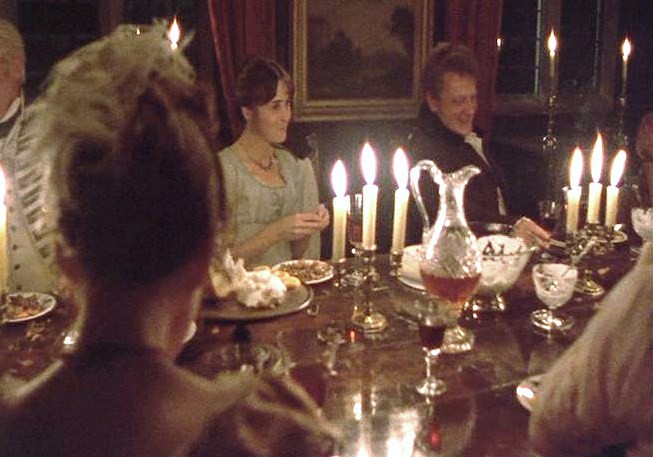
As lovers of Regency-set fiction would tell you, one of the most important centerpieces of social life for the gentry and aristocracy was the formal dinner party. It was not just an exercise in hospitality, it was also a social tool not only to show off one’s wealth, but also to show off the importance of the people one entertained in one’s home.
Or, at least, that’s what Julia’s aunt, Lady Pembroke, would like for a dinner party in Admiral Sir Edward Witherington’s home to be. But since she has no say in the guest list—with the exception of inviting her son, Sir Drake—the dinner party in Ransome’s Honor is a celebration of the Royal Navy and its officers instead of a carefully calculated social-climbing event.
A typical dinner party would have been planned for about ten to fourteen guests—though, obviously, the wealthier the family, the more people they could afford to invite. Invitations (hand-written) were sent out by the lady of the house to a carefully selected guest list with an RSVP (accept or decline) expected. Around seven o’clock on the evening of the party, the guests arrived and were shown up to the sitting room (the formal receiving room was up one level from the ground floor—known as the “first” floor—in a townhouse, while usually on the ground floor in a country manor) where they stood about making polite conversation (drinks were not served—this was not a “cocktail hour”) as they waited on everyone to arrive.
As the guests were greeted and introduced and spent time making smalltalk, the hostess circulated discreetly, making introductions and arranging the couples in order of precedence. It was very important that the dignity of rank be preserved for this procession into the dining room. When a servant announced dinner served, the couples proceeded down (or in) to the dining room. Typically, the man of the house took the highest ranking lady, while the lady of the house took the arm of the highest ranking gentleman (yes, that means that couples were typically separated for this exercise). At the table, guests were seated alternating male/female down the table, and not next to the spouse—thus the importance of inviting an equal number of men and women, if not everyone expected was married.
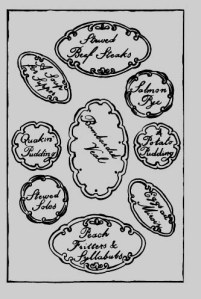 All the food of the first course was laid out on the table, ready as soon as the diners walked in. The soup tureens were placed in the middle with all other dishes in a circle around it—one of these arrangement of dishes on either end of the table for a large party. Guests would eat only what they liked, self-service style; gentlemen always offered all of the dishes for the ladies, and if it were not easily within reach, a footman was employed to reach it for them. [The wealthiest households employed one footman to stand behind the chair of every single dinner guest for this purpose, as well as for pulling the chairs in and out if the guests stood for any reason.] The butler was in charge of the meal service, the wine, and overseeing the carrying of plate. As the first course began, each man engaged the woman on his right in conversation.
A TYPICAL BILL OF FARE (for a party of 12 guests)
First Course
- -Turtle soup
-Preserved fruits in baskets
-Turbot with lobster and dutch sauce—carved on sideboard, then served individually
-Portion of red mullet with cardinal sauce
-Cucumber and essential cruet
-Oyster or marrow pâté
-Sweetbread au jus
-Lamb cutlets
-Asparagus
-Peas
-Venison, mutton, or beef
-Salad, beet root, vegetables, French and English mustards
Once the first course was finished, these would be cleared and the second course—same number of dishes—would be served, both savory and sweet, but tending toward lighter/sweeter.
Second Course
- -Turkey, duckling, or goose (taking the center position, where the soup had been)
-Peas/asparagus
-Plover’s eggs in aspic jelly
-Mayonnaise of fowl
-A macedoine of fruit
-Meringues a la crème
-Marasquino jelly
-Chocolate cream
-Sardines
-Salad
-Beet root
-Celery
-Anchovies
-Butter/cheese
In a household with young children, who would not be included in such a dinner party, after the second course was cleared, the children would be brought down, all dressed up in their finery, to be introduced to the guests and be given a few sweets from the dessert course before being sent back to the nursery not to be heard from again that evening.
Dessert Course
- -Two ices
-Cherry water and pineapple cream
-Fruit of the season
–Sherry, Madeira, and champagne (served throughout dinner—two servants for this only)
As the century progressed, the dessert course became the most elaborate and expensive course of the formal dinner.
After dessert, the ladies withdrew to the drawing room for coffee and/or tea. Men stayed in the dining room at the table for a stouter drink and “masculine” conversation. This lasted about half an hour. Then the gentlemen repaired to the drawing room for about an hour of conversation. Between eleven o’clock and midnight, carriages were called for. In London during Season, this was then followed by attending a ball.
- The two books that I pulled most of the research from are What Jane Austen Ate and Charles Dickens Knew: From Fox Hunting to Whist—The Facts of Daily Life in Nineteenth-Century England and Jane Austen: The World of Her Novels.
MENU FOR ROMANCE: Who Trusts a Skinny Chef?
Finally, we’re getting around to one of the most important subjects in Menu for Romance: THE FOOD!
The fridge beckoned. Not much there—maybe he should hit the grocery store on the way back from the Guidrys’ open house.
Half an hour later, with the Rose Bowl parade providing ambiance, Major sank into his recliner and dug into the andouille-sausage–shrimp–potato–mushroom–red-pepper–onion–jack-cheese–and–bacon omelet, spread with Creole mustard on top.
Maybe he should consider making a New Year’s resolution to cut back on calories this year. What was missing? Oh, yeah, the grits. He’d left the bowl sitting by the stove.

Obviously, Major’s “not much there” in the fridge is quite a bit different than most normal folks’ “not much there.” But with a chef as the hero and a heroine who plans lush events (which he cooks for), both of them work with food on a daily basis (he in reality, she on paper). So it only seemed natural to take something that I did without even realizing it in Stand-In Groom and beef it up for Menu for Romance. And today, I thought I’d share some of the menus and a few recipes of the food that appear to, er, whet your appetite for the book.
Major filled the thermal carafe with chicory-flavored dark roast, covered the platter holding warm croissants, strawberries and raspberries, bacon, shelled hard-boiled eggs, and a large ramekin of honey-butter . . . and added them to the rolling service cart. Preparing a meal for someone he was mad at always helped him overcome the feelings and approach the situation in a positive frame of mind.
 If you’re like Major, you’d leave the making of the croissant up to your pastry chef. But if you feel very industrious, you can try this recipe for homemade croissants. And honey butter is so much easier (and less expensive) to make yourself—plus, you can adjust the level of sweetness to suit your own tastes, as well as add in your own favorite flavorings, like flavored extracts or spices.

Meredith cut another small piece of the braised lamb. Cooked with honey, garlic, onions, and topped with crumbled cabrales cheese, the strong flavors burst in her mouth.
Okay, I have to admit that I got this through a Google search for Spanish restaurant menus. But here’s a recipe for braised lamb with ancho chile honey glaze that sounds pretty good.
Major added a last-minute garnish of chopped chives and parsley to the blue-cheese mashed potatoes and pulled out the chair for Meredith. . .
Meredith finished off her Caesar salad quickly and started on the blackened lemonfish with the citrus beurre blanc. At the first bite, she closed her eyes and sighed.
The Hearts to HEARTS Banquet
“How did that whole thing work? I know you and Mrs. Warner narrowed down the choices from what was presented to the board a few weeks ago.” Alaine pulled her pen from behind her ear, ready to write on the steno pad in her left hand.
“Once we narrowed that down, I had menus made up giving each banquet attendee a choice of starter salad, protein—from red meat, poultry, seafood, or vegetarian—and dessert. The menus will be at each place and the wait staff will take the guests’ orders as they serve beverages.” Meredith glanced around for Major, but didn’t see him. She didn’t really need to talk to him, but coming up to ask Alaine about Friday had been all the excuse she’d needed for an opportunity to bump into Major.
“But all of the meals are served at the same time?” Alaine scribbled on her notepad.
“Yes. Dinner service is at seven o’clock, sharp.”
“But how do you know how many of each dish to prepare?”
“Based on the percentages of how many chose the similar dishes last year,” Major said, and Meredith turned, heart thrumming.
 A very, very long time ago, I posted the tasting menu that the board for the HEARTS Foundation (for the cardiac-care unit at the hospital) would get to sample and then have to narrow down to come up with what would be served at the banquet—of course, that was long before I cut out the entire chapter that contained the tasting. Once again, most of these dishes were taken from menus I found online. Here’s the final menu for the banquet:
Starter Salad (choose one):
Spinach Salad with Warm Bacon and Apple Cider Dressing
Chicory Salad with Walnuts and Parmesan
Main Dish (choose one):
Filet Mignon topped with Crawfish Au Gratin
Seared Duck Breasts with Cherry Sauce
Chicken Breasts Stuffed With Ricotta And Goat Cheese
Crawfish Imperial
Apricot-Walnut Stuffed Zucchini
Entrées are served with:
Roasted Baby Vegetables
Garden Risotto
Dessert (choose one):
Chocolate-Cherry Bread Pudding
Poached Pears with Ginger Crumble (I omitted the mangoes from this recipe, because I’m allergic!)
Grilled Tropical Fruit with Spiced Chai Syrup
~~~~~~~~~~~~~~~~~~~~~~~~
Now, for those of you who’ve read Stand-In Groom, are there any food items mentioned in there that you’d like a recipe for or would like to know more about?
MENU and RANSOME Questions Answered
Sylvia asked: “What all does Boudreaux-Guidry Enterprises include? I know that Meredith’s parents started it as a real-estate business, but is that all it is? Could you expound on that and Meredith’s role in it? Also, does Major run his business out of one place and then go on location to all the places that need him?”
- I don’t want to give too much information on it, as Menu gives quite the inside look at the workings of Boudreaux-Guidry Enterprises. But it’s a large corporation (top 100 in the Southeast) that owns major real estate tracts in Bonneterre, including the tallest building in downtown, Boudreaux Tower, the site where the engagement party took place in Stand-In Groom, Lafitte’s Landing, and they were greatly involved in the revitalization of Town Square and Old Towne.
Jane G. asked: “What made you decide on 1814 as the setting for Ransome’s Honor? Most Regencies I’ve read are usually earlier, like 1802 or 1803.”
- Not to get too technical, but the Regency period in England began in 1811 the Prince of Wales became the Prince Regent because his father, George III, was completely bonkers and couldn’t handle the job anymore (yes, the George III who was king when America declared Independence thirty-six years earlier). The Regency period ended in 1820 when the Prince Regent became King George IV upon his father’s death. The year 1814 was a time of peace in the Napoleonic Wars. What is generally referred to as “The Napoleonic Wars” is basically from the beginning of the French Revolution in 1793 through Bonaparte’s defeat at Waterloo in 1815. Bonaparte came to power around 1799, but as Great Britain had been at war with France almost continually for the six years before that, it’s all considered part of the same conflict. There were two significant times of peace during this twenty-two year war: what is commonly referred to as the Peace of Amiens (for the Treaty of Amiens) from March 1802 through May 1803, when open hostilities once again erupted. Then in April 1814, with defeat imminent, Bonaparte abdicated his position of Emperor of France and was exiled to the island of Elba. The Royal Navy was recalled to England to be decomissioned, which was a realistic time for both William and Julia to both be in Portsmouth. And, as a matter of fact, when I added the prologue for Ransome’s Honor—which was the last time William and Julia saw each other—I had it take place in 1802, the Peace of Amiens, which would have seemed like a safe time for then-Captain Witherington to have his wife and daughter come back to England from Jamaica (where they’ve been since 1794) for a visit. In 1802, when we first meet William, he’s a poor lieutenant with nothing to offer his wealthy Captain’s daughter. However, by the time 1814 rolls around, he’s been in the Royal Navy for almost twenty-three years (since he was twelve), so he’s had plenty of time not only to rise through the ranks, but to also amass a small fortune of his own, which, by 1802, he wouldn’t realistically have had time to do.
And now I’m sure you’re wondering why I’m referring to him as Bonaparte and not Napoleon, which is what most people are used to seeing him called. Well, his name was Napoleon Bonaparte. When he declared himself Emperor of France, he was referred to as Napoleon I of France. However, Britain didn’t recognize him by this title and continued to refer to him as Bonaparte (or “Boney”). And yes, during this same time period, England and America are at war as well, which is another of the reasons for choosing the year, because it gives a good reason for William to be sent to the Caribbean, as that’s where the Royal Navy’s main action was now to be found—in the waters surrounding North America.
Becky Davis asked: “How did you come up with your characters’ names? I’m just starting with writing fiction and I can never think of good names for my characters. Also I heard your not supposed to have characters with names that start with the same letter in a romance novel. But you have Meridith and Major. So is it ok to do that.”
- You may want to read these couple of posts I’ve written on naming characters:
Creating Credible Characters–What’s in a Name?
Which Comes First–the Character or the Name?
By Any Other Name . . .
Yes, it is frowned upon for a hero and heroine in a romance novel to have names that start with the same letter, as using too many names starting with the same letter (especially if they’re around the same length) can be problematic for a reader (for example: John, Jack, Jake, Jane, Joan—see how they all kind of look alike?). But Meredith and Major were created as secondary characters in Stand-In Groom long before I knew they’d have their own story together. Meredith was named on a whim for someone I worked with and Major is a family name from the Caylor side of my family. In Ransome’s Honor, the name William came from the character who inspired him (William Bush from the Hornblower series) and the name Julia is in honor of my maternal grandmother, Julia Katherine Caylor McLellan. I do try to be careful when it comes to using names of family members, especially for main characters. And with a large family, it’s hard to find names that aren’t already in use in my family.
Rachael Adams asked: “Has it been different to market an historical novel than a contemporary novel? Have you done anything differently to get the word out about Ransome’s Honor than you did with the contemporary novels?”
- You know, I hate to admit it, but with all of my focus the last five or six weeks being on getting A Case for Love finished, I’ve only been doing some general marketing for both books. Once I meet with the marketing/sales executives at ICRS in a couple of weeks, I’ll probably have a better idea of what I can do differently. I have been trying to get ARCs (advance reader copies—basically bound galleys) to people who have more of a focus on historical fiction and especially those who’re big in the Jane Austen blogosphere community (see the two Jane Austen blogs in my links to the right). But so far, I haven’t really done much differently.
Eileen Astels asked: “Which did you have the most fun writing, and why?”
- Though I’m very happy with the final product of Menu for Romance, I’d have to say the process of writing Ransome’s Honor was more fun—for the main reason that I had all the time in the world to work on it and could really fly by the seat of my pants and change my mind as I went. Plus I love research, so it was great being able to incorporate my love of that period in history into fiction.
Caleb asked: “What does it feel like to be a multipublished author? How has it changed your life? Also can you talk about deadlines and what it’s like to write when you have to meet a deadline?”
- I still have a hard time thinking of myself as a “multi-published author.” Probably because there’s technically only one out right now—and because other than advances, I haven’t really seen the financial “benefits” of being multi-published.
As far as what it’s like to write on a deadline, I just wrote a full blog article on that which will be appearing on the Seekerville blog on June 30. I’ll announce it here when it goes up!
Ask a Question–About MENU and RANSOME
 Since I still have about 20,000 words to write this week, I’m going to try to get a head-start today by not spending several hours putting together the posts about food and costumes in Menu for Romance and Ransome’s Honor. Since it was so popular last time, I thought I’d open up today’s blog for y’all to post your questions about these two books. So ask me whatever you’d like about them—just remember, I reserve the right to remain silent. 🙂
Fun Friday—More Great Costumes on Film
A couple of years ago, I did a “Great Movie Costumes” post, and after some things I’ve watched recently—or that I’ve even just seen previews for—I figured it was time to revisit this topic. Again, as I stated in the previous post, I make no claim that these are the “best,” just some that I really like.
 Marie Antoinette. I watched this movie a year or so ago. Wasn’t really impressed by the story, nor the acting, but the costumes and the sets (filmed on location at Versailles!) were stunning. Rather than try to create collages of the absolutely gorgeous costumes—even just those that Kirsten Dunst wore as the erstwhile queen, I’ll send you to the Costumer’s Guide to Movie Costumes website, where there’s a repository of images of the more than sixty different dresses Dunst wore in the movie. Yes, more than sixty in a two-hour movie means a different costume every two minutes! But it wasn’t just Dunst whose costumes were ornate to the smallest detail. In every scene in the movie, it’s obvious such a level of detail was given to every lady-in-waiting, every footman, every coachman. And then there’s the jewelry and the wigs and the shoes and the other accessories. If you’re at all interested in that era, it’s worth watching, just for the visual feast the movie provides.
 The Duchess. It’s been awhile since I’ve seen this one (since it was out in theaters last year), but I remember thinking that Keira Knightley wasn’t horrible enough to make it not worth watching. And, while she looks absolutely horrendous in the weird hybrid, almost-empire costumes they put on her in P&P 2005, this style, meant to completely flatten the chest (not hard in her case) actually works for her figure. Descriptions of each of the gowns in the collage can be found on the film’s official website, and more images—mostly screen captures but some promotional stills as well, can be found on the Costumer’s Guide website.
 Comanche Moon. Good Westerns are few and far between these days. This one is based on one of the novels in Larry McMurtry’s Lonesome Dove series. While I’m not a fan of McMurtry’s books or the other film adaptations of them, I couldn’t wait for this one to air. One guess why! The costuming in this two-part movie event was interesting, as they had to find ways to subtly indicate differences in social status, especially amongst the female characters, yet without having the rungs on the social ladder really being too far apart. So the differences were shown more in the details—a woman of better means might wear wide hoops, whereas one of little to no means wears only petticoats under her dress. Each of the male characters had one iconic outfit with many layers/pieces to it—which is pretty accurate for how men of the late 19th Century West would have dressed, especially Rangers who were out on the trail quite a bit and wouldn’t have been able to carry much around with them. Great images of the characters/costumes can be found on the CBS website.
 Pushing Daisies. Though I couldn’t watch this show regularly, one of the things that really stood out was their off-beat choice in the costume design. Each character had his/her own style, and much of it came out of a 1950s/early 1960s vibe. And then there were the bizarre getups worn by Chuck in her effort to disguise herself (so no one would recognize her as the girl whose murder was big news) or by the characters that they run into along the way as they’re investigating the deaths that each episode centers around.
 Miss Pettigrew Lives for a Day. This has to be one of my favorite romantic movies that’s come out in a very long time. And it wasn’t the love-tri—no, quadrangle between the characters played by Amy Adams, Mark Strong, Lee Pace, and Tom Payne that made the film for me. It was the much quieter, more mature romance between Frances McDormand’s and Ciaran Hinds’s characters that made me nearly swoon. Granted, I already have a soft spot for Hinds, due to his portrayal of my favorite Austen hero, Captain Frederick Wentworth, in my favorite Austen film adaptation, Persuasion 1995. Maybe it’s just another sign I’m getting older, but it was their characters’ finally finding someone they could relax and be themselves with that made the movie for me. Oh, and the pre-World War II costuming was brilliant—especially the lingerie in the fashion show scene. Miss Pettigrew is a down-on-her-luck daughter of a vicar who’s been trying to make her living as a nanny, but doesn’t like children (see, I identified with her right off the bat!). When we first meet her, she’s just lost her job, and her physical appearance makes it obvious she hasn’t had access to disposable income for quite some time—if ever. The physical transformation that McDormand’s character makes through the film, especially in the makeover scene, is marvelous. And yet even though she goes from a duckling to a swan, who she is never changes—she only allows it to shine through for everyone else to see and love.
 The Young Victoria. No, I haven’t seen this movie. But I have seen images from it and it looks like the costuming is very well done. Stills from the film can be viewed on the AceShowBiz website, and you can view the trailer here. While I love the Victoria and Albert miniseries A&E did (it was one of their last costume dramas), this one looks like it’s going to be even better—if it ever releases!!!
 Pirates of the Caribbean. This was one I’d thought about including last time, but didn’t. Mostly because there were ten others I liked better than these at that point in time. Well, now that all three films have been out for a while, it’s time for me to pay them their due. (And yes, I do realize I have two Keira Knightley films on this list. I can’t help it. She didn’t make the costumes, she just wore them. And, yes, these costumes are from about the same era as The Duchess and Marie Antoinette). The men in these films, like in Comanche Moon get their own iconic costumes that don’t change much from scene to scene/from film to film. And every time I see the high-res image of Commodore Norrington (Jack Davenport) in his Royal Navy uniform, I drool over the exquisite detailing of it. Once again, the Costumer’s Guide has a wonderful index of images from all three films.
 Sense & Sensibility 2007, Northanger Abbey 2007, Persuasion 2007, and Miss Austen Regrets. The latest adaptations of Jane Austen’s novels made the most of their budgets when it came to costuming. Now, many costumes were repurposed from other films, whether other JA adaptations or just other films set in the era, but still, they did a good job with them. And even though I wasn’t thrilled with the liberties they took with the storyline of Persuasion (see my reaction here), it didn’t keep me from admiring the way Rupert-Penry Jones looks in Regency formal black. And no, Mansfield Park 2007 was not included in this. The costumes were probably fine, but I was so disgusted with that “adaptation” of the novel that I don’t even want to give it any undue attention.
 The Chronicles of Narnia. Though the level of detail of the fantasy/medieval style costuming of the scenes in Narnia aren’t quite as good as those in the Lord of the Rings films, it’s pretty darn good. And the contrast that’s made between the Pevensie children’s every-day, World War II–era clothing and school uniforms and their Narnian wardrobes is vast and plays well on screen, especially in the second movie. Their change from “every day” to “Narnian” in the first film happens gradually, along with their gradual acceptance of and belief in what’s happening to them—once again, using the costumes to visually convey the transformation taking place inside the characters. The best place to view images from the films as well as behind-the-scenes photos and publicity stills of the actors in their costumes is at The Wardrobe Door a division of NarniaWeb, which is dedicated to examining the costumes from the films.
 The Tudors. It’s crass. It’s vulgar. There are gratuitous scenes that they can get away with because this is made for/airs on Shotime that really add nothing to the story. And despite that, it’s so well written and acted—and so lush on the screen—that it’s compelling to watch. And it’s what made me think of revisiting this topic. Like just about everyone else, I had an elementary knowledge of what happened during the rule of Henry VIII. He wanted to divorce his first wife, Catherine of Aragon, so that he could marry Anne Boleyn. And thus was born the Church of England (and thus died Cardinal Wolsey and Sir Thomas More). Well . . . sort of. I’ve learned so much about the details of what happened—not because the show is 100 percent accurate (because it isn’t, which the creators have admitted to), but because it’s made me stop and look up the actual history of what happened. And their costumers have outdone themselves with the creations for each character. Now, to save money they, like others before them (mentioned above, as a matter of fact), repurpose costumes and accessories, both within the show and from other projects. I personally could spend all day just perusing an exhibit of the jewelry pieces they use. And then there are the costumes. Spend some time browsing this website—especially if you’re writing something set during this era, as they’ve done quite a bit of historical research on costuming.
Though I’ve linked you to source websites throughout, I’ve uploaded more images of costumes from all of these into a set on Flickr.
RANSOME’S HONOR: The Research
 The research for the Ransome Trilogy begins with my falling in love with a certain movie I saw in the 1980s. As a matter of fact, we watched it in my British Literature class my junior year of high school during the two weeks after the seniors graduated (the whole class but four of us) and before the rest of us got out of school. That movie? Pride and Prejudice (the one with the best Mr. Darcy, David Rintoul).
Though it would be five or six more years before I would fall in love with Austen’s work in writing (I loved history, but my focus was on the American Civil War when I was at LSU and the few years after when I lived in Northern Virginia, thus most of my reading/writing focused on that), I trace my love of the late Georgian/early Regency era to seeing that miniseries when I was seventeen years old.
 By the time I returned to college in the late 1990s, I’d already fallen in love with Austen’s work, my favorite being her last completed novel, Persuasion, which I experienced for the first time when I was twenty-seven years old—the same age as Anne Elliot, the heroine. I connected instantly and deeply with Anne, someone who’d fallen in love at a young age, then lost that love and had never found another. And I absolutely and irrevocably fell in love with Captain Frederick Wentworth. This was helped along, I believe, by the unequaled 1995 theatrical-release adaptation of the novel, starring Amanda Root and Ciaran Hinds, which, to this day, stands as my favorite of all of the film adaptations of Austen’s works.
When it came time to write a literary criticism thesis when I was a senior in college, I wrote it on “Wealth and Social Standing as a Theme in Jane Austen’s Pride and Prejudice.” I’ve excerpted sections of the paper in these two posts:
Fun Friday–Pride & Prejudice (Part 2)
Fun Friday–Pride & Prejudice (Part 3)
Then, as I mentioned in the Inspiration post, I saw the Horatio Hornblower films, and that was what sealed the deal for me, so to speak, in my decision to try writing something set during that era. I already had the research I’d done for my lit-crit thesis, and my love of Austen’s works, to begin with as research for all of the social aspects of the story. But all I had to go on for my hero were Austen’s vague mentions of the Royal Navy in her works and what was deemed interesting enough to put on screen in the Hornblower films and Master and Commander. Where to begin?
Well, there aren’t a lot of readily available research materials on the British Royal Navy of 1814 in Nashville, Tennessee. And while I could find some information online, I knew I couldn’t depend on all of it being accurate. I needed some research books. So I decided to see what I could glean from C. S. Forester’s and Patrick O’Brian’s novels. And sure enough, there were lots of great things in there. The problem was I wasn’t sure I understood all of them. I needed to know what the command structure was. I needed to know how one went about getting promoted. I needed to know the daily schedules and duties.
 Thank goodness that fans of Patrick O’Brian’s novels felt the same way. Once I started looking up information about Patrick O’Brian’s novels on Amazon, they started suggesting some nonfiction companion books I might be interested in (and while this penchant of Amazon’s to suggest things to you based on items you’ve searched for can be annoying, in the instance of research, it’s wonderful!). The first book I bought was Patrick O’Brian’s Navy, a “coffee table” (oversize) book complete with plates of period artwork and illustrations, as well as information on everything from daily food rations to duty schedules to what disciplinary action was meted out for what offenses.
  Another book that I’ve found invaluable is A Sea of Words, a dictionary of unique nautical jargon used by the Georgian Royal Navy. But I also picked up several novels set during the era: a few Hornblower books, a couple of O’Brian books and several books in Alexander Kent’s Bolitho series. Because not only did I need to be familiar with the terminology and the technical aspects of life in His Majesty’s Royal Navy, I needed to see it “in action”—on the page, in dialogue, in action narrative.
Once I immersed myself in this research, I figured I’d never be able to watch those movies again, sure I’d be nitpicking every little bit of historical inaccuracy. But I have to tell you: they strike pretty close to the mark!
Now, when you read Ransome’s Honor (hitting bookstore shelves in TWO WEEKS!!!), you may wonder at the amount of time I spent researching the Royal Navy when William spends very little time aboard his ship in it. Well, while he may not be on his ship, we’re talking about a man who’s spent the last twenty-two years of his life—since he was twelve years old—living aboard ships, serving as a midshipman, then a lieutenant, and now a captain in the Royal Navy. I had to know all of that because he knows all of that. At least 90 percent of the research someone does for a novel will never appear in its pages . . . except for in the depth it gives to our characters, settings, and plots.
I’d asked about doing a bibliography in lieu of acknowledgments in Ransome’s Honor, but my editor didn’t go for it. So here is the bibliography of books and websites I used for research purposes when writing Ransome’s Honor. And many of them will once again be put to use in another three or four weeks as I get started on Ransome’s Crossing.
 Adkins, Roy. Nelson’s Trafalgar: The Battle That Changed the World.
Austen, Jane. Persuasion: A Norton Critical Edition.
- Critical articles used: “The Language of Feeling” (Julia Kavanagh); “New Landscapes” (A. Walton Litz); “Moral Luck and Judgment in Jane Austen’s Persuasion” (Robert Hopkins); “Anne Elliot’s Education: The Learning of Romance in Persuasion” (Ann W. Astell); “Doubleness and Refrain in Jane Austen’s Persuasion” (Cheryl Ann Weissman).
Austen, Jane. Pride and Prejudice: A Norton Critical Edition.
- Critical articles used: “Pride and Prejudice: The Reconstitution of Society” (Alistair Duckworth); “Pride and Prejudice and the Pursuit of Happiness” (Claudia L. Johnson); “Interpreters of Jane Austen’s Social World: Literary Critics and Historians” (David Spring); “Radical Jane” (Edward Ahearn); “A Note on Money” (Donald Gray).
Austen, Jane. Sense and Sensibility: A Norton Critical Edition.
- Critical articles used: from “Strictures on the Modern System of Female Education (1799)” (Hannah More); “Sensibility” (Raymond Williams); “Sense and Sensibility: Opinions Too Common and Too Dangerous” (Claudia L. Johnson); “Wills” (Gene Ruoff); “The Novel’s Wisdom: Sense and Sensibility” (Patricia Meyer Spacks); “Taste: Gourmets and Ascetics” (Isobel Armstrong); “Mass Marketing Jane Austen: Men, Women, and Courtship in Two Film Adaptations” (Deborah Kaplan).
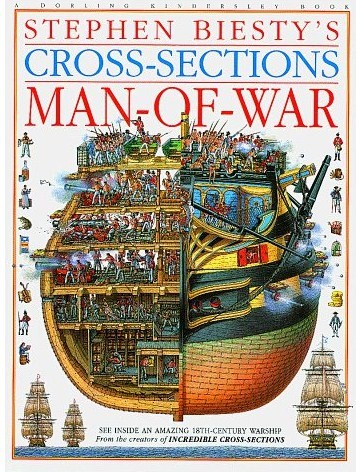
Biesty, Stephen. Man-of-War: Stephen Biesty’s Cross-Sections.
Broadside: Home of Nelson’s Navy website.
Cawthorne, Nigel. History of Pirates: Blood and Thunder on the High Seas.
Copeland, Edward and Juliet McMaster. The Cambridge Companion to Jane Austen.
Eras of Elegance website.
Forester, C. S. Mr. Midshipman Hornblower (1948), Lieutenant Hornblower (1951), and Hornblower and the Hotspur (1962).
The Georgian Index website.
Girouard, Mark. Life in the English Country House: A Social and Architectural History.
Goodwin, Peter (Keeper and Curator, HMS Victory). Men o’ War: The Illustrated Story of Life in Nelson’s Navy/National Maritime Museum, London.
Hamill, John. John’s Military History website. “Portsmouth: The Royal Dockyard and Gunwharf.”
The Jane Austen Society of North America.
Jane Austen’s World blog.
Kent, Alexander. Beyond the Reef (1992), Cross of St. George (1996), and Sword of Honor (1998).
King, Dean. Harbors and High Seas: An Atlas and Geographical Guide to the Complete Aubrey-Maturin Novels of Patrick O’Brian.
King, Dean. A Sea of Words: A Lexicon and Companion to the Complete Seafaring Tales of Patrick O’Brian.
 Le Faye, Deirdre. Jane Austen: The World of Her Novels.
Lewis, Jon E. Life Before the Mast: Sailors’ Eyewitness Stories from the Age of Fighting Ships.
Macquarie University. Elizabeth Macquarie: 1809 Journal.
Miller, David. The World of Jack Aubrey.
National Maritime Museum website.
The National Museum of the Royal Navy website.
Norgate, Martin and Jean. Old Hampshire Mapped website.
O’Brian, Patrick. Post Captain (1972) and The Far Side of the World (1984).
O’Brian, Patrick. Men-of-War: Life in Nelson’s Navy.
O’Neill, Richard. Patrick O’Brian’s Navy.
Pool, Daniel. What Jane Austen Ate and Charles Dickens Knew: From Fox Hunting to Whist—The Facts of Daily Life in Nineteenth-Century England.
Portsmouth Naval Base Property Trust. Portsmouth Historic Dockyard Visitor’s Guide.
Portsmouth Royal Dockyard Historical Trust website.
Project Gutenberg. Reminiscences of Captain Gronow.
Ray, Joan Elizabeth Klingel. Jane Austen for Dummies.
 Ross, Josephine. Jane Austen: A Companion.
Southam, Brian. Jane Austen and the Navy.
Tierney, Tom. Fashions of the Regency Period Paper Dolls.
Tomalin, Claire. Jane Austen: A Life.
Turner, Barbara Carpenter. A History of Hampshire.
Wallace, Laura. “Food and Drink in Regency England.”
Watkins, Susan and Hugh Palmer. Jane Austen: In Style.
White, R. J. Life in Regency England.
Wilson, Kim. Tea with Jane Austen.
(And there are probably at least a hundred other websites I accessed which I didn’t bookmark that I gleaned tidbits of information from.)
MENU FOR ROMANCE: The Research
Most people (non-writers, I mean) assume that when one writes a contemporary-set novel, there isn’t any research involved. WRONG! Even though I try to keep my characters in jobs that I’m at least vaguely familiar with—or I know someone who is—I still have to make sure I’m getting all the details correct. While the research for a contemporary (at least mine) isn’t as intensive as it is for a historical, it’s still as vitally important. After all, I don’t want a bunch of readers contacting me telling me I got everything wrong. So what are some of the topics I had to research?
Event Planning and Facilities Maintenance
 Meredith is Executive Director of Events and Facilities for Boudreaux-Guidry Enterprises, her parents’ corporation that they grew out of her maternal grandfather’s commercial real estate company. The “research” for this came mostly through my own life experience. When I worked at the daily newspaper here in Nashville, I did quite a bit of event planning—from events for our sales staff to focus groups to “gala” awards ceremonies for several hundred people. So that part of Meredith’s job was easy for me. But she’s also the Facilities Director, which means that all of the management, security, and maintenance staff for each of the properties owned by B-G report to the supervisors who all report to her. How did I handle this? Well, again, back to my days at The Tennessean. For several years, I served on several different company-wide committees, which not only brought me into contact with the facilities/maintenance managers and staff, as part of my duties on the company safety committee, several times a year, I had to participate in safety inspections of other departments, which meant we had to know all the OSHA rules and regulations, and sit in meeting in which we discussed work-place accidents and incidents—everything from trip-and-falls to major loss of limb—and life—accidents to building security.
On Being an Executive Chef
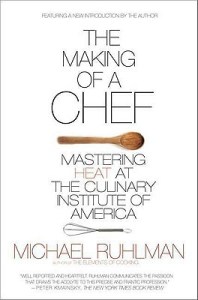 As a majority of people have at one time in their life, I worked in a couple of different restaurant/kitchen environments in high school and college. In high school, it was a restaurant; in college, I worked at the Faculty Club at LSU, which was a restaurant/hotel combination on campus (some people familiar with the Faculty Club might recognize that it was the inspiration for Lafitte’s Landing in Stand-In Groom). Yet I was never an executive chef. I watched a lot of cooking shows on Food Network and Top Chef on Bravo, which gave me pretty good insight into chefs’ personalities, but not on the day-in, day-out life of being a chef. So I had to do some real research. It took quite a while of searching, but I finally ran across this book, The Making of a Chef, at Barnes & Noble one day. As soon as I opened it, I knew it was exactly what I was looking for. An almost daily journal of someone attending culinary school. No, it didn’t give me the day-to-day workings of a professional kitchen—but since this wasn’t a restaurant, that wasn’t really what I needed anyway. I needed the “deep background” that this book gave me.
Restoring a Historic Home
 Okay, so this is pretty much an excuse to post another image of Eduardo Xol, the template for Ward Breaux, the contractor Meredith hires to finish restoring her house when it gets to be too much for her. I’ve watched my share of home-improvement shows over the years and learned some of the jargon. But when I needed to send Meredith to the hardware store in search of something for her house—the trip on which she’d meet Ward—I need her to be able to speak with him like an equal, to show him she’s not just some fragile flower who knows nothing about wood epoxy. Why did I settle on wood epoxy? Because I like the word epoxy! And I’d just had a situation—the rear-view mirror in my car losing adhesion to the windshield and falling off—which sent me to Home Depot in search of epoxy, which is when I came up with the idea for that scene. So of course, I had to research the different types of wood epoxies available—and what she would be using it for. And because this isn’t a huge area of interest to me (like cute contractors are), I didn’t spend much time focusing on the details of this particular topic.
Gourmet Food
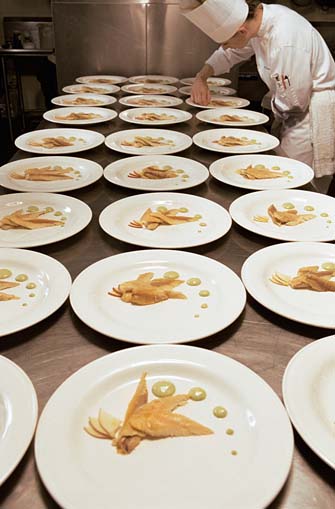 While I’m going to give some recipes in another post next week, I did want to mention that I had to spend a lot of time researching food for this book. Many people mentioned that reading Stand-In Groom made them hungry—and I didn’t intentionally focus on food in that book! I guess my own obsession with food just shines through. 🙂 But with a chef and a character who coordinates banquets and formal dinners and catered galas, there had to be a focus on food in this book. But since I’m not personally given to wanting to eat fancy foods (just give me steak and a baked potato for a special meal out!), I had to research what types of foods are currently in style for these types of events.
A Wedding Reception
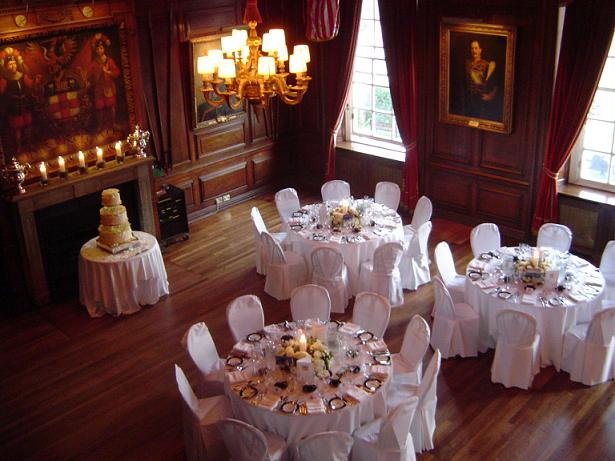 Yep, you’re reading that correctly. The author who wrote an entire novel about a wedding planner had to research what happens at a wedding reception for her second book. Okay, yes, I know the basics of what happens at a normal wedding reception. Everyone sits around (if you can find a place to sit), waits for the bride and groom to show up, waits some more while the bride and groom go around and are greeted by everyone they know, wait while they cut the cake, and then, maybe, have some cake, congratulate the new Mr. and Mrs., and then skedaddle. What, you mean that isn’t what happens at the receptions you’ve been to? Well, as the “old maid” at every single wedding I’ve been to in the last ten years, hanging out at the reception isn’t my idea of fun, especially since, aside from family, I don’t usually know anyone there. So I had to pull out one of the books I’d bought for research for SIG to see what the order of events is at a formal, sit-down reception with dancing—because Meredith would have to know this.
RANSOME’S HONOR: Settings
 When I first started working on the idea for what would become The Ransome Trilogy, I had basically two choices I could choose for my main setting in England: Portsmouth or Plymouth. Since I knew that William’s ship, Alexandra, would be going into dry-dock for an overhaul before he weighed anchor on his new assignment, I chose Portsmouth, because that’s the place ships went for that kind of work. Once I started researching Portsmouth, I learned something that at once gave me both a distinct advantage and a distinct disadvantage. You see, most of Old Portsmouth (what would have been around in 1814) was destroyed by the German Luftwaffe in World War II. So most of the historical sites that remain are few and far between, and the area is vastly different than it would have been if the original city still existed. So I had the freedom to make stuff up when it came to the setting—but I really couldn’t find much reference images or information about where things would have been located. So I ended up being vague whenever possible.
Portsmouth is an island city, the only one in England, located on Portsea Island in Hampshire County (Hants). Because of its natural deep port, it was a logical location to become the hub of the Royal Navy, and thus one of the most heavily fortified in the country. The dockyard was the center of life for historical Portsmouth, being its primary industry. Just about everything revolved around the Royal Navy.
But you didn’t come for a history lesson. You came to see the places mentioned in Ransome’s Honor.
HMS Alexandra, 74-gun (3rd Rate) ship of the line. William has captained Alexandra for three years. It is really hard to find images online of a 74-gun ship of the line, and my scanner doesn’t work with my new Vista computer, so I can’t share with you the images from the several research books I have. I can, however, direct you to Dorin Stanciu’s photos of HMS Victory, Admiral Lord Nelson’s flagship, which is permanently installed in dry-dock in Portsmouth. Victory was a much larger ship, as it was an admiral’s; however, you can still get a good feel for what it might have looked like in Dorin’s photos. And here’s a very large photo of a model of a French 74-gun ship so you can see more details of how it’s laid out.
When we first meet William, he’s knocking on the front door of the home of Captain Collin Yates, his best friend. Collin and Susan Yates live in a First-Rate Georgian rowhouse in Portsmouth. I wish I could show you pictures of the interiors and furnishings of most of the homes I’ve described in the book, but, alas, most of them exist only in my imagination. But I can at least show you William’s room in the Yateses’ home, which is quite a contrast to his quarters aboard Alexandra.
In Julia’s first scene (not counting the prologue), she is in her bedroom in the house her father purchased for her mother when he struck his colors, planning to bring Lady Witherington back from Jamaica for good. After sitting for a little while with her father in his study, she joins her aunt in the formal sitting room, where she meets her cousin, Sir Drake.
Sir Drake is staying at Pembroke House, his family’s house in “town” (but, alas, not the right Town, a.k.a., London), which is pretty much falling down around his ears.
Though I don’t want to give anything about the story away, some other locations of interest are Lady Dalrymple’s home, Marchwood (the Pembroke ancestral estate), Portsmouth’s High Street, the dockyard quays, the concert hall, and the Cathedral Church of St Thomas (à Becket) of Canterbury.
I’ve uploaded these and many more setting photos to the Ransome Set on Flickr (since last time I posted the link).


