DOUBLE THE FUN CONTEST WINNERS!!!
 As promised, the entries in the Double the Fun contest have been judged by an anonymous panel of judges (thanks, y’all!) and a winner has been decided upon. I have to tell you that they had a really hard time picking a winner because everyone’s entries were so well done. I’m glad I wasn’t the one having to choose!
For those of you who entered and didn’t win, your names were included in the drawing for the 2nd and 3rd place prizes along with those who didn’t enter. Here’s how the entries stood at the end of the contest:
Jennifer H.: 22 comments for 13 entries
Renee C.: 20 comments for 11 entries
Jess P.: 19 comments for 10 entries
Liz J.: 18 comments for 9 entries
Jolanthe: 16 comments for 7 entries
Becky Miller: 20 comments for 11 entries
Alexandra R.: 10 comments for 1 entry
Carman B.: 15 comments for 6 entries
Becky Terry: 15 comments for 6 entries
I wish I could award everyone a prize, because the verve you had in commenting on all the posts this month made it so much fun for me to try to think up topics that would hopefully capture your interest. I hope that even if you didn’t win, you did get something out of the conversations that happened here over the past four weeks, and I really hope you’ll come back to chat often! (Especially since I’m going to be doing some posts this month in preparation for the release of Menu for Romance and Ransome’s Honor that I hope will get you even more excited about them!)
THE PRIZES
Grand Prize (one winner): Signed copy of both Menu for Romance and Ransome’s Honor, your choice of one of the cookbooks on the MFR list and one of the DVDs on the RH list, and a $100 gift certificate from your choice of Amazon, ChristianBooks.com, or Wal-Mart (yes, Wal-Mart. Why? Because they, unlike B&N, will actually carry my books!).
2nd Place (two winners): Choice of Menu for Romance or Ransome’s Honor (signed) with one cookbook (for MFR) or one DVD (for RH) from the list, and a $25 gift certificate from your choice of Amazon, ChristianBooks.com, or Wal-Mart.
3rd Place (two winners): Choice of Menu for Romance or Ransome’s Honor (signed) with one cookbook (for MFR) or one DVD (for RH) from the list.
- Menu for Romance cookbook choices:
Ransome’s Honor DVD choices:
And the winners are . . .
3rd Place (two winners): Choice of Menu for Romance or Ransome’s Honor (signed) with one cookbook (for MFR) or one DVD (for RH) from the list.
Carman Boley
and
Renee Chaw
2nd Place (two winners): Choice of Menu for Romance or Ransome’s Honor (signed) with one cookbook (for MFR) or one DVD (for RH) from the list, and a $25 gift certificate from your choice of Amazon, ChristianBooks.com, or Wal-Mart.
Jolanthe
and
Becky Miller
Grand Prize (one winner): Signed copy of both Menu for Romance and Ransome’s Honor, your choice of one of the cookbooks on the MFR list and one of the DVDs on the RH list, and a $100 gift certificate from your choice of Amazon, ChristianBooks.com, or Wal-Mart (yes, Wal-Mart. Why? Because they, unlike B&N, will actually carry my books!).
Every Time
by Liz Johnson
- The smoke begins curling around the patio overhang, and I let my eyelids drop. Maybe if I’m really still, the sweat on my arms won’t slide to my fingers or the drops on my lip won’t slip to the corner of my mouth adding a salty tang to the rest of the evening. I risk taking a deep breath through my nose. And that’s when it hits me.
The spicy smell of home.
I’ve been at college for just six weeks. Just a five hour drive from the rest of the family, from the heat of southern Arizona. Except it feels like a lifetime and a million miles since I’ve stood next to my dad in front of his grill.
One of the brown patties in front of us drops a stream of grease and sizzles as a flame licks its edge. Dad’s practiced hand slides a spatula under the burger in the back corner and flips it. Then the next. He presses the bottom of the turner to the top of that one, and the fire pops loudly.
“Cheese?”
“Huh?”
My dad looks down at me, the corners of his eyes crinkling. “Cheese?”
I jump. I’ve forgotten my only responsibility for the evening meal. I run inside, immediately missing the scent of the smoke mingling with the Italian spices I saw Dad mixing with the ground beef earlier today.
“Who wants cheese?” I call, sailing past my sister, who is setting the table.
One “me.” One “no.”
The other two are unaccounted for, and a quick glance shows they’re nowhere to be seen. I shrug. You don’t pipe up. You don’t get cheese.
With a bounce in my step, I carry the cheese slices back outside. Dad is just turning the last burger. The wrappers in my hand crinkle as I cover the perfectly char grilled patties. Orange cheese curls at the corners as the heat begins to melt it.
Before I know it, Dad is scooping the burgers onto a plate, and I realize we haven’t spoken more than half a dozen words to each other in the fifteen minutes we’ve been standing side by side watching our dinner cook. Is this going to be our only time alone together during my long weekend? Have I wasted my only chance to tell him about my first weeks of college?
I don’t have a choice now. He’s headed through the door, and if I want dinner, I have to follow.
My head is bowed, and my eyes are closed as my dad offers thanks for the meal on the table. But I can’t help sneaking a peak at my brother holding my right hand and my mom sitting across from me. I didn’t realize how much I miss being with my family until this moment.
My sister passes the platter of burgers and I stab a cheesy one, settling it between the two halves of a potato bun. I choose minimal condiments—ketchup with a dab of old-school mustard—and use the top of the bun to swirl them together on the melted American cheese.
Using both hands, I bring my meal to my mouth, ready for the first bite, but stop just before chomping down.
If I hurry through the meal, will I shorten the time I have with my family? If I rush through my burger, will I start to lose touch with my home?
Dad leans over. “Everything okay? You haven’t touched your burger. I made it because I know it’s your favorite.”
I have to fight the tears that sting the corners of my eyes.
“I’m good,” I mumble before cramming a huge bite into my mouth. The bun is soft and light and melts away. And the burger is just like I remember it. Tangy and juicy. Solid and comforting.
It’s the taste of home.
“Will you make these next time I come home?” I whisper to Dad.
“Every time.”
Congratulations to all the winners. Look over the prize lists and e-mail me to let me know what you’ve chosen!
Fun Friday–My Favorite Fairy Tales

We all grew up hearing fairy tales and watching movies based upon many of them—in fact for most of us, our primary exposure to so-called “fairy” tales came from whatever Disney decided to put on film. (Yes, I know, most of what I’m about to mention probably aren’t fairy tales in the truest sense of the term, however, that’s the genre into which they all fall.)
On the Louisiana leg of my trip this month, I picked up a few books on one of my myriad trips to bookstores, one of which touts itself as a new fairy tale: The Princess and the Hound. Author Mette Ivie Harrison, who is Danish by ancestry, holds a PhD in German Literature from Princeton; so with her background in Germanic and Scandinavian storytelling, it reads like an old-fashioned fairy tale. Which is what put me in mind of this topic.
 5. The Princess on the Glass Hill
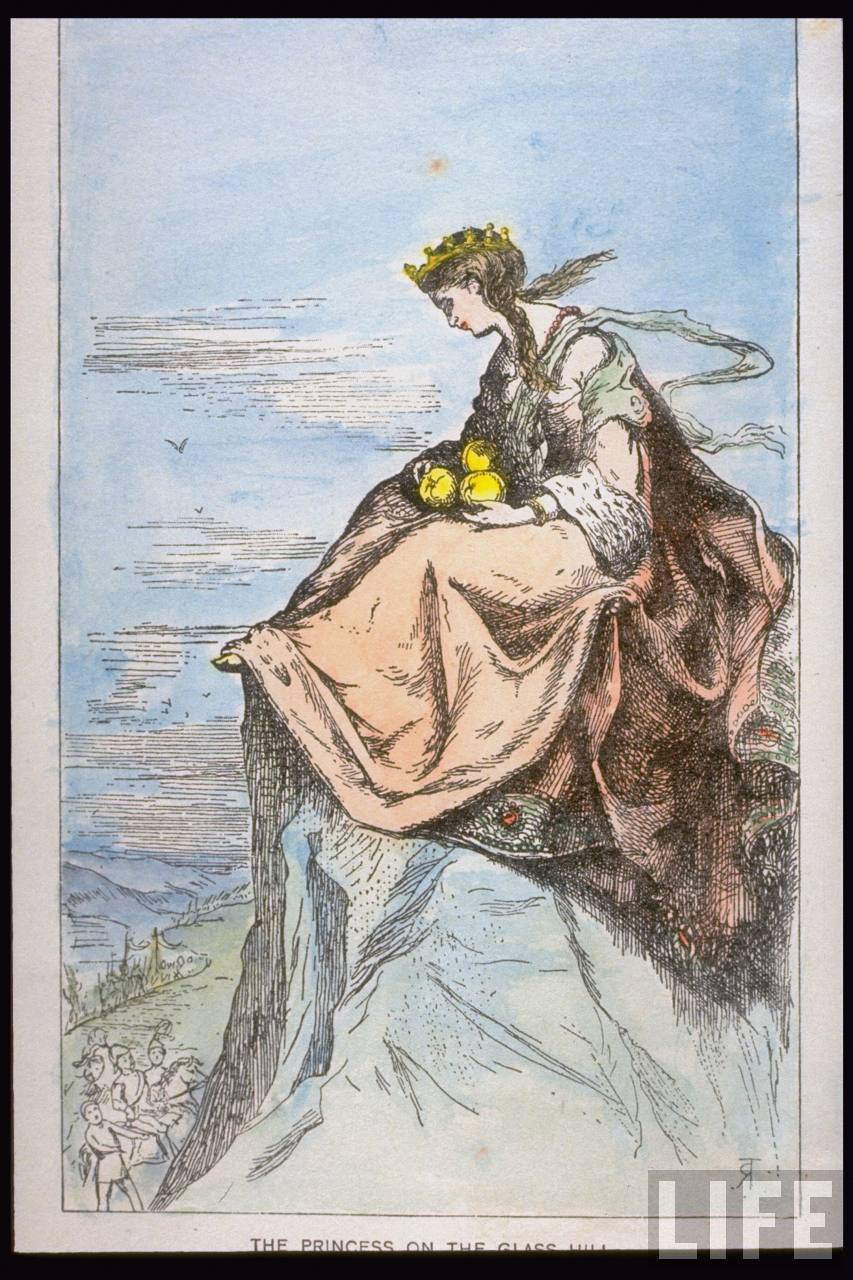
It took me forever searching for this one to remember exactly what it was about. But I remembered it because it was in a book of fairy tales that my grandmother used to read to us during the summers—and then which I read over and over once I could. It’s a Norwegian fairy tale collected by Peter Christen Asbjørnsen and Jørgen Moe in Norske Folkeeventyr. This is a tale of not only the youngest son winning the princess’s hand, but also of how persistence wins the day.
4. Rumpelstiltskin
A German fairy tale, first published by the Brothers Grimm in 1812. I can’t really say that there’s a particular moral to this story that makes it one of my favorites, but I’ve always been enamored of not only the idea of spinning straw into gold (what Rumpelstiltskin does for the girl which in turn so impresses the king that he marries her) or of the Faustian bargain entered into by Rumpelstiltskin and the girl (that she will give him her first child for spinning the straw into gold for her). When the child is born and he returns to claim his due, he gives her three days to guess his name. She stoops to subterfuge, but it’s a cautionary tale against being too proud of oneself—after all, it’s because Rumpelstiltskin is crowing about his pending victory (and using his name in the rhyme) that allows the queen to break the deal by revealing his name the third night.
3. The Tinderbox
This is a lesser-known story from Hans Christian Andersen, but one that was in the same book as The Princess on the Glass Hill, so I think of it with much the same level of fondness. This one has the advantage of featuring dogs who save the day.
2. Cinderella
According to Wikipedia, the roots of this story go back all the way to 1st Century Greece. But whatever its origins, there seems to be a Cinderella story in just about every known civilization. We’ve all dreamed of the rags-to-riches miracle—something to happen, someone to come to us, an unexpected windfall to land on us—to move us out of whatever oppressive lifestyle we feel we have. For women, this usually includes a very handsome (wealthy) man sweeping us off our feet. Of course, the way it’s presented in the European/American versions of the story, this happens only after the girl has made such an impression on him in the brief time they’re together at the ball that he can’t live without her. And of course, they lived happily ever after.
 1. Snow-White and Rose-Red
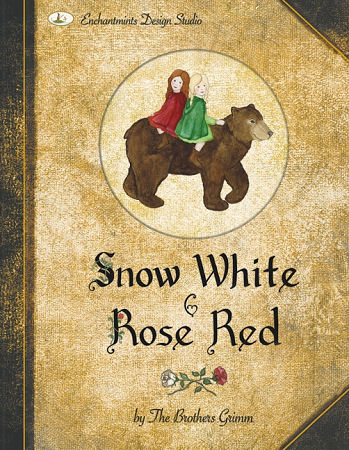
Not to be confused with just plain old Snow White. This is another Brothers Grimm fairy tale, which is about a prince, who was cursed by a troll and transformed into a great bear, who is then saved by two sisters, Snow-White and Rose-Red. Why is this my favorite? Well, because in the end, both sisters end up married to princes. When I was growing up, we had a record that had the dialogue, sound effects, and music from the live-action version of a movie that I’ve never seen nor can I find any definitive information about it online (but this German version of it from 1955 is listed as having been dubbed in English, so that may be it). But I listened to it almost every night throughout elementary school, until I could practically quote it. I think I still have the tape that we eventually recorded the LP onto—I’ll have to see if I can find it so I can transcribe it before the tape disintegrates.
What are some of your favorite fairy tales?
Author Obits
It seems like we’ve had a lot of great authors who’ve passed away in the last year or so. . .John Updike, Michael Crichton, Arthur C. Clarke, Tony Hillerman, Margaret Truman, Alexander Solzhenitsyn, and several more. I thought today, we’d look at some famous authors’ obituaries and start thinking about what we might like for the media to say about our writing careers (after many long and successful years, of course) after we’re gone.
Michael Crichton
Crichton was a distinctive figure in the entertainment business, a trained physician whose interests included writing, filmmaking and television. (He was physically distinctive as well, standing 6 feet 9 inches.) . . . Crichton was “an extraordinary man. Brilliant, funny, erudite, gracious, exceptionally inquisitive and always thoughtful,” “ER” executive producer John Wells told the AP. . . .
Michael Crichton was born in Chicago in 1942 and grew up in New York’s suburbs. His father was a journalist and Michael loved the writing profession. He went to medical school partly out of a concern he wouldn’t be able to make writing a career, but the success of “The Andromeda Strain” in 1969 — the book was chosen by the Book-of-the-Month Club and optioned by Hollywood — made him change his mind, though he still had an M.D.
Though most of Crichton’s books were major best-sellers involving science, he could ruffle feathers when he took on social issues. “Rising Sun” (1992) came out during a time when Americans feared Japanese ascendance, particularly when it came to technology. “Disclosure” (1994) was about a sexual harassment case.
Crichton won an Emmy, a Peabody, a Writers Guild of America Award for “ER,” and won other awards as well.
“Through his books, Michael Crichton served as an inspiration to students of all ages, challenged scientists in many fields, and illuminated the mysteries of the world in a way we could all understand,” the news release said.
(From CNN.com)
Sir Arthur C. Clarke
Sir Arthur’s vivid – and detailed – descriptions of space shuttles, super-computers and rapid communications systems were enjoyed by millions of readers around the world.His writings gave science fiction – a genre often accused of veering towards the fantastical – a refreshingly human and practical face.
His ideas and gadgets engaged his readers because of, not despite, their plausibility. Quite often, his fictional musings formed the basis of what we now see as science fact. . . .
A youthful interest in dinosaurs and Morse code blossomed into a fascination with all things scientific.
During World War II, Sir Arthur volunteered for the Royal Air Force, where he worked in the, then highly-secretive, development of radar. . . .
He wrote story-lines for the comic-book hero, Dan Dare, inspired Gene Roddenberry to create Star Trek, and posited Clarke’s Law: “Any sufficiently advanced technology is indistinguishable from magic.”
Beyond this, during the war, he published a paper in which he predicted that, at 22,000 miles above the Earth’s surface, communications satellites would sit in geo-stationary orbit, allowing electronic signals to be bounced off them around the globe. . . .
A seer of the modern age, Sir Arthur was an original thinker, a scientific expert whose tales combined technology and good old-fashioned storytelling and whose influence went far beyond the written page.
Marking his 90th birthday last year, he told fans: “I want to be remembered most as a writer. I want to entertain readers and hopefully stretch their imaginations as well.
“If I have given you delight by aught that I have done, let me lie quiet in that night, which shall be yours anon.”
(From BBC News)
John Updike
John Updike, the kaleidoscopically gifted writer whose quartet of Rabbit novels highlighted a body of fiction, verse, essays and criticism so vast, protean and lyrical as to place him in the first rank of American authors, died on Tuesday. . . .Astonishingly industrious and prolific, Mr. Updike turned out three pages a day of fiction, essays, criticism or verse, proving the maxim that several pages a day was at least a book a year — or more. Mr. Updike published 60 books in his lifetime; his final one, “My Father’s Tears and Other Stories,” is to be published in June.
“I would write ads for deodorants or labels for catsup bottles, if I had to,” he told The Paris Review in 1967. “The miracle of turning inklings into thoughts and thoughts into words and words into metal and print and ink never palls for me.” . . .
(From The New York Times)
An audio obituary of Madeleine L’Engle (2007) from NPR.
Tony Hillerman
In 1970, Hillerman published The Blessing Way, the first of 17 novels that tracked tribal police officers Joe Leaphorn and Jimmy Chee through the wide-open Navajo landscape. The series was among more than 30 books he wrote. Actor and producer Robert Redford turned three of the mysteries into movies that were shown on PBS. . . .Hillerman also had a rapt audience in his children. “He was a wonderful bedtime storyteller for me and my brothers and sisters,” Anne Hillerman said. “They were just these improved stories from whatever the day had brought.”
But her father spoke little of his time in the Army during World War II, where he earned the Silver and Bronze stars and the Purple Heart. She learned more about those experiences from reading his 2001 memoir Seldom Disappointed. “He was just like a lot of people in his generation — he was getting on with his life,” she said. “He lived very much in the present.”
(From the Santa Fe New Mexican)On the Navajo Nation where tribal members sometimes hesitate to open up to outsiders, they embraced Tony Hillerman as an honest and genuine man who wanted to learn about their culture and get the details right. . . . But Hillerman’s relationship with the Navajo Nation stretched far beyond the pages of those books, which featured two of the unlikeliest of literary heroes — Navajo police officers Joe Leaphorn and Jim Chee. He shed light on Navajo culture, his books becoming a bridge to the reservation for tribal members who moved elsewhere, and encouraged Navajo youth to ask elders about traditions and ceremonies. . . . Hillerman returned the blessings he received from Navajos by donating money for a water delivery program at St. Bonaventure Indian Mission and School in Thoreau, N.M., to the Little Sisters of the Poor in Gallup, N.M., and to put up lights at a football stadium in Monument Valley, Utah.
(From the Albuquerque Journal)
What do you want your “Beloved Author Died Yesterday” obit to say about you?
Books & the Economy
 Last night, I was thrilled to be able to watch one of my former critique partners, Cindy Woodsmall, be interviewed by ABC’s Nightline about her bestselling women’s fiction novels!
While on that site, I saw a link to another story about books—about how romance novels are weathering this economy.
With Book Expo America coming up this weekend, I know there’ll be a lot of news stories in the next few days trying to gauge whether book sales will be up or down this year, so I thought I’d get the discussion going early. Here are some recent news stories about books and the economy—let the discussion begin!
Amid Economic Crisis, Book Industry Feeling Jitters
Worried book industry gathers for convention
Borders Sales Fall 12% in First Quarter
Books-A-Million Posts First-Quarter Gains
Sales Fall Less Than Expected at Barnes & Noble; Has Improved Outlook
The recession heats up romance novels
Christian fiction thrives during economic crisis (Not only was this article written for the paper where I worked for 10 years, one of my local group members was interviewed for it!)
(And yes, this means there are two posts you can comment on today so you can get an extra entry in for the contest!!!)
Contest Reminder–Only THREE Days Left!

That’s right—there are only three days (counting today) remaining in the DOUBLE THE FUN contest. And unless I’ve missed seeing some e-mails, I’ve only received ONE entry for the grand prize drawing (from Renee Chaw). So if you want a chance at that grand prize, be sure to get your entry in to me by midnight (central time) Friday night.
Here’s a reminder of what the grand prize is and what you need to do to qualify for the drawing:
- Grand Prize (one winner): Signed copy of both Menu for Romance and Ransome’s Honor, your choice of one of the cookbooks on the MFR list and one of the DVDs on the RH list, and a $100 gift certificate from your choice of Amazon, ChristianBooks.com, or Wal-Mart (yes, Wal-Mart. Why? Because they, unlike B&N, will actually carry my books!).
1. To enter the grand prize drawing, you must do both of the following (part a & part b):
- (a) Write about one of the following, in at least 500 words and no more than 1,000 words:
- 1. My favorite food. Can be a personal story related to discovering your favorite food. Can be a description of your favorite food (try to use all 5 senses and Show don’t Tell!). Can be an anecdote about your favorite restaurant where you eat your favorite food. Can be about a particular dish or an entire cuisine. It can even be a fictional short story centered around your favorite food. No matter how you write it, it should capture the readers’ interest (a panel of anonymous judges) and make us hungry for that food!
2. If I were to go back in time. . . What’s your favorite historical era? Or who’s the historical figure you’d like to meet? What would it have been like to live in that time? Why are you interested in it? Using the same guidelines as above—making it factual, narrow or broad, or a short story—write about your favorite era of history. Make us want to go back there with you!
I along with a panel of anonymous judges will choose the winner. Entries must be received no later than midnight (U.S. Central Time) Friday, May 29, 2009 and should be e-mailed to me at kaye (at) kayedacus (dot) com, with a subject line:
Double the Fun Contest Entry.
(b) Post a comment on at least ten blog posts between Friday May 1, 2009, and Friday May 29, 2009. Comments must be relevant to the topic of that day’s post. Only one comment per post will count toward the contest, but each comment over the ten required earns you another name in the “hat”—so the more you visit the blog and comment on posts, the greater your chances of winning.* One comment out of the ten can be a link to an announcement of my contest on your blog on Friday May 1, 2009 (please use this link: https://kayedacus.com/double-the-fun-contest).
For comments to count toward the contest, they must be on the posts dated between May 1, 2009, and May 29, 2009—no going back to older posts and commenting on those!—and the comments must be posted within three days of the date of the post (with the exception of posts on May 27, 28, and 29, as no comments posted after May 29, 2009, will count). Also—it should be more than just “Great topic. Thanks for posting it.” I want thoughtful comments that prove you’ve actually read what I’ve written.
- Eligible non-winning entrants for the grand prize will be entered into the drawing for the 2nd & 3rd place prizes.
Hope to see those entries rolling in soon!
Will E-Books Ever Replace Paperbacks and Hardcovers?
Since I’ll be in the car for six or seven hours Tuesday, I thought it might be nice to get home in the evening and find a raging discussion of the future of book publishing.
 At the lunch before the Arkansas Inspirational Writers’ meeting, the question was raised if regular printed-paper books will be replaced by e-book readers in the near future. Seeing as how I predicted that print newspapers would be gone by the year 2000, I may not be the best person to answer this question—and journalists have been debating this topic for a few years now. There is a lot of controversy surrounding e-book readers, but now that it looks like there’s a front-runner in the market (the Kindle from Amazon—and there’s a Kindle app for the iPhone) the question over whether or not e-books will take over the publishing world is becoming more and more heated.
So, here are a few articles for y’all to read, and then I’d love to hear your opinion on e-books, traditional books, and the future of both!
Kindle Changing How People Read, Publish Books
Have We Reached the End of Book Publishing as We Know It?
Remembering Memorial Day
As I am no poet, and as there are so many others who’ve already written words that better express my own feelings and emotions about Memorial Day, I wanted to pay tribute to the day and to this poet by sharing her poem here today.
Memorial Day
© 1999 by Michelle Keim,
Commander of Royersford VFW Post 6341 in PA.
 As we stand here looking
At the flags upon these graves
Know these flags represent
A few of the true American brave
They fought for their Country
As man has through all of time
Except that these soldiers lying here
Fought for your country and mine
As we all are gathered here
To pay them our respect
Let’s pass this word to others
It’s what they would expect
I’m sure that they would do it
If it were me or you
To show we did not die in vein
But for the red, white and blue.
Let’s pass on to our children
And to those who never knew
What these soldiers died for
It’s the least we can do
Let’s not forget their families
Great pain they had to bear
Losing a son, father or husband
They need to know we still care
No matter which war was fought
On the day that they died
I stand here looking at these flags
Filled with American pride.
So as the bugler plays out Taps
With its sweet and eerie sound
Pray for these soldiers lying here
In this sacred, hallowed ground.
Take home with you a sense of pride
You were here Memorial Day.
Celebrating the way Americans should
On this solemnest of days.
Fun Friday–What I’m Doing on My Summer Vacation
Okay, so I know it’s not officially summer yet; however, as this is really the only vacation-like trip I’m taking for the next few months, it counts.
Last week, as you may recall, I was in Baton Rouge, visiting with family and traveling around South Louisiana doing a couple of book signings and visiting bookstores to sign books and drop off marketing materials. For some reason I cannot fathom, I didn’t get my digital camera out the entire time I was there! And I should have. I really wish I’d taken new photos of the niece and nephews, especially as they were getting their Awana awards last Wednesday.
I posted pictures of the book signing at the LifeWay Christian Store in Alexandria from last Saturday. And here are some photos I managed to snap at Rachel Fernandes’s (nee Smith) wedding Saturday evening.
One thing I have done on this trip that I’ve been thinking I should make myself do in Nashville but never have (because the carry-out option is too easy) is to actually go in and sit down at a “table for one” and eat a meal in a restaurant. Though I have been taking something with me to do while waiting (writing “To learn more about Kaye and her books, visit her online at kayedacus.com” on my marketing postcards and then autographing to use to stuff in books where I can’t sign them), I’ve put it away when my food arrives and just enjoyed watching people in the restaurant. I’m going to have to do this more often when I get home.
Since I’ve been in Hot Springs, Mom and I have gotten a little silly with the cameras, so I at least have some documentation of some of the fun stuff I’ve been doing since I’ve been here (I’ve spent at least 20 hours so far working on freelance projects that are due next week—the day after I drive home!—and still have about 10 or 15 hours’ worth of work yet to complete throughout the holiday weekend). So I thought I’d do a combination of Show and Tell and a “What I Did on My Summer Vacation” project for today’s Fun Friday.
As you may have already guessed from Monday’s post, much of my time in Hot Springs is taken up by my parents’ Schnauzer, Missy, who feels it’s incumbent upon me to hold her in my lap as often as possible while I’m here:

Monday, of course, was the requisite first trip out to Lake Ouachita to take the boat out for the first time since last summer. (If you look at the full-size photo, you’ll see all the pine pollen that the boat was coated in that we spent most of this first time out cleaning up. Oh, and though my legs look sunburned here, it’s just the red reflection off the canopy, because I hadn’t gotten any sun when this photo was taken.)

There’s been so much rain in Arkansas that the lakes are all at least 10 to 15 feet above what’s usually their highest level for the season. It’s going to be an interesting holiday on the lake for everyone who thinks they’ll be camping and having picnics and playing on the beaches:

Woohoo! Putting out some wake:

My parents have this sneaky way of ordering furniture (big, heavy furniture) with “some assembly required” whenever they know I’m coming in town (at Christmas, it was the cabinet that their new, huge plasma TV is now on). This time, it was desks for their office, which we spent most of Tuesday and Wednesday assembling (I’m actually holding down the top so he could put pressure on the screws to attach it to the base):

Here’s Mom’s desk, completed (with Daddy’s feet up on his desk chair while he’s “under the hood” of his desk—see previous pic):

And here’s Daddy at his desk, once we finished assembling both the desk and the hutch:

Thursday, it was back out to the lake.

This time, Mom and Dad actually did some fishing (while I worked on a copy-editing project). Mom caught a six-pound drum-fish. Way to go, Mom!

I came back from the lake with a little bit of a sunburn on my shoulders and back (though really good color on my formerly pasty-white legs, which was the goal). Today, we’re going to go see Star Trek and then we’ll spend the rest of the day getting the house organized and cleared out as much as possible for the movers who’ll be bringing the rest of their belongings from Dallas late next week. Oh, what fun! (Um, I think I’ll still have A LOT of freelance work I need to do today. . .) Then, Saturday, I’ll be in Little Rock for most of the day, having lunch with and then teaching a workshop for the Arkansas Inspirational Writers’ group, then attending my cousin Katie’s wedding that evening. Sunday and Monday will probably be more of getting the house organized (and going through lots of stuff. . .for a former military family, my parents have WAY too much stuff!). And then Tuesday, I head back to Nashville. Though in a way it feels like I’ve barely started my “grand tour” of Arkansas and Louisiana, by the time I get home, I’ll have been gone for seventeen days!
Leave ’Em Hanging
Unless you’ve been hiding under a rock the last couple of weeks, you’ll know that this is season finale time on TV. Those of us who are TV addicts have been tuning in to see bigger, badder, bolder episodes of our favorite shows. . .wondering what they could possibly do to whet our appetites and make us return to view the program next fall (or January).
Good storytellers have an innate ability to “write to the hook.” They’re so tuned in to the structure of each scene/chapter in their story that they know just when to “drop the bomb” to keep the viewer/reader wanting more.
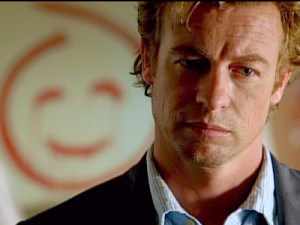 Two nights ago, we watched the season finale of The Mentalist, one of the new shows I started watching this year. Even though this is an episodic (serial) show (click here for more on the three types of series in novels and TV), there has been a recurring story thread throughout: Patrick Jane’s wife and child were murdered by a serial killer called Red John, whom they’ve been running across clues about all throughout the season. Last night, of course, centered on a Red John case—and made it look like Jane might finally corner his quarry and bring Red John to justice.
About halfway through the show, my mom said, “Of course he’s not going to catch Red John. They wouldn’t have anything to go on with next season.”
I’d been thinking about that as we sat down to watch it: what would be the ongoing thread, what would Jane’s motivation be, if they let him catch Red John at the end of the first season?
Where would M*A*S*H* have been if the Korean War had ended at the end of their first season? What would have made us want to come back for another season of Quantum Leap if Sam Beckett had been able to leap back to his own time/body at the end of each season? Why would we have continued watching Star Trek: Voyager if they’d established contact with the Alpha Quadrant/Starfleet Command early on in the series’ run and figured out the shortcut to get home?
Why would I want to keep reading a novel that’s going to resolve every single conflict a character runs into at the end of each chapter?
One of the comments I made on several manuscripts that I judged in the Genesis contest was: “While your opening is well written and you do have an interesting hook in your opening line, unfortunately, nothing actually happens in your first fifteen pages to get the story started.” It was either a character traveling from one place to another (two of them on a stagecoach—and the entries were so similar in other ways, I contacted the category coordinator afterward to see if they’d been written by the same person. They weren’t.); or a scene that starts off with an exploration of an internal conflict for a character (a fear-based situation), which then didn’t take her anywhere but back to her bedroom (it did introduce her as a character, but didn’t give an inciting incident that pointed to what the story would be about); or characters blithely going about doing what they’re doing (whether traveling on that stagecoach, weathering a storm, waiting for a train to leave the station, or taking over the running of a medieval keep after her father’s death) and not running into any roadblocks or conflicts that made me want to read the rest of the story once I was finished with the first fifteen pages.
This is where we novelists can learn from screenwriters, whether TV or movies. Because screenwriters have such a limited time to work with—and because they only have sight and sound to work with, not introspection/narrative (unless they use a lot of voiceovers, which can get really old really fast)—they start each episode with a bang and then have each scene move toward a hook, before the opening credits or before each commercial break.
 One of my favorite episodic programs is Law & Order: Criminal Intent. This is mostly because I love the character of Detective Bobby Goren created by Vincent d’Onofrio. Even though each week’s case is “solved” by the end of the one-hour run-time (and I have that word in quotation marks because they don’t always wrap up the rough ends of each case, especially since they dropped the courtroom portion of the case a couple of years ago where we got to see what happened after they figured out whodunit), there’s always a “last line” that leaves the viewer hanging. It’s usually Bobby who gets the last word in, but occasionally it’s his partner, Eames, or even the captain. (Of course, thats on the “Bobby Episodes.” Jeff Goldblum’s new character has yet to gel for me—but I have only seen one of his episodes so far.) It’s that last line, the little quip, the phone call that comes in at the last minute, the message handed to one of them—but not revealed—that leaves questions in the viewer’s mind that makes us want to come back and watch again next week (and beloved characters, but that’s a different post).
So think about some of the season finales you’ve seen (or if you don’t watch TV, some of the movies you’ve seen or some of the books you’ve read) and examine how they ended that make you antsy to find out what happens next or to watch again the next season to see how a continuing thread is going to either be resolved or build to be even greater motivation for those beloved characters. (And if you’re going to be specific about what’s happened in currently airing series, be sure to mark your comment with ***SPOILER ALERT***.)
Contest Aftermath
Last year, I did a series on entering contests. This year, I did some pre-contest edits for several people, as well as answered copious e-mails about the ACFW Genesis contest from a judge’s perspective. Now, I’ve been participating in a discussion of the aftermath of the first round of the contest—by those who didn’t final and are trying to process their scores and comments—on my local writers’ group’s e-mail loop. I shared the following with them yesterday:
Yes, it is very important to remember that many judges are biased or prejudicial in one way or another (or many) and have a hard time being objective when it comes to judging—because as a writer, the way you’ve written it isn’t the way I would have done it.
Now being published AND working as a content editor/copy editor for a couple of fiction publishing houses, I find myself commenting only upon what I would mark on an editing project for those houses—which means that I’m more often questioning how some things are written, but not saying straight out “this is wrong, wrong, wrong.” It’s also what’s given me the ability to sit in our monthly MTCW meetings and say what we’re talking about are “guidelines” and not hard-and-fast rules (well, some of them are—like grammar, spelling, and punctuation on which I’m quite a stickler still). I find myself not commenting on things now that I would have dinged the writer on a couple of years ago (and probably did) back when I was still in the pre-pubbed, everyone-has-to-follow-all-the-rules-because-I-do mindset.
[Having asked the MTCWers to check, it’s a proven fact that unpublished judges score lower and make more critical (negative) remarks than published judges, as there’s a place at the end of the score sheet for the judge to mark whether he/she is published or not.]
Of course, I’ve considered myself to be one of the hardest judges in the contest, but I’m only guessing. And based on the comments that y’all got back, I may have to rethink that image of myself. The scores I gave on the entries I judged this year ranged from a record-low of 30 (and I spent about four hours on that manuscript addressing each element of the score sheet) to a high of 90, and an average between all fourteen of them of 64 points. And I considered this a relatively strong batch of entries.
Some of the areas in which I commented the most (none of you will be surprised!):
- Showing vs. Telling (eliminate thought, felt, watched, etc.)
- Historical research (since I was judging the historical romance category. If I wasn’t sure on something, I looked it up to see if I was correct or if the author was. If it was wrong, I included a few links or the titles/authors of the books in which I looked up the correct info.)
- Too many/embellished dialogue tags, she said incredulously.
- Grammar, punctuation, spelling. Typos, grammar problems, formatting problems galore! (A great reminder to have someone else look at your entire entry/manuscript before submitting it!)
- Continuity. Yes, even in fifteen pages, I ran into some authors with problems remembering their characters’ ages, eye color, horse’s name, that their character’s arm was in a sling a few paragraphs above, etc.
- POV—not just deep POV, but head-hopping as well. I didn’t realize in this day and age that anyone who’s trying to get published would still do that!
- Scene length. I had a couple of entries that switched Viewpoint Character or had an actual scene break every fourth or fifth paragraph. As I told those writers, that’s just as jarring as head hopping, even when the next scene is still with the same character’s viewpoint.
- Starting the story in the wrong place. I had several that started in one place in the story, then had to write sentences like, “Three months later…” and paragraphs of summary of the passage of time, which to me was a clear sign that the story hadn’t started in the right place—at the place of conflict that’s the inciting incident of the story.
- Clichés. This is the romance genre, after all, so there were a lot of pounding hearts (every single entry).
- ADVERBS! Had several entries that were loving the -ly words.
- Passive voice. Had a couple that got back red-stained entries where I’d gone through and done a “find all” for was, were, had, and their derivatives and highlighted them in red—but only if they were excessive.
As one of our members mentioned before, it only takes one editor to like your story to get published. And as someone whose manuscript was rejected by every single publishing house before Barbour ever looked at it, I know of whence she speaks! I was told Stand-In Groom was too old-fashioned; an editor didn’t like George—didn’ t think he was a likeable character; one thought the entire plot was too contrived; another didn’t think Anne’s character, her behavior and how she interacts with people, was realistic; and so on. Oh, and I just last week received a “fan” letter from someone who wrote to me to tell me that she thought that what I did with the character of the guy who’s the real groom “was completely out of the realm of his developed character… . plausibility was absent … ‘Happy Endings, Inc.’ did not have to apply to every aspect of each character in order for this to showcase Christian characters in real situations. Realistically the reverse would have worked better.”
I don’t know who this person is, nor what her background in writing/storytelling is to be instructing me on how I should have written a book that’s already been published (meaning it’s definitely not going to be changed). And frankly, before I started writing this, I’d put her comments out of my mind. But I’m actually kind of glad I’ve received it. Because so far, all of the feedback on SIG has been quite positive. I’d been waiting for the bombs to start dropping: negative reader reviews, mediocre to bad reviews in publications, etc. And I feel like it’s unrealistic to only receive positive feedback. After all, receiving the hard/negative critiques is what helped me improve to the point where I was ready to be published. I’m not saying it was all correct, but it was instructive and taught me more about myself as a writer and as a person.
So just look at those horrible scores and awful comments and, once you allow yourself time to go through the grieving process, approach them with gratefulness in knowing that those overly harsh judges were just preparing you for getting published one day—by teaching you how to accept feedback that may be unfriendly, unfounded, and unfair.


