Bad Girls: The Scorned Woman
“Women do not have any macho tradition to uphold. We are socialized to be nurturing and nice. Beneath these feelings, however, has always been an icy rage. When you ask a woman to focus her imagination toward murder, she treats it as fresh turf and brings to it an enthusiasm that may not be naturally shared by a man, exposed as he has been to violent moments his entire life.”
~Sue Grafton
We’ve danced around this topic throughout this series. We’ve talked about our favorite Disney villains, which includes a large number of females. But when it comes to creating believable female villains—Bad Girls, in other words—it takes a totally different skill set than it does to create a male bad guy.
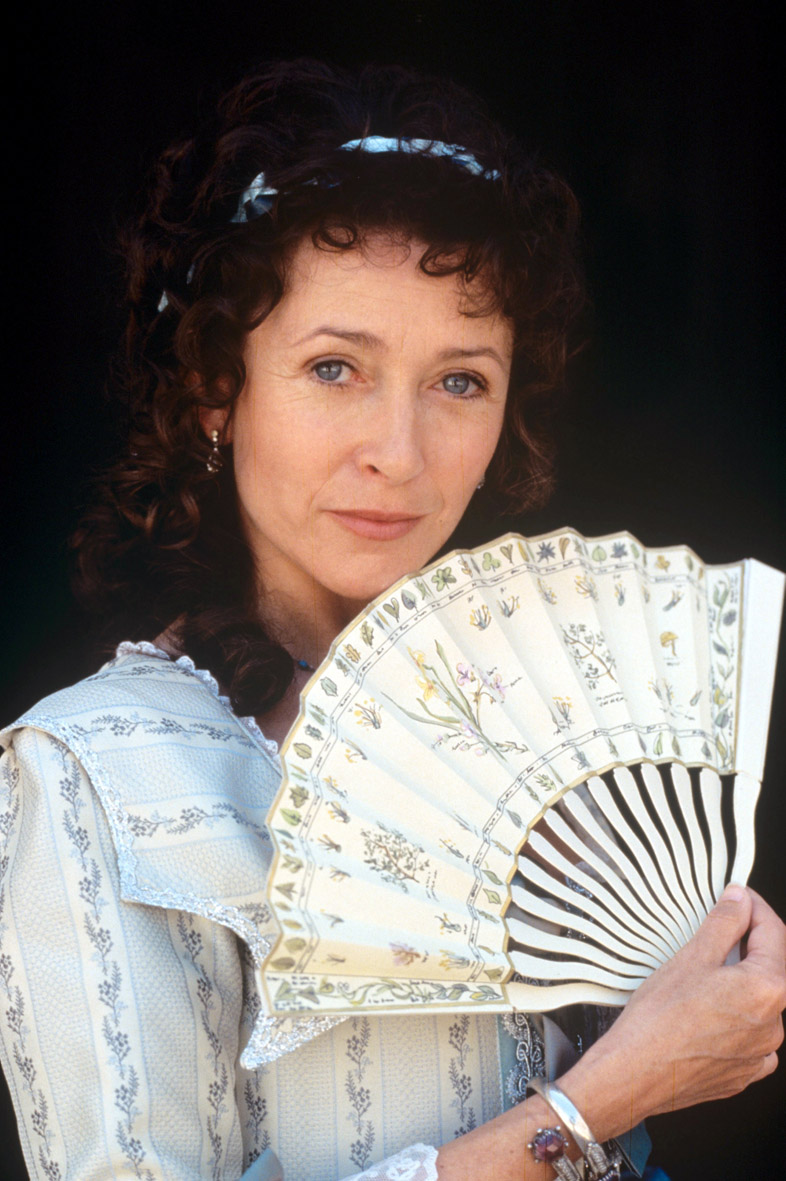
Cherie Lunghi as Lady Augusta Pembroke from RH
I’ve already given a detailed example of two female characters who are the antagonists in their own stories. I’ve also been known to use a Bad Girl upon occasion in my books—y’all know about Ransome’s Honor, but I have a Bad Girl in A Case for Love as well. When I created these Bad Girls, their sole purpose is to thwart one of the main characters (Julia in RH, Forbes in Case). Because they aren’t POV characters, and because there was no need to redeem them at the end of the story—just to have their actions influence Julia and Forbes—I wasn’t concerned so much about whether or not the reader feels sympathy for them . . . though I do try to show why the Bad Girl in Case may have turned out the way she is. I did, however, want them to be believable and not the Cartoon Caricatures I wrote about yesterday. (Y’all will have to tell me if I succeeded or not!)
As I’ve thought about Bad Girls—and especially as I wrote the post about the two wedding movies—I began to think about the “other woman” Bad Girl. And I knew that one of the members of my local group, Middle Tennessee Christian Writers, is writing a romance novel in which the hero is already seeing someone when the story opens—and she’s not the heroine. In fact, this female antagonist becomes a villain because she becomes the woman that all mankind should fear: the SCORNED WOMAN. So I asked Krista Phillips if she would share some thoughts on creating a Bad Girl/Scorned Woman character:
When I think of “bad girls,” the “Bad Boys, Bad Boys, What ya gonna do?” song runs through my head… just substituting “Boys” with “Girls.” (Feel free to blame me if you find yourself singing the particular tune for the next 48 hours.)
My latest WIP features a female antagonist, and I gotta say, it’s been both fun and frustrating. On one hand, I can take all those experiences with catty girls/women that have left scars on me in the past and pour them into my character… then I can make her life completely miserable, especially at the end. Ahhh… sounds like fun right? (A little unchristian too….)
But then I realized that my antagonist was puny and one-dimensional.
So, I took out my bike air pump, inserted it into the mouth of my female antagonist, and started to go for it. Okay, sorry, that was more of that vindictiveness in me. I see a prayer of repentance in my future.
Seriously, my first step to add dimension was to look at her motive. Why is my bad girl so bad? What made her like this? We need to do this with EVERY character we write, but I think it’s a common pitfall for writers to forget about the antagonists motives, especially females. A man is on a quest for power, control, or vindication. But what does a woman want?
On the surface, we may think “attention” or “beauty” or “the man.” And all those things are true, but a woman is a deeply emotional being. It’s how God created us. So when you have your antagonist, figure out why she wants those things. Many times, it comes down to her need for love and acceptance, or she’s acting out of her lack of love and acceptance.
That said, these motives don’t have to be redeeming. But they can be. It is perfectly acceptable for your reader to STILL not like your antagonist, and it’s fine not to give readers the complete backstory. As long as there IS a backstory. Geez, look at all the other female antagonists we’ve seen. The Wicked Witch of the West in The Wizard of Oz (total middle child syndrome!) The wicked stepmother in Cinderella (well… the poor lady DID lose her husband! And probably two husbands… or maybe the stepsisters were out of wedlock… ohhh, now THERE’S an interesting twist!). Amanda/Angel in Redeeming Love (yes, she’s the protagonist AND one of the many antagonists…) the three hormonal cheerleaders in Never Been Kissed (I bet all of their fathers are workaholics who just hand over the credit card instead of spending time with their daughters.) Regardless, somewhere in their pasts, something made them how they are. Find it, and it will help you deepen your antagonist.
When I started my new book, all I knew was that my main character (MC) was engaged, and this new girl came on the scene and he fell in love with her. (I knew more than that but don’t want to spoil the story!) But… what was I to do with said fiancée? I couldn’t have her be nice, otherwise everyone would be mad at my MC for being a jerk. I didn’t really want him to cheat on her…. I AM writing Christian fiction after all. The idea was for Maddie, the new girl, to be “sandwiched” in between the couple.
To solve my problem, I took a long hard look at Livy.
What did I find? Well, Livy comes from a divorced parents, has no contact with her dead-beat dad, has a crazy whack-job of a mother, and is engaged to her high school sweetheart who she fears doesn’t even love her anymore, yet she is still deeply in love with him. When miss “thang” walks in and Livy’s fiancé’s eyes start to wander… she panics. She pulls out her “sexy” card… but that doesn’t work. When she’s sure that she’s being cheated on, she turns to her mother to console her, who in turn hands her a “revenge” card. Thus… she becomes my bad girl.
And from there… yeah, let’s just see she gives the Cinderella’s step-mom a run for her money.
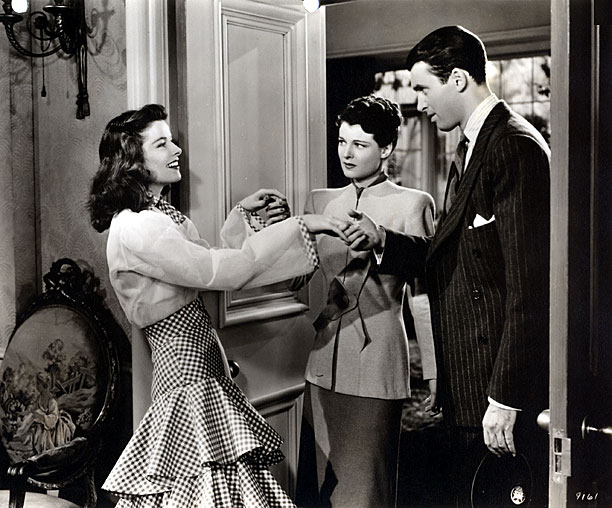
Ah . . . jealousy. The age-old maker of Scorned Women throughout the ages. Just look at the tradition of Scorned Women Bad Girls: Scarlett O’Hara, Caroline Bingley, Ashton Main Huntoon, Becky Sharp, Velma Kelly, Hera (Greek mythology), the wives in First Wives Club, and Alex Forrest (Fatal Attraction).
There’s so much more to talk about with Bad Girls, so we’ll carry on tomorrow!
For Discussion:
Who are some of your favorite Scorned/Jealous Women Bad Girl characters?
Bad Guys—Creepy Cartoon Caricatures
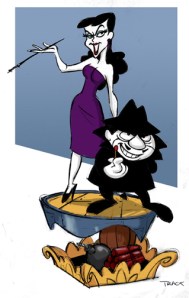 Maybe I’m aging myself here, but surely most of you can easily recall the ZZ Top song “Bad to the Bone.” All throughout this series, that’s the song that’s been running through my head as I’ve written about how to create Bad Guy characters. But there are two ways to go about this. There’s creating “Bad to the Bone” villains (like those pictured on this page today)—the creepy cartoon caricatures; and then there’s creating Bad Guys (antagonists, dark heroes, villains) who have just a little something about them that makes them sympathetic to the reader. Those are the two qualities I’d like to focus on for this, the second to last formal entry in the Bad Guys series. (We’ll end with a bang by talking about Bad Girls.)
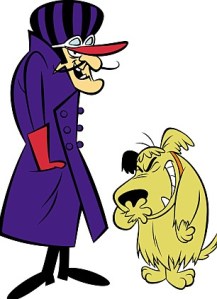
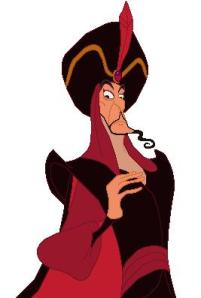
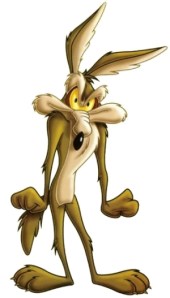
For most of us growing up, our first exposure to Bad Guy characters came from cartoons, whether on TV or in the movies. When we start naming villains, it’s usually easiest to start with the Disney movies: the evil queen in Snow White; the wicked stepmother in Cinderella; the hunters in Bambi; Cruella de Vil; Jafar; Ursula; Captain Hook; Gaston (Beauty & the Beast); Aunt Sarah, the Siamese cats, and the rat (Lady & the Tramp); Prince John, Sir Hiss, and the Sheriff of Nottingham; Scar and the Hyenas; and so on. And there were those we saw on TV: Boris & Natasha; Dastardly and Muttley; and Wile E. Coyote. What makes it so easy to name these characters as Bad Guys/villains? Because they’re presented very simply: they do bad things, they have to face the consequences for doing bad things, and we’re told through the “moral” of the story that doing bad things is, well, bad. Therefore, these characters are bad for doing bad things. We’re never given their backstory in such a way as to become aware of why they became bad. They’re just bad because they’re in juxtaposition to the heroes/heroines of these stories.
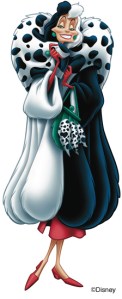 As we grow older, though, and we begin to experience life—an abusive adult, the schoolyard bully, the first romantic interest to break our heart—we begin to realize that being “bad” isn’t as black-and-white as it’s portrayed in those cartoons. People who do bad things aren’t bad all the time. In fact, they can be quite nice and charming sometimes. In real life, it’s hard to pick out the “bad guys” around us—mostly because they don’t come with names like Cruella or Dastardly or Snidely Whiplash, or with pencil mustaches with curlicues on the ends for them to twirl while chuckling menacingly. They don’t tie the Nell Fenwicks of life to the railroad tracks. (Though there are some real-life creepy cartoon caricatures who do commit heinous acts like that; and even when we do learn their entire backstory, we find nothing that makes us sympathize with them.) Cartoon bad guys are over-the-top—in appearance, in costume, in personality, in sheer evilness. They are, in other words, “Bad to the Bone.”
If you are creating stories for very young children, these types of bad-guy characters are fine—in fact, these are the best type of bad guys for children’s stories. Because at that age, they are thinking in terms of black-and-white, right and wrong. They haven’t started to experience the gray areas of life.
 In the first (original, 1977) Star Wars movie, Darth Vader was one of these caricaturish bad guys. He had the black body-armor, the swirling black cape, the creepy breathing machine, the ability to choke someone from across the room just by pointing at him, the intimidation factor, and served as the “evil henchman” for a dastardly leader in Grand Moff Tarkin. When Tarkin decided to destroy Alderaan, Vader didn’t speak up for the peace-loving people who’d long-since given up all of their weapons. When Tarkin gave the orders to “terminate her, immediately,” Vader didn’t stick up for Leia. Without a second thought, he killed Obi-Wan Kenobi. And then he went after our heroes. In the second film (Empire Strikes Back), Vader did even more dastardly deeds. But then we found out something very interesting about his backstory: he is Luke’s father. (Sorry if I just spoiled that for anyone ;-).) It is through Luke’s character that we begin to feel sympathy for Vader as Luke, in the third film, sets out to redeem Vader. And his sympathy is justified. At the end of Return of the Jedi, Vader/Anakin chooses to save his son and destroy the evil emperor who’d turned him into that creepy cartoon caricature embodiment of villainy.
 Probably one of the best-known literary villains of the 21st Century is Voldemort from the Harry Potter books. Because the first few books are written for younger readers, Voldemort is portrayed as one of these creepy cartoon caricatures: he’s the embodiment of evil because he has it out for our young hero. But the series is a wonderful example of how we come to know what evil truly means—how a person develops emotionally to understand that “the world isn’t split into good people and Death Eaters” (Sirius Black from Harry Potter and the Order of the Phoenix). As the series progresses, as Harry Potter ages and starts to understand that there are many more gray areas of life than there are black-and-white, more of Voldemort’s backstory is revealed. Then, once we get to the sixth book, we are treated to his entire backstory: the miserable family he came from; his early life in an orphanage; the tragedies that led him to fall into vengeance and darkness. At one point, Harry compares his own life with Voldemort’s: how his (Harry’s) mother loved him so much she sacrificed her life to save Harry, and how Voldemort’s mother didn’t love her son enough to go on living after her muggle husband abandoned her when she stopped giving him the love potion she’d snared him with—she abandoned her own baby and then went off and died of her broken heart. We also learn there is one way for Voldemort to save himself in the end: to feel regret for everything he’s done. It’s the exact same decision that Darth Vader must make at the end of Return of the Jedi. Except Voldemort makes the opposite choice. In both stories, it’s through the eyes of the hero (Luke and Harry) that we as the viewer/reader begin to feel something akin to sympathy for the bad guy. And it makes both characters—the hero and the villain—resonate all the more for it.
 In Bullies, Bastards & Bitches, Jessica Page Morrell sums up creating sympathy for Bad Guys this way:
- “The forces that shape villains in fiction and in real life can rarely be undone. Thus, when you’re creating sympathy for a villain, you’re doing so because of his situation and backstory. Not only do readers want to walk along in your protagonist’s clothes, they want a close-up meeting with the villain, a meeting so physical and fully wrought that the character’s smell, posture, and menacing or seemingly benign presence will take over their senses. Readers want a glimpse or, better yet, a tour of the inner workings of someone drastically different from them” (p. 214).
For Discussion:
Who are some of your favorite Creepy Cartoon Caricatures—the bad guys/villains you remember from childhood that have stuck with you as the embodiment of what defines a bad guy/villain? Who are some of the bad guys you’ve encountered in books/movies/TV as an adult that creep you out because you actually start feeling sympathy for them?
Fun Friday–My NC Trip

What is it about traveling—whether for business or pleasure—that makes coming home and getting anything accomplished so difficult? I know I promised I’d wrap up the Bad Guys series this week, but I’ve been so slammed with trying to get stuff accomplished that it obviously didn’t happen. Instead of trying to get that done now, when I’m focused on preparing the four one-hour workshops I’ll be leading at my local writing group’s mini-conference this Saturday, I’ll do that next week.
Remember a couple of weeks ago when I posted the Thirtysomething and Never Been Kissed rant? I cannot tell you how therapeutic it was for me to have gone through all of those emotions—and that entire discussion, hecklers and all—before attending the wedding of a cousin who’s seven years younger than me. I have gone to the weddings of several of my younger male cousins, but Sarah is my first younger female cousin to get married (there are only six of us girls in a family of twenty-one grandkids). This could have been devastating for me; and several years ago, it might have been. However, God has really been working recently to show me that I have a life full of love and companionship, friends and family. And though I still feel I would someday like to get married, I’ve come to be content with waiting for it to happen. And that blog post helped out with that a lot. So thanks for helping me with that little therapy session. Because it made my North Carolina trip so much more enjoyable.
So, anyway, enough of the deep stuff. This is supposed to be fun Friday, right? On to the pictures.
Mom drove over from Arkansas on Thursday, arriving in the late afternoon. After a wonderful dinner at Logan’s Roadhouse, we went to Walmart and Sam’s to pick up stuff we needed to take to North Carolina. It was pretty late when we got back to my house, and after cooking up the meat we needed to take, we went to bed to be well-rested for the drive Friday.
On Friday, we got up, had coffee, picked up breakfast, and rolled out onto I-24 headed toward Chattanooga. In Chattanooga, we stopped so Mom could find a blouse to wear at the wedding (which we found at Catherine’s outside the Hamilton Place Mall) and then had a quick lunch at Jason’s Deli (where the Poblano Corn Chowder was to-die-for!) before getting onto I-75 North toward Cleveland, TN. Just south of Cleveland, we got off the interstate and onto Highway 64, which, it turns out, we followed all the way to our destination, though we did have to turn/exit a couple of places.
In Tennessee, Highway 64 follows the Ocoee River for quite a few miles. The Ocoee is where they did the whitewater and kayaking events during the 1996 Olympics. I enjoyed driving it (except for the few times people came barreling around the tight/sharp curves from the other direction) and Mom enjoyed viewing the scenery.
Around five o’clock in the afternoon, we arrived in Highlands, North Carolina. (I didn’t take this picture, but wanted you to be able to see how lovely and quaint this town is.) We knew that the vacation rental house was about three or four miles on the other side of town, but we didn’t realize just how narrow and windy (or whiny as we started saying) the road leading out to it would be. But when we saw the view we had from our back deck, we decided the drive was well worth the effort!

While I unloaded the car, Mom got to cooking supper—cavatini (pasta casserole with pepperoni and cheese). The bride, Sarah, and her parents and two of her brothers came out for supper, which helped wile away the time waiting for another cousin to arrive—my aunt had dropped him off on the way into Highlands because he’d seen a hiking trail he wanted to try. Long story short—his GPS didn’t work right and he ended up hitching a ride with a sheriff’s deputy just to get there by midnight. (In addition to Mom and me, my aunt Rinn and her family—son, daughter, future son-in-law, and future step-grandson—and my grandmother stayed in this house.)
Saturday, we grilled out hamburgers and hotdogs—again hosting the bride’s family—and then after they left to get ready for the rehearsal dinner (though the rehearsal was Sunday morning) we hung out at the house until time to go into town to meet up with a bunch of other family members for supper. (Yes, we’re a food-focused family.) My grandmother had arrived just in time for the rehearsal dinner, so we picked her up afterward and took her back out to the house. (And for those of you who’ve been praying for her, she’s slowly recuperating her strength and energy after a week in the hospital being treated for extreme anemia.) We, of course, sat up talking for a while before going to bed.
Now, because I never sleep well when I’m away from home, and especially if I’m sharing a room with someone and forgot to take my MP3 player and headphones with me, I wasn’t able to sleep Saturday night. Around 3:15, I got out of the bed and took my notebook into the living room. I figured if I couldn’t sleep, I could at least be doing something productive until I got sleepy. So I wrote—and got almost 1,400 words written before 5 a.m. when I finally was to the point where I could barely keep my eyes open. And yes, I tweeted and updated my FB status from my phone during that time.
Sunday morning started very early, because we hosted the rehearsal luncheon for everyone who’d come to Highlands for the wedding. It was a wonderful time for the families to mingle and start getting to know each other.
We barely had time to recover from that before it was time to get ready for the 5 p.m. wedding. The main event!
The wedding was held at The Farm at Old Edwards Inn & Spa, which was a gorgeous venue—the kind of place that my Anne would have adored to plan weddings.

My grandmother, “Mamie,” being seated by two of her very handsome grandsons.

Here comes the bride, Sarah Kay Able (now Dinsmore).

You may now kiss the bride.

Mom and me in the garden at “The Barn” (the reception site).

Me and my “dates”: Elijah Abel, Kevin Cloud, and Caleb Abel, a few of my very handsome cousins!
Monday morning, we packed up and left—after getting coffee at Buck’s Coffee on Main Street. The drive back was just as gorgeous (though after the really narrow and whiny road between Highlands and the rental house, Hwy 64 didn’t seem all that bad), though we were exhausted when we got back here. Mom drove back to Arkansas on Tuesday and I’m sure is still recovering, just like me. (Though I’m wondering if part of that recovery involved driving another narrow, whiny road out to Lake Ouachita to recover via some fishing therapy.)
I’ve uploaded all the pictures to a set on Flickr.
So that was my Labor Day weekend. What did you do?
Fun Friday–Happy Labor Day Weekend!
Sorry about the sparsity of posts this week, but it’s been busy, busy, busy trying to get work finished and everything ready for a big holiday weekend, complete with family and a wedding and a trip to the mountains of North Carolina.
I posted on Facebook and Twitter about getting my edits back for A Case for Love. There were so few of them, I’m almost frightened! But I got those done and turned back in today. I got a couple of freelance projects finished. I got the floors done and the office cleaned up so that I could set up the airbed for my mom, who arrived this afternoon. I feel like the week has barely begun, and yet here it is, Thursday night. I wish I had the time and brain-power necessary to come up with a brilliant, insightful, funny, entertaining Fun Friday post. But I don’t—because I still have to look up the directions and maps of where we’re going—and still get a good night’s sleep.
So for Fun Friday, I’ll wish you all a wonderful holiday weekend (for my U.S. readers, anyway). I’ll see you back here next Tuesday or Wednesday for a wrap-up of the Bad Guys series!
Bad Guys: Is He or Isn’t He?
A con man stranded on a strange island. A cold-blooded assassin with a memory problem. A vampire in a small Louisiana town. A billionaire playboy wanting vengeance for his parents’ murder. What do these characters all have in common?
They’re all dark heroes.
“Dark heroes inhabit the dark side of life. This means they often have a sinister, brooding, or gloomy nature. It does not mean they need to be evil like villains do, although they can certainly have a range of less-than-desirable traits. They often have secrets, and they often have been wronged in the past. . . . The stories they appear in are often about how their faith in humanity needs to be restored” (Jessica Page Morrell, Bullies, Bastards & Bitches).
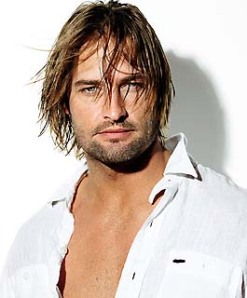 When the TV series Lost started, the setup was clear: clean-cut spinal surgeon Jack was the hero; scruffy, chain-smoking, high-school dropout Sawyer was the bad guy. Or was he? As the series has progressed, we’ve seen sides of both of these men that have turned these notions on their heads. Sawyer called people names, hoarded necessary supplies, stole all the weapons, squished a cute little tree frog with his bare hand, and advocated the philosophy “Every man for himself” on more than one occasion. But he also got shot trying to keep the Others from taking Walt off the raft. He tried to protect Kate when they were in captivity on Hydra Island. He’s stepped up on multiple occasions to protect the other survivors. And he worries about and protects Hurley. We learn that Sawyer, a.k.a. James Ford, witnessed his father shoot his mother and then commit suicide while eight-year-old Sawyer hid under the bed. From this event, Sawyer burned with the desire to kill the man who’d seduced his mother and swindled her out of their family’s life savings—leading to the murder/suicide. And then, in a cruel twist of irony, became the same kind of con man as the man he hunted. By the end of season five, Sawyer had long replaced Jack in the role of the leading man, the hero, on the show—at least in my opinion. Yet Sawyer’s still dark, brooding, and has his hangups when it comes to being the “good guy” all the time. While we’ve seen he has he ability to be good, we know that his bad-guy tendencies are there, just below the surface.
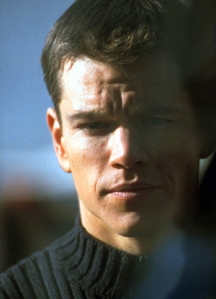 He was found floating in the ocean, shot in the back. When he regains consciousness, he has no idea who he is. But two things are sure: he knows how to kill and he knows how to survive. Thus is the beginning of the Jason Bourne trilogy (at least the movies, I’ve never read the books). Jason is a man without a past—and without a future if whoever’s hunting him has their way—but he uses the skills programmed into him to try to piece together the life that was stolen from him. Or was it? Was he forced into the life of an assassin or did he volunteer for this and take on the job of a Black Ops operative knowing full-well it would mean killing for a living? Before Jason figures out what Treadstone—the Black Ops group—is and what he’d done for them, we see his definite hero tendencies. That is, until he starts kicking some butt to try to get to the truth of who he is.
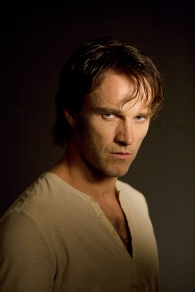 Bill Compton has returned to Bon Temps, Louisiana, to his family home. The home he lived in with his wife and children until 1865—when he was turned into a vampire on his way home from fighting in the Civil War. Now, it’s 2009 and vampires have been allowed to “come out” into society due to the invention of “Tru Blood,” a synthetic blood that gives them the same nutritional support as actual human blood (though apparently doesn’t taste good). Bill wants to rejoin mainstream life, to try to live on Tru Blood so he doesn’t have to kill anymore. He even falls in love (though I don’t understand why) with Sookie Stackhouse, a human waitress at the local bar/restaurant. But when Sookie’s life is threatened, that’s when we get to see that Bill is definitely a vampire through-and-through. There’s a sinister edge to his character—one that is somewhat unsettling. Because even though we know he’s trying to be a good guy, what he is, in his very core, is something dark and dangerous. (And I’ve only watched Season One, so no spoilers in the comments, please!)
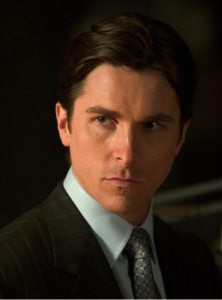 When he was a small child, Bruce Wayne’s parents were murdered before his very eyes. The weight of this trauma—the guilt it induces as well as the fact he never moves beyond the anger stage of grief—seethes and grows within Bruce’s psyche until one day, he puts on a bunch of black eye makeup, dons a suit of black body-armor, a cape, and a bat-ear-adorned helmet and turns his pain and psychological turmoil outward in the name of cleaning up the streets of Gotham. He is above, around, over, beside, and under the law, but rarely within it. He does what good, law-upholding Sgt./Lt./Commissioner Gordon cannot. “He’s the hero Gotham deserves, but not the one it needs right now. So we’ll hunt him because he can take it. Because he’s not our hero. He’s a silent guardian, a watchful protector. A dark knight.”
So what have we learned about dark heroes from these four examples?
- Alpha Male (or Female, if it’s a dark heroine)
- An Outsider/Outcast—someone who has either done something to get himself cast out of society or who has decided to cast off society
- Usually selfish/self-serving and a self-persevationist
- Angry, cynical, haughty
- Scarred by some trauma in his past
- Isn’t really as bad deep down as he tries to look on the outside
- Isn’t living up to his potential
- Broods, a lot (serious or pained expressions)
- Wears his inner turmoil on his sleeve
- Has a tendency to ignore the law/society’s rules whenever they constrain him
- Can’t help but be affected by the bad things he’s really fighting against
- Doesn’t see anything wrong with vigilantism
- Has an ambiguous code of morals/ethics
- Has lots of unresolved issues in his life
- Will never be completely redeemed/redeemable (unlike his close relation, the “bad boy”)
For Discussion
What can a Dark Hero (Heroine) add to a story that a traditional “white hat” hero can’t? If a dark hero can never be fully redeemed or isn’t fully redeemable, can his story ever be completely resolved? From this list and these examples, what are the distinctions you would draw between a rake/bad-boy character and a dark hero?
Bad Guys: What Is Evil?
 I would imagine that most people reading this blog would answer the titular question by saying that evil is anything that is in opposition to God. Evil=Satan. Right? That would be the religious definition of evil, yes, but we’re looking to go beyond the knee-jerk, Sunday school answers in today’s post, as well as looking at the question from other perspectives.
In many fantasy books/movies, the most evil characters, the worst villains, are usually a non-human entity at which we can take one look and know that they are evil. The Shadow in Inkheart. The Balrog and Sauron in The Lord of the Rings. In horror films, evil is usually pretty easy to distinguish as well. Jason. Michael Meyers. Jack Nicholson.
But what about in those stories in which the characterization is more subtle, in which the lines between good and evil aren’t so clearly drawn? How, then, do we figure out if a character is an antagonist, a bad guy, a villain, or truly evil?
Certain denominations/religions tell us that humans are inherently evil and that we must strive against our natural tendencies toward evil all of our lives. This, of course, goes back to the idea that “evil” is anything that is human and not divine. In this mindset, this means that most of what fills our lives is evil: television, movies, music, games, sports, gourmet food, making/saving money, dancing, dating, art, technology, and so on. An Amish person’s definition of what is evil is going to be different than what a lapsed Catholic would list. Someone who’s Jewish only by heritage and not by practice would define it much differently than an Orthodox Jew.
There is no hard-and-fast definition that every single person would agree to. I would venture a guess that the majority of humans would agree, though, to the statement that intentionally causing another living being pain or harm is evil. But even here, there are degrees upon which we will disagree as to what constitutes “harm.” Vegans and vegetarians would say that raising animals for food is evil because they’re being harmed when they’re slaughtered (to which this carnivore says, okay, but what about the plants you’re killing to eat?). Most of us would say that clubbing baby seals in the head is evil, but what about the natives who rely on them for food? There is a counter argument for almost anything we would put a label on. It’s evil to kill another person. Okay, what about the death penalty? (And no, that’s not an invitation to debate the death penalty.)
Even the types of characters that have always been seen as evil are changing. No longer are vampires always the embodiment of evil—in fact, they’ve quickly become the emblem of the disliked, much maligned segment of the population that has been misunderstood and persecuted (lots of allegorical connections in most of the stories about them—whether they’re being portrayed as addicts who’re trying to get clean or a certain segment of society who’ve only recently been recognized and started to be given rights). However, in the two shows I’ve watched that have vampires as main, “hero” characters (True Blood and Being Human), there are “good” vampires (our main characters who are trying to fit into mainstream life and no longer kill) and “bad” vampires (those who derive much pleasure from torturing and/or killing humans—and are possibly looking to take over the world). It’s one of the ways which the writers help to show us why our dark heroes are just that—heroes—by playing on that root definition of evil: the willful intention to cause harm to others.
In storytelling, the definition and depiction of evil depends greatly on the time and place and values of the characters. For example, between 1540 and 1700 in Spain, Jews were seen as the greatest evil and threat to the people of Spain, thus they were arrested and tortured and executed by the hundreds—even some who weren’t Jewish but who were suspected of being “secret” Jews (by refusing to eat pork, for example) were arrested and tortured until they confessed and converted or repented. The Spanish Inquisition went on for more than a century—and spread to Spain’s holdings in the New World, such as Peru and Columbia, as well. Other countries, including France and England, took Spain’s example and at least outlawed Judaism if not also devolving into arresting, torturing, and executing them. Two and a half centuries later, when another government decided that Jews were evil and posed a threat to society, it caused the largest-scale war we’ve seen to date. Why? Not because Jews changed who they are or what they stood for or believed, but because society’s understanding of the true nature of evil had changed. If asked who the most evil figure from history is, most people would say Hitler. But why not the leaders of the Spanish Inquisition as well? Hitler was motivated by racism and greed. The leaders of the Inquisition justified their actions in the name of Jesus Christ.
Looking back at these two time periods with the benefit of “enlightened” hindsight, we can see the evil intrinsic in each situation. However, for the people living through those time periods, the everyday Spaniards and Germans who didn’t have access to mass media to learn a different point of view, they had to rely on what their trusted leaders—whether political or religious—told them was right and wrong. And when those leaders used scare tactics, when those leaders played upon humans’ natural fear of the “other” or the unknown, those everyday Spaniards and Germans were willing to believe that what their leaders were doing was right, was for their own protection. Does that make them evil, too?
And lest we think we’re not susceptible to this kind of thing in our more enlightened age, just look at what’s going on in the U.S. right now. Leaders still know how to play upon and exacerbate people’s fears—of someone of another race or religion or of a change in how things have worked for sixty or seventy years—to create chaos and discord. But is the “other” evil? Is the change evil? Or is it the intent to sew discord that’s truly the evil behind it all?
At its very core, I think we can define evil as “the intent to do harm to another.” It is the job of fiction, of storytelling, to explore the nuances of that definition—whether it’s in a lighthearted manner, like with Dr. Evil in the Austin Powers series, or whether it’s an exploration of some of the most horrendous acts of evil throughout history—and continue the dialogue on what the true nature of evil really is.
For Discussion:
From a book, movie, or TV series, who is a character you think is the epitome of evil. How does that character define and exemplify evil in your opinion?
Fun Friday–What I Do to Relieve Stress
 I’ve never been one much for hand crafts—needlepoint, crochet, embroidery, etc. I was great at starting projects, but I would soon get bored with them. In college and throughout my twenties, I did take up sewing and made a lot of my own clothes—I even earned a little extra money after I moved to Nashville by doing alterations and seamstressing for people I worked with at the newspaper. But once I went back to college, even that went by the wayside. I occasionally pull out my sketchbook and draw, but don’t really find that relaxing.
Then, about two years ago, I copy edited a kids’ book on learning how to knit. As I read through it, I thought, I could do that. So I went to Michael’s and got a pair of (purple) knitting needles and the cheapest cotton yarn I could find (I can’t use acrylic—I have very sensitive skin, and it’s one of the textures I’m very sensitive to and makes me itch). I learned how to knit and purl. I learned how to cast on and bind off. I learned how to do a rib-stitch (alternating knit and purl stitches). I became the queen of lap blankets and scarves. For Christmas last year, my niece and nephews each received a hand-knitted scarf from their aunt (of course that would be after it snowed in Baton Rouge and they really could have used them).
Earlier this year, I pulled out all those “lap blankets” and a crochet hook and started crocheting all of them into one big blanket (which will never see the light of day, because of all the different patterns/colors of the yarn). But now that fall is almost upon us, I’ve been wanting to try my hand at crocheting for myself one of those cute, slouchy, beret-style knit caps I’ve seen around. They look something like this:

I looked through all of the pattern books at Michael’s this afternoon and couldn’t find anything that looked like that. So I figured I’d just go ahead and get the yarn and come home and find a pattern online. And then I found it . . . one of the skeins of yarn I picked up had a photo on the front of the kind of style I was looking for—and promised a pattern on the back!
Well, that yard is a rough, bulky yarn which, when I started to cast-on, I discovered was very hard to work with, especially after not having knitted for almost a year. So I pulled out the lighter-weight, smooth yarn and decided to give it a go with that first, as the pattern didn’t seem too complicated. I did have to stop to figure out how to inc 3 sts evenly across row (increase the number of stitches in the row by 3) and what M1 meant (make one, or add one additional stitch by picking up the yarn between the stitches on the row below), but all-in-all it was a relatively simple pattern. However, it would probably have given me a result closer to what I was looking for with the bulkier yarn, because this is how it ended up, following the directions exactly:

Not quite as “slouchy” as I’d hoped for. But now that I’ve practiced it (and it only took me a couple of hours to do), I think I’ll be able to do it with the knobbly, bulky yarn and get something more like what I wanted. (And I chose blue yarns because my overcoat is navy with a white and tan pattern on it.)
What do you do to relieve stress?
Bad Guys: Preview of Next Week’s Topics
 Time, cruel time has once again gotten the better of me today (time has truly been my antagonist this week!), and I want to make sure that the next few topics we delve into have the appropriate amount of time. I may not post every day next week, as I’ve got big plans for the Labor Day weekend, which includes my mom coming over from Arkansas and the mountains of eastern North Carolina and a dear cousin’s wedding. I’ll try to get Thursday’s and Friday’s posts written ahead of time, but if you don’t see anything new those days, that’s why! I’ll be taking my laptop with me, but wi-fi access there will be spotty at best.
Some of the topics we’ll be looking at in the discussion of Bad Guys next week are:
- What is Evil and what makes an Evil bad guy?
- Dark and Anti-Heroes
- Non-character antagonists (groups, entities, forces of nature, etc.)
- Superhuman/supernatural bad guys
But first, what are some questions that have been raised in your mind that we haven’t discussed yet? What areas of bad guys/villains are you most interested in learning about?
Bad Guys: Does a Villain Have to Be Evil?
And the winner of the drawing is . . . DEBORAH! She’ll be receiving a signed copy of Stand-In Groom.
~~~~~~~~~~~~~~~~~~~~~~~~~~
 Yesterday we determined that villains are always antagonists, but antagonists aren’t always villains; and the difference is motivation/intent. An antagonist can be in opposition to the hero without meaning to; the villain sets out to be in opposition to the hero. A villain willfully chooses to try to stop the protagonist from achieving his/her goals.
I gave these examples yesterday in the comments, but wanted to share them again, because I think they fully illustrate this concept without having to delve into the realm of murderers and chainsaw users just yet.
Let’s look at the movies The Wedding Planner and My Best Friend’s Wedding not from the point of view through which the movies are told, but through the point of view of the fiancées.
| The Wedding Planner | My Best Friend’s Wedding |
|---|---|
| Protagonist: Fran (Bridgette Wilson) | Protagonist: Kimberly (Cameron Diaz) |
| Fiancé: Steve (Matthew McConaughey) | Fiancé: Michael (Dermott Mulroney) |
| Antagonist: Mary (Jennifer Lopez) | Antagonist: Julianne (Julia Roberts) |
—
These two movies are set up to make the viewer believe that Fran and Kimberly are the antagonists, but that’s not actually true. Let’s look at these stories from Fran’s and Kimberly’s perspectives. Fran and Kimberly were going about their lives and fell in love: Fran with Steve, Kimberly with Michael. They get engaged. Fran decides to hire a wedding planner; Kimberly agrees to Michael’s request to have his best friend serve as his best man in their wedding. Enter the antagonists: Mary, the wedding planner, and Julianne, the “best friend.”
 Even with as much as I didn’t like the way The Wedding Planner ended (thus the whole reason for writing Stand-In Groom), I have to hand it to Mary . . . she did not become a villain in this story. Mary, our unsuspecting, unlucky-in-love wedding planner, is rescued by a handsome doctor who seems to her like he might be “the one.” Until she lands the biggest wedding contract of her career . . . and discovers he’s the groom. Even though she’s still attracted to him, she fights against it—she does not want to break up this engaged couple. Fran, who’s blissfully unaware that there’s anything going on between Steve and Mary, even asks Mary for advice on her wedding day, wanting reassurance that she’s not making a mistake. Our antagonist comforts Fran and paints a beautiful picture of what Fran and Steve’s life together will be like. Fran, then, gets to make the decision as to whether or not to marry Steve—without the antagonist having tried to influence her to make the decision to give Steve up. Mary, in this case, is an antagonist without being a villain, because it is not her intention to thwart our heroine (Fran) in her goal to marry Steve. Just the opposite, it is her intention to help Fran get what she wants. However, Mary is unwittingly the antagonist simply because it’s Steve’s falling in love with Mary (and she with him) that ends up thwarting Fran’s goal.
On the other hand, when Julianne gets a phone call from her best friend—the one with whom she has the “age guarantee” marriage plans (“If we’re both not married by X age, let’s tie the knot”)—and finds out he’s getting married, her first thought is that she has to go there . . . not to wish him well and privately mourn the loss of this guarantee and the necessary change in their relationship but to break up the engagement and get Michael for herself. And it’s not really because she’s in love with Michael.  It’s because she feels possessive and jealous—and rejected because he’s given his romantic affections to someone she feels isn’t worthy of him (without knowing Kimberly at all at this point). Once she arrives in Chicago, she does everything she can to make Michael draw negative comparisons about Kimberly against herself. She also tries to make Kimberly focus on all the negative things about Michael. Then she gets even more devious by trying to sabotage Michael’s job with Kimberly’s father. Kimberly welcomed Julianne into her home, treated her like family—maybe even better than family—and made an effort to try to get to know Julianne without any hangups of jealousy over Julianne’s longstanding relationship with Michael. And how does Julianne repay her? By embarrassing Kimberly at the karaoke bar. By trying to make Michael turn against her. By trying to ruin her feelings for Michael. Julianne is a villain in almost every sense of the word. Her actions are calculated and malicious—even though the movie portrays them in a humorous manner. She is motivated by jealousy and greed (she wants to possess Michael very much the same way Gollum wants to possess the One Ring). And she doesn’t repent of these actions until Michael discovers what she’s been up to and she is threatened with never having any kind of relationship with him ever again. Of course the betrayer is going to repent when she faces losing what it is she really wants, even if it means she has to retrench and settle for less than what she’d hoped for.
But is Julianne evil? While Kimberly might think so when she discovers what Julianne’s done, we, as more objective viewers, can see that while Julianne is misguided and driven by jealousy, she’s not truly an evil person. She’s driven more by fear than anything—fear of change, fear of loss. So while, yes, the dictionary definition of the word villain includes the terms cruel and evil, connotatively in fiction, a villain can be a villain without being an evil or cruel person. It all comes down to the choices they make, and in this case, a villain is a person who consciously chooses to work against the protagonist. It’s our job to determine what their motivation is to figure out if they’re truly evil or not.
For Discussion:
From how I’ve illustrated the differences between these two characters, can you think of some “villain” characters who aren’t necessarily “evil”?
Bad Guys: Antagonist or Villain?
 If a story has an antagonist, is the antagonist always a “bad guy” or villain?
Most of us like clearly defined roles for characters in movies or TV—or at least, I do. As I mentioned yesterday, there are shows I’ve stopped watching when the morality of the protagonists started “going gray” or becoming ambiguous and they started becoming anti-heroes. (I think it’s harder for me to stick with a character who’s shown that he has the capacity for doing good things, who knows he has that capacity and has been working for good for a while, who then willfully turns around and does very bad things than it is for me to stick with a character who starts off bad/dark who then comes around to at least a place of partial redemption—whether it’s giving up his treacherous ways or sacrificing himself to save the hero/heroine.)
Then there’s the role of the antagonist-who-isn’t-the-villain. As I’ve already discussed at length, an antagonist needs to be someone (or something) whose presence is necessary to try to thwart the protagonist from attaining his goal for the story.
So let’s look at the antagonist I’ve already subliminally gotten you thinking about: Commodore James Norrington from the Pirates of the Caribbean series. When the first film starts, Norrington is set up as the “bad guy”—as the character whose purpose and motivations are in direct conflict with our heroes’ goals.  He’s a Royal Navy officer who is tasked with hunting down all the pirates and removing their kind from the Caribbean. (Hmm . . . that sounds really familiar. Where else is there a story about a Royal Navy officer who’s been tasked with sailing to the Caribbean to hunt down pirates? 😉 )
But even though Norrington is set up in opposition to Captain Jack, Will, and Elizabeth, we can tell he’s not truly a “bad” person—he doesn’t have malevolent intentions toward them . . . well, once Jack steals his ship there may be a touch of malevolence in Norrington’s attitude. But we can tell that he’s a man whose heart is in his job—that he’s a man loyal to his king and to the Royal Navy and that he takes his sworn duties seriously. And we can actually start to like him for that. Especially once the real villains of the story are introduced and Norrington helps our heroes fight them.
It’s at the end of the first film, though, that we really get to see that Norrington is an antagonist and not a villain: when he decides to give Captain Jack a head start and lets Will and Elizabeth off the hook.
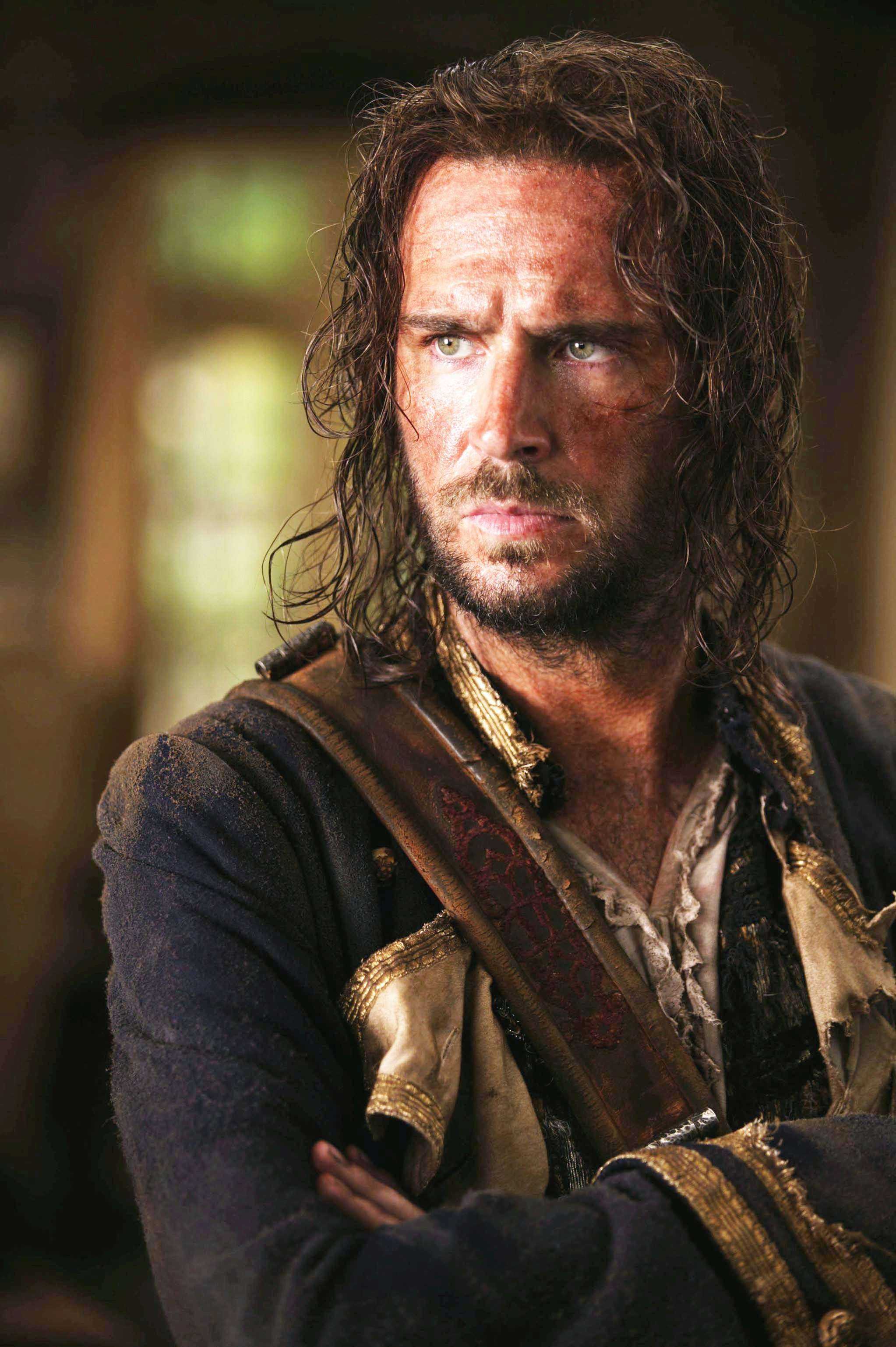 This would have been a great character arc for him had no other movies been made. But there were two more movies. And I must admit, Norrington became my favorite character in the series by the turns his character took in the second and third films. We get to see the consequences of his making this good-faith (good-guy) decision: he loses his command, his commission, basically everything he’d worked for in his life. He’s a man without a home, a sailor without a ship/port, (insert your metaphor here). His character’s journey becomes the most interesting in the film series because he is the one who has already lost everything, and we get to see just what effect that has on someone who’s already been in opposition to the main characters once. Though Norrington does try to act like a bad guy and tries to thwart Captain Jack/Will/Elizabeth to gain what he needs to secure his own future, the innate goodness in him ultimately leads him to do the quintessential good-guy thing: sacrifice himself to save the others. Yet even though he does make this ultimate sacrifice, we can still look at his overall character’s journey and label him as an antagonist—because at each step along the way, his goals and motivations were directly opposite of the goals and motivations of the protagonists.
According to Jessica Page Morrell in Bullies, Bastards & Bitches, the job of an antagonist is five-fold. A good antagonist should:
- make the reader/audience feel sympathy for the protagonist by thwarting the protagonist’s ability to reach his goals.
- help create the conflict that drives the plot of the story.
- reveal the protagonist’s ability to deal with conflict/adversity.
- push the protagonist out of his comfort zone into new and character-testing situations—whether physical, emotional, or spiritual.
- prove to be a threat to the protagonist, whether physically or emotionally. Possibly a threat of physical or emotional pain, or a threat to his/her freedom or relationships or job, etc.
The antagonist’s main job is to raise the question in the reader’s/viewer’s mind of whether or not the protagonist is going to be able to do what he’s set out to do—whether it’s save the world or win the girl.
In Stand-In Groom, the antagonist is Cliff Ballantine—even though he’s not physically present for the majority of the book, it’s Anne’s past relationship with him (i.e., the memory of him) that acts as the antagonist for her relationship with George (that, and the little fact that she believes she’s planning George’s wedding). In Menu for Romance, there are two main antagonists: Ward Breaux and Beverly O’Hara. Though in and of themselves, they’re good people, they both stand in the way of Meredith and Major’s relationship. In Ransome’s Honor, however, we’re going more into the territory of villains—because of the motivation behind the actions taken against Julia.
Morrell gives a list of different types of antagonists in fiction—those who aren’t villains but who stand a chance of thwarting the protagonists. These types include:
- Adulterer
- Bad Boss
- Betrayer
- Bully
- Cad/Femme Fatale
- Control Freak
- Mommy/Daddy Dearest
- Gossip/Liar
- Love Interest
- Mentally Ill
- Narcissist
- Power Hungry
- Frenemy (i.e., the Pseudo-Friend)
- Snoop
- User
- Weakling
For Discussion
Reviewing this list of antagonist types, see how many you can come up with examples of from your own writing or from books/movies/TV. Some may be obvious, some may be a little more obscure. And just because I feel like giving away a book today, I’ll draw a name at random from today’s comments (every comment on today’s post counts!!!—but every comment should add to the discussion.) to receive a signed copy of Stand-In Groom, Menu for Romance, or Ransome’s Honor OR be put at the top of the list to receive a signed copy of A Case for Love when it comes out next February. I’ll draw the name at noon (Central) tomorrow!


