Bad Guys: The Allure of the Dark Side
 Imagine you’re sitting in a well-lit room. Sunlight is streaming in through the many, large windows on three sides, as well as the skylights overhead. There are so many lights—from the can lights overhead to the sparkling crystal chandelier, to the lamps on every table—there is nary a shadow to be found. A man you don’t know walks in, carrying a flashlight, and tells you not to fear, he’s here to lead you out of this terrible situation. What is your reaction? Skepticism? Laughter?
Now imagine you’re in a different room. This one has no windows. You do not know if it is day or night outside. If there are any windows or doors, they are sealed so tightly that not an iota of light penetrates the room. You have been locked in this darkness long enough that you’ve lost track of time, lost your sense of direction, lost your sense of self as a corporeal being. Suddenly you hear a noise, a flashlight comes on. A soothing, deep voice tells you not to fear, he is here to lead you out of this terrible situation. You are drawn to the warm comfort of the flashlight, to the humanity represented by the silhouette beyond the flashlight’s beam, to the sense that the reappearance of light means you will be able to return to a state of normalcy—of time, of direction, of self.
This is the allure of the dark side.
“Good is a point of view, Anakin. The Sith and the Jedi are similar in almost every way, including their quest for greater power. . . . The Dark Side of the Force is a pathway to many abilities some consider to be unnatural.”
~Supreme Chancellor Palpatine (Star Wars: Revenge of the Sith)
“Your father was seduced by the Dark Side of the Force.”
~Obi-Wan Kenobi (Star Wars: A New Hope)
Sound familiar? What is it about the “dark side” that can be so alluring? Actually, what is it about human nature that makes the dark side so alluring?
“Bad”/dark characters are alluring because they give us a glimpse into the taboo or the forbidden. I’ve already illustrated this with my explanation for why Sir Drake (Ransome’s Honor) has been my favorite character to write so far in my career: because I could do pretty much anything I wanted to with his character. He could gamble, smoke, get drunk, carry on an affair with a married woman, bribe public officials, and scheme against Julia, all without having to feel guilt over any of it.
 We all get annoyed when rush-hour traffic slows to a crawl because everyone has to try to get a glimpse at the carnage at the accident that happened. Tabloids and celebrity “news” magazines make millions upon billions of dollars every year by pasting all the sordid rumors and details of divorces, breakups, affairs, and other nefarious activities by public figures on their pages. Even though it may disgust us (remember the media spectacle surrounding the death of Princess Diana—or Michael Jackson or Prince?), we’re secretly drawn to it. We all have our vices, whether it’s celebrity gossip, true crime novels/shows, “reality” shows like the “Real Housewives” series on Bravo, soap operas, shows featuring vampires and werewolves and ghosts, etc. Whether it’s something you’d consider “bad” or just entertaining, analyze it next time you watch one of those shows or read an article about the latest Hollywood It-Couple’s divorce. What’s the draw? What is it about that story that is alluring to you? Then channel that into a way to seduce your character away from his or her goal.
 There is a difference between “bad” and “evil,” and that difference is motivation. For a character to be a “bad guy,” he simply needs to stand in opposition to the achievement of the hero’s goal. This kind of a bad-guy character can actually be acting out of good intentions (in his own mind/worldview). These can be two people on opposite sides of a social or political issue; each is acting on his deeply held beliefs, each believes the other is wrong, therefore “bad.” Yet in their own ways, both are “good”/right. But it’s when motivations and intentions change—for example, when the person on one side of an issue starts to kill those who don’t agree with his belief—that evil enters the picture.
As an author, it’s my job to present my main character’s worldview in such a way to make you determine he is the good guy and the other one is the bad guy. This is how authors/screenwriters can get away with creating dark heroes/heroines: They get us so wrapped up in the character’s viewpoint, in what drives the character to make the decisions he makes, that we willingly go along for the ride and rubberneck and gawk at the “accidents” that happen along the way. Not everyone enjoys these types of stories—me, for one. When the show 24 first premiered, I was an avid watcher every week. So I was excited when the second season started. But then in one of the first episodes, Jack Bauer killed a confidential informant in an interrogation room to take his head to the “bigger fish” they were trying to catch. While the show tried to explain that this was for the “greater good,” I stopped watching. I don’t want my protagonists to be morally ambiguous, especially someone who is in a position in which he has sworn to uphold a certain set of moral and ethical codes (like the LAW). This happened to me with Heroes as well when, in the third season, all of the heroic characters I’d come to love started doing really stupid/bad things that were genuinely out of character with how they’d been developed so far on the show.
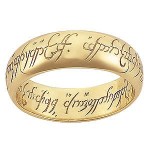 But there is definitely something to be learned/taught by showing the allure the darker side of life can have on people—in that it makes characters much more realistic. In the behind-the-scenes commentary/interviews with Peter Jackson and Phillipa Boyens, they explained that the reason they vastly diverged from the books with Faramir’s character in the movie—that he was tempted by the ring—is that for the viewers to (a) believe that the ring was as powerful as it was supposed to be and (b) believe in Faramir as a character, he had to be tempted by its supernatural allure.
There’s a reason why so many bad-guy characters in movies are portrayed by good-looking actors and actresses—because it’s a physical representation of the allure of the dark side. Even Satan is described as being one of the most beautiful creatures.
For Discussion:
Give an example of a story or character which shows the allure of the dark side—from your own writing or a book you’ve read or movie/TV show you’ve seen.
Fun Friday–Playlist First-Lines Poem

 Rules: Using your iPod, your MP3 player, your iTunes, your Windows Media Player, (set on Shuffle/Random) or Pandora.com or AccuRadio.com, create a “free-form poem” by writing down the first line of a song, then skipping to the next song. Try at least 20 and see what you come up with.
—————————————————-
I feel the sudden urge to sing:
More than the greatest love the world has known.
If you’re ever in a jam, here I am—
I can’t give you anything but love, baby.
It’s the wrong time, and the wrong place—
In the still of the night, as I gaze from my window—
Dance, ballerina, dance . . .
I’d cry like a baby if you told me good-bye.
You’re the fly in my ointment.
I walk along the street of sorrow;
Every time we say good-bye, I die a little.
Life’s great, life’s grand.
I know that someday, you’ll want me to want you—
Saturday night is the loneliest night of the week.
I’m back in the saddle again . . .
Cuddle up a little closer, oh, lovey mine.
Watch the sunrise on a tropic isle;
The moon belongs to everyone.
It looks like love; it feels like love—
The evening breeze caressed the trees tenderly.
Do you recall that night in June when first we met?
I was just another who laughed at romance.
Where stately oaks and broad magnolias shade inspiring halls,
Just in time, I found you just in time.
Heart and soul, I fell in love with you
Way down upon the Swanee River
In Napoli beside the sea, it happened on a night like this.
Return to me.
—————————————————-
Now it’s your turn. Share your poem here or post it to your blog and come back to post the link. Your comment today will count toward the drawing for the Sheaf House books gift pack!
Bad Guys: Everything I Need to Know about Bad Guys, I Learned in Childhood
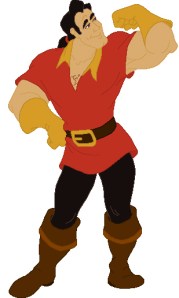
“It’s a fiction writer’s job to remember childhood’s hard lessons about vulnerability and dangers, and then to rouse those memories and fears in readers.”
~Jessica Page Morrell, Bullies, Bastards & Bitches
Think back to when you were a small child—as early as you can go back. Which of the following held more fear for you:
- A parent’s warning, “Don’t take candy from strangers.”
- A parent’s warning, “Don’t run with scissors.”
- Monsters in the closet/under the bed.
- The strange house on the corner (the “witch’s” house—or the house where the mean old lady/man lived).
- Scary movies/cartoons or characters therein.
- Bad dreams.
- Ghost stories.
For many, many years (up into elementary school) I had to sleep with the bedroom door open and the hall light on—and the closet doors completely closed. I don’t really remember any specificity of being afraid of the dark or of “monsters” in the closet, but that’s the way it was. (As a matter of fact, I still have to make sure that the closet door in my bedroom is closed—completely latched—before I’ll go to bed. But that may be more OCD than anything else—all of the dresser drawers have to be completely closed, too.)
Fear is a natural and, usually, a healthy emotion. Fear keeps (most of) us from doing stupid things that will result in hurting ourselves. Fear is the emotion that taps into what modern psychologists like to call the “lizard” part of our brain—or the deepest, most primal place within us where we’re all reaction and no reason. Fear is a part of our natural defense system. When we are afraid, there are certain physical reactions in our bodies—a higher flow of adrenaline that seems to heighten our senses and make us more keenly aware of what’s around us. Most of our deepest fears can be linked to experiences we’ve had or circumstances we’ve been conditioned to react to: a child bitten by a dog may be afraid of dogs; a woman who survived a plane crash as a child might be phobic of flying. Sometimes fears are part of our cultural upbringing (going back to Tuesday’s post about what “bad” is). As children, we’re told stories of evil stepmothers (so we naturally see a stepmother as someone who might be an adversary later in life); stories of old crones who want to eat children (so we’re afraid of old people); a song about a bridge falling down (so we develop a fear of driving across bridges). In every culture in the world, there is some kind of storytelling tradition that is built on playing upon people’s fears, whether it’s to teach a lesson or to just full-out scare people just for the sake of scaring them.
When we create bad guys, we want to play upon our readers’ fears—we want to tap into that primeval part of the brain and make our readers squirm, make them connect with the characters emotionally because they’re actually experiencing some of the same feelings/sensations the character should be feeling. In fiction, we can introduce the reader to characters they’d never meet in real life—to characters they would never want to meet in real life—by drawing upon the “bad guys” we’ve experienced in our real lives:
- The school bully
- The mean cousin or relative
- The abusive adult
- The teacher who hated you
- The boy- /girlfriend or spouse who cheated on you
- The boss who made your life miserable
- The people in the clique/club you wanted to be in but wouldn’t let you in
- The kids who were always made team captain in P.E. and always left you ’til you were the last person standing and they had to take you
- The P.E. teacher
- The sadistic personal trainer at the gym
I think you get my drift. When we’re creating antagonists for our heroes/heroines to come up against, we usually don’t have to look further than our own past experiences. And the further back you can go, the better.
For Discussion:
1. What are some of the fears you remember from childhood that you can draw on to add suspense/tension/conflict that could be used to add conflict/tension/suspense to a story?
2. Who are some people (no names need be mentioned) in your past who could serve as templates to start building an antagonist character?
Bad Guys: Breaking (Down) Bad
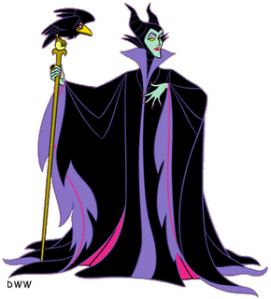 In the lists we came up with yesterday of some of our favorite villainous/antagonistic character, we definitely had two different types of characters going: the sympathetic bad guy and the out-and-out, no-redeeming-qualities villain. And we’re definitely going to take a close look at both in the course of this series.
But first, let’s define what “bad” means when it comes to characters who are labeled as the bad guy/villain/antagonist in a story.
We must first start off with defining what the protagonist/main characters believe is bad—bad behavior, bad beliefs, bad ethics, bad spirituality, bad culture, bad politics, etc. Through this process, we can start to see that a “bad guy” in a story might not necessarily be “bad” (or evil) in and of himself. It may be the hero’s perception of the antagonist’s behaviors or beliefs or actions that make him the “bad guy” in the story. This is the kind of antagonist character we see more often in stories that are lighter-hearted, such as romance or women’s fiction or general fiction. These are going to be people who, while going about their daily lives, create conflict for our hero or heroine because the antagonist’s lifestyle or behavior or beliefs or work ethic is different than the main character’s. In A Case for Love, the antagonists are Forbes’s parents—because he finds himself coming to a point where he believes their company is doing something wrong. Does that make his parents “bad” people? No. But it makes their company’s actions bad in Forbes’s eyes, thus putting them in the antagonist role in the story.
The more specifically and strongly bad is defined and shown contrasted to good by the heroes and the villains, the more potential there is for conflict and drama. But be cautious with this. Unless you’re writing a children’s story (for children under the age of about seven), you can’t paint good and bad in shades of black-and-white. Some of the greatest stories out there are those that make the reader/viewer—even just for the briefest moment—wonder if we’ve got it all wrong and maybe the bad guy isn’t so bad after all (before either proving he is worse than we imagined or showing that it really is all about perception).
This black-and-white concept of good vs. evil is known as duality, and we must determine if our protagonist believes in duality: good vs. evil, light vs. dark. Even though we authors don’t want to make the conflict in our stories that black-and-white (again, unless we’re writing for children), it’s okay if our characters have a black-and-white, good-vs.-evil view of the world. The more your character has this kind of worldview, the more they may be willing to sacrifice, even to the point of martyrdom, because for them, the ends justify the means—if through their own personal sacrifice, good/light prevails (no matter the cost to them), their sacrifice is justified and the reader/viewer will be satisfied. We see examples of characters in which the duality worldview leads to the main character being willing to make the ultimate personal sacrifice in Braveheart, the Harry Potter series, and in the Lord of the Rings. (And yes, there are biblical parallels in this story structure.)
In addition to figuring out what the protagonist thinks is bad and what the protagonist’s worldview of Bad is, we must also determine what Bad wants. There are many roles Bad plays in stories throughout the ages, sometimes more than one. But here are some of the things that Bad (the antagonist, the bad guy, the evil force, the inanimate object that takes the place of the bad guy) can do within a story:
- Bad wants to teach the hero a lesson—e.g., what goes around comes around (the concept of Karma); or it can be a concept the hero must learn, such as forgiveness or tolerance or humility. This is the most common use of Bad in a story.
- Bad wants to teach the reader/viewer a lesson—whether or not the character learns the lesson Bad wants to teach, the reader/viewer can learn the lesson, either by seeing how the hero’s life is changed for the better or, more potently, by witnessing the character’s tragic downfall, e.g., King Lear, Romeo & Juliet, Oedipus, most of the Greek and Roman myths, Wall Street.
- Bad is a side-effect of a wager between supernatural forces—in this case, though the story is focused on the human pawn, Bad is in the hands of two supernatural forces that are entertaining themselves—or waging a passive-aggressive war against each other—who are wielding it in such a way that the hero character has no chance of overcoming Bad on his own, without allying himself to one or the other of the supernatural forces. The prime example of this kind of Bad is in the story of Job.
- Bad actually used to be Good, but has gone awry, been taken to an extreme, or has rebelled. E.g., the Cylons in Battlestar Galactica, the cybernetic creatures in the Terminator movies, HAL in 2001, or something as simple as a healthy fear allowed to become a phobia (think about Monk).
- Bad was always Bad but should have been something the character grew/learned from; instead, he’s become bitter, jaded, cynical, etc. Therefore, Bad now actually lives inside the character and feeds off the character’s reaction to his previous encounter with Bad. (Can someone think of an example of this? I’m not coming up with one immediately.)
- Bad needs to be redeemed—whether it wants it or not. This is Darth Vader in the original Star Wars trilogy.
- Bad wants something it shouldn’t have, lest it become Worse—money, power, social status, media attention. Think Gordon Gecko in Wall Street, whose most famous line was, “Greed is good.” This is also the nature of Bad as seen in the characters of Sir Drake, Lady Pembroke, and Lady MacDougall in Ransome’s Honor.
- Bad just wants something to break/destroy—break up a relationship, annihilate a different ethnic group, stop someone else from rightfully getting what he/she deserves, destroy the planet, etc. We see this kind of Bad in a wide range of stories, such as Schindler’s List, My Best Friend’s Wedding, Independence Day and Signs, the Bond films, and horror films.
- Most of all, Bad wants whatever is going to stop the hero from attaining his goal. No matter what it takes. So, technically, the author is the ultimate Bad Guy of the story.
For Discussion
Think back to some of those favorite villainous characters you mentioned yesterday. What kind of Bad are they? Are they bad because they are at odds with the hero and may believe or do something the hero doesn’t like? Do they fall on the evil/dark side of the hero’s belief in duality? And what’s the purpose they serve in the story?
Bad Guys: The Villains and Antagonists We Love to Hate
 It’s about time for a new series, yes? One of the series I’ve been wanting to do since running across a certain couple of books online earlier this year is: Bad Guys: The Villains and Antagonists We Love to Hate. With help from the two new books I picked up—The Power of the Dark Side (Pamela Jaye Smith) and Bullies, Bastards & Bitches (Jessica Page Morrell)—we’ll start to analyze the bad-guy characters in our writing and reading. And for those of you who aren’t writers, we’ll be looking at the antagonists in books and movies for examples, and I’ll be wanting your feedback as non-writers so we can learn from what readers take away from these kinds of characters!
As I’ve stated innumerable times over the years, the heart of telling a good story is conflict. And while that conflict doesn’t have to come from an antagonistic character (a bad guy/girl, villain, whatever you want to call it), some of the most iconic characters across storytelling venues have been bad guys: Darth Vader, Professor Moriarty, Voldemort, Sauron & Saruman, the Wicked Witch of the West, Nurse Ratched, all of the evil queens and stepmothers from fairytales, Captain Bligh, and so on.
Sometimes the story will give us a black-and-white picture of which characters are heroes and which characters are villains. These are usually stories which have a plot that hinges on some kind of “good will ultimately triumph over evil” idea (like Harry Potter or the Lord of the Rings). Sometimes, the stories are more complex, and we are made to feel something for the antagonistic character—even though we know we shouldn’t. Sometimes the badness is in shades of gray; and sometimes, as with Heath Ledger’s immortal portrayal of The Joker in The Dark Knight, the character is as bad as bad can get—and we never really find out why.
I’ve been asked in a lot of interviews recently which one of my many characters I’ve had the most fun writing (which is quite different from tagging the one who’s my “favorite”). The answer is easy: Sir Drake Pembroke from Ransome’s Honor. Actors many times will say that it’s a lot more fun and interesting to play a bad guy than a hero—and that’s because the bad guy can get away with a lot more. I found the same to be true when writing Sir Drake. I could get away with just about anything with that character—so long as he could justify it to himself. Which we’ll get into at length in this series.
I’ll be posting an updated Favorite Bad Guys list on Friday, but I wanted to start the series out by finding out who some of your favorite bad guys are. From movies, TV, or books, who are some of those bad guys you love to hate?
Another Fun Friday—Like Mother, Like Daughter
I posted this on Facebook, but not everyone gets to see my stuff there (mostly just family and close friends/colleagues).
Last night, after my post-exercise shower, when I was drying my hair, it struck me that I currently have almost the same hairstyle my mom had when she was my age:
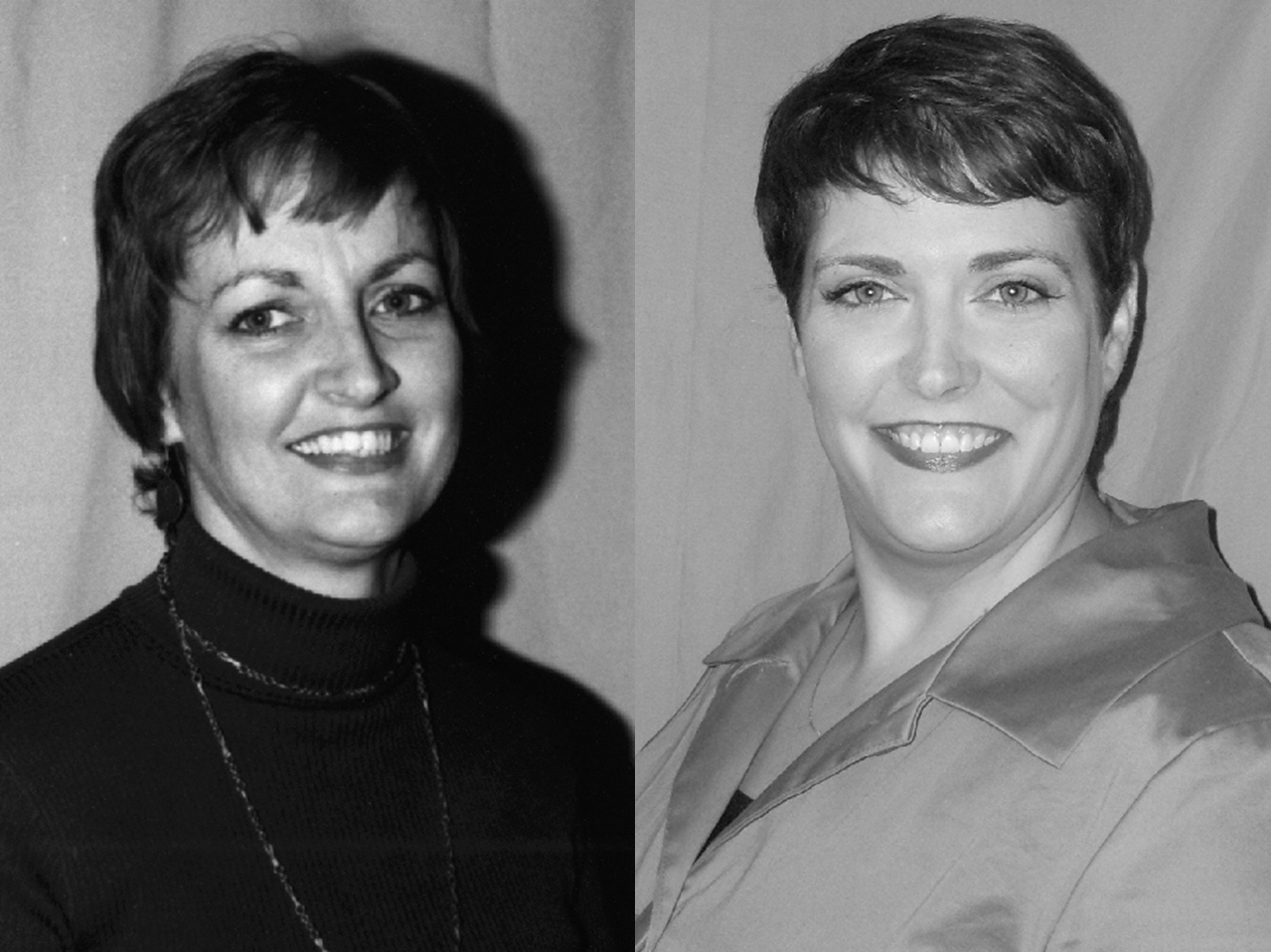
I guess it’s true what “they” say about how we become just like our parents as we get older!
Fun Friday–Make Your Own Luck? A Lesson from Ma Ingalls
This is a slightly different Fun Friday topic, but it’s what’s on my mind, so it’s what you’re getting!
For those of you who kept up with the comments on Tuesday’s post, you know that a heated discussion about whether or not my claim to never have been asked out was a cop-out for why I’ve never dated/never been kissed, and my response detailing all the ways in which I have tried to make sure I was giving men every opportunity for it to happen. (But until I learn to use the telepathy portion of my brain to implant thoughts into a man’s mind, I can’t make a man ask me out, no matter how many I know nor how much time I spend with them—just like I couldn’t make them say yes back in my teens and twenties when I tried to be the initiator.)
But it got me thinking about how there are times when things do come our way in unexpected ways, at unexpected times.
Wednesday, I received an e-mail from someone who’s going to be in Nashville at the end of the month and wanted recommendations for restaurants in downtown. I sent her a list, and told her that if she wanted company, I’d be happy to meet her for lunch one day while she’s here. So even though I wasn’t “out there” specifically looking for someone to have lunch with that weekend, I now have plans to get together with someone and make a new connection.
Then yesterday afternoon, the phone rang—which is a highly unusual occurrence in my house—with a number I didn’t recognize. Well, it was the manager of the C.J. Banks clothing store down at the Cool Springs Mall—the store where I did my first book signing back in March, the store where I drop in occasionally just to keep the contact going—including going by twice to take in a copy of Menu when those came and a copy of RH a couple of weeks later. Well, they’re having a big sale Wednesday (I assume it’s a back-to-school thing) and want me to come in and do a book signing. I thought I had something going on that evening, so I told her I’d have to check (yet once again, the reason why I need to get back to keeping to-do lists!). But I discovered that whatever I thought I had going was just a figment of my imagination. So I’ve already e-mailed my publishers to see if they can get some promo materials sent out to the store by Wednesday, and I’m going to try to go by the store tomorrow to confirm, in person, that I will do the book signing.
I am a firm believer in going after what I want—as long as I’m confident that’s the direction God is pointing me (because I know only too well the consequences of going after something that isn’t what He’d planned for me). My motto is that good things come to those who wait, but those who are willing to work for it receive the best things.
In These Happy Golden Years, Laura Ingalls Wilder relates how, when a new girl (Florence) came to school, she invited her to sit with her and they became friends. Later, after Laura had already taught a couple of terms (six- to eight-week terms) of school, she once again takes the annual teacher’s examination. When Laura receives her new teacher’s certificate, she says, “Now if I can only have the good luck to get the right school.”
Caroline and Charles Ingalls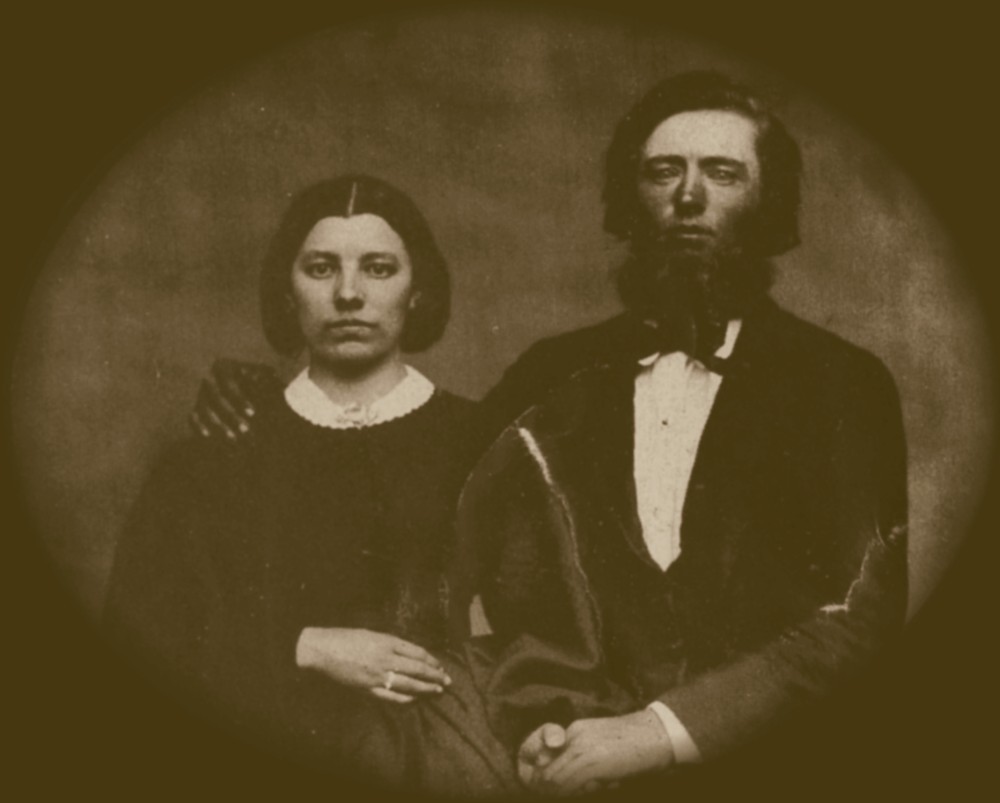
Laura wracks her brain to try to figure out how to make good luck for herself so she can get a good-paying school. When she goes to school the next day—she, herself, is still a student at this time—Florence comes to her and asks her if she received her certificate. Laura says she did.
“I didn’t get any, so I can’t teach our school,” Florence said soberly, “but this is what I want to tell you: You tried to help me, and I would rather you taught our [small, country] school than anyone else. If you want it, my father says you may have it. It is a three months’ school, beginning the first of April…”
Laura could hardly get the breath to answer, “Oh, yes! I do want it. . . . Thank you, Florence, so much.”
“Well, you have always been so nice to me, I am glad of a chance to pay some of it back,” Florence told her.
Laura remembered what Ma had said about luck, and she thought to herself: “I believe we make most of our luck without intending to.”
If you’ve been around the blog awhile, you know that I harp on about networking quite a lot (if you’ve never read through them, read the two series I did on networking). Networking boils down to us making our own luck. Even the most innocent of contacts with someone can create opportunities we never even dreamed of. I never knew Chip MacGregor would be my agent when I first started getting to know him three years before I ever submitted anything to him. I didn’t know Rebecca Germany would give me my first book contract when I started getting to know her six years before then.
While the “putting myself out there” didn’t work with dating/relationships, it has definitely produced quite a bit of fruit for me on the professional level. I put myself out there and went back to school (after dropping out at age 21) to do what I could to chase my dream of working in the publishing industry—and not only did I get a full-time job as an editor at a publishing house, I got published. But that job and those book contracts weren’t just going to fall into my lap. As I’ve already mentioned, without even knowing how they’d become “lucky” for me, I’d already started developing relationships with the people who’d make my publishing dream happen. (The job I got because I applied for it and went through a rigorous interview process that took almost two months.)
I have the kind of mind that allows me to look back over things that have happened to me in the past and make connections and see how things happened and ended up working to bring about some blessing—anticipated and hoped-for or totally unexpected—whether it was preparing me for a certain job (or a certain lack of a certain job) or preparing me to become a published author. And while there are definitely times when unexpected blessings came my way, which I can only attribute to the grace of God, most of the time, it’s because I was working, I was following the path that God was putting before me—a lot of times, it was a lot like driving on a winding road through a forest at night with only one headlight working. But in the morning, when I look back at it from the mountain top, I can see the entire road clearly—with all of its hairpin turns and twists and potholes and sheer dropoffs. And yes, even though there were times that got rough or times when I didn’t want to go on—or even wanted to turn around and go back—I stuck with it. And the blessing at the end of the journey—or the “luck” that I made—makes me that much more willing to do it the next time.
What about you? Do you have any experiences with what Ma Ingalls called making your own luck?
What’s the Worst Hairstyle You’ve Ever Had?
I ran across this article in the New York Times this morning, about the trend in young men’s hair:
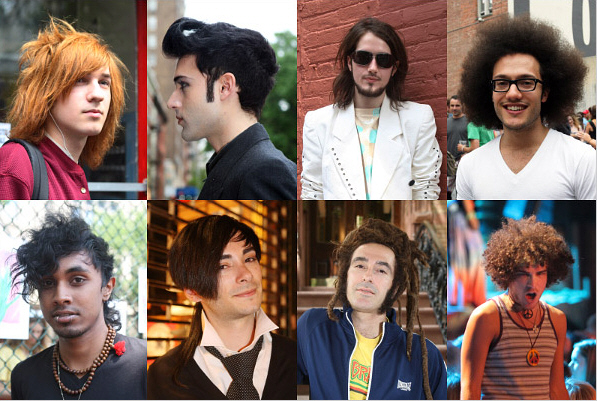
It got me started thinking about all the hairstyles I’ve had over the years. Seeing as how I never truly gave in to fashion and went totally punk or totally “fanged” (you know, big hair, even bigger bangs of the late 1980s/early 1990s), I’d have to say that my worst hairstyle choice ever was when I was in ninth grade and sported a style that today would be called a mullet:

So what’s the worst hairstyle fad you’ve ever given into?
May I Ask You a Question (or Several)?
 Well, I tried posting this before I left to go meet with Joan Shoup, publisher at Sheaf House, to discuss freelance work, but WordPress froze up on me. So let’s try this again.
I finally got my group discussion questions for Ransome’s Honor and A Case for Love written last night and sent off to my editors this morning. I figured it would probably be a good idea to go ahead and upload them to the series pages, but wanted to link to them here as well (at least the three that are currently out).
Be warned: if you haven’t read the books, the discussion questions contain spoilers. (But continue reading, because I’ve posted some discussion questions I’d like y’all to think about and possibly comment on today.)
For Discussion (answer one or all):
- Much of the feedback that publishers are getting right now is that with the economy, job market, and heated political environment we’re experiencing right now, readers are looking for escapist fiction—something to sweep them away from the realities of life and into something more “shallow,” more entertaining than thought provoking. Would you agree with this? What kind of book do you want to read when life has you totally stressed out?
- In the romance genre, it seems like there are lots of books on either end of the “extremes” spectrum—either they’re very evangelical/hit-you-in-the-face-with-a-Bible “Christian” romance or they’re totally on the other side with explicit s*xual content. Is there a need for something closer to the middle—“sweet” romance that doesn’t necessarily have a spiritual content (or maybe the characters are Christians but there’s no real “spiritual message” in the story) but is also clean, with the couples waiting to consummate until marriage, and then not on the page? Have you found any authors who are writing these kinds of stories?
- There are some historical eras that seem to be written about all the time, while others never get any coverage. If you’re a lover of historical fiction/romance, what time periods/locations would you like to see more books set in?
- What’s your favorite new book you’ve read this year (i.e., one you’d never read before—it didn’t have to be published this year)?
Thirtysomething and Never Been Kissed? Getouttahere!
A writing acquaintance of mine posted the following in her (very lovely) review of Menu for Romance:
The only part that didn’t quite ring true to me is that Meredith could have gone 34 years without one date, let alone a kiss.
I couldn’t let that go without commenting upon it, so I posted the following response:
Well, the author has gone thirty-eight years without one date, let alone a kiss, so it does happen in real life—and more often than most people realize.
And I’m not talking about those who are involved in the “Virgin Lips” or “Purity” movements. I’m talking about normal, everyday women, Christian or not, who’ve never been asked out on a date (though we’d really like to be) and who’ve never been kissed (though we’d really like to be).
A couple of weeks ago, I posted a diatribe on the new Fox “reality” show More to Love in which I mentioned hearing many of those women, in their twenties and thirties, remark that they’ve never dated and that some have never been kissed. But surely, most viewers must be thinking, the producers had to search high and low for these women. Either that or they’re lying about it. Because as everyone knows, every woman in this country has not only dated but has surely been kissed before she’s—what? twenty? eighteen? sixteen?
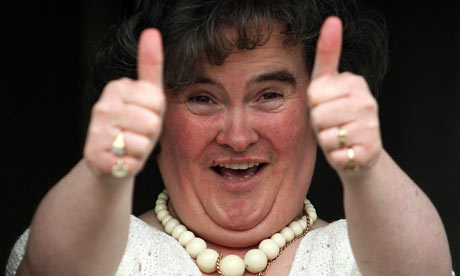 When Susan Boyle came to prominence on Britain’s Got Talent earlier this year, all one had to do was look at her to understand why she’d never dated, never been kissed, right? I mean, that’s what everyone was saying on the blogs and in the in the tabloids. With someone who isn’t the western world’s idea of attractive/beautiful, it’s easy to categorize them and shove them off to the side and believe they’d never “get” someone simply because they’re not good looking enough. In this blogger’s post, the information that Susan Boyle admitted to—being single, living alone (with a cat), and never having been kissed—is classified as “self-deprecating facts.” Since when did being single, supporting one’s self to the point of being able to live alone, and never having gone through a horrible experience with a bad relationship just to mark “first kiss” and “have a boyfriend” off our life’s to-do list become “self-deprecating”?
I know there are people who will look at pictures of me—having been a size 16 when I graduated from high school (at 5’9″) and now at a size 22/24 (though two years ago barely fit into a size 28)—and put me in the same category with the Susan Boyles of the world. But I’m proud of the fact that I’ve never dated. I’m proud of the fact I’ve never been kissed. I’m proud of the fact that I don’t have the baggage of past relationships to drag around with me, to damage my view of what falling in love is all about. Because I wouldn’t be able to write the books I write if I had to lug all that garbage around with me.
But heaven forbid a woman of average height who fits into a size 10 pants with strawberry blonde hair, nutmeg-brown eyes, a pretty face, and a six-figure income should have gotten to the grand old age of thirty-four without ever having been asked out on a date or been kissed. It’s unthinkable! Especially in the modern culture of American Christianity, where everyone knows that it’s a young woman’s job to date as much as possible so she can find her husband as young as possible so she can start popping out as many babies as possible, right? I mean, come on now, right? That’s why most Christians who are over the age of about thirty-five who aren’t married are no longer attending church regularly. If every unmarried Christian over the age of thirty-five were to go to the church in his or her community on the same Sunday, all the married people/families wouldn’t have room. But because we’ve been marginalized and pushed to the side for years and years—mostly viewed as abnormalities, as people who obviously aren’t living good Christian lives, because otherwise God would have blessed us with marriage and children by now—most of Christian society has forgotten that we exist.
But it may not just be in the churches where we’ve ceased to exist. In this blog post, the blogger brings up the idea that in the past, on TV shows or in movies, there was always the character of the “maiden aunt” or “bachelor uncle.” Usually as a comic relief, or sometimes as a parental substitute in stories in which the children had bad relationships with their parents. But in the last twenty or thirty years, the fact that someone could have survived into adulthood without having been in a romantic (and/or sexual) relationship with someone AND who isn’t lesbian/gay has pretty much been wiped out of all media—whether TV, movies, or books. One might argue that the chick-lit genre celebrates the single woman. Sort of. But how many of those characters (a) have never dated/been kissed or (b) aren’t actively dating/looking for someone to date/falling in love?
Since being published, the question as to why I write romance novels invariably comes up in interviews. Here’s my standard answer:
My heart is, as it has been for more than twenty years, focused on writing light-hearted romances. But not just any romances. I like writing characters who represent a growing segment of the population that seems to be increasingly left out in Christian circles: women in their late-twenties, thirties, and early-forties (and even older) who have never been married and who want to be loved and accepted for who they are, not pigeon-holed into a category, labeled, or, as happens most often, shoved to the side and ignored/forgotten about by their churches, coworkers, or even friends and family. I’m writing to the women who, like me, expected to be married before they turned twenty-five (-six, -seven, -eight . . .), but who may find themselves now in their mid- to late-thirties or forties and have never even had a date or meaningful relationship.
I’m writing for them (me, actually) so we can hang on to the hope of finding a well-adjusted, loving, marriage-minded Christian man out there somewhere and having a “happily ever after” ending with him (with the optimism that he may be closer than we realize). I’m writing for the woman who, like me, feels most alone when she goes to church and sees all the married/engaged couples and families sitting together; who has to endure the family-focused activities, Bible studies, Sunday school lessons, and sermons (if you’ve never noticed, start keeping track of how often your pastor talks about families and/or marriage); who begins to feel it isn’t just the church that has pushed her aside and forgotten about her, but that maybe God has too.
Apparently my books are getting into the hands of these targeted readers—if the e-mails that I’m getting are any indication. While I once believed I was unique—perhaps one of a kind—in this world where it seems like happiness depends solely on “hooking up” with someone else (whether permanently or temporarily), I’m finding that there are many more kindred spirits out there who are like me: never dated, never been kissed. Some are okay with it, some are heartbroken by it. But all of them are my sisters.
In response to a comment left on the More to (Not) Love post, I wrote this: While I would love to find “Mr. Right” and perhaps get married one of these years, I’ve learned to be content with the life God’s given me. As long as I have companionship—in whatever form it comes—I’m satisfied. The rest would be “gravy.”
And that is why Meredith Guidry is thirty-four years old and has never dated nor been kissed.


