Thursday Thought Provoker

A Book-Lover’s Paradise
The scene I’m gearing up to write (hopefully today—which is why this is so late getting posted) takes place in the study at an aristocrat’s massive country home. So I’ve immersed myself in studying the differences between libraries and studies (the “library” was typically considered a women’s room, also a public room in which certain types of entertaining could be done; the “study” was the man’s private domain, with rare visitors). Through this research, I’ve seen tons of photographs of rooms that make me absolutely drool because of their grandeur and scope . . . and places for books. Lots and lots of books!
One of the blogs I follow is Bookshelf Porn, a blog that celebrates books—and how we store them—through photos. So that’s what today’s post is about. Books, books, and more books. And the creative and beautiful ways in which people find to keep them.

My Dream Library (though it needs a desk too)

Doesn’t hold much, but looks cool
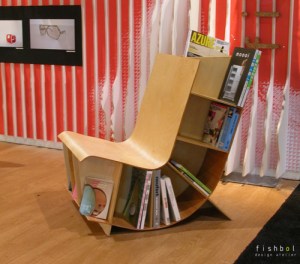
A “chairbrary”

Love this room!
(not so sure about the fireplace in the
middle of the bookcase, though)

Another “chairbrary”

A wise use of otherwise unusable space—
but not for the faint of heart!

Here’s something I can’t believe I never considered—
organizing books by COLOR!

Which came first—the stairs or the bookcase?

The room has a perfect view . . .
What? There’s a window? I never noticed!

And now, my minions, we shall finalize my plans for world domination.
Bwahahahahahahahahaha!
(As soon as I finish this chapter . . .)
.
What does your ideal reading room/library/study look like? If you could build your dream book room (attached to your dream house, of course!), what features would you want it to have? (And if you have a photo, please feel free to post the link!)
What Not to Wear
. . . Or, Characterization by Wardrobe
It’s no secret—I’m no fashionista. I do enjoy watching the show referenced in the title, especially when they feature larger-than-average women, because I enjoy finding out what shapes and colors and patterns of clothes might be flattering on me. Of course, what looks good on someone depends greatly on several other factors than size alone: lifestyle, situation, and personality are the three most important.
I spent the weekend choosing the wardrobe for my two main female characters in the first book of the Great Exhibition Series. And after hours of this activity, I started asking myself why I was spending so much time doing it.
Sure, it’s fun. But I realized that in the process of figuring out how Kate and Nora would dress tells me a lot about their personalities and lifestyles—as well as the culture in which they are supposed to have lived. As a governess, Nora is typically going to wear dresses in dark colors, with practical straight sleeves, high necklines, and narrower skirts. Kate, who grew up privileged and wealthy—though very practical and definitely not a typical socialite like her aristocratic cousins—wouldn’t be allowed to be seen in public wearing one of Nora’s dresses. And Nora would be accused of trying to appear above her station if she wore one of Kate’s dresses.
So while a “daily wear” dress for Kate would be something like this:

a “daily wear” dress for Nora would be more like this:
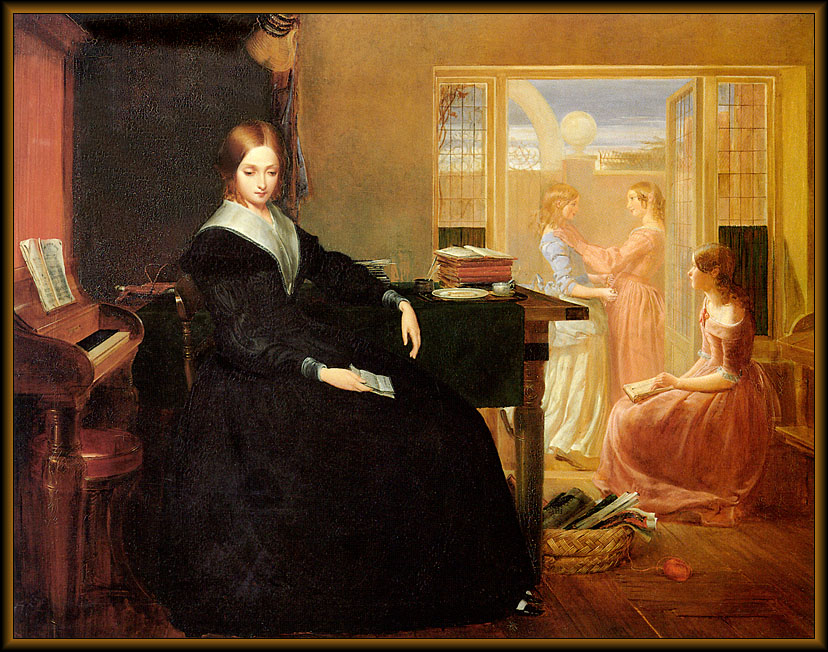
I didn’t spend nearly as much time on costume research for the Ransome Trilogy—mostly because it’s not one of my favorite fashion eras. How many different ways can an author describe a high-waisted white gown? Of course, that’s one of the reasons I did depart from that fashion statement just a bit, by putting Julia in color as much as possible. I also didn’t need to do as much research, because I’ve seen ever so many movies set during that time period, so I have a good visual image of what women wore for different functions during that time period.
When I’m working on my contemporary romances, I also do “costume research” for my characters by choosing at least partial wardrobes for them. Of course, I’ve learned a lesson over the past couple of years—which is that if I’m going to mention what a character is wearing (women, particularly), to not get very specific with the description, or to make sure it’s something “evergreen,” like a little black dress or jeans or something that hasn’t gone out of style for the past fifty years and probably won’t any time soon. In Stand-In Groom, there’s a scene in which I describe Anne, who’s working on getting a wedding set up, as wearing a sleeveless denim shirt and khaki shorts. Well, a reviewer (who read the book in 2010 or 2011) took exception to this, saying in her review that she pictured Anne as much more fashion-forward and wouldn’t wear something that frumpy. Well . . . yes and no. You see, that book was written in 2004–2005, when denim shirts with khaki bottoms were au courant. But now, five or six years later, to a fashionista, it seems frumpy and passe (from other clues on the person’s blog, I guesstimate she’s no older than 20, which puts another spin on it, as well).
[Would Anne wear a sleeveless denim shirt with khaki shorts when working on setting up a wedding in 2011? Well . . . probably not, but only because she’d more likely be wearing a lighter-weight shirt in a stretchy cotton knit, which would be cooler and easier to move around in, and she’d definitely be wearing cargo shorts with lots and lots of pockets!]
Choosing wardrobes for my contemporary characters, even though I most likely won’t describe them, really helps me get to know them better. For example, even when going to the same place with the same man, a woman who would wear this on a first date:
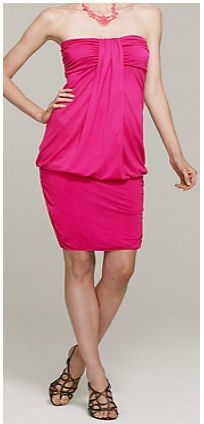
is going to have a much different experience on that date than a woman who would wear this:

Just from looking at those two pictures, it’s easy to imagine two very different types of women (or one who just really wants to toy with a man’s mind—or one who’s living a secret life . . . I could go on and on).
What does the clothing someone wears tell you about him/her? Do you ever consider the impression people will have of you when you get dressed? How does that affect your clothing choices?
Writers: Do you make conscious choices of what style/color/type of clothing to dress your characters in? What have you learned about your characters through how you dress them?
Fun Friday–Seeing RANSOME’S QUEST through Others’ Eyes

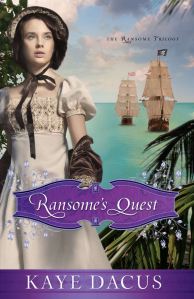 In the past eight days, Ransome’s Quest has been featured in two different blog tours, First Wild Card and Christian Fiction Blog Alliance. I thought today I’d feature excerpts from some of the reviews. If I missed yours, please post a link in the comments. If you’ve read it and want to post your review in the comments (before then posting in on Amazon and CBD and B&N and other sites), please feel free to do so! 😉 If you want to discuss the book with the others here, I’d love for you do to that (but try to refrain from spilling spoilers). ***Update*** If you’d like to discuss the Ransome series with other readers with all the spoilers you’d like, head on over to Facebook, where I’ve set up a discussion forum for that: https://www.facebook.com/kayedacus?sk=app_2373072738
(Click the title of the blog for the complete review.)
- “Ransome’s Quest was a fitting end to an exciting trilogy. Though it was slightly predictable at times, the villain was believable, the characters consistent and the ending satisfying.”
- “I love how plucky her heroines are – just at the right time and with the right mix of sweetness/feisty-ness! I also love that there are chances of hope and redemption laced in this book – it just makes for a sweet read!”
- “I will say that I could read this particular volume and enjoy it without having read the previous two books. All the fun swashbuckling adventure has me putting the preceding novels onto my reading list for the future.”
Black ’n’ Gold Girl’s Book Spot
- “The latest book in the Ransome Trilogy has sultry breezes, cerulean waters and huge ships that will take you on a journey to rival any trip to the beach.”
- “A delightful, entertaining story and a fitting end to an entertaining trilogy.”
- “The suspense, danger and ever-changing scenarios keep you riveted, and the budding romance and secrets pique your interest to the very end. . . . You will find differing insights into the title of the book. A good play on words!”
- “The contrast between the two pirates with different goals and reasons for being such is interesting and thought provoking. Is there such a thing as a good pirate?”
- “As a former sea person, the lure of the sea and her salty air will always draw me. Throw in action, romance and history, and I’m totally hooked. The adventures in this last book outshine the two previous.”
- “The naval rhetoric and activities took some getting used to as did the contemporary relationship dynamics. Kaye is certainly well researched on the era and naval profession. I enjoyed the humorous respites that Charlotte’s character offered, especially in contrast to Julia’s predicament.”
- “I don’t recommend reading it as a stand-alone novel. There was some backstory given, but not until later in the book and I always had the feeling that I was missing something. Thankfully, once I got about halfway into the book, the plot really caught me and carried through until the end.”

- “This was a rollicking pirate adventure with lots of relationships and drama.” (And my favorite line from the review: “I’d say the woman on the cover must be Julia because Charlotte wouldn’t be caught dead looking so wistful.” :-D)
- “Charlotte is a strong female character who’s strength can be both a help and sometimes a hindrance, especially when she gets into her stubborn moods. She is a character I adore and am thrilled with this last book, but also sad, because the trilogy is over.”
- “Kaye does an extraordinary job at creating characters. You will want to read the first book in the series, first, as these are not stand alone books.”
- “This is an action-packed, suspense-filled novel and I loved every bit of it.”
- “I didn’t have the chance to read the first two books in this series so it was a bit difficult to follow along. I highly recommend reading them in order.”
- “I would say if you enjoy reading about pirates, kidnappings, family secrets and a nice romance set during the 1800’s then you’re probably going to enjoy this one, but you really need to read this series in order to understand what is going on so I suggest starting with Ransome’s Honor.”
- “In the hands of a more skilled writer, it could’ve been an exciting opening. . . . While this book’s adventures can feel like a ride on the high seas, overall it lacks a layer of the sinister. The pirates feel like ordinary bad guys, missing that dark, exotic, unpredictable air about them.”
- “I’m not a big fan of romance novels; I’m more interested in the action and adventure genre for books and television shows. Ransome’s Quest was totally an adventurous book, filled with pirates, ship voyages, and dramatic situations both on-board ships and on land. Romance did flow throughout the story but it was modest, and it was just the right amount for me.”
- “One thing I took out of this book is how sometimes we can believe in something, but when something happens to challange the belief we can actually be holding a prejudice we didn’t realise we had.”
- “Kaye’s books never disapoint me. She’s a gifted writer with the ability of tugging all the right heart strings and humor chords when needed. Add in adventure and swashbuckling pirates and you get perfection.”

- “Although the plot revolved primarily around Charlotte Ransome and Ned Cochrane as well as William and Julia Ransome, the pirate El Salvador de los Esclavos and his first mate Declan nearly stole the show. I would love to see another novel featuring El Salvador.”
- “You will LOVE William, Ned, Julia and Charlotte and if you are like me, you will feel like you have made some great friends! In Ransome’s Quest, you will meet Salvador ~ (hubba hubba).”
- “Unlike the comical adventures found in The Pirates of the Caribbean, this one deals with the unyielding black hearts and ruthless, cut-throat pirates from real history. This all ties together perfectly along with romance and faith that makes this high-seas adventures a must read.”
- “The storyline kept me captivated from the first hit over the head at the very beginning of the book straight through to the end!”
Reading ’n’ Writing with Patricia
- “As much as I love Kaye Dacus’s contemporary romances, her writing really sings in this historical series.”
Thursday Thought Provoker
Romance Genre Definitions Part 2
The Range of Romance
Romance (as defined yesterday as a novel centering on the developing relationship of two people, culminating with a happy ending) covers quite a wide spectrum (these are my definitions/categories):
Erotica
- Hottest of the hot, no holds barred. BUT—there must be a compelling story
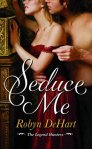 General Market/“Steamy”
- Majority of mass-market romance. Readers expect to find several sex scenes, but the terminology is toned down a bit, more euphemistic
Sensual but not explicit
- Kissing, heavy petting, “making out,” but no body parts mentioned explicitly; all actual intercourse takes place behind closed doors/off page.
- Think Lifetime movies
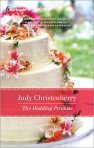 Sweet (*updated)
Sweet Romance can contain all of the same depth of historical and character elements that every other genre does. The two main things that set “sweet” romance apart from those above and below it in the “range” are:
- It’s “clean” (i.e., no sex, no swearing)
- No religious/spiritual content
- Think Hallmark Channel movies
Inspirational
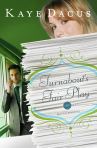
- NO sex before marriage!!!! (or at least, if they do, they’re genuinely sorry for it, and it doesn’t usually happen between the main characters of the book—it’s usually a past mistake)
- Limited sensuality/physical contact; kisses are okay. A bit of physical attraction between the characters is okay—as long as it isn’t “lust.”
- Little to no quoted scripture, no sermons, characters are already Christians when the story opens; there may be a spiritual lesson to learn (forgiveness, contentment, etc.)
- (This is what I write.)
 Evangelical
Contains most of the same elements as Inspirational Romance but also includes some or all of the following:
- Even more limited sensuality/perhaps only one or two kisses
- Quoted scriptures, written-out prayers and sermons
- At least one character (usually the h/hn) must “come to Jesus” as part of the resolution of the relationship/HEA
.
Romance Novel Formats
Novella
- 20,000 to 25,000 words
- Themed collections or e-pub
Category
- 40,000 to 65,000 words
- Series (or “lines”) with a certain number published each month. Usually subscription based (though many companies are now shifting these to e-pub and cancelling their subscription service).
Single Title
- 75,000+ words
- Mass-market and Trade (small vs. large format, price point—mass market is about half the price of trade)
.
Romance Subgenres
This is nowhere near an exhaustive list—as pretty much any genre anyone can imagine can be mashed up with romance to create a subgenre (like Amish Vampire)—but these are the major recognized subgenres of romance:
- Romantic Suspense: For the romance to work in Romantic Suspense, the two main characters must be involved in something that threatens one or both of them—if the romance is taken out, the suspense doesn’t work, and vice versa.
- Paranormal: This is especially popular in Steamy and Erotica—vampires, werewolves, faeries (?), shape shifters, mind control, etc.
- Fantasy: While most fantasy novels contain a major romantic thread, if the romance is removed, there’s still a story (think Lord of the Rings without the Aragorn/Arwen thread—which is one of the reasons it’s pretty much relegated to the appendix). In Romantic Fantasy, it’s a romance story set in a fantasy setting—again, if the romance isn’t there, the story doesn’t work.
- Time-Travel: One or both of the main characters travels in time, facilitating their meeting. I’m sure most romance novelists can name, in one guess, the most famous title in this subgenre!
- Futuristic/Sci-Fi: Just like fantasy, for one of these to be considered a romance novel, the plot must center on the relationship.
- Licensed Theme: These are popular in the category lines when the publisher signs a licensing agreement with a professional sport or organization, like NASCAR, and the authors write books featuring that sport or organization.
- Medical: One or both of the characters are a medical professional and in addition to the romance plot, there’s a medical issue/situation that must be resolved for the story to work.
- Regency: Set in England between 1800 and 1820 (though, technically, the regency was from 1811 to 1820), this has become the prevalent subgenre in general-market historical fiction.
- Medieval/Highlander: Set between about 900 to 1400 A.D., in England, Ireland, and/or Scotland, this used to be the dominant subgenre in general-market historical fiction—and it’s still my favorite.
- Gothic: A forerunner of romantic suspense, these have a historical setting, are typically written from first-person POV (the heroine), and involve the heroine being in peril (genuine or imaginary, real or paranormal). The hero is typically the prime suspect, but it’s always someone else, if the threat to the heroine turns out to be genuine.

Where do your favorite books fall in the “range” of romance novels—evangelical? sweet? steamy? What is your favorite subgenre of romance?
Romance Genre Definitions Part 1
On Friday, Lady DragonKeeper asked:
If you have time, Ms. Kaye (or anyone who wants to answer), I was wondering what your definition of “chick lit” is?
How about let’s step back and take a bigger-picture look at some genre definitions. For years, lots of different types of books have been lumped under an umbrella labeled “romance.” This to me is a misnomer, because romance is a genre with very specific expectations for characters and plot structure. Instead, I believe that Women’s Fiction is a much more appropriate umbrella under which these different genres should be grouped. Why women’s fiction? Well . . . because these are stories that are targeted for and meant to appeal to female readers. So let’s start defining them.
What Is a Romance Novel?
- “Two basic elements comprise every romance novel: a central love story and an emotionally satisfying and optimistic ending.” (www.RWA.org)
- “Rather than asking, ‘will the hero obtain his goal?’ the central question posed by a [romance] is: ‘will these two individuals become a couple?’” (Billy Mernit, Writing the Romantic Comedy)
- “The core story is the developing relationship between a man and a woman. The other events in the storyline, though important, are secondary to the relationship.” (Leigh Michaels, On Writing Romance: How to Craft a Novel That Sells)
In a true romance novel, the plot of the novel is the developing relationship between the hero and heroine. Everything that happens in the story, either in the main plot or in the subplots, needs to advance and/or affect the romantic relationship.
If you can eliminate the romance and you still have a viable plot (even if flat), it’s a novel with romantic elements, but it’s not a romance novel, whether it’s a contemporary or a historical setting.
There are three elements which must be present for it to truly be a romance novel:
1. Boy and Girl Meet
2. Boy and Girl Fall in Love
3. Boy and Girl Have a Happily Ever After Ending
There is an optional fourth element which can come between #2 and #3, which is Boy and Girl Are Torn Apart, Seemingly Forever. Critics of the romance genre call this “formulaic.” Those of us who write it call it our basic plot structure.
The happily ever after ending is one of the most important parts of the genre. Whereas all fiction should have a satisfying ending, romance must have a happy ending—or else it’s technically not romance. The “ever after” part of this ending varies throughout the spectrum of the genre (steamy romance/erot*ca may end with more of a “happily for the near future” ending).
The standard for the romance genre is that the story is experienced through both the hero’s and heroine’s viewpoints, in third person, past tense. There are authors who challenge this standard and do it successfully, but this is what the typical romance reader is looking for.
- Examples: Do I even need to point out all of my books as examples of standard romance? Even in the historicals (with the possible exception of Ransome’s Quest), I follow the genre expectation—though I don’t always use the “lose/separation,” because too often that can come across as contrived/forced—and that’s the last thing I want to do!
What Is Chick Lit?
Chick lit is a subgenre of romance/women’s fiction that features a “career girl in the city” main character—whether that city is New York, L.A., Chicago, or Nashville. It’s written in first person, present tense featuring only the viewpoint of this main character. She’s usually someone who’s obsessed with fashion (shoes, clothes) or some other aspect of pop culture (classic movies, celebrities, a certain TV show past or recent). The chick-lit heroine is snarky, sarcastic, sometimes naive, sometimes jaded, and has been thwarted in love—whether it’s a string of bad relationships in the past or a long-time unrequited crush on someone seemingly out of her reach.
There is almost always a strong romantic thread in chick lit, usually with the female protagonist suddenly discovering herself with two admirers she must choose between. However, unlike a true romance novel, she may not end up with either of them. One is typically an “ordinary guy,” the other is usually more worldly, experienced—not to mention wealthy. In general-market chick lit, it’s not unusual for the main character to carry on multiple relationships at once, including sleeping with more than one man, regardless of the depth of her feelings for each one.
A variation on the “career girl in the city” theme can be “city girl in the country” or “country girl in the city.” A very important aspect, though, is her job—either she’s looking to establish a career (usually in fashion, publishing, or entertainment), she’s burned out on it and looking for a change, or the book opens with her losing or quitting her job and trying to figure out what to do next. While there is a romance thread, the romance takes a backseat to the story’s focus on the main character’s internal journey.
While the genre boomed in the late 1990s through the mid-2000s, it fell out of favor with readers who grew tired of finding the same characters, the same situations, the same predicaments in every cookie-cutter story. There are a few authors who are still successful with this genre (though most publishers have reclassified them as romance novels, since the “chick lit” label makes even romance readers turn up their noses these days) by shaking things up, making their characters, settings, and situations unique enough to keep readers coming back for more.
- Examples: The most famous examples of chick lit are Sex and the City and Bridget Jones’s Diary in the general market. In the Christian market, the two most successful and popular chick lit authors are Laura Jensen Walker (Miss Invisible, Daring Chloe) and Tamara Leigh (Faking Grace, Restless in Carolina).
So that’s Romance and Chick Lit. Tomorrow, we’ll look at some other romance/women’s fiction subgenres. But for now, let’s discuss:
Taking into consideration the definitions above, name your three favorite ROMANCE novels. And, if you read chick lit, name your three favorite CHICK LIT novels.
Fun Friday—In Which I Talk About Just About Everything
I had what was probably the most fun radio interview yesterday, and I wanted to share it with you this weekend. Dear writing friend Lynette Sowell interviewed me for the Gate Beautiful Blog Radio program Thursday afternoon and we talked about everything from Ransome’s Quest and The Ransome Trilogy to The Matchmakers to Eye-Candy of the Day posts (on my Facebook page, just in case you’ve been missing those) to Middle Tennessee Christian Writers to the template for Dylan in The Art of Romance to singleness and the misconceptions “the church” has about romance novels and vice-versa. And just to try to make it visually interesting, I’ve added some graphics that go along with what we talked about.
It is thirty-one minutes long, so you may want to watch it in snippets or bookmark the permalink for this post and come back and watch it this weekend when you have more time.
Now . . . I’d like to do some actual video interviews (short–two to three minutes at most), but I need some interview questions. So why don’t you post some questions in the comments you’d like to see me answer in future video interviews.
Here’s yesterday’s interview:
Thursday Thought Provoker
Historical vs. Contemporary, Part 2
I started writing this as a reply to Kav’s comment on yesterday’s post, but it was getting long enough it deserved its own post, so that’s why you’re getting a real post instead of Open Mic Wednesday today.
Kav wrote: I would think that an author might gain more readers by doing both. If they captivate a contemporary reader that reader might just take a leap into the same author’s historical books because she loved the contemporary.
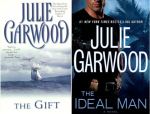 Starting out writing more than one genre can be helpful—instead of switching after building a name with only one type of books. For example, when I was in my teens and early twenties, I absolutely devoured every historical romance novel written by Julie Garwood and Catherine Coulter. Then, in the mid-1990s, both of them inexplicably switched to writing contemporary-set romantic suspense novels. I tried reading them, but I didn’t enjoy them (understand—up to that point in time, I had never read a contemporary romance novel in my life). In the last year or two, both JG and CC have each put out a new historical romance novel (not those that are pictured—those happen to be two of my favorite historicals from these authors). I was so excited, I got both in hardcover. And I was horribly disappointed in both—they were terrible. It’s not just that their writing style hasn’t changed since the ’80s/’90s (head hopping even to the servants and walk-on characters), but the stories were poorly thought through and executed—not even up to the standards set by the worst historical romance novels they wrote twenty or thirty years ago.
 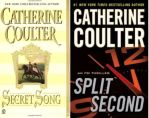 So building a readership in one type of fiction doesn’t necessarily mean that those readers will follow them over into another genre. And I know that Garwood and Coulter have huge readership numbers for their romantic suspense novels (or they wouldn’t still have books coming out). But how many of those readers would make the switch to reading their non-suspenseful historical romance novels—even if their new ones were up to snuff?
Liz (Roving Reader) wrote: I must say that I prefer reading historicals…I think because I enjoy getting lost in a place and time completely different from my own.
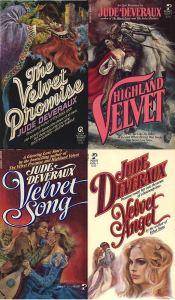 I didn’t read a contemporary romance novel until I was in my late twenties. I grew up reading historical romance, from the time I got my hands on my mom’s Jude Deverauxes and Catherine Coulters when I was twelve or so. I tried reading the contemporaries, but I just didn’t enjoy them. I think it’s because it was easier for me to get completely lost in the reading experience with a historical because there weren’t things in it constantly reminding me of the real world. (And my favorites have always been medievals.)
It’s easier for me to read historicals that are set during time periods about which I don’t know as much—for example, I was never able to read anything set during the Civil War, and now I have a hard time reading anything set during the Regency era or that’s set aboard a ship, especially a Royal Navy ship…simply because I’m always checking their facts against what I know and the research I’ve done.
Because I read only historical romance when I was young, that’s what I tried writing. My problem was that not only did it come across as very juvenile (using all of the historical romance cliches found in YA books—the girl and her horse, the swooning, the mandatory complaining about the corset, the 20th century girl in costume, etc.), I got so caught up in the research that I’d “lose the plot” as the Brits are so fond of saying. I was more concerned about making sure I got the history right that I couldn’t mesh it with the fiction.
If I love reading historicals so much, why did I ever decide to try writing contemporaries?
In 1992, a fateful remark from my college best friend started me on a path that would eventually lead to Stand-In Groom—when out running errands one night we were merrily chatting about mutual friends, and Amy made the very innocent comment, “I wonder where we’ll all be in five years.” That night, I had a very vivid dream and spent most of the next day writing—about where she and I and these friends of ours would be five years down the road. I wrote about those characters for the next ten years—changing the names and location (that was the birth of Bonneterre) and coming up with hundreds of peripheral characters. . .including the ones who would become the main characters of the first two manuscripts I ever completed in the early 2000s. But even though I worked on that “story” for ten years that story was just for me—something entertaining but nothing I’d ever consider sharing with anyone else. I was still trying to write historicals—and reading only historical romances.
When I attended my first writing conference in 2001, I was developing these new Bonneterre characters while still writing the college-inspired “epic” (already at 200k words with no end in sight, as it was an episodic/follow-the-lives-of the-characters piece). When I left that conference knowing that God was calling me to pursue publishing, I came to a couple of decisions. First was that I needed to learn a lot more than I knew about writing, and to do that, I needed training—in the form of writing. Could I write something from start to finish? Could I do it using only one character’s viewpoint per scene? Could I actually finish a manuscript? Those questions led to the second decision—I needed to write something that would allow me to focus on the writing, not have me pulling out research books every five minutes to look something up. So I decided since I had a strong story idea with these new characters that had grown out of the college-story idea, I’d write their books.
 But I’d never read a contemporary romance novel before—so how in the world was I supposed to write one? I went to the Christian bookstore and found a book called Danger in the Shadows. Sure, it was romantic suspense, but it was the only contemporary-set novel with some kind of romance premise that I could find. And I loved it. As I loved the remainder of the O’Malley series. And Susan May Warren’s first Deep Haven series. And Linda Windsor’s romantic comedies Along Came Jones and It Had to Be You. Suddenly, finding contemporary romance in the Christian market, I discovered I liked it. But I was still finding that I enjoyed reading historical romance just a little bit more.
It wasn’t until 2005, after I’d finished the first draft of Stand-In Groom—my fourth completed manuscript (all contemporaries)—and had a much better handle on what it takes to structure a story and write it from beginning to end, that I had an idea for a historical romance novel I thought I could really write. It was a different time period/setting than anything I’d ever tried before. And as I did research (already started a couple of years before when I wrote my senior literary criticism thesis, “Wealth and Social Status as a Theme in Jane Austen’s Pride and Prejudice”), even though I got caught up in the research, it wasn’t for the sake of the history itself—everything that caught my interest did so because it was tying back into my characters or my plot or my setting. The difference was that I had come up with the story first—the history was just there to make the story better. (Whereas before, I’d been trying to come up with stories to fit the history I loved so much.)
Which do I now prefer reading/writing?
I can honestly say I enjoy writing the historicals as much as the contemporaries. Sure, they take a little more work—but it’s work that I thoroughly enjoy (especially when I can take my time doing it!).
As far as reading . . . by just looking at my bookshelves, it’s easy to see that I still enjoy reading historical romance more than contemporary romance—in my office, I have about one and a third shelves of CR and three shelves of HR. On my Kindle, I have 116 titles of historical romance (at least half of which are samples, not full books, only about 1/3 of which are Christian fiction) and 29 titles that are contemporary romance (most of which are full books, about half-and-half general-market and inspirational, but which also include four of my own books as PDF galleys).
Would you follow a favorite author over into another genre, even if it’s a genre you typically don’t enjoy reading? Writers, would you try writing a genre you don’t usually enjoy reading?

 KayeDacus.com