Thursday Thought Provoker

Writer-Talk Tuesday: Writing without Knowing What to Write

- Sherrinda asked: You said you did not know what you would be writing Sunday. Do you not have a plan…an outline…of what you are writing?
Debra wrote: I’ve been doing the 1k1hr challenge once or twice a day but I can only do it if I list the three or four things I need to get done in each chapter. Then I have no problem hitting that mark.
Best-selling author Tom Wolfe once said:
What I write when I force myself is generally just as good as what I write when I’m feeling inspired. It’s mainly a matter of forcing yourself to write.
Because I’m at the point in my novel in which I’m in the middle—the section where I’m supposed to be upping the ante for my characters, complicating/thwarting their goals, and driving them toward the climax at the end, I’m also at the section of the book in which I had the fewest ideas for specific scenes when I wrote the synopsis for the proposal (which, let’s remember, was about eighteen months ago).
About four or five months ago, right after I signed the contract and knew for sure this was what I’d be writing, I pulled out the synopsis and my big Post-it Notes and wrote scene cards for the scenes I’d already written (prologue and first three chapters which went out with the proposal) as well as for the specific scenes mentioned in the synopsis. Though I stuck them to a table-top A-frame flip-chart easel, and not to my office wall (which no longer has this space available), here’s a reminder of what that process looks like:

Scene cards from Ransome’s Crossing
However, once I get into the middle of the book like this, I’m not always certain what specifically comes next when I sit down to write. Much depends on what happened in the previous scene, and much depends on what specific scenes toward the end I know I need to work toward. But most of the time, when I sit down to write, I don’t have a specific scene in mind.
There are those occasions when I will suddenly hear the dialogue in my head or I will see a scene play out in my mind’s eye and have to scramble to transcribe it onto the page. That did happen to me with one of my 1k1h sprints last weekend. I’d already begun writing the scene (about 300 to 400 words) of which I’d had a very clear vision the day before. So when I sat down to just write, write, write for that one hour, I knew exactly where that scene was going—what the action was, what they characters needed to say to each other, and what the motivations/reactions/goals of each of the three characters in the scene were. But part of the problem of having that scene so clear in my head was that it slowed my ability to write it because of the fear that I’d never be able to get it down in words the way I envisioned it.
The next afternoon, when I started the next 1k1h challenge, I’d already started a new scene—and shortly after starting to write, I knew where it was going and what hook I was working toward for the end of the chapter. Which I got to with plenty of time to spare in that hour. So I started the next chapter, really not sure exactly where it was going.
How did I start the next chapter if I had no idea what came next? Well, I thought through my four or five POV characters (I’m still not sure if I’m keeping all of them, but I am allowing myself to write a first draft, so I’m experimenting with viewpoints right now) and picked the one who hadn’t had a POV scene in a while. I started with his name. Andrew. Then I figured out where he was. In his cottage. What time of day it was. Afternoon. What he was doing there at that time of day. About to look at the thing wrapped in cloth that Meg handed him in the previous scene. But, as an experienced author, I know I can’t just have him sitting in his house alone thinking. A knock on the door. So . . . who’s on the other side?
As soon as I figured out who was at the door (his rival for the heroine’s attention), then I had my scene—and I was able to write more than 1,600 words in one hour. But if I hadn’t made myself sit down and write, I probably wouldn’t have (a) come up with that scene or (b) gotten any progress made on my word count that day.
When that hour was up, I walked away—and left off in the middle of a sentence (and with a misspelled word at that!). So the next time when I sat down to write, I was able to immediately pick up where I left off and keep writing. Which resulted in another almost 1,500 words in one hour.
Though I didn’t get anything written yesterday, as I was exhausted from having been kept awake until almost 3:30 in the morning by the tornado sirens the night before, I am planning on doing at least 1k1h challenge every afternoon this week to see just how much progress I can make on this manuscript this week. And, no, I won’t know what I’m going to write every day when I sit down to do it . . . I’ll simply know that I must write. And trust that my creativity will kick in and illuminate my path.
Which brings me to my favorite quote about writing from author E.L. Doctorow:
It’s like driving a car at night. You never see further than your headlights, but you can make the whole trip that way.
Book-Talk Monday: How Do You Find Your Fiction?

The Romance Writers of America recently released their annual statistics on Romance reading and buying habits, and their findings were quite interesting.
Information source: Where do they get their information?
- 1. Friend/word-of-mouth
 2 Amazon.com recommendations (publishers pay for targeted recommendations/e-mailings)
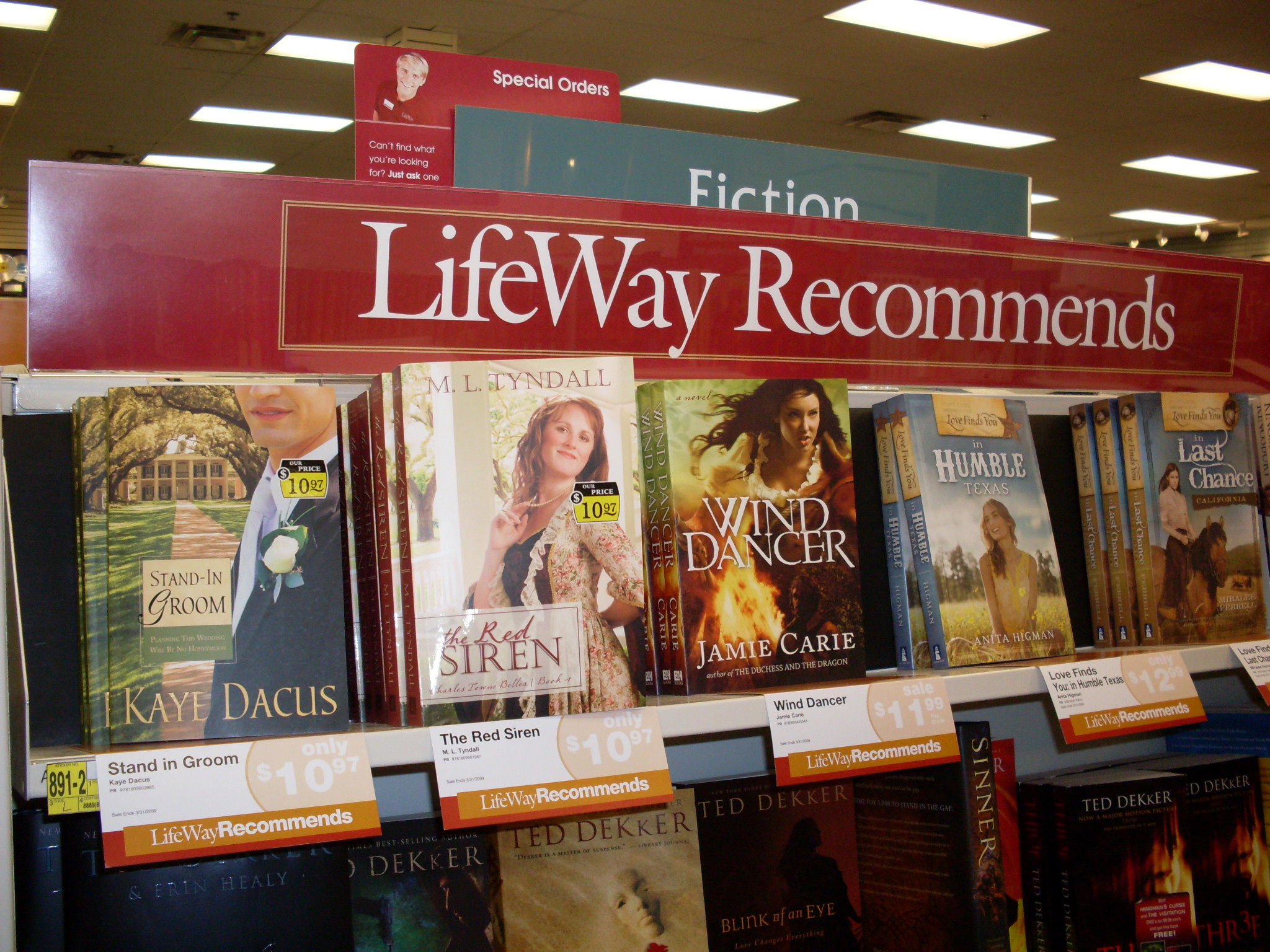
3. bookstore shelf (publishers pay for premium in-store placement/signs)
4. bestseller lists
5. family
6. other online sources
7. email from author
8. book club
9. free promotional chapters
10. other offline source (ad in a magazine)
* Ebook and print buyers alike find a subgenre they like and stick with it with top ones being Romantic Suspense, Contemporary Romance, Historical Romance, Erotic Romance, Paranormal Romance, Young Adult, Christian Romance (19% of overall market)
Activities that interest Romance buyers:
- visited an author website 41%
saw a promotional book trailer 18%
read an author’s blog and bought the book 16%
followed an author on Facebook 13%
gone to live author event and bought the book 12%
entered contest 10%
watched YouTube video featuring the author or book 9%
followed author community on GoodReads or other community site 5%
attended online author event 5%
followed an author on twitter 6% (conversely 83% responded they had not done it and weren’t interested)
How do you find your fiction? Do you tend to fall in line with the statistics above, or do you have other, more trusted methods of choosing which fiction to read/purchase?
Fun Friday–What’s in a Name?

I read a blog post on PW yesterday about the titles famous books almost had (The Alternate Titles of Famous Books: Who’s Afraid of Franz Kafka?). And, of course, there are the stories about characters who almost ended up with different names . . . the most famous example being how Scarlett O’Hara’s name was originally Pansy.
I’ve gone though some name changes in my books, too . . .
- In Stand-In Groom (which was originally titled Happy Endings Inc.), the wedding planner’s name started out as Nell—and she had quite a different personality before she became Anne (you can read about my process of changing her name here).
- In the Ransome Trilogy, while William was always William, when I first started trying to figure out what woman would be good enough for him, the first name I settled on was Elizabeth. However, once I discovered her character, that name didn’t fit—and only Julia did. Also, William’s younger sister started out as Sophie . . . before she ever appeared on page. As soon as I wrote her first scene, though, she announced her name was Charlotte. Good thing, too, because of Charles Lott!
- In the first version of Love Remains that I wrote in 2003 (which was my first and only attempt at a category romance, and I still couldn’t get it under 75,000 words), the hero’s name was Kevin, not Bobby, and he was a computer guy, not in law enforcement.
- I dug up my original writeup of the idea for The Art of Romance (which began its life with the working title Cover Model) and discovered that the original names for the characters were Jason and Angie. Hmmm . . . I must have had Angie Harmon and Jason Sehorn on the brain when I wrote that!). Jason then got changed to Bradley Caylor and Angie to Kate Blane. But I still wasn’t connecting with the characters. I’m not sure how many other names I went through before I came up with Dylan Bradley and Caylor Evans, I just remember it took me a really long time to get there.
I’ve mentioned before that I like to comb my family tree for fun/interesting names. Just from main characters, Major, William, Julia, Michael, (Dylan) Bradley, and Caylor are all names from my genealogy (and there are lots of others in the ranks of the secondary characters).
Today, I thought it would be fun for us to come up with some funny/silly character names—and maybe find some hidden gems amongst them! (Don’t feel like you have to do all of them. Pick and choose the ones you want to do, but be sure to include the item number so we know which ones you did.) You may find pen/pencil and paper will be helpful so you don’t have to keep scrolling up and down the page.
1. Your paternal grandmother’s (or grandfather’s) middle name + your maternal grandmother’s (or grandfather’s) middle name (if you know them) + last name of your favorite singer
- Grandmothers: Ethel Katherine Martin
Grandfathers: Carroll Reid Martin
2. First name of your favorite actor/actress + your favorite color (or a synonym) + your father’s or grandfather’s first name
- Katharine Aubergine David
Karl Perse Crawford
3. (First Name) take the first 3 letters of your first name and add the first 2 letters of your last name; (Last Name) first 2 letters of your mother’s (or grandmother’s) maiden name and add the first 3 letters of the city you were born
- Kayda McBat (I used my mom’s maiden name—because my grandmothers’ names would make it Cabat or Brbat, neither of which work as well with Kayda—which could be Katda if I used my full name instead of my nickname. See how many options we can have???)
4. Name of the street you grew up on + a favorite pet’s name + last name of the author of the first book you look at
- Valencia Taffy Ingermanson
Capri Princess L’Engle
5. First name of an ancestor (beyond a grandparent, if you can) + City OR State where you currently live + last name of a favorite teacher.
- Florinne Nashville Stevens
James Tennessee Bowling
6. First name of the last person who sent you an e-mail + last name of the first person listed in your newsfeed on Facebook
- Riley Duvall
Katie Slack
Eric Land (and you can just keep going down the lists!)
7. First name of one of the authors in the top 20 paid/free Kindle Best Sellers + name from the Top Names of the 1880s + last name of one of the singers/word from a group name from this list
- Marlen Clara Keys
Colton Edward Prysock
8. First name of someone you went to junior high/middle school with + Name of a constellation
- Tonya Boötes
Todd Serpens
9. First name of Best Supporting Actress or Actor Oscar winner + last name of a U.S. President
- Miliza Fillmore
Basil Harding
10. Your choice. Share with us your methodology so we can play along, too!
Thursday Thought Provoker
Writer-Talk Tuesday: Questions and Topics from You
Tuesdays are our main day here for discussing topics about the craft and industry of fiction writing. I’d love to get your input on topics you’d like to see discussed or even questions you have so that I can do some Q&A style posts like this one from last November. Post your suggestions/question here or e-mail me (see the contact page).
Writing Update
 This weekend, my local writing group held two write-in events in conjunction with our month-long writing marathon. At each of the events, we did a 1k1h challenge—sprint writing for one hour trying to hit at least 1,000 words. On Saturday, I knocked out 1,440 words in that hour—a scene I’d envisioned the day before, so it formed pretty easily once I got started. Sunday, when I started that timer, I had no idea what I would be writing. Yet I still managed to add 1,242 words. Which puts my total word count at 29,809. Nowhere near where I should be at this point in the month, but I’m making progress.
So, what topics on writing do you want to discuss on Tuesdays in the near future?
Book-Talk Monday: Novelizations and Book Spinoffs of Movies/TV Shows
The Movie Novelization
We’re all accustomed to the movie based on a novel: all the classics from Jane Austen and Charles Dickens, the Harry Potter, Twilight, and Hunger Games films, all of those movies from Steven King’s and John Grisham’s books. But what about those that are movies first and then someone is paid to turn it into a novel?
We all have our preferences when it comes to movies that are based on a book as to whether or not we read the book before or after (or at all). But what about when the movie comes first? What would drive you to read a novelization that springs from that?
The Book Spinoffs
 One of the shelves in my office is dedicated to books set in the Star Wars and Star Trek universes (more SW than ST, though). In fact, I have the novelizations of each of the six Star Wars movies (and I must say—the novelization version of the last movie, Revenge of the Sith is SO much better than the movie could ever have been!). In the world of Star Wars, the dozens or even hundreds of books that have come out over the past thirty years are referred to as the Extended Universe. While the novelizations of the movies give us more insight into the major characters, the extended universe books go well beyond that—continuing the stories of Han Solo and Princess Leia (one of my favorite EU books is The Courtship of Princess Leia) and Luke Skywalker after the events of Return of the Jedi. And for those of us who are obsessed with secondary characters, the EU gives us a chance to spend time with/learn more about our favorite secondary characters—mine just so happens to be Wedge Antilles, who features prominently in the nine-book Star Wars: X-Wing series, in which he’s given command of Rogue Squadron. I’ve also read spinoff novels from Dr. Quinn (there were only a few, and they weren’t all that great), Highlander (I needed me some more Methos!), and over Christmas, I picked up a book that has three Buffy the Vampire Slayer novels in it (it was under $5).
Unlike novelizations of movies, which give us the storyline we already know from the film, but with more insight into the characters’ thoughts as well as more details and possibly additional scenes either cut from the film or made up for the book, movie/TV-series spinoff books actually give us more adventures, more episodes in our favorite characters lives. If they’re done right—and if those in creative control of the property maintain strict guidelines for the cannon of their storyworld—spinoff novels feed the fans’ longing for more and more and more of the world, the characters, and the situations that couldn’t necessarily be explained in a film or TV series.
Do you read novelizations or spinoff novels from movies or TV shows? If so, what are some of your favorites?
Fun Friday–Richard Armitage Sings!!!
Have y’all seen this yet?
.
In case you didn’t already know, that’s our dearly beloved Richard Armitage playing (and singing as) head dwarf Thorin Oakenshield. (Click here for the full cast list.)
I can’t believe we have to wait until December for this!
Thursday Thought Provoker

Writer-Talk Tuesday: “We try something else.”
I mentioned last week that my biggest short-term writing goal for 2012 is to get the first draft of Follow the Heart finished in January. But for the first eight days of the month, I was so sick that I had no energy or creativity for anything. Yesterday, however, I made myself sit down and write as soon as I got home from work. I had a goal of 1,500 words in two hours.
I wrote 1,904 words, putting my manuscript’s total word count at a hair under 27,000 words. To finish (with a length of somewhere between 80–90k), I’ll need to step that up a little bit—I’ll need to average between 2,500 and 3,000 words a day for the next twenty-one days to meet that word count by that deadline. Of course my goal is to be able to spend February, March, and April on revisions/edits. So if I have a complete story which isn’t quite up to that word count, I will still have met my goal of a complete first draft by the end of January—and I can add word count in the revision process.
How did I get those 1,900 words after so many months of not writing? As I said, I made myself write. When I got to a point at which I wanted to check e-mail or get on Pinterest or read blogs, I forced myself to write one more sentence. And then one more.
No, not all of those 1,900 words are great. But they are written. And tomorrow, my goal is to write 2,000 words. And Thursday . . . 2,100 words. And Friday . . . you guessed it, 2,200 words. Because I’m finally getting back into the rhythm of just writing without worrying about if it’s perfect, or if one of my characters has repeated something they might have said in a previous chapter. Because I can always fix it later.
Which leads me to the quotes I’d love to get your feedback on. Both are from Madeleine L’Engle:
- “With free will, we are able to try something new. Maybe it doesn’t work, or we make mistakes and learn from them. We try something else. That doesn’t work, either. So we try yet something else again. When I study the working processes of the great artists, I am awed at the hundreds and hundreds of sketches made before the painter begins to be ready to put anything on the canvas. It gives me fresh courage to know of the massive revision Dostoyevsky made of all of his books—the hundreds of pages that got written and thrown out before one was kept. A performer must rehearse and rehearse, making mistakes, discarding, trying again and again.”
“There are in the life-works of all artists things which don’t work. But sometimes that painting which did not work, that piece of music which did not work, was a necessary preliminary for the next thing which did. And if the artist had never been free to fail, he never would have gone on to that next work.”

 KayeDacus.com