SCENE IT! Working with Multiple Viewpoint Characters
When discussing the idea of “scenes,” the definition can become a little confusing/hazy. You see, there’s “scene” in the broad sense—it’s a particular action that happens in a story taking place in a finite time and specific location. But then there’s a narrower sense—and that’s when we have to take in account viewpoint characters.
“What I told you is true . . . from a certain point of view.”
When we work with multiple (two or more) viewpoint characters in limited POV writing, it means that we are showing the story from the viewpoint of a limited number of characters, and we stay inside ONE character’s viewpoint for the entirety of a scene. However, this does not mean that (after giving that character a substantial/meaningful amount of page space) we cannot switch to another character’s viewpoint within the same scene. Confused yet?
I guess to try to define it, there are two types of scenes we need to consider: story scenes and viewpoint scenes. Story scenes can also be defined as plot points. It’s the occurrence that is going on that moves the story forward. However, these story scenes can be broken down into more than one viewpoint scene if it better serves the structure of the story.
Story Scenes
If you are an outliner—or if you were to outline your story after you pants your way through to the end—you will (hopefully) discover that your story breaks into plot points—these are story scenes. They take place among a certain group of characters at a certain place at a certain time. They are finite and contained. Yes, they lead into more story scenes/plot points (or else they’re vignettes and not story scenes).
Think of story scenes as floors in a high-rise building. You cannot build the penthouse (your climax/ending) without first building all of the other floors to support it. Your story scenes are what give your plot its structure and build to the ending of the book.
Viewpoint Scenes
Sometimes, the floor of a building is wide open, with no walls to break it up. Most of the time, it’s going to be divided into different rooms. Each room has a function, but each room is still a part of the same floor. These are your viewpoint scenes.
Typically, scenes are written from the viewpoint of the character who has the most to gain or lose in a particular scene—or a character who has a lesson to learn or discovery to make. Conversely, you can show a viewpoint scene from one character’s POV when you don’t want to reveal the internal reaction/thoughts of another viewpoint character who has a lot to gain/lose from the scene but it needs to be concealed from the reader.
see also: Make POV Work for You: POV Begins with Character
While your story scenes give the overall plot its structure, your viewpoint scenes are what give it its aesthetics and pacing.
Let’s Build Our High-Rise
Think of our high-rise as a condo building. Because of the size and structure of the building, we can have a maximum of four condos on each level. (Four viewpoint characters.) Obviously, the more condos we have, the smaller they will be.
Each condo on each floor is going to follow standard guidelines determined by the structure of the building/floor, and as the designer, we’re going to follow the guidelines we’re given for designing them (craft guidelines, genre considerations, market/publisher expectations, etc.). But once the tenants move in, the aesthetics of each condo will change—paint color, furniture, wall hangings, window treatments, etc., will reflect the tastes and talents of the person living in that condo (character voice).
In our novels, each story scene (floor) may have room enough for a viewpoint scene (condo) from each of your main characters. This doesn’t mean you must have a viewpoint scene from each character in each story scene. In fact, it’s probably better if you don’t. With multiple POV characters, it’s going to be important to spread them out, to ensure than each one has his/her own set of conflicts (story scenes) to work through individually as well as with the group. This is what will give your viewpoint scenes diversity and keep your story from becoming a monotonous warren of same-size, same-color, same-design cubicles that no one wants to get stuck in.
Having Characters Make Scenes
One of the best parts of using multiple viewpoint characters in a book is the ability to use our viewpoint scenes to generate tension and pacing in the story. And one of the main ways we do this is by employing the cutaway.
We’ve discussed before how our scenes should end with the character making backward progress or with a “disaster” (something that knocks the viewpoint character off the track of achieving his/her goal)—and that it’s important to end a scene at a point at which the reader needs to know what happens next. And with multiple viewpoint characters, we can enhance this by cutting away to another character’s viewpoint. This can be within the same story scene or switching over to a different story scene (a subplot or parallel plot happening at the same time but different location) in order to increase the tension of having that first scene as yet unresolved.
We must be careful with cutaways, though, that we don’t allow the intervening scene to last too long, though, or else we forget what was happening with the previous character.
This is one of the main reasons I gave up on reading the second Game of Thrones book. Each chapter was a story scene from one viewpoint character’s POV. Unfortunately, with the number of viewpoint characters and each chapter ending being a cutaway, it took far too long to get back to the “cliffhanger” of what had happened eight or nine characters ago, and I found myself constantly having to turn back to that character’s previous scene to remember where they’d been and what they’d been doing—and that’s much harder on a Kindle than in a physical book. So when you employ the cutaway technique, don’t stay away from that “dangling” character too long, or you lose the tension you created with it in the first place.
What lingering questions do you have about story scenes vs. viewpoint scenes and how to employ them?
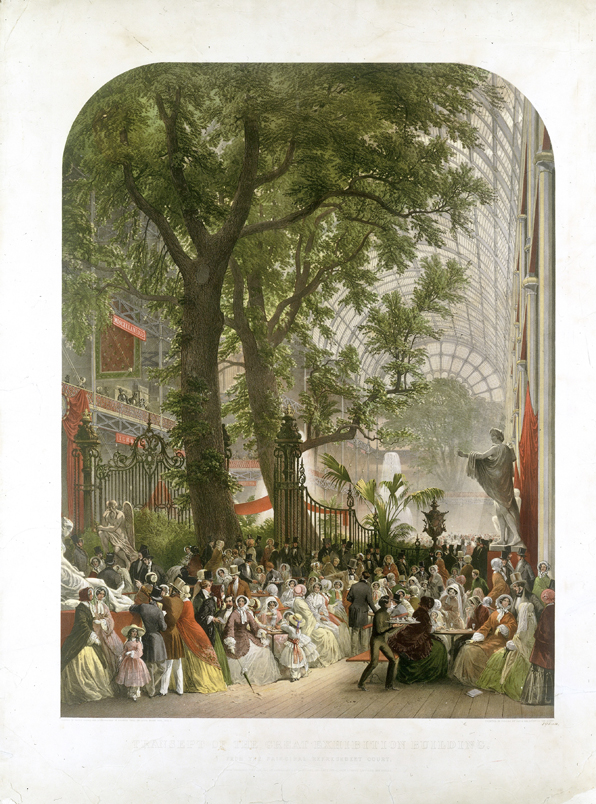
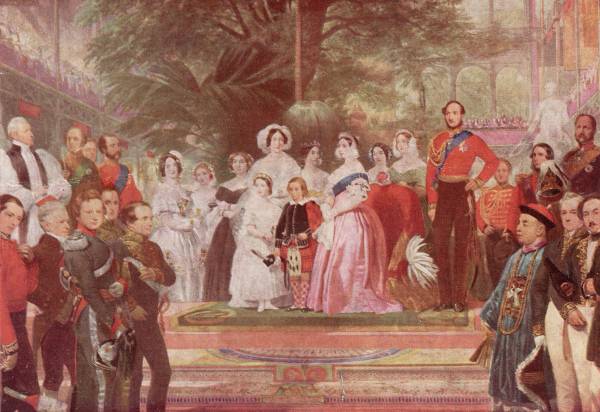
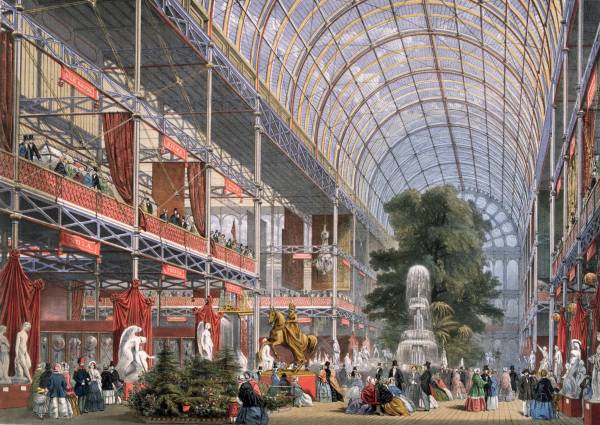
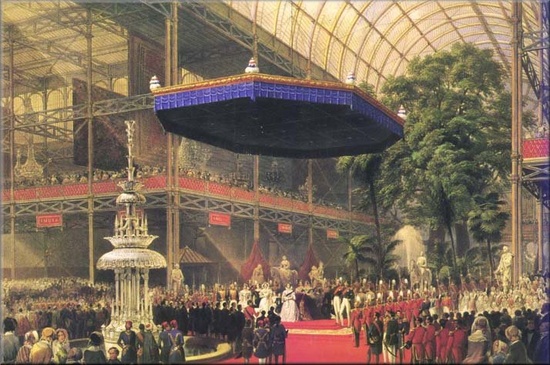
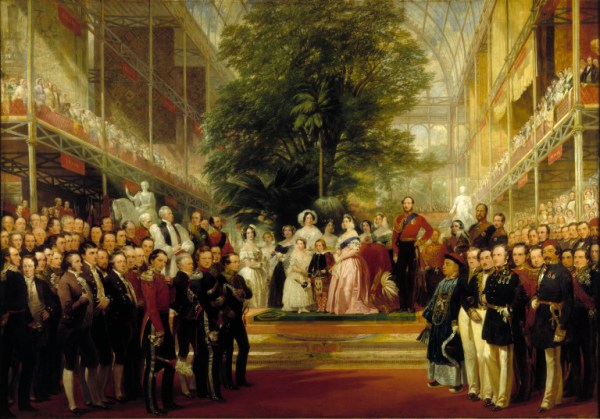
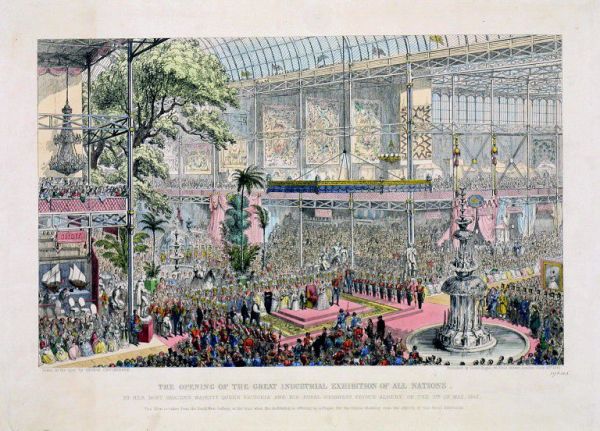
Wordless Wednesday: May 1, 1851
.
.
(Getty Images)
.
.
.
.
SCENE IT! Types of Scenes
AFTER you finish your first draft and you’re in the revision process, it’s time to start making sure you’re including a variety of scenes in your story. Let’s look at a few key scene types.
.
First Scenes
The opening scene of any novel is the hardest to write. And it’s the one you should spend the least amount of time on when writing your first draft—because it’s going to change by the time you get to the end of your manuscript.
A first scene must:
- Kick-start your plot.
- Introduce at least one of your main characters and provide a glimpse (hint) at his/her internal and external conflicts.
- Establish your setting.
- Start building dramatic tension that hints at the conflicts and consequences to come.
.
Suspense Scenes
Suspense can (and should) be found in every genre of fiction. A suspense scene should:
- Throw your character immediately into conflict/trouble.
- Raise the emotional, physical, or spiritual stakes for the character.
- Increase and sustain the emotional intensity for the character.
- Use events or other characters to exert pressure on your viewpoint character to change or act in some way.
- Delay conclusions to scene events and thwart character intentions.
- Either break the suspense at the scene’s end (reward) or end on a cliffhanger (leading to a consequence/sequel scene).
.
Dramatic Scenes
Dramatic scenes are the vehicle for emotional content in your story. These are the scenes in which you deliver the consequences (from joy to tragedy) of what’s happened before. The goal of the dramatic scene is to elicit an emotional response from the reader by:
- Using action/dialogue to focus on the characters’ emotions/feelings
- Emphasizing relationship-oriented interactions (the deepening or breaking off of relationships)
- Moving the character into a better understanding of his/her own internal life or self-awareness
- Putting characters into situations in which they will have intense (but not melodramatic) reactions
- Indicating the character (and, thus, the plot) is moving toward a decision/turning point
.
Contemplative Scenes
When a character contemplates, time slows down, or even disappears; and the scene zooms in tightly and intimately onto the character’s perceptions. Use these types of scenes sparingly in genre fiction. A contemplative scene typically:
- Has a higher percentage of interior monologue (thought) than action or dialogue.
- Moves at a slower pace to allow the reader to get a deeper, more intimate look into the character’s inner life.
- Shows the character interacting with himself and the setting more than with other characters.
- Allows the character time to digest actions, events, and epiphanies that have come before and to decide what to do next.
- Gives a pause before or after an intense scene so the character can reflect and the reader can take a breather.
These scenes are better left to later in the book—once the action/drama of the plot has already been established. And too many can make the story drag.
.
Can you think of any other scene types that should be included in this list?
SCENE IT! Is it a keeper?
Let’s face it—not every scene we write is going to end up in the finished draft of our books. And the pieces that need to be axed first are usually vignettes.
.
Scenes vs. Vignettes
It’s important to be able to recognize when a scene is just a free-floating vignette that doesn’t serve your narrative. There are multiple definitions for a vignette. In Make a Scene, Jordan Rosenfeld defines it as “a small, graceful literary sketch. . .which does not necessarily relate to the plot, and is therefore extraneous.”
Vignettes may be your favorite scenes in your story—but if they don’t add to the overall plot of the novel, they have no place in it. Ask these questions to determine if it’s a scene or a vignette:
- Does the scene have a beginning, middle, and end? Is there a character with a scene intention (related to the overall plot) that meets with conflict and an ending that thwarts that intention?
- Does the scene introduce new plot information?
- Does the scene relate to the overall plot situation?
- Does the scene build upon the last scene—is it a sequel, dealing with the fallout/consequences of the previous disaster?
- Does the scene involve, inform, or affect the viewpoint character(s)?
- Does the scene more the story forward in time?
If the answer is yes to each of those, then it’s a scene, not a vignette. If you answer no to any of those, you most likely have a vignette which needs to be fleshed out to a proper scene (until it answers yes to each question) or it needs to be removed.
A scene adds to the latticework that forms the overall plot of the story. A vignette leaves the reader scratching her head and wondering why she just had to read something that didn’t move the story forward at all.
Vignettes are selfish writing—they’re for the author’s pleasure, not the reader’s.
The most important question you can ask (of any scene, not just vignettes) is: If I cut this scene from my manuscript, will the plot still make sense? If the answer is yes, you have a scene you can cut.
.
Let’s Watch the Deleted Scenes
Do you watch the deleted scenes on the DVDs of movies/TV shows? Do they add to your understanding of the movie?
How many of you went to see The Hobbit in theaters? How many of you found yourselves thinking that Peter Jackson could have done a MUCH better job editing out unnecessary scenes that didn’t advance the plot of the story?
There’s a reason why much of the information on the background and tangential events of what happened before and after the story of The Hobbit and The Lord of the Rings were relegated to the Appendices by J. R. R. Tolkien. Even he—who did include a bunch of stuff (in the LOTR books, especially) which I found to be unnecessary—knew when certain scenes didn’t directly influence the plot or move it forward. In his passion for all-things Middle Earth, Peter Jackson seems to have lost sight of this, adding much of that information back into the films which doesn’t need to be there.
Conversely, when I first saw the original LOTR trilogy in the theater, I loved it so much, I wanted to know more about the characters and the events—so I gladly purchased the extended edition DVDs and purposely watched first all of the additional scenes. Even still, Jackson didn’t add everything he’d filmed. Just those scenes that added to the tapestry of the characters, the world, or the story. But had I not initially fallen in love with the tighter, more straight-forward storytelling of the pared-down, tightly edited theatrical release movies, I might have gotten bored with the extended editions’ extra bulk—just as I did with The Hobbit’s.
.
Is it a keeper?
The time to worry about whether or not a scene works within the structure of your story is not when you are writing the first draft. You don’t need to be worried about that during the creative process. You just need to write down everything that comes to mind in order to get your complete story on the page.
The time to worry about whether or not a scene works within the structure of your story is during the revision process. Once you have your full story written down, with your ending complete, then you know whether or not a scene actually moves the plot forward and supports/sets up that ending. Then, you’ll be able to answer the questions above and determine if it’s a scene or a vignette. Sure, vignettes are fun and they’re a great way for you, the author, to learn more about your characters or your setting. But, frankly, your readers won’t care, not until you’ve given them something to care about—which is a tightly written story with a well-paced plot.
Afterward, if you want to share your deleted scenes (because just like a filmmaker, you should never truly “delete” them but set them aside, save them in a separate folder), on your blog or release an “extended edition” of your book for those who are true fans, you can do so.
___________________________________________________________
Works cited:
Rosenfeld, Jordan E. Make a Scene: Crafting a Powerful Story One Scene at a Time. Cincinnati, OH: Writer’s Digest, 2008.
SCENE IT! Consequences and Rewards (a.k.a., Scene and Sequel)
Picture this scenario: You’re watching your absolutely favorite show. Things are getting dicey for the heroes. All of a sudden, there’s an explosion! Your heroes’ lives are in danger! What’s going to happen to them? Are they okay? Will they survive? Then, the screen goes black. And then you see: TO BE CONTINUED. “NOOOOOOOOOOO!” you scream. “I have to know what happens next!”
.
What Does Happen Next?
Well, you tune in when the next episode airs or the new season starts. Why? Because you’re HOOKED. Because you need to know the sequel: what happens next.
In another example of fiction imitating life and vice versa, “what happens next” is all about consequences. We’ve already looked at how it’s our job as authors to make our characters fail to reach their goals often enough to generate more conflict for the story. But why? Because failure creates consequences that generate conflicts that necessitate setting new goals—in addition to the story goals that must still be met. These consequences now become your scene goals.
For each conflict generated, there are multiple outcomes depending on which decision is made by the character, which action is taken. This is the driving force behind the pacing and tension of your scenes—but also what drives the plot of the story forward. For example, in the Lord of the Rings trilogy, Frodo and Sam’s main story goal is to take the One Ring to Mordor to destroy it. Yet all along the way, they encounter roadblocks, interruptions, setbacks, and other characters with different goals that keep setting them along paths they don’t necessarily want to be on. They must work their way through each of those conflicts—they must resolve those consequences—before they can resolve their story goal.
.
To reward, or not to reward—that is the question
Along with consequences come rewards. Stein, in How to Grow a Novel, states that in a discussion with playwrights once, he jotted down the phrase, “You must reward your audience” (pg. 18). As we discussed in the Plot or Plod series, you cannot just pile up the conflicts one on top of another in an ever increasing intensity, or else the reader is going to be overwhelmed. Once you’ve finished your first draft and are ready to start revisions, take the time to write out a scene-by-scene outline (or use scene cards) and pinpoint scenes where you’re rewarding the reader for sticking with you by revealing something important, resolving a conflict, or allowing a breather-scene where your reader can fall in love with your characters a little bit more. This will also help you in tracing the conflicts and consequences and making sure that each scene ties in with the scenes that follow in some way, and that each ends with some kind of a hook.
You need to have both simple conflict (simple narrative interest) and compounding conflicts (compound narrative interest) in your story. Simple conflicts are resolved within a scene or two. A lost dog is found, the contract on the new house comes through, a long-anticipated event goes well. But you also need compounding conflicts—conflicts or questions that linger, with complications compiling until you have to have a payoff or risk losing your reader. As I stated in the original post about Narrative Debt, this is like maxing out a credit card and then only paying the minimum payment each month. Yes, you’re keeping your account alive and in “good standing” but you’re not paying it off. It’s a big debt-monster sitting there waiting to devour your character(s).
Science fiction likes to toy with the idea of consequences—for each decision made, there are an exponential number of possible outcomes, each happening in an infinite, and exponentially growing, number of alternate universes. In one universe, you went right; in the other, you went left. In fiction, we need to be aware of “what happens next”—what consequences do the decisions and actions (or inaction/indecisiveness) of our characters create? Sure, we’ve resolved one conflict, but what are the results of that—where are the ripples in the pond going? Will they dissipate or will they trigger a tsunami?
.
Release the power of your inner three-year-old.
When writing each scene, you want to get back in touch with your inner toddler and constantly be asking “why?” Why would she make that decision? Why would she go there? Why would she think she would be able to get away from the bad guy by running UPstairs? Why is the bad guy a bad guy? Why is the hero going to the place where he is going to have a humorous run-in with the heroine?
Crafting scenes is about chain reactions. If your character makes a decision, there must be consequences—for good or bad. Things can’t “just happen” in your story. Unlike in real life, the events that your characters experience must have meaning, must connect with something else going on in the story. Otherwise, you’re leading your reader down a bunch of rabbit trails, but actually going nowhere.
Keep asking: Does this dialogue / introspection / action / description / scene have an important role in the plot? Comb through your scenes to make sure that everything your characters do connects somehow with the forward progress of the story.
And don’t forget to ask WHY!
.
___________________________________________________________
Works cited:
Bickham, Jack M. Scene and Structure. Cincinnati, OH: Writerʼs Digest, 1993.
Stein, Sol. How to Grow a Novel: The Most Common Mistakes Writers Make and How to Overcome Them. New York: St. Martin’s, 1999.
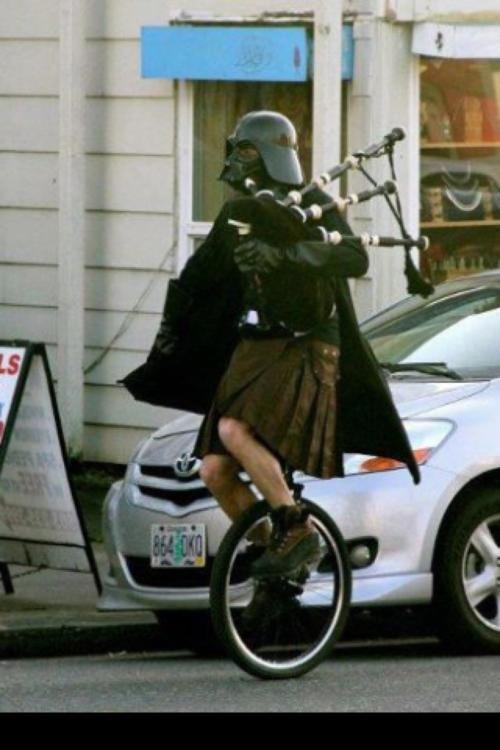
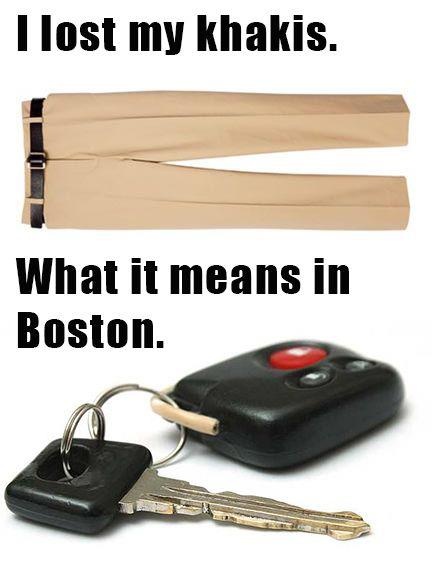
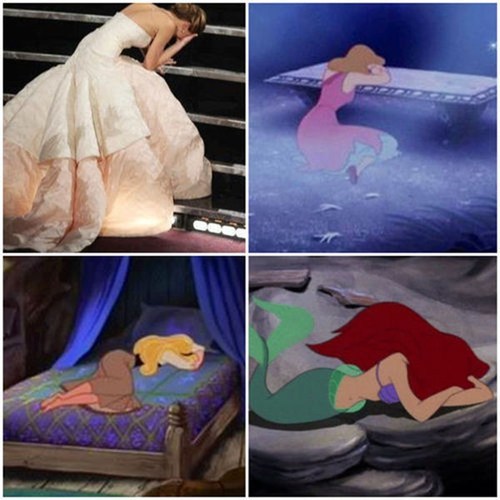
Wordless Wednesday: Random Snark
All images were found on Pinterest and do not belong to me.
.
.
.
.
.
.
.
.
.

SCENE IT! Hooking Your Reader with Scene Endings
In writing circles, we talk a lot about opening hooks—“hook the reader from the first line.” Just as it’s important to hook your reader in at the beginning of the scene and to keep the reader involved by creating tension and complicating your characters’ lives in the middle of scenes, it’s equally as important to make sure the reader keeps turning pages by hooking them with how you end each scene, no matter if it’s in the middle or the end of a chapter (because, after all, a chapter ending is also a scene ending).
Now We’re Coming to the End
Once you’ve created characters the readers will invest in, then you have to start writing each scene, each chapter, to a hook ending. The structure of a chapter is similar to that of the novel itself—except, unlike your book, scenes and chapters end before the resolution of the conflict.
In the comments section on the post about creating tension, I wrote the following:
When I’m writing the first draft, I almost always start each scene not knowing where it’s going. If I’m really stuck, I just think about which character hasn’t had a viewpoint scene recently and start the scene by writing that character’s name. Then I think about what he or she was doing last and what’s happened in the intervening scenes, then use that to figure out where that character is now. Then I keep writing until I figure out what the hook for the end of the scene is. Then, in revisions, I cut, I figure out if it flows,I see where it fits into the sequence/sequel of the story.
Back in 2001, when I was writing what would become my first complete manuscript, after giving the first half (what was at the time completed) to my mother and grandmother for Christmas, I started sending them each chapter as I finished it. Having something of a devilish streak, and wanting to elicit a reaction, I started ending each chapter on a “cliffhanger”—before I’d ever heard of this concept, I was writing a hook. I wanted a reaction. I wanted my readers clamoring for more, more, more—emailing me, I CAN’T BELIEVE YOU LEFT IT HANGING LIKE THAT!!!! and WHAT HAPPENS NEXT??? By doing this, I taught myself to structure my scenes this way—to build up to something that would leave the reader hanging and wanting to turn the page to find out.
Regardless of how long or short your chapters are,
always end your scenes at a place where the reader
must know what happens next.
If you don’t end at a moment of disaster, the next best place to end is in the middle of the conflict, especially if the next scene opens with the continuation of the conflict. Another way to end is at a place when the character is stuck, thinking there’s no way out or that things can’t possibly get worse (which of course, is a method of foreshadowing and immediately implanting the idea in the reader’s mind that things are definitely about to get much, much worse). Or you can end the scene when the character is on the brink of making an important decision or taking a new action that has potential to change the story outcome.
“Suspense is achieved by arousing the reader’s curiosity and keeping it aroused as long as possible” (Stein, How to Grow a Novel). A reader is hooked when she can’t put the book down—she just has to turn the page to find out what happens next. “Immerse the reader so deeply in the story that he’ll let go of the book only when the real world intrudes” (Stein).
Reality TV as well as scripted shows like LOST, Once Upon a Time, Downton Abbey, and soap operas have perfected this in the visual storytelling medium. It’s the long pause by the reality show host before announcing who’s getting kicked off the island. It’s the commercial break right before Heidi Klum announces who’s in and who’s out. It’s the cliffhanger at the end of the show—followed by the snippet of a preview for the next week—that leaves us worried about whether Snow, Charming, Emma, and Henry will all survive and be reunited.
In other words, you’re starting the scene out with a question: can the character do/attain this? To keep a reader hooked into the story, the answer at the end of the scene should be no. Or at least yes, BUT . . . or yes, IF . . .—if it’s a yes answer, it cannot be unconditional.
The end of the scene has two primary jobs:
to answer the scene question (preferably “NO!”)
and to make the reader want to read the next scene
to find out when the character will attain that goal.
A good scene will end with the characters making “backwards” progress; it eliminates options for an easy answer or solution; it makes the walls start closing in (think about the trash-compactor scene in Star Wars); and it has an impact on later events (consequences/sequel—which we’ll discuss in another post).
But one caveat: don’t contrive a disaster just to create a cliffhanger—hooks should be unexpected, but they should also be realistic and logical for your plot, the world of your story, and the development of your characters. Make the lead-up to the hook subtle enough that the reader is suspicious something’s going to go wrong, but not so that they can see it coming from a mile away.
As a reader, what kinds of scene/chapter endings do you like? What makes it hard to put a book down when you reach that scene/chapter ending?
As a writer, do you write to a hook purposely or do you have to figure out how to add hooks/tension in the revision process?
SWOON!!!! Richard Armitage reading the proposal scene from NORTH & SOUTH!
Book-Talk Monday: What Are You Reading? (March 2013)

It’s the first Monday of the month. So I hope you have your lists ready!
.
- What book(s) did you finish reading (or listening to) since last month’s update?
- What are you currently reading and/or listening to?
- What’s the next book on your To Be Read stack/list?
~~~~~~~~~~~~~~~~~~~~~~~
Since the February 2013 update, I’ve finished . . .
-
Quiet: The Power of Introverts in a World That Can’t Stop Talking by Susan Cain. Audiobook read by Kathe Mazur. (3.5 stars, click title for review)
The Viscount Who Loved Me by Julia Quinn. (4 stars, click title for review)
His Enemy’s Daughter by Terri Brisbin. (3.5 stars, click title for review)
The Governess Affair by Courtney Milan (4 stars, click title for review)
Gentleman of Her Dreams (novella) by Jen Turano. (3 stars, click title for review)
I’m currently reading . . .
-
The Six Wives of Henry VIII by Alison Weir. Audiobook read by Simon Prebble. Started 2/28/13
A Kiss for Midwinter (novella) by Courtney Milan. Started 2/28/13.
Currently waiting to be read . . .
-
A Cast of Stones by Patrick W. Carr
Heavens to Betsy by Beth Pattillo
AN HONEST HEART Cover Reveal
After getting the sage advice from other writers to wait until after Follow the Heart releases to do so, I discovered that the cover image is already up on Amazon. So I figured there was no reason in waiting to reveal . . .
. . . the cover of An Honest Heart
Created by Kirk DouPonce of DogEared Design
(November 2013 release)
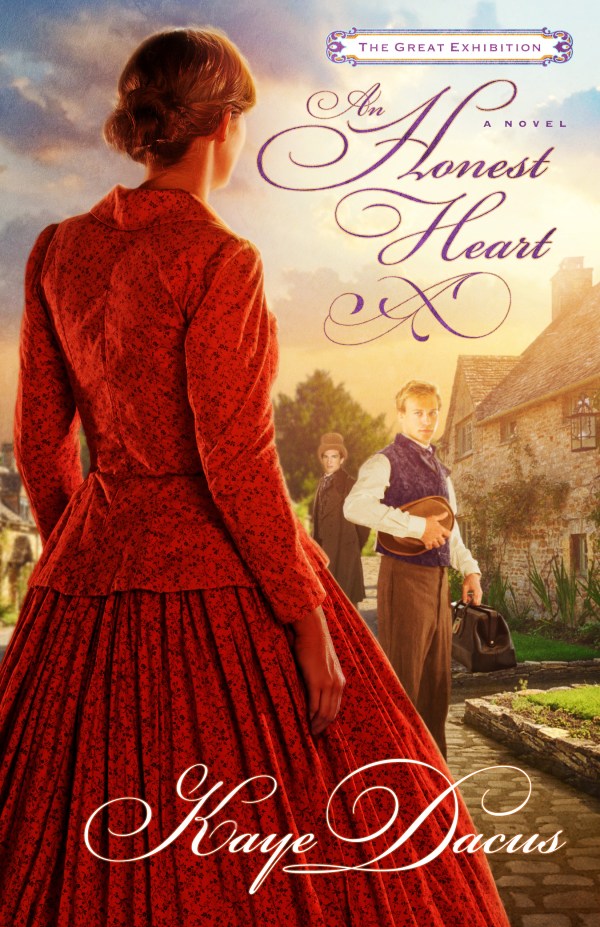
So . . . what do you think?

 KayeDacus.com