Romance Novels: Falling for Paranormal Romance (Guest Blogger Rachel Leigh Smith @rachelleighgeek)
Continuing the series on Romance Novel genres, please welcome special guest poster Rachel Leigh Smith today.
Romance That’s a Bit Out of This World
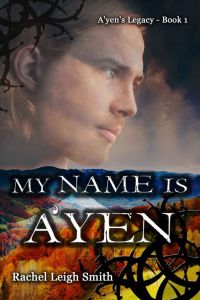 I spent the first twenty years of my adult reading life (started when I was 11) devouring inspirational historical romance. The first novel I wrote was a historical romance. Then on May 16, 2012, I dreamed about a humanoid alien walking through a forest saying two words over and over. The next morning, I started writing My Name Is A’yen.
While exploring the new world creating itself in my head at the speed of light, I wanted to go beyond the bounds of inspirational romance. My bestie and critique partner, Winter Austin, gave me two author names to check out.
In March of 2013, I read The Darkest Night by Gena Showalter, and I haven’t looked back since. Showalter led me to Sherrilyn Kenyon’s Dark-Hunter and The League series—and ooh boy. I’m such a Kenyon fangirl now. It started me on a multi-year binge of exploring, devouring, and falling in love with the beautiful world of paranormal romance.
There’s More to the PNR Subgenre than Vampires
I read romance to watch the hero fall in love and watch him become the man the heroine believes he can be. In paranormal romance, the hero is never a secondary character. Quite often, he’s the main character. My hero-lovin’ heart eats it up. There’s also way more to the genre than vampires.
Like most romance readers, I have my favorite tropes and ones I avoid. Paranormal romance (PNR) allows for a new twist on familiar tropes. Right now, I know of two mail-order bride paranormal series, and another one that’s one of those app-based dating agencies. This is one of the tropes I avoid, though, no matter what genre I’m reading.
Another popular one is a band of warriors working to keep something secret or protect humanity from the unsavory elements of a paranormal world. I’m a sucker for the band of warriors. Forbidden romance is also popular. Think a vampire hunter falling in love with a vampire, or a werewolf falling in love with a werecat. Packs and prides in shifter paranormals fit nicely into the big meddling family trope. Arranged marriages are also popular, as are fated mates. I’m rather fond of fated mates. It’s a powerful thing to explore.
One of the fastest growing subgenres right now is shifters*. I’ve discovered I love shifters—cats specifically, though I’ll read wolves if it’s all I can find when I’m desperate. My favorite shifter series is Psy-Changeling by Nalini Singh. I want to write like her when I grow up.
I also enjoy mythology-based paranormals, where the gods and goddesses of various pantheons, usually Greek or Egyptian, are real. Dark-Hunter is the most incredible example, with the Greek, Egyptian, Sumerian, Celtic, Norse, Cherokee, Mayan, and Kenyon’s personal Atlantean pantheon, either featuring as major characters or influencing events off the page.
- *shape-shifters
It’s a Subgenre That Defies Boundaries
As a writer, I classify my A’yen’s Legacy series as both futuristic and paranormal. There’s quite a bit of crossover between the subgenres of Science Fiction Romance (SFR) and Paranormal Romance (PNR). My aliens are varying degrees of psychic, from telepathic to empathic to telekinetic. While I loved writing A’yen’s Legacy, I found trying to stay within a science fiction framework a bit restricting as I worked on new series ideas. A lot of the things I wanted to explore simply didn’t work in an SFR context.
So I decided to build on a paranormal framework, and toss an SFR element in here and there. What came out was a shifter paranormal set in our modern world where the Egyptian and Greek pantheons are at war for control of world events. I’m having the time of my life with it.
Finding the paranormal genre was like coming home, as a reader and a writer. I’ve found the right place where my imagination flourishes, I can build worlds as big or as small as I want, and my novels written mostly from the hero’s POV are embraced.
It’s a big wide reading world out there. Go explore something new!
____________________
 Rachel Leigh Smith writes romance for the hero lover. She lives in central Louisiana with her family and a half-crazed calico, and is an active member of Romance Writers of America. When not writing, which isn’t often, she’s hanging with her family, doing counted cross-stitch, or yakking about life, the universe, and everything with her besties. There may also be Netflix binging…
You can connect with Rachel, and get updates about her writing, by connecting with her online:
Website: http://www.rachelleighsmith.com
Twitter: http://twitter.com/rachelleighgeek
Facebook: http://www.facebook.com/rachelleighsmithauthor
Romance Novels: What Is “Steampunk”? Special guest blogger Shelley Adina (@ShelleyAdina) #amwriting
Continuing the series on Romance Novel genres, please welcome special guest poster Shelley Adina today.
Shelley Adina on Steampunk Romance
An Early Affection for Steampunk
It’s been a long, strange publishing trip for me . . . from romance to Christian women’s fiction to YA to steampunk. But in writing steampunk, I feel as though I’ve returned to my first love (and who doesn’t like reunion stories?). You see, back in the sixties, as a Canadian child living on an island off the west coast, we got one American channel on the TV, and it broadcasted my favorite show: The Wild Wild West. Every week, Artemus Gordon invented a cool new device or disguise, and of course, the train that carried the two secret agents on their missions was packed full of fantastic weapons and hidden technology. My neighborhood bunch never played house like other kids. We’d play “escape from the orphanage” and “pirates” and we’d re-enact the episodes from that week’s Wild Wild West. Since I was the oldest, I got to be James West. But I secretly wanted to be Artemus. In my view, brains outshone brawn any day.
That outlook still pervades my books, where a lady of resources can make a success of herself no matter what her economic status, because she has the brains to do so. It’s part of what attracts me to steampunk—that hint of subversion, of turning Victorian mores and expectations and society’s standards upside down, especially when they involve women and people of color. And as romance tends to do, we can apply that hint of subversion in our courtship stories, too.
The Tropes and Expectations of Steampunk
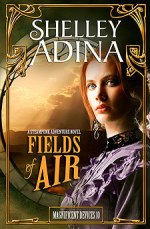
Fields of Air by Shelley Adina
In my mind, the most important element is a resourceful character with a mechanical or adventurous turn of mind—a character who is up to the challenge of your plot. You need lashings of adventure, and heaps of imagination with which to build your story world. Simply locating your story in Victorian London and having an airship sail overhead periodically is not going to produce a steampunk novel. That’s cover art.
Steampunk in the Romance Genre
In the courtship story, you might find the heroine with mechanical abilities being tapped by a secret agency to work undercover “for the Empire.” If she falls in love, it might endanger the mission, whereupon the heroine has a choice—the good of the country versus the needs of her own heart. This is the kind of romance conflict that male heroes have been used to dealing with for decades; but just as romances have changed to keep pace with today’s active women, in steampunk, danger and suspense are equal-opportunity problems as well.
Steampunk has something to say—about society, about gender roles, about human ability. The “punk” element is what sets it apart from either fantasy or historical fiction. It’s subversive, it’s critical, and the reader ought to come out of it both greatly entertained and a little bit changed.
A Few Steampunk Favorites
Some of my favorite examples of steampunk romance include Gail Carriger’s Parasol Protectorate books and Lindsay Buroker’s The Emperor’s Edge series. Also, the young adult genre harbors some excellent steampunk, such as Kenneth Oppel’s Matt Cruse trilogy (which starts with Airborn) and Scott Westerfeld’s epic Leviathan trilogy. Then there’s Cherie Priest’s Clockwork Century books and Devon Monk’s weird west series, Age of Steam (the first book, Dead Iron, was a total head trip) that are more action-oriented women’s fiction, or action-adventure, than romance, but still manage to turn women’s roles on their heads.
This genre is rife with fabulous imaginations and amazing worlds that never were . . . but could have been. The airship is waiting here at its mooring mast—I invite you aboard!
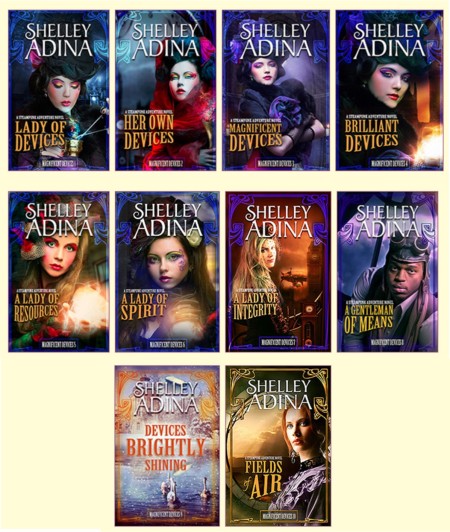
The Magnificent Devices series by Shelley Adina
~ * ~
 Shelley Adina is the author of 24 novels published by Harlequin, Warner, and Hachette, and 12 published by Moonshell Books, Inc., her own independent press. She holds an MFA in Writing Popular Fiction from Seton Hill University in Pennsylvania, where she is adjunct faculty. She won RWA’s RITA Award® in 2005, and was a finalist in 2006. When she’s not writing, she’s usually quilting, sewing historical costumes, or hanging out with her flock of rescued chickens.
To learn more about Shelley and about her books and upcoming projects, connect with her online via:
Website: http://www.shelleyadina.com
Facebook: https://www.facebook.com/shelley.adina and https://www.facebook.com/magnificentdevices/
Twitter: @shelleyadina
Pinterest: https://www.pinterest.com/shelleyadina/the-magnificent-devices-series/
Romance Novels: What’s the Difference between “Trope” and “Subgenre”? | #amwriting
 Friday, we looked at what we romance authors/reviewers mean when we speak of tropes in romance—certain types of characters or storylines that have gained popularity throughout the romance genre. But then there’s another word that we use a lot which needs to also be defined: subgenre.
As a reminder the Romance Genre is defined as books that follow this basic outline:
1. Meet: H & H have significant encounters.
2. Lose: H & H are separated.
3. Get: H & H reunite
4. HEA (HFN): H & H have a “happily ever after” (“happily for now”) ending.
Beyond this basic structure, though, there are infinite possibilities for variety—and for creating “hybrid” novels that incorporate elements of more than one genre.
But aren’t tropes the same as subgenres?
Subgenres, at their most basic level, are actually categories that we can easily sort romance into (historical vs. contemporary, sensual vs. sweet). But there are some tropes that have become so popular, so common, that they have gained the distinction of subgenres.
Some of the most basic classifications through which we can start breaking the genre down into subgenres are:
- Historical Romance: stories in an era prior to the current, usually prior to the Vietnam Conflict—such as my Ransome and Great Exhibition series
- Contemporary Romance: stories set in the current timeframe in which they’re written—such as my Bonneterre and Matchmakers series
- Inspirational Romance: romance novels, contemporary or historical, which incorporate a spiritial element, traditionally a Christian worldview, ranging from “moral” to “evangelical”
- LGBTQ Romance: romance novels featuring lesbian, gay, bisexual, transgender, or “questioning” characters as the main romance couple
- African American, Asian American, or other specific ethnicity: romance novels featuring characters from one or more ethnicities other than white European/American which incorporate specific cultural traditions into the characters, settings, and storylines
And those are just a few of the basic subgenre classifications.
To start differentiating tropes and subgenre, let’s look at the four books of mine that we looked at in the tropes post:
| Book | Trope(s) | Subgenre(s) |
|---|---|---|
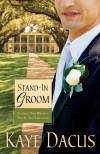 |
Stand-In Groom Trope 1: Wedding planner falls in love with “groom” Trope 2: Hidden identity Trope 3: Older main characters (contemporary = 35+) Trope 4: Large, friendly, meddling family (southern) Trope 5: Big Misunderstanding |
Subgenre 1: Contemporary Romance Subgenre 2: Inspirational Romance Subgenre 3: Southern Romance |
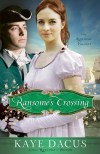 |
Ransome’s Crossing Trope 1: Girl disguised as boy, excels at boy stuff Trope 2: Hero (almost) immediately sees through disguise Trope 3: Cliffhanger ending (series novel) |
Subgenre 1: Historical Romance Subgenre 2: Regency (1800-1820) Romance Subgenre 3: Royal Navy Romance Subgenre 4: Inspirational Romance |
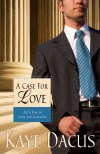 |
A Case for Love Trope 1: Forbidden romance Trope 2: Enemies to lovers Trope 3: Romance opens hero’s eyes to his/his family’s flaws Trope 4: Romance trumps duty/obligation |
Subgenre 1: Contemporary Romance Subgenre 2: Inspirational Romance Subgenre 3: Southern Romance |
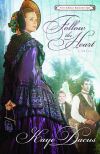 |
Follow the Heart Trope 1: Must marry for money/falls in love with someone relatively poor Trope 2: Must decide between two suitors Trope 3: Poor relations depending on wealthy relatives to help find marriage prospects Trope 4: “Sense & Sensibility” siblings (one with all the reason/responsibility, the other giving into the whims of romance with no sense of responsibility) |
Subgenre 1: Historical Romance Subgenre 2: Victorian (British, 1830s–1900ish) Romance Subgenre 3: Inspirational Romance |
As each of the categories mentioned above has expanded, new subgenres have popped up as certain tropes/settings/historical periods/etc. have gained popularity. For example, within the Historical Romance category, we’ll find these subgenres:
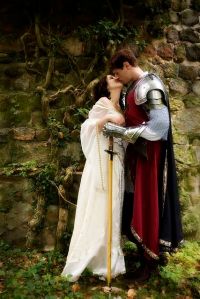
Medieval Romance
- Medieval Romance: usually set in England from the 11th–15th centuries (or between the Normal Conquest of 1066 up until the end of the War of the Roses/dawn of the Tudor era in the mid- to late-1400s), with varying degrees of historical accuracy.
- Highlander Romance: usually also set between the 11th–15th centuries–though some may stretch this into the 18th century and the era of Bonnie Prince Charlie—but set in Scotland featuring a powerful warrior/clan laird as the hero.
- Colonial America: these can be romance novels featuring characters involved in the American War for Independence, or set even earlier, during the earliest decades of settling the North American continent—17th–18th century.
- Regency Romance: the most popular time period of the last two or so decades; though the actual British Regency period was 1811–1820, in the romance genre, it’s generally accepted as from around 1800 into the early 1820s, and always set (at least partially) in Britain (since it’s the British Regency that gives this era its name).
- Victorian Romance: set in Britain—or one of her colonies—during the reign of Queen Victoria (1837–1901)—or, again, stretching it for the Romance genre, from about 1830 to around 1900. Does not include American-set novels from the 19th century—there was so much else going on in the US during this time that it needs to be designated differently. Plus, again, it’s an era named for a British monarch; therefore, the category name connotes it’s going to be a British setting.
- Prairie/North American Frontier Romance: set in North America during the 19th century—usually deals with at least one of the two main characters traveling west from the more civilized east to settle in the Untamed West as pioneers. This is different from Western Romance, which usually features cowboys, ranches, Indian attacks, cattle/livestock drives, gunfights, etc.
- Gilded Age Romance: usually set in a big city (New York, Boston) or high-class resort area (think: the Hamptons) on the east cost of the U.S. during the 1890s.
- Edwardian, or Titanic-/Downton Abbey-Inspired, Romance: set, you guessed it, during the Edwardian age—or from around 1900 through World War I.
And on and on it can go. As certain time periods gain in popularity, usually influenced now by popular media (see Titanic/Downton Abbey reference above), we see a proliferation of books set in that era which can be a flash in the pan (such as the multitude of books set on the Titanic which were published around the 100th anniversary of its ill-fated voyage in 2012) or which can become its own subgenre with its own conventions and expectations.
How do subgenres develop out of tropes?
As mentioned before, there are some tropes that become so popular that they become subgenres in and of themselves, with their own conventions and reader expectations. Such as:
- Medical Romance: one or both of the main characters is a medical professional, and there is some kind of medical issue that is integral to the plot of the novel
- Marriage of Convenience (as discussed in the tropes post)
- Professional Sports Figure: as it suggests, these feature a professional (or semi-professional) athlete, someone who makes his/her living from participating in that sport; such as Harlequin’s NASCAR line or certain authors’ series featuring specific sports: Susan Elizabeth Phillips with professional football, Rachel Gibson with ice hockey, or Jaci Burton’s Play by Play series which features a different sport in each book
- Military Romance (again, described in the tropes post)
- Time-Travel Romance: one of the main characters travels back in time to the era of the other main character—the book will then incorporate elements of that historical setting while also keeping some of the contemporary elements through the time-traveling character; unlike Outlander, which is an epic fantasy with a strong romantic thread, true Time-Travel Romances keep the traditional romance novel structure—like Jude Deveraux’s Knight in Shining Armor.
For a trope to become a subgenre, first authors must incorporate that trope into several (if not all) of their stories—such as a Royal Navy captain (rather than a titled gentleman) as a main character in a Regency romance and then setting all/most of the story aboard his ship. If readers fall in love with that trope and demand more and more books featuring that trope, it eventually gains the status of a subgenre. In other words, it’s no longer a Regency romance that happens to have a Royal Navy captain—it becomes a Royal Navy Romance (yes, I’m really trying to make this happen!)
What about romance novels that incorporate elements from other genres?
When talking about romance, we cannot ignore the fact that over the past twenty or thirty years, authors have become quite successful at creating hybrid stories that have created some of the most popular subgenres. For example:
Romantic Suspense: There is a suspense element (one or both the hero or heroine is personally in jeopardy) that is almost to equally important as the romance plot. Take out either thread, and the story falls apart. These are usually contemporary settings (historical romantic suspense tends to fall into the “Gothic” category–see below), and one of the characters may be involved in law-enforcement in some manner (an FBI agent, a police officer, a homeland security agent, etc.).
Paranormal Romance: These are stories in which one of the characters is a vampire, werewolf, sorcerer/ess, shape-shifter, ghost, angel (or former angel), or someone with supernatural talents, such as magic or psychic abilities. These are set in the real world (contemporary or historical), though the actual location (city, country) may be fictional. Not to be confused with fantasy.
Fantasy Romance: These are romances that have an other-worldly setting. The characters may or may not have special/supernatural abilities. While the fantastical setting is important, the romance is still what takes center stage.
Futuristic Romance: Can be science fiction or dystopian/end-times—but, again, the romance/relationship is the focus of the story, not the setting or events, which differentiates it from the regular sci-fi/dystopian genres.
War Romance: Just like it sounds, these are historical romances set during a real war: one of the World Wars, the American Civil War, the Napoleonic war. It isn’t just set during that time period, though. The war must have an effect on the storyline/relationship.
Gothic Romance: In these historicals, the heroine’s life is in jeopardy from someone very close to her—usually a close relative—but the suspicion usually falls squarely on the hero. These are most often written only from the heroine’s POV (1st or 3rd Person), and are set in gloomy climates (lots of storms, fog, cloudy skies, cold, etc.) in mausoleum-like houses/castles. They very often appear to have paranormal elements that are usually explained to be of perfectly natural origins at the end.
Again, this is not an exhaustive list, but those I could come up with easily, just looking through the titles on my own bookshelves (or thinking about what authors I know are writing). For a much more exhaustive list, complete with examples of specific titles, visit this great site: http://www.magicdragon.com/ROgens.html.
The most important thing to keep in mind about all of these subgenres is this: if you take the romantic thread out of the story and you still have a story (no matter how weak it is), it’s not a romance novel. No matter the trope or subgenre the story is built around, the developing relationship and ultimate happy ending are integral to it as a romance novel.
For Discussion:
What is your favorite subgenre of romance? What subgenre(s) have you written/are you writing? Do you have a tendency to read mostly one subgenre over others? What are some of the advantages of writing in a subgenre that crosses over to another genre (such as suspense, fantasy, or science fiction)? What are some disadvantages?
Romance Novels: What Are “Tropes”? #amwriting
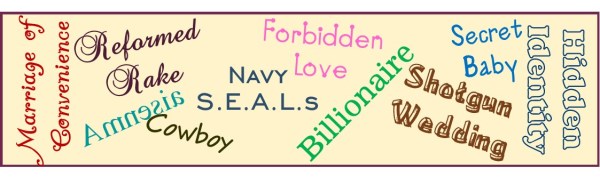 As I mentioned yesterday, there are two terms you hear bandied about a lot when it comes to romance: formula and trope. We tackled formula yesterday (did anyone else crave cake after that post?), and today we’re going to explore (scratch the surface, really) of tropes and what they mean in the context of romance novels.
What does Trope really mean?
If we’re going by the dictionary definition:
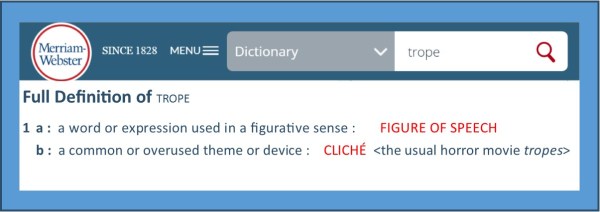
I asked some colleagues how they would define trope, and here are a couple of responses:
When I think of tropes, I think of things romance readers want and expect. Here are the elements—bend them and twist them to suit your story. At first glance, incorporating tropes can look like it limits the creative process, but really, it gives an author free rein to make something tried and true into something different and amazing.
~Deanna DeeI think of tropes as a form of shorthand—characters, settings, situations, or themes that are so commonly found in a certain genre readers have unconsciously (or consciously) identified them on their own and can spot them immediately. While I don’t encourage using tropes when avoidable, I also think it allows the author, aware their readers can spot the trope, to quickly insert an initial story element (i.e., a trope) then move on to digging deeper into how their story/characters make that trope unique. It means readers can crack open a book and in the first chapter get 80% of the “gist” of what the story is and where it’s probably going. Then the author gets to spend the rest of the novel surprising the reader with how they use the trope. Or boring them by sticking too closely to the trope.
~Anna La Voie
So, akin to the formula we discussed yesterday, trope can be a starting point, a structure on which to start building the story. According to the romance blog Heroes and Heartbreakers, tropes are “conventions of the romance genre. Some of them never get old and still have the power to delight. On the other hand, some of them need to die a fiery death.” (The page doesn’t go on to identify which ones they think should “die a fiery death.” And I think that’s wise; that, like all things, is a matter of personal opinion, I believe.)
If I don’t know what tropes are, how can I identify them?
You probably subconsciously recognize tropes, even if you couldn’t identify them by name. But let’s look at a few books you might have read (I hope!) and identify the tropes at work in them.
| Book | Trope(s) |
|---|---|
|
Stand-In Groom Trope 1: Wedding planner falls in love with “groom” Trope 2: Hidden identity Trope 3: Older main characters (contemporary = 35+) Trope 4: Large, friendly, meddling family (southern) Trope 5: Big Misunderstanding |
|
Ransome’s Crossing Trope 1: Girl disguised as boy, excels at boy stuff Trope 2: Hero (almost) immediately sees through disguise Trope 3: Cliffhanger ending (series novel) |
|
A Case for Love Trope 1: Forbidden romance Trope 2: Enemies to lovers Trope 3: Romance opens hero’s eyes to his/his family’s flaws Trope 4: Romance trumps duty/obligation |
|
Follow the Heart Trope 1: Must marry for money/falls in love with someone relatively poor Trope 2: Must decide between two suitors Trope 3: Poor relations depending on wealthy relatives to help find marriage prospects Trope 4: “Sense & Sensibility” siblings (one with all the reason/responsibility, the other giving into the whims of romance with no sense of responsibility) |
While not all of these fall under easy to name tropes/categories, if you think about those I’ve listed, you might be able to easily identify other books you’ve read which have similar storylines/issues/plots.
What are some of the most common tropes?
Romance publishers have built their business—and even entire lines—on romance readers’ love of some of the most common tropes. Some of the most common, across-the-board (from all ends of the sensuality spectrum) are:
- Marriage of Convenience: Characters are married (agree to marry) based on an arrangement other than love: a business contract, blackmail, personal safety of one or both, to inherit a fortune, etc. (Ransome’s Honor uses this trope in Julia’s marriage proposal to William; in Follow the Heart, Kate must consider a MOC in order to financially save her family). Subcategories of this include Arranged Marriage, Mail-Order Bride, Widower with a Child Marries Newly Widowed Pregnant Woman, Political/Royal Arranged Marriage, Substitute for a Runaway Bride/Groom. This is one of my favorite tropes.
- Enemies to Lovers: The H/H dislike/hate each other and are at odds from their first meeting. They might have known each other a long time and one wronged the other while the other has never forgiven them, or the meet cute might be something that sets them down the path to anger fueling the flames of romance. Either way, the conflict between them is mostly internal—driven by their enmity for each other. You’ve Got Mail is a perfect example of this. I also used this to a certain extent in Turnabout’s Fair Play.
- Friends to Lovers: The H/H know each other before the book starts and have been acquaintances/friends for a long time. The plot of these novels involves some kind of conflict that brings them together in order for them to realize (and admit) they’re falling in love and want to be together. Some of the most common conflicts in this trope are: will they/won’t they, matchmaker friends/family, we’re better off just friends, we grew up together and we’ve always been more like siblings, last-chance romance (agreed upon age at which they’d marry if neither is married by then). Examples: Jane Austen’s Mansfield Park, my Menu for Romance.
- Reunion/Second-Chance at Love: The H/H had a romantic encounter/relationship in the past (at least a few if not several years ago) that didn’t end well (obvs, because they’re no longer together!). They went their separate ways, may have had other romantic relationships (or even been married, though no longer are), but “fate” has now brought them back together. This can use the “enemies to lovers” trope or “friends to lovers” trope as part of the re-development of their relationship. Subcategories include: We had a romantic encounter and I secretly had your baby (Harlequin has entire lines devoted to this idea); we married by convenience years ago, went our separate ways, but now I need you for something (social/political, an heir, a family gathering, etc.); we were too young and someone talked us into breaking up, but now we’re older and wiser and have always carried a torch for each other though we’re still to angry with each other to admit it; and so on. Examples: Jane Austen’s Persuasion, my Love Remains and Ransome’s Honor.
- Love triangle—I used this in An Honest Heart, along with . . .
- Character has secret, the revelation of which could destroy the relationship
- Opposites attract
- Poor character/obscenely wealthy character
- Secret/hidden identity
- Spies (historical in war, CIA/NSA or MI-5/MI-6 agents, etc.)
- Law enforcement (US Marshal, FBI agent, etc.)
- Military special forces (Ranger, SEAL, Green Beret, or historical equivalent)
- Secretly royal
- Amnesia
- Older heroine/younger hero (The Art of Romance)
- Successful (alpha) heroine / struggling (beta) hero (also The Art of Romance)
- Fairytale retelling
- Fake engagement
- Matchmaker (um, I think I have some of these somewhere in one of my series)
- Mistaken identity, unknown identity (see also Secretly Royal, Amnesia)
- Identical twin takes sibling’s place/identity
- Return to hometown / move to small town / stuck in small/hick town
- Prairie / Wagon Train / American Frontier (different from “Westerns”)
- Kidnapped by pirate / native / Viking / Fabio / enemy, whathaveyou (ding-ding-ding: Ransome’s Quest)
- Sibling’s former/ex-spouse
- Ugly duckling to swan
- Revenge romance (seeking revenge through pretending to woo the other character, then accidentally falls in love for real)
- Nanny/Employer (hello, Sound of Music!)
- Shotgun/Soiled-Honor Wedding (after being discovered in flagrante delicto—anything from a stolen kiss in a historical to actually doing the “deed” in both historical/contemporary, the H/H are forced by others to marry in order to preserve their honor/reputation—or someone else’s)
And a quick list of some of the other common tropes:
There are tons more, but I don’t have all day to sit here and list them.
What are your favorite romance novel (or movie) tropes? Please give us some examples of your favorite titles!
Romance Novels: What Are “Formulas” and Are They Bad? #amwriting
 There are two words you’ll hear writers—especially romance writers—throw around which, if you’re only a reader, you might not understand: FORMULA and TROPE. Formula, when it comes to romance, has taken on quite a negative connotation, which I hope to dispel today. Tropes are something we writers like to talk about—which ones we prefer to read and which ones we’ve used in which of our books. Today (formula) and tomorrow (tropes), we’ll define these terms and decide for ourselves whether they’re good or bad for the genre.
How Can Formula Not Be a Bad Thing?
When we talk about romance novels, the words “formula” or “formulaic” almost always come up. In fact, that’s one of the most common terms others outside of the genre use to insult it—they don’t like romance novels because they’re too “formulaic.” (As opposed to mystery novels or other genre fiction, right?)
As I wrote in the post Romance Novels: What Are They, Anyway?, romance readers expect their romance novels to hit certain “beats”—or, in other words, to follow a certain formula: The meet, the separation, the reunion, the happy ending. This expectation may seem limiting—stifling—to the creative process.
Actually, as a romance writer, I find that already knowing I have a built-in structure, that I have certain beats I need to incorporate into my story, makes it so much easier to write and be creative.
Why? Well, because my story already has something of a structure before I even start writing. I know I’m going to have two main characters. I know the H/H are going to have to meet pretty close to the beginning of the book, because I know that the plot of my book doesn’t get rolling until they meet (after all, the plot of a romance novel hinges on and is built around the developing relationship between the H/H). I know I need to come up with conflicts that challenge the H/H’s developing relationship. I know there needs to be a major crisis/conflict that threatens the relationship (something that either separates them or that they need to face together, though one might not come out of it unscathed). And I know the ending of my book—the H/H will have a happy ending. I may not know how they have that happy ending, but I know that’s what I’m working toward.
But Doesn’t a Formula Make It Boring to Write/Read?
Which would you rather eat? A cake made by someone following a precise recipe, or one made by someone who’s just throwing a whole bunch of ingredients together without measuring anything?
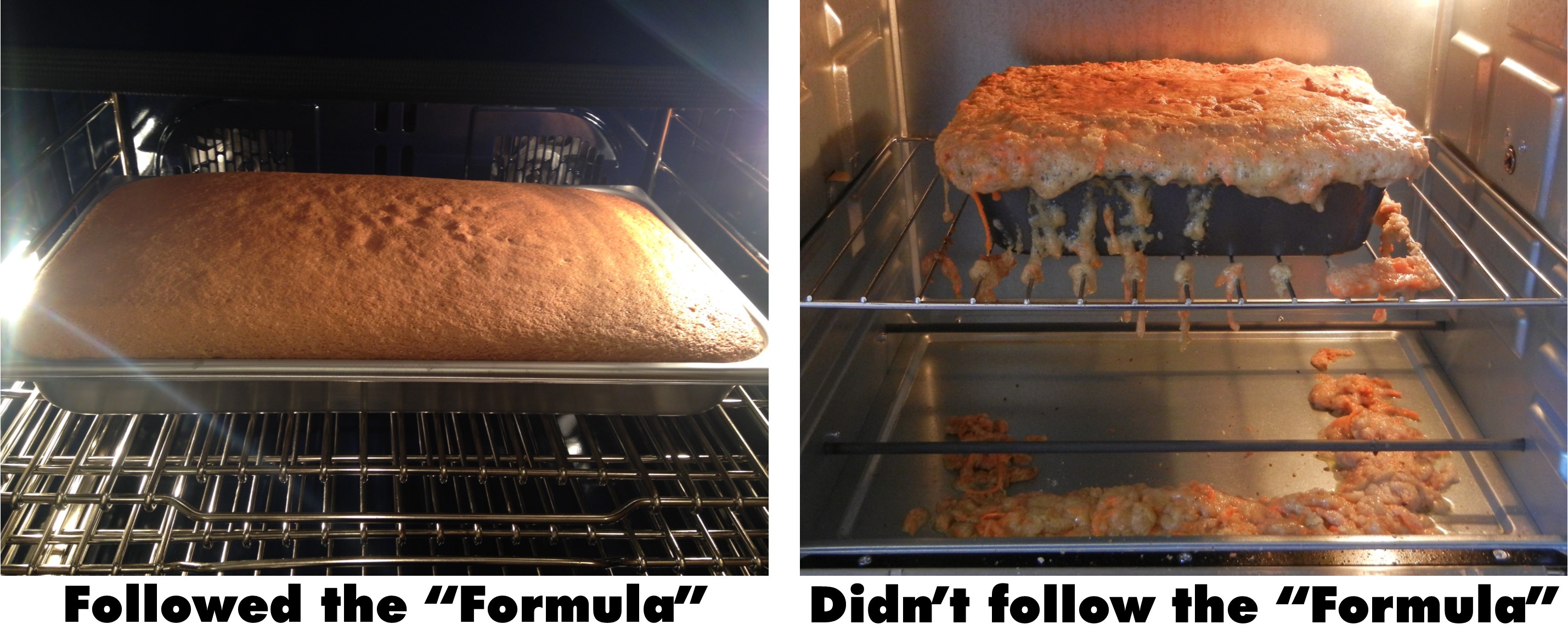
If you’re an accomplished cook, it’s likely that you can walk into your kitchen, grab a bunch of ingredients, and make a tasty meal without having to follow a recipe or do much measuring. But were you always able to do that? Or was there a point at which you had to follow recipes (or have someone telling you exactly what to combine and in what ratios)?
Writing is a lot like cooking—and writing romance is even more like baking. When you first start out, you have to follow a recipe—you have learn/follow the “rules” of writing, and in genre fiction, you need to learn the formulas/tropes that are common in the genre (because they’re what the readers are expecting). But eventually, you’ve learned the theory so well, you can just sit down and “throw something together” because you know your “flavors” and “ratios” and how to balance everything out to get a “tasty” outcome.
With romance writing, our readers are expecting anything from a pie with a perfectly flaky crust to a massive wedding cake. And if you’ve ever tried baking either of those, you know that it not only takes practice, it takes precise measurements from a tried-and-true recipe. However, there isn’t just one kind of pie. Nor is there just one kind of wedding cake. As authors, it’s our job to give our readers something different—a peach and cherry cobbler or layers of chocolate espresso cake with raspberry filling beneath that fluffy white frosting—so that they don’t get bored with the same old “desserts” every time they come to us for their “sweets.”
Yes, bakers experiment and create new stuff all the time—cronuts, anyone? But they have to know what they’re doing—they have to be experts with their craft, they have to know the rules of baking (does it need leavening? how much? how much is too much sugar? what about liquid—how wet or dry does the batter need to be? what cooking method should be used—oven, deep-fry, boil? etc.). It’s knowing the basic recipes, knowing the “formula” behind baking, that allows their creativity to soar. And even then, even with the experts, there’s a lot of experimentation followed by failures until the right balance of formula and creativity is struck. It’s the same with writing romance.
 Back to the cake analogy—think about how creative experienced bakers can be with adding other flavors or textures—not to mention the decorations, from simple and elegant to elaborate and breath-taking. Yet every piece of it, no matter how creative, still follows a “formula.” Frosting, fondant, ganache, and royal icing all have basic recipes which must be followed in order for them to have the right consistency. Could you substitute salt for sugar in buttercream frosting? Sure. And it might still come out looking the same and have the same consistency. But no one would eat more than one bite because it doesn’t meet the expectations of the consumers who want their frosting to be sweet, not salty.
Could you add flavors like amaretto or strawberry or lemon-ginger? Absolutely. What about changing the color? Yep. Using a combination of several different types of frostings/coverings? Sure. How about edible flowers or some made out of fondant or gum paste? You betcha. But no matter how creative these bakers get, when we go to a wedding (or a birthday party) and see something that looks like a cake, we have a certain expectation as to what we’ll be getting. What’s served to us can fail, meet, or exceed our expectations.
It’s all still cake. And it’s our prerogative as to what flavors we like and dislike, whether we want square or round tiers, and how much decoration we want. But now I’m dancing on the edge of tropes and that’s the topic for tomorrow.
What do you think of when you hear the word “formula” when it comes to romance novels? In what ways do you expect there to be a formula, and in what ways does seeing a novel following the formula bother you?
Romance Novels: Do They Have to Be 3rd-Person/Past-Tense? #amwriting
 A couple of weeks ago, before I went traveling throughout the southeast (southwest, from my perspective in Tennessee, since I was in Arkansas and Louisiana), we were discussing the expectations of Romance readers when it comes to what a “Romance” genre novel truly is, and what it should contain. Those two posts covered HEA/HFN endings and story structure. But what about the technicality of viewpoint—do romance novels always have to be written in third-person/past-tense?
What are Viewpoint, POV, or Tense, and Why Should I Care?
- Viewpoint means the character(s) through whose eyes (inside whose head) the reader gets to experience the story.
- Point of View (POV) means the “person” the narration is written in (think back to elementary school)—in first person, the narrative is written from the viewpoint of I, me, my, ours, we, etc.; in third person, it’s he/she/they, etc., even in the main characters’ viewpoints. (Second person—you, your—is very rare in fiction.)
- Tense means the “time” of the prose—present tense means it’s written as if it’s happening right now (I go to the cabinet and open the drawer. I take out a knife . . .) and it’s usually used with first-person POV; past tense means it’s written as if it happened in the past—but the writer’s challenge is to still make it feel immediate (She opened the cabinet drawer and yanked out a knife . . .).
Now, as to why you should care . . . that’s going to take a little longer to try to explain.
Why Should You Care—As a Reader?
As a reader of romance novels, this may not be something you’ve given much thought to—especially since the majority of romance novels, both contemporary and historical, tend to be written in third-person/limited (only one viewpoint at a time, no head-hopping), with the viewpoints of just the two main characters (perhaps one or two additional important secondary characters) and in past tense. You may not have ever been able to identify it, but you know it when you see it. Just pick up any random romance novel sitting near you (I know there’s one there) and open it to the first page. Most likely, it’s third person and past tense.
But why is it 3rd/Past? Well, that’s the way it’s been written in for hundreds of years (think of Jane Austen) and it’s what the vast majority of the reading audience for the genre prefer—and, thus, what we expect when we pick up something labeled “romance”—just like we expect a happy/hopeful ending (HEA, HFN) and a focus on the developing relationship between the H/H. There’s a reason why the romance genre has the largest reader-base: because readers know specifically what we want in a book.
But how do you even know how to recognize it—and which one you prefer? Let’s do an experiment.
Original:
“I hate weddings.”Flannery McNeill sank down on the top step of the broad stage as the rest of the wedding party gathered around the wedding planner. She didn’t need to hear all of the dickering and whys and wherefores. She just wanted the bottom line: where to stand, and how to get there.
“You don’t mean that.” A gorgeous man with sandy brown hair, vivid blue eyes, and dimples to die for plopped down on the step beside her.
Flannery looked at her boss, and friend, Jack Colby. “Yes, I do. A wedding is a flashing neon sign warning everyone that they’re never going to have the same relationship with these people ever again.”
Jack’s broad forehead creased. “What do you mean?”
Flannery braced her hands on the stage floor behind her and locked her elbows. “Take my sisters, for example. They were fine before they got engaged. But then they couldn’t carry on an intelligent conversation. They morphed into this unrecognizable we-us entity and couldn’t see anything in terms of me-I or make their own decisions.”
Jack laughed. “People just get caught up in the excitement of planning a wedding. They’ve both been married a long time—it can’t still be that bad.”
“Ha!” Flannery’s cheeks burned a little when several people turned at her echoing derision. “Emily was one of the youngest junior executives in the bank where she worked before she had kids—now she can’t even balance her own checkbook; her husband does it.”
Yes, that’s the beginning of Chapter 1 of Turnabout’s Fair Plain, as originally written in third-person-limited/past-tense. The book, as all of my books do, also includes the viewpoint of the hero, Jamie.
But what if I’d written it differently? Let’s see:
“I hate weddings.”
I sink down on the top step of the broad stage as the rest of the wedding party gathered around the wedding planner. I’m so sick of hearing all of the dickering and whys and wherefores. I just want the bottom line: where I’m supposed to stand, and how I’m supposed to get there.
“You don’t mean that, Flannery.” My boss, and friend, Jack Colby—a gorgeous man with sandy brown hair, vivid blue eyes, and dimples to die for—plops down on the step beside me.
I look up at him. “Yes, I do. A wedding is a flashing neon sign warning everyone that they’re never going to have the same relationship with these people ever again.”
Jack’s broad forehead creases with what I recognize as his confusion over what he calls girl-stuff. “What do you mean?”
I brace my hands on the stage floor behind me and lock my elbows for support. “Take my sisters, for example. They were fine before they got engaged. But then they couldn’t carry on an intelligent conversation. They morphed into this unrecognizable we-us entity and couldn’t see anything in terms of me-I or make their own decisions.”
Jack laughs. “People just get caught up in the excitement of planning a wedding. They’ve both been married a long time—it can’t still be that bad.”
Annoyed, I let out a loud, “Ha!” Then my cheeks burn a little when several people turn at the echoing sound. “Emily was one of the youngest junior executives in the bank where she worked before she had kids—now she can’t even balance her own checkbook; her husband does it.”
Although it nearly made my skin crawl to rewrite that passage in first person/present tense, even I’ll admit that’s a personal preference—I just don’t like reading (or writing) 1st/present in fiction. However, what other changes would that have made in this particular novel? Well, I wouldn’t have been able to include any of Jamie’s, Cookie’s, or Big Daddy’s viewpoint scenes—everything would have been only from Flannery’s viewpoint. Imagine if the movie You’ve Got Mail had been shown only from the Meg Ryan character’s viewpoint. We never would have known anything about Tom Hanks’s character—we never would have gotten Joe’s viewpoint, nor known that, deep-down, he’s really a nice person, not just some cut-throat businessman intent on putting Kathleen’s store out of business. And then we wouldn’t have been rooting for her to get together with him because we wouldn’t have known that he was worthy of her. (And to take that example even further, with another Ryan–Hanks outing, imagine if Sleepless in Seattle had been told only from Sam’s viewpoint—if we never knew anything about Annie except for the three random times Sam sees her: at the airport and from across the street when she’s stalking him, and the other at the very end when he’s just found his runaway child at the top of the Empire State Building. What kind of a romance would that have been?)
So, yes, as a reader, it’s important to know what you like when it comes to viewpoint/POV/tense.
Why Should You Care—As a Writer?
As a writer of romance novels, it’s your job to know what the expected conventions—including storyline, tropes, and technical aspects—are for your genre as well as for the publisher(s) (and/or audience) you’re targeting.
As readers, we like our romance novels to be written in third-person because it usually means we’re going to get the viewpoints of both main characters—and that’s something that we’ve not only come to expect but demand from our romance novels*.
- *Except for in certain subgenres of romance, like Gothic, in which we expect first person because of the reader expectations of that specific subgenre.
The biggest problem with trying to write adult-level romance in first person is because the definition of a romance novel is that it focuses on the developing relationship between the two main characters. That’s awfully hard to do when you only get the viewpoint of one of the characters. And dual (dueling) first-person POVs in a book are very hard on most readers—its so hard to tell, most of the time, whose viewpoint the scenes are in, especially when readers set down and pick up the book time and time again—it’s not always clear who the “I” character is.
The genre is ever growing and evolving, though. And it takes authors who push the boundaries to do that. Otherwise, we’d still be reading/writing the bodice-ripping headhoppers of the 1970s/80s/90s (or, for Christian/Inspy writers—prairie romances or the coming-of-age, tame/save the backslidden/ungodly hero stories of Grace Livingston Hill). And I’m not knocking any of those on either side of the market—I grew up reading them voraciously; however, when I go back and try to reread them now . . . yikes!
The authors who helped evolve the genre into what it is today were those who knew and understood the readers’ expectations and started out writing within those guidelines/expectations—then, once they’d created their audience/brand, they started subtly pushing the envelope and introducing their readers to new elements—the hero’s viewpoint, limited POV, [consensual initial sex encounter and non-virgin heroines in the general-market], [characters without squeaky-clean pasts and grittier/edgier subject matters in Christian/inspy], beta heroes and alpha heroines, etc. Once readers learned to like those elements, the market for books featuring those grew, and the former tropes diminished. But it took a long time. We romance readers like what’s familiar and don’t like to let go of it easily.
As we’re so accustomed to hearing from our mentors/instructors: You have to know the rules before you can break them. And learning the “rules” of writing romance means knowing the genre, its readers, and the expectations well. Which means extensive reading of the genre—especially if you’re pursuing traditional publication, you must read what the specific publisher is putting out to learn their expectations.
However, you can write your story any way you want to. Just don’t be surprised if it doesn’t do well when pitching it or with readers. You never know. There could be an audience out there waiting for exactly what you want to write. You’ll never know if you don’t try, especially if you feel strongly about breaking all the genre conventions. You may turn out to be the person who starts the next big trend in publishing. Just don’t be disappointed/surprised if you don’t.
It’s Reading Report Time! (April 2016) #amreading
Happy First Monday of April, everyone.
It’s Reading Report time!
Open Book by Dave Dugdale
.
Tell us what you’ve finished over the last month, what you’re currently reading, and what’s on your To Be Read stack/list. And if you’ve reviewed the books you’ve read somewhere, please include links!
To format your text, click here for an HTML cheat-sheet. If you want to embed your links in your text (like my “click here” links) instead of just pasting the link into your comment, click here.
.
- What book(s) did you finish reading (or listening to) since the last update?
- What are you currently reading and/or listening to?
- What’s the next book on your To Be Read stack/list?
Here’s my report:
I got some more reading done in March because I was traveling, so I got through a few audiobooks along the way.
What book(s) did you finish reading (or listening to) since the last update?
As always, click through on the title for my review.
- A Very Proper Monster from Beneath a Waning Moon by Elizabeth Hunter (historical paranormal romance–Victorian, 3.75 stars)
- Harry Potter and the Deathly Hallows (Harry Potter #7) by J. K. Rowling, audiobook performed by Jim Dale (YA contemporary fantasy, 4.5 stars)
- The Captain’s Wallflower by Audrey Harrison (chaste historical romance–Regency, 2.5 stars)
- Hornblower During the Crisis (Hornblower: Chronological Order #4) by C. S. Forester (historical fiction, 4.5 stars; “research” for The Spymaster’s Daughter)
- O Pioneers! by Willa Cather, audiobook read by Kate Reading (American classic lit, 4 stars)
- The Burning Sky (The Elemental Trilogy, #1) by Sherry Thomas, audiobook performed by Philip Battley (YA historical fantasy–Victorian, 4 stars, review to come)
- Beyond Heaving Bosoms: The Smart Bitches’ Guide to Romance Novels by Sarah Wendell and Candy Tan (literary criticism–romance genre, 3 stars)
- William Shakespeare’s Star Wars: Verily, A New Hope (William Shakespeare’s Star Wars, #4) by Ian Doescher; audioplay preformed by Ian Doescher, Daniel Davis, Jonathan Davis, January LaVoy, and Marc Thompson (humor, SFF, 5 stars)
What are you currently reading and/or listening to?
- From London With Love (Lady Spies, #1) by Jenna Petersen (historical romance–Regency)
- Persuasion by Jane Austen, audiobook read by Anna Massey (Annual Austen, inspiration/motivation for The Spymaster’s Daughter)
What’s the next book on your To Be Read stack/list?
- I’m waiting for the Kindle version of the April book for my alumni reading group to become available: A Head Full of Ghosts by Paul Tremblay. I tried listening to the audiobook version—but since I tend to listen to my audiobooks for thirty minutes to an hour after I get in bed at night, and since this is the book for the Horror genre, I realized I wasn’t going to be able to do that. So I’m still waiting for the library Kindle book to become available. This may be the only one of the books for this group that I skip if it doesn’t come through in the next week.
- The Red Door Inn (Prince Edward Island Dreams #1) by Liz Johnson (contemporary inspirational romance)
- Terror Before Trafalgar: Nelson, Napoleon, and the Secret War by Tom Pocock (nonfiction/Spymaster research)
- The Other Side of Midnight by Simone St. James (historical paranormal romance–1925)
- Sport of Baronets (Romance of the Turf Series, #0.5) by Theresa Romain (historical romance–Regency; novella)
- Her Master and Commander (Just Ask Reeves #1) by Karen Hawkins (historical romance–Regency)
- Not Another Bad Date by Rachel Gibson (contemporary romance)
- My Stubborn Heart by Becky Wade (contemporary inspirational romance)
- Lady Maybe by Julie Klassen (historical romance–Regency)
- Fairchild’s Lady (The Culper Ring #1.5) by Roseanna M. White (historical inspirational romance–18th Century; novella)
- Out of the Storm (Beacons of Hope #0.5) by Jody Hedlund (historical inspirational romance–1880s America; novella)
- A Lady of Esteem (Hawthorne House #0.5) by Kristi Ann Hunter (historical inspirational romance–Regency; novella)
- Summer of Dreams (From This Moment #0.5) by Elizabeth Camden (historical inspirational romance–1880s America; novella, releases May 3, 2016)
Here are the books I’m hoping to get around to soon—either recent purchases or checkouts/downloads, or research for Spymaster:
Other than that, my next reading selection will most likely be from the 2016 Reading List that I put together for myself on Goodreads for my A to Z reading challenge for this year.
2016 A–Z Reading Challenge Update
Here are the letters (author last names) I haven’t fulfilled yet: A, E, G, I, J, L, O, U, V, X, Y, Z. Considering we’re only a quarter through the year and I’ve already checked off more than half the letters, I think I’m doing pretty well!
_______
My rating matrix:
5 STARS = one of the best I’ve ever read
4 STARS = a great read, highly recommended
3 STARS = it was okay
2 STARS = I didn’t enjoy it all that much, not recommended
1 STAR = DNF (did not finish)
Books Read in 2016: ‘O Pioneers!’ by Willa Cather #amreading
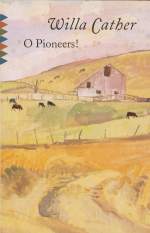
My rating: 4 of 5 stars
Book Summary from Audible:
On the harsh and wild frontier of the American West, Alexandra Bergson struggles to fulfill her father’s dying wish of establishing his family on the Nebraska table lands. Through hard times and abundant, through love and loss, through joy and suffering, Alexandra challenges both her family and the land in her quiet, honest way. Cather’s realistic depiction of life on the prairie is anchored by a smart, strong, independent heroine and heart-achingly beautiful prose which evokes both the melancholy and the awe-inspiring beauty of middle America at the turn of the century.
O Pioneers!, published in 1913, is the first book in Willa Cather’s Great Plains trilogy, followed by Song of the Lark and My Ántonia. Although Cather was born on a Virginia estate that had been in the Cather family for generations, when she was nine years old, her father relocated the family to Nebraska in 1883. He tried farming for a while before moving into the town of Red Cloud where he set up an insurance office. They spent the rest of her adolescence in Nebraska, and in 1894, Cather graduated from the University of Nebraska. After graduating, Cather returned east to pursue a career in journalism; but it was during this time that she also started writing fiction—short stories at first, many of them set in the western prairies she was so familiar with. Although the magazine-serialized Alexander’s Bridge was Cather’s first novel, O Pioneers! was the one that put Cather on the map of American literature, with both critical acclaim and commercial success (Ahern).
Perhaps, as Jo March learned in Little Women, Cather’s pioneering book found its audience and survives as a classic of American literature today because she wrote from the heart—she returned to her Nebraska roots and wrote what she knew. In an interview about the book’s success, Cather was quoted as saying, “I decided not to ‘write’ at all—simply to give myself up to the pleasure of recapturing in memory people and places I’d forgotten” (Slote xliv). Memory, people, and places—or, at least, one place—are, indeed, the driving force of this book. Above and beyond anything else, O Pioneers! is about relationships. Throughout the book, broken into five parts and multiple chapters, Cather explores three types of relationships: the familial and the romantic, as well as the relationship between the characters and the land itself.
Exploring familial relationships is not uncommon in literature; in fact, much of what is considered classic literature depends on exploring this topic. In O Pioneers!, we get to experience family as it grows and changes. The first indication we get of the impact that familial relationships will have is the interaction between Alexandra Bergson, a twenty-one-year-old woman, and her five-year-old brother Emil. Both the children of a Swedish immigrant to Nebraska, it’s as if they’re from two different generations—almost from two different families, and not just because of their age difference. Alexandra remembers living in Sweden. She knows what it was like for her father, whose family owned a shipbuilding business, to make the decision to relocate his family halfway across the world and become a farmer—an unknown profession in an unknown and unbroken land. There are two brothers between Alexandra and Emil—Lou and Oscar—and two sons born and died at a young age between the boys and Emil. Their father, who is dying as the book opens, tells Lou and Oscar to be led by their sister and to take care of their mother and, grudgingly, they agree. As the story progresses, we skip forward sixteen years. Alexandra’s no-nonsense, pragmatic approach to investment and farming has made her, as well as Lou and Oscar, very wealthy, successful farmers. Lou and Oscar, however, take Alexandra for granted and believe that everything she has was gained only through their own hard work—not taking into account all of her business acumen and introduction of modern and scientific farming and livestock techniques. One of the brothers has embraced this success—losing his accent and being embarrassed by anything that would remind others of their rustic/immigrant background; the other still speaks with a heavy accent and stubbornly keeps the old customs. Emil, however, has just graduated from college and returned home until he decides what he wants to do next. He is as different from his three siblings as it is possible to be. And Alexandra not only encourages this, but has specifically worked for this. All the sacrifices she’s made throughout her life have been to give her baby brother all the opportunities he could possibly have. Because of this, because there has never been any responsibility put on him, because he’s never had to work the farms (other than mowing, he’s not seen doing any physical labor), Emil is rudderless, discontent, and inchoate. Alexandra still sees him—and treats him—like a little boy. She takes great pleasure in everything he does, without concern for the fact that he has no goals, no idea of what he wants to do in life. All she cares is that he didn’t have to grow up the way she, Lou, and Oscar did. For their part, Lou and Oscar are jealous of Emil, resenting that he didn’t have to break his back on the farms the way they did in order to scratch a living out of the prairie.
Both complicating and complementing the family relationships are those with outsiders—the ones that eventually become romantic. Marie Tovesky is introduced in the first chapter as a little china doll who attracts the notice—and attention—of all the men at the shop in town. She is bright and forward and shares the candy the men give her with Emil, who is two years her junior. It is also in this chapter that we meet Carl Linstrum, the late-teenaged son of the Bergsons’ neighbors, who helps rescue Emil’s kitten from up on a telegraph pole, and then drives the two Bergsons home. Both Marie and Carl leave the area shortly after this introduction, but are reintroduced after the sixteen-year time gap. Marie is now married and living on what was formerly the Linstrums’ farm; Carl returns after having failed at a job back East and is now on his way to the gold fields in Alaska. Because Alexandra is blind to Emil’s faults, ever since Emil returned from college, she has been pushing Emil and Marie together as often as possible, viewing them more as playmates than man and woman—something that will come back to haunt her. When Carl returns, he is greeted as a dear friend . . . who throughout a month’s visit becomes an important part of Alexandra’s life, and someone she doesn’t want to give up. She wants Carl to stay—forever, though she does not say it in so many words. When Lou and Oscar realize this is happening, they try to shame Alexandra into turning Carl away—reminding her she is almost forty years old, that Carl is more than four years younger, and telling her he’s just trying to marry her for her money/land because he’s failed at everything else. Carl, to whom Oscar and Lou also talk, and who has always loved Alexandra, realizes that for his own self-worth, he needs to make something of himself before he’d be worthy of Alexandra—he doesn’t want her to marry him/support him out of pity. So he goes off to Seattle, where he’ll spend the winter before heading to Alaska. Of course Alexandra’s throwing together of Emil and Marie doesn’t turn out well—not for two young people who had feelings for each other all through childhood before she ran off and married a handsome city boy she met while in boarding school. When Carl learns of what happened, he immediately returns to Nebraska, and he and Alexandra realize that it doesn’t matter which one of them has the money, nor what other people—even her brothers—think, they’re meant to be together.
In Carl and Alexandra’s long talks, it’s mentioned how she’s always been in tune with—tied to—the land, while Carl isn’t. Therefore, it was Alexandra who was able to see the opportunity to buy up farms as others failed and moved away. She had an instinct that beneath the twisted roots and tangled fronds of the prairie grasses, there was good land just waiting to be worked. And, eventually, she coaxed it into becoming some of the most fertile farmland in the country, dragging her brothers and neighbors along with her kicking and screaming. She didn’t implement new techniques or seek out those with new scientific discoveries (like alfalfa) because she just thought they were interesting, she did it because she felt like the land was calling for it. Alexandra has two romances in O Pioneers!, and the one with Carl is secondary to the one she has with the land. It isn’t until after she has subdued the land—until she has been able to stop working the land and make the land work for her—that she is finally free to pursue a relationship with a man. And while she’s finally able to settle down and marry a man she both respects and loves, her relationship with the land has meant sacrificing every other relationship she has—her relationships with Lou and Oscar are strained at best, and she bears significant responsibility for the loss of Emil. She wanted Emil to have a different life; yet how different his life would have been if he’d been raised to be her right-hand-man on the farm. If she’d passed on her love of the land, her desire to see it become the farmland she knew it could be, perhaps Emil’s fate would have been much different. But because she didn’t see this relationship with the land as “good enough” for Emil, because she pushed him away from it, forced him to be indifferent toward it, she perhaps sealed his fate as someone who was destined to never know its joys or bounty.
The relationships that drive O Pioneers! are universal—love of family, romantic love, love of the land. But it’s the unique way in which Cather portrays these, the unique personalities and the way she makes the setting a character in and of itself, that makes this book one that still resonates more than one hundred years after its publication.
_________________________________________
Works Cited:
Ahern, Amy. “Willa Cather: Longer Biographical Sketch.” The Willa Cather Archive. Center for Digital Research in the Humanities at the University of Nebraska–Lincoln. Web. 02 April 2016.
Cather, Willa S. O Pioneers!. New York: Houghton Mifflin Company, 1913.
Slote, Bernice. “Willa Cather and Her First Book.” April Twilights. Lincoln: University of Nebraska Press. 1968. page xliv.
Romance Novels: What Are They, Anyway?

“Une soirée” Jean Béraud, 1878
Yesterday, we pondered the question of whether or not a book that is labeled/marketed as a Romance Novel needs to have a happy ending. I thought we could look today at what we’re really talking about when we throw around the term “Romance Novel.”
A little background on my experience with this genre: I have a Master of Arts degree in Writing Popular Fiction, where my area of specialization was romance, my thesis was a contemporary inspirational romance novel, and my critical research paper was on the conventions of the romance genre, reader expectations, and the evolution of inspirational romance as a separate genre. I have eleven novels that have been published (but I’ve been writing romantic stories since I was twelve years old); my debut novel, Stand-In Groom, which was also my thesis novel, was published by Barbour in January 2009. My eleventh novel, An Honest Heart, was published by B&H Publishing in 2013. After a break of a few years, I’m currently writing a new historical romance, which I hope to be handing over to my agent in the fall to start shopping it to publishers.
All that said, I am nowhere near considering myself an expert on the romance genre. However, I think my background makes me a little more knowledgeable than the average bear.
What is the definition of a “Romance Novel”?
According to the Romance Writers of America (RWA), the leading authority on the romance genre (emphasis mine):
Two basic elements comprise every romance novel: a central love story and an emotionally satisfying and optimistic ending. Romance novels may have any tone or style, be set in any place or time, and have varying levels of sensuality—ranging from sweet to extremely hot. These settings and distinctions of plot create specific subgenres within romance fiction.1
A Central Love Story: The main plot centers around individuals falling in love and struggling to make the relationship work. A writer can include as many subplots as he/she wants as long as the love story is the main focus of the novel.
An Emotionally Satisfying and Optimistic Ending: In a romance, the lovers who risk and struggle for each other and their relationship are rewarded with emotional justice and unconditional love.2
(RWA.org)
In Writing the Romantic Comedy, Billy Mernit puts it this way: “Rather than asking, ‘will the hero obtain his goal?’ the central question posed by a [romance novel] is: ‘will these two individuals become a couple?’” (p. 13).3
Or to put it the way I was taught at one of my first writers’ conferences: If you take the romantic thread and the happy ending out of the story and you still have a story, it’s not a romance novel. It’s a novel with a romantic subplot. It could even be a love story (which, minus the romantic thread, wouldn’t have a story; but minus the happy ending, would). It’s just not a romance novel.
Gail Martin gives the definition this way: “. . . Romance is the story of two people with individual goals and needs, the physical and emotional attraction that holds them together, the conflict that separates them, and their coming together . . . to embrace in love and commitment” (p. 4).4
Leigh Michaels adds an important facet to the definition (emphasis mine):
“. . . The core story is the developing relationship between a man and a woman. The other events in the storyline, though important, are secondary to the relationship” (p. 2).5
Now that’s clarified—the story focuses on the development of the relationship between two people and ends happily/optimistically—we must take the definition a step further (which Gail’s definition begins to do) and define the general structure of a romance novel. Billy Mernit boils it down to three basic elements:
1. Meet: H & H have significant encounters.
2. Lose: H & H are separated.
3. Get: H & H reunite
(pg. 4)3
I would add one more to his list:
4. HEA (HFN): H & H have a “happily ever after” (“happily for now”) ending.
Some call this a formula; most experienced writers consider it our basic plot structure.
In a true romance novel, there must be a “lose”—something that threatens the happy outcome to our story. This can be a conflict that seems to tear our beloved characters apart forever; or it can be a challenge that they both have to face together—but without the successful resolution of this conflict, they may not get their happy ending.
In the movie Return to Me, the “lose” happens when Grace reveals to Bob that she was the transplant recipient who received his dead wife’s heart. In Pride and Prejudice, it’s Lydia’s elopement with Wickham. In Sense and Sensibility, it’s Edward’s previous engagement (and seeming marriage) to Lucy Steele. In Jane Eyre, it’s the existence of Rochester’s first wife.
Whether it’s another woman (or man), a secret revealed, family objections, a war, a near-death experience, believing the other is dead, or whatever you can think of, the major conflict of your story must have a very logical and realistic chance of pulling your characters apart forever and depriving them of their happy ending.
_____________________
Works cited:
1“The Romance Genre.” Romance Writers of America. RWA. n.d. Web. 22 March 2016. https://www.rwa.org/p/cm/ld/fid=1682
2“About the Romance Genre.” Romance Writers of America. RWA. n.d. Web. 22 March 2016. https://www.rwa.org/p/cm/ld/fid=578
3 Mernit, Billy. Writing the Romantic Comedy. New York, NY: HarperCollins Publishers Inc., 2000. Print.
4Martin, Gail Gaymer. Writing the Christian Romance. Cincinnati, OH: Writer’s Digest Books, 2007. Print.
5Michaels, Leigh. On Writing Romance: How to Craft a Novel That Sells. Cincinnati, OH: Writer’s Digest Books, 2007. Print.
Romance Novels: To Happy Ending or Not to Happy Ending?
 Last week, Book Riot posed the question: Should romance novels always have happy endings? I shared the link to the Romance genre forum for discussion among the alumni and current students of the Writing Popular Fiction program at my grad school, Seton Hill University.
Book Riot directs the conversation this way:
As a romance reader who has been reading the genre for more than a decade now, I honestly feel a little conflicted about books that are labeled “romance” but lack a happy ending for the main couple. I’m sure non-HEA romances existed before the last couple years, but I think the existence of social media has definitely put a spotlight on things that people are upset about. . . .
Most of the time, these endings are not indicated in any way by the jacket copy, which is fair. You don’t want to read a description of the book and have the ending ruined by an, “Oh, by the way, everyone dies at the end.” But when readers come to expect a certain ending, it almost feels a little bit like betrayal. . . .
There’s this unspoken contract between a romance author and a reader, this element of trust. We know that this authors may put us through an emotional wringer, but we know that it’ll all work out in the end . . .
So where is the line? And can a romance without a happy ending still be considered a romance? Do books that bend or break the standard conventions of a genre automatically become something else?
What do you think? Does a book that’s labeled/marketed as “romance” need to have a happy ending?

 KayeDacus.com