Blogging Through ‘Scene and Structure’: Chapter 1 “The Structure of Modern Fiction”
As I wrote in the post Romance Novels: What Are They, Anyway?, romance readers expect their romance novels to hit certain “beats”—or, in other words, to follow a certain formula: The meet, the separation, the reunion, the happy ending. This expectation may seem limiting—stifling—to the creative process.
Actually, as a romance writer, I find that already knowing I have a built-in structure, that I have certain beats I need to incorporate into my story, makes it so much easier to write and be creative.
Why? Well, because my story already has something of a structure before I even start writing. . . . I know what I’m working toward (Dacus, Romance Novels: What Are “Formulas” and Are They Bad?).
 I’ll be the first to admit that even though I’ve quoted from Scene & Structure often here on the blog, I’ve never actually read it cover-to-cover. So imagine my surprise when I read the following on the first page:
In reality, a thorough understanding and use of fiction’s classic structural patterns frees the writer from having to worry about the wrong things and allows her to concentrate her imagination on characters and events rather than on such stuff as transitions and moving characters around, when to begin or open a chapter, whether there ought to be a flashback, and so on. . . .
Structure is nothing more than a way of looking at your story material so that it’s organized in a way that’s both logical and dramatic. Structure is a process, not a rigid format. Structure in fiction is not static, but dynamic. (Bickham, p. 1)
In this same passage, Bickham points out that structure not only gives freedom to the author to focus on the more creative part of the story, but also provides a clearer understanding—both for the writer and the reader—of the plot and characters as well as a clearer path to connecting with the emotional content of the story better. After all, it’s hard to connect with a story/its characters on a deep emotional level when you’re spending most of the time you’re reading it wondering if it’s actually going anywhere (i.e., “I hope there’s a point to all of this”).
Genre fiction, those books with the strongest structures, is popular for a reason: the familiar structure employed (the couple will get together, the murderer will be caught, the journey will come to a successful conclusion, etc.) allows readers to immediately (subconsciously) trust the author. Imagine visiting a large city you’ve never been to before. You have a choice of two taxis. In the first, the driver immediately knows how to get to the address you give him; the second cabbie just moved to the city and doesn’t even know any of the major street names yet. Which one would you feel more comfortable with?
(Here, Bickham employs the familiar metaphor comparing writing to constructing buildings. While the materials used for a multi-story office building are going to be different than those for a small house, the principles behind building any structure are the same. So while the “materials” one uses to “build” a story might differ greatly from genre to genre, from author to author, the guiding principles of story structure remain the same.)
The most interesting thing about reading this right now is that I’m currently working my way through two novels: Charles Dickens’s Bleak House, one of his longest and most complicated novels; and My Name is Mary Sutter by Robin Oliveira. As I’ve mentioned in my Goodreads status updates, because I was already familiar with the stories that happen in Bleak House from multiple viewings of the 2005 miniseries, I decided that I’d skip the chapters not written from the viewpoint of main character Esther Summerson. (This is easy to do, because Dickens employed a unique literary style with POV in this novel—chapters written in first-person/past-tense from Esther’s viewpoint, telling the story that surrounds/concerns her; and chapters written in third-person/present-tense telling everyone else’s stories.) As I posted last night, this novel, more than any of his other works, really shows that Dickens was getting paid by to write this as regular installments in a periodical—in other words, for the length of it—rather than as a novel with a focused structure. The most structured narrative in the novel, and the only one in which there’s true emotional resonance, is Esther’s, which is why I’m actually enjoying just reading her chapters.
The problem I’m having with Oliveira’s book is another one of mixed POV and seeming lack of structure. Although I think Oliveira was trying to employ an omniscient POV, it’s actually more of a head-hopping style. And her narrative jumps around in time, dropping flashbacks into the middle of a scene of dialogue, or jumping back in time to tell someone’s entire backstory after leaving the previous chapter hanging at the end. And because this is not genre fiction (or, at least, it’s not structured as typical genre fiction), I’m having a harder and harder time trusting that the author is actually going somewhere with this story.
The History of Structure and Types of Forms
In the two sections of this chapter, Bickham mentions how POV can affect structure—both technically (first-person epistolary vs. first-person narrative vs. third-person, whether omniscient or limited) as well as figuratively (which characters’ viewpoints are included)—though POV isn’t his main concern.
Most successful fiction today is based on a structure that uses a series of scenes that interconnect in a very clear way to form a long narrative with linear development from the posing of a story question at the outset to the answering of that question at the climax (Bickham, p. 4)
As much as I like to complain about not liking first-person narrative, I have to admit the truth of Bickham’s words—it may not necessarily always be the POV to which I’m reacting . . . it may be the underlying structure of the story (or lack thereof) to which I’m subconsciously reacting. After all, of the two books I’m reading right now, it’s the one (or the parts of the one) written in first-person that I’m enjoying more—because it has a structure with which I’m familiar. (If I weren’t such a fan of the miniseries, would I be enjoying it as much? Who knows. But knowing where Esther’s narrative is going does provide me as a reader the structure I need in order to trust that Dickens will get her there eventually.)
For Discussion:
What do you think of when you hear “structure” mentioned in the context of fiction writing?
How does the presence or lack of structure in a story affect you as a reader? As a writer?
What were your thoughts on reading this first chapter?
What are you hoping to get out of this “Blogging Through…” exercise?
_________________________________________
Works Cited:
Bickham, Jack. Scene & Structure. Cincinnati, OH: Writer’s Digest Books. 1993.
Dacus, Kaye. “Romance Novels: What Are ‘Formulas’ and Are They Bad?” KayeDacus.com, 22 March 2016. Web. 20 July 2016.
Books Read in 2016: ‘A Noble Masquerade’ by Kristi Ann Hunter (3.5 stars)
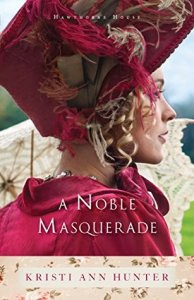 A Noble Masquerade
by Kristi Ann Hunter
My rating: 3.5 stars
Book Summary from Goodreads:
Lady Miranda Hawthorne acts every inch the lady, but inside she longs to be bold and carefree. Approaching spinsterhood in the eyes of society, she pours her innermost feelings out not in a diary but in letters to her brother’s old school friend, the Duke of Marshington. Since she’s never actually met the man she has no intention of ever sending the letters and is mortified when her brother’s mysterious new valet, Marlow, mistakenly mails one of the letters to the unsuspecting duke.Shockingly, this breach of etiquette results in a reply from the duke that soon leads to a lively correspondence. Insecurity about her previous lack of suitors soon becomes confusion as Miranda finds herself equally intrigued by Marlow, a man she has come to depend upon but whose behavior grows more suspicious by the day. As the secret goings-on at her family’s estate come to light, one thing is certain: Miranda’s heart is far from all that’s at risk for the Hawthornes and those they love.
My GR Status Update(s):
05/03 . . .marked as: currently-reading
05/04 . . .49.0%: “Ugh–another book with the characters dancing a waltz in 1812!”
05/04 . . .marked as: read
My Review:
When I saw this available as an ebook through the library, because it had just been announced as a finalist in 2016 RITA awards (which it just won!), I decided I really needed to give it a shot—both for personal interest and for market research, since I’m also currently writing something set during the Napoleonic war and dealing with spies.
While I was able to zip through this book in just two sittings, after I put it down, I had a hard time remembering much about it. Technically, it’s well written—the tone and the prose were well done. I just never really connected with either of the main characters much beyond the surface level. My one status update while reading this which warranted the addition of a note was “ugh–another book with the characters dancing a waltz in 1812!” While, yes, technically the waltz had been introduced in England by 1812, it was still considered vulgar in polite society, especially outside of London; and even in London, one had to have gained special permission from the matrons of the Ton to dance it.
(This was once again a reaction I had to a scene in a book I read shortly after this [Mary Balogh’s Only Beloved], which is set a few years later . . . but then, shortly thereafter, Balogh has the characters discuss this very thing—that in 1816/17, it was still not common/done).
I will probably pick up at least the second book in the series to see if I connect with other characters of Hunter’s any better, because she is a good writer.
And just in case you’re questioning my reaction to having characters dancing a waltz in 1812, here’s an excerpt from Cheryl A. Wilson’s article “The Arrival of the Waltz in England, 1812”:
- Most dance historians pinpoint its inclusion in the 12 July 1816 Regent’s Fête at Carlton House as the moment when the waltz became truly integrated into London society. Reactions, of course, were swift and strong, and the response of the London Times (16 July 1816) is worth quoting in full:
- We remark with pain that the indecent foreign dance called the Waltz was introduced (we believe, for the first time) at the English Court on Friday last. This is a circumstance which ought not to be passed over in silence. National morals depend on national habits: and it is quite sufficient to cast one’s eyes on the voluptuous intertwining of the limbs, and close compressure of the bodies, in this dance, to see that it is far indeed removed from the modest reserve which has hitherto been considered distinctive of English females. So long as this obscene display was confined to prostitutes and adulteresses, we did not think it deserving of notice; but now that it is attempted to be forced on the respectable classes of society by the evil example of their superiors, we feel it a duty to warn every parent against exposing his daughter to so foul a contagion. Amicus Plato sed mogis amica veritas. We pay a due deference to our superiors in rank, but we owe a higher duty to morality. We know not how it has happened (probably by the recommendation of some worthless and ignorant French dancing-master) that so indecent a dance now has for the first time been exhibited at the English court; but the novelty is one deserving of severe reprobation, and we trust it will never again be tolerated in any moral English society.
This was in London that they had this reaction, four years after this book is set. At this point in the culture, while the waltz was danced at Almacks, both the man and woman had to have received explicit permission from the society matrons in order to be able to participate in the dance. And it was usually the prologue to the announcement of an engagement, if the couple dancing were not already married.
- Further reading on the waltz in England in the Regency period:
“Waltzing during the English Regency? Preposterous!” by David W. Wilkin
“Lady Caroline Lamb, Highbury, and the Waltz: Regency Dancing” by Vic on Jane Austen’s World blog (according to this, the waltz wasn’t sanctioned at Almack’s until 1814)
“Ask the Expert: The Waltz in Jane Austen’s Time” by Allison Thompson on Austenblog
_______
My rating matrix:
5 STARS = one of the best I’ve ever read
4 STARS = a great read, highly recommended
3 STARS = it was okay
2 STARS = I didn’t enjoy it all that much, not recommended
1 STAR = DNF (did not finish)
Blogging through ‘Scene and Structure’ by Jack Bickham
The majority have spoken, and the book chosen for our first Blogging Through . . . series is Scene and Structure by Jack Bickham.
As mentioned before, I picked books that are available at most major public libraries, as well as through services like Amazon’s Kindle Unlimited (if you’re a Prime Member and/or KU subscriber). If you do not want to purchase the book immediately (you’ll probably want to pick it up before the series is over, though, because there will be a lot in it that we can’t cover here), you can check it out from your library or through KU—my public library system has it in both hard copy and ebook format.
So go ahead and pick up your copy of it. Your first assignment is to read Chapter 1, “The Structure of Modern Fiction,” by Monday 7/18 and be prepared to discuss your insights, revelations, quibbles, and questions next week.
If you want to go ahead and start posting your questions, thoughts, or ideas about the book or this project, go ahead and do so below!
Books Read in 2016: ‘Trouble in Paradise’ by Liz Ireland (3 stars)
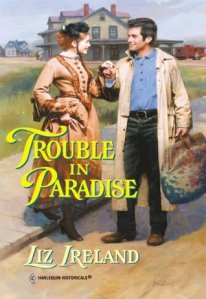 Trouble in Paradise
by Liz Ireland
My rating: 3 stars
Book Summary from Goodreads:
Roy McMillan Had Vowed to Live and Die a Bachelor!But the McMillan credo didn’t set too well the day that Ellie Fitzsimmons stepped off the train in Paradise, Nebraska. The confounded beauty lit up an October day with her sunshine. And though she was there to visit his brother, Roy had trouble keeping that fact in mind–and not making a complete fool of himself!
Ellie was in a pickle! And no amount of fabric could hide her secret for long. Roy McMillan only added to her troubles with his devastating smile. But when Roy learned the truth, would he still want to make their own little paradise on earth?
My Review:
This should have been a fun, quick read—actually, it should have been a novella. There was so little story/plot in this category-length romance that there were no fewer than six viewpoint characters (possibly seven—I think I’m forgetting someone) and three romances! And the big conflict between the main couple, Ellie and Roy, was one of my pet-peeves in the genre: the Big Misunderstanding Based on an Initial Falsehood. There’s an assumption made of who she is/what her background is before she arrives in “Paradise, Nebraska,” pregnant and penniless (though Roy and his brother initially don’t know either of those facts)—that she’s a wealthy widow from New York instead of a housemaid who got pregnant from being seduced by her employer’s son. The premise wasn’t the problem. It was how the characters dealt with it that became problematic.
Roy doesn’t like women and plans on never marrying because women are nothing but trouble—a lesson he learned from his mother who walked out on him and his brother and father when he was a small child. So nothing Ellie says or does will ever convince him that she doesn’t have an ulterior motive.
Ellie, of course, is practically perfect in every way with some Manic Pixie Dream Girl characteristics.
As already mentioned, Ellie’s and Roy’s viewpoints aren’t the only ones, and theirs isn’t the only story in this short novel. We’re also given the POVs of Parker (Roy’s brother) and Clara (the girl he’s in love with) and Isabel (Roy and Parker’s wayward mother) and Uncle Ed (their father’s brother/Isabel’s actual lifelong love). Because Roy’s distrust of women and Ellie’s false identity are the only sources of conflict in their plotline (the main plotline of the book) and because he overcomes his conflict until he learns the truth about Ellie right as he’s about to propose to her, there isn’t a whole lot of tension or conflict in their relationship . . . nor a lot to their relationship at all. Which, I’m sure, is why there are two other, more poorly developed, relationships in the story to fill out the required word count.
There isn’t much to get excited about with either Ellie or Roy—although Roy does a pretty good impression of an alphahole a few times—so rather than sighing with pleasure by the time I got to the HEA at the end, I was just relieved the book was over.
And, one last thing, this would have been much better off as a sweet/clean romance. The two “sensual” scenes in the book were uncomfortable at best—especially given that Ellie is around seven or eight months pregnant during both of them. That’s not to say that pregnant women shouldn’t have/enjoy sex, but the entire pregnancy thing wasn’t well incorporated into her characterization, movements, internal life, actions/reactions, etc.—nor was it apparent in Roy’s relationship to her, whether emotional, visceral, or physical.
_______
And now, a few words about that cover image. Roy meets Ellie at the train station, not 200 yards away from it. And the book very specifically describes the black “widow’s weeds” Ellie is wearing when she gets off the train—including being covered up with a shapeless cloak that disguises the fact that she’s six months pregnant. It’s also very specific in describing Ellie as a “tiny thing”—meaning she isn’t nearly the same height as Roy, as shown on this cover.
And, finally, this book is set in 1892. The style of her dress is almost forty to fifty years out of date (see these images from the 1840s/50s:
- 1845ish “fan” bodice with dropped waist
- mid-1850s dropped waist, button-up bodice with attached lace collar
- 1845 dropped-waist bodice with narrow pagoda sleeves
- late 1850s ruffled bodice and pagoda sleeves
While they didn’t have to put her in something like this, which is much more period appropriate (1888) and closer to what’s described in the book, and I know she was supposed to be lower/working class and the black dress she was wearing was her old maid’s dress, they could have at least tried to find a shape a little bit closer to what was in style in the late 1880s and early 1890s.
Of course, I think I found the actual inspiration for the dress they used on this cover. You can see it here.
(And, yes, I’m being far too critical of this cover—but I was awake and working on this at 4:30 a.m. and cranky and had nothing else better to do.)
_______
My rating matrix:
5 STARS = one of the best I’ve ever read
4 STARS = a great read, highly recommended
3 STARS = it was okay
2 STARS = I didn’t enjoy it all that much, not recommended
1 STAR = DNF (did not finish)
It’s Reading Report Time! (July 2016)
Happy First Monday of July, everyone.
It’s Reading Report Time!

Open Book by Dave Dugdale
.
Tell us what you’ve finished over the last month, what you’re currently reading, and what’s on your To Be Read stack/list. And if you’ve reviewed the books you’ve read somewhere, please include links!
To format your text, click here for an HTML cheat-sheet. If you want to embed your links in your text (like my “click here” links) instead of just pasting the link into your comment, click here.
.
- What book(s) did you finish reading (or listening to) since the last update?
- What are you currently reading and/or listening to?
- What’s the next book on your To Be Read stack/list?
Here’s my report:
What book(s) did you finish reading (or listening to) since the last update?
As always, click through on the title for my review.
- Only Beloved (The Survivors’ Club #7) by Mary Balogh, audiobook read by Rosalyn Landor (historical romance–Regency | 4 stars)
- The Curse of Lord Stanstead (The Order of the MUSE #1) by Mia Marlowe (historical paranormal romance–Regency | 4 stars)
- The Ramona Quimby Audio Collection (Ramona Quimby #1-8) by Beverly Cleary, audiobook read by Stockard Channing (children’s fiction | 4 stars)
- Wife for Hire by Janet Evanovich (contemporary romance | 4 stars)
- North and South by Elizabeth Gaskell, audiobook read by Charlton Griffin (romance, classic British lit | 3.5 stars)
- Trouble in Paradise by Liz Ireland (historical romance—American West 1890s | 3 stars)
What are you currently reading and/or listening to?
- The Red Door Inn (Prince Edward Island Dreams #1) by Liz Johnson (contemporary inspirational romance | 65%)
- Innocent Traitor by Alison Weir, audiobook read by Stina Nielsen, Davina Porter, Bianca Amato, Jenny Sterlin, Jill Tanner, Gerard Doyle, & Robert Ian Mackenzie (re-read, historical fiction—Tudor era | 85%)
What’s the next book on your To Be Read stack/list?
- I’m currently in the process of working through the remaining letters in my 2016 A to Z reading challenge. This month, I knocked out E and I and am working on J. So here are the books I’m looking at for L and O:
- Sawbones (Sawbones #1) by Melissa Lenhardt (historical fiction—American West 19th Century)
- The Gamekeeper’s Lady (Rakes in Disgrace #1) by Ann Lethbridge (historical romance—Regency)
- A View to a Kiss (The Bow St. Agents: Spies in Love #1) by Caroline Linden (historical romance—Regency)
- The House of the Four Winds (One Dozen Daughters #1) by Mercedes Lackey and James Mallory (historical fantasy romance)
- Pieces of Hate (Assassin #2) by Tim Lebbon (historical fantasy)
- My Name is Mary Sutter by Robin Oliveira (historical fiction—American Civil War)
2016 A–Z Reading Challenge Update
Here are the letters (author last names) I haven’t fulfilled yet: J (in progress), L, O, Q, U, V, X, Y, Z.
And according to Goodreads, I am 16 books ahead of schedule to meet my overall goal of reading 60 books this year, with a total of 46 read already.
_______
My rating matrix:
5 STARS = one of the best I’ve ever read
4 STARS = a great read, highly recommended
3 STARS = it was okay
2 STARS = I didn’t enjoy it all that much, not recommended
1 STAR = DNF (did not finish)
“Blogging Through…” Help Pick a Writing Craft Book We Can Study Together
 It’s been a while since I’ve written regularly and, along with that, it’s been a long time since I’ve read/studied any books on the craft of writing to remind myself of the technical aspects of what I choose to spend my after-hours time doing.
Rather than do it alone, though, I thought it might be fun to “blog through” a craft book to hopefully generate some discussion and other points of view from those of you who choose to participate. With that in mind, I thought I’d post a survey to get you to help me pick the book to do this with. The books I’ve picked are available through Kindle Unlimited, if you have that program and/or most likely available through your public library, if you don’t already own them. (Or, of course, you can purchase the book if you want.)
Please share in the comments why you’d like a particular book and why you think I, and the other readers here, should be interested in blogging through it.
Books (re)Read in 2016: ‘Innocent Traitor’ by Alison Weir
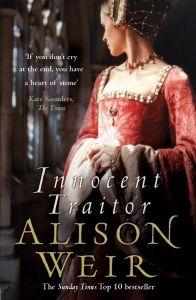 Innocent Traitor
by Alison Weir
Audiobook performed by Stina Nielsen, Davina Porter, Bianca Amato, Jenny Sterlin, Jill Tanner, Gerard Doyle, and Robert Ian Mackenzie
My (2013) rating: 4 stars (story), 4.5 stars (audio performance)
Book Summary from Goodreads:
New York Times best-selling author Alison Weir has earned her reputation as the preeminent historian of British royalty. Now with ‘Innocent Traitor,’ Weir utilizes her vast knowledge and captivating narrative style to craft her first historical novel, choosing Lady Jane Grey, the most sympathetic heroine of Tudor England, as her enthralling subject.The child of a scheming father and ruthless mother, Jane is born during a time when ambition dictates action. Cousin to Edward VI, Mary I, and Elizabeth I, she is merely a pawn in a political and religious game in which one false step means a certain demise. But Lady Jane has remarkable qualities that help her to withstand the constant pressures of the royal machinery far better than most expect.
Weir’s striking novel sweeps readers back through the centuries to witness firsthand one of the most poignant tales from a time of constant scheming and power brokering.
My Review:
I’m currently re-listening to this, so here’s my original review from 2013:
This was a LOOOOONNNNNGGGGG look at the life of the Nine-Day Queen, Jane Grey, the traitor queen of England who was forced to take the crown at age 15/16 by men who wielded power like bludgeons during one of the most chaotic times in England’s history.
I enjoyed this book much more than I did The Lady Elizabeth, Weir’s novelization of the childhood and youth of Elizabeth I. While that one betrayed Weir’s experience as a nonfiction writer, this one read more like a Philippa Gregory novel—with multiple first-person viewpoints (much like my favorite, The Boleyn Inheritance). And, much like the audio version of that Gregory novel, this one featured a different narrator for almost every viewpoint.
Because Jane Grey was so young for most of the book, it actually worked better to have the multiple viewpoint characters, since she was a passive player in most of what happened to her. It was good to get into the minds (in a fictional conjecture, of course) of the people behind the machinations that led, ultimately, to Jane’s execution as a heretical traitor in February 1554.
Though I knew the story from the “outside”—in that I knew the timeline and details of the historical occurrences—it was interesting to get an “inside” look at the characters who are usually brushed aside as bit players in the transition from King Edward VI to Queen Mary I. Especially since I’ve recently read The Tudor Secret and The Tudor Conspiracy by C.W. Gortner, which is a complete fictionalization of these events (experienced through completely fictional characters interacting with the historical figures/events).
There isn’t much in fiction that covers the lives (and reigns) of both Edward VI and Jane Grey, so the subject matter was what drew me to this book. It was Weir’s surprisingly deft handling of all of the characters that kept my interest throughout the 18+ hours of this audiobook (though, as with The Lady Elizabeth, I found that when she was unable to characterize Jane’s youth through the prose—even at four years old, Jane came across as an adult, with an adult’s vocabulary, reasoning, and understanding).
The only narrator I had any issue with was Stina Nielsen, who was the voice for Jane Grey’s viewpoint. She had a tendency to pause at odd/awkward places in the middle of sentences, which made me have to run it back to figure out what the sentence was actually supposed to be saying, since the pauses chopped up the flow/meaning. She also had a tendency to mispronounce things/pronounce them oddly (such as saying tutor for Tudor). While this was annoying and would start getting on my nerves, invariably just when I was getting ready to turn it off, the viewpoint would switch to another character which meant another narrator.
I would have liked to have seen one last scene in the book: from Queen Mary’s viewpoint, reacting to Jane’s death. The end of the book, as it was for Jane, was too abrupt.
_______
My rating matrix:
5 STARS = one of the best I’ve ever read
4 STARS = a great read, highly recommended
3 STARS = it was okay
2 STARS = I didn’t enjoy it all that much, not recommended
1 STAR = DNF (did not finish)
Books Read in 2016: ‘Dangerous Women’ (George R. R. Martin & Gardner R. Dozois, Eds.)
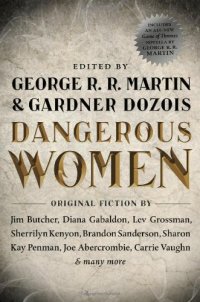 Dangerous Women
Edited/Compiled by George R. R. Martin & Gardner R. Dozois
My rating: 3 of 5 stars
Book Summary from Amazon:
All new and original to this anthology, the twenty-one stories in Dangerous Women include work by twelve New York Times bestsellers, and seven stories set in the authors’ bestselling continuities-including a new “Outlander” story by Diana Gabaldon, a tale of Harry Dresden’s world by Jim Butcher, a story from Lev Grossman set in the world of The Magicians, and a 35,000-word novella by George R. R. Martin about the Dance of the Dragons, the vast civil war that tore Westeros apart nearly two centuries before the events of A Game of Thrones.Also included are original stories by Brandon Sanderson, Joe Abercrombie, Sherrilyn Kenyon, Lawrence Block, Carrie Vaughn, S. M. Stirling, Sharon Kay Penman, and more.
Writes Gardner Dozois in his Introduction: “Here you’ll find no hapless victims who stand by whimpering in dread while the male hero fights the monster…Instead, you will find sword-wielding women warriors, intrepid women fighter pilots and far-ranging spacewomen, deadly female serial killers, formidable female superheroes, sly and seductive femmes fatale, female wizards, hard-living Bad Girls, female bandits and rebels, embattled survivors in Post-Apocalyptic futures, female Private Investigators, stern female hanging judges, haughty queens who rule nations and whose jealousies and ambitions send thousands to grisly deaths, daring dragonriders, and many more.”
It’s somewhat deceptive that I’ve marked this whole book as “read,” and that I’ve given the entire book a 3-star rating, when I’ve only gotten through a couple of the stories in it. I checked out the audiobook version from the library, but even though there are some amazingly talented vocal performers included in the collection, I think this is one that I’ll be better off purchasing sometime in the future and just picking up occasionally to cherry-pick stories from, depending on my mood.
Martin and Dozois, and whoever else helped come up with the idea for this anthology, had the fantastic idea of picking authors from a wide variety of genres—from high fantasy, urban fantasy, and distopias to hard and soft science fiction to historical fiction—to pen short stories in their beloved genres (and sometimes within their existing series) about women, good and bad, trying to break the stereotype of women as “the weaker sex.”
Story 1: “Some Desperado” by Joe Abercrombie, read by Stana Katic
Story Summary from Goodreads:
As the sizzlingly fast-paced and action-packed story that follows demonstrates, sometimes chasing a fugitive can be as dangerous for the pursuers as for the pursued—particularly when the quarry has no place left to run….
This apparently fits within Abercrombie’s First Law series, which, according to Wikipedia, is a fantasy series “set in an epic fantasy world at war, reminiscent of medieval-era Europe and the greater Mediterranean world.” I personally would have guessed that it was a western series set some time in the 1870s in west Texas, New Mexico, Arizona, etc., and populated by somewhat stereotypical male outlaws and a kickass female outlaw.
While it was well-written and engaging, there was no point to it. I never really knew who the main character, Shy South, was, what she had done, why she was on the run, and why I should care if she lived or died. There was really no arc to the story. Shy had a goal (survive) and plenty of conflict, but this could have been a chapter lifted out of the middle of a novel—because there was no actual plot to it. It seemed to be moving some larger storyline forward without ever truly becoming a standalone story in its own right.
Stana Katic (from Castle) did a great job with the main character’s narrative and dialogue, not quite as much with the men’s voices—though she did keep it highly entertaining.
Story 2: “My Heart is Either Broken” by Megan Abbott, read by Jake Weber
Story Summary from LA Review of Books:
A pretty young mother, Lorie, falls under suspicion for killing her baby daughter, who has gone missing. This psychological thriller unfolds from the perspective of Lorie’s husband, who first defends Lorie from the scourge of public opinion but over time finds himself questioning her innocence as he observes her behavior: is her crazed partying indicative of her grief, or a celebration of freedom from childrearing? Every memory and event from her past begins to take on ominous significance in his mind.
Megan Abbott, according to the introduction in the book, is an author of “noir” mysteries. While I didn’t really get a sense of “noir” (think old movies like Laura or The Manchurian Candidate), it was a good mystery . . . and I found myself, along with the male POV character, starting to wonder if Lorie had committed the crime or not. At various times throughout listening to the story (brilliantly performed by Jake Weber, probably best know for his role as Joe Dubois on the TV show Medium), I actually found myself debating whether or not she could be the guilty party, which to me means that the author did her job—and did it well!
_______
My rating matrix:
5 STARS = one of the best I’ve ever read
4 STARS = a great read, highly recommended
3 STARS = it was okay
2 STARS = I didn’t enjoy it all that much, not recommended
1 STAR = DNF (did not finish)
Books Read in 2016: ‘Pioneer Girl: The Annotated Autobiography’ by Laura Ingalls Wilder | Part 3
 Pioneer Girl
by Laura Ingalls Wilder
My rating: 5 of 5 stars
Book Summary from Goodreads:
Pioneer Girl follows the Ingalls family’s journey through Kansas, Missouri, Wisconsin, Minnesota, Iowa, back to Minnesota, and on to Dakota Territory sixteen years of travels, unforgettable experiences, and the everyday people who became immortal through Wilder’s fiction. Using additional manuscripts, letters, photographs, newspapers, and other sources, award-winning Wilder biographer Pamela Smith Hill adds valuable context and leads readers through Wilder’s growth as a writer. Do you think you know Laura? Pioneer Girl: The Annotated Autobiography will re-introduce you to the woman who defined the pioneer experience for millions.
Read Part 1 here (covering Little House in the Big Woods, Little House on the Prairie, and On the Banks of Plum Creek)
Read Part 2 here (covering By the Shores of Silver Lake and The Long Winter)
Part 3 (covering Little Town on the Prairie and These Happy Golden Years):
I only posted one status update on Goodreads while reading the part of Pioneer Girl that is covered in Little Town on the Prairie and These Happy Golden Years . . . mainly because these are my two favorite books in the series.
- 05/12 Little Town on the Prairie marked as: currently-reading
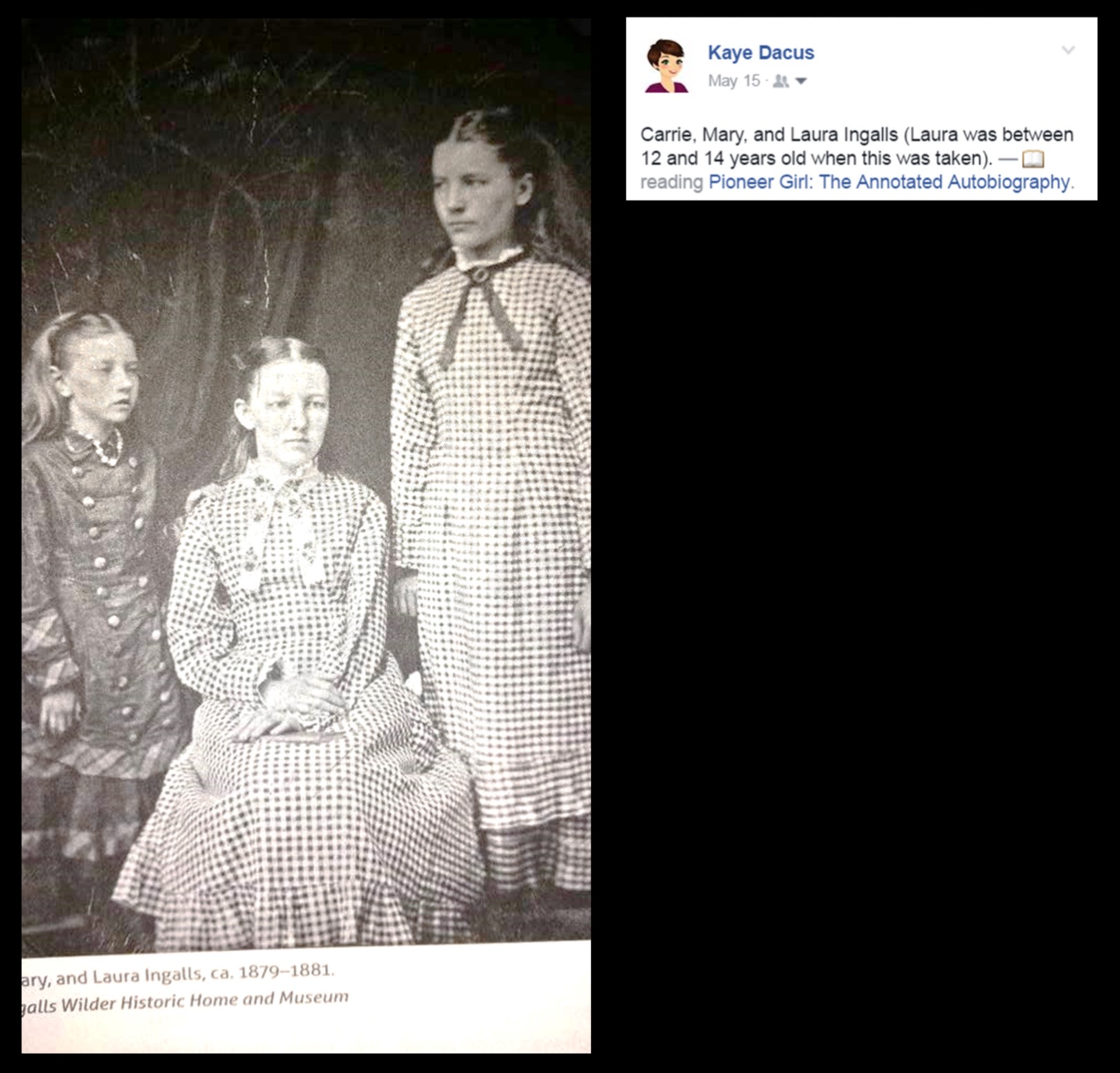
I love Little Town on the Prairie (second-favorite in the series) probably for the very same reason that Caroline Ingalls was so adamantly opposed to moving again once they’d settled in De Smet—because there was a town and a school and a church and society and a social life for the characters to be involved in. While the pioneering stuff in the earlier books is interesting, and the whole “triumph of the human spirit” thing can be inspirational, the constant struggle, even when presented gently as in the earlier novels, gets wearing. Plus, as I started reading these books on my own, as a middle-grade/tween reader, I was closer to the age Laura is in LTOTP, so I found the depictions of school and town and the social events she was starting to take place in much more interesting. From a character-development standpoint, it’s also where we start seeing Laura truly develop relationships with others outside her family. Ida Wright (Brown) and Mary Power and others whom she knew from school bring out aspects of Laura’s personality and development as a person that we don’t get to see in the earlier books when it’s just the Ingalls family out on their own and with no one else but the immediate family around to see how this character develops different types of relationships.
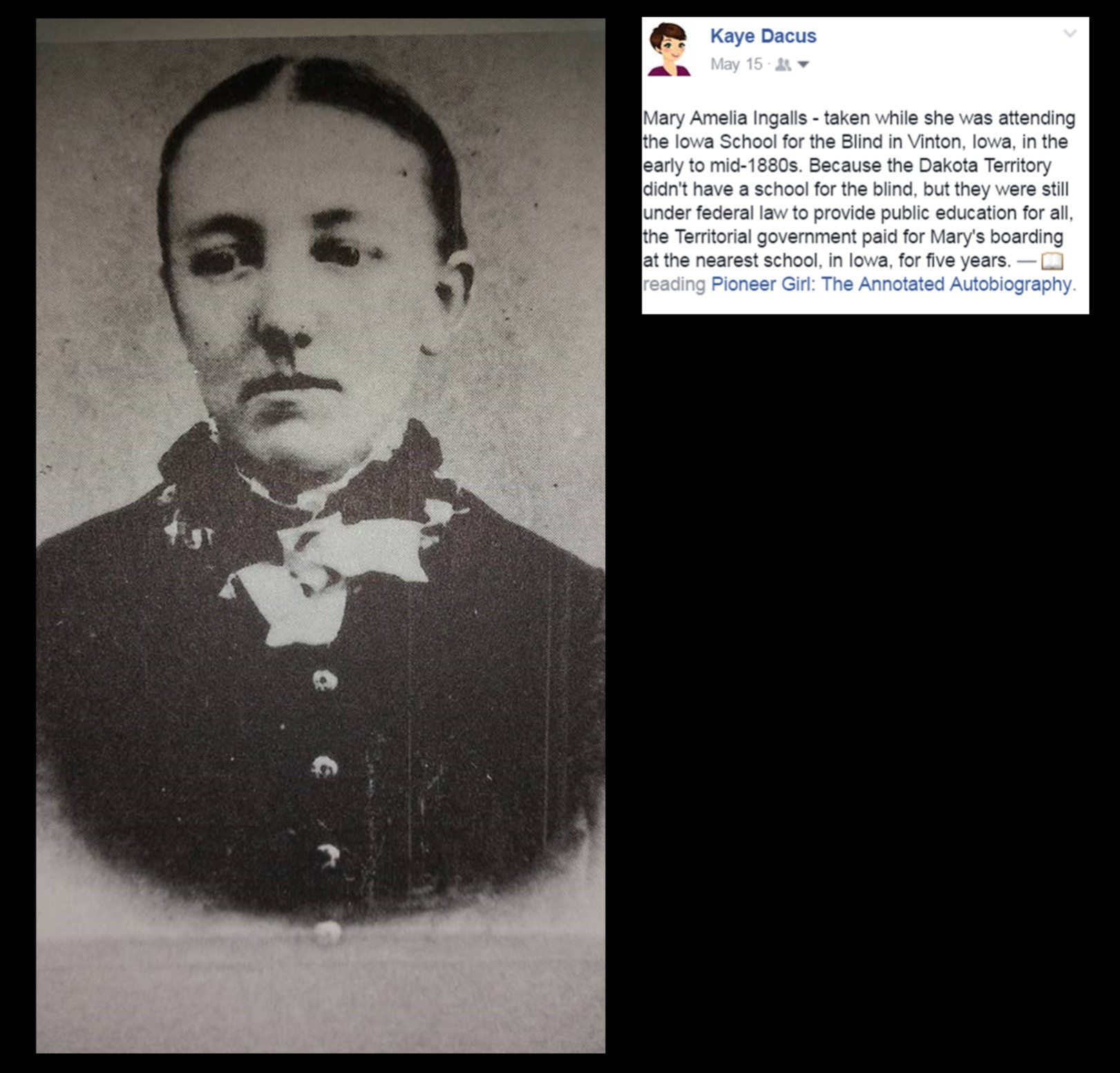
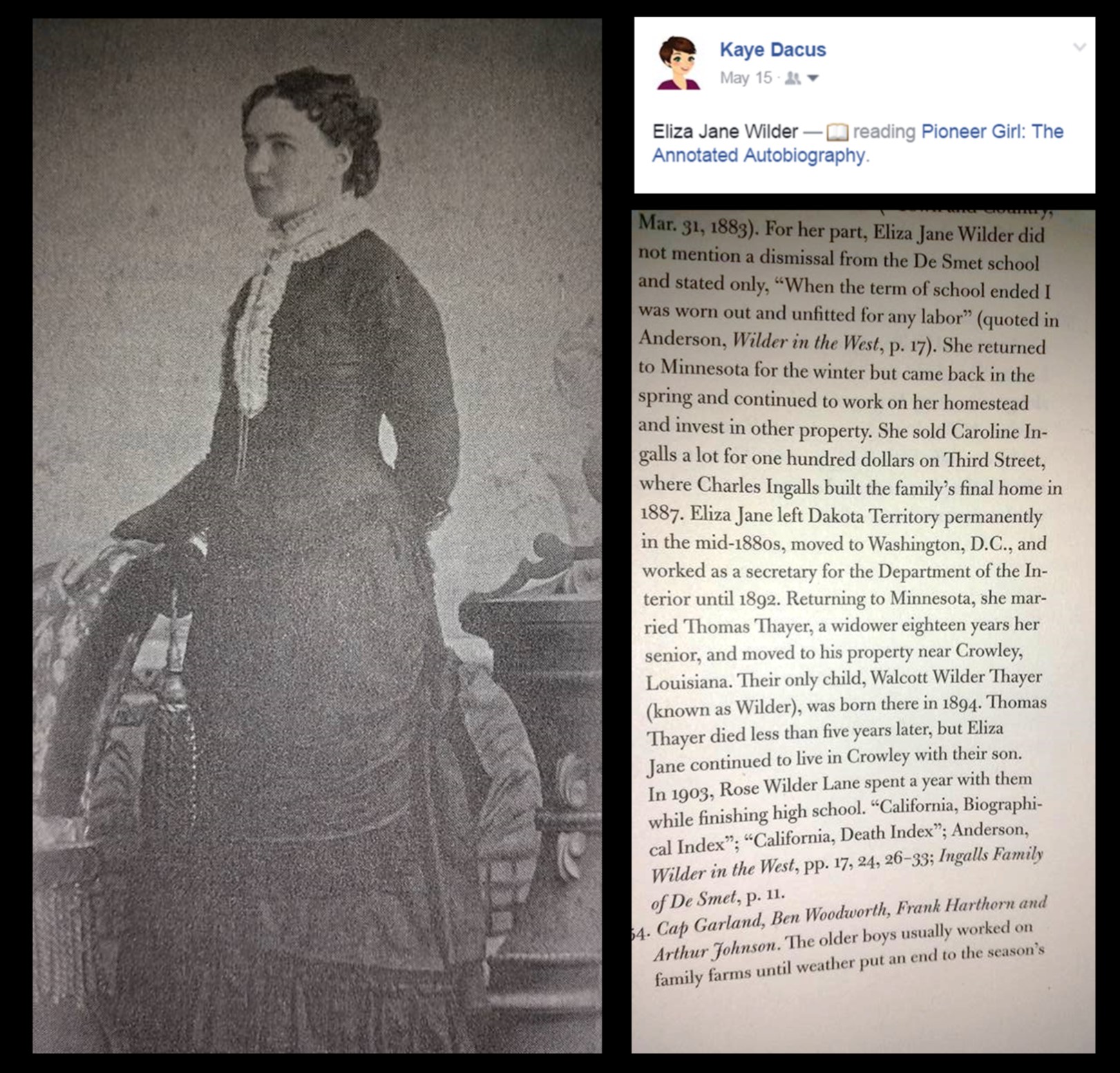

As mentioned, for someone who was reading romance novels at a very early age, things started getting much more interesting when Laura started noticing (and being noticed by) the opposite sex in Little Town…—and there’s even more of this in Pioneer Girl.

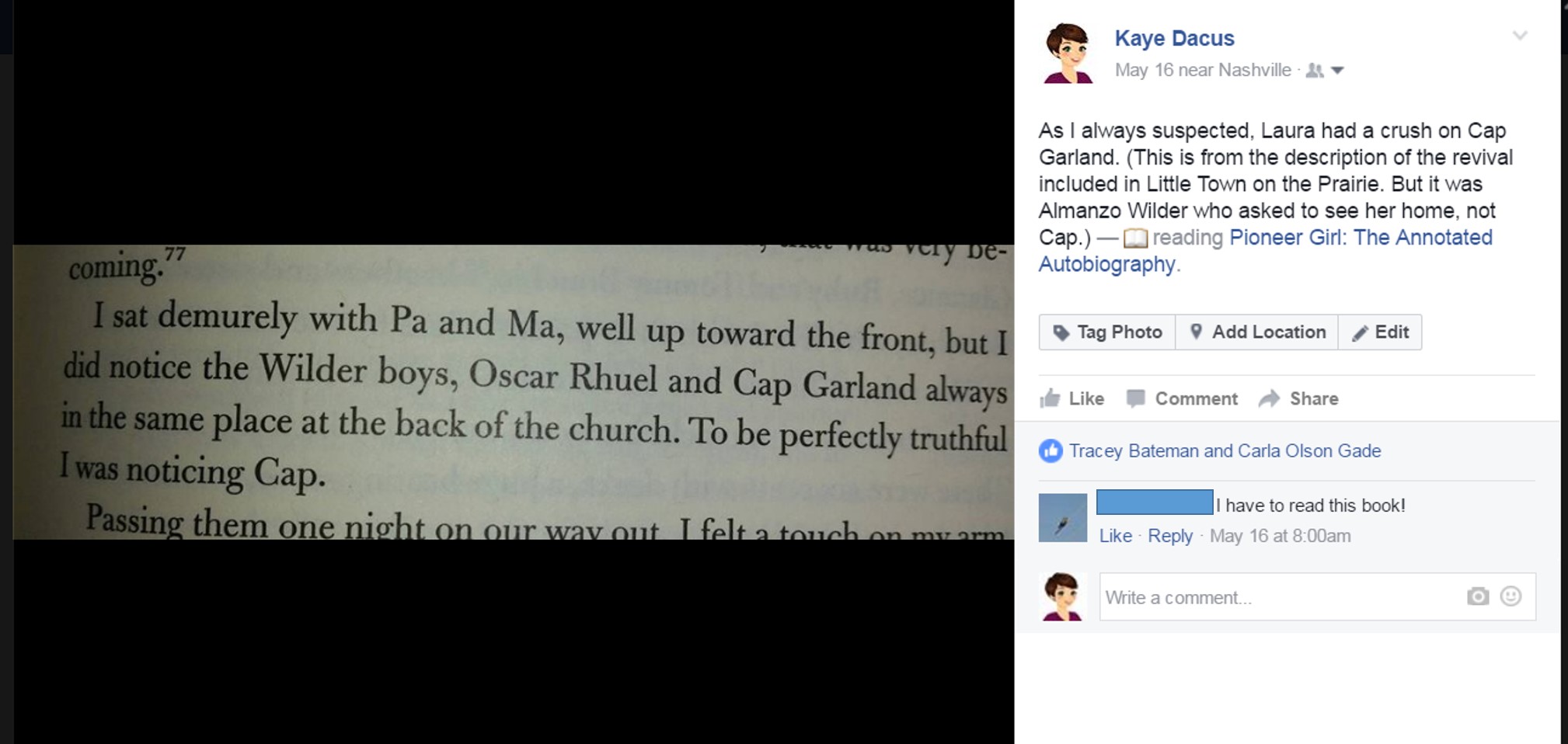
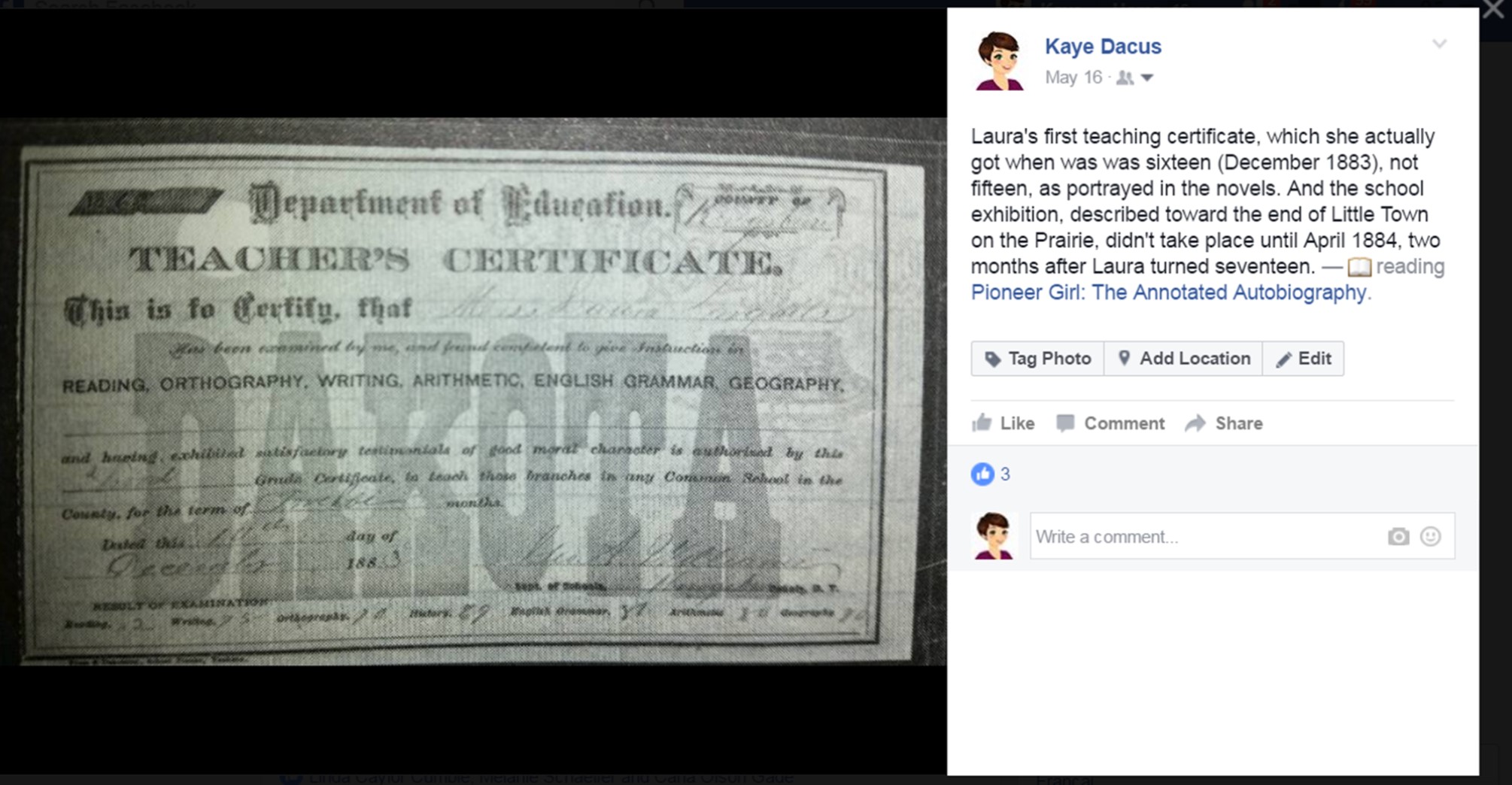
.
- 05/15 Little Town on the Prairie marked as: read
05/15 These Happy Golden Years marked as: currently-reading
There are quite a few details that were changed from the memoir (or apparently remembered incorrectly) in the “Brewster School” sequence that happens in the beginning of These Happy Golden Years, some of which were left out of the novel and which were surprisingly worse than what actually made it to the fictionalized version. It’s amazing to me how Hill and the researchers at the Pioneer Girl Project were able to track down so many of the people that Laura mentioned in her memoir, given that many times she was going off of childhood memories for names and spellings of names—even to tracking down the students/families who lived in the Bouchie (a.k.a., Brewster) settlement where Laura taught her first term of school.
It’s also my least favorite part of my favorite book in the series . . . except for, like Laura, looking forward to those Friday afternoons and hearing the jingle-bells on Prince and Lady’s harnesses when Almanzo arrived to take her home for the weekend.
- 05/16 These Happy Golden Years marked as: read
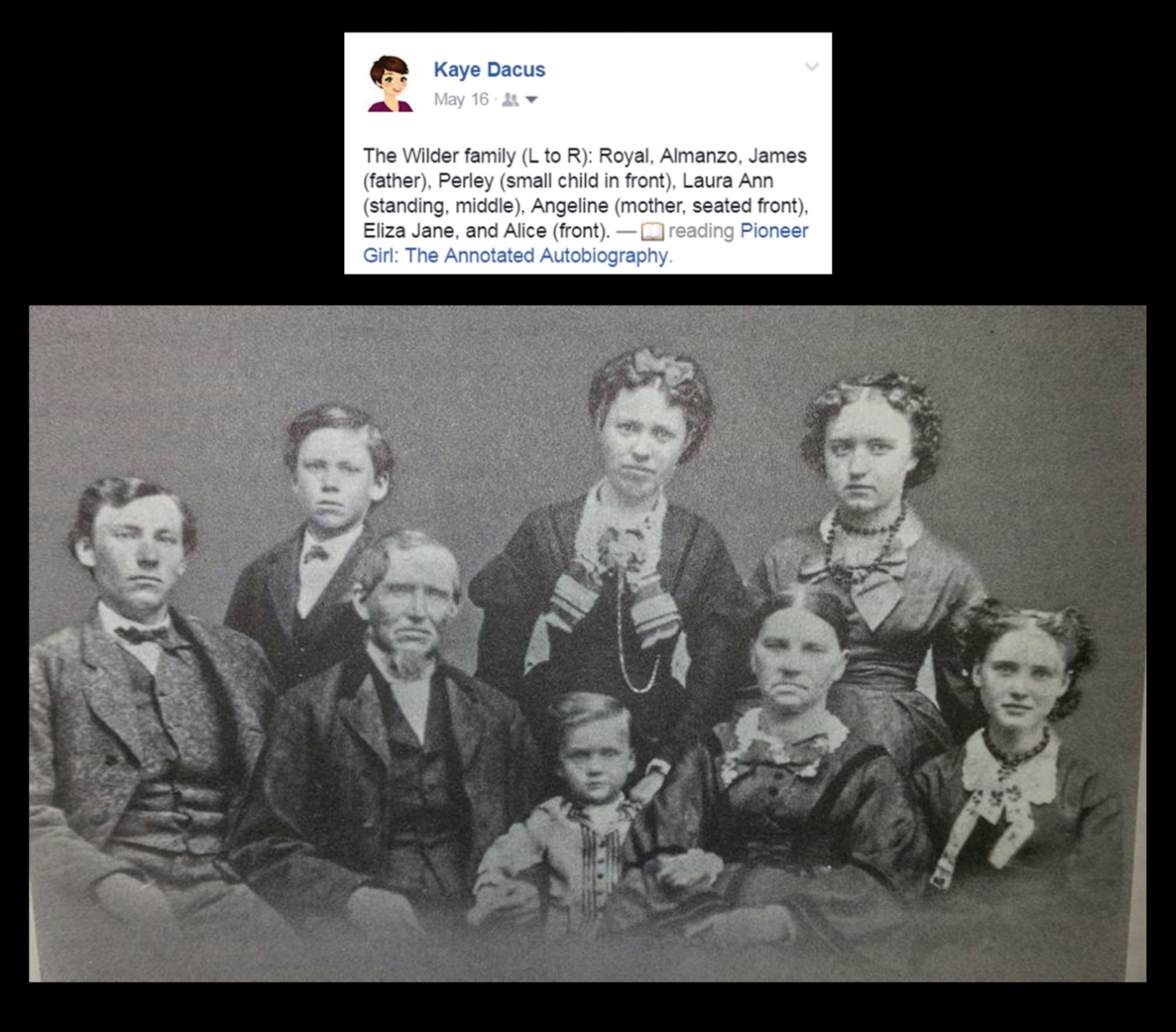

.
As evinced in the portion of the memoir that became Little Town on the Prairie, Laura had a crush on Cap, even though he was going with her friend Mary Power for a while. And while she managed to keep most of that out of the novels, she was much more honest about it in her memoir, to the point that this passage made me giggle aloud when I read it:

.
05/16 on page 297 of Pioneer Girl (74.0%): “I had not seen Manly since the sleighing had gone, nearly three months, but he had come as soon as he could buy a buggy. I hadn’t known that I missed him, but it was good to see him again, gave me a homelike feeling.”
.
I credit These Happy Golden Years with being one of the first romance novels I ever read and fell in love with. So one might think that reading the “real” story behind the fictionalized courtship might take some of the sparkle off of it.
Not in the least. In fact, there were many details in the memoir that made reading how she ended up writing about it in the novel all the more sweet.
As the annotations point out, the memoir does end on the somewhat same “happily ever after” note that we get at the end of THGY—with Laura and Almanzo almost literally riding off into the sunset together to their happy little gray home in the west. Even though we know what happened next—and that it wasn’t “happily ever after”—it’s nice to see that Laura could find a way to give herself, both in the memoir version and in the fictional version, and all of those who would read it, a hopeful, happy ending. Which is exactly how I like my books to end. (Which is why I never read The First Four Years, either).
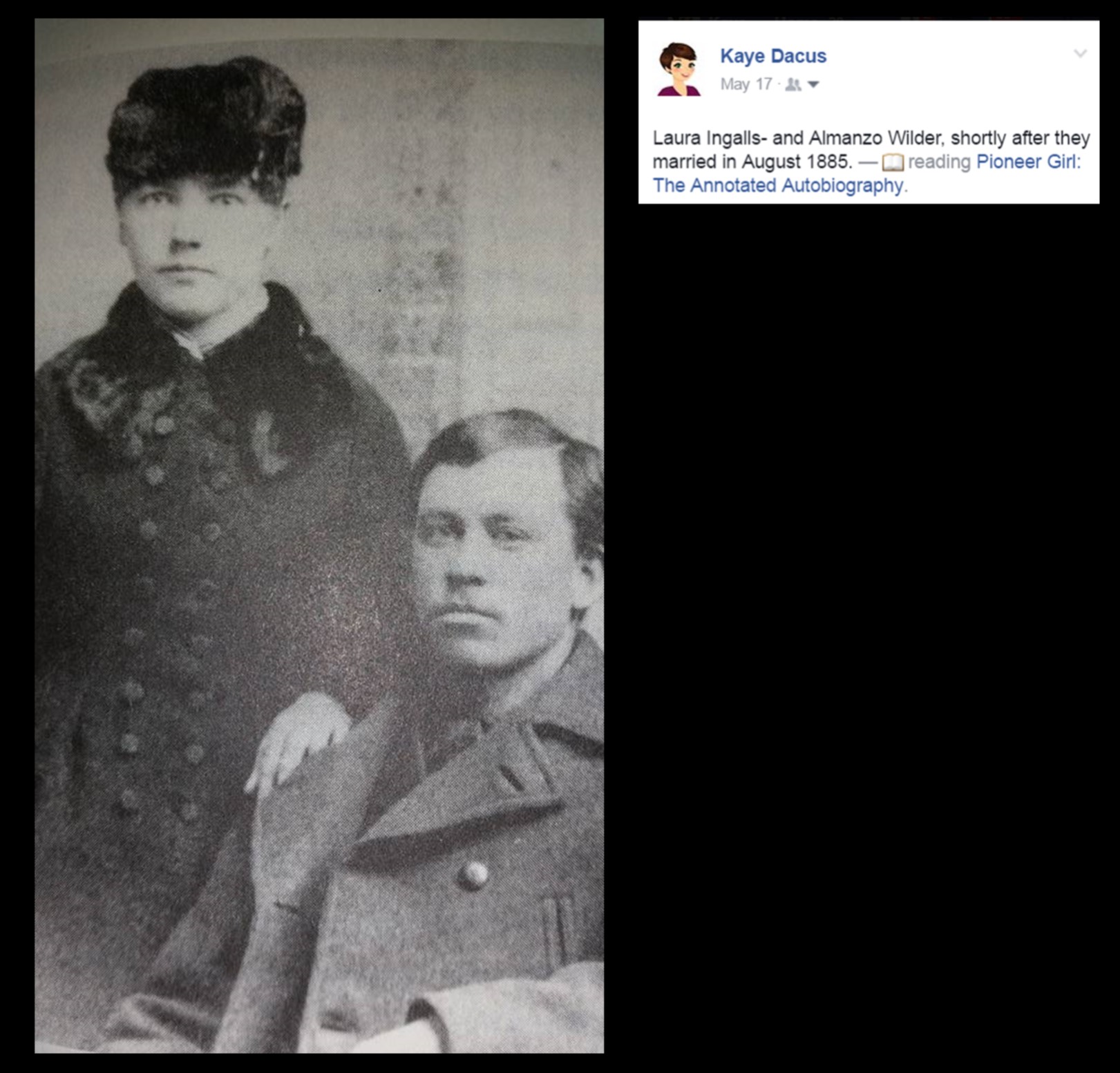
.
05/17 Pioneer Girl: The Annotated Autobiography marked as: read
Books Read in 2016: ‘Pioneer Girl: The Annotated Autobiography’ by Laura Ingalls Wilder | Part 2
Pioneer Girl
by Laura Ingalls Wilder
My rating: 5 of 5 stars
Book Summary from Goodreads:
Pioneer Girl follows the Ingalls family’s journey through Kansas, Missouri, Wisconsin, Minnesota, Iowa, back to Minnesota, and on to Dakota Territory sixteen years of travels, unforgettable experiences, and the everyday people who became immortal through Wilder’s fiction. Using additional manuscripts, letters, photographs, newspapers, and other sources, award-winning Wilder biographer Pamela Smith Hill adds valuable context and leads readers through Wilder’s growth as a writer. Do you think you know Laura? Pioneer Girl: The Annotated Autobiography will re-introduce you to the woman who defined the pioneer experience for millions.
Read Part 1 of my reading recap here.
Part 2 (covering By the Shores of Silver Lake and The Long Winter):
- 05/07 By the Shores of Silver Lake marked as: currently-reading
05/07 at 4.0% of By the Shores of Silver Lake: I’d forgotten how the beginning of this book makes me bawl my eyes out for good, faithful, loyal Jack, the brindle bulldog.
05/08 at 40.0% of By the Shores of Silver Lake: There was a lot of skipping over of the many pages of explanation/description of the work in the railroad camp that just happened.”

05/09 on page 201 of Pioneer Girl (50.0%): While I don’t think the section of this book that coincides with By the Shores of Silver Lake was actually any shorter than those that came before it because, just as with the novel, I found myself skimming over a bunch of the descriptions of the railroad camp and the process of building the RR track. Which, in this book also means I was also skipping many of the annotations, which add to the reading time.

05/09 on page 201 of Pioneer Girl (50.0%): This autobiographical picture of Laura’s life growing up also is much more honest when it comes to realistically portraying the family’s bleak (many times dire) financial problems—so much so that Pa would leave the table after eating just a little bit to go back out to the fields to work just to leave more food for his wife and daughters. Laura noticed, so she started doing the same.


.
- 05/10 By the Shores of Silver Lake marked as: read
05/10 The Long Winter marked as: currently-reading
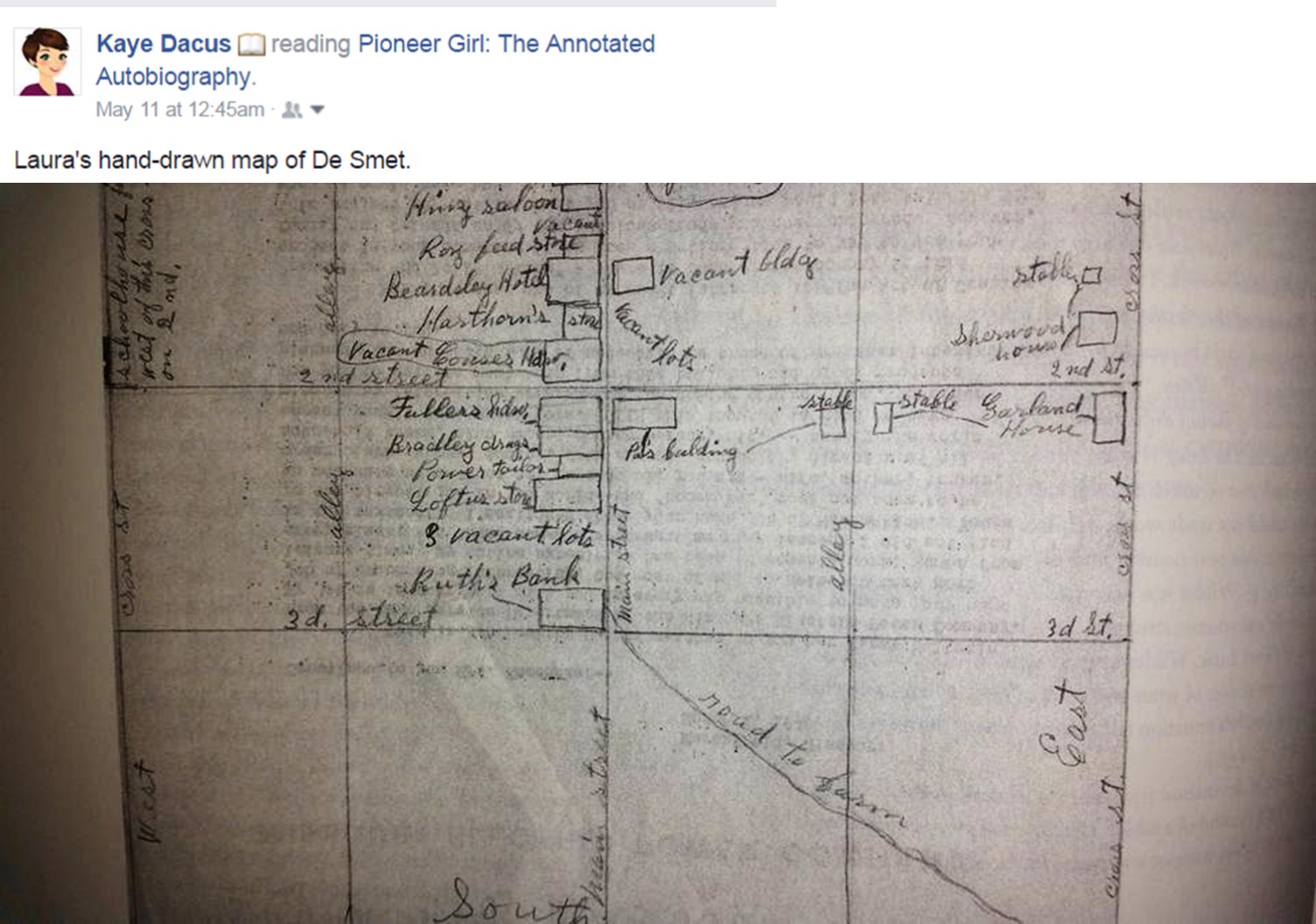
Apparently I don’t have many thoughts about Silver Lake or The Long Winter as I didn’t really post many text updates while reading these two. In fact, Silver Lake is my least favorite of the series (not counting Farmer Boy, which I don’t even really think of as being part of this series), so I read it mainly to see how things changed from the memoir to the novel . . . and to be honest about saying I’d re-read all of the books. But for me, like them, it’s just a quick stop while waiting for the best part of the story to come along.

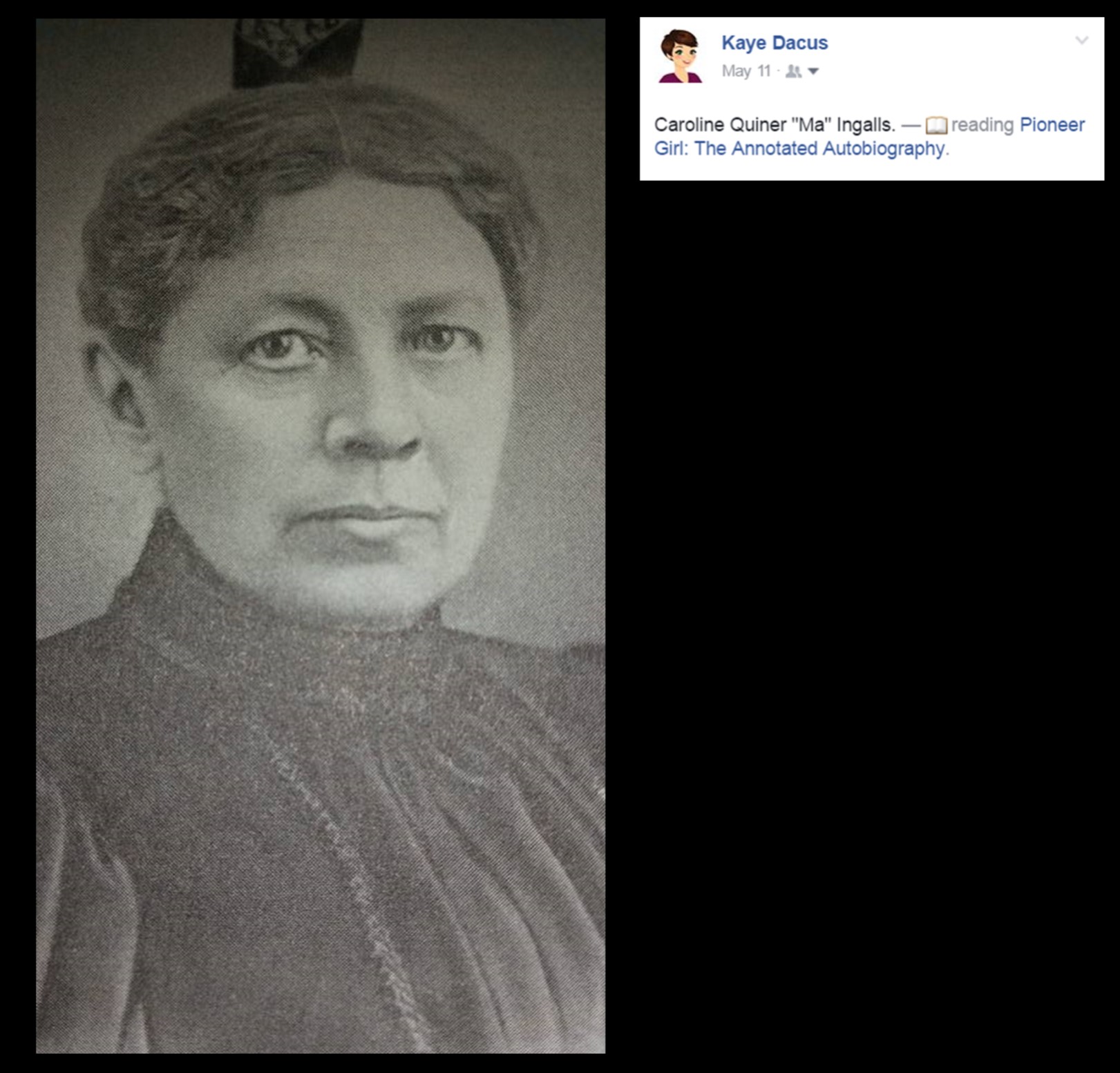
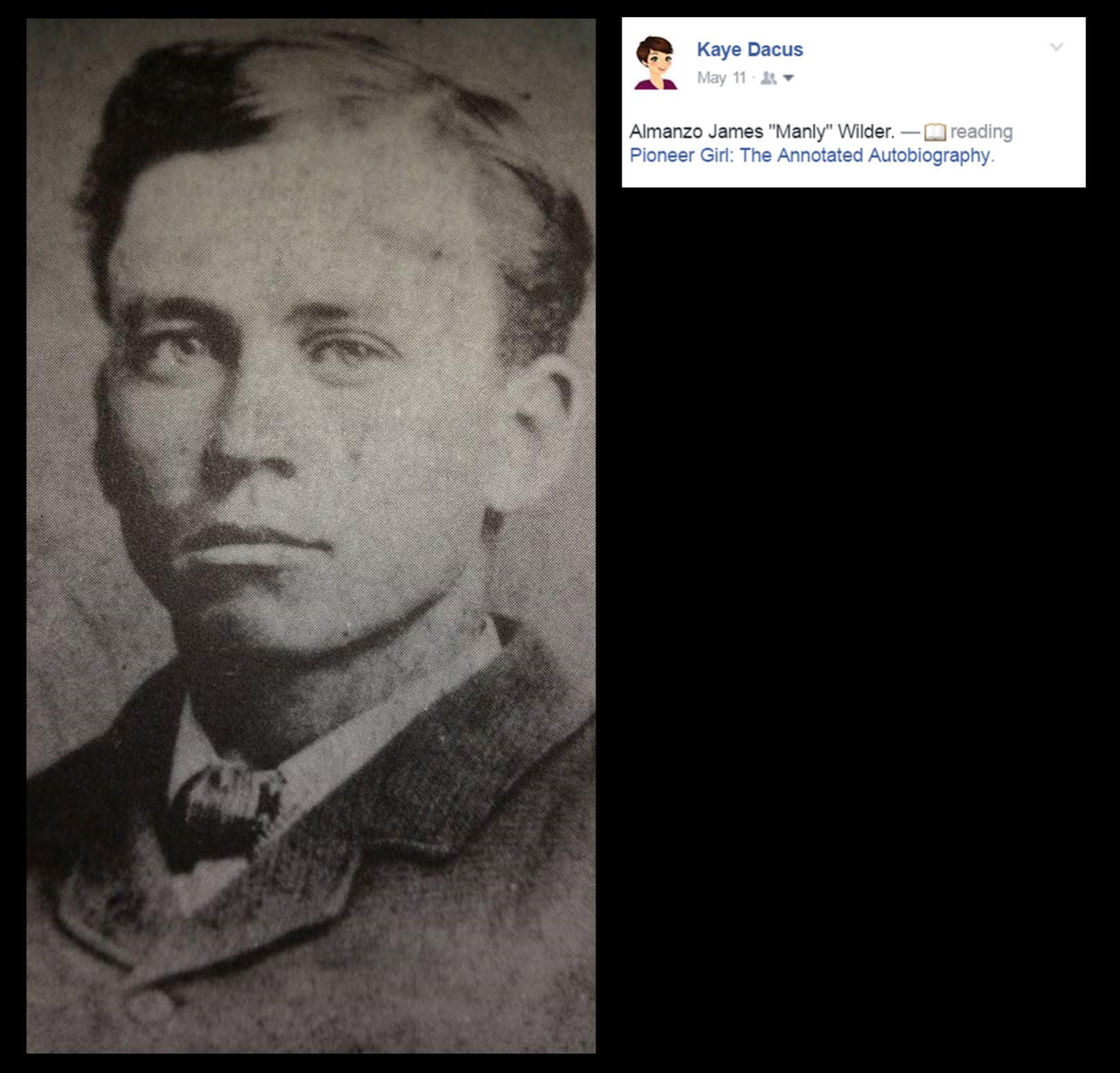
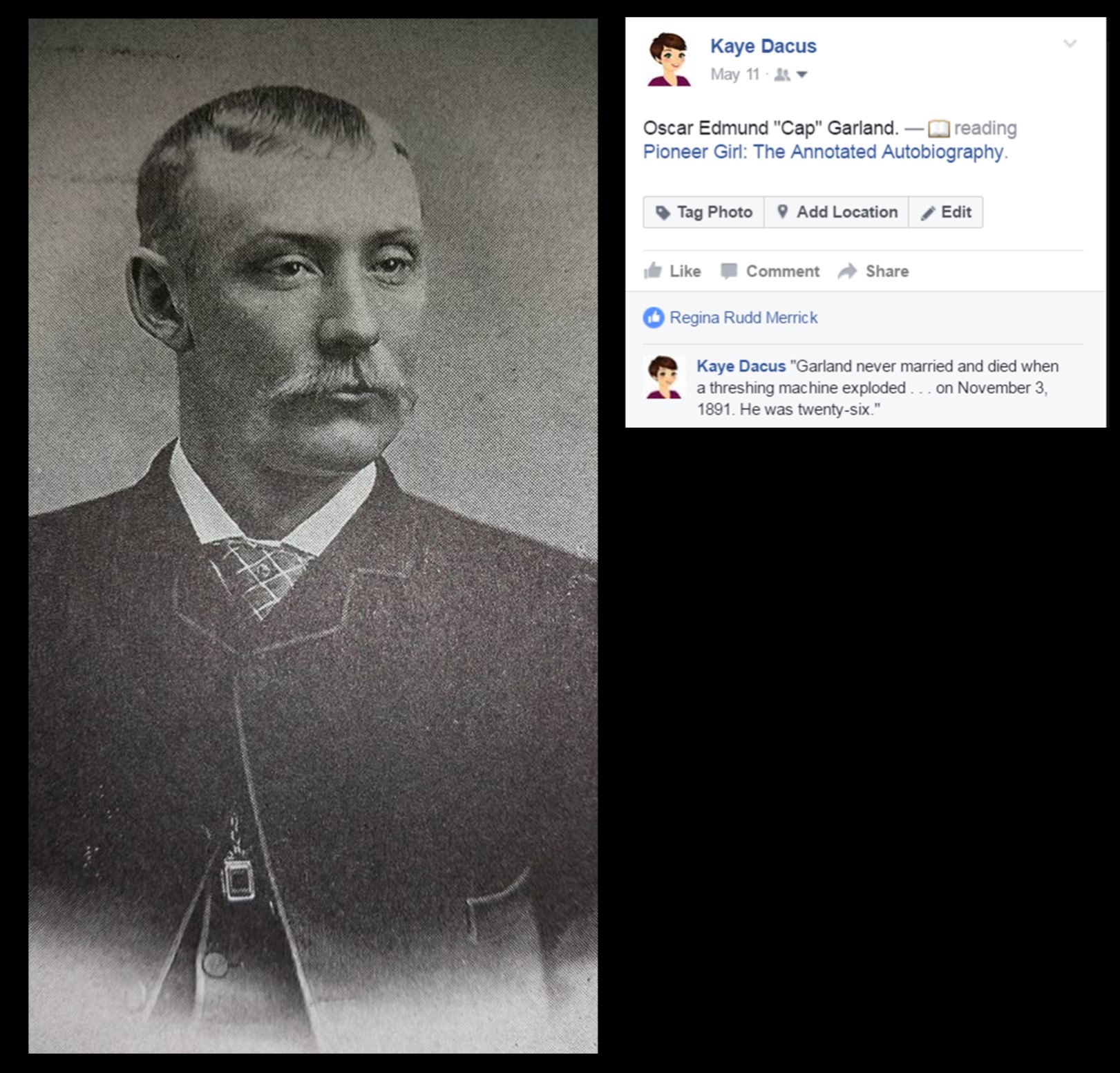
An interesting thing that LIW did in the novels (possibly at her publishers’ request???) was to make Almanzo younger—closer to her own age. IRL, he was 10 years older than she and already old enough to file his own claim by the time he came to De Smet. In the novels, she shaved about five or six years off and had him lie about his age so he could file a claim. This makes sense for the audience she ended up writing for—by the time the novels in which he features as the romantic interest came out in the early 1940s, society had already moved away from the idea that it would be appropriate for a 25-year-old man to be paying romantic interest to a 15-year-old schoolgirl.
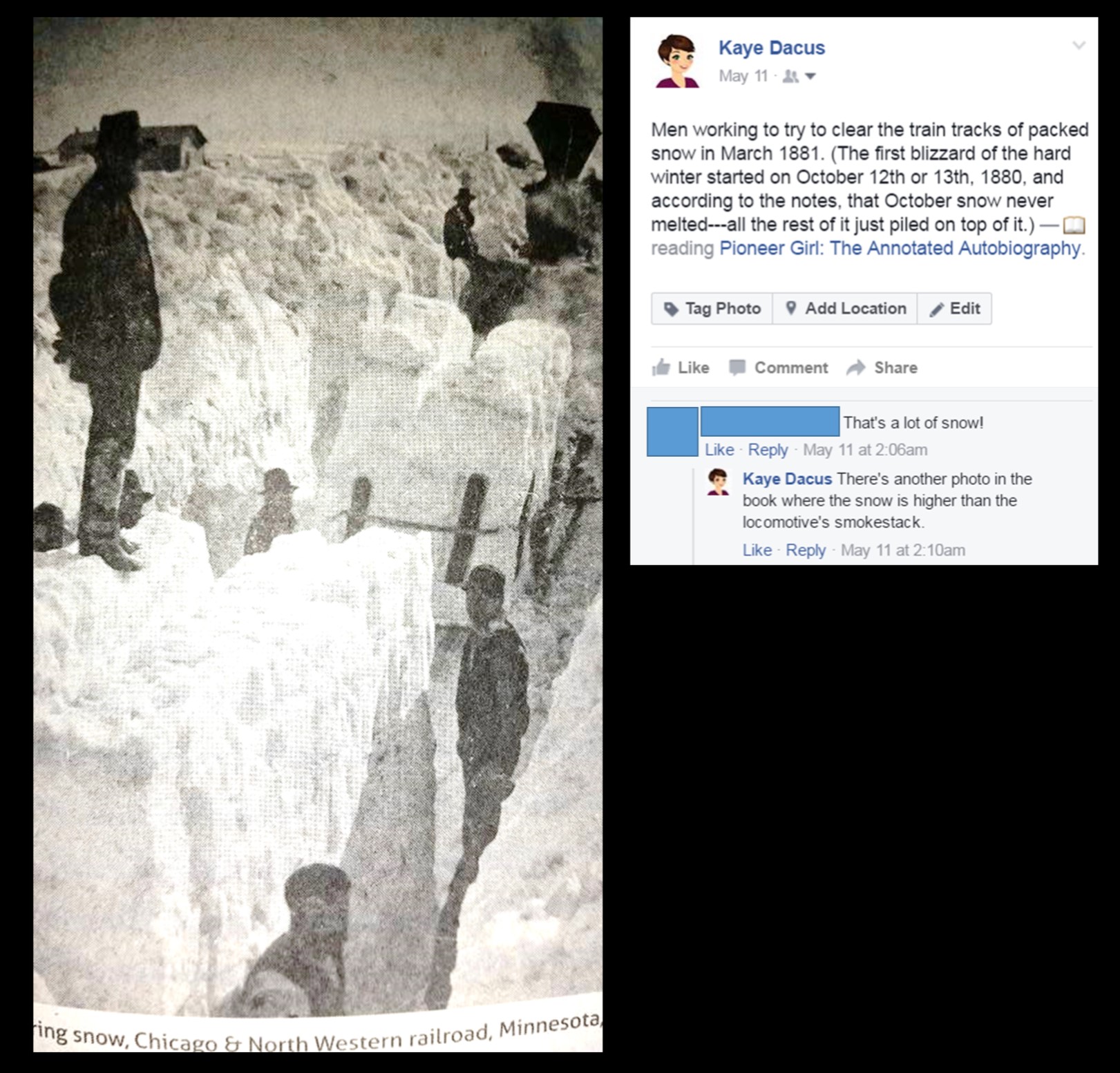
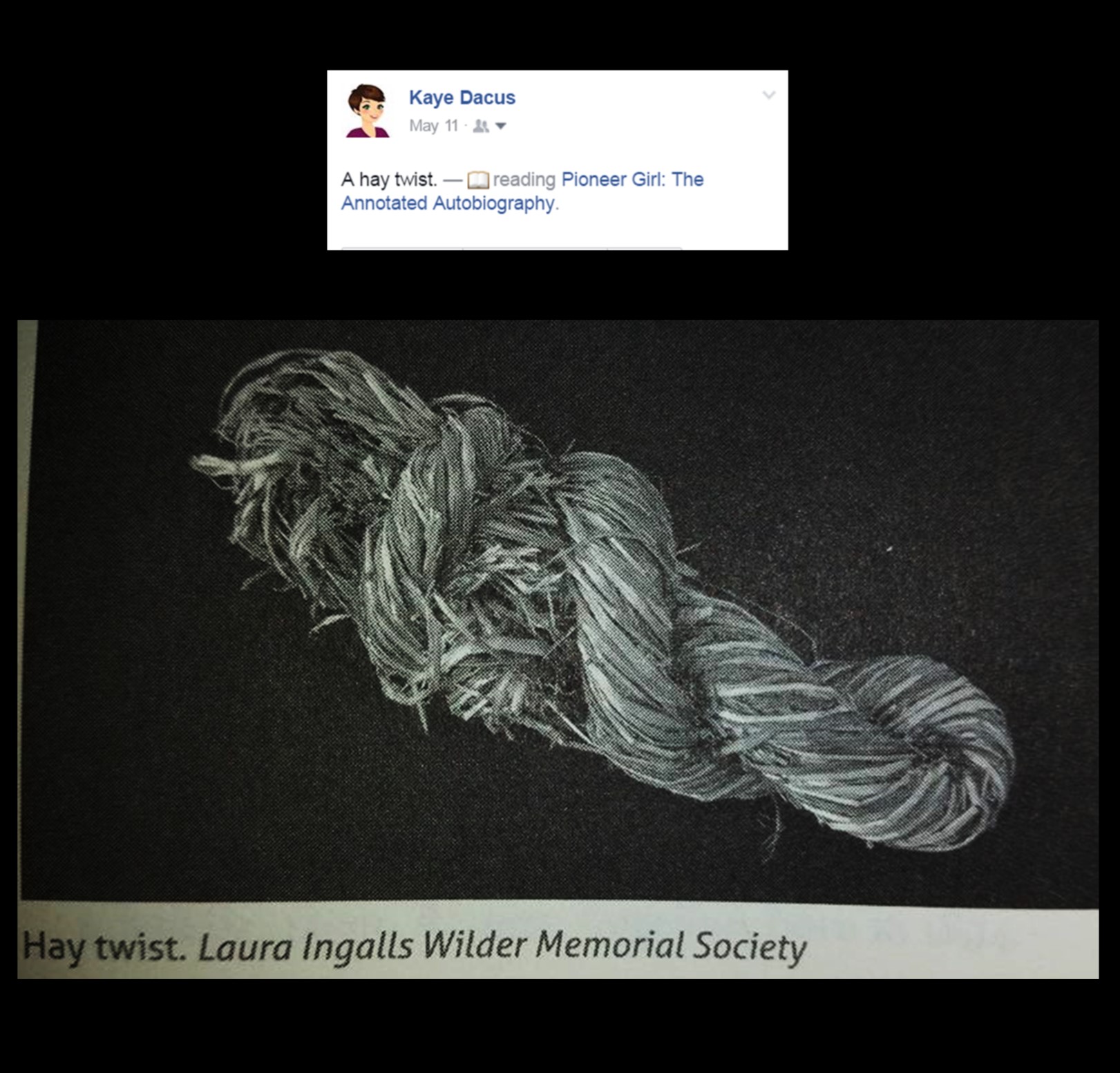
05/11 on page 227 of Pioneer Girl: (56.0%): Whew! The long winter is over—at least this version of it. In this memoir, LIW did not commit to nearly as much detail or description to remembering the hard winter as she did with any other section that became its own novel. It’s obvious, even without the annotations, that Laura really had a hard time writing about it.
- 05/12 The Long Winter marked as: read

 KayeDacus.com