Got my hair cut!
So, this is a totally random post and has nothing to do with anything but the fact that I finally went and got my hair cut for the first time in almost a year. After the salon I’d been going to shut down nearly two years ago, I’ve only had my hair cut twice, which is highly unusual for me. When I have a stylist I like, I enjoy going to the salon and getting my hair washed, cut, and styled by someone else for a change. But between losing my salon and laziness, I went from a quite short haircut to hair reaching almost to the tips of my shoulderblades in two years.
With the office move, I don’t have to be at work until noon on Monday, so I thought I’d drive around Berry Hill, the former residential area that, shortly before I moved here in 1996, turned into a boutique-store mecca. It’s maybe two miles from where I live, and it’s where my previous salon was located—the salon that had a Steel Magnolias feel to it that I loved. I figured I’d call a couple of them while I drove around to see if they could fit me in today or Monday morning.
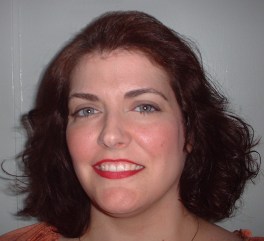
The first one I pulled up to not only could take me as a walk-in, but she could take me right then. So, after suffering through long, straggly hair for a year, in half an hour, I walked out with a new salon and the cut I’d been hoping for:
Fun Friday–Authors and Books in the News

Back at the beginning of the year, I wrote a post about the lawsuit J.K. Rowling has brought against the writers of a Harry Potter Lexicon (Fun Friday–J.K. Rowling, Are You Kidding Me?). Well, the case is now in court. The British newspaper The Guardian has an update on it.
~~~~~~~
Have you ever ended a relationship because your tastes in literature differed, your partner hated your favorite author, or he didn’t read at all? Check out this essay from the New York Times.
~~~~~~~
Are you like me and love your Roget’s Thesaurus? Ever wonder who Roget was? Here’s a review of the biography of Mark Roget, The Man Who Made Lists.
~~~~~~~
What’s the difference between a creatively written memoir and fiction? The New Yorker magazine explored this question recently in “Just the Facts, Ma’am: Fake memoirs, factual fictions, and the history of history.”
~~~~~~~
Okay, so this one isn’t really about books or an author. With the upcoming release of a long-awaited and somewhat questionable fourth Indiana Jones movie May 22, National Public Radio correspondent Christopher Joyce recently explored the question, Indiana Jones: Saving History or Stealing It?
The piece is part of a series NPR is running called “In Character” in which they’ve taken critical and historical looks at some of our favorite fictional characters from TV, movies, and books:
Hannibal Lecter: A Psycho with an Unlikely Soft Spot
Jack Bauer: Quiet, Ruthless Defender of America
Fictional Characters That Inspire: TV’s Jack Bauer
Catwoman: Feminine Power, on the Prowl
Blanche DuBois: Chasing Magic, Fleeing the Dark
Was Captain Ahab Ahead of His Time?
Pretty, Plastic Barbie: Forever What We Make Her
Unapologetically Harriet, the Misfit Spy
Hester Prynne: Sinner, Victim, Object, Winner
Elmer Gantry, a Flawed Preacher for the Ages
Darth Vader: The Tragic Man Behind the Mask
Cookie Monster: A Sweet, Sensual Id, Unfiltered
Valentino’s Sheik: An ‘Other’ Made to Swoon Over
‘Salesman’ Willy Loman: A Towering Little Man
Was Jim of ‘Huckleberry Finn’ a Hero?
Shrewd, Selfish Scarlett: A Complicated Heroine
Pollyanna: Spirit of Optimism Born Out of War
Our Characters, Ourselves: ‘In Character’ From NPR
~~~~~~~
NPR has also been running a series entitled “You Must Read This,” in which modern authors speak about one particular novel they’ve read that has had a profound influence on their lives.
~~~~~~~
Gail Gaymer Martin’s Writing the Christian Romance has been made the subject of a very ribald article which tries to harpoon the Christian romance genre. Be sure to read the comments that have been left. You might recognize a few names of published Christian romance authors!
~~~~~~~
Have a wonderful weekend!
Characters and Point of View
Due to exhaustion brought on by spending the last several days at work packing up to move to new offices next week, I wasn’t able to write a new post for Writing the Romance Novel. But just in case you’re jonesing to read something about the craft of writing, check out these past posts on Characters and Point of View:
Creating Credible Characters (June 2007). See also Be Your Own Casting Director, Point of View
Creating Credible Characters—Introduction
Creating Credible Characters—Where Do Characters Come From?
Creating Credible Characters–Who Are You?
Creating Credible Characters–Culture Clash
Creating Credible Characters–Let’s Get Personal
Creating Credible Characters–Mannerisms and Quirks
Creating Credible Characters–What Do You Want?
Creating Credible Characters–What’s in a Name?
Point of View (June 2007). See also Creating Credible Characters, Showing vs. Telling
Point of View–Whose Story Is This?
Point of View–How Important Is It?
Point of View–Semantics & Book List
Point of View–Giving POV the Third Degree
Guest Blogger Erica Vetsch–Making your Point (of View)
Guest Blogger Georgiana Daniels–Getting POV Right
Point of View–Showing vs. Telling
Writing the Romance Novel: Point of View
Though this is coming under much more debate these days, with all of the editors and agents saying chick lit is dead, dead, dead (which they said about historicals several years ago, but I digress), the standard POV for romance is third-person limited, past-tense, featuring the viewpoints of the heroine and the hero. That is what the romance reader is looking for.
I have heard from several authors recently that their first-person/present-tense “romance” novels were rejected, because the editor felt they were too chick-litty; or the author was asked to rewrite the story in third-person/past-tense and include the hero’s POV. And, by way of full disclosure, I am extremely prejudiced against the first/present POV and actively avoid reading it in books labeled “romance.”
Yes, single viewpoint romances have been written, and yes, they can be done well. In fact, we could say that there is almost a subgenre of romance which is the “girl must choose between two boys” romance. Young adult romances use this setup a lot (such as the Sunfire romances I read as a teen), as does chick lit.
I just want you to be forewarned that selling a romance novel that isn’t third/past/dual POV might be a struggle. Not impossible. But a struggle. But, don’t just take my prejudiced word for it.
A writer should stick to one POV per scene. “Headhopping” is a definite no-no. For category romance, a book should either contain just the heroine’s POV, or, optimally, the heroine’s and hero’s POV. Multiple POVs [more than hero/heroine] should be reserved for single-title works only. In general, third-person POV is the preferred viewpoint. (Rebecca Vinyard, The Romance Writer’s Handbook)
What does she mean, no headhopping? What about Nora Roberts and Jude Deveraux and Julie Garwood and Lori Wick? They headhop all over the place! Yes, and they’re all multi-published authors whose books sell on the strength of their brand-name, not the strength of their craft. Honing the skill of writing in deep, third-limited POV will strengthen your writing like nothing else.
The most common point of view in Christian romance is third person limited, alternating the hero’s or heroine’s POV by scene or chapters. . . . This method allows readers to enjoy getting to know both the hero and heroine intimately by seeing their relationship through both characters’ thoughts.
(Gail Gaymer Martin, Writing the Christian Romance)
Let’s take, for example, the movie You’ve Got Mail. What if it only had Meg Ryan’s scenes and the scenes in which she and Tom Hanks are together? Take out all of the scenes of him apart from her. You’d lose a big chunk of what’s important to the development of Kathleen and Joe’s relationship: the conflicts he brings to the table because of his family. If the story were told only from Kathleen’s POV, we would probably never understand why she ends up falling in love with him—nor would we get the chance to see the change and growth in him. Without getting inside the hero’s head, it’s a lot harder to convince the reader that the hero is worthy of our heroine’s love.
By using POV to allow the reader an intimate glimpse inside the character’s perspectives, the writer allows the reader to understand why the character is threatened by the conflict and why she [or he] feels so strongly about the subject.
(Gallagher/Estrada, eds., Writing Romances)
Including both the hero’s and heroine’s viewpoints not only gives us insight into both sides of the developing relationship, it’s also a way to create and maintain suspense and conflict. As we talked about in the Hooking the Reader series, being able to cut away from a character’s POV at a pivotal moment—a moment of decision or the cusp of taking a new action—hooks the reader and keeps them reading to find out what happens next.
In romance, it is the hero who carries the book. Within the dynamics of reading a romance, the female reader is the hero, and also is the heroine-as-object-of-the-hero’s-interest. . . . Through her own and the hero’s eyes, the reader watches and judges the heroine . . . the closer she moves toward spontaneously identifying with both hero and heroine, the more rich and rewarding the romance is likely to be for her.
(Laura Kinsale, “The Androgynous Reader,” Dangerous Men and Adventurous Women)
For Discussion:
What POV do you prefer to read romances in? Do you always want the hero’s POV? Would you ever consider writing a single POV romance from the hero’s viewpoint? Do you find yourself identifying more with the heroine when you see her through the hero’s eyes—wanting to be in her place as the object of his admiration? What POV have you chosen to use? Any other thoughts on POV in romance?
* * * * * *
If you like what I do here and want to keep this content free,
consider supporting me and my work by buying me a coffee.

Writing the Romance Novel: The Caveman and the TSTL Heroine
Yesterday, we began our discussion of stereotypical characters in romance novels. I’ll be the first to admit that with some writers, I don’t mind them. As I’ve already mentioned, I cut my teeth reading Garwood, Deveraux, and Coulter in the 1980s—and there are certain novels of theirs that I still enjoy reading, because they’re good storytellers. But we’ll get into that later.
There are two more types of characters I want to talk about before we move on to the next topic. (What will it be? I’m not sure. I’ll find out tonight when I sit down to write tomorrow’s blog entry.)
The Caveman
Have you ever read a romance novel in which the main male character was so brutish and stubborn that you wondered if he’d skipped back a couple of steps on the evolutionary ladder? (Even if you don’t believe in evolution?) This is the MMC who’s so thickheaded and set in his ways that his only internal conflict is whether or not he’ll give up his caveman ways and finally admit that he loves the romantic interest (usually a female main character). He doesn’t care about anything other than food and entertainment, whether that entertainment is fast cars or going to war on the clans who are his enemies. While the FMC might become part of that entertainment, she’s definitely outranked by the pre-existing forms of entertainment (cars/clubbing his enemies over the head with his big sword). She’s merely a distraction. A gnat. A mosquito. Something he’ll protect because, in his caveman mentality, she now belongs to him (whether they’re married or not).
No, if your reading has been limited to stuff published in the past ten or fifteen years, you probably haven’t seen a caveman hero—or at least, not a true caveman. Just like the short-lived TV show based on the Geico commercials, the caveman of the new millennium has changed. He has feelings just like everyone else (sort of). But just like those Geico cavemen, he’s better left to 30-second clips (secondary role) than being given his own show (MMC).
I’ve read enough newbie authors’ writing to know that in the dark recesses of the vast troposphere of unpublished (unsubmitted, unedited, unrevised, un-everything) work most of us have done, we’ve written a caveman, whether we set out to do it or not. On one side, the caveman character appeals to those romance writers who are the kind of women who find themselves drawn to the “bad boy” character. The rebel without a cause. The one with the devil-may-care attitude who leaves a trail of broken hearts behind him. Somehow, these women believe they can “fix” these bad-boy cavemen. So they write romance novels in which some fiery, spunky, red-headed, green-eyed vixen tames the caveman. Makes him turn from his bad-boy cro-magnon ways and become the ideal Homo sapien.
On the other side, how many episodes of Maury, Jerry Springer, and Ricki Lake does it take for people to realize that our caveman will always be a caveman?
Please, please, please . . . don’t let your MMC be a caveman. Give him some spark, some inkling, that makes his turnaround at the end of the book believable as a lasting change.
Edited to add, 2024
Caveman Red Flags:
- Bullying or belittling others.
- Ignoring his own emotions and emotional wellbeing.
- Refusing to acknowledge or show others that he has feelings.
- Gaining compliance through the threat of (or actual) physical violence.
- The world revolves around him and what he wants / he thinks the other characters exist only to serve his needs.
- Blaming others for his own faults/shortcomings.
- Mansplaining.
- Any kind of in¢el/red Þíll behaviors.
The TSTL Heroine
If you’ve never seen this acronym before, I know you’re dying to know what it means. This is my biggest pet-peeve when it comes to characters: the TOO STUPID TO LIVE female main character. The TSTL heroine is the one who cannot defend herself. Who has to rely on the big, strong, oh-so-manly, I-may-faint-if-he-smiles-at-me hero to save her from every little problem that comes her way. The one who, when kidnapped, cannot even begin to think of own escape plan—or, worse yet, the one who ignores everyone’s warnings and puts herself in harm’s way leading to the kidnapping. The kind who is headstrong and goes against every social norm of her era or environment (whether historic or contemporary) and yet is lauded and applauded by those around her who, in real life, would scorn her. (This is usually done by an author as a means to generate conflicts for the character.)
The TSTL FMC is problematic because she usually exemplifies stereotypical behaviors that display or betray misogyny on the behalf of the author and/or the intended audience, whether intended or not. Every year, we see lists of how poorly female characters have been written in fiction (with their boobs bouncing boobily). But that’s not the most insidious version of the TSTL FMC. Even authors who have been considered feminist icons can fall into this trap, writing an FMC who epitomizes everything the author finds annoying in women they feel fall short of their own ideals, beliefs, and internal codes of behavior. They may think they’re writing this kind of character as a warning to readers not to be this way. But it never works out; the character just becomes unlikable and unbelievable—and doesn’t reflect well on the author. These kinds of characters play upon the worst stereotypes that exist in the societal zeitgeist and reinforce them, setting the fight for equity and equality back decades, if not centuries. (end soapbox)
We see a lot of TSTL FMCs in romantic suspense. She’s the one who runs into the basement in her underwear when she’s home alone and hears a noise down there. She’s the one who opens the door when she knows there’s something dangerous on the other side of it (have you ever seen The Birds?). She’s the one who runs upstairs to get away when she knows there’s no way to get out of the house upstairs. She’s the one who follows the bad guy into the dark woods to find out what he’s up to when she’s unarmed and has no tracking/stealth ability or training (and usually ends up getting captured by the bad guy, who is almost always a caveman).
I also see a lot of TSTL FMCs in historical romances. In fact, I began reading a book that came out a couple of years ago in which the entire premise of the story was built upon the FMC going somewhere where she knew she shouldn’t have been, where she didn’t need to be, and where a woman in her situation of life would never have gone during that time period. Then, once she was in the dangerous situation, she—a headstrong woman of rank and wealth—couldn’t figure out how to prove her identity or buy her way out of it.
TSTL heroines have a tendency to shriek, scream, weep, wail, flail, faint, stamp their feet, and get lost A LOT.
There’s a big difference between TSTL heroines and those who are just ditzy. Ditzy FMCs are usually smart but lacking in common sense. TSTL heroines lack both. (And ditzy just for the sake of humor is borderline TSTL.)
The worst part of TSTL heroines is that it’s not always the character’s fault that she comes across that way—it’s the totally unbelievable situations the author puts her in. (See the example I gave above about the published book I read!) Usually a TSTL heroine’s plight is made even worse by the author putting her in one inane situation after another just for the sake of having the hero come in and rescue her.
Please, respect your female main characters more than that. Even in romantic comedy, don’t make your FMC ditzy or silly without giving her a strong intellect and the capacity for getting herself out of conflicts. Don’t have her make the same mistake over and over and over without facing consequences and learning from it. And don’t have her rely so heavily on the MMC to rescue her that she ties herself to the train tracks and lets the train roll right over her.
She doesn’t have to be an Alpha female and go in with guns blazing to save the MMC (unless you really want her to). She can be soft and demure and meek without being stupid or silly.
For Discussion:
Have you ever read a romance which featured a caveman or a TSTL heroine? (published or unpublished) What are some qualities you could give to a caveman or TSTL heroine to break them out of that mold? Is there ever an instance where a caveman or TSTL heroine is the best choice of character?
MFR Page Has Been Updated
For those of you wondering why my MFR Progress page hasn’t been updated in a while, it’s because I’ve been struggling to write. But I just updated it, so be sure to check it out! And keep on me if I don’t keep updating it regularly!
Writing the Romance Novel: The Warrior and the Damsel in Distress
The strong, domineering hero of the romance novel has long been the subject of criticism. What critics don’t realize is that it is the hero’s task in the book to present a suitable challenge to the heroine. His strength is a measure of her power. For she must conquer him.
Robyn Donald, “The Hero in Romance Literature”
Most romance writers I’ve talked to, or whose critical writings or interviews I’ve read, say that their ideas for their novels begin with the characters. I’ve found this to be true for myself—and for me, it’s usually the hero who comes first. After all, the true romance novel is, as we learned last time, a story about the developing relationship between two characters. Meaning that it is the characters who are the central focus of the story, the characters who drive the plot, the characters whom, at the end of the book, the reader really cares about. Therefore, when setting out to write a romance novel, a considerable amount of care and attention needs to be paid to developing your characters.
F. Scott Fitzgerald once wrote, “Begin with an individual and you will find that you have created a type; begin with a type and you will find that you have created—nothing.” Back in the glory days of the books that gave us the term bodice-rippers (the 1970s and ’80s, just in case you don’t remember reading them yourself!), most of us who were avid romance readers had our favorite authors, because we could count on them to give us the kinds of heroes and heroines we were looking for. Jude Deveraux, Julie Garwood, and Catherine Coulter were my three favorites. In fact, I didn’t read very many other authors at all, because I had all I wanted in their prolific writings. They gave their readers warrior-heroes who took what they wanted no matter the consequences, who resented the heroines for distracting them from their tasks, who felt love was showing weakness and would bring them dishonor; and heroines who were strong, sometimes well beyond what was realistic for the medieval or other historical time periods in which the stories were set, who put up with the men’s brutality and eventually came to not only love them, but soften/tame them as well—while never giving up their own identity.
I’ve recently re-read two old Julie Garwood novels, Honor’s Splendor and The Wedding, and I came to the realization that even though the heroes are technically different—one is an English Baron, the other a Scottish Laird—they’re basically the same. And the heroines are too. And I’m now remembering that even though I considered Julie Garwood my favorite of the three authors I mentioned, I never really did like her heroines. Like the heroes, they’re all very similar, and relatively silly. Jude Deveraux, while still giving the warrior-heroes at least didn’t make her heroines silly. But for the most part, all of them wrote characters that were stereotypical for their era: the warrior and the damsel in distress.
Sure, there are a lot of readers out there who still want those two archetypal romance characters. Or they want the Scoundrel and the Socialite, or the Rich Man and Poor Girl. And if we study all romance novels deeply enough, we’ll find that for the most part, all of our characters fall into some kind of “type” in one way or another. But we have to fight against the stereotypes to make our characters fresh and appealing.
If a romance novel features a heroine with red hair and green eyes, what kind of personality do you expect her to have? If there’s an African American man as a secondary character in a book and a crime is committed, who’s the perpetrator most likely going to be? Are all Italian men hot-headed, lusty, and linked with underground crime? Are all medieval men warlords, barons, or lairds? Do all historical heroines have to be feisty, spunky, educated beyond what is historically believable, hate their corsets, and want to run around all over the place unchaperoned?
In inspirational romance, we have our own set of stereotypes to deal with: the pioneer widow who must marry a stranger to survive; the nineteenth century teacher who’s gone west to teach and bring God’s word to the heathens; missionaries and preachers; secretaries; characters with jobs so vague as to be nonexistent; ranch owners who take in wayward boys; the good Christian girl who must “save” the backslidden or non-Christian hero; and so on.
Quite a lot has changed in the romance genre since the heyday of Deveraux, Garwood, and Coulter. We’ve seen the splintering of romance into subgenres: chick lit, paranormal, romantic suspense, inspirational, sweet, historical (which has its own genres, the two most popular being Regency and medieval), etc. We’ve also seen the decline in popularity of the warrior heroes and damsel-in-distress heroines. Oh, sure, they’re still out there, but modern readers are looking for something more. They’re looking for a twist on the type. They’re looking for unique individuals, so that each story they read seems different from the last.
One thing that has become possible in the last ten or fifteen years has been the beta-male hero. He’s Clark Kent without the Superman alter-ego. He’s Steve Jobs or Bill Gates. He’s the Hollywood mega-star’s personal assistant (George in Stand-In Groom). He’s most likely not buff nor capable of physically sweeping the heroine off her feet, doesn’t hold a “romantic” job (systems support analyst, anyone?), and definitely doesn’t go around intimidating people because of his physical prowess. Yes, typically, these beta-male heroes are found mostly in contemporaries. (We still like our historical heroes to be alpha-males.)
With the rise of the beta-male has come the rise of the alpha-female—the “bitch,” in other words. She’s the powerful woman who’s completely given up on men. She’s the attorney, the vice president of the company, the CEO, the governor, the senator. She has taken over as the character who must be conquered, whose stony dispassion must be chiseled away by our more in-touch-with-his-emotions beta-male.
But once again, in these scenarios, we tend toward types. Our job as authors is to make sure we’re not falling into the trap of beginning with a “type” of character. Is your character telling you she’s a teacher? Great. Make her a shop teacher at an inner-city high school instead of a kindergarten teacher at a private school where all the children are precocious little angels. He’s a medieval Highland laird? Super. Make him a pacifist. Do something to give some kind of twist to your character’s “type” to keep him or her from becoming a stereotype.
In inspirational romance, we’re so scared of giving our characters any kind of flaws, sins, or pasts that they come across as perfect, sanctimonious prigs. Let them have pasts that they’re still paying the consequences for. Let them say things that not everyone around them agrees with. Let them argue. Let them fall down and fail. Let them get angry at God. Let someone else take them down off of their holier-than-thou high-horse.
Because there’s no way to cover everything about romance heroes and heroines in one blog entry, we’ll continue talking about them tomorrow. But for now, let’s get some discussion going.
For Discussion:
In your WIP, what “type” is your hero? (Alpha? Beta? Highland laird? Nerd?) Your heroine? (Damsel in distress? CEO? Silly girl who gets into one catastrophe after another?) What have you done to keep them from becoming stereotypes? Do you have a favorite author who tends to use stereotypical characters in her/his novels? What are your favorite “types” to read in romances?
Gotta Love Des!
I’ve probably mentioned here once or twice my addiction to the TV show LOST, so I just had to share this video, which Lori Benton encouraged me to watch. It was posted on the front page of Lostpedia.com, which I usually only visit the day after a new episode airs, so I’m glad she pointed it out to me. If you’ve ever wondered what LOST is all about, here’s your chance to know in four minutes, twenty-four seconds everything you need to know:
Fun Friday–My Boy Jack on Masterpiece Classics

I finally received my press-preview copies of the remaining Masterpiece Classics, so I eagerly sat down and watched My Boy Jack last night, which airs on PBS this Sunday.
“Have you news of my boy Jack? Not this tide.”
— Rudyard Kipling, “My Boy Jack”
In 1914 England, patriotism is high in the early days of WWI, and writer Rudyard Kipling (David Haigh, Four Weddings and a Funeral) is one of its most eloquent and passionate voices. John “Jack,” (Daniel Radcliffe, Harry Potter films), Kipling’s only son, is underage, hopelessly myopic, and eager to join the war effort. Kipling’s outspoken American wife Carrie (Kim Cattrall, Sex and the City) remains more sanguine on the course of the war, and the fate of her family. My Boy Jack, based on a true story, tells of a nation at war, and offers an intimate portrait of one family’s complex and divided experience in it. (from the PBS Masterpiece Classics website)

I’ll admit to being a bit leery of the casting of Daniel Radcliffe and Kim Cattrall in this film. At first, it was a bit disconcerting to see a much more mature Daniel dressed in period costume, smoking, and stripping down to his skivvies (and dropping those—though that, obviously, wasn’t shown on screen) for his Army medical evaluation. But he really shows his acting chops in this role and deserves an Emmy or a BAFTA or something for this complete departure from how we’re used to seeing him as Harry Potter. Kim Cattrall, on the other hand, had to fight against type in her role as Carrie Kipling, wife of Rudyard. In her introductory scene, there is quite a bit of Samantha from SATC present, but after that, she did tone it down to where she was almost believable as a woman who would have grown up at the end of the Victorian era.
Now, for the Austen connection.  Carey Mulligan (P&P 2005, Northanger Abbey 2007) portrays Elsie “Bird” Kipling, Jack’s older sister. Hers is a bit of a background role, but important none the less, as she confronts her father and makes him understand his responsibility in pushing Jack too hard. And she and Daniel played very well off of each other—I can’t help but imagine that his experience in making this film and working with actors with such wide and varying experiences as they’ve all had only served to strengthen his own skills.

It isn’t until Jack joins the Army and begins to go through training that we really begin to see Daniel stretching his acting wings. Even though with the pencil mustache and in the uniform he initially looks like he’s going to a costume party dressed as Hitler, that impression is overcome by his great acting and the powerful script and story he was given.

My Boy Jack is based on a stage play penned by David Haigh—yes, the same David Haigh who plays Rudyard Kipling in this film, which he also did on stage. The play premiered in 1997 to packed houses and critical acclaim. Now, with its look at how war affected the family of one of the twentieth-century’s most beloved authors, the story takes on even deeper meaning as comparisons to what’s happening currently in the world are inevitable. However, this is not a blatant pro- or anti-war film. It’s a film about family, about loyalty, about duty, about love.
And there’s no doubt about it, David Haigh, whether or not he wrote and executive produced the film, is perfect for the role:

Rudyard Kipling
I really hope you watch My Boy Jack and then come back and leave your comments on what you think of it. I can’t wait to watch it again . . . and again . . . and again . . .
Writing the Romance Novel: Who Reads Romances?
I mentioned in the first post the stigma that reading and writing romance has. If you’ve been a reader or writer of the genre for any length of time, you know what I was talking about from first-hand experience.
But who is reading romance novels? Let’s look at some statistics, courtesy of the Romance Writers of America’s website:
Romance Sales
Romance fiction generated $1.37 billion in sales in 2006.
Approximately 6,400 romance titles were released in 2006.
Market Share of Romance Fiction
Romance fiction outsold every market category in 2006, with the exception of religion/inspirational.
26.4% of all books sold are romance.
Romance Market Share Compared to Other Genres
(source: Simba Information estimates)
Romance fiction: $1.37 billion in estimated revenue for 2006
Religion/inspirational: $1.68 billion
Science fiction/fantasy: $495 million
Classic literary fiction: $448 million
Mystery: $422 million
Graphic novels: $128 million
Of those who read books last year, one in five read romance novels. (AP-Ipsos Poll)
As you can see, the only category of fiction that outperformed romance is religious publishing (fiction and nonfiction), which includes inspirational/Christian romance. What a bonus for those of us who are writing inspirational romances! (For a more detailed romance subgenre breakdown, along with annual updates, click the RWA link above.)
Who are these “one in five” people reading romance novels? According to RWA’s statistics:
- Readers break down geographically in the U.S.: Southeast (29%), Western (27%), Midwest (26%), Northeast (12.6%)
- More women (78%) than men (22%). The number of men reading novels categorized as “romance” genre increased from 7% in 2002.
- Married women make up 50% of readers, while 37% are single.
- There’s a pretty wide age range for readership: 41% are between the ages of 25–44; 29% between the ages of 45–64; 15% between the ages of 14–24
- Here’s the statistic that usually surprises people: 42% of people who read romance novels have a bachelor’s degree or higher; 15% have post graduate work or a degree; 23% have high school diplomas
So that’s for whom we’re writing.
Next week, we’re going to start getting into the nitty-gritty of the nuts-and-bolts of how to write a romance novel—from characters to conflicts to structure to endings. And I’m lining up some fun and surprising guest columnists too!


