Thursday Thought Provoker

Bookstore Bonanza!
Last Friday, I drove over to the relatively new shopping area on the other side of downtown Nashville from where I live, where the only remaining non-religious chain bookstore exists within the Nashville city limits—Books-A-Million on Charlotte Pike—to see if they had any of my books in stock. (Yes, you read that correctly: Nashville—the city known for more than a century as the Athens of the South because of the number of newspaper, magazine, and book publishers in town—is down to just one major big-box chain bookstore within the city limits. They had one copy of TAoR on the shelf.)
But as I was leaving, I accidentally walked past the Reference section (which is quite inconveniently located at the front of the store), and I accidentally stopped and looked to see what books they had on fiction writing. And . . . I accidentally walked out of the store with four of them (product descriptions are from Amazon):
 How to Grow a Novel (Sol Stein)
Yes, I’ve quoted from this one in a few different writing series, but only because I checked it out from the library. Now I own it!
- Product Description
How to Grow a Novel is not just a book, but an invaluable workshop in print. It includes details and examples from Stein’s editorial work with a #1 bestselling novelist as well as talented newcomers. Stein takes the reader backstage in the development of memorable characters and fascinating plots. The chapter on dialogue overflows with solutions for short-story writers, novelists, screenwriters, and playwrights. Stein shows what readers are looking for—and what they avoid—in the experience of reading fiction. The book offers guidelines– and warnings– of special value for nonfiction writers who want to move into fiction. Stein points to the little, often overlooked things that damage the writer’s authority without the writer knowing it. And this book, like no other writing book, takes the reader behind the scenes of the publishing business as it affects writers of every level of experience, revealing the hard truths that are kept behind shut doors.
 Zen in the Art of Writing (Ray Bradbury)
My dear friend Chris alerted me to this one—her English professor mentioned it to her and she told me she’d ordered it. So when I saw that one lonely copy sitting on the shelf, I had to rescue it. She and I plan to powwow over this when I see her in July!
- Product Description
“Every morning I jump out of bed and step on a land mine. The land mine is me. After the explosion, I spend the rest of the day putting the pieces back together. Now, it’s your turn. Jump!” Zest. Gusto. Curiosity. These are the qualities every writer must have, as well as a spirit of adventure. In this exuberant book, the incomparable Ray Bradbury shares the wisdom, experience, and excitement of a lifetime of writing. Here are practical tips on the art of writing from a master of the craft-everything from finding original ideas to developing your own voice and style-as well as the inside story of Bradbury’s own remarkable career as a prolific author of novels, stories, poems, films, and plays. Zen In The Art Of Writing is more than just a how-to manual for the would-be writer: it is a celebration of the act of writing itself that will delight, impassion, and inspire the writer in you. In it, Bradbury encourages us to follow the unique path of our instincts and enthusiasms to the place where our inner genius dwells, and he shows that success as a writer depends on how well you know one subject: your own life.
 What Would Your Character Do? (Eric and Ann Maisel)
One of my issues with the last two contemporary novels I wrote (well, all three of the Matchmakers books, maybe) is that I feel like I’ve been there, done that with my characters—yet at the same time, I feel like I’m having trouble getting to know them at a deep level. Since I have the luxury of time right now in which to get to know my characters quite well before I start working on the next novel (whichever one that turns out to be), I’m hoping this book will help me come up with some new and interesting twists so that I’m not repeating myself with my characters in the future.
- Product Description
Not just another dry, how-to instruction book, “What Would Your Character Do?” is the first interactive guide that encourages writers to get inside their characters’ heads as they create them. This fascinating book: provides more than 20 quizzes to help writers analyse their characters’ traits; features easy-to-understand psychological summaries and prompts for further exploration; and includes a wealth of writing and psychology expertise to help writers create believable characters. Whether readers are exploring how their characters react to the death of a loved one or how their characters learned to ride a bike, they’re sure to emerge with more compelling heroes, heroines and villains than ever before.
 The 101 Habits of Highly Successful Novelists (Andrew McAleer, ed.)
If you follow me on Twitter, you’ve seen a couple of quotes about writing from authors every day for the past several days—they all came from this book. Not only am I enjoying finding all of these great little tidbits to share, but I’m avidly highlighting others to use in future workshops (and possibly more craft-of-writing blog posts).
- Product Description
This title focuses on the behaviors necessary to succeed in the dog-eat-dog world of fiction writing by asking successful authors how they practice their craft. Readers will learn how to adopt those habits on their quest to become novelists. The book will inspire, nourish, and provide the needed kick in the pants to turn the wannabes into doers! The 101 Habits of Highly Successful Novelists is full of “aha” experiences as the reader uncovers the collected wisdom from the cream of today’s fiction writers.
What books have you added to your To Be Read pile recently?
Writer’s Window: Martha Rogers
 Joining us today for Writer’s Window is historical-romance author Martha Rogers.
One lucky commenter* will win a signed copy of Martha’s latest release, Summer Dream. Deadline for leaving a comment to enter the drawing is Friday. To enter the drawing, you must answer the question posed by Martha at the end of the interview. Only one comment per person will count toward the drawing. Please do not include your e-mail address in the body of your comment—just make sure it’s correct when you sign in to leave your comment. The winning name will be drawn next weekend and the winner will be notified via e-mail.
- *U.S. residents only, void where prohibited. If you win the drawing, you will be ineligible for the next three drawings, though hopefully you will still come back and join in the discussion.
__________________________________________________________
As the daughter of a small town minister in Connecticut, Rachel Winston fears that the only way she’ll ever find a husband is to visit her aunt in Boston for the social season. When Nathan Reed arrives in town, she can’t help but wonder if he could be the one. Although attracted to Rachel, Nathan has no desire to be involved with a Christian after a painful experience with his own family. What’s more, he knows he has no hope of courting her.
When Nathan is caught in a devastating blizzard and lies near death in the Winston home, Rachel and her mother give him a lesson in love and forgiveness that leads him back to his home in the South. Will he make peace with his family and return before Rachel chooses a path that will take her away from him?
Welcome, Martha!
What do you like best about being a writer?
- Creating the stories in my head before I ever put them into the computer.
What do you like least about being a writer?
- Trying to market and sell myself and my books. I can talk about my books at length, but hesitate to ask people to buy them. I don’t enjoy going into bookstores to promote myself and ask for book signings. I can do it for others, but not myself.
Pop, Soda, or Coke? What do you call it, and what’s your favorite variety?
- I always say “Coke” for everything, and my favorite is Diet Coke with Splenda with Diet Dr. Pepper running a close second.
What’s your favorite dessert?
- Any kind of pie but especially chocolate. Of course if it’s chocolate, I’ll take any kind of dessert. I’ve been known to hide desserts from my children when they were small so I’d have some for myself later. You might call me a “chocoholic.”
What’s the most fun/interesting/crazy/scary/unique hands-on research you’ve done for a book?
- The most interesting was the tour of Boston and the Freedom Trail for my first series and for the first book in the second one. I used a lot of those places and the history of them in two of the books. The most fun one was doing the research on my family and learning so much about them. That research became the basis for a novel.
What’s your favorite movie from childhood?
- Little Women with June Allyson, Janet Leigh, Elizabeth Taylor, and Margaret O’Brien and I think Peter Lawford played Laurie in that one. I vaguely remember the one with Katherine Hepburn as Jo. However, I didn’t see them as many times as I did Gone with the Wind. Would you believe 3 times in one day? Went one morning at 10 AM for the first showing and stayed through all three showings with my best friend in 1952, our junior year in high school.
If you were to write a novel about what your life would have been like if you’d become what you wanted to be at eight years old, what kind of character would the story be about?
- It would be about a young woman in the WACS or WAVES as a nurse treating our young men in WWII. I wanted to be one so badly that I cried because I was too young, so I used my paper dolls and wrote stories about them for my paper dolls to play out. I even entered college as a nursing student, still writing stories. So, I guess I was destined to be a writer.
What makes you happy?
- Being with our ten grandchildren and especially with our two great-grandsons. I can’t be anything but happy around their smiling faces and listening to their tales. They range in age from eight to twenty-six with one two year old and one two-month-old great-grandson.
What makes you nervous?
- Talking to editors at appointments. I become an absolute blithering idiot who can’t put two words together coherently when trying to tell about the book I want to pitch. I can speak before a roomful of men and women and have blast, but put me one on one with an editor and my tongue is thick as a slab of bacon straight off the hog.
What’s your biggest dream for the future?
- Professional: To win an award for one of my books
Personal: To watch our great-grandchildren grow older and to celebrate our 60th wedding anniversary together (8 years from now).
Tell us about your newest release and what you’re working on now.
- My newest release in Summer Dream, Book 1 in Seasons of the Heart series. It’s about a faithful Christian young woman in Connecticut in 1888 who meets a young man from North Carolina who believes God has abandoned him because of what happened in his past.
Where can people find out more about you/connect with you online?
- Website: www.marthawrogers.com
Blogs: marthasbooks.blogspot.com
. . . . . .justthewritecharisma.blogspot.com
. . . . . .writersonthestorm.blogspot.com
Now it’s your turn to ask the question. What question do you want to ask the commenters to answer?
- What is the one thing you would really, really like to do before you become too old, too weak, too ill or whatever to enjoy it?
__________________________________________________________
 Martha Rogers’s book credits include the novellas Sugar and Grits and A River Walk Christmas, as well as the historical romance series Winds Across the Prairie. She had also written seven Bible studies, contributed to compilations by Wayne Holmes, Karen O’Conner, and Debbie White Smith. Martha has also written devotionals in several anthologies including recently released Blissfully Blended, Devotionals for Stepmoms from Barbour. Martha is currently working on another series, Seasons of the Heart. Book one, Summer Dream, will released in the summer of 2011. Martha sings in the choir at her church and is a co-leader for a First Place 4 Health group. She loves to scrapbook when she has the time. She is a retired teacher and lives in Houston with her husband, Rex, where they enjoy spending time with their grandchildren and attending football and baseball games when one of them is playing.
Saturday Supplemental: The Importance of Coffee

Kaye before her first cup of coffee:

Kaye after her first cup of coffee:

Fun Friday–My Virtual Summer Vacation: Goin’ to the Chapel

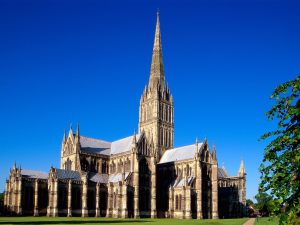
I’ve always been fascinated with sacred architecture, and over the past several weeks as I’ve been collecting images of the different places I’d like to visit, I’ve also been collecting images for my screensaver/wallpaper on my computers. And many of those images are of places of worship: churches, chapels, cathedrals, abbeys, monasteries. So for today’s virtual vacation, we’re “goin’ to the chapel” and visiting a handful of worship sites around the world. Because there are so many beautiful examples of architecture, I’ve only included a few. If I’ve missed one of your favorites, please feel free to post a link in the comments! (Click the image to open the slideshow in a new window/tab.)
Australia & New Zealand
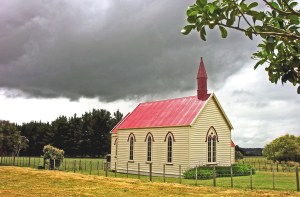
.
Iceland, Greenland, and Scandinavia
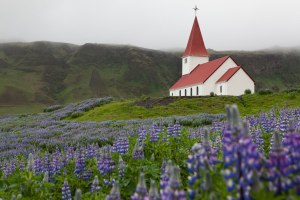
.
Eastern Europe & Russia
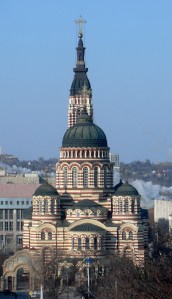
.
Western Europe

.
The United Kingdom
Upcoming Appearances & Workshops
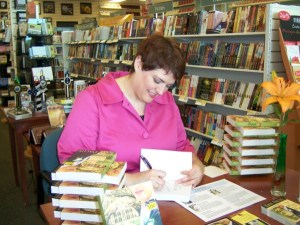 After struggling for something to blog about today, I realized I’ve been lax in updating my Appearances page. And since I haven’t been doing the level of traveling this year that I did last year (averaging 600+ miles each month of book-promotion related travel!), I just haven’t thought about it. But, my travel is about to kick into . . . third (?) gear with a couple of trips planned for this summer (definitely not high gear, compared to last year when I sometimes unpacked only long enough to do laundry before leaving again). Right now, all I know for sure are the dates for the next three weeks or so, but hopefully my July stuff should be nailed down soon.
So, here’s where I’ll be signing and speaking for the next few weeks:
Tuesday, June 21, 2011—Canton, Ohio
1:00 to 3:00 p.m. (book signing)
Berean Christian Store
1100 30th Street NW
Canton, OH 44709
(330) 492-7990
(800) 423-1232
Wednesday, June 22, 2011—Berlin, Ohio
10:00 a.m. to 12:00 noon (book signing)
Gospel Bookstore
4900 Oak Street
Berlin, OH 44610
(330) 893-2523
Wednesday, June 22, 2011—Sugarcreek, Ohio
2:00 to 4:00 p.m. (book signing)
Gospel Shop
112 East Main Street
Sugarcreek, OH 44681
(330) 852-4223
Friday, June 23—Greensburg, Pennsylvania
2:00 to 3:00 p.m. (workshop)
“A Copy Editor’s Top Ten Pet Peeves”
10th Annual Writing Popular Fiction Workshop
Seton Hill University
1 Seton Hill Drive
Greensburg, PA 15601-1599
(724) 830-1005
Friday, June 23—Greensburg, Pennsylvania
7:00 to 9:00 p.m. (book signing)
McKenna Center Lounge
Seton Hill University
Sunday, June 26—Greensburg, Pennsylvania
8:00 to 9:00 a.m. (workshop)
“Writing the Romance Novel”
10th Annual Writing Popular Fiction Workshop
Seton Hill University
Saturday, July 9—Nashville, Tennessee
9:00 a.m. to 12:00 noon (workshop)
“Making a Scene”
Middle Tennessee Christian Writers
2007 Acklen Avenue (Belmont United Methodist Church)
Nashville, TN 37212
MTCWgroup@gmail.com
Fun Friday–My Virtual Summer Vacation: Going Deutsch
Well, I’m keeping it Continental this week. I figured since I was in the neighborhood, after visiting Salzburg last week, I’d visit one of the places I’ve been wanting to go for more than twenty years—again, dating back to taking German (Deutsch) in high school.
Bayern, Deutschland (Bavaria, Germany)
 (I would usually have a video here, but I can’t find one that’s specific to the few locations I’m visiting today—and that’s in English.) I am limiting myself not just to one specific region of Germany, but to only a few specific towns/sites in that region. (Otherwise, this post would have gone on and on and on and on. It’s going to be pretty long as it is!) For my sojourn in Germany, I’ve decided that I’m going to take advantage of one of the unique aspects of holidaymaking in Europe—staying in a castle.
Burg Rabenstein
This is where I’ll be staying on this leg of my vacation. Mentioned historically as far back as the twelfth century, Rabenstein underwent a full renovation in the 1830s into Rococo style. With a nearby Celtic-style village to explore, can it get more authentic than this? (Click the image to view the slideshow in a new tab/window.)

Bamberg/Oberfranken
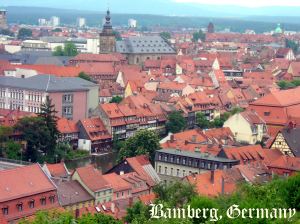
My first excursion will be to the city of Bamberg, located in Upper Franconia (Oberfranken). Bamberg dates back to the early twelfth century and sits on the river Regnitz, near its confluence with the river Main. Unlike most cities in Germany, Bamberg did not suffer damage from the American and British bombings during World War II because of cover fire from a nearby artillery factory that kept the bombers from flying into the area.
Bamberg is considered the German twin of Rome, as it’s situated in seven hills: Domberg (lit. “Cathedral Hill”—where the Cathedral and Neue Residenz are located), Michaelsberg (location of St. Michael’s Abbey—a former Benedictine monastery), Kaulberg/Obere Pfarre, Stephansberg (Stephanskirche is the main Protestant church in Bamberg), Jakobsberg (site of Jakobskirche, second oldest church in the city), Altenberger Berg (the highest of the seven and site to the Altenberger Castle), and Abtsberg (which used to belong to St. Michael’s Abbey). So of course, I’ll be touring the town, along with the Altenberg, Neue Residenz (bishop’s palace) and the Domplatz (cathedral square), Ehemalige Benediktinerabtei und Klosterkirche Sankt Michael (the Benedictine Abbey and Cloister of St. Michael), Altes Rathaus (old townhall), and Fischerhäuser von Klein-Venedig (the fishing village of Little Venice). And, of course, I’ll hit the Markt (market), a cafe or two, and stuff myself on local fare. (Click the photo to view the slideshow in a new tab/window.)
Nürnberg (Nuremberg)
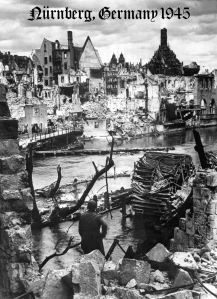
Though this city is famous for its ties to World War II and the Nazis, that’s not the aspect of this lovely town I’ll be focusing on. Predating Bamberg, Nürnberg was settled in the early eleventh century, and sat on a key trade route, on both the Pegnitz and the Rhine–Main–Danube Canal (dating from the 10th century, thanks to Charlemagne). Because of this, it became the “unofficial capital of the Holy Roman Empire.” And then because of that, the Nazi Party chose it as the site of what are now known as the Nuremberg Rallies in the 1930s. . .and lots of other stuff.
On January 2, 1945, British and American bombers strategically bombarded the medieval town center, destroying about 90% of it in about one hour. After the war, though, the residents painstakingly rebuilt the city—including many of its medieval and other historical buildings. So we’ll be seeing many of those buildings on our tour. We’ll also be seeing the old city wall fortifications, the Nürnberger Burg (Nuremberg Castle), Tiergärtnertor Platz (the main town square), Sebalduskirche (St. Sebaldus Church), Henkersteg (Hangman’s Bridge), and the Heilig Geist Spital (literally, Holy Ghost Hospital, but officially, Hospice of the Holy Spirit). Let’s visit Nürnberg! (Click the photo to view the slideshow in a new tab/window.)
Bayerische Schlösser (Bavarian castles)
Here’s where I start to fast-forward through Bavaria—there are so many places I don’t have time to visit: Augsburg, Würzburg, Regensburg, Ingolstadt, München (Munich), Ammersee—and I don’t even have room to list all of the other places outside of Bavaria I’d like to see in Germany! But I can’t visit Germany without visiting some castles! In Bavaria, we’re going to see Blutenburg, Brennhausen, Burghausen, Elmau, Hoheneck, Irmelshausen, Johannisburg, Linderhof, and, of course, Rosenau—the birthplace and childhood home of Prince Albert of Saxe-Coburg and Gotha, consort to Queen Victoria. (Click the photo to view the slideshow in a new tab/window.)

What—you thought I’d forget the two most famous castles in all of Germany?
Schwangau
Schloss Hohenschwangau (High Swan County Palace) was built in the nineteeth century by King Maximilian II of Bavaria and was the childhood home of King Ludwig II. It’s located above the village of Schwangau near the town of Füssen in southwestern Bavaria, not far from the Austrian border. It was built on the remains of Festung Schwanstein, a twelfth century fortress, which had fallen into ruins by the nineteenth century. In 1829, Maximilian, then Crown Prince, discovered the ruins on a walking tour and acquired the property in 1832 due to its beautiful aspect. Construction of the new castle began in 1833 and continued until 1837—with continual additions until 1855. It became the official summer residence and hunting “lodge” of Maximilian and Queen Marie (who created the gardens with plants from all over the Alpine region). Maximilian died in 1864, and Ludwig became king. As he was unmarried, he moved in to Hohenschwangau to live with his mother until his own castle was finished.
Schloss Neuschwanstein (New Schwanstein Castle) sits even higher over Schwangau than Hohenschwangau. It’s built in the Gothic revival style, commissioned by Ludwig II and in inspired by Ludwig’s almost obsessive love of Richard Wagner’s operas and his overly romantic ideals of medieval times and architecture. It was built as the reclusive Ludwig’s personal retreat. It was built on the site of two other castle ruins that had overlooked Schwangau in medieval times. Ludwig had become familiar with these additional ruins during hiking excursions from Hohenschwangau—he even sketched them in his diary in 1859. When he came to power in 1864, construction of Newschwanstein began. Though contemporary architecture critics derided the design as kitsch, the castle is now considered one of the major works of historical architecture in Europe.
Let’s see our two swan-y castles. (Click the photo to view the slideshow in a new tab/window.)

Where are you heading on your virtual vacation this week?
Thursday Thought Provoker

Can Writing Become Detrimental?
 As y’all know, I finished Turnabout’s Fair Play on May 15. And since then, I’ve had absolutely no motivation to write. The main reason is because I’ve pretty much tapped the creative well dry writing seven novels over the span of about twenty-four months. So I’ve needed to take a break—to read, to take on some additional editing work to try to rebuilt my financial life to a normal level, and to not feel the pressure to produce a certain number of words in a certain amount of time.
But I also haven’t wanted to let that creative pump get rusted and become unusable. So I’ve been spending hours and hours on my favorite stock-photo site finding stock photos of models to replace the actors and actresses I’d originally used as templates for one of my two contemporary romance proposals. I’ve done very well—finding replacements for all of them, and with one, finding a slightly different character backstory based on the image I found.
And while I woke up this morning with the complete backstory for another of the characters and spent a couple of hours writing that out, it still didn’t motivate me to start doing any actual writing.
Right now, I have the opportunity to take my time writing a novel and then have the time to do what I used to love best—focus on revision and polishing. But the thought of making myself write makes me cringe.
I don’t know how many times I’ve posted this quote from Madeleine L’Engle:
We must work every day, whether we feel like it or not, otherwise when it comes time to get out of the way and listen to the work, we will not be able to heed it.
~Madeleine L’Engle, Walking on Water
But right now, I’m dealing with the question of motivation from another angle:
Does there come a time in a writer’s life when forcing yourself to write can become detrimental to your mental health?
Plus-Size Heroines and Husky Heroes
I’ve written before about how I’ve been taken to task by a few reviewers (both publicly and privately) for featuring “plus-size” heroines (full-figured, fat, overweight, whatever term the person chooses to use). The majority of feedback I’ve seen for making this choice is positive—after all ninety-nine percent of romance-novel heroines are shaped like Barbie-dolls: big boobs, tiny waist, curvy hips. And of course, the heroes are all built like Superman—tall, broad shouldered, muscular, narrow waist, strong legs.
But what if a romance-novel couple looked like these people:
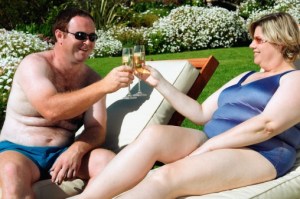


Would you buy a romance novel with one of those images on the front?
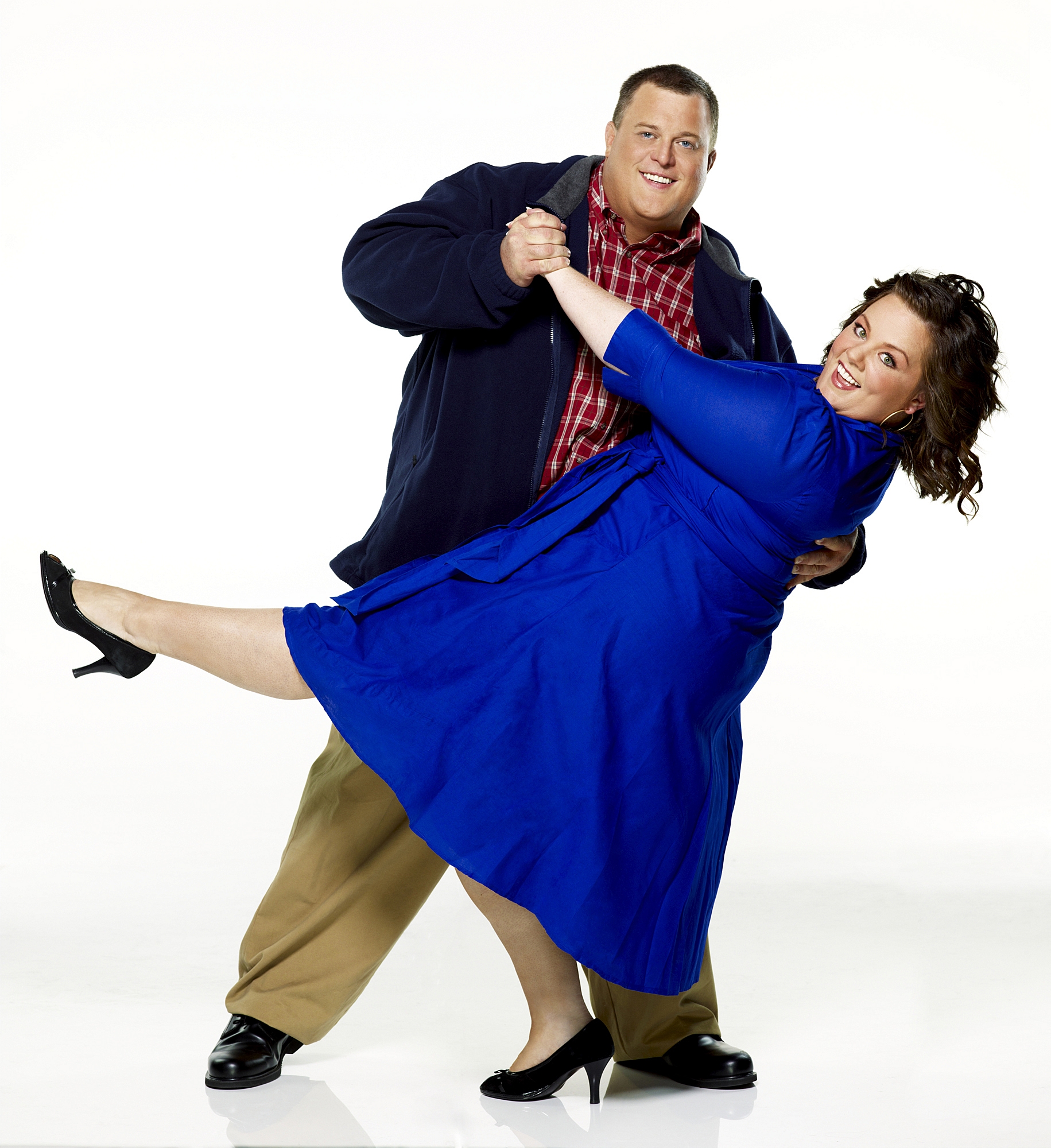 Last year, CBS debuted a show that takes this question head on—are people interested in a romance story involving two overweight people?—with a show that’s the only sitcom I’ve watched in years, Mike & Molly. By some, it was well received (especially after the first month or so when they stopped making such a big deal about weight, dieting, Overeaters Anonymous, and making fat jokes). However, it also received scathing criticism, like this article that appeared in Marie Claire magazine: “Should ‘Fatties’ Get a Room? (Even on TV)?”
After writing a blog post defending plus-size heroines (Beauty…In the Eye of the Beholder), I was taken to task last night by my uncle about the photos of the male templates I’ve been collecting over on my Facebook page—that not a single one of them is 6’1″ and 275 pounds—or, in other words, the male equivalent of a plus-size heroine.
 And it struck me . . . although I have used a “husky” hero—Major, in Menu for Romance (after all, who trusts a skinny chef?)—there is a disproportionate number of slender, muscular men in my books compared to the women. Part of that, I think, is that it’s every overweight woman’s dream that the man who falls in love with us and finds us beautiful have six-pack abs instead of a six-kegger beer gut. And I felt so guilty—because one of the things that annoys me the most about online dating (which is why I gave that up years ago) is because even all of the more-than-husky (i.e., downright fat) guys online still want the Barbie-doll figure on a woman. And here I am doing the same thing, writing my romance fantasies only about men who fit that physical ideal.
Is there room on the bookshelves for romance novels featuring plus-size heroines and husky heroes? And even if the characters featured inside are larger-than-average, will readers buy books with pictures of overweight people on the front cover?

 KayeDacus.com