TURNABOUT’S FAIR PLAY–Settings
If you’ve been following along for a while, you know that in addition to finding Real World Templates (pictures of people) to use as inspiration for my characters, I also like to find images of my settings, especially people’s homes. There’s a lot that can be learned about someone from the type of home they choose to live in. In the Matchmakers series, I’ve had some historic homes (Zarah’s, Caylor & Sassy’s, and the Bradleys’) as well as a pretty snazzy, relatively new condo (Bobby’s). Because of who Flannery and Jamie are and the lifestyles they lead, historic homes weren’t even in the cards for them.
Flannery’s Condo
Though Flannery had a typical suburban upbringing in Nashville, the daughter of a surgeon and a football coach, five years ago, when she, Caylor, and Zarah moved out of the rental house they’d shared since college, Flannery bought a condo in the brand-new Encore! condominium building. As someone whose life’s ambition was to be an editor, she’d occasionally dreamed of living and working in New York—but though she’s enjoyed visiting NYC as often as possible, she realized a long time ago that she would hate living there. So downtown Nashville is the next best thing for her. Especially since the condo building was only a brisk seven-block walk from the offices of Lindsley House Publishing on Lindsley Avenue. But then, three years after she moved into the eighth-floor one-bedroom, the publishing house outgrew its downtown location and moved eleven miles south to the Maryland Farm business park in Brentwood. So she’s been considering selling. (Click the image to view a slideshow of Flannery’s condo in a new window/tab.)

(In the book, there’s also a chair-and-a-half and ottoman creating a bit more separation between the living room and the dining/kitchen area.)
Jamie’s Townhouse
For the first few years he worked at the Gregg Agency, which is located in “the second tallest building” in downtown Nashville (Google it—you’ll find it), Jamie still lived in the apartment he shared with Danny in Murfreesboro while in college. Then, once he’d saved up enough for a down payment, Jamie bought a townhouse in the only area of town he’d consider living in—because, at the time, it was “the” address for an up-and-coming young marketing executive to have: Old Hickory Boulevard right on the border of Nashville and Brentwood (on the Nashville side, though, which meant a lower price). As an extrovert, he loves living in a townhouse community, especially one that’s as vibrant and active as his is, mostly filled with other young up-and-comers. And the location of his condo puts him only a few minutes’ drive from Lindsley House’s new location in Maryland Farm! (Click the image to view a slideshow of Jamie’s townhouse in a new window/tab.)

(Obviously the decorating in this townhouse leaves a bit to be desired—y’all have seen what Jamie’s like here on the blog, so just picture the condo furnished to his tastes! Which should be a lot easier for those of you who’ve already had a chance to read advance galleys of it!)
Other Settings
There are some other, very recognizable, locations in Turnabout’s Fair Play—such as Starbucks and Panera. I always try to put plugs in for as many local restaurants and coffee shops as I can . . . but with the locations in which Flannery and Jamie live and work, the fact of the matter is that they’ve been mostly overtaken by national chains like these.
For those who have read both Love Remains and The Art of Romance, you’ve either learned through online research or guessed that the church which plays the biggest role in the books, Acklen Avenue Fellowship, doesn’t really exist. Yep, I made it up. But I did set it right across the street from my own church. I’ve described Acklen Ave. as having a red-brick exterior. I imagine it looking something like this:

Where the small part on the left is the original church structure, built in the 1920s, and continually added onto over the decades until the final expansion ten or twelve years ago (Dylan was in high school) when they gave everything a more modern facelift. The original small sanctuary still exists, but is now the “chapel,” while a new, modern worship center with all the technological bells and whistles hosts the several services on Sundays.
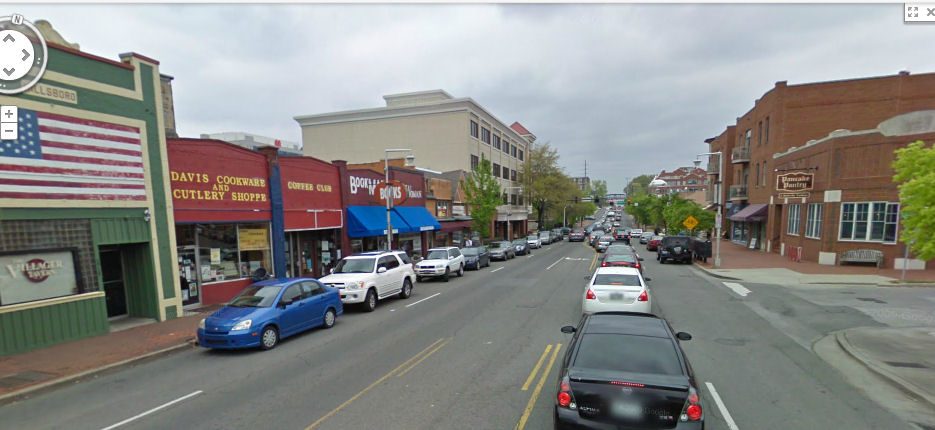 The very name of the church gives its location—Acklen Avenue runs through the Belmont/Hillsboro Village area of Nashville, which is one of my favorite places in town. It’s Midtown adjacent, with Vanderbilt University lying between it and the true Midtown area. For tourists, Hillsboro Village is most famous for The Pancake Pantry (and I must admit, having lived here almost sixteen years, I’ve never even attempted to eat there—I’m not really big on standing in line for four hours just for pancakes). This image is the street-view photo from Google maps of 21st Avenue South (looking north toward Vanderbilt/downtown), which is the main drag through Hillsboro Village—and yes, traffic is almost always that bad!
A new location I introduce in TFP, even though just for one scene, is the Scarritt Bennett Center—a conference and retreat center just off of 21st Avenue, not too far from the Village. With its Gothic architecture and grand old trees, it’s like taking a step back in time—and across the Pond to a quaint, ancient village in England.
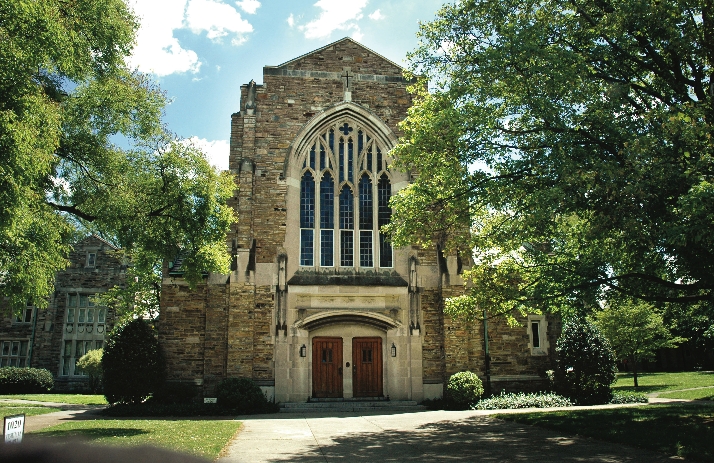
One thing I’ve tried to do with each of the books in the Matchmakers series, since they are set in such an iconic city, is make sure that I’ve done my research—because if you’re anything like me, you get curious about the places mentioned by name in a novel set in a real place.
Do you ever look up the names of places from novels to see if they really exist in that city? How “real” do you think an author needs to be when using an iconic city like Nashville in fiction?
Thursday Thought Provoker

Writer-Talk Tuesday: Becoming a Profiler
 Over Labor Day Weekend, my last weekend of “freedom” (i.e., I was getting ready to go back to work for the first time in three years, and, ever since that weekend, I’ve had something going on seven days a week without fail), I found myself wanting to veg-out in front of the TV. And as I was flipping past A&E, I saw Thomas Gibson on the screen and I thought, He’s hot. So I landed on their holiday Criminal Minds marathon.
I’d tried watching this show before, and it was just too much for me. However, at that time, I was still watching two of the three CSI shows, Law & Order: Criminal Intent, and a few other crime/procedural shows. And I just couldn’t add one more to the mix—especially one that dealt with even darker subject matter than those shows usually did.
This time, however, I found myself less concerned about the serial killers and victims and much, much more interested in the characters solving these heinous crimes. And in the methods they’re shown using to figure out who these unsubs (unidentified subjects) are.
 Okay, so my reason for initially landing on CM was rather shallow. I have a type, and Thomas Gibson, who plays SSA Aaron Hotchner fits it to a T (though, I was never able to watch him on Dharma & Greg because everyone else on that show annoyed me). However his is one of the most fascinating characters to study on this show. And the writers have done a great job at a “slow burn” character development for each of the main players, revealing only in tiny bits these characters’ backstories . . . even as they spend each week figuring out in the first ten minutes of the show the complete backstory of the unsub—down to the smallest detail.
 What these profilers (from the Behavioral Analysis Unit of the FBI) do is figure out where an unsub came from—how they grew up and what made them people who are capable of committing these crimes. Then they determine the trigger—the event in the unsub’s life that flipped the switch and led them to start doing what they’ve done.
In novels, we call this the inciting incident—the event that sets the story on its path. The event that changes the life of our main character(s) irrevocably.
Developing a character is much more than coming up with a name and a job and a place for the character to live and things for the character to do in the course of the story. As storytellers, we need to profile our characters as carefully as the fictional BAU team (and I’m sure the real-life BAU teams on which they’re based) do with the criminals they chase each week.
 In fiction writing, we need to know more than just who our characters “are”—we need to know how they became who they are. Age, race, religious/denomination affiliation, economics, parental presence or lack thereof, type of school(s) attended, birth order, number of siblings, family dynamics, introvert vs. extrovert . . . all of these things not only tell us who a character is, but they determine how a character will act/react in different situations.
Each writer profiles his/her characters in different ways. Some do it with extensive character “interviews” or profile sheets that they fill out for each of their viewpoint characters as well as major secondary characters. I, personally, write detailed backstories (in synopsis format) for my main characters—yet I still discover things about them as I write the story, and sometimes even in the revision process. (For example, I didn’t know that William and Julia had seen each other again since the first voyage to Jamaica, when she was ten and he was fifteen, until I got feedback from a publisher asking for a happier opening that brought them together earlier than the end of the third chapter, suggesting I do it with a prologue. And suddenly, I found myself writing a prologue in which not only were they seeing each other again, but Julia was expecting William to propose to her. Never saw it coming, and that was after I’d already completed a rewrite and a couple of revisions on Ransome’s Honor before submitting it.) Some writers figure out their characters’ backstories as they’re writing.
Writers—how do you “profile” your characters?
Readers—can you tell whether or not a writer has done a good job as a profiler? How much backstory do you need to make a character you’re reading compelling?
 And if this seems like a thinly veiled excuse to write about Criminal Minds, you’re probably right, but that’s what was on my mind.
P.S., for those who watch the show, who doesn’t love the interplay between Morgan and Garcia?
.

Book-Talk Monday: Favorite Childhood Bedtime Stories
 Hey, y’all. Since Kaye asked Flannery to do a guest post a couple of weeks ago, I guess she felt sorry for me and asked me to do one (officially—not a takeover like I usually do!). I picked Monday and found out that Kaye likes to talk about reading and books on the Monday blog posts. So since I probably don’t really read a lot of what Kaye’s blog readers like to read, it took me a while to figure out what to post. But then it came to me. I still like reading now as an adult because I loved being read to as a kid.
When I was little, I stayed with my grandmother often, until I moved in with her when I was thirteen when . . . well, this probably isn’t the appropriate place to get into all of that. Anyway, when I was little and would stay at her house, Cookie would read to me at bedtime, and I had a few favorite stories I asked for so often that it finally got to the point where both of us could pretty much recite them word for word to each other. This one was my favorite:
- The Wedding of Sir Gawain and Dame Ragnell
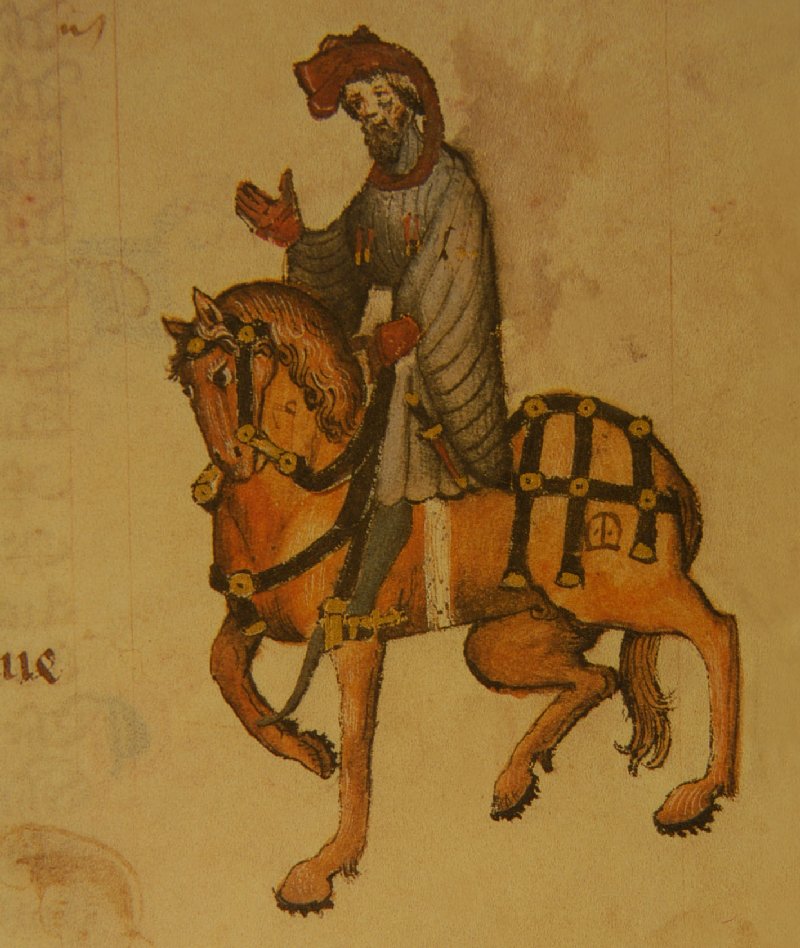 One day King Arthur went hunting in the forest of Inglewood with his retainers. At length he and his companions became separated, and he found himself in an unfamiliar part of the forest. Abruptly, he found that his body was quite frozen and he could not move a muscle. A menacing figure, dressed in pitch-black armor, approached him, saying, “Arthur, I have you in my power. You have wrongfully given my lands to Sir Gawain, and for that, you will die unless you find the answer to a question I put to you.”
Arthur found that he could speak and asked, “Who are you, and what is this question you wish me to answer?”
“I am Gromer Somer Joure. If you would win your life, return here in twelve months with an answer to this question: What is it that every woman desires most?” As suddenly as he had appeared, he was gone; and the King found that he could move freely again. He returned to his court with a heavy heart.

Of all his retainers, only Sir Gawain asked King Arthur what sorrow he bore; and Arthur related the tale of his discomfiture in the forest. Sir Gawain then proposed that they ride forth and ask every woman they found what she most desired and collect the answers in a book.
They set out and asked women what they desired and soon they had a huge book of answers. But as many as they had found, they were still uneasy that any of the answers they had were the true one.
Shortly before the King had to meet with Gromer Somer Joure, he rode again through the forest of Inglewood and came upon a hideously ugly woman, one who not only looked terrible with a foot-long dripping nose, donkey ears, and a gaping mouth with yellow teeth, but one who also smelled terrible. She stopped King Arthur saying that she had the right answer and could save his life, if he agreed to her terms. She somehow knew about his quest. He asked what her terms were, and she replied, “I am Dame Ragnell, and I want to marry one of your knights: Sir Gawain.”
King Arthur was horrified, and told her that he could not promise her Gawain without Gawain’s consent and that he would return to her after speaking with Gawain. He returned to court and explained the situation to Gawain. Without hesitation, Gawain, the most noble of knights, answered that he would marry her in a minute, even if she was a devil, if it would help save Arthur’s life.
Arthur returned to the forest where Dame Ragnell was waiting. He told her that Gawain had agreed to marry her if her answer was the one sought, but if one of the others they had collected was the one, the deal was off. Satisfied with this, she gave Arthur the answer.
On the appointed day, Arthur rode to meet with Gromer Somer Joure. Again Gromer appeared suddenly, demanding the answer to his question. Arthur gave him the book with the answers they collected. Gromer looked it over, laughed with a deep laugh, and told Arthur to prepare to die. Arthur said, “Wait, I have one more answer,” and gave him that of Dame Ragnell.
Gromer roared in frustration. “Only my sister could have told you that! May she be burned in the fires of hell for her treachery! Go where you will, King Arthur; I will bother you no more.” So Arthur returned to Ragnell and brought her back with him to court.
Upon seeing her for the first time, Gawain looked stunned but bravely assented to be married the next day. The ladies of the court wept to see such a kind and handsome knight to be married to such a hideous woman; the other knights were glad it wasn’t any of them who had to marry her.
 Ragnell demanded to be married publicly and to have a great feast with all the nobles attending. She was decked out in the most costly of dresses, but her manners repulsed everyone there. She ate great volumes of food with loud slurps and belches, food sometimes running down her chin. Great was the pity felt for Gawain that day!
At last the wedding feast was over, and the couple led to their chamber. There Gawain gazed at the fire, reluctant to touch his bride, until she requested a kiss. Bravely, he acceded, only to find a most radiant woman in his arms. He stared speechless in wonder and, finally finding his tongue, asked her how could this be. The lady told Gawain that her own brother, the giant Gromer Somer Jure, had placed a spell on her which could only be broken if the best knight in the world had the courage to marry and kiss her.
“I have waited in that shape until I found a man gentle enough to marry me. Now I offer you a choice: I can be fair by night and foul by day; or foul by night and fair by day. Decide which you want.”
Gawain thought for a while, pondering the events that had lead to this moment, and then it dawned on him what answer he must give. “I cannot make such a choice; that is for you to decide.”
She cried out in joy, “My lord, you are as wise as you are noble and true, for you have given me what every woman genuinely desires, sovereignty over herself. You will never see that hideous old hag again, for I choose to be fair from this time on. You have discovered the solution to my brother’s riddle—that the greatest wish of all women is to be able to make their own decisions.”
Thus Gawain and Dame Ragnell begot Gyngolyn of the Round Table, a knight of strength and goodness. Dame Ragnell helped King Arthur and her brother Sir Gromer come to peaceful terms.
Alas, the gentle lady lived only five years with Gawain, and he mourned her death for the rest of his life.
So, there you have it—my favorite bedtime story from childhood.
What’s yours?
.
TURNABOUT’S FAIR PLAY–Jack’s “I told you so” Dance

In the Sneak Peek of Turnabout’s Fair Play I posted a couple of weeks ago, Jack warns Flannery about his “I told you so” dance.
Little did I know when I wrote that line that such a dance exists. Okay, maybe it’s not officially an “I told you so” dance, but it’s the template (John Barrowman) dancing almost exactly the way I pictured Jack doing when he’d just been proven right.
.
So that now begs the question . . . does Jack actually get to do his “I told you so” dance in Turnabout’s Fair Play? 😉
.
.
Thursday Thought Provoker

Wednesday Wonderings–Is It Ever Really “All” or “Nothing”?
 It’s ironic. For three years, I worked at home. And for three years, I increasingly had fewer and fewer things to do outside of my house, even on the weekends. Two Saturdays a month were my local writing group meetings. Sundays were church—if I got myself out of bed in time to go.
When I accepted the offer of employment from the church, even with its being part-time, I knew I’d look forward to and jealously guard my personal time on the weekends. Saturdays would be my day of rest so that I could once again start attending church regularly and start getting plugged in to my new church community.
However, since I started working on September 1, with the exception of that first weekend (Labor Day weekend), I’ve had something going on every single Saturday and some Sundays. And when we were off on Thursday and Friday for Rosh Hashanah a couple of weeks ago, I was even busy on those two days as well.
We’ve all heard and used the phrase “it never rains but it pours.”
In June, my freelance work mysteriously dried up. No word from the publisher I was working for after almost three years of continuous monthly projects from them. At one point, I was seriously considering having to pack up, sell what I could and get rid of everything else, and move to Arkansas to live with my parents until I could find a job that would allow me my independence again.
After between 80 to 90 job applications, I finally got an interview—for a job I didn’t originally apply for because I didn’t think that the Reform Jewish Synagogue would want to hire someone who grew up Southern Baptist and just converted to United Methodist. But then when I saw the job ad posted again the next week, I figured there was no harm in applying.
I’ve been here six weeks now. I work 25 hours each week—on those weeks when we actually have five days to work (I started just before the High Holy Days, which means we’ve had several days off since the beginning of September)—and while it’s not a sustainable income level, it at least made up for the money I was making from that monthly freelance project that went away. Plus, I do have the money from the new publishing contract I just signed. But I didn’t want to have to live off of that advance. And I knew that with only 25 hours a week, I needed to supplement that income with freelance work.
Two days before I left to go to St. Louis to crash the ACFW conference, I got an e-mail from my friend who still works as the editor at Ideals (where I used to work full-time before getting laid off in 2008) offering me a freelance project. At the conference, I talked to editors from two local (Nashville) publishing houses who want to send me freelance editing work also.
Last week, I had planned on attending a concert—for the first time in four or five years—of a new-to-me singer my cousin turned me on to: Jon McLaughlin. However, because of this unexpected plethora of freelance work, I ended up not going because, as I posted on Twitter/FB, I was “blessed with work.”
In looking at my calendar this morning, with a day off tomorrow and another day off next Friday, I noticed that the trend of busy days off and busy weekends doesn’t seem to be ending any time soon.
So are all the extra activities and work projects coming in because God has a twisted sense of humor and is saying: “You asked for something to do with your time, well, here you go!” Or is the truth closer to the idea that by getting a job—getting out of the house, pulling myself out of that penchant for seclusion bordering on hermit-ism which, in my case, leads to depression—has given me the energy and motivation to agree to do all of these extra activities? To want to fill my days off with as much energy and activity as I now have during the rest of the week when I’m at work?
Have you ever noticed in your life that things seem to be “all” or “nothing”? Is it real or is it just perception?
Writer-Talk Tuesday: Tips and Advice for Marathon Writing
November is National Novel Writing Month . . . but in my local writing group (Middle Tennessee Christian Writers), most of us have a hard time focusing on writing during that month, what with Thanksgiving and the lead-up to Christmas that naturally comes in November. So for the past few years, we’ve designated October as our MTCW Marathon Month. Since I know that many of you may be thinking about participating in NaNo—or you may just want to spend a few weeks trying to make some headway on your writing, I’ll share with you some tips and advice for marathon writing.
“Success depends upon previous preparation,
and without such preparation there is sure to be failure.”
Confucius
1. Prepare, Plan, and Organize
If the sign of a disorganized mind is a messy desk, what’s the sign of a disorganized writer?
Writer’s block!
In the past month, I’ve taught two workshops about this—planning, preparation, and organization ahead of time to help give us momentum when we actually sit down to write. So before your writing marathon starts, there are several things you can do to make sure you’re not going to get a few hundred words in and then get lost—or writer’s block.
.
“Wishing that you had more time to write will not make you a novelist.
You will not have more time. . . .
Each day, you must set some time aside to write even if it is only enough to write one paragraph or one page or to sketch out your next idea for a chapter. By setting reasonable goals, you also develop a rhythm to your writing. You will be surprised that once you set a goal of say, one page a day, and you stick to that goal, it becomes part of your everyday schedule.”
Andrew McAleer
2. Set a Writing Schedule
I’m the world’s best at preaching this and the worst at practicing this . . . which is why I’m about 10,000 words behind where I should be this month on the first draft of Follow the Heart—because I haven’t set a schedule and made myself stick to it every day.
In one hour, if you’ve prepared, planned, and organized ahead of time, most writers can easily write between 500 to 1,000 words or more. No, not everyone can do this. Sometimes, no matter how well-prepared we are, the words just won’t come. But just like an old-fashioned water pump, the more often we work at it, the easier it will flow. So set a time every day—even if it’s just half an hour—to be your designated writing time. And commit yourself to doing nothing but writing during that time. No e-mails, no Facebook or Twitter, no blog reading/writing, no research. Just writing.
“Carefully examine the phrase ‘first draft.’ There’s a reason the word ‘first’ is in there. It strongly implies that there’s going to be a second draft. And if you write anything like me, there’s going to be a third. And a fourth. And probably a fifth.”
~Ed Gaffney
3. Turn Off the Internal Editor
I know, easier said than done. But even if it means you have to go back to writing long-hand, find a way to stop listening to the other voices in your head—the ones that say you can’t/shouldn’t/mustn’t and the ones that say always/never. The most important thing with a first draft is to get the story down on paper. Don’t worry about active vs. passive, showing vs. telling, sentence structure, or balance between character/setting or narrative/dialogue. FINISH YOUR FIRST DRAFT. Later, you can always go back and fix the craft stuff. Your first draft should be focused purely on storytelling.
“The secret is not to try to be perfect.
If you try to be perfect, you procrastinate,
you go over and over what you wrote, you make no forward motion.
Trying to be perfect doesn’t produce masterpieces, only agony and slow writing.”
~Stephen J. Cannell
4. Move Relentlessly Forward—No Going Back!
In addition to your story bible, keep a list—a file in Word or even handwritten in a notebook—of any changes that come up as you move further into your story. Things you know you’re going to need to change when you go back for revisions after you finish your first draft. When you’re writing your first draft, it’s okay to make massive changes to characters or setting or plot or conflicts halfway through. By then, you know each of those elements better and you know what’s going to work and what’s not. But if you stop and go back and try to “fix” what you’ve already written to reflect those changes, you’re going to lose all momentum of where that change can take you if you just stick with it and keep moving forward.
When I was writing the first draft of Stand-In Groom, after three complete rewrites of the first ten chapters (which meant that for a year, I basically made no progress on the story), I was forced to stop going back and to move relentlessly forward—by my graduate school deadlines. You see, I had a date by which I had to have a first draft finished and turned in. It was in the middle of my second semester—the semester by the end of which I had to have that first draft finished—that I came up with the hidden-identity plot. I was in chapter seventeen. I had ten chapters that had the story going one direction, followed by seven meandering chapters with little more than character development in them. But then, once I realized that the crux of the story rested on George pretending to be the groom and not being able to tell Anne, I flew through the remaining half of the book. In fact, I wrote the last approximately 20,000 words in one weekend to get it finished by deadline. (And those are still some of my favorite scenes in the book.) But if I hadn’t been forced to stop going back and trying to perfect the first ten chapters, I might never have discovered the true plot of the story.
“You can fix, polish, and sell anything except a blank page.
Ergo, sit down and write.”
~Lori Avocato
5. Write Something . . . Anything
When you sit down for that scheduled writing time and you stare at that flashing cursor waiting for the words to come, and they don’t, DO NOT walk away from it and give yourself the excuse that you’ll just double-up on words tomorrow. Why do you think I’ve ended up writing the bulk of two of the last three novels I’ve finished in two weeks or less?
When I was writing what would become my first completed manuscript a little less than ten years ago, I got to a point at which (being a seat of the pants writer with no synopsis, only a vague story idea) I had no idea where my story was going. But I wanted to write. I needed to write. So since I’d just gone to the grocery store that evening after work, I wrote one of my characters doing the same thing. I had him get his basket. I had him pick out produce. I got him through the store all the way to the frozen-food section—where, surprisingly, he ran into another character; and, all of a sudden, I had a scene that moved the story forward again.
It sounds mundane and like bad writing (and it’s probably something you’d end up cutting most of in a revision), but not only are you working at that creative pump, you can also learn more about your character by doing something like that.
Who’s planning on participating in NaNo? Have you ever participated in a writing marathon/challenge like that before—in which you set a daily/weekly/monthly goal to meet in which all you’re focused on is word count? How do you prepare/plan/organize? How do you find time to do it? How do you make yourself build that word count every day?
.
Writer’s Window: Michelle Lesley
 Joining us today for Writer’s Window is Bible-study author—and my big sister—Michelle Lesley.
One lucky commenter* will win a signed copy of Michelle’s Bible study, Jacob: Journaling the Journey (which is available now on e-book, but will be released in print in November). Deadline for leaving a comment to enter the drawing is Friday. To enter the drawing, you must answer the question posed by Michelle at the end of the interview. Only one comment per person will count toward the drawing. Please do not include your e-mail address in the body of your comment—just make sure it’s correct when you sign in to leave your comment. The winning name will be drawn next weekend and the winner will be notified via e-mail.
- *U.S. residents only, void where prohibited. If you win the drawing, you will be ineligible for the next three drawings, though hopefully you will still come back and join in the discussion.
Comments on today’s post also count toward the FAIR PLAY contest.
__________________________________________________________
Deceiver . . . Supplanter . . . Cheater . . . Liar . . .
Patriarch
Strap on your sandals and get ready for the journey of a lifetime. Jacob’s lifetime—and yours. Jacob: Journaling the Journey follows the story of the patriarch as he treks through the desert and grows from an impetuous mama’s boy into one of the founding fathers of the faith. Along the way, you’ll meet his quirky, yet lovable family members—such as “Manipu-Mom” Rebekah, “Wild Thing” Esau, and Rachel, Queen of High Maintenance—who played such vital roles in his life.
And you thought your family was dysfunctional.
What could God possibly have to say to us as women through the life of this rough and tumble Old Testament hero? Plenty. And with the distinctive journaling format of this study, every woman will take away God’s unique and personal message for her own life.
So, come take a stroll across the sands of time with Jacob, and take the first step on your journey to a closer walk with God.
Welcome, Sis!
What do you like best about being a writer?
- There are so many answers to this question, I hardly know where to start!
First, I’m kind of like Jeremiah. There’s a fire for the things of God that is “shut up within my bones” and I get weary of holding it in. Since I’m not a preacher, writing is the best outlet for me to share God’s word and encourage my sisters in Christ as they walk with the Lord.
Second, I get to work at home. I’m a stay at home, homeschooling mom, so God graciously gave me a job that fits in with those things.
Finally, I love playing with words and language like a little kid loves building with blocks. Like a painter loves capturing a landscape just perfectly. Like my husband loves harvesting crops on Farmville. Well, you get the picture.
What do you like least about being a writer?
- Promoting my writing. I enjoy coming up with PR ideas, and I enjoy participating in PR activities, but I feel really uncomfortable with the step that comes between those two things: approaching people and asking them to buy or recommend my book, or asking them to have me come speak at their church or event. I’d much prefer people approach me!
Pop, Soda, or Coke? What do you call it, and what’s your favorite variety?
- What is this “pop” and “soda” of which you speak? Everyone with any refinement knows the proper term is “coke.” :0) My favorite is Cherry Coke. It’s hard to find at a fountain these days.
What’s your favorite dessert?
- All of them. Unless it has coconut or rhubarb. I really like hot fudge sundaes with warm brownies—no nuts in the brownies.
What’s the most fun/interesting/crazy/scary/unique hands-on research you’ve done for a book?
- Well, I guess the scariest thing would be pulling my Bible atlas down from the top shelf of the bookcase. It’s huge. Not a book you want falling on your head.
I write Bible studies, so my research isn’t all that glamorous, but I enjoy it. When researching a Bible passage, I like to study maps of the region the story is set in, and study the culture and archaeological findings specific to that particular time and place. That way, I’m better able to put myself in the shoes of the Bible character I’m writing about. Then it’s easier to see how to apply that passage of Scripture to my life and help my readers do the same.
I would love to go to Israel and do some hands on research, but it’s too dangerous and expensive right now.
What’s your favorite movie from childhood?
- Song of the South. I don’t mean to offend anybody by saying that, but I have always loved Joel Chandler Harris’s Uncle Remus stories. I also admire him for his dedication to preserving the oral storytelling tradition of slaves in literary form, and for being a strong voice from the South for racial equality, and for reconciliation between the North and South and between the races during Reconstruction. And how can you not love the song “Zip-a dee-doo-dah”?
If you were to write a novel about what your life would have been like if you’d become what you wanted to be at eight years old, what kind of character would the story be about?
- The main character would probably be a lot like Sandi Patti, minus the divorce, adultery, and a few other things. I always wanted to be a Christian singer when I grew up. Some days, I still do.
What makes you happy?
- A really great, really long, really intense time of prayer with other believers. There’s nothing like it.
What makes you nervous?
- Too much month at the end of the money. God always takes care of us, though.
What’s your biggest dream for the future?
- Revival. I want to see the bride of Christ wake up and become passionate about prayer, the study of God’s word, missions and evangelism, worship, and personal holiness.
Tell us about your newest release and what you’re working on now.
- My latest release is a women’s Bible study on the life of Jacob, entitled Jacob: Journaling the Journey. It’s an in depth look at Jacob and his family and the things we can learn from them and apply to our own walk with the Lord.
Not your traditional, “fill in the blank” type of workbook Bible study, I’ve written Jacob in a journaling format so you can explore what God is teaching you, personally, through the Scriptures. Each day’s lesson begins with a Scripture passage, followed by expositional teaching. At the end of the teaching section, there’s a journaling niche that begins with questions and related Scriptures to “get your juices flowing” for journaling.
I’m also very excited to let you know that for the next year, all of my royalties from the sale of Jacob are being donated to the International Mission Board of the Southern Baptist Convention to reach an Unreached People Group with the gospel. This is a group of Bedouins who “journey” around in basically the same area where Jacob lived. So when you buy a copy of Jacob: Journaling the Journey, you’re not just investing in your own spiritual life, but also in the spiritual lives of people a world away who have never heard the name of Jesus!
I’m currently working on a Bible study on the book of Jude. What a fascinating, yet so often overlooked little book! The theme of Jude deals with false teaching infiltrating the church, a topic, sadly, that is all too timely for today. I hope reading it will encourage you to “contend earnestly for the faith” (Jude 3) with me!
Where can people find out more about you/connect with you online?
- Facebook is where the action is. Come on over and hang out with us! (www.facebook.com/MichelleLesleyAuthor)
You can find more information on me, my book, and the Bedouins on my web site:
(www.michellelesleybooks.com)
Now it’s your turn to ask the question. What question do you want to ask the commenters to answer?
- In Jacob: Journaling the Journey, you’ll meet “Manipu-Mom” Rebekah, “Wild Thing” Esau, Rachel, Queen of High Maintenance, and Laban the Terrible, among others.
Got a goofy nickname like one of those that comes to mind for Jacob (I couldn’t think of one for him) or any other Bible character? Maybe it’ll make an appearance in my next book!
__________________________________________________________
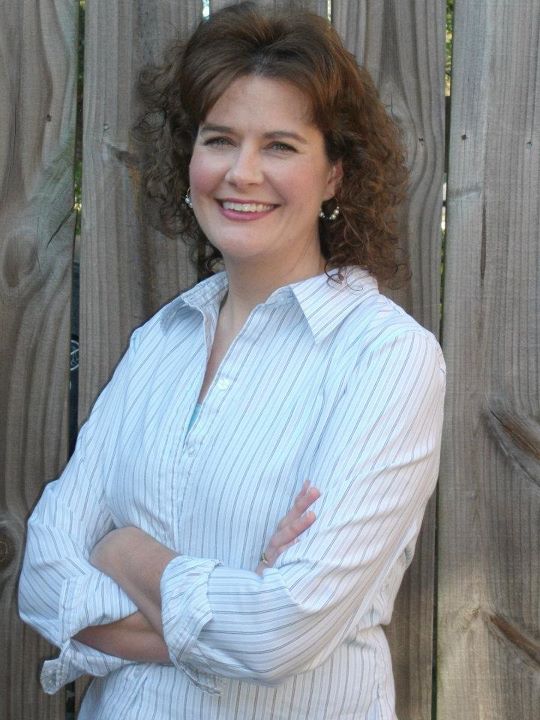 Michelle Lesley has always used writing as a creative outlet. Journaling during her quiet time led Michelle into a deeper and more intimate relationship with God, and it is out of these journals that her first book, a women’s Bible study on the life of Jacob, grew.
As an army brat, Michelle has lived in some interesting places such as Alaska and New Mexico, but returned to her native Baton Rouge, Louisiana, in 1989. Here, she graduated from LSU, and remains a die-hard Tiger fan.
Michelle and her husband have been blessed by the six wonderful children God has brought into their lives. Passionate about prayer, Michelle serves as Associational Prayer Coordinator for the greater Baton Rouge area, working with over 100 churches and pastors to increase corporate prayer. She also sings on the praise team at church, and homeschools her three youngest children.
Jacob: Journaling the Journey is now available for Kindle and Nook. The softcover version, releasing in November, is currently available for pre-order.
Jamie Takes Over–Props to the Sports Marketing Dept. at the Gregg Agency
Seriously? Flannery’s boss gets mentioned in the character introductions post, but my work team is ignored? Where’s the love, Kaye?
Jamie O’Connor here, taking over Kaye’s blog while she’s off at her writers group this morning—to introduce you to some people I think are important but who apparently didn’t rate introductions yesterday.
(Though, I do have to say that I’m glad she only found pictures of me and Danny together as adults. There are some of us as kids . . . well, let’s just say I wouldn’t want them to see the light of day ever again.)
Okay, anyway, back to my work team. I’ve worked at the Gregg Advertising Agency for thirteen years—ever since I graduated from college. I started out in the general advertising/marketing pool, but quickly moved into Sports Marketing, where I’ve been ever since. I’ve worked with all of the professional and semi-professional sports teams in town, as well as with sponsors of all the different high school and collegiate tournaments and championships that come to Nashville. Sometimes, it’s hard to believe we get paid to have this much fun.
But, you’re not here for my resume. Let’s meet the team:
First, there’s Armando Gregg, my boss (now that we’re without a director of Sports Marketing) and the owner of the Gregg Agency.

Then, there’s the other senior account executive, Mitch Collins. Mitch has only worked with us for about two years.

Darrell Keesey is not just a Sports Marketing account executive, he’s also a good friend—and a ladykiller, even if he is short. (Just kidding, dog.)

Wade Vaughn is our junior account executive. A California guy if ever there was one. Not sure how he ended up in Nashville for college, since there are definitively no waves to catch here, but he’s been an asset on our team for the past five years, as both an intern and an account exec.

And last, but definitely not least (especially given the fact she’s taller than me!) is our Administrative Assistant, Ainslee Urbanik. Ainslee played basketball in college before going on to play a few seasons in the WNBA. She’s been with us a couple of years now and just completed her master’s degree in Sports Management. As soon as an account exec position comes open in our department, it’s hers.

So there they are, the Sports Marketing Department at the Gregg Advertising Agency in Nashville. I can’t wait for you to meet them!

 KayeDacus.com