FOLLOW THE HEART: Meet Kate and Nora
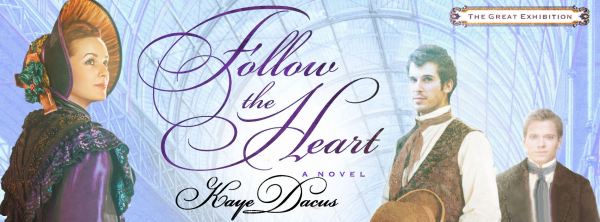
Yesterday, you met the three “leading men” from Follow the Heart. Now it’s time to give the two leading ladies the same honor. Be sure to check my Follow the Heart board on Pinterest today, as I will be posting images of these ladies as I have a chance.
Honora “Nora” Woodriff
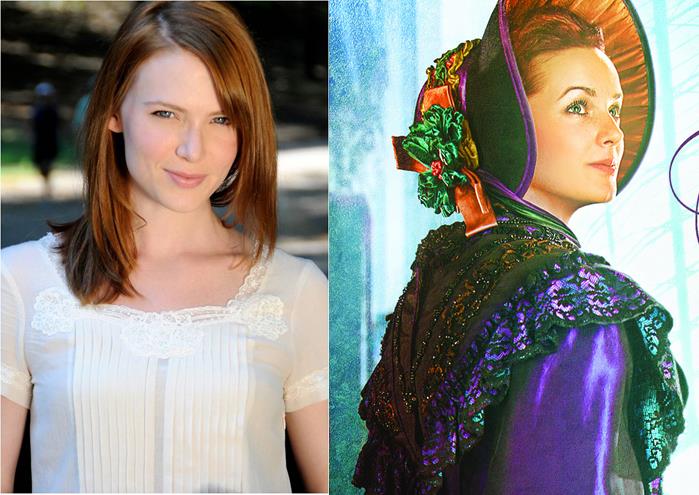
 [Template: Olivia Hallinan, altered for eye color]
Nora Woodriff grew up in a working-class family in Manchester, England. When her father was injured at his factory job, they could no longer support their children, so Nora and her siblings were sent out to find work—the boys to factories in the north of England and the girls to the south to find work in service. Nora, however, was too old to be taken on as a maid (with no prior experience), until she found herself on the doorstep of Mrs. Timperleigh’s Seminary for Deserving Young Women. She begged to work at the school, but Mrs. Timperleigh made her an offer—work in exchange for schooling, room, and board. Nora agreed. Upon completing her education, she taught at the school for a couple of years until the opportunity arose to become governess to the two younger daughters of Sir Anthony Buchanan at Wakesdown Manor. While Dorcas left after a year of Nora’s tutelage to go to finishing school, Nora has continued over the past several years, to work with the youngest Buchanan, Florie. She’s also managed to barely stave off rumors that she took the position (a young woman in her early 20s at the time) with an eye to becoming the next Lady Buchanan. While this has mostly died down, it still occasionally rears its ugly head.
Why Olivia Hallinan? Though it’s set a few decades later than this time period, I loved Olivia Hallinan in the TV series Lark Rise to Candleford. Besides her “girl-next-door” looks, the character she portrays in that series has just the right combination of sweet naivety and strength to suit someone like governess Nora Woodriff.
Katharine “Kate” Dearing
 [Template: Holley Fain]
This story is, for the most part, Kate’s story. Though both Kate and Christopher have been sent to England to marry wealth, the weight of this responsibility falls more heavily on her shoulders. First, she is the eldest child in the family. She knows more (or thinks she does) of what is going on with her father and the lost fortune. She’s always felt responsible for Christopher, especially since the death of their mother in childbirth when they were young. Second, she feels guilty that she hasn’t managed to catch a husband by her advanced age of twenty-eight. She knows that if she’d managed to keep her opinions to herself, to learn to flirt, to become a vapid socialite like all of the other women her age, she would be married by now and her family would not be in the dire straits they find themselves in. And she finds it hard to forgive her father for sending her off to England, or to ask his forgiveness for the harsh words they exchanged before she and Christopher boarded the steamship for England.
Why Holley Fain? I’ll admit I’ve never actually seen her in anything. I don’t even know what her voice sounds like. But when I saw a series of photos of her online, the character of Katharine/Kate (originally named Margaret/Meg) sprang to mind. Her physicality bespoke the kind of character I wanted Kate to be.
On May 1, I will be giving away FIVE signed copies of Follow the Heart.
Beginning Monday, April 15, 2013, and ending Tuesday, April 30, 2013, I’ll be doing a series of blog posts on the background and inspiration for the Great Exhibition series and Follow the Heart. Each comment you leave on every post between 4/15/13 and 4/30/13 will earn you a name in the “hat” for the drawing. (Posts will be closed to new comments after 24 hours, so be sure to check in daily—subscribe via email above, or check my Twitter or Facebook page, as each new post gets announced there, too—for the latest post to comment on.)
Comment early, comment often!
FOLLOW THE HEART: Meet Andrew, Christopher, and Stephen
Because I enjoyed being able to explore other characters’ relationships in the Ransome series, I set out to do something a little different with the Great Exhibition series . . .
TWO romances for the price of one!
Yep, both of the books (though in a round-about way in Book 2) feature two romantic storylines. While this did make it a little harder to write/plot, I’m really happy with the outcome, with the way the characters’ stories weave together.
But let’s get on to why you’re really here today.
Character Casting!
To try to keep spoilers to a minimum, I’m going to break the character casting into a few posts—introducing the main men first, then the heroines, then secondary characters. If, at any time, you have any questions about any of them, feel free to ask. Oh, and check my Follow the Heart board on Pinterest today, as I will be posting images of these guys as I have a chance.
Now, on to the character introductions.
Christopher Dearing
 [Template: Lee Pace]
Philadelphia born-and-bred Christopher Dearing seems to be on the cusp of the American dream—a law degree from Yale, a prestigious apprenticeship with one of the largest railroad companies in New York, and his family’s wealth and social standing to help him rise quickly in the fastest-growing industry in the country. That is, until his father loses all the family wealth in a land speculation and Christopher is called home. Once there, he learns that, along with his older sister, he must go to England to live with his mother’s brother, a baronet, and do whatever it takes to find and marry a wealthy woman—or else his father, stepmother, and three young half-sisters will be destitute.
While upset over the circumstances, Christopher is excited to be traveling to England. He’s read everything he can get his hands on about Prince Albert’s Great Exhibition and it had been almost beyond hope that he might be able to see it. Now he can—and if he can’t find a wealthy wife, maybe he can find a lucrative position with one of the many successful railway companies in England.
Why Lee Pace? While I enjoyed the first season of Pushing Daisies back when it was on, I had to stop watching because Anna Friel (Chuck) was the template for Julia in the Ransome series, and the character she played on that show was far too different and it was messing my mental image of Julia up to see her physical template behaving so differently. But then I saw Lee Pace in Miss Pettigrew Lives for a Day, and I realized just how much more range he had than what I’d seen in PD. I filed him away—and when I started thinking about Christopher: tall, gangly, good-humored, optimistic, and slightly goofy while also having a romantic side, I knew Lee Pace would be the perfect template.
Stephen Brightwell, Viscount Thynne
 [Template: Daniel Craig]
Stephen Brightwell never expected to become Viscount Thynne (pronounced tine, like the tine of a fork)—a second son, he’d been perfectly content living on and managing his father’s properties in Argentina for the past ten years. But with the deaths of his father and older brother within six months of each other, Stephen has returned to England to take up his place as head of the family. And at almost forty-one years old with his brother having died childless, Stephen feels the pressure to marry and produce an heir. But many years ago, he had his heart broken by the woman he loved, so falling in love again is not on his agenda. He’s invited to Wakesdown Manor to attend the house party thrown by Christopher’s uncle, thinking he’ll most likely settle on one of the baronet’s daughters. That is, until he meets someone else . . .
Why Daniel Craig? Uh, why not? 🙂 I’d been looking for a role in which I could use the current 007, and what better role than a dashing though somewhat taciturn Victorian aristocrat?
Andrew Lawton
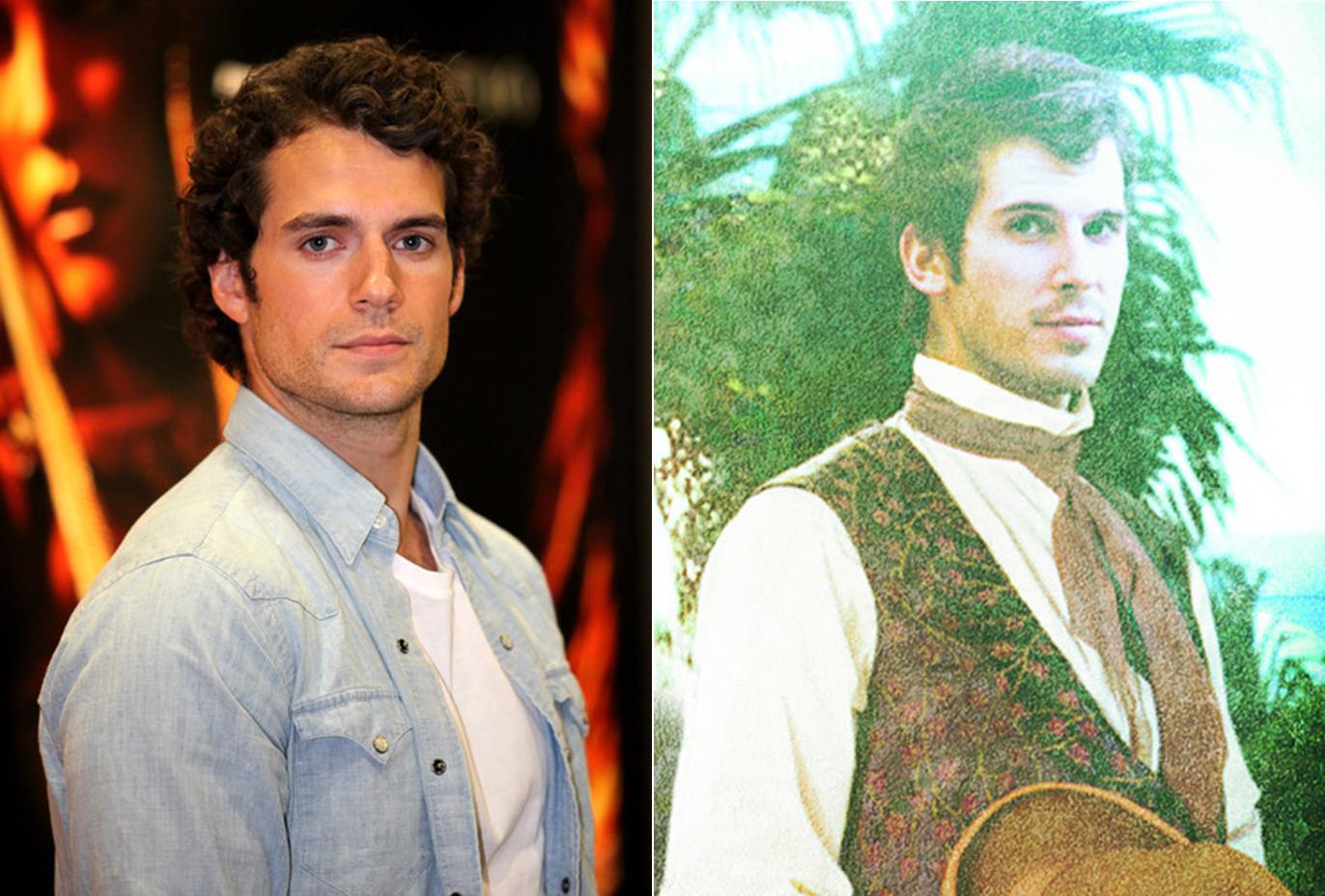
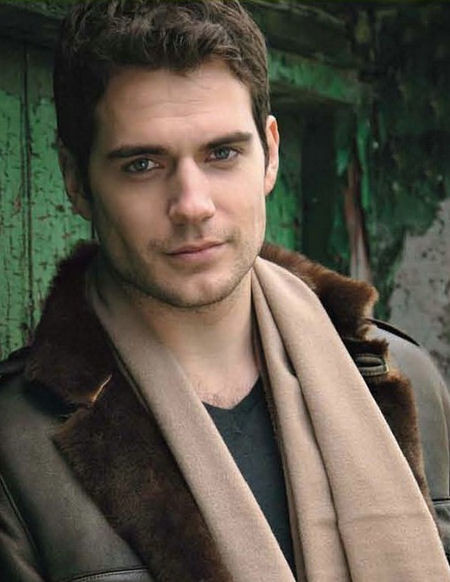 [Template: Henry Cavill]
Andrew Lawton had the kind of hard-scrabble life common to the urchins in Dickens’s novels. His father died when Andrew was very young. Because of this, Andrew and his mother ended up in the poorhouse, where his mother died of “lung rot.” Andrew found work at the estate at Chatsworth and worked his way up—from general laborer to and undergardener. Then he caught the eye of the man who would change his life: Joseph Paxton. He was fascinated by Paxton’s designs for the greenhouses at Chatsworth and spent his spare time studying every book he could get his hands on about both architecture and agriculture. Paxton took notice of the lad and decided to apprentice him.
Just before the opening of Follow the Heart, Andrew has been hired on at Wakesdown Manor to redesign the gardens and grounds and to build new hothouses—his first job completely on his own as a professional.
Why Henry Cavill? Well, when I first started developing this idea three years ago not a whole lot of people had heard of this British mega-hunk. I’d fallen in love with him as Charles Brandon in The Tudors—especially in seasons 3 and 4, in which he really comes into his own as an actor—and so I’d been thinking about him quite a bit. Really, the whole idea for the story started with wanting to use him as a hero but wanting to make him more of an “every-man” character instead of an aristocrat, like he played in The Tudors. I then saw this image of him:
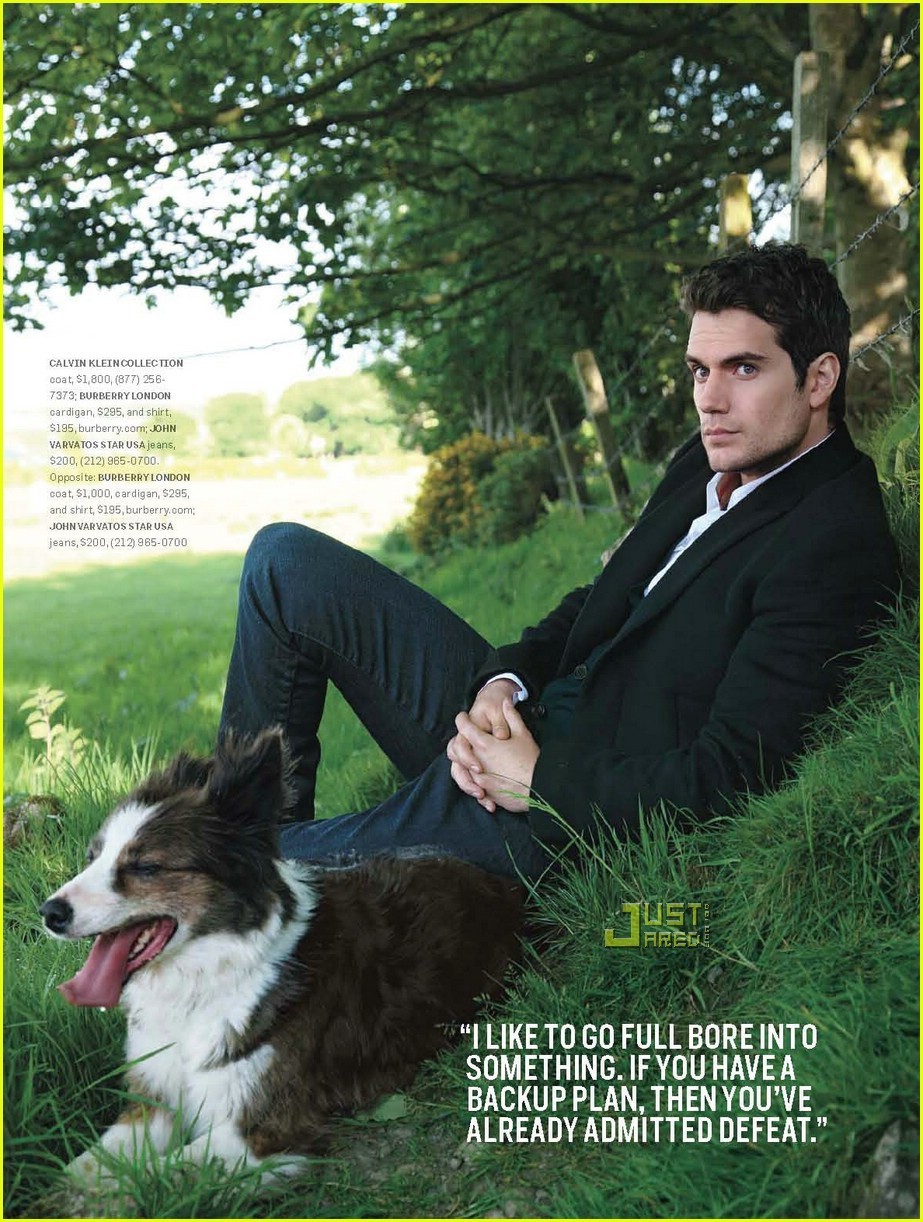
and suddenly “gardener” popped into my head. And, apparently, the cover designer agreed with me.
On May 1, I will be giving away FIVE signed copies of Follow the Heart.
Beginning Monday, April 15, 2013, and ending Tuesday, April 30, 2013, I’ll be doing a series of blog posts on the background and inspiration for the Great Exhibition series and Follow the Heart. Each comment you leave on every post between 4/15/13 and 4/30/13 will earn you a name in the “hat” for the drawing. (Posts will be closed to new comments after 24 hours, so be sure to check in daily—subscribe via email above, or check my Twitter or Facebook page, as each new post gets announced there, too—for the latest post to comment on.)
Comment early, comment often!
FOLLOW THE HEART: The Inspiration
Let’s see . . . how did I come up with the idea behind Follow the Heart and the Great Exhibition Series? It’s been so long ago, it’s hard to remember details, but I’ll do my best.
In early 2010, while I was writing Ransome’s Quest, I was asked for a proposal for a new series to follow it. At that point, because I was still so caught up in the world of the Ransomes and Witheringtons and Cochranes, I wrote a “next-gen” proposal in which Sir Drake Pembroke uses his oldest son to try to gain the fortune he himself couldn’t win through Julia by having his son woo and wed Julia’s youngest child, Margaret. Much drama ensued and the three-book proposal spanned a couple of years and took place in both Jamaica and England—and culminated with a grand finale at, you guessed it, the Great Exhibition of 1851.
I’d already fallen in love with the idea of setting something around the time period of the Great Exhibition because of this:
.
. . . and this . . .
.
Because of Victoria & Albert I’d been intrigued with the idea and the history of the Great Exhibition since 2001. Because of North & South, I’d been convinced it would be a fabulous setting for a romance novel since around 2007 or 2008.
But the Pembroke Trilogy didn’t sell to the publisher of the Ransome series, and by the time I finished Ransome’s Quest, I was ready to move on to different characters anyway. But I was intrigued by the mid-Victorian setting—the early years of the Industrial Revolution, the shifting of society and culture from Romanticism to Victorian, and, of course, the Great Exhibition itself.
The Buccaneers
There’s another costume-drama miniseries with which I have much more of a love-hate relationship than most of the others I’ve ever watched—The Buccaneers, based on the unfinished novel by Edith Wharton. The premise of this story is one of the more romanticized ideals of the Gilded Age—wealthy American heiresses descending on England to marry titled, landed, but impoverished gentlemen.
I decided to flip that notion on its head. What if instead of a wealthy girl being sent to England to marry for title/land an impoverished girl (and her brother) were sent to England to marry for money?
And, naturally, the path toward matrimony cannot be smooth. What if she does meet a wealthy, titled gentleman who is willing to marry her and offer her family the salvation and security they need. But what if she secretly falls in love not with him but with an equally impoverished, working-class man who has nothing but his heart to offer her.
And that’s where the inspiration for Follow the Heart began.
On May 1, I will be giving away FIVE signed copies of Follow the Heart.
Beginning Monday, April 15, 2013, and ending Tuesday, April 30, 2013, I’ll be doing a series of blog posts on the background and inspiration for the Great Exhibition series and Follow the Heart. Each comment you leave on every post between 4/15/13 and 4/30/13 will earn you a name in the “hat” for the drawing. (Posts will be closed to new comments after 24 hours, so be sure to check in daily—subscribe via email above, or check my Twitter or Facebook page, as each new post gets announced there, too—for the latest post to comment on.)
Comment early, comment often!
Fun Friday–Favorite Victorian Movies

To get you all in the mindset for the next two weeks’ posts delving into the background and inspiration that drove me to write Follow the Heart, I thought I’d kick us off with clips from a few of the Victorian-set films that helped get me “in the mood” to write this new-to-me time period.
Victoria & Albert (miniseries, 2001)
.
Cranford and Return to Cranford (miniseries based on several stories by Elizabeth Gaskell, 2007, 2009)
.
Bleak House (miniseries based on the novel by Charles Dickens, 2005)
.
Lark Rise to Candleford (TV series based on the novel by Flora Thompson, 2008–2011)
.
The Young Victoria (feature film, 2009)
.
And, of course . . .
North & South (miniseries based on the novel by Elizabeth Gaskell, 2004)
Look What Came in the Mail Today Part 2! (And a Giveaway Announcement!)
Drove up to the house coming home this evening to see this on my front porch:

When I got out of the car and walked up onto the porch, I saw this:
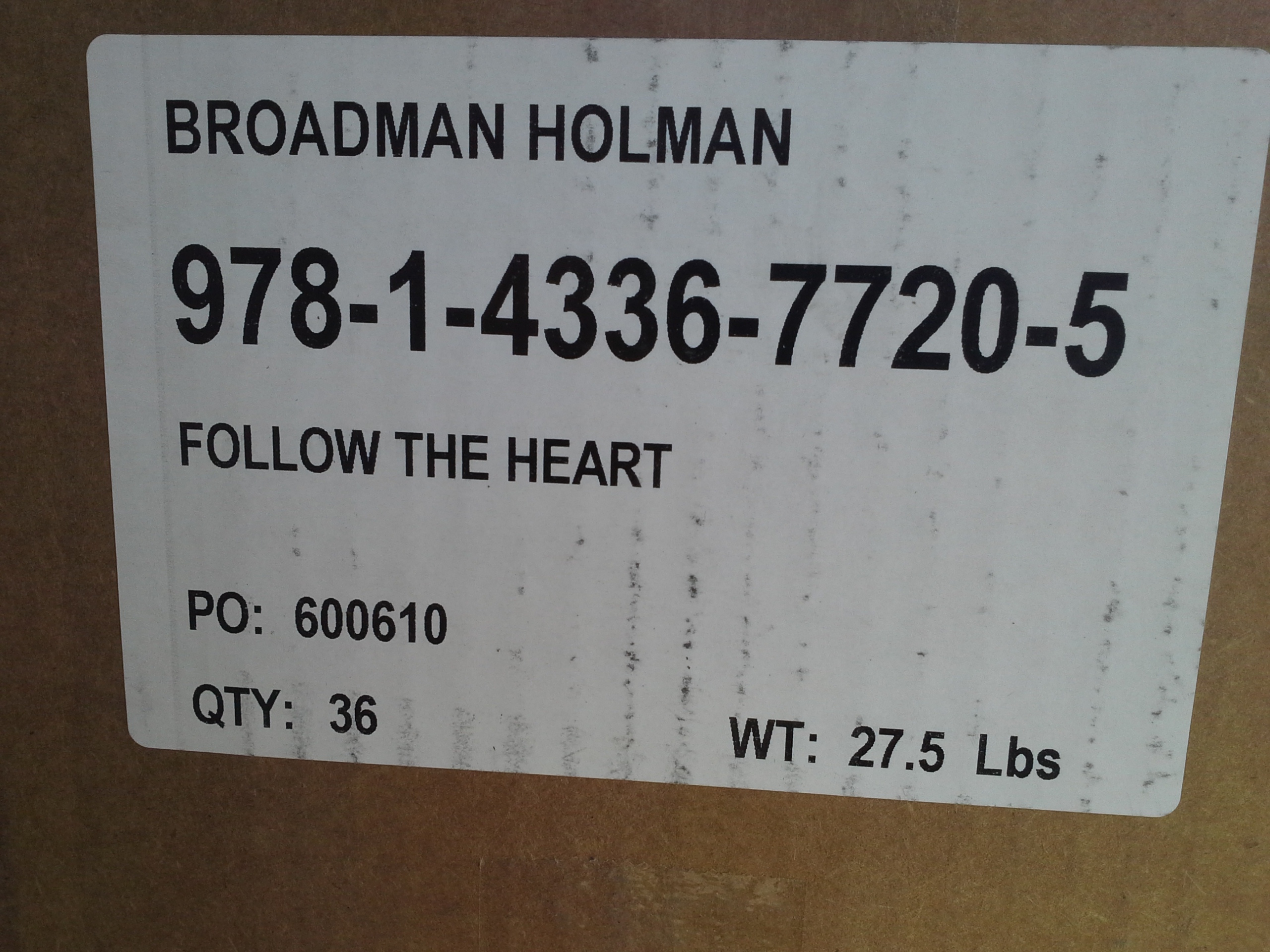
So I opened the box on top and I found this:
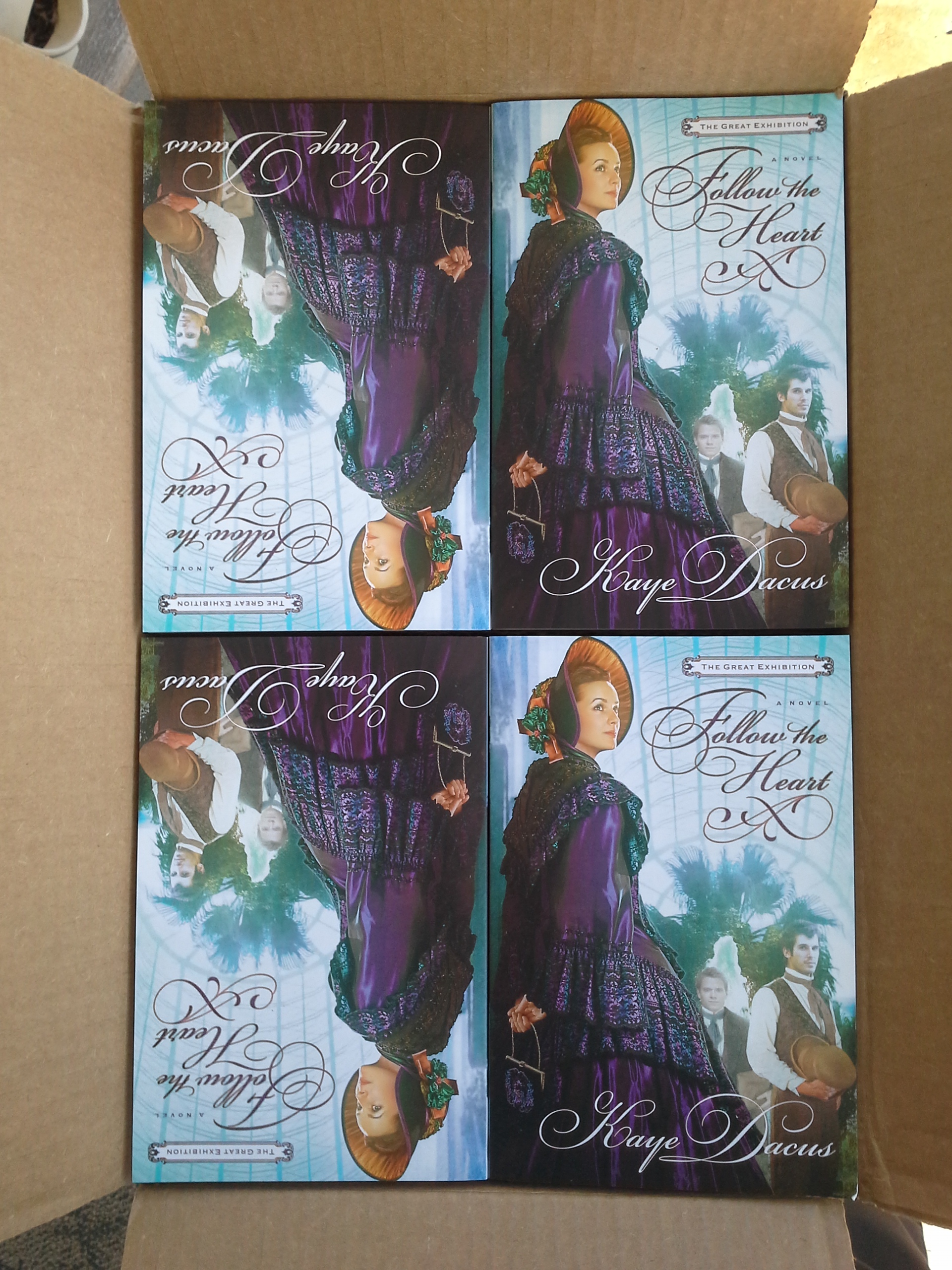
They’re HERE!!!
So that means it’s time to give some of them away!
There are those who won the first contest I did, and I’ve already emailed them to let them know their books are on the way.
If you did not win a signed copy last time, now you have another chance!!!
On May 1, I will be giving away FIVE signed copies of Follow the Heart.
Beginning Monday, April 15, 2013, and ending Tuesday, April 30, 2013, I’ll be doing a series of blog posts on the background and inspiration for the Great Exhibition series and Follow the Heart. Each comment you leave on every post between 4/15/13 and 4/30/13 will earn you a name in the “hat” for the drawing. (Posts will be closed to new comments after 24 hours, so be sure to check in daily—subscribe via email above, or check my Twitter or Facebook page, as each new post gets announced there, too—for the latest post to comment on.)
Comment early, comment often!
Wordless Wednesday: Warrior Women

Scapular by Kannagara on deviantART
.
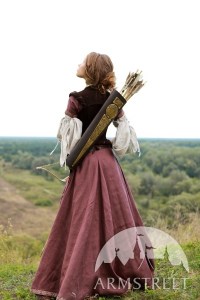
Costume by Armstreet
.

Brave 3 by Galina Aster, via 500px
.
© Elisabeth Ansley / Trevillion Images
.

Lady Gwyneth by Phatpuppy Art, via 500px
.
Image by Fotodreamz Photographer
FOLLOW THE HEART Sneak Peek!
FOLLOW THE HEART
Book 1 of the Great Exhibition Series
© 2013 by Kaye Dacus
Prologue
Philadelphia, Pennsylvania
New Year’s Eve, 1850
Would the rustle of her skirts against the floorboards give her away?
Kate Dearing lifted the burdensome bulk—pink silk-taffeta flounces over layers and layers of starched petticoats—and padded down the hall in her soft kid dancing slippers. Christopher said he’d seen Father and Devlin Montgomery head toward Father’s study.
Devlin wanted to ask for Father’s blessing before he proposed to her. At least, Kate assumed so. Devlin had been courting her for almost a year now; and even though she could hardly tolerate being in the same room with him for the hour his calls lasted, at twenty-seven years old, she had no alternatives—for no other man had paid court to her in more than five years, despite the family’s wealth and her large dowry. Devlin was wealthy and somewhat handsome, and his family owned hundreds of thousands of acres of land in western Pennsylvania and eastern Ohio. And the railroad company in which Father had invested his fortune wanted to lay new rail lines through it.
She squeezed through the narrow door of the storage room behind Father’s study. She and her younger brother, Christopher, discovered the hiding place many years ago.
Trying to mash her bell-shaped skirt flat, to keep it from catching on any of the old, framed paintings stacked against one wall, Kate sidled down the cramped space toward the thin beam of light that trickled through a chink in the wood-paneled wall. Too high to see through, it carried sound from the adjacent room quite well.
“You lied to me.” Devlin’s voice held a venom she’d never imagined the staid young man possessed.
“Lied?” Her father sound shocked—offended. “Is Kate not beautiful and accomplished? Intelligent and well capable of running a large household?”
Devlin snorted at her father’s words. “When she keeps her mouth closed and her radical beliefs about abolition and voting rights for women behind her teeth, yes, she is passing pretty.”
Kate stifled a gasp. Only passing pretty? Then she shrugged. She’d always known she’d never be a great beauty like her mother, God rest her soul.
“It is not of Miss Dearing that I speak,” Devlin continued. “It is of you and the deception you used your daughter to try to draw me into.”
Kate frowned. Father had nothing to do with Devlin and her meeting. Aunt Kitty arranged the introduction.
“I am certain I do not take your meaning,” Father said, though Kate recognized the tremor of fear in his voice. It was the same as when he’d tried to convince seven-year-old Kate and four-year-old Christopher that their mother and newborn sister would be just fine—and the same as when he’d told them the next day of Mother and Emma’s passing. Now, as then, her heart caught in her throat.
“You may have everyone else in Philadelphia fooled, but we Montgomerys know better.”
Father laughed nervously. “I do not know to what rumors you have been listening—”
“They are no rumors. The front page of the paper announced the land commission’s decision to vote against allowing a railroad to be built through that part of the state. Which means everyone who invested in the speculation, in buying up all of that land, lost everything. And since you boasted to my father of how you invested all your wealth in the speculation, trying to get him to go in it with you, it is obvious you are also now penniless. And you intended for me to marry your spinster daughter—whom no man with use of his senses would have before she possessed no dowry—to save the railroad and your fortune.” A loud thump followed Devlin’s pronouncement as if he’d hit his fist against the table or desk. “I will not be your dupe.”
The thud of footsteps followed by the opening and slamming of the study door masked the whoosh of Kate’s skirts as her knees gave out and she sank to the floor.
Bankrupt? Penniless?
Surely not. Yet . . . the invitation list for tonight’s ball had been kept suspiciously small. Father had spent more time than usual away from the house in recent weeks. And when he returned home, his haggard appearance made her wonder if he was coming down with a chill.
Bankrupt. Penniless.
Kate pushed and pulled herself back up to her feet and squeezed through the small space and back out into the wide hallway. The dark hallway. Never before during a social event had so few candles been lit. And when had the exquisite Persian rug that had dressed the hall floor since before her birth been removed?
Though not a proper ballroom, the salon in the back of the house served the purpose well, looking much larger tonight with the pared-down number of guests who had come to celebrate the advent of the New Year.
Maud gave her a questioning look when she stepped into the room. Kate smiled at her stepmother, hoping to keep her believing everything was fine.
How soon would all of these people know that the Dearings were ruined? How soon would they turn their backs on Father and Maud, on Christopher and her? On her young half-sisters, Ada, Clara, and Ella? Once Philadelphia society discovered their new financial status, doors would be closed, connections severed. No one would want to be associated with a man who invested unwisely and lost everything.
Devlin had been correct—no man would want to marry her now, with no dowry.
Ignoring the cold of the winter evening, Kate escaped through the back doors to the solitude and peace of her garden, its wildness beautiful even in the light of the half-moon and covered in snow.
Dear Lord, what am I supposed to do now?
Look What Came in the Mail Today!
About forty-five minutes ago, when I got home from work, I posted this on Facebook before I’d even made it into my driveway:

Then, when I got inside, I made this little video:
.
After I made the video, I pulled out the piece of paper you can see sticking out of it and found a letter that included this interesting piece of information:
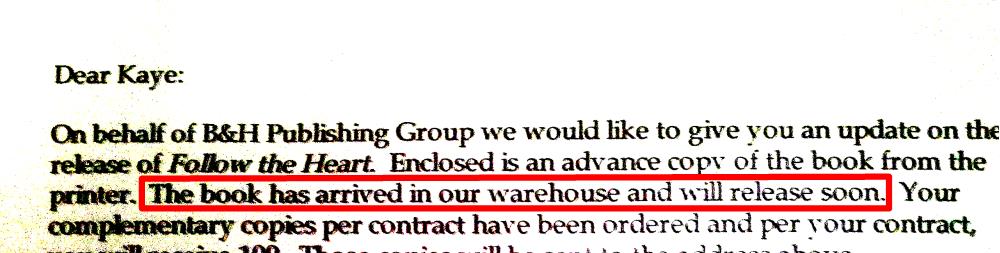
I’d love to know when it hits your area—please post photos of it in bookstores or of yourself receiving, holding, reading, etc., the book. You can post them on Pinterest or Twitter or Facebook, and, I’ll feature your photo here on the blog and on my Pinterest account. Be sure to tag me when you post!
Fun Friday Questions
It’s time for Fun Friday Questions. Click over to my Facebook Page to play along!
Wordless Wednesday: Let’s Go on an Adventure
Image by Susan Fox – Trevillion Images
.

Mast Ropes by Emma Samuel via 500px
.
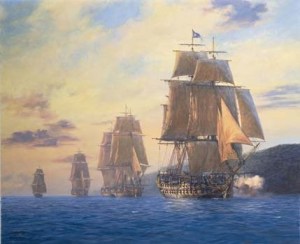
Image by Geoff Hunt
.

fog by Serge Kozintsev via 500px
.

Image by James Steidl / Shutterstock
.
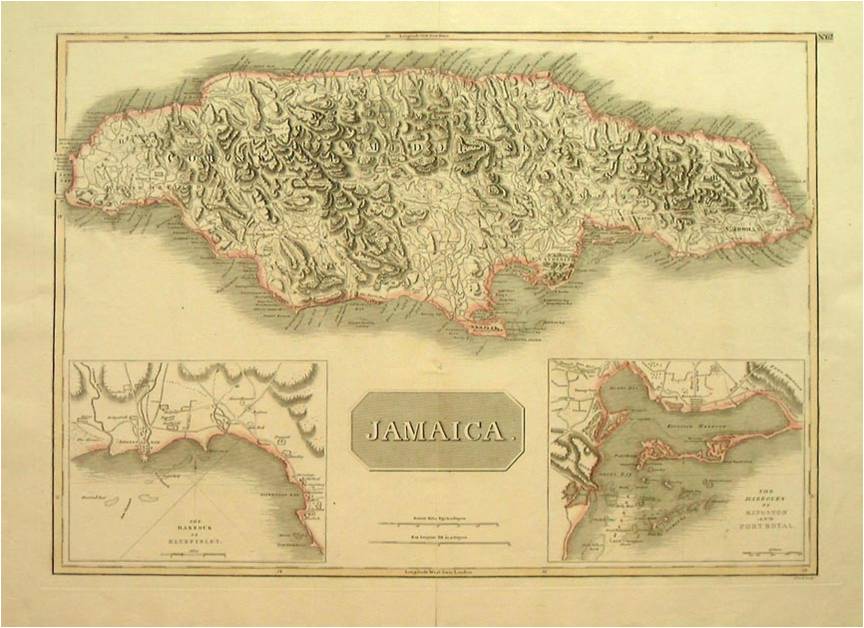
19th Century Map of Jamaica

 KayeDacus.com