Stephen King on Writing for the Money
Excerpt from Chapter 16 of Part 4, “On Writing,” in On Writing: A Memoir of the Craft by Stephen King
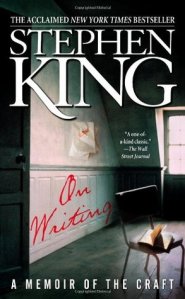
One more matter needs to be discussed, a matter that bears directly on that life-changer and one that I’ve touched on already, but indirectly. Now I’d like to face it head-on. It’s a question that people ask in different ways—sometimes it comes out polite and sometimes it comes out rough, but it always amounts to the same: Do you do it for the money, honey?
The answer is no. Don’t now and never did. Yes, I’ve made a great deal of dough from my fiction, but I never set a single word down on paper with the thought of being paid for it. I have done some work as favors for friends—logrolling is the slang term for it—but at the very worst, you’d have to call that a crude kind of barter. I have written because it fulfilled me. Maybe it paid off the mortgage on the house and got the kids through college, but those things were on the side—I did it for the buzz. I did it for the pure joy of the thing. And if you can do it for joy, you can do it forever.
(quoted from pg. 253)
About the book:
“Long live the King” hailed Entertainment Weekly upon the publication of Stephen King’s On Writing. Part memoir, part master class by one of the bestselling authors of all time, this superb volume is a revealing and practical view of the writer’s craft, comprising the basic tools of the trade every writer must have. King’s advice is grounded in his vivid memories from childhood through his emergence as a writer, from his struggling early career to his widely reported near-fatal accident in 1999—and how the inextricable link between writing and living spurred his recovery. Brilliantly structured, friendly, and inspiring, On Writing will empower and entertain everyone who reads it—fans, writers, and anyone who loves a great story well told.
__________________________________________
Work Cited:
King, Stephen. On Writing: A Memoir of the Craft. New York, NY: Pocket Books, 2000. Print.
Stephen King on Writing with the Door Closed
Excerpt from Chapter 20 of Part 1 “C. V.” in On Writing: A Memoir of the Craft by Stephen King
“When you write a story, you’re telling yourself the story,” [John Gould] said. “When you rewrite, your main job is taking out all the things that are not the story.”
Gould said something else that was interesting on the day I turned in my first two pieces: write with the door closed, rewrite with the door open. Your stuff starts out being just for you, in other words, but then it goes out. Once you know what the story is and get it right—as right as you can, anyway—it belongs to anyone who wants to read it. Or criticize it. If you’re very lucky (this is my idea, not John Gould’s, but I believe he would have subscribed to the notion), more will want to do the former than the latter.
(quoted from pg. 47)
About the book:
“Long live the King” hailed Entertainment Weekly upon the publication of Stephen King’s On Writing. Part memoir, part master class by one of the bestselling authors of all time, this superb volume is a revealing and practical view of the writer’s craft, comprising the basic tools of the trade every writer must have. King’s advice is grounded in his vivid memories from childhood through his emergence as a writer, from his struggling early career to his widely reported near-fatal accident in 1999—and how the inextricable link between writing and living spurred his recovery. Brilliantly structured, friendly, and inspiring, On Writing will empower and entertain everyone who reads it—fans, writers, and anyone who loves a great story well told.
__________________________________________
Work Cited:
King, Stephen. On Writing: A Memoir of the Craft. New York, NY: Pocket Books, 2000. Print.
Fun Friday: PUPPIES, PUPPIES, PUPPIES!!!

#TBT Post: Writing Bad Guys—Creepy Cartoon Caricatures

.
Throwback Thursday Post of the Week:
Bad Guys—Creepy Cartoon Caricatures
Originally posted: September 14, 2009
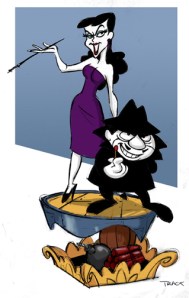 Maybe I’m aging myself here, but surely most of you can easily recall the ZZ Top song “Bad to the Bone.” All throughout this series, that’s the song that’s been running through my head as I’ve written about how to create Bad Guy characters. But there are two ways to go about this. There’s creating “Bad to the Bone” villains (like those pictured on this page today)—the creepy cartoon caricatures; and then there’s creating Bad Guys (antagonists, dark heroes, villains) who have just a little something about them that makes them sympathetic to the reader. Those are the two qualities I’d like to focus on for this, the second to last formal entry in the Bad Guys series. (We’ll end with a bang by talking about Bad Girls.)
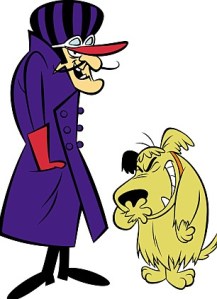
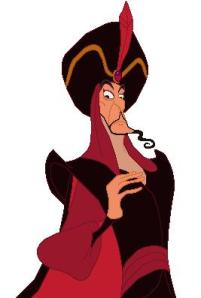
For most of us growing up, our first exposure to Bad Guy characters came from cartoons, whether on TV or in the movies. When we start naming villains, it’s usually easiest to start with the Disney movies: the evil queen in Snow White; the wicked stepmother in Cinderella; the hunters in Bambi; Cruella de Vil; Jafar; Ursula; Captain Hook; Gaston (Beauty & the Beast); Aunt Sarah, the Siamese cats, and the rat (Lady & the Tramp); Prince John, Sir Hiss, and the Sheriff of Nottingham; Scar and the Hyenas; and so on. And there were those we saw on TV: Boris & Natasha; Dastardly and Muttley; and Wile E. Coyote. What makes it so easy to name these characters as Bad Guys/villains? Because they’re presented very simply: they do bad things, they have to face the consequences for doing bad things, and we’re told through the “moral” of the story that doing bad things is, well, bad. Therefore, these characters are bad for doing bad things. We’re never given their backstory in such a way as to become aware of why they became bad. They’re just bad because they’re in juxtaposition to the heroes/heroines of these stories.
 As we grow older, though, and we begin to experience life—an abusive adult, the schoolyard bully, the first romantic interest to break our heart—we begin to realize that being “bad” isn’t as black-and-white as it’s portrayed in those cartoons. People who do bad things aren’t bad all the time. In fact, they can be quite nice and charming sometimes. In real life, it’s hard to pick out the “bad guys” around us—mostly because they don’t come with names like Cruella or Dastardly or Snidely Whiplash, or with pencil mustaches with curlicues on the ends for them to twirl while chuckling menacingly. They don’t tie the Nell Fenwicks of life to the railroad tracks. (Though there are some real-life creepy cartoon caricatures who do commit heinous acts like that; and even when we do learn their entire backstory, we find nothing that makes us sympathize with them.) Cartoon bad guys are over-the-top—in appearance, in costume, in personality, in sheer evilness. They are, in other words, “Bad to the Bone.”
If you are creating stories for very young children, these types of bad-guy characters are fine—in fact, these are the best type of bad guys for children’s stories. Because at that age, they are thinking in terms of black-and-white, right and wrong. They haven’t started to experience the gray areas of life.
 In the first (original, 1977) Star Wars movie, Darth Vader was one of these caricaturish bad guys. He had the black body-armor, the swirling black cape, the creepy breathing machine, the ability to choke someone from across the room just by pointing at him, the intimidation factor, and served as the “evil henchman” for a dastardly leader in Grand Moff Tarkin. When Tarkin decided to destroy Alderaan, Vader didn’t speak up for the peace-loving people who’d long-since given up all of their weapons. When Tarkin gave the orders to “terminate her, immediately,” Vader didn’t stick up for Leia. Without a second thought, he killed Obi-Wan Kenobi. And then he went after our heroes. In the second film (Empire Strikes Back), Vader did even more dastardly deeds. But then we found out something very interesting about his backstory: he is Luke’s father. (Sorry if I just spoiled that for anyone ;-).) It is through Luke’s character that we begin to feel sympathy for Vader as Luke, in the third film, sets out to redeem Vader. And his sympathy is justified. At the end of Return of the Jedi, Vader/Anakin chooses to save his son and destroy the evil emperor who’d turned him into that creepy cartoon caricature embodiment of villainy.
 Probably one of the best-known literary villains of the 21st Century is Voldemort from the Harry Potter books. Because the first few books are written for younger readers, Voldemort is portrayed as one of these creepy cartoon caricatures: he’s the embodiment of evil because he has it out for our young hero. But the series is a wonderful example of how we come to know what evil truly means—how a person develops emotionally to understand that “the world isn’t split into good people and Death Eaters” (Sirius Black from Harry Potter and the Order of the Phoenix). As the series progresses, as Harry Potter ages and starts to understand that there are many more gray areas of life than there are black-and-white, more of Voldemort’s backstory is revealed. Then, once we get to the sixth book, we are treated to his entire backstory: the miserable family he came from; his early life in an orphanage; the tragedies that led him to fall into vengeance and darkness. At one point, Harry compares his own life with Voldemort’s: how his (Harry’s) mother loved him so much she sacrificed her life to save Harry, and how Voldemort’s mother didn’t love her son enough to go on living after her muggle husband abandoned her when she stopped giving him the love potion she’d snared him with—she abandoned her own baby and then went off and died of her broken heart. We also learn there is one way for Voldemort to save himself in the end: to feel regret for everything he’s done. It’s the exact same decision that Darth Vader must make at the end of Return of the Jedi. Except Voldemort makes the opposite choice. In both stories, it’s through the eyes of the hero (Luke and Harry) that we as the viewer/reader begin to feel something akin to sympathy for the bad guy. And it makes both characters—the hero and the villain—resonate all the more for it.
 In Bullies, Bastards & Bitches, Jessica Page Morrell sums up creating sympathy for Bad Guys this way:
- “The forces that shape villains in fiction and in real life can rarely be undone. Thus, when you’re creating sympathy for a villain, you’re doing so because of his situation and backstory. Not only do readers want to walk along in your protagonist’s clothes, they want a close-up meeting with the villain, a meeting so physical and fully wrought that the character’s smell, posture, and menacing or seemingly benign presence will take over their senses. Readers want a glimpse or, better yet, a tour of the inner workings of someone drastically different from them” (p. 214).
Wordless Wednesday: Tahmoh Penikett Natural and SUPERNATURAL

Tahmoh Penikett as the angel Gadreel on Supernatural (The CW)
.
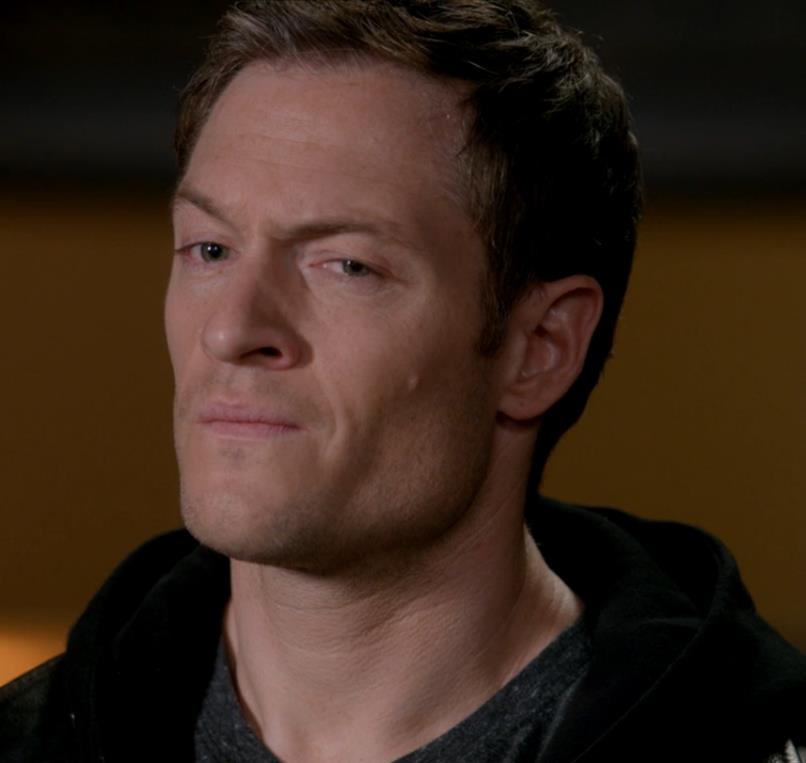
Tahmoh Penikett as the angel Gadreel on Supernatural (The CW)
.

Tahmoh Penikett as the angel Gadreel on Supernatural (The CW)
.

Tahmoh Penikett modeling for The 100 Mile Outfit
.

Tahmoh Penikett modeling for The 100 Mile Outfit
.

Tahmoh Penikett modeling for The 100 Mile Outfit
Books Read in 2014: JUST LIKE HEAVEN by Julia Quinn
Just Like Heaven by Julia Quinn
Audiobook performed by Rosalyn Landor
Book Blurb:
Honoria Smythe-Smith is:A) a really bad violinist
B) still miffed at being nicknamed “Bug” as a child
C) not in love with her older brother’s best friend
D) all of the aboveMarcus Holroyd is:
A) the Earl of Chatteris
B) regrettably prone to sprained ankles
C) not in love with his best friend’s younger sister
D) all of the aboveTogether they:
A) eat quite a bit of chocolate cake
B) survive a deadly fever and the world’s worst musical performance
C) fall quite desperately in loveIt’s Julia Quinn at her best, so you know the answer is . . .
D) all of the above
My Review:
Rating:
Story: 4 stars
Narrator: 4.5 stars
- Goodreads bookshelves: audiobook, books-read-in-2014, hist-19th-c-romantic-victorian, historical-romance
Read from April 30 to May 12, 2014
Why, oh, why, oh, why is Julia Quinn obsessed with the idea that a couple cannot have a happy ending without pregnancy/babies?
I’m getting ahead of myself.
After enjoying Quinn’s Bridgerton series (though I did skip When He Was Wicked after two attempts and not being able to get into it), I decided to go ahead and jump right into the Smythe-Smith series. At first, I wasn’t quite sure where this first in the quartet fell in the Bridgerton timeline (I didn’t look at the previous books for date-stamps), and at first thought it might be between Eloise’s and Hyacinth’s books, as Gregory is still at university in this one—but then Colin shows up and is still unmarried, so it falls much earlier in the Bridgerton timeline than I originally thought. Not that it means much, except for my surprise that Colin was still unmarried (and, come to think of it, no mention was made of Lady Whistledown’s column, which should have still been going strong at this point).
Anyway, back to the book. Lady Honoria Smythe-Smith is the youngest of a large family (and there’s the obsession with people having lots and lots and lots of babies again!). Her older brother, Daniel, had a school friend, Marcus, whom he brought home on holidays because Marcus is an only child and he and his father didn’t really have much of a relationship. So Marcus has been around pretty much ever since Honoria can remember.
As the story begins, mortified at the idea that she’s going to have to play in the infamous Smythe-Smith Musicale again this year, Honoria is determined that she will find someone to marry before the end of the season (which hasn’t quite started yet). She’s at a house party (her aunt’s house, IIRC), and the property just happens to be “surrounded” by Marcus’s estate. Though her aunt tries to cajole Honoria into inviting Marcus to the house party (after all, he’s an earl (again, IIRC—these details are a lot harder to remember when it’s from the audiobook version—young, handsome and, obviously, eligible), but when Honoria writes to tell him of the invitation, she reminds him how much he hates these kinds of social events and how awful it would be. Naturally, following her lead, he declines. But he wants to see her—because, secretly, he’s sworn to her brother, Daniel, that he’ll keep an eye on her and make sure she doesn’t make a bad marriage while Daniel is out of the country. (Long story as to why he’s absent—you’ll have to read the book to understand.)
Honoria decides to set a trap for one of the young men at the houseparty (Gregory Bridgerton, whom she thinks is the least objectionable of the lot) by digging a “mole hole” and pretending to twist her ankle in it. She does this, hides until she hears others out walking, then sets her scene. Only no one from the houseparty hears her calling out for help—but Marcus happens upon her in this undignified, unsuccessful pose. In his attempt to help her, he ends up stepping in the hole and twisting his ankle for realsies. But his fashionable boots are too tight for them to take off, and he can’t walk on the ankle. So Honoria—instead of going directly to his house, which would have been logical—goes back to her aunt’s house (and, naturally, it starts raining) to send a message to Marcus’s house for a footman to go out and get him.
Honoria and one of her cousins calls on him the next day or so and learn that he’s under the weather. She learns that he had to sit out in the rain for almost two hours before help arrived, and that when they finally did get him home, his valet had to cut his boot off because his ankle was so swollen, slicing Marcus’s leg in the process to add, well, injury to injury.
After the visit, Honoria returns to London with her mother to prepare for the Season—purchasing gowns, planning dinners, etc. But after just a few days, she receives an urgent note from Marcus’s housekeeper saying that Marcus is extremely ill and the housekeeper begs Honoria to come. She forces her mother to drop everything and leave immediately for Cambridgeshire to see him.
When they arrive, Marcus is not just sick, he’s delirious with fever, something that a simple cold from having been out in the rain for a couple of hours shouldn’t have caused. After quite some time of mopping his brow with . . . um, well, I’ll leave that for you to discover what she uses for that . . . she finally thinks to have a look at his leg. Lo and behold, the cut is extremely infected, causing the fever.
Quite a bit of the story is focused on this incident and its aftermath, with Honoria and her mother cleaning the wound and cutting away the dead tissue and, basically, saving his leg from amputation. Honoria realizes that she couldn’t face the prospect of losing him, and Marcus realizes that she was his touchstone and why he kept fighting during the worst of the fever. There’s even a stolen treacle tart involved. Ah, that’s true love—stealing a treacle tart for someone! 😉
This is the portion of the book in which Julia Quinn’s writing sparkles—the banter between hero and heroine. I also appreciate the fact that she doesn’t go for the “sick-bed sex”—the heroine giving in to her curiosity/temptation/desire about the hero and having sex with him while he’s out of his mind with fever, which many books I’ve read do. I love that while her characters may think about their attraction—or even desire—for each other, it never devolves into a rapacious, prurient, animalistic, “can’t control themselves” sex. They still maintain their faculties. The hero doesn’t get a hard-on every time he looks at the heroine; and she isn’t generating “moisture” every time she thinks about him—and I’m not talking tears, either. I never fail to appreciate this about JQ’s stories, and it’s here in full-force.
The day before Honoria and her mother are to return to London, Marcus receives a letter from her brother, Daniel, stating that he’s coming back to England. He tells them this, but that Daniel doesn’t give a date. This, of course, throws the mother into a frenzy of wanting to get back home to prepare for his arrival.
The next morning, when Honoria goes to Marcus’s bedroom to say goodbye, she learns from the housemaid that he’s in the dressing room with his valet taking a bath. Because they need to get on the road early for the twelve-hour drive back to London, she decides to leave him a note. Seeing the letter from Daniel on his bedside table, she goes against her better judgment and reads it. And, of course, this is where the Big Misunderstanding enters the story.
So . . . the scene shifts back to London and the looming Smythe-Smith Musicale. Things happen. Marcus shows up. They go to Lady Bridgerton’s birthday party. Marcus gets jealous over his great-aunt, Lady Danforth, introducing Honoria to Colin Bridgerton. Other conflicts ensue, and, finally, we get to the night of the musicale.
If you’ve read any of the Bridgerton books, you know what the Smythe-Smith Musicale means, and this time we get an insider’s perspective of it, which only makes me happier that I didn’t actually have to sit through it myself.
Honoria goes upstairs to lie down after it’s over, and, naturally Marcus follows her.
I’ll close the door on that, except to say that the Big Misunderstanding is resolved, and then catch up with them again when they’re at the back/servants’ door kissing goodbye so that Marcus can sneak off home and Honoria can sneak back into the post-Musicale party, when Marcus is attacked by . . . someone. And I’ll leave that there for you to read about.
Honoria returns to the party only to be publicly insulted by some random person who’s never (to my knowledge) been mentioned in any of the Bridgerton books and hadn’t been seen/introduced/heard of in this one before he starts insulting Honoria in front of everyone in the room (she doesn’t even know who he is).
It was so . . . out of left field that it was quite obviously a setup for Marcus to come in as the knight in shining armor and defend her honor. And while Honoria wasn’t one of my favorite Quinn heroines to begin with, the fact that she didn’t say a word in defense of herself or her family, just stood there letting this man insult her in her own home, left me with a really bad taste in my mouth. I appreciate the fact that she was taken off guard—but to not say anything to this man who went on and on and on, with increasingly nasty insults? And then for others in the room not to say anything in protest or defense? The Smythe-Smiths are supposed to be a HUGE extended family—there wasn’t one male cousin or uncle who would have stepped forward in defense of a famale family member??? Well, the scene just became more and more contrived. Of course, Marcus comes in to save the day (and then proposes to her in front of everyone); but by that point, the scene had lost all credulity for me.
And then there’s the epilogue.
If I’d been reading the book on my Kindle, I would have just skipped it. I’ve learned from the other six Quinn books I’ve read that the epilogue is just going to make me angry with its “baby ever after” cap to the story, but as I was listening to the audio, I went ahead and let it run. And, naturally, Honoria is pregnant. And not only that, but, sitting there at the next year’s Musicale, she beams and gets teary-eyed, and says to Marcus how much she’s looking forward to having many, many daughters who can play in the Musicale.
Excuse me? The very thing that she’s been complaining about for the ENTIRE BOOK—she’s going to inflict it on her own children. Really????? And, of course, all Marcus can do is look down at her big preggers belly and agree with her, because we all know that romance heroes lose their ability to reason and do anything but think about having lots and lots of babies and keeping little wifey-poo eternally pregnant and popping out more little babies for the rest of eternity. Because, apparently, copious fertility is the only way to prove that the hero/heroine really are in love.
Gag.
I really need to stop reading/listening to these epilogues, as they give a really sour note to the endings of JQ’s books for me.
There wasn’t an obvious set-up for the next book. Several characters were introduced who, I’m sure, will be featured in the remaining three installments in this series (Daniel, Sarah, Iris/Daisy???), but I like the fact that even though I know it’s a series and even though characters I’m sure will show up in subsequent books appear in this one, JQ doesn’t give much, if any, page room for setting up those other stories, beyond world-building and extensive casts of characters. (Unlike Eloisa James in her Maiden Lane series, where the next book’s character gets his/her own POV scenes which may have absolutely nothing to do with the plot of the current story.)
Epilogue aside, I did enjoy this book. While I don’t feel it’s the best JQ has written, it was far from the worst.
______________________________________________
My rating matrix:
5 STARS = one of the best I’ve ever read
4 STARS = a great read, highly recommended
3 STARS = it was okay/not a favorite
2 STARS = I didn’t enjoy it all that much, not recommended
1 STAR/DNF = I hated it and/or Did Not Finish it
Creation and Trinity in the Act of Writing
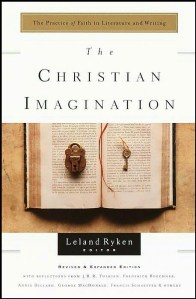
Excerpt from Chapter 1 “Christian Poetics, Past and Present” by Donald T. Williams in The Christian Imagination, Leland Ryken, Ed.
While the doctrine of sub-creation was created to explain certain features of fantasy literature, it is applicable to many other genres as well. Even in the most “realistic” fiction, the writer creates a world, peoples it with characters whose actions give its history significance, and determines the rules of its nature. And usually there will be a hero, a villain, a conflict, and some sort of resolution (which Tolkien called eucatastrophe), so that the secondary world echoes the primary creation in more ways than one. The hero, at great personal sacrifice, defeats the villain and rescues the damsel in distress, and they ride off into the sunset to live happily ever after: this basic plot we keep coming back to is salvation history writ small, as it were. As [Michael] Edwards says, literature is “drawn” towards a biblical reading of life. . . .
In 1941, Dorothy L. Sayers provided a detailed analysis of that creative process in The Mind of the Maker. She developed the relevance of the imago Dei for understanding artistic creation explicitly in trinitarian terms. In every act of creation there is a controlling IDEA (the Father), the ENERGY which incarnates the idea through craftsmanship in some medium (the Son), and the POWER to create a response in the reader (the Spirit). These three, while separate in identity, are yet one act of creation.
(quoted from pg. 16, bold emphasis mine)
About the book:
The Christian Imagination brings together in a single source the best that has been written about the relationship between literature and the Christian faith. This anthology covers all of the major topics that fall within this subject and includes essays and excerpts from fifty authors, including C. S. Lewis, Flannery O’Connor, Dorothy Sayers, and Frederick Buechner.
__________________________________________
Work Cited:
Williams, Donald T. “Christian Poetics, Past and Present” in The Christian Imagination. Leland Ryken, Ed. Colorado Springs, CO: WaterBrook Press, 2002. Print.
Fun Friday: Why do cats love boxes so much?

Not being a cat person, I really don’t get cats’ fascination with cardboard boxes of every shape, form, and size.
#TBT Post: When is backstory just backstory?
.
Throwback Thursday Post of the Week:
When is back story just back story?
Originally posted: May 27, 2006
A couple of months ago, I was so excited about being finished with my thesis novel, the contemporary romance Happy Endings, Inc. so that I could concentrate on writing the first part of my historical trilogy, Ransome’s Honor. I have several people who’ve been reading RH as I’ve written it—each bugging me for another installment. But even though I’ve had some extra time on my hands, I just couldn’t bring myself to sit down and continue writing “Part One”—what I thought was going to be the first half of the novel focusing on Julia and William as children and what shaped them to be the adults we meet in 1814 (where I originally started writing the story).
And I finally admitted: Even I’m not that interested in delving into all of the minutia of the first trip to Jamaica, what happened on the ship, or what happened once they arrived in Jamaica. I’ve worked out in synopsis format what happens, because that’s important to who they are as adults twenty years later. But trying to weave ten-year-old Julia’s and fifteen-year-old William’s stories together in 1795 is making it harder and harder for me to figure out how to have Julia feel animosity toward him in 1814.
Because I’m a “seat of the pants” writer, one of the hardest things for me is to have people reading my writing as I’m doing it, especially right in the beginning, because I’m never sure until I’m about halfway through exactly where I’m going. But I’ve come to the decision that I need to scrap Chapters 2 through 4 (well, the three pages I’ve written of Chapter 4) of “Part One,” and just use the first chapter as a prologue. Then, with everything I have learned about Julia and William from this back story/character exercise, I will revise the existing nine chapters of the part starting in 1814 and just move forward from there.
I can tell this is the right thing to do; I’m excited about getting started and have been thinking about the story all day as I’ve run errands around town, and that’s something I haven’t done in a very long time (the thinking about the story, not the running errands)!
_____________________________________________
May 8, 2014:
Wow, that was SO long ago! In May 2006, I’d been working on the Ransome idea for about a year. When I started it in May 2005—as something I dashed off to submit for workshop critiques at the June 2005 Residency (one week of on-campus workshops and seminars at the beginning of each term) of my grad program—I was planning on trying to write it as a category-length romance and pitching it to Love Inspired and/or HeartSong Presents. Obviously, a year later, I’d realized that the story had so much more going on in it than would fit in 50–75,000 words and knew it would be a trilogy . . . yet at this point, I hadn’t even finished the first draft of it.
In thinking that I might try writing some Ransome novellas this year, I’ve recently gone back and revisited those chapters focusing on William and Julia as children—and I’m so happy I came to this realization early on and scrapped plans to spend half of the first book with them during that time. I decided that I didn’t even want to make a prequel novella out of it!
I mentioned, back in 2006, that I’d use the first chapter as the prologue in RH. Well . . . that book does have a prologue, but it isn’t the backstory I wrote about in this post. You see, it wasn’t until almost two years after this, when Harvest House was looking at the Ransome series to consider publishing it, without a prologue in RH, that I was asked to add one—one that would help the book start with Julia in a happier frame of mind than she is when we meet her in her first scene in chapter one (when she’s homesick for Jamaica). I thought I’d just pull up this “childhood” chapter and slap it on and be done with it. But when I went back and re-read it, it didn’t work for me then, either. That’s when I decided to write about when Julia and her mother visited England during the short-lived Peace of Amiens in 1802—and, wham!, I discovered the NEW backstory between Julia and William at ages seventeen and twenty-two was much more interesting and added a whole new layer to their relationship and the conflict between them, and that’s why we now have the existing prologue to the story.
But if you’re really curious, you can read the first part of that original, unused, backstory here.
Wordless Wednesday: Half the Cast for a New Historical Romance Series Idea


 KayeDacus.com