Top Ten Writing Tips–Tip #1: FINISH YOUR FIRST DRAFT
Originally posted as Top Ten Writing Tips: Tip #1 on May 10, 2010.
The members of Middle Tennessee Christian Writers asked if, for our May meeting last week, I could present “Kaye’s Top Ten Writing Tips” as the workshop topic. Having been forced by a blog interviewer to come up with five (thanks, Regina—I usually only have to do one, maybe two) tips, I agreed, thinking it would be easy to come up with an additional five. Well . . . it wasn’t as easy as I anticipated—especially since I wanted to make sure I had “experts” to back me up on all of them.
And since I went to that much work, I figured they’d make a nice blog series. So, over the course of the next couple of weeks, you’ll be treated to Kaye’s Top Ten Writing Tips.
Kaye’s Writing Tip #1. FINISH YOUR FIRST DRAFT.
 As I just mentioned in a class on writing opening hooks, don’t stress out about perfecting your opening hook before you have your entire story written—until you get to the end, you don’t really know what your story is about, no matter how detailed your outline/synopsis is.
It’s all well and good if you can write great openings, three to five great chapters. It’s fantastic if you can win contests with them. But if you never actually finish a manuscript, winning contests is all you’re ever going to be able to do.
You’ll never know how to write the beginning of a novel until you write through to the ending of it. You don’t know what hints/clues/red herrings you need to incorporate. You don’t know what themes are going to be important to introduce early. And you don’t know what secondary characters or subplots are going to come into play that need to be worked into the beginning of the novel.
In The Art of War for Writers, James Scott Bell wrote:
Finish your novel, because you learn more that way than any other.
Some writers tinker over their words endlessly, perhaps fearing the end result. It might stink.
Yes, it might. But it’s the only way you’re going to get better.
Finish your novel.
(Bell, p. 65)
As an unpublished writer, how will you know if a story has enough plot, enough conflict, to sustain an entire 80–100,000-word novel unless you write the whole thing? The only way you learn how to write a novel is by writing a novel. You’ll never be a professional author if all you ever write are snippets and snatches and opening chapters.
Instead of getting so wrapped up in going back and trying to “perfect” what you’ve already written, when you sit down for your writing time, don’t do anything more than re-read and possibly do a light revision on what you wrote yesterday, but then move forward. Try to push yourself to write a few more words today than you wrote yesterday. In War, Bell encourages writers to “write hard, write fast” when you’re writing your first draft. By pounding out the story in a shorter amount of time, you stay in its slipstream much more easily—the story takes on a life of its own and compels you to write it.
Obviously, this requires writing every day. If you want to be a professional (i.e., published) author, you must treat writing as your profession (even if it’s a second, third, or fourth profession in addition to a full-time job, spouse, and kids). “A surgeon can’t refuse to operate because he’s upset over the Lakers game last night,” Bell writes. “A criminal defense lawyer can’t ask for a continuance so he can go to the beach and dream of someday getting a client who’s actually innocent. And a professional writer can’t sit at the computer playing Spider Solitaire, waiting for a visit from the Muse. A pro is someone who writes, whether inspired or not, and keeps on writing. . . .”
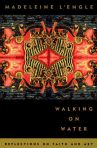
Madeleine L’Engle put it this way in Walking on Water:
We must work every day, whether we feel like it or not, otherwise when it comes time to get out of the way and listen to the work, we will not be able to heed it.(L’Engle, p. 24)
.
Bell gives quite a few examples of authors who put the “write hard, write fast” principle to work:
- “William Faulkner wrote As I Lay Dying in six weeks, writing from midnight to 4 a.m., then sending it off to the publisher without changing a word. (You’re not Faulkner by the way.)”
- Ernest Hemingway wrote The Sun Also Rises also in six weeks, part of it in Madrid, and the last of it in Paris in 1925.
- From 1953–1954, John D. MacDonald produced SEVEN novels of high quality. Over the course of the decade, he wrote many more superb books, including The End of the Night and Cry Hard, Cry Fast. MacDonald quelled a critic (who said he should give up writing “paperback drivel” and write “real fiction”) by saying in thirty days, he could write a novel that would be published in hardback, serialized in magazines, selected by a book club, and turned into a movie. The critic laughed and bet him $50 he couldn’t. MacDonald went home and, in a month, wrote The Executioners. It was published in hardback by Simon & Schuster, serialized in a magazine, selected by a book club, made into a film in 1962 that continues to garner acclaim (and remade in 1991): Cape Fear.
- Ray Bradbury wrote Farenheit 451 in nine days on a rented typewriter. He had a newborn at home so he needed somewhere else to work. He had no money for an office. But UCLA had a room in the basement of the library with 12 typewriters for rent at ten cents per half hour. $9.80 later, Bradbury had written his famous “dime” novel.
- Jack London would shut himself in a room and write, sometimes for up to eighteen hours a day. He filled a trunk with rejections. But he was learning. When he died at the age of forty, he was one of the most prolific and successful writers of all time.
- Stephen King says he used to write 1,500 words a day every day, except his birthday and the Fourth of July.
(Bell, pp. 77–83)
.
For discussion:
What is the shortest amount of time it’s ever taken you to complete a manuscript? How many manuscripts have you finished (written through to the ending)? How long did it take you to finish your first full-length manuscript? Why do you think it’s important to finish your first draft?
.
__________________________________________
Works Cited:
Bell, James Scott. The Art of War for Writers: Fiction Writing Strategies, Tactics, and Exercises. Cincinnati, OH: Writer’s Digest Books, 2009. Print.
L’Engle, Madeleine. Walking on Water: Reflections on Faith and Art. Wheaton, IL: Harold Shaw Publishers, 1980. Print.
It’s the First Monday of the Month–Time for Reading Reports! (09-14)
Happy First Monday of September, everyone.
It’s Reading Report time!
Open Book by Dave Dugdale
.
Tell us what you’ve finished over the last month, what you’re currently reading, and what’s on your To Be Read stack/list. And if you’ve reviewed the books you’ve read somewhere, please include links! (To format your text, click here for an HTML cheat-sheet. If you want to embed link your test (like my “click here” links) instead of just pasting the link into your comment, click here.)
.
- What book(s) did you finish reading (or listening to) since the last update?
- What are you currently reading and/or listening to?
- What’s the next book on your To Be Read stack/list?
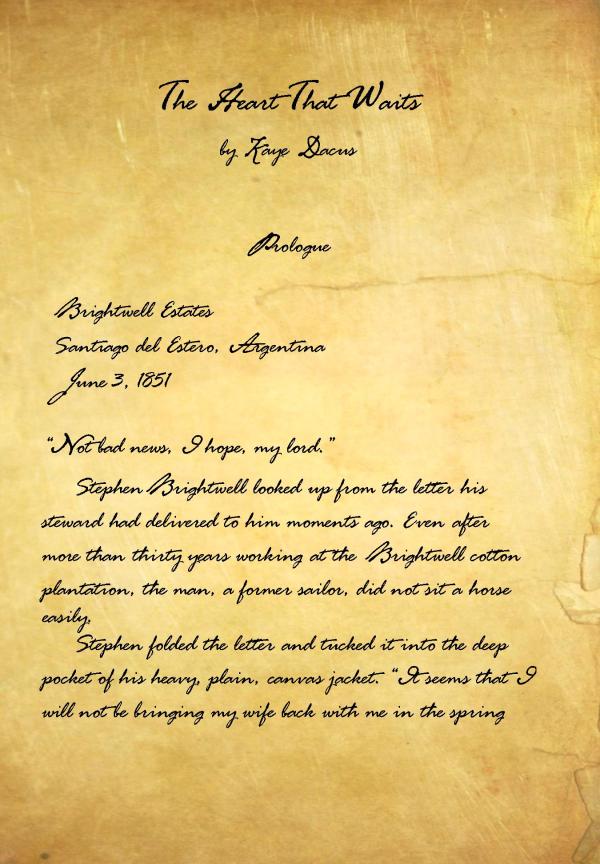
The Great Exhibition Series: “The Lost Prologue”
I’ve had a bunch of people contact me to ask if there will be a third book in the Great Exhibition series. As of right now, the answer is, unfortunately, no.
But here is the “lost” prologue—part of what I’d written before my contact was canceled. Click the image to bring up the full PDF version.
What I Have in Common with George R.R. Martin
I discovered today that I’m not alone in how I feel about writing a first draft vs. rewriting/editing:
“I enjoy rewriting much more than I do first drafts. Rewriting, at least you have something to work with. I find writing first drafts extremely difficult.”
– George R.R. Martin
Read more about what the inimitable Mr. Martin, along with fantasy author Robin Hobb, have to say about writing here: These Writing Tips From George R.R. Martin And Robin Hobb Are Just Epic on BuzzFeed.

George R.R. Martin and Robin Hobb | Image via Daniel Dalton / BuzzFeed
What are you reading? (August 2014)
Open Book by Dave Dugdale
It’s the first Monday of the month, and you know what that means . . .
Book Reports!
Tell us what you’ve finished over the last month, what you’re currently reading, and what’s on your To Be Read stack/list. (And if you’ve reviewed the books you’ve read somewhere, please include links!)
.
- What book(s) did you finish reading (or listening to) since the last update?
- What are you currently reading and/or listening to?
- What’s the next book on your To Be Read stack/list?
EVERYWHERE is a good place to brainstorm a story!
I’ve told the story in workshops and writers’ groups before, but I don’t know if I’ve ever shared it here.
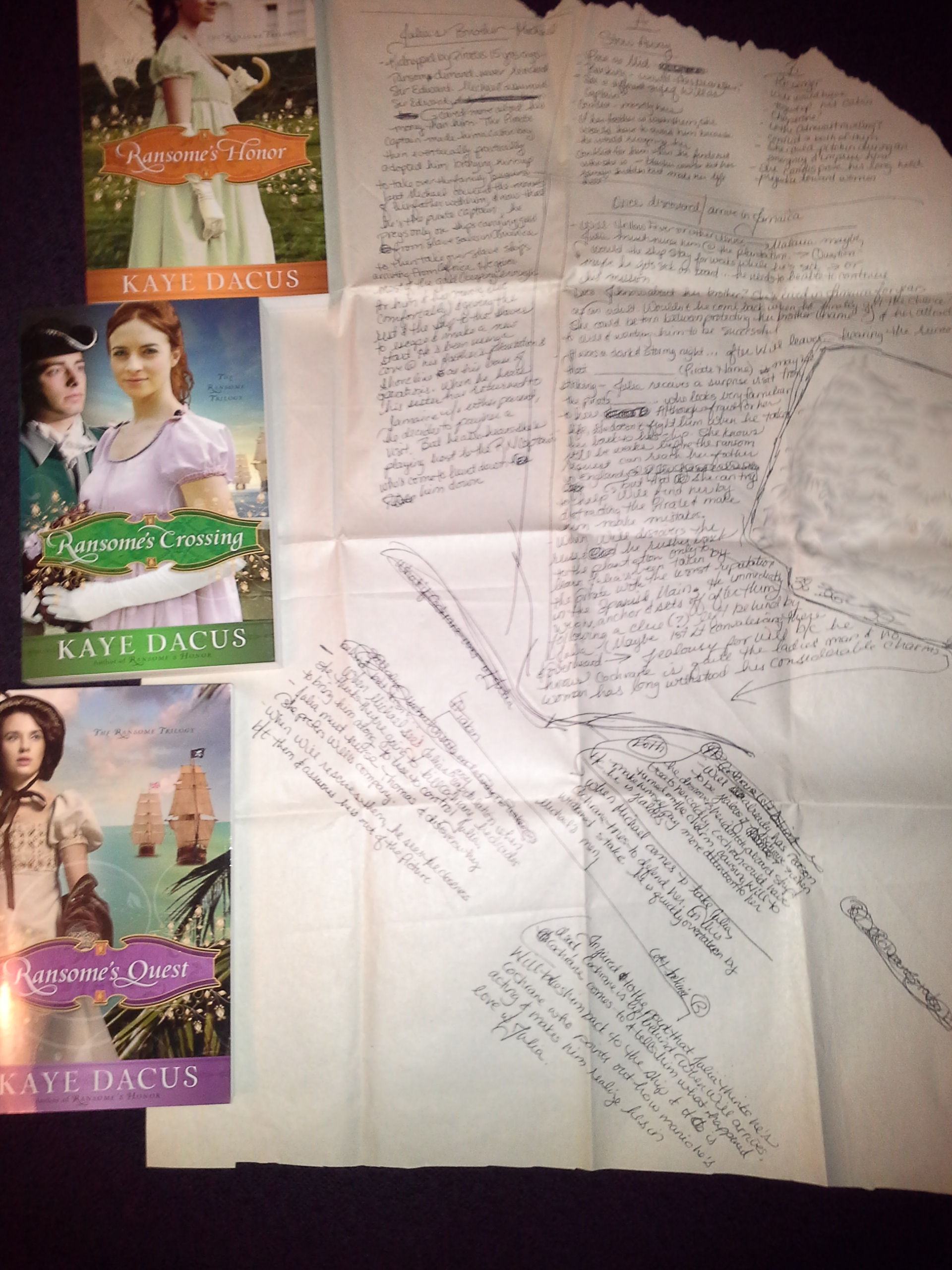
When I was first working on the germ of the idea for what would become the Ransome Trilogy, I wasn’t sure exactly where the story was going, who would be involved, or even how long the story would be.
Back in May 2005, most of my extended family were in Baton Rouge for a family wedding. We’d all gone up to the Saturday Night “Southern Gospel Service” at my grandmother’s church for supper and to hear one of my cousins and his wife sing, along with my aunt who was part of the group who sang every week.
After dinner (on long banquet tables covered with butcher paper), they lowered the lights and the music started. Now, anyone who knows me knows I love music. So it’s not that I wasn’t enjoying myself. But, being a visual person, I start to get restless when just sitting and listening to music (even when I can see the people singing). I’d already written the first chapter of Ransome’s Honor (most of it has since been cut) for a workshop at grad school the next month. So I’d been playing with the story idea for a while.
At that point, I had two conflicting ideas running through my head of how to (a) get William and Julia together and (b) get Julia back to Jamaica and away from her scheming relatives. The first idea was to have her stow away on William’s ship disguised as a boy; the second was to have her propose a “marriage in name only” which could later be annulled if he wanted. If you’ve read Ransome’s Honor and Ransome’s Crossing, you know how I ended up using both of those scenarios.
Because I’m a writer, I always carry at least one writing utensil with me. And there I was, sitting at a table with a HUGE expanse of blank paper in front of me. So I started jotting down notes. It started with an A/B list—Stow Away on one side, Marriage of Convenience on the other. And it just grew from there.
Well, in the past nine years, I thought maybe I’d lost it or accidentally thrown it away. But tonight, in digging through my files for something else, I found it. So here it is in all its glory!
What Are You Reading? (July 2014)
Open Book by Dave Dugdale
It’s the first Monday of the month, and you know what that means . . .
Book Reports!
Tell us what you’ve finished over the last month, what you’re currently reading, and what’s on your To Be Read stack/list. (And if you’ve reviewed the books you’ve read somewhere, please include links!)
.
- What book(s) did you finish reading (or listening to) since the last update?
- What are you currently reading and/or listening to?
- What’s the next book on your To Be Read stack/list?
What Are You Reading? (May and June 2014)
Open Book by Dave Dugdale
It’s the first Monday of the month, and you know what that means . . .
Book Reports!
And I just realized that I forgot to do this post in May, so we’ve got two months’ worth of books to catch up on!
If you’ve challenged yourself to—or even officially signed up for—a reading challenge in 2014, now’s as good a time as any to start reporting your successes. Tell us what you’ve finished over the last month, what you’re currently reading, and what’s on your To Be Read stack/list. (And if you’ve reviewed the books you’ve read somewhere, please include links!)
.
- What book(s) did you finish reading (or listening to) since the April update?
- What are you currently reading and/or listening to?
- What’s the next book on your To Be Read stack/list?
Fun Friday–Can You Guess the Theme?
I just started reading this book:
 Chosen to help Robert the Bruce in his quest to free Scotland from English rule and claim his crown, the legendary team of warriors known as the Highland Guard battles on.
Embedded deep behind enemy lines, Arthur “Ranger” Campbell is prized for his razor-sharp senses and his ability to blend into the shadows. But when Arthur infiltrates the clan of the chieftain who murdered his father, his heart is locked on revenge. Inside he faces unexpected resistance from the sweetest of obstacles—a honey-haired siren who is his enemy’s daughter.
Intrigued by this ruggedly handsome newcomer to her father’s forces, the vivacious, enchanting Anna MacDougall is a woman whose skill at uncovering deception rivals Arthur’s own. Though yearning for a quiet life with a good man to love, Anna is drawn to this mysterious knight whose eyes devour her but whose words push her away. As danger, treachery, and the threat of looming war draw them closer into each other’s arms, a warrior made of steel must make a choice from the heart: love or revenge.
.
I just picked this book up at the library and hope to read it while I’m off work next week:
 In the pre-dawn hours of August 24, 1305 a.d., in London’s Smithfield Prison, the outlaw William Wallace, who is to be executed at dawn, is visited by a Scottish priest who has come to hear his last Confession. So begins The Forest Laird, the first book in Jack Whyte’s masterful new trilogy.
Wallace’s story leads us through his many lives—as an outlaw and a fugitive, a hero and a patriot, a rebel and a kingmaker. He is the first heroic figure from the Scottish Wars of Independence brought blazingly to life in Jack Whyte’s new trilogy, the Guardians, and will be followed by his two compatriots Robert the Bruce, King of Scots; and Sir James Douglas, known as The Black Douglas. Their exploits and escapades, desperate struggles and medieval savagery, high ideals and fierce patriotism are the stuff of legends, and the soul and substance of these epic novels.
(I actually wanted the one about Robert the Bruce, but it was checked out and had a long waiting list.)
.
I recently downloaded these books to my Kindle:
 Get swept away by the romance of the Highlands in three historical romance novellas from Harlequin!
Brenda Joyce – The Warrior And The Rose
- Lady Juliana MacDougall prays for her loved ones to survive battle against Robert Bruce… but the battle comes to her when her lands are attacked by a band of Highlanders, including a man wearing the colors of her clan’s worst enemy. Taken hostage by Alasdair Og, Juliana quickly learns he’s as exceptional a lover as he is a ruthless warrior. But how can she ever love Alasdair when he’s her blood enemy?
Terri Brisbin – The Forbidden Highlander (The MacLeries #6.5)
- Honor-bound by an arranged betrothal, James Murray never anticipated falling in love with his intended bride’s dearest friend instead. The passion between James and Elizabeth MacLerie is undeniable, but they are torn between love and loyalty to their clans…
Michelle Willingham – Rescued By The Highland Warrior (MacKinloch Clan #3.5)
- Celeste de Laurent is determined to never again live in poverty. After sacrificing love for a secure marriage, she now stands to lose everything as a widow. Her only hope is to bear an heir – and what better man to father her child, and save her from a terrible fate, than Dougal MacKinloch, the only man she ever loved?
.
 At the end of the 13th century, the people of Scotland suffered cruelty under the heavy hand of their English ruler, Edward Longshanks. This stirring tale recounts their valiant struggle for freedom under the legendary leadership of William Wallace and Robert Bruce. Time has burnished the feats of these great Scots heroes to mythic proportions, but both were real people, and this gripping tale of courage, loyalty, and ingenuity places its fictional protagonist alongside Wallace and Bruce within an accurate historical context.
.
.
.
.
And I recently posted this image on the blog:

Yes, there are seven of them (though they are not all “tall as church steeples”). Aside from all of them being terribly good looking, they have something else important in common.
.
Anyone care to venture a guess as to why I seem to be stuck on a certain theme at the moment?
(A few people already know from participating in the comments-conversation that happened when I posted the Sexy Scotsmen image a couple of weeks ago, so I know this isn’t completely unknown to everyone out there.)
#TBT Post: Does it matter what Jane Austen looked like?

.
Throwback Thursday Post of the Week:
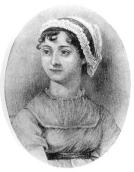
Does it matter what Jane Austen looked like?
Originally posted: April 1, 2007
I don’t usually post on Sundays, but my mom forwarded this link to me. It’s a nice op/ed piece on Jane Austen and if what she looked like and what she was like as a person have any effect on how we read her novels:
“It is a failing to read Shakespeare and feel impoverished by the lack of biographical detail. It is no less a failing to read Austen and wonder what the mirror said when she looked into it. I cannot think of anything that would make Emma richer than it is.”
Verlyn Klinkenborg, The New York Times, April 1, 2007
It’s interesting that this essay should appear in the NY Times today. I recently read another article (from the British Guardian) where the writer poses the idea that publishers are as concerned about what an author looks like as they are with the quality of the writing.
“Amid the pile of first novels in front of me, a handful of author photos proves her point: Ivo Stourton looks as if he has stepped out of Brideshead Revisited, snapped outside a sunny villa. His publisher makes much of his youth and Cambridge education. And an A4-sized photograph of a smiling Priya Basil slips invitingly out of the review copy of her novel as if to win favour.
That is not to imply that this is a talent contest—only that everything counts.”
Kate Kellaway, The Observer, March 24, 2007
This is an area long debated by literary critics—and something I had to learn about as an undergrad in my Literary Criticism course. Is it possible to separate the author from the work? The theories of literary criticism are vast and wide—and very similar to the theories of philosophy . . . and some are rather along the lines of “If a tree falls in the forest…”
For example: Is a poem good because of the response that readers have to it, or is it good because it has the potential to create a response in readers? Does the author lose authority over his/her writing as soon as someone else reads it (reader as authority)—in other words, does it matter with what intention an author writes something, or is it only what the reader gets out of it that means anything?
Wow—this has made me dig out my notes from that class, which was one of my favorites.
So let me as you—when you read, do you find out everything you can about the author? Do you try to figure out what the author is trying to say or do you read it looking only for your own interpretation of it? Does knowing about an author’s personal life enhance or detract from your reading experience?

 KayeDacus.com