Writer-Talk Wednesday: “Say What?”—A Series About Dialogue | #amwriting
- Since 99% of writers are readers, we all know when dialogue “works” and when it doesn’t when we read it. We just may not be able to put our fingers on exactly what it is that makes it work or not. Well, that’s what we’re going to try to figure out in this series.
more…
 “Say What?” How Do You Say Hello?
- When you speak, the words you choose, the inflection you use, your body language, the rhythm of how you speak, and the accent which shapes what your words sound like are a reflection of who you are. Without even realizing it, you have certain idioms and metaphors you use all the time in your speech.
more…
“Say What?”—Uh, Um, Well, So, Wow, Great, Yeah, Really?
- If you were to read a dialogue exchange between two people talking off the tops of their heads, you would begin to feel overwhelmed by the number of times “uh” shows up—because it’s the filler we use when we have to give our brains a moment to catch up with our mouths to supply us with the proper words or thoughts.
more…
“Say What?”–Transcribed Dialogue Assignment
- Okay, today is the day for us to compare our transcribed conversations with actual scripted dialogue to mark some differences.
more…
“Say What?”–Where Do I Put the Quotation Marks?
- Where quotation marks come in relationship to other punctuation can be rather tricky, especially if you’re like me and you read not just American-published stuff, but British and Australian as well. If you’re outside of the U.S. reading this, please understand that the rules I will refer to apply to standards of American publishing. Also, this will focus on the use of quotation marks in fiction/prose writing.
more…
“Say What?”–A Delicate Balancing Act
- Remember back at the beginning of the series when I posted the scoring guidelines for several different contests? Most of them required a “balance” between narrative and dialogue as the mark of good writing. But what is this balance, and how do we know when we’ve achieved it?
more…
“Say What?”–What Direction Is Your Dialogue Going?
- If you don’t take away anything else from this series, one of the most important things we have to learn about dialogue is that in a novel, dialogue must impact the story and the story must impact the dialogue. The plot(s) and conflicts of the story are what should drive the dialogue so that what your characters say pushes the story forward.
more…
Fun Friday–Favorite Movies/TV for Dialogue
- While these may not be some that are considered the “best” when it comes to dialogue (I’ve always heard that Woody Allen’s movies are great for this, but I’ve never been able to watch one all the way through), when I start thinking about movie/TV lines that get stuck in my head, these are the top ones…
more…
“Say What?”–Is It Dialogue-Worthy?
- “How do you know if a moment should be translated into dialogue or not?” Last week, I started to answer this when I said, “Don’t write the small stuff.” In “Dialogue: The Lifeblood of the Mystery Story” (The Writer, October 2008, pp. 30–33), William G. Tapply puts it this way: “Don’t be afraid to summarize any hunk of dialogue that you think readers may be tempted to skip.” . . . Here are some guidelines to apply to your scenes to try to figure out if something needs to be summarized or if it needs to be shown through dialogue.
more…
“Say what?” she intoned incredulously.
- Yes, that’s right. Today’s topic is on dialogue tags.
more…
- The basic definition of subtexting when it comes to dialogue is that the character is saying one thing and thinking something totally different.
more…
“Say What?”–Character Quirks & Non-Verbal Dialogue
- I . . . wanted to wrap up the series with a look at how dialogue can make our characters unique and how we can use unspoken “dialogue” to deepen our characterization, tension, and plot.
more…
If you like the content on KayeDacus.com and would like to keep it available for free, please consider donating at https://www.gofundme.com/keep-content-free-kayedacuscom. Thanks!
The Business of Writing: Networking = Name Recognition = Marketing | #amwriting #writingbiz
 Introducing a new weekly feature! I post a lot about the craft of writing fiction and the emotion – inspiration – creativity of writing/being a writer, but not a lot about the business side of the profession. So every Tuesday, I’ll be tackling a topic that focuses on the Writing Biz—what it means to be a professional writer beyond just putting words on a page. I’m going to start out gently—for both you and me—by writing about something I already know a bit about: Networking.
__ __ __ __ __
In talking to a friend about the concept of “networking,” she mentioned that one of the things she is doing is participating in a genre-specific group blog where she is gaining name recognition, but that she isn’t sure that it is networking.
I’m building name recognition, but is it networking?
Building name recognition is a major part of both networking and marketing! Because the three work hand-in-hand. This is why we write blogs, why we participate in local writers’ groups (aside from the fellowship, knowledge, and support of other writers), why we volunteer to help out with contests and “group management” type tasks with our writing groups, and why we walk up and introduce ourselves to published authors, editors, or agents at conferences. We want name recognition.
How can networking and building name recognition be the same thing?
Many years ago, I used to joke that I was one of the best known unpublished authors in Christian-fiction publishing circles—I was heavily involved in the American Christian Fiction Writers national organization, first as an active member, then as an officer for several years. This was helped along by several things, some of my doing, others because I actively networked, both as a writing-group member and a writing-group officer. I participated in the email loop and forums (this was pre-Facebook days, but now I participate in several writing-related Facebook groups), and thus the other members knew my name, and many considered me a mentor, even before I was published. As an officer, I worked with the most prominent editors and agents in Christian publishing through several of the projects I was involved with, not the least of which were the contest for unpublished authors and the annual national conference. This meant that I not only had contact with them through email/phone calls before conference, but also had every reason to walk up and start talking to them at conferences or book shows (like ICRS) because I was building a professional relationship with them. By the national conference the year that I was VP of ACFW, I actually had editors and agents ask me when I would be pitching something to them!
But something I couldn’t have planned, but which also gave me name recognition—not necessarily writing related, but still name recognition—happened because I was networking with other authors. At the first ACFW national conference in 2002, I got to know Brandilyn Collins, one of the preeminent CBA authors at the time, and just a fun person to be around. It just so happened on our last night there, as a bunch of us were hanging out in the restaurant/bar at the hotel, another patron decided he wanted to have a bit of fun and walked over to our table and kissed someone on the cheek—ME! It was fun and funny and we joked that I would go down in the lore of the stories that are told about ACFW conferences.
What I didn’t know is that for a couple of years after this, Brandilyn was still telling this story about me. When she came to Nashville with the Zondervan book signing tour a couple of years later, almost as soon as I walked into the bookstore, I was practically mugged by this tall man I’d never seen before in my life who wrapped me in a huge bear-hug and kissed me on the cheek. Well, he turned out to be James Scott Bell who’d been told the “kissing bandit” story at lunch by Brandilyn, who knew I would be there. (And is JSB’s name one that you recognize? It should be.)
What can networking/name-recognition do for me, really?
Through networking (and because he already knew my name before we met face to face—through my work with the writing organization), I knew my agent for years before he became my agent. Same with the acquiring editors at the two publishing houses my first two series were published by.
Networking builds name recognition and name recognition translates into marketing—because a recognized name is a brand. Think about it. John Grisham. Tom Clancy. J. K. Rowling. Nora Roberts. Amazon.com has a feature on their website where you can “follow” your favorite authors to receive notifications of their upcoming releases so you can preorder their books. If these authors didn’t have name recognition (to you), you wouldn’t know to follow them, would you? And remember, at one point in time, all of the authors I mentioned above were unpublished writers trying to break into print. Now people buy books simply because their name is on the cover as the author.
Granted, their name recognition has come through selling millions of books; but for those of us trying to break into an over-saturated publishing market, building a following by networking ahead of time, getting our names out there, marketing ourselves pre-publication is vitally important when it comes to first convincing a publisher if they buy our novel it will sell, and then parlaying that into sales and royalties after the book hits the streets. And not only will you have built-in readers eager for your book to come out, but you will have influencers—readers willing to read your book ahead of time and market it through reviews and word of mouth; and endorsers—published authors willing to put their “seal of approval” on your book with a quote about what a wonderful author you are and how fabulous your story is.
Caveat: Networking—like social media—is not something that should impinge upon the time that you need to be writing. Remember the formula: 90% of your time writing, 10% of your time doing everything else related to the Writing Business. But these are the kinds of things to be thinking about now to start learning about and trying out slowly before you’re suddenly thrust into it once you complete your manuscript and are ready to start pitching it at conferences.
Think about everything you do and all the ways in which you are involved communities where you are building your name as a writer working toward publication. How are you networking and building name recognition?
Books Read in 2017: ‘Claiming the Duchess’ by Sherry Thomas (Romance Short Story, 3.5 stars) #amreading
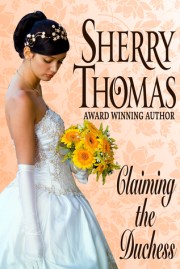 Claiming the Duchess (Fitzhugh Trilogy 0.5)
by Sherry Thomas
Genre: Historical Romance (short story)
My rating: 3.5 stars
Book Summary:
Clarissa, the widowed Duchess of Lexington, has two great loves: the reticent and reclusive Mr. James Kingston and her faithful correspondent Miss Julia Kirkland, whom Clarissa has never met.Now both Mr. Kingston and Miss Kirkland are due to arrive at Clarissa’s house—and Clarissa is about to find out that nothing of either is as she has been led to believe…
A story of longings–and longings fulfilled.
My GR Status Update(s):
03/06. . .Currently Reading
03/06. . .Finished Reading
My Review:
3.5 stars
I had this on my “novella” list in GR—because I’m supposed to be reading/analyzing “novellas” this year as part of my professional development toward writing my own.
However, with everything that I know about what constitutes the difference between short stories (up to 10k words) and novellas (approx. 10k to 35k), I’d say this one is a short story, not a novella.
According to the technical information for the book, it’s 24 print (45 Kindle) pages long. If you take the age-old formula that a print page is approximately 250 words, that means this story is only around 6,000 words. Which puts it squarely in short-story territory (i.e., under 10k words).
Is that a bad thing that it’s a short story? No . . . technically. I have nothing against short stories. In fact, I read another short story (fantasy) right after this one and thoroughly enjoyed it.
I liked the idea of this story (even though I’d figured out the “twist” a few pages into it). It was the execution of the story that didn’t work for me in this short format. You see, there was no conflict. There was a meet. There was a happily ever after. But there was no rising tension. No relationship development. No conflict. No dark moment. Nothing to really make me care about either of these characters.
When reading romance, yes, I know going into it that the two main characters are going to end up together (even if only one of them gets a viewpoint, as in this story). That’s not the main point of reading a romance story. The point of reading a romance story is to see what these two characters have to overcome in order to be together. And in this story, it was . . . not really anything at all.
Even the fact that the hero is a plain “Mr.” while the heroine is a dowager duchess could have been thrown in as a conflict. But nothing is ever even mentioned about the disparity of their social statuses. It was all just too easy.
So why 3.5 stars rather than a lower rating? Because I love Sherry Thomas’s writing style. Before reading this short story, all I’d read of hers (so far) was The Burning Sky, the first book of her YA The Immortal Heights series. (LOVED it—review here.) Because even with all of the issues enumerated above, I sped right through this story, smiling over the zippy dialogue and the sparkling prose. And I devoured the excerpt of Beguiling the Beauty, Book 1 in the Fitzhugh Trilogy that this short story is an introduction to. And I immediately added it to my TBR list.
_______
My rating matrix:
5 STARS = one of the best I’ve ever read
4 STARS = a great read, highly recommended
3 STARS = it was okay
2 STARS = I didn’t enjoy it all that much, not recommended
1 STAR = DNF (did not finish)
#2017WritingGoals: Being Responsible for Your Own Success | #amwriting
 “Being deliberate is owning the responsibility for your success and planning how you will achieve it.”
I read this in a document I edited this past week. Because I edit the text of online courses for graduate school programs, I see lots of stuff about setting goals, time management, and success in specific professional/academic fields. But this line really stood out to me. Because this is what 2017 and our Writing Goals challenge is all about: being deliberate, taking responsibility for our own success, and planning to achieve it.
So here are the questions we should ask ourselves at the beginning and end of every day:
In the morning, ask yourself:
- In what ways can I deliberately work toward my 2017 Writing Goals today?
- What can I do today to take responsibility for creating my own success?
- What is my plan for today so that I can be deliberate, take responsibility, and be successful?
At the end of the day, ask yourself:
- What did I to today that was a deliberate attempt to reach my short-term and long-term 2017 Writing Goals?
- What did I do today in order to create my own success?
- Did I stick to my plan for today? If not, what can I do tomorrow in order to be successful in meeting my plans and goals?
Have a great writing week!
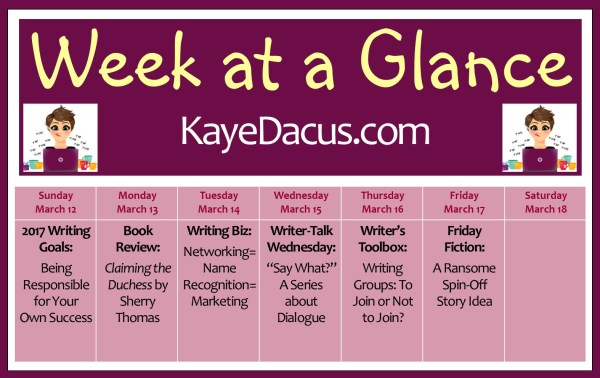
Fun Friday: Her Rebellious Heart (A Ransome Spin-Off #StoryIdea)

Because I’m trying to re-teach myself that writing can be fun, this year, I’m focusing on coming up with new ideas for stories. Does this mean they’ll all get written in novel or even novella form? No guarantees. However, this is a creative exercise that I both need and want to share.
You can read all of the previous story ideas here.
Enjoy!
Working Title: Her Rebellious Heart

Edmund James Cochrane = Liam Hemsworth
Abigail Bradford = Jennifer Lawrence
After a few unsuccessful years as a sailor on a merchant ship as a compromise to joining the Royal Navy and following his Admiral father’s footsteps, Edmund is forced to find some other kind of work to support himself. While his father’s living as an Admiral in the Royal Navy afforded them a comfortable life, it wasn’t enough to ensure each of the seven children an inheritance that would allow them to live comfortably without their own source of income. Knowing that academia is not for him, Edmund instead joins the Metropolitan Police. Because of his outstanding work at infiltrating and bringing down several crime/smuggling rings in London and Portsmouth, in the summer of 1848, Edmund is assigned to find and infiltrate the resurgence of Chartists in order to waylay another violent riot, like the Newport Uprising ten years before.
His entrée into the heart of the movement comes from in a most unexpected form—when he rescues a woman on the street from a runaway carriage. She has been in the process of distributing leaflets about a meeting for “the working men of London,” a common phrase among the Chartists.
Abigail Bradford is, at first, suspicious of the tall young man who literally swept her off her feet—no mean feat, given her own above-average height and sturdy build. He’s a bit cleaner, and bit more nicely dressed, than most of the men that she usually sees at the Chartist meetings. But no one would be able to fake the interest he shows when she tells him about the meeting and invites him to come—fully expecting him not to show up.
But he does come. And Abby can’t keep her eyes off of him . . . and notices his eyes straying toward her more often than appropriate. (Not that she minds.)
Edmund is surprised by the fact that not only does Miss Bradford not feign shyness or pretend she wasn’t observing him, but she doesn’t look away, meeting his gaze evenly and steadily, whenever he looks her way. And he looks her way often enough to almost forget why he’s at the meeting in the first place. But when the main speaker takes the stand and begins to rail about voting rights for all men, for equal voting districts, and pay for members of Parliament, among other things, he is quickly reminded of the job he’s supposed to be performing. He knows his best course of action is to avoid anyone with whom a connection could become complicated by personal entanglement—but he cannot resist seeking out Abigail Bradford after the meeting ends. He tells her his cover story—that he’s new to London and trying to find a like-minded society with which to spend his time. She tells him of a ball at the borough guildhall in two days—and that she’ll save him a dance if he comes.
At the assembly ball, Edmund meets Abigail’s mother and sisters, and discovers that Mr. Bradford died while serving a life sentence at hard labor for being arrested as one of the rioters during the Newport (Wales) Uprising in 1838. Mrs. Bradford invites Edmund for Sunday dinner the next afternoon. There, he learns that Abigail’s mother married her husband’s cousin shortly after her husband’s passing, in order to be able to support her children, and they relocated to London, where the husband works at the docks, unloading coal from barges. Neither he nor Mrs. Bradford are pleased with Abigail’s involvement with the Chartist Movement, but since she is of age and makes a small living of her own as a jeweler’s assistant at a shop near Mayfair, there really isn’t anything they can do to stop her. And they trust that her uncle, her father’s younger brother, will keep her out of harm’s way.
When Abigail arrives at a meeting wearing one of the fine dresses that she usually only wears to work, she is accused of betraying everything her uncle and the other Chartists stand for. Afterward she confesses to Edmund that her position pays her enough that she could have a decent flat in a nicer part of the city than living with her parents near the docks. But she feels she’d be betraying her father’s memory and what he died for if she allows herself to become someone who lives like the Conservatives. But she’s torn. Because she also wants to show her younger siblings that with enough hard work and dedication, they can rise above their current situation, too. That while government reforms are vital, so is self-sufficiency and the willingness to work hard to improve oneself and one’s situation.
It isn’t long before Edmund has completely fallen for the feisty Abigail. Yet he knows he cannot act upon these feelings, or else he’ll put the job he’s here to do at risk. And if he reveals his feeling for Abigail and discovers she returns them, he knows he’ll no longer be able to keep lying to her about his real employment. And there would be nothing to stop her from telling her about him.
One afternoon, Abigail agrees to make a delivery for her employer. The bus she takes on the way home passes by Scotland Yard—just in time for her to see Edmund Cochrane walking out of the building, deep in conversation with a detective inspector Abigail recognizes from his several “sweeps” of the neighborhood where the meetings are held. The last thing she sees before the horse-drawn bus turns a corner is the two men congenially shaking hands.
Every suspicion Abby ever had about Edmund returns full-force, and she realizes what a fool she was for falling for his charm and flirtation.
Abby goes straight to her uncle and tells him what she saw. Her uncle tries to convince her that Edmund is trustworthy—that there’s surely another reason why he’d be meeting with the DI. Or that it was someone else entirely that Abby saw. But she eventually makes him admit that she might be right. That means he needs to call an emergency meeting in order to change the date—but he’ll need Abby to make sure that Edmund doesn’t find out about it in order to attend, as they can’t keep him out of the meeting without letting on that they know he’s spying on them.
Though it’s hard to maintain a pleasant attitude, Abby tells Edmund that she will in fact take him up on his offer of a drive in the country that he made quite some time ago, and conveys the date and time to her uncle. On the drive, Abby can no longer keep up the pretense. She confronts him and forces him to confess. She’s shocked to learn that not only is he a spy but he is also a Metropolitan Police officer and it was his job to find a way into this group of Chartists in order to preempt another uprising like Newport.
Abby insists on returning home—she cannot spend one more minute in his presence. As soon as they arrive, however, her uncle and a group of men are waiting for them and they attack Edmund right there in front of her, despite her protests.
With Edmund’s life in the balance, can Abby forgive his deception, put aside her rebelliousness, and let love reform her heart?
Writing Groups–Yes or No? A Survey
I need your help!
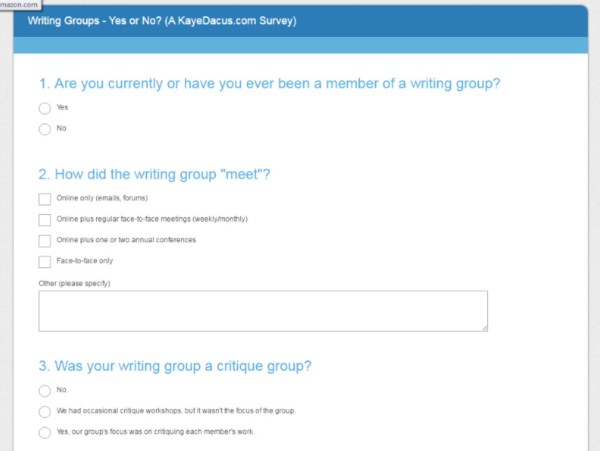
I’m doing a bit of research on writing groups—specifically on the thoughts, attitudes, and experiences of people who’ve been in writing groups. If you have a few minutes, please click the screen-capture image below to fill out a brief (9-question) survey about writing groups.
Thanks!
Writer-Talk Wednesday: Beginnings, Middles, and Endings | #amwriting #2017WritingGoals
- Why are first lines more memorable than last lines?
- Are first lines more important than last lines?
- Why are there so many more books, articles, blog posts, etc., published about writing first lines/openings than there are about writing last lines/endings?
- What’s your favorite last line of a book?
Let’s explore these and more questions about writing the beginnings, middles, and endings of stories.
Finding Your Beginning in “The End”
 (originally published October–November 2014)
There and Back Again: Finding Your Beginning in “The End”
Let’s look at some last lines and discuss whether last lines are as important and memorable as first lines.
more…
Finding Your Beginning in “The End”: Is Writing the Perfect First Line Really a Big Deal?
- How much more time and effort is given to the study and practice of “crafting the perfect opening” of our novels? After all, not only must we intrigue readers with it, but our first few opening lines may also be all that our dream agent or editor might ever read. It’s drilled into our heads over and over and over and over that we must make a good first impression by writing the perfect opening line/paragraph/page.
And there is a lot that hangs in the balance that means we should spend time and energy on crafting our opening lines.
The question becomes WHEN should we spend the time on our openings?
more…
Finding Your Beginning in “The End”: Are You a Trustworthy Writer?
- Have you ever picked up a book, read a few paragraphs, and then put it down (or thrown it down) in disgust or disappointment because there was a historical error or a page and a half of backstory or head hopping? What happened is that you discovered you couldn’t trust the author.
more…
Finding Your Beginning in “The End”: Dreaming of Writing a Perfect Opening
- One of the most tempting things for beginning writers—and one thing absolutely certain to flag them as newbies—is to take the instruction to “open with a bang” as permission to generate a hugely intense and captivating opening by throwing the readers into the middle of the character’s dream.
more…
Finding Your Beginning in “The End”: The Importance of Finishing Your First Draft
- More than going to conferences, more than reading how-to books to help you learn about the craft of writing, more than anything else you can do, finishing your first draft teaches you how to write. It also lets you know what you need to go back and change in the beginning of your manuscript.
more…
Finding Your Beginning in “The End”: Ending Your Beginning
- No matter how meticulously you’ve plotted and pre-planned your story, new scenes, new plot ideas, new characters crop up as you write. So much of our creativity comes from our subconscious processes that our stories at times seem to take on a life of their own—we become a conduit for the story that’s taking shape on the page, and we’re almost like spectators watching a movie or reading someone else’s book. And these new ideas and twists can change the tone, theme, or even plot of the story once you get to the end. How can you weave setups for these new scenarios into the opening scenes when you go back for revisions?
more…
If that series wasn’t enough to get you started, here are some others I’ve written about beginnings, middles, and endings:
First Lines
(originally published April 2007)
- Famous First Lines
Not-so-Famous First Lines
What’s the Big Deal about First Lines?
A Last Word about First Lines
Middles
- Storyboarding to Avoid the Sagging Middle
Hooking the Reader: Scene Two, Take Five
Hooking the Reader: That Scene Is a Disaster!
Hooking the Reader: “To Be Continued . . .”
Hooking the Reader: Facing the Consequences
SCENE IT: 1-2-3 Blast Off! Crafting Out-of-this-World Scene Launches
SCENE IT! Is there a bit of tension in here?
SCENE IT! Complicate Your Characters’ Lives
SCENE IT! Hooking Your Reader with Scene Endings
SCENE IT! Consequences and Rewards (a.k.a., Scene and Sequel)
Endings
BookBub: For Authors? For Readers? For Both?
 If you’re anything like me and you pretty much live under a rock most of the time, you may have heard of BookBub but you haven’t actually used it. A year or so ago, I clicked on a link to it once because someone mentioned they’d seen in their BookBub update that a few of my books were on sale for $0.99. But when I got to the page and saw that the first thing facing me was a screen that wanted my email address before I could even browse the site to see if I wanted to use it, I clicked right back out.
But I’ve been hearing more and more about it as a great place not only to find deals on ebooks by authors I love, but to find new-to-me authors I might love. So, using the email address I always use for things I might get spammed by (it’s a Gmail address instead of my main addy), I went ahead and signed up. At their suggestion, I started “following” some of my favorite authors.
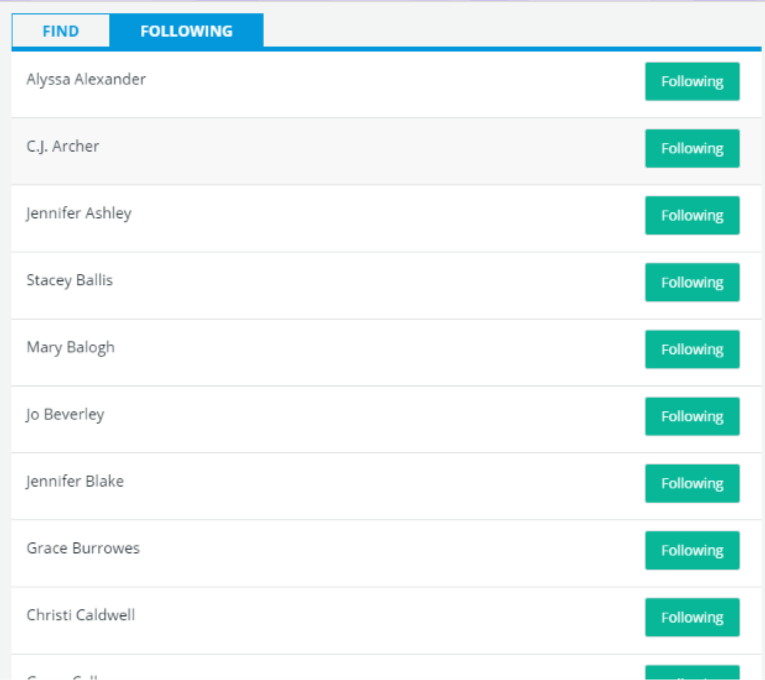
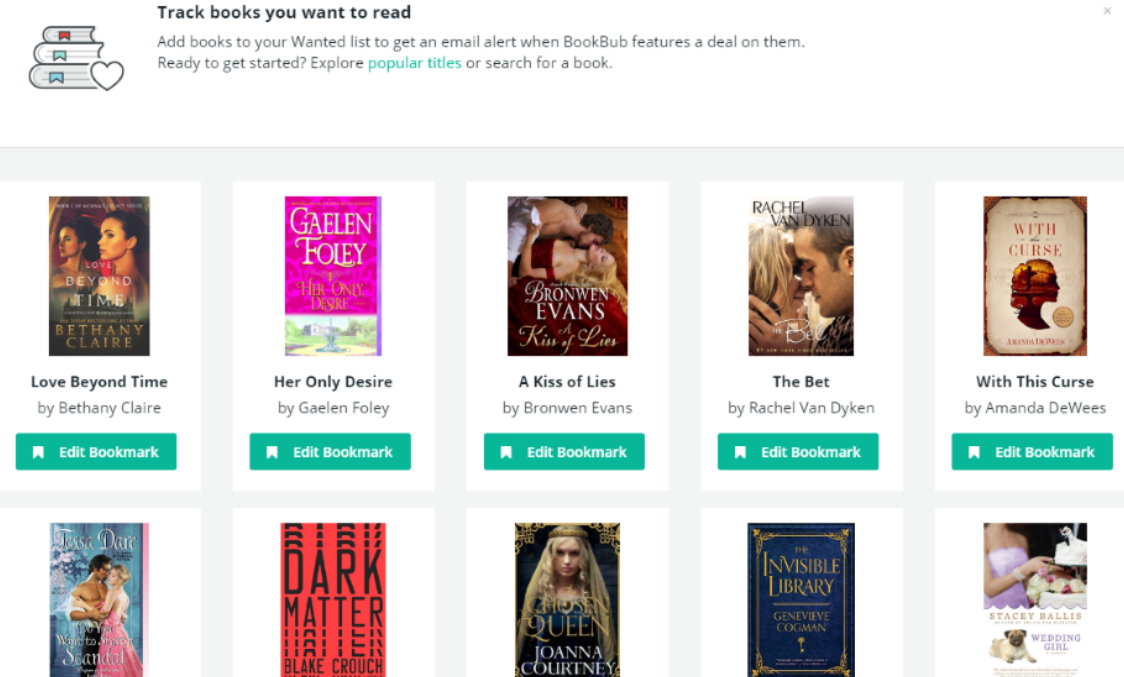
I was having so much fun, I went through and searched for the books on my Goodreads 2017 TBR list and “bookmarked” them on BookBub so that I’ll get an alert if any of them go on sale.
I also selected specific genre categories for a daily-deals email.
And then I discovered that there was a process through which I could claim my author profile. I’m not sure yet exactly the benefits this might be to me right now, as someone whose books are slowly going out of print. But I think that should I decide to enter the self-publishing arena, this could be a great place to promote my work. I need to familiarize myself with it more, though, to know whether or not it’s going to be a helpful tool for me as an author. (It’s already netted me several free books to read, so it’s already a benefit to me as a reader.)
Do you use BookBub? How do you use it? How have you seen authors use it?
It’s Reading Report Time! (March 2017) | #amreading #bookreview
Happy First Monday of March, everyone.
It’s Reading Report Time!

Open Book by Dave Dugdale
.
Tell us what you’ve finished since the beginning of last month, what you’re currently reading, and what’s on your To Be Read stack/list. And if you’ve reviewed the books you’ve read somewhere, please include links!
To format your text, click here for an HTML cheat-sheet. If you want to embed your links in your text (like my “click here” links) instead of just pasting the link into your comment, click here.
.
- What book(s) did you finish reading (or listening to) since the last update?
- What are you currently reading and/or listening to?
- What’s the next book on your To Be Read stack/list?
Fun Friday: Learning to Love (A Ransome Spin-Off #StoryIdea)
Because I’m trying to re-teach myself that writing can be fun, this year, I’m focusing on coming up with new ideas for stories. Does this mean they’ll all get written in novel or even novella form? No guarantees. However, this is a creative exercise that I both need and want to share.
You can read all of the previous story ideas here.
Enjoy!
Working Title: Learning to Love

John Charles “Jack” Witherington = Luke Macfarlane
Ellen Delaney = Hannah James
Having arrived in Boston as an adolescent, Ellen Delaney has done everything she can to distance herself from her Irish heritage–after all, “Ellen Delaney” with an American accent can move throughout Boston without a second glance, unlike Eileen O’Delaney, a young girl fresh off the boat from Avoca, County Wicklow, Ireland. The Delaneys came to Boston in 1833 when her father, educated in England and having converted from Catholic to Quaker, wanted to leave so his family could practice the religion of their choice, and where not adhering to the state-mandated religion wouldn’t negatively affect his ability to find work as a physician. He made a new life for them in Boston, quickly teaching his children to speak like native-born Bostonians and ensuring they had every advantage they never would have had in Ireland.
Captain John Charles Witherington, US Navy, was shot twice in the right leg in the First Battle of Tabasco, which was fought during the Mexican–American War, in October 1846. Near death, he was sent back to the US, landing in New Orleans, where he recuperated. From there, he was first sent to Washington City and then assigned to the ship building yard, the Charlestown (Boston) Navy Yard, being experienced in ship design (learned from his mother and a lot of independent study). As primarily a repair yard, Charlestown employs hundreds (thousands?) of civilian dock workers. In the summer of 1847, with hundreds of Irish immigrants pouring off ships in Boston Harbor almost daily, tensions rise between the American laborers at the Navy yard and large Boston dockyards and the Irish immigrants looking for work.
Well known as one of the officials at Charlestown, and with a last name that connects him to a famous British admiral from the Napoleonic wars, as Jack heads home after work one night, he is set upon by a mob of desperate Irishmen. The last thing he hears before he loses consciousness is the sound of a woman’s voice.
Ellen’s parents have expressed their concerns more than once, even going so far as forbidding her, over her teaching at the charity school down near the dockyards. But Ellen cannot turn her back on the poor, starving children. Or the men and women for whom she and a few of her fellow teachers regularly stay to teach to read and figure after the school day has ended. She’s heading home late in the evening after one of these sessions when she comes upon a group of teen boys she knows from the neighborhood attacking a man in a military uniform. Knowing they will face severe punishment should they ever be identified, she sends them away before enlisting the help of men who work at the dockyard to load him into a cab and take him home to be seen to by her doctor father.
When Jack wakes up, he finds himself tucked into a bed in an unfamiliar room being tended to by a couple of unfamiliar women. The older woman steps out, leaving Jack alone with the very pretty younger woman. She asks him what he remembers (not much), then introduces herself. When he learns that she teaches in the school down in the Irish tenements, Jack worries about what kind of household he’s been brought into. But when her father, the doctor, arrives, he’s put at ease by hearing everyone’s American accents.
At Dr. Delaney’s insistence, Jack stays with the Delaneys overnight to ensure that his head injury doesn’t cause any complications and that there are no lingering effects from injuries they might not be able to see. The next morning, though a headache lingers, Jack thanks the family and then, upon learning that Ellen is about to leave for school, accepts her offer to walk with him to his boarding house–and her offer to take a note to the Navy yard for him, explaining his tardiness.
For the next few days, Ellen Delaney occupies Jack’s thoughts to the point of nearly constant distraction. So when a note arrives from Mrs. Delaney inviting him to a dinner, he gratefully accepts. It’s a good opportunity for him to broaden the scope of his social life in his new city–and also to spend more time around Miss Ellen Delaney. It’s planned that Jack will meet Ellen at her school to drive with her the night of the dinner. When he arrives, he sees Ellen speaking with a group of young men . . . And it sparks something in the back of his mind. Two of the boys look familiar to him, but he can’t quite recall why.
Over the next several weeks, Jack finds more and more excuses to walk over to the charity school in order to see Ellen, including offering to walk her home in the evenings to ensure no danger comes to her. It’s during these walks that she begins to tout the benefits he could help provide to the growing population of impoverished Irish immigrants by helping to see as many of them as possible hired at Charlestown. Many of them came from port towns in Ireland and have experience as dockhands and shipwrights—and even if they don’t there’s so much manual labor that happens at the dockyard that there must always be a need for unskilled labor as well.
At first, Jack is enchanted by Ellen’s passion for those less fortunate than herself. But it’s not long before he starts feeling jealous of the attention she lavishes on the Irish. He wants her to pay that kind of attention to him.
As the summer wears on, the unrest increases, and it isn’t long before Jack realizes that Ellen is more involved with the Irish than he first realized. He tries to convince her to distance herself, that it isn’t safe for her to not just attend but also help organize meetings and rallies, trying to help them create a community that will have the power to negotiate with landlords and the city in order to improve their living environment, create employment opportunities, and build a real school.
When Jack tells her one too many times that he thinks what she’s doing is too dangerous, she finally breaks down and reveals the truth of her background to him—that she was born Eileen O’Delaney in a small village not too far from Dublin. She feels it’s her duty to help these immigrants as much as she can to have the same kind of life in America that she’s been blessed to have.
Can Ellen help Jack to see that there’s more to the Irish than the squalor and violence that’s all he seems to focus on? Can Jack open his heart not just to Ellen but to those for whom she cares?

 KayeDacus.com