Finding My Voice–Louise Gouge and Randy Ingermanson
Please make welcome Louise Gouge and Randy Ingermanson.
 In 1986, Louise Gouge started college the same semester as her oldest child—talk about experiences to write about! Having a very busy imagination, Louise had always wanted to write books, and had already completed one novel, but wanted to polish her skills. Louise received her Associate of Arts degree from Valencia Community College in 1988, then enrolled in the University of Central Florida (the same year her oldest son started there) as a junior, graduating in 1990 with a creative writing degree. While in graduate school, in November 1994, Louise’s first novel, Once There Was a Way Back Home, was published by Crossway Books. Her second novel, The Homecoming, was published in January 1998. Louise earned her Master of Liberal Studies degree from Rollins College in May 1999. Her thesis was a historical fiction novel entitled Ahab’s Bride. Louise currently teaches English at Valencia Community College and continues writing. Her newest title is Then Came Hope, hitting bookstore shelves in May 2007.
 Randy Ingermanson tags himself as a “Physicist, Novelist, Speaker, and All Around Troublemaker.” If you haven’t heard of his Snowflake Method for novel plotting, you might subscribe to his Advanced Fiction Writing Course or E-Zine, or you might have read one of his books. Randy was both class nerd and class clown. He’s now an award winning novelist, a physicist, and a fiction teacher. He wants to be Supreme Dictator For Life and First Tiger. He’s getting closer every day!
WPWT: How did you find your unique writing voice? Did you struggle to find it or did it come easily to you?
LG: Not meaning to cause a problem, but I really must ask, “What is ‘voice’?” I must also take a quote (loosely) from Flannery O’Connor: I just write what I write. And my writing definitely does not come easily to me. I labor over every word, every passage.
RI: When I got started, my writing style was pretty vanilla. I did some things well and some things really badly. Style is made up of a lot of different components, and voice is only one of those, but it’s a very important one. I went to a critique group for probably two or three years before my style really started gelling. I know some writers do it much quicker, but I had a lot of unlearning to do. And I did it by writing every day and taking my work to my critique group every month and seeing what worked for my critiquers and what didn’t.
WPWT: How would you describe your unique writing voice? What is it that you do to make sure your writing “sounds like” you? LG: With my first answer in mind, I must tell you that I have an amateur acting background, backed by a few drama classes in college. As such, I have always taken on the character of my, um, characters. Brandilyn Collins has a terrific book entitled Getting into Character, which explains this approach. I become my characters in order to discover their motivations and actions. With my husband’s help, I even take on the characters of my heroes. Further, as a historical writer, I rely on my family history. My maternal grandmother, who was born in 1875, had a big influence on me in my early years. I hear her voice in my head AND on one fading audio cassette (made when she was over 100 years old) to capture the nuances of a nineteenth century heroine. Maybe it’s her voice that people hear in my writing.
 RI: For starters, my writing voice is AUTHENTIC. I don’t have to put my voice on–it’s just a reflection of who I really am. I think that’s a key thing–don’t try to be someone else. Just be yourself. My writing voice is a weird mix of “deep thinking” and “whackball humor.” Both of those are essential to who I am. I’m a physicist from Berkeley, for heaven’s sake, so there’s bound to be some depth to what I write. But I’m also pretty crazy (Berkeley is Berzerkely) and I put that craziness in my writing. I like to tell people that I was both class nerd and class clown. Those are the key components of my writing voice. As for how to make my writing sound like me, it’s not something I do, it’s something I don’t do. I don’t censor. I just pretend like I’m talking out loud and then I jam it out on the page. Yes, I’ll edit that later. But to get it down on paper first, I just write as if I were talking. And that often means throwing in a random line about “ironing the cat.”
WPWT: What advice would you give to beginning/intermediate writers to help them find and develop their unique writing voice?
LG: Write. Write, write, write. Discover yourself. Abandon rules. Follow rules. Act out your story. Seek counsel from those who embody your characters’ qualities. (Cop, doctor, teacher, homeless person, Starbucks clerk, etc.) DO NOT struggle to find your “voice.” It will come naturally when you begin to master the art of telling a compelling story with real, compelling characters.
RI: Write a LOT. And then toss it out there and see what works. When I said above that you should “be yourself,” I don’t mean that you should never bother learning what works and never modify your style. Some aspects of “you” will just work better than other things. You want to learn which parts to select and amplify in your writing. And that’s a matter of trial and error. These days, I think a blog is a great way to do that, because you can get immediate feedback. Write a piece, toss it out there, learn from your mistakes, and then go do it again tomorrow. There really isn’t any substitute for that pesky hard work.
Finding My Voice–Deborah Raney, Terry Burns, & Chip MacGregor
Please make welcome Deborah Raney, Chip MacGregor, and Terry Burns.
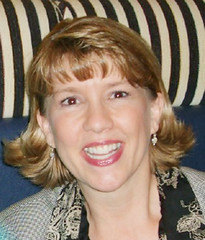 Deborah Raney grew up on a farm in Kansas and, inspired by Laura Ingalls Wilder’s Little House on the Prairie series, first tried her hand at novel writing at the age of twelve. But after accidentally putting airplanes in a story set in the 1700s, she tore up her manuscript in frustration and vowed never to write historical fiction again. Two decades later, she began work on her first novel—a contemporary story—after an intriguing discussion about Alzheimer’s disease with her husband, Ken, and their young teenagers. A Vow to Cherish was published by Bethany House Publishers in 1996 and won an Angel Award from Excellence in Media. It has been translated into the Swedish, Danish and Norwegian languages, and is also available in a hardcover large-print edition from Thorndike Press. Steeple Hill Books recently released an updated and expanded version of the book. It also inspired a TV movie by the same name. Deborah’s books have won the RITA Award, the National Readers Choice Award, The HOLT Medallion, the Inspirational Readers Choice Contest, and numerous other awards, as well as finaling in the Christy Awards. Deborah is currently working on her fourteenth novel. Her most recent release is Remember to Forget from Howard Publishing.
 For Terry Burns, telling stories comes as natural as breathing. With a combination of a strong faith and a legacy of Irish storytelling and Texas tall-tales, he writes Christian fiction set against a western canvas. Even when trying to be serious, he finds it hard to keep his subtle West Texas humor out of his writing. Terry just can’t buy the notion that all Christian fiction is written for female readers and his simple, fast moving writing appeals to male readers, though he admits he has more readers among the ladies. “I don’t have a problem with that,” he says. “I love to interest one of those pretty ladies in a book, then watch them talk hubby into reading it. You’d be surprised how often that happens.” In addition to writing, Terry is also a literary agent with Hartline Literary Agency. A list of Terry’s titles can be found on the books page of his website.
 Chip MacGregor is an extraordinary Literary Agent with a comprehensive knowledge of the publishing industry, from book development to writing, acquisition to production, marketing to sales. He has secured more than one hundred book deals for authors with all of the major publishers in both CBA and ABA. Chip has written more than two-dozen titles, including two books that hit #1 on the bestseller lists in their category. He has also been the collaborative writer on books with people like Howard Hendricks, Joe Stowell, Andre Kole, and Bruce Waltke. This longtime agent has represented such luminaries as Brennan Manning, Michelle McKinney Hammond, Jill and Stuart Briscoe, Alistair McGrath, Neta Jackson, Donna Partow, the MOPS organization, and Hearts at Home. His work with Lisa Beamer and Ken Abraham led to Let’s Roll hitting #1 on the New York Times Bestseller List, eventually becoming the bestselling nonfiction book that year.
WPWT: For Deb and Terry—how did you find your unique writing voice? Did you struggle to find it or did it come easily to you?
DR: I honestly have never been sure I even have a unique writing voice. People tell me I do, so I’m beginning to believe it, but it’s certainly not something I set out to “create.” If I struggled, it was with the worry that I didn’t have a unique voice. But other than studying the craft of writing, and honing my craft through practice, I haven’t done one thing different from the day I began writing until now. So I don’t think one necessarily has to work at finding their voice.
TB: In my opinion if somebody is struggling to find “their writing voice” they’re trying to force it. My writing voice is not the way I talk, my West Texas Drawl, it is who I am. It is the sum total of my education, my upbringing, my faith, my family, my experiences and it comes through in the way I write, even when I am trying to craft dialogue where the character speaks far differently than how I would speak myself. Some of my characters would speak much as I do, others speak far differently, but always no matter what is going on in the dialogue there are ways I would phrase things and ways that I wouldn’t. There are things I would allow in my writing and things I wouldn’t. The way I craft sentences, the pacing of my writing, these are the things that make up voice, not the way I speak or make my characters speak. I think far too many writers mistake dialogue for “voice.”
WPWT: How would you describe your unique writing voice? What is it that you do to make sure your writing “sounds like” you?
DR: Readers who know me say that reading my books is like sitting down across the table from me and having tea. So I guess I’d describe my voice as conversational, chatty even, and easygoing. I suppose what I “do” to make it that way, is just not be too concerned with it. I just write the only way I know how, and my voice is what comes out!
TB: My writing style is simple, because that’s what I am, a simple old cowboy. If I tried to write complicated literary fiction it wouldn’t work because then I would be outside my voice. I write simple, fast-moving stories and even if I’m not trying to do so, my faith is still evident. As long as I stay true to my upbringing I don’t have to worry about my voice, it’ll be there.
WPWT: What advice would you give to beginning/intermediate writers to help them find and develop their unique writing voice?
DR: Don’t work too hard at it. Don’t try to “affect” a voice, or it will certainly come out seeming less than genuine. Just write your story the way it comes to your mind, hone your craft, and then apply what you learn to that foundational writing—and what you’re left with will be your voice. One thing I would warn against is trying to emulate another writer. None of us can help but be influenced by other writers—and the more we read one particular author, the more their writing will inform what we write. That’s fine. But to purposely attempt to copy another writer will undoubtedly hinder the unique voice that’s trying to come through your writing.
TB: Don’t overthink it. Tell your story, then look at what you’ve written and see if it sounds like you or if it sounds like you are trying to be someone else. Not the dialogue, we all try to be someone else in the dialogue and sound the way we feel that character should sound, but in the general tone and style of the writing. Does it feel natural, or does it feel like you are trying to write like somebody else? If someone were sitting there with you, is this the way you’d tell them a story?
CM: Write something you’re passionate about. Kill the teacher in your head. Write something for yourself. Read it out loud and make sure it sounds good on your ear. Try to stretch your vocabulary, broaden your imagery, and strengthen your rhythm.
WPWT: For Terry and Chip, when reviewing submissions, what do you look for in others’ writing? How do you identify a writer’s voice?
TB: Is the writing natural? I don’t try to identify a writer’s voice and style but I can tell when it is contrived, when it is not natural. When it is forced it can seem pompous, the story doesn’t seem to flow easily, it sounds like the writer is using words and phrasing they are not comfortable with. It feels very much as if they are trying to be something they aren’t.
CM: Brightness. Likeability. Consistency. Passion. Clarity. Smoothness. The ability to get your character onto the page. A good voice will offer good character, which will lead to good stories, which make up a good book.
Finding My Voice–Rachel Hauck & Lena Nelson Dooley
Today, I’m thrilled to have Rachel Hauck and Lena Nelson Dooley, two of my writing godmothers, as my guests talking about voice.
 Rachel Hauck is an alumna of Ohio State University and has traveled the States and the world with her job as a software trainer. Rachel always wanted to be a writer. “My dad used to tell me, ‘You’re a writer.’ I have letters he wrote me post college, exhorting me to write. In this, I believe he had the heart of God.” In 1993, Rachel started “an epic WW2 novel with two plots.” When it was rejected, she took a break and focused on her work. But the siren of writing beckoned, and in 1999, she took her pen up again and started writing. With encouragement, help and prayer support from friends, Rachel’s first book, Lambert’s Pride—a HeartSong romance—was published in 2004. Since then, Rachel has published several romances and has recently broken ground in the new “red-neck” branch of chick lit with Georgia on Her Mind, Lost in NashVegas and Diva NashVegas.
 Lena Nelson Dooley has been a professional writer with a free-lance writing and editing business since 1984. In that time, Lena has written curriculum for public schools, private schools, and three different denominations—including working on a team that developed a two-year American History course for at-risk students. She has also written material for a Christian comedian as well as editing and designing training materials for an airline. Lena’s first novel was published by HeartSong Presents in 1992, her second in 2002. Four books came out in 2004, and one in August 2005. Lena had five releases in 2006, with another four already scheduled for 2007. Information on her titles can be found on the BOOKS page of her website.
WPWT: How did you find your unique writing voice? Did you struggle to find it or did it come easily to you?
RH: Great question. I wasn’t very aware of voice when I started writing. I tried to simply create authentic characters who sounded “real.” But when I started writing chick lit, I knew I’d found my voice. First person in particular. I sort of stumbled into finding my voice, but I know it is a struggle for many writers. I suggest keep writing, keep a journal, speak on the page from your heart, to hone your voice.

LD: I write what I feel, with my emotions as well as my thoughts. My writing style has evolved over time, because of being on a learning curve. I believe that we all should be constantly on a learning curve.
WPWT:How would you describe your unique writing voice? What is it that you do to make sure your writing “sounds like” you?
RH: I’m a quirky, snappy dialog sort of writer. My voice is most felt in dialog and musings of the protag. And my characters have to be someone witty or sarcastic, they see the irony in life. They catch the inconsistencies around them and comment.
LD: I use descriptive snippets to ground the reader into the setting. I love description, but I’ve learned how to use it better. Word choices and the rhythm of sentences and transitions are a part of the voice. I do believe that the Lord helps me with the creative process that becomes my voice.
WPWT:What advice would you give to beginning/intermediate writers to help them find and develop their unique writing voice?

RH: Read a lot. Read books you love in the style or genre you want to write. Be real in your writing. Don’t try to conform to what you think the reader will want or like, or even the editors. Follow publisher or industry guidelines, but try to speak truth through your characters. Go deep. Look below the surface. Really mull over your characters. Pray about them. Also, write the first draft, then read with a critical eye. I never hit my true voice on the first draft, often not the second. Don’t be in too much of a hurry. Write and rewrite.
LD: Study the writing of other authors that you like to read. Learn from them, but never . . . never try to imitate any of them. Pray a lot and let the Lord help you find your unique voice. He created each of us as a unique person, so He’ll help us find that voice that works best for us. 
Finding Their Voices–Authors Speak Out on Voice
I am so excited about the responses I got to my requests for interviews with authors on the topic of Author’s Voice. Here are the authors who will be featured this week:
Monday, February 26:
Lena Dooley
Rachel Hauck
Tuesday, February 27:
Deb Raney
Chip MacGregor, Literary Agent
Terry Burns (Author and Agent)
Wednesday, February 28:
Louise Gouge
Randy Ingermanson
Thursday, March 1:
Kristy Dykes
MaryLu Tyndall
Friday, March 2:
Camy Tang
Shelley Bates
Saturday, March 3:
Bryan Davis
And more will be added to this schedule! Be sure to stop by and see what these wonderful people have to say about Voice!
Finding My Voice—COLLEEN COBLE
In doing the research for this topic, I’ve been curious how successful published authors have discovered and developed their unique voices. So I have contacted several authors whose writing and voices I greatly respect and admire and asked them to share their thoughts and advice with us, and I will be featuring their feedback throughout the next week or so.

Author Colleen Coble’s thirty novels and novellas have won or finaled in awards ranging from the Romance Writers of America prestigious RITA award, the Holt Medallion, the ACFW Book of the Year, the Daphne du Maurier, National Readers’ Choice, and the Booksellers Best awards. She writes romantic mysteries because she loves to see justice prevail and love begin with a happy ending. Her latest release is Midnight Sea.
WPWT: How did you find your unique writing voice? Did you struggle to find it or did it come easily to you?
Colleen Coble: I didn’t really find my voice until I started writing my passion. In the early years, only prairie romance had an audience, and while I enjoyed writing it, it wasn’t where my heart was and I had to tailor my voice to suite the genre. But as CBA expanded, I decided to try my hand at what I loved to read–romantic suspense. It was HARD but I worked at it. When I wrote my first chapter, my critique buddy, Kristin Billerbeck, told me I’d found my voice.

WPWT: How would you describe your unique writing voice? What is it that you do to make sure your writing “sounds like” you?
Colleen Coble: My voice has a lot to do with mood and atmosphere. And I quit “dumbing it down” a few books back. I’ve got a large vocabulary and sometimes I would pull back because I’d think most people might not know what a word meant. I turned off that mental editor and let the words bubble out as they wanted. My voice brings in a deep sense of the setting, using the five senses. I want my readers to be immersed in my world.
WPWT: What advice would you give to beginning/intermediate writers to help them find and develop their unique writing voice?
Colleen Coble: Turn off the internal editor. Don’t think “this won’t fly in CBA.” Let the words come out without critiquing them first and see what you’ve got. you might also try a few things. My friend Diann Hunt was writing prairie romance at first and decided to try a humorous book in first person present tense. It was totally her voice and very clear the minute I read it. The same thing happened with Kristin Billerbeck. You don’t know what your voice is early on sometimes until you try something that really moves you.
To find out more about Colleen Coble, please visit her website www.colleencoble.com and the Girls Write Out blog.
Finding My VOICE—Writing for ME
Yesterday, I took you on a trip down my memory lane with excerpts of things I wrote as a child/teenager. I also mentioned that in college, as I got deeper into academic writing through Comp classes—and the fact I was a history minor and was constantly writing research papers (even one or two just for “fun”)—my creative work began to become, to use Tom Wolfe’s term, “beige.”
In 1992, while on a trip to Rite Aid for…who knows what…my best friend Amy and I were discussing our lives and those of our closest friends. She made the comment, “I wonder where we’ll all be in five years.” For me as a writer, these were not just idle words. I went home that night and started writing about the two of us and several of our closest friends: what we were doing for jobs, who was married to whom—and who wasn’t yet married—where we all lived, and how our lives still twined together. And I wrote it all from my own first person POV—because that was how I experienced those people and those lives. I was not writing this with any view to publication—in fact, Amy was the only person I ever let read any of it, as I was writing it solely for our entertainment. I wrote it just as I would have worded it if I were making it up and saying it aloud—it was natural, I never struggled for words to explain things, I never got writer’s block. Granted, technically and craft-wise, it left a lot to be desired. But when I go back and look at it now (even though I eventually changed it to 3rd person, changed all of the characters’ names because they were actually characters with little resemblance to the originals, and changed the location of the setting), I can see where I started exercising the humor in my narrative, detailed descriptions of settings and characters, the rhetorical questions that I love, the figures of speech I learned through all of my writing classes, and my love for dialogue—dialogue that mimicked how I heard people speak in real life. I called it “A Shared Dream.”
About the time I started writing Dream, I slipped into a depression that within a few months led me to drop out of school and move to live with my parents hundreds of miles away from the people whom I was writing about. This story became a refuge, a retreat—the place I escaped to when the realities of life became too much to handle. It was where I could just be me—no pressure to put on a happy face and pretend like everything was okay. For the next decade, even after coming out of my depression in early 1993, I escaped to what would eventually become my fictional city of Bonneterre, Louisiana, to spend time with the “people” there who had gotten me through one of the roughest times of my life. I wasn’t reading any writing craft books. I didn’t subscribe to any writing how-to magazines. I read voraciously—romances, mainly, but some mainstream popular fiction as well. I reveled in writing how I wanted to write instead of how I’d been told in both of my college Creative Writing classes I should be writing—it was almost an act of defiance.
Although I wrote enough scenes to push the word count of this “manuscript” over 200,000 words, I was also exploring other story ideas, other characters. After my first writing conference in 2001 when I made the commitment to become serious about my writing and pursuing publication, the first two manuscripts I completed were characters I had developed during the previous years while writing Dream. I had spent so much time developing my fictional city that it was only natural to use it as a continuing setting for stories I would write in the future, including Happy Endings Inc.
There are two reasons I believe have helped me maintain my Author’s Voice:
1. A wide variety of reading materials. Yes, growing up, I read mainly historical romances, and that genre is still my favorite. But I also read a ton of classic literature (can’t get away from it being an English major) as well as historical journals and diaries (ditto, history minor). My dad turned me on to Tom Clancy and Tony Hillerman. My mom passed along her love of cozy mysteries. I read science fiction and fantasy, such as schoolmate Maria Snyder’s Poison Study and Magic Study. I return to my favorite YA fiction again and again—including some I discovered as an adult, such as Harry Potter, or some I’ve had for more than twenty years, like Rosamund duJardin’s Tobey Hayden series. My sister loves John Grisham, so I started reading his books to see what the fascination is. And, of course, I have an entire wall of bookshelves dedicated to Christian fiction that runs the gamut of these genres. By reading widely—across all genres—it’s so much easier to see how there is no one all consuming “should” of writing. That those I sometimes enjoy the most break more rules than they uphold. That some of the best storytellers are the worst at craft or POV or showing/telling, or active writing. But they have such a great storyteller’s voice that it doesn’t matter.
2. Stubbornness. Or pride or whatever you want to call it. I’ve never been one to do something a certain way just because I’ve been told it “should” be done that way. As a matter of fact, I’m more likely to question, argue, or dig in my heels when I’m told I “should” do something or that I “should” do it a certain way (and that word starts looking really strange after typing it several times!). One of the areas I used to get high marks on at my previous job was the fact that I would find new and innovative ways to improve processes or procedures that helped us get work done more effectively and efficiently. This seems, on the surface, at odds with my innate personality that dreads change and likes things to stay the same. But digging a little deeper, the change I dread is change just for the sake of change. One of my greatest pet peeves in life is people or organizations who won’t make changes that have been proven necessary or good simply because it’s never been done that way before. (Thus why I don’t attend church business meetings any more.) While some “shoulds” are good when it comes to writing—we should use limited POV instead of omniscient because it makes our writing stronger, we should watch out for repetitious words or phrases, we should show more and tell less—there are other “shoulds” that we can ignore—we should spend a lot of time reading craft books, we should strive to write like our favorite authors because there must be something special about them as they’re published and we’re not, we should study the classics and eschew contemporary writers, we should incorporate words in our writing we would never use in conversation with our friends because they make us sound like better writers, and so on. Whenever I hear a “should” when it comes to writing, there are a few sources I go to if it is something I’ve never heard before—trusted writing friends whose voice and style I admire and the couple of craft books I have learned a lot from, including Stein on Writing. (You knew I was going to say that, didn’t you?)
So, where along your journey did you go from being your own eclectic self to jumping into the river of beige? Going back through your writing journey, and, as we did yesterday, looking at your past writing, where do you see glimpses of your real self shining through and where do you see you were starting to adjust your writing to someone else’s “shoulds”?
Tomorrow, we’ll look more in depth at the “shoulds” and the people we allow to squelch our Author’s Voices and what we can do to start reestablishing our voices. As the series continues, we’ll also look at voice in contemporary vs. historical settings as well as first drafts and rewrites.
Finding our VOICE—A Trip Down Memory Lane
As promised, here I am back again with more on VOICE.
Erica asked: “Do you think it is easier to identify another person’s voice than it is to identify your own?”
Yes, I do believe it is—just as it’s easier to hear that someone else has an accent than to hear our own (great analogy, btw!).
Many of us who are now writing as adults wrote as children as well. We all had to do it for school whether nor not we did it for pleasure. One of the main things that kills our natural Author’s Voice is the instruction and correction we receive through formal education. We are taught to have an “academic” voice. We are taught we must write in complete sentences. We are taught we should not use conjunctions. We are taught we must not begin sentences with conjunctions (and, but, or, nor, for, so, because, etc.). We are taught we must not end sentences in prepositions. We are taught that only a certain few authors are worthy of reading, which leads us to believe that we should imitate their style/voice. We are taught to always write with a public or “beige” voice (as Tom Wolfe called it). Heaven help those who took or are taking creative writing classes at most colleges where Faulkner, Steinbeck, and Hemingway are venerated and all popular fiction dismissed as trash.
We’ve been taught to leave our own voice at the door through all of this. (Oops, I used a contraction! Quick, call the literary police!) We’ve also learned to have an inferiority complex when it comes to writing in our own natural voice. We’re told it’s not “right,” it’s not “good enough,” it’s not “what’s expected,” it’s not “literary enough.”
In researching something totally different today, I ran across this blog article: http://blogcritics.org/archives/2006/03/19/182004.php. When I first started reading it, I expected to be completely offended by the end. Here was another literary creative writing snob talking about how horrible the romance genre is. But as I read it, and as she explained her experience with trying her hand at writing something completely out of her comfort zone, I started to see how this, for her, was an exercise in discovering her Author’s Voice. She had to go completely outside of the writing which she found most comfortable to truly discover the way in which she writes best.
It may not take something as drastic as changing to a totally different genre (like me trying to write horror—imagine! The horror, the horror!). What it may take is a trip down memory lane for us to be able to start to recognize our writer’s voice.
So I went through my archives and pulled out a notebook containing much of my old writing. Here’s something from a booklet we put together in second grade (as punctuated and spelled in the original):
My Christmas Vacation
by Kathy DacusThe day we got out of school I went to Baton Rouge, Louisiana. They had a lot of snow. My sister and I played in the snow. Bur-Bur it was cold down there. Finally it was Christmas. My two little cousins named Rusty and his big brother Ryan who is three years old we played with them. I couldn’t believe that it was Christmas. I said, “I can’t believe it is Christmas!”
See, even for school assignments, I was making stuff up! Lots of snow in Baton Rouge??? I can’t believe the teacher gave me an S on that paper!
What do I see about my style in this? Well, my tendency to over explain in long sentences.
Okay, so next, let’s look at something I wrote in ninth grade (a history report that actually won a school-wide award . . . it was a very small school):
The Political and Religious Turmoil in England
I will start my report some years before the year Columbus discovered America. In 1492, Christopher Columbus discovered the “new world”. England paid little to no attention to their newly found province. England ruled over most of the world at this time, any way, so what did a new unexplored province mean to them? All of the other provinces that they accumulated were already populated so all they had to do was to make the people work for England, and England would be rich. The ruler of this time was Henry VII.
Aha! The (slightly sarcastic) rhetorical question! I use this device in my writing all the time now. Okay, I have to include the conclusion just for giggles:
Many things that happened in England, to me are very detestable. A lot of the things that happened are not very ethnic. The people, on the most part, were rotten people committing adultery and such. I am glad I did not live in that era.
Let’s move forward one year to a rough draft of a paper I wrote in 10th Grade AP English (what a difference a year makes!):
Control is something all people would like to have, whether they know it or not. Some people want to control other people, others just want to run their own lives. In Eudora Welty’s short story “Livvie,” the control that one person has on another is a major factor of the theme. Through mythological connotations, symbolic names, release or rebirth, and the characters’ trials, Welty shows her theme that if people have their lives controlled by an outside force, they are likely to want release.
Beige is starting to force its way in here. But my natural tendency toward lists and long, complex sentences works well in academic writing. Perhaps that’s why I always enjoyed composition classes.
Now, on to my senior year and my very first Creative Writing class (with the same teacher who gave me a C on the final draft of the above paper):
Kathy Dacus
Creative Writing
October 4, 1988
Daily ObservationMonday, 5:45 PM
An upside down, mangled bakery box. That’s what it was, just sitting there in the middle of the street.
They’re dead. All of those doughnuts are dead. Their cream or jelly fillings spilled out senselessly on the cold, hard pavement. It’s a gruesome sight: splattered icing, crumbled doughnuts.
Someone’s car has the tell-tale sign of a murdered box of doughnuts, but whose?
Here, I have humor/sarcasm, long sentences punctuated with short punches, rhetorical question, description, and a couple of sentence fragments. The same teacher who drilled beige writing into my head just two years before saw this and started encouraging me to explore creative writing more and more. In that class, we wrote poetry, fairy tales, short stories, and short one-act dramas. We had to get other students in the class to act out our drama scene—and part of our grade was determined by the rest of the class’s feedback on it. I got the highest grade because everyone said that my dialogue was realistic and natural sounding.
One of the things that this teacher did with us was mark points off for every clichéd phrase we used. In our various projects, he made us incorporate different devices like similes, metaphors, onomatopoeia, oxymorons, etc. This is where my love for these techniques blossomed and became part of my writing toolbox.
In college, I took the requisite freshman comp classes but also took Advanced Composition as an elective. It was one of the few classes during my first round of undergrad (before dropping out) that I enjoyed and worked hard for an A in.
Yet when I look at my creative work from that time period, it was starting to look rather beige—mostly because I had been knocked around ruthlessly with critiques on the first short story piece I submitted in my Creative Writing class (and that was my major!) and was trying to imitate a more “literary” voice.
So, how did I break myself of beige prose and find my Author’s Voice?
Tune in tomorrow (laughs wickedly).
VOICE—Blogging as Our Characters
Yesterday, I gave a writing assignment to write a blog entry for one of our characters, but using our own blog-writing style. So here is mine, written from the POV of the heroine of my soon-to-be work in progress A Major Event, Inc. (sequel to HEI). Meredith lives with Social Anxiety Disorder (SAD) and has her BS/MS in Psychology—though currently works as an event planner in her parents’ corporation.
Living with SADness
Posted by Meredith Guidry
Next week is Mardi Gras and everything in the office is crazy with last minute details of the six events I’m personally handling. I missed group therapy this afternoon as I received a visit from the mayor’s wife, just before I was supposed to leave, and spent a couple of hours with her revising the menu for the mayor’s annual Mardi Gras Gala. So, I promised Tom I would make time tonight to post a blog so he can check up on me (hi, Tom!).
With as busy as I have been, it’s easy not to think about being in public or surrounded by people. I am so overwhelmed by the stress of wanting to make everything perfect for the clients that I do not have time to worry about whether the guy beside me checking out at Bordelon’s is judging me because I’m buying a bunch of frozen dinners and canned veggies instead of the fresh meats and produce that fills his cart. (Of course, having and using the option of self-checkout helps a lot, too—but then, when I swipe my Frequent Buyer card, I wonder if there’s someone on the other end of that computer system somewhere tallying how many Mama Thibodeaux frozen dinners someone can eat in a year without going into massive organ failure.) Anyway, the SAD has been easy to deal with during the day as long as I focus on the task at hand—making clients happy and making Mama and Daddy’s company look good. (Tom, I really don’t want to go into the whole parent-expectation thing tonight, okay?)
My cousin Anne will be home in a few minutes and wants to take me to look at place settings for her reception. I’m so excited for her, and I couldn’t love George more if he were one of my brothers. And yet I get this awful panicking feeling inside every time I think of Anne’s getting married. The diagnostician in me says this is simply a reaction to fear of change—of having to find a new place to live because Anne and George will be restoring the triplex back into a traditional Victorian house; or if my relationship with Anne—not just my cousin but my best friend—will alter significantly when she marries; and the responsibility and focus that has been thrust on me as her maid of honor…and the dread that I will disappoint her. I know what I should do is focus on the joy of the changes—getting out and finally getting a place on my own, away from family members who drop by at any and all hours of the day because of the close proximity of a house-turned-triplex and my apartment being on the ground floor (love you, Sis); the happiness and love Anne has found with George after enduring so many years of regret and pain because of Cliff. Focus on the happy—that’s what Rational Me says.
Irrational Me wants to huddle in a corner and mourn the loss of the familiar, the comfortable. So many times today, I found myself close to tears over the least little problems. I finally shut my office door, brought up the instrumental jazz mix on my MP3 player, plugged in my earphones, closed my eyes, and meditated on Isaiah 41:9–10:
You whom I have taken from the ends of the earth, And called from its remotest parts And said to you, “You are My servant, I have chosen you and not rejected you. Do not fear, for I am with you; Do not anxiously look about you, for I am your God I will strengthen you, surely I will help you, Surely I will uphold you with My righteous right hand.”
Anne just pulled up, so I’d better post this so that my cell phone doesn’t ring in the middle of dinner with my therapist looking to see if I’m huddled in a corner somewhere.
No fears.
Mere
VOICE—You’ve Got Personality!
THERE WILL BE A BOOK GIVEAWAY at the end of this series . . . but I’m still in the process of reviewing the book I think I might want to give away. So, stay tuned for that title and join in the conversation for your chance to win. Every comment you leave earns you an additional entry in the “hat.”
Who is your favorite author? In case you’ve been hiding under a rock—or this is the first time you’ve ever been to my blog—mine is Jane Austen . . . followed closely by Linda Windsor, Susan May Warren, and Dee Henderson. What is it about these authors that keeps me returning to their books again and again? Well, they are wonderful storytellers—great characters, plots, settings, etc. But there are a lot of other writers who are great storytellers. What specifically draws me to these particular authors?
Voice.
Great . . . but what does that mean?
The first time I ever started to get an inkling of what voice is was just after completing my first full manuscript. After much cajoling on his part, I let a friend from church read it. This made me somewhat nervous—it was my first full story. I had never let anyone outside of my mom, grandmother, and best friend in college read anything I wrote after my terrible experience in the two Creative Writing classes I took at LSU. And I knew David to be a voracious reader who loved, amongst other popular and prolific authors, Steven King. But I e-mailed the manuscript to him and waited to hear his polite response (masking the fact he didn’t like it). After all, it’s a romance.
Sooner than I thought possible, he got back to me—he’d read the whole thing (about 120,000 words or 450 pages double-spaced) in almost one sitting. He got misty-eyed when the main male protag reconciled with his parents at the end. If he enjoyed it so much, surely romance readers would love it. Then he said, “And the whole time I was reading it, I felt like I was reading a book by a favorite author whose stuff I’d been reading for a long time. It was as if I was sitting there with you and we were just talking and you were telling a story about people we both know well. I could hear your voice in my head as I read it.”
Ding! A bell went off in my head. That’s what everyone means by Author’s Voice. But I didn’t know how I achieved it—except for the fact that I just sat down and wrote. I lost myself in the story. I knew hardly anything about craft. In addition to loving the characters and the story, I was writing it as an experiment—could I write a complete novel from beginning to end in limited 3rd person POV? I was more concerned about telling the story from start to finish than in trying to figure out what genre it was or to which publishing house I would submit it (which I don’t know if I ever will). I let myself be guided by the characters—let them tell their story through me.
Not very helpful in trying to define voice, is it?
The more I think about what David said, the more I focus on the last part of it: it was like we were just sitting there talking . . . he could hear my voice in his head as he read it. Now, he and I were very close friends at the time and could spend hours talking about anything. In analyzing his comments, what he was really saying is that I write the same way I talk—that the words I put down on the page were familiar to him because they were true to the vocabulary, the structure, the cadence of how I speak in real life; but more so than that, the familiarity of my personality—my voice—came through because I wasn’t trying to write like anyone else or in a style I thought would be acceptable to some particular publishing house or another.
Although I’ve always read my writing aloud to check for errors, I also started really listening to myself as I do so—if I trip over the words on the page or substitute other words or rearrange them as I speak it, I know I must rewrite it until it rolls naturally off my tongue—as if it is the way I would have said it if I were sitting with a friend, telling him the story off the top of my head (in a grammatically correct, craft-conscious way).
Though it is not a fully accurate definition, voice is the author’s personality shining through the words on the page.
Think about your own blog. When you write an entry, are you thinking about your Author’s Voice? Probably not—because you’re just sharing what’s on your heart and mind. Your blog is a great representation of what your Author’s Voice is. Do you write in long, flowing sentences, expounding upon your thoughts with lots of description and $5 words? Or, short and choppy with lots of action? What about figures of speech such as metaphors, similes or analogies?
My prose writing style is very much like my blog writing style. I like long sentences—and parenthetical elements set off with em-dashes—that seem to flow on and on, sometimes for nearly a whole paragraph, just to get the entire thought in. But not always. I like to punctuate them with a snappy two or three word fragment just to keep things interesting. I love figures of speech and have cultivated the use of them until they are a part of my mental writing toolbox—easily accessible. In fact, when I re-read my writing, I will find places where I have accidentally authored an alliteration without even realizing I had done so, simply because that’s me. Because that’s how I write.
Don’t worry, we will continue to delve deeper into this subject. I’m in the process of contacting a myriad of authors from across the genre-board to get their thoughts and experiences with discovering their Author’s Voice.
But here’s an assignment. Write a blog entry as one of your characters, writing it just the way you write everything else on your blog. If you want to actually publish it to your site, be sure to leave a comment with the link. Or just post an excerpt of it in your comment here if you don’t want to put it up on your site.
I’ll post mine tomorrow.


