Writer’s Window: Nancy Moser
 Joining us today for Writer’s Window is historical fiction and romance author Nancy Moser.
One lucky commenter* will win a signed copy of Nancy’s latest release, An Unlikely Suitor. Deadline for leaving a comment to enter the drawing is Friday. To enter the drawing, you must answer the question posed by Nancy at the end of the interview. Only one comment per person will count toward the drawing. Please do not include your e-mail address in the body of your comment—just make sure it’s correct when you sign in to leave your comment. The winning name will be drawn next weekend and the winner will be notified via e-mail.
- *U.S. residents only, void where prohibited. If you win the drawing, you will be ineligible for the next three drawings, though hopefully you will still come back and join in the discussion.
__________________________________________________________
Lucy Scarpelli, an Italian dressmaker from New York, befriends socialite Rowena Langdon as she’s making her summer wardrobe. It’s an unlikely friendship, but one that Rowena encourages by inviting Lucy to the family mansion in Newport, Rhode Island. Grateful for Lucy’s skill in creating clothes that hide her physical injury, Rowena encourages Lucy to dream of a better future. One day Lucy encounters an intriguing man on the Cliff Walk, and love begins to blossom. Yet Lucy resists, for what man will accept her family responsibilities? Rowena also deals with love as she faces a worrisome arranged marriage to a wealthy heir. And Lucy’s teenage sister, Sofia, takes up with a man of dubious character. All three women struggle as their lives, and those of each unlikely suitor, become intertwined in a web of secrets and sacrifice. Will any of them find true happiness?
Welcome, Nancy!
What do you like best about being a writer?
- The chance to be creative and escape into a world of my own making—where I’m the boss!
What do you like least about being a writer?
- The insecurity. I’ll put my entire heart into a story, spend hundreds of hours on it, create a website, a blog, be on Facebook, pray, hope . . . and still have no idea whether readers will like it or how it will sell. It feels like I’m throwing it into the wind. And as far as marketing? If writers and publishers knew what worked, every book would be a bestseller. The best thing a reader can do to help their favorite authors to not feel so insecure is to spread the word. Word-of-mouth is a priceless commodity, one that authors really appreciate.
Pop, Soda, or Coke? What do you call it, and what’s your favorite variety?
- In the Midwest it’s “pop.” And my favorite is Diet Dr. Pepper.
What’s your favorite dessert?
- Chocolate-peanut butter ice cream in an enormous waffle cone.
What’s the most fun/interesting/crazy/scary/unique hands-on research you’ve done for a book?
- Actually, the most unique research involves getting the idea for a book. I was in Mozart’s house in Salzburg Austria when I heard the tour guide say, “Many people don’t know this, but Mozart had an older sister who was just as talented as he was, but because she was a woman, she didn’t have the chance to fully develop her talent.” At the time I was only writing contemporary novels, but this one tidbit stuck with me and led directly to me getting my first contract for an historical novel (Mozart’s Sister). It was one of the best career paths I’ve ever taken. I often think of how many things needed to fall into place for me to be in that house, across the world, at the exact time a particular tour guide said the sentence that changed my life. I truly feel it was a God-arranged moment—and opportunity.
What’s your favorite movie from childhood?
- Gone with the Wind and Pollyanna. I loved the costumes and drama of GWTW, and was a big fan of all the Hayley Mills movies. There’s a scene in Pollyanna where she strings crystal pendants from a chandelier in a window to create gorgeous prisms. My grandma had a light fixture like that so I copied Pollyanna. It was really beautiful.
If you were to write a novel about what your life would have been like if you’d become what you wanted to be at eight years old, what kind of character would the story be about?
- I would have been the president’s daughter. I was fascinated with Caroline Kennedy, who was about my age when her father was in the White House. I remember sitting on our front step, looking at some magazine article (Life magazine?) that had pictures of Caroline with her pony and dancing with John-John in the oval office, with her father looking on, clapping. I thought Caroline lived a charmed life—which obviously wasn’t true. But wouldn’t it make an interesting story: a child with the world at her feet having to deal with great loss, finding her way into womanhood and discovering her purpose? Hmm. Sounds like the story of every-girl.
What makes you happy?
- Our kids are all married and live in town, which means our grandkids are close. At least once a month we have everyone to our house for dinner. The happy chaos of hearing the granddaughters clopping around in my heels, our grandson wrestling with the dogs, and our kids scattered over the house enjoying each other’s company . . . those are the moments when I sit back and revel in the miracle of family—and not just family but family that enjoys being together, and can be together, often.
What makes you nervous?
- Being late. Or witnessing other people being late. Hence, I’m always early.
What’s your biggest dream for the future?
- To write novels until God takes me home. To press SEND on an email sending a complete manuscript to my publisher, and then take a nap where I drift away to heaven.
Tell us about your newest release and what you’re working on now.
- Just out is An Unlikely Suitor. It’s a Gilded Age historical romance set in Newport, RI, in 1895. Newport was the town where the Vanderbilt and Astor set spent the summer season in enormous mansions they called “cottages,” and needing dozens of new dresses to go to all the balls and other social events. The story involves an immigrant seamstress in NYC who creates a summer wardrobe for a rich heiress. The two girls from different worlds become close friends, and together, discover true love—and their purpose.
What I’m working on now is a novella for a Christmas anthology with Stephanie Grace Whitson and Judith Miller. My story will be set in the Gilded Age, Steph’s is set in the pioneer/prairie era, and Judy’s is set in the Amana Colonies. All involve quilts. The title is yet to be determined and will be out in 2012.
- And be sure to look for Nancy’s book Masquerade:
1886, New York City: Charlotte Gleason, a rich heiress from England, escapes a family crisis by traveling to America in order to marry the even wealthier Conrad Tremaine. She soon decides that an arranged marriage is not for her and persuades her maid, Dora, to take her place. What begins as the whim of a spoiled rich girl wanting adventure becomes a test of survival. As for Dora, she lives a fairy tale complete with gowns, jewels, and lavish mansions–yet is tormented by guilt and the presence of another love that will not die. Will their masquerade be discovered? Will one of them have second thoughts? Will love win out? There is no guarantee the switch will work. It’s a risk. It’s the chance of a lifetime.
Where can people find out more about you/connect with you online?
- Website: www.nancymoser.com
- Historical fiction blog (with author Stephanie Grace Whitson): http://footnotesfromhistory.blogspot.com/
- Website for my speaking and Sister Circle novels: www.sistercircles.com
- Facebook: https://www.facebook.com/home.php
Now it’s your turn to ask the question. What question do you want to ask the commenters to answer?
- What’s your favorite era of history to read about?
__________________________________________________________
 Nancy Moser is the award-winning author of over twenty inspirational novels about people discovering their unique purpose. Her newest historical romance, An Unlikely Suitor, was just released. Her historical bio-novels allow real women-of-history to share their life stories: Just Jane (Jane Austen), Mozart’s Sister (Nannerl Mozart), Washington’s Lady (Martha Washington), and How Do I Love Thee? (Elizabeth Barrett Browning.) Nancy’s time-travel novel, Time Lottery, won a Christy Award, and Washington’s Lady was a finalist. Her contemporary novels are known for their big-casts and intricate plotting. Some titles are John 3:16, The Sister Circle, and The Invitation. Nancy has earned a degree in architecture, traveled extensively in Europe, and performed in numerous symphonies and choirs. She gives Sister Circle Seminars around the country, paints canes, kills all her houseplants, and can wire an electrical fixture without getting shocked. She’s a fan of anything antique—humans included.
THE ART OF ROMANCE—The Art and Your Questions Answered

There several important pieces of art in The Art of Romance, but I’m going to leave all but two up to your imagination. (And you might consider these spoilers, but I don’t think it’ll ruin anything for you.)
First, upon meeting Caylor, Dylan itches to draw her. But he’s been systematically programmed over the last few years (by his ex) that he shouldn’t do portraits (his first art love) but should focus on abstract. But, as you can guess, he finally gives in and sketches her:
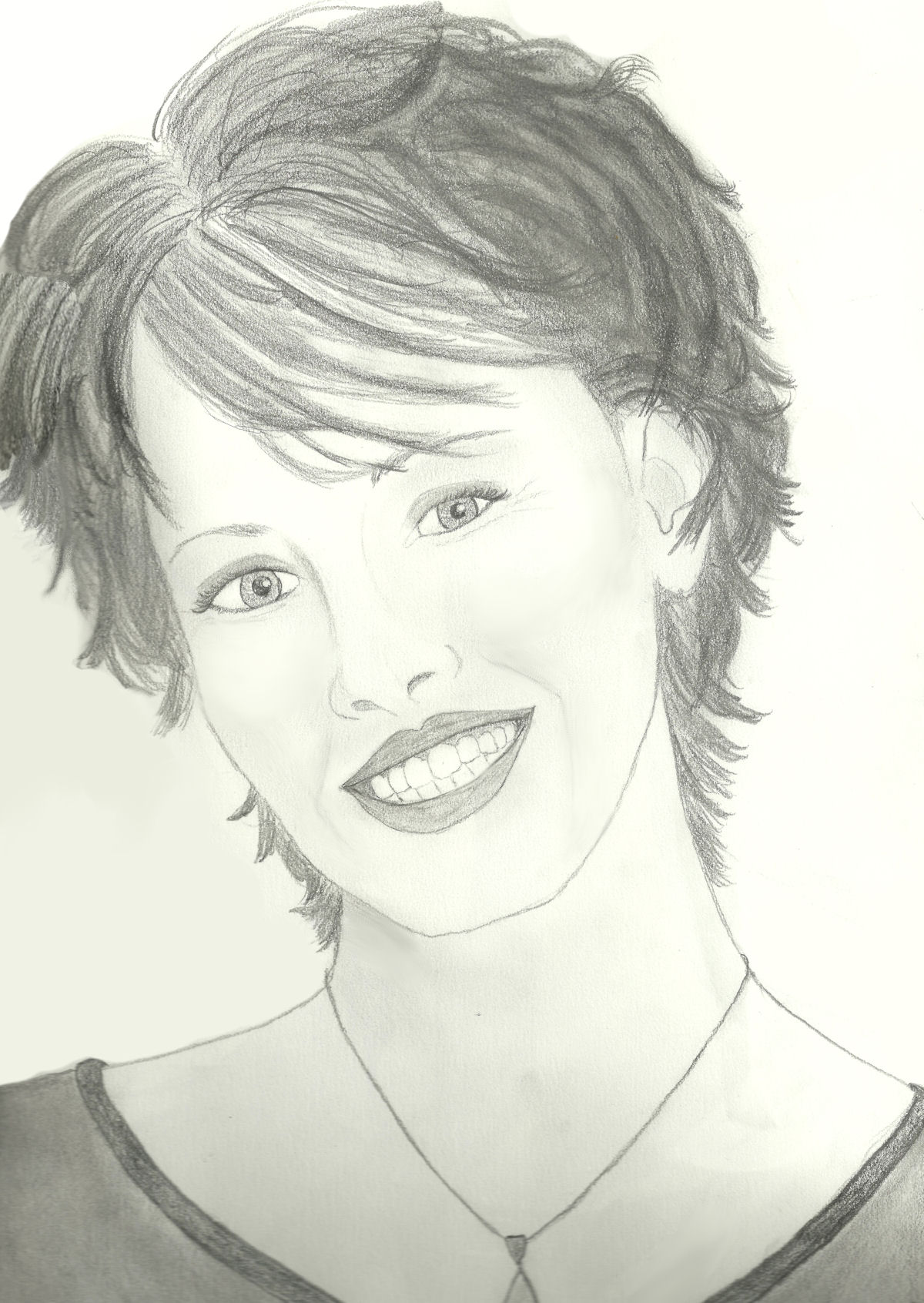
To answer your next question, yes, I drew that. Now, before you get overly impressed, I cheat a little when I draw—I print an image of the person (the model in the stock images of Caylor in this instance), then put a piece of carbon paper under it and trace the outline and features into my sketch book. Then I just go back and fill in the details.
The second piece of artwork I want to share with you was actually inspired by the cover of the book. When I first saw the cover design, I was thrilled—I’d picked out those images. That was really Caylor on the front cover. But, as a friend of mine pointed out when I shared it, Caylor’s a writer, not a painter. So why is she standing at an easel?
Well, because I’d always known that Dylan would teach the painting class for the senior adults at the church and that Caylor would be there with Sassy (refer back to the original story idea), it didn’t take much imagination for me to put her in the class, not just observing. Caylor, however, is no artist. But at Dylan’s encouragement to have fun painting the vase of flowers at the front of the room, Caylor does just that:

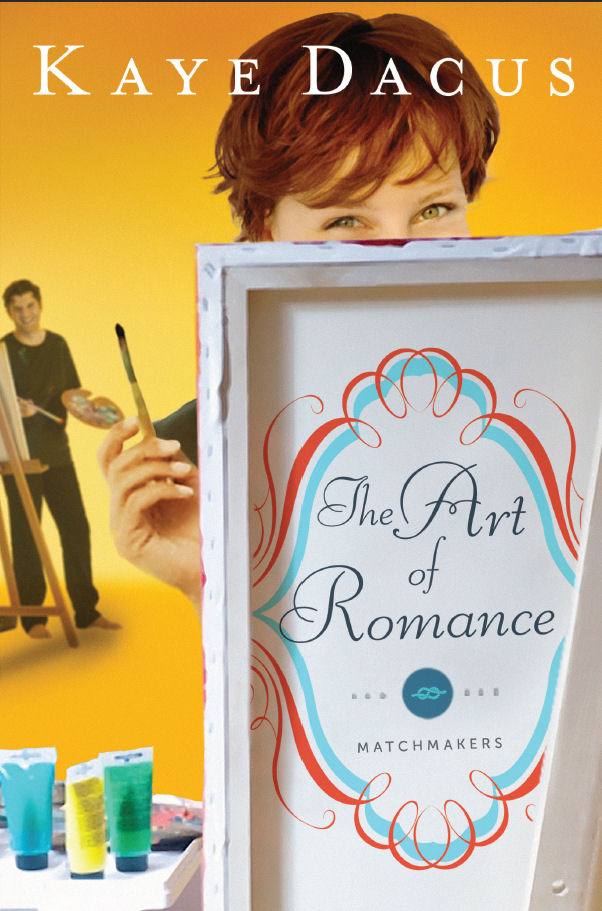
Now, if you look at the cover, you can see that not only did I tie in Caylor’s being at an easel with a paintbrush in her hand, I also tied in the background color and the colors of the tubes of paint on the table! I don’t know if this actually comes through in the scene, but I hope it does! (And, no, I didn’t paint that. I drew a pencil outline on a piece of paper and scanned it into the computer, where I commenced “painting” it—and pulling the colors directly from the digital copy of the cover—in Corel PaintShop Photo Pro X3.)
Your Questions Answered
Many of you asked about the character casting process and when/how I do it.
- Without going into vast detail (for that, check out the Be Your Own Casting Director series on the Writing Series Index page). The short-form of the answer is that I have to cast a character before I can write about him/her. I have to be able to visualize who it is in my head, and going off of a picture of a real person is the easiest way for me to do that—otherwise, they’d all end up looking the same. I have an eye for details, such as face shapes, eye shapes/colors, mouths/smiles, etc., that make it easy for me to find real people who share similar—shall we call them familial?—features. That’s how I put together my families. Because I have to cast my main characters when I write the synopsis I sell the story from, I have those images to build from when I start the book. Then, because I’ve been collecting templates for my casting book for so long, that’s where I go to start filling in all the secondary characters—and whenever a secondary character pops up.
No, I don’t cast every single character in the book. Just the important ones.
Kav asked: “How do you balance secondary characters with the main ones…I mean so they don’t take over but you’ve fleshed them out enough to make them memorable?”
- I think part of that starts with that casting process. Once I’ve put a face with a character, they become a real person to me. Real people have backstory and what Donald Maass calls “range.” Basically what that means is that they have a life, a before-and-after outside of the brief period of time they appear on page in the book. They aren’t static. They aren’t Barbie dolls who are still in the same position they were in when I put them away last time I played with them. So, just as I need to know what my main characters were doing the moment before they step into the book at the beginning, I need to know what the secondary characters were doing just before they enter a scene. That helps me to see them as full-blown characters, not just space fillers.
I also remind them that this is not their story. If they want to take over, they’ll have to make an appointment for us to talk about it later. Right now, there’s a waiting list with a few members of the Guidry family of Bonneterre on it, along with Dylan’s three brothers and some other folks as well. 😉
Audry asked: “Dylan’s family certainly is a bunch of brainiacs, huh? Where’d his artist genes come from?”
- I believe everyone has some kind of creative/artistic bent. We all just express it in different ways. Perty, Dylan’s paternal grandmother, was an English professor. She also made way for him to take lessons from the art professors at JRU (James Robertson University—the fictional liberal arts school where Caylor is a professor). I see Perty as the one who passed on the creative gene to him. And to her other son, Dylan’s uncle, who owns an angora goat farm out in rural Tennessee.
Pam Kellogg asked: “I find it interesting that you say you have characters popping up in the story that were unexpected. I’ve heard other writers speak about how characters seem to take on a life of their own and the writing goes in different directions than the writer anticipated. Does it bother you when that happens or is it fine with you to just ‘go with the flow?'”
- Because I’m still more of a seat-of-the-pants writer than a plotter, I love it when unexpected secondary characters pop up—usually because I didn’t know I needed them to get to an important plot point I otherwise never would have found. So when a new character unexpectedly pops up, I definitely go with the flow!
Barbara asked: “Do you write your chapters in order–or write scenes as you think of them and come back later and fill in the missing scenes?”
- I am very much a chronological writer. A very long time ago, I used to just write whatever scene struck me—and I did that for more than fifteen years. It netted me a lot of words written, but never a full manuscript. At my first writing conference, Davis Bunn not only gave the advice, “Above all else, finish your first draft,” which I definitely took to heart, he followed that up by suggesting that newer writers would probably find writing chronologically (from beginning to end without skipping around) the easiest way to get that first draft finished instead of just writing in circles. Now, after I finish the first draft, when I’m in the revision process, if I see a hole, I have no problem writing a scene or chapter to fill it—in fact that happened with The Art of Romance. After turning it in at a whopping 103,000 words (3k over my contracted length), my content editor and I realized something was missing toward the end—that we needed more scenes of Caylor and Dylan together. So I ended up adding a full chapter and an additional full scene—almost 7,000 words, making TAoR my longest published novel to date!
Sherrinda asked: “Dylan has had some difficulty in his life. How did you decide on his backstory? And what made you decide to have the big age difference? So often we see the man quite a bit older, but not the woman.”
- From the original story idea, I knew Dylan (a) left Nashville at age eighteen for college, (b) paid part of his way through college by painting romance-novel covers and using himself as the model, and (c) was coming back to Nashville with no job. But if he’d just decided to move home, there was really no story arc for him, no growth as a character. So I needed to go deeper with him. Why was he moving home? Why did he have no job? What happened at the college in Philly where he was teaching that would force him to leave mid-year, sending him home with his tail tucked between his legs—especially since his parents never approved of his choice of major? Really, it took a whole lot of asking “what if” until I settled on what felt right for his character—on what it felt like he was telling me about himself.
Whenever we hear of someone coming out of an abusive relationship, we immediately think the victim is a woman. However, men also fall victim to abuse—not physical as often as women, but definitely emotional. There had to be a reason why Dylan had pulled away from his family as much as he had—and not just because his parents basically cut him off when he chose to go to art school instead of following in their footsteps and becoming a lawyer. Because he grew up with such an overbearing mother, the groundwork had already been laid for a domineering woman to get hold of him and subtly start isolating him from everyone in his past until he depended solely on her for his purpose and direction in life. Because I knew Rhonda was considerably older than him, I wanted to throw another obstacle in Dylan’s path to happiness—and that’s the fact that Caylor is also an older woman. And he fears that an older woman, more established in her career and life, will try to take over running his, once he starts getting it back on track.
Now that I’ve answered those questions, what other questions do you have about The Art of Romance? (You don’t have to ask a question in your comment to be entered in the drawing. I just want to make sure you feel free to ask more questions if you have them.)
Thursday Thought Provoker
Do Book Reviews Matter to You?
I’ve seen this question, this topic of discussion, around a lot—and in fact have commented on a couple of other posts on FB or blogs with my answer; so I thought it would be interesting to discuss this here.
Reviewer vs. Influencer
Let’s begin this with a clarification—not everyone who posts a review is a reviewer. Last week, I put out a call for volunteers to be word-of-mouth influencers as part of the marketing for The Art of Romance, and part of that is asking these people to post “reviews” of the book online (their blog, the online booksellers’ sites, readers’ communities, etc.) with the idea in mind that they’re going to try to positively influence people to buy the book if they like it.
This is influencing, not always reviewing to me. And I’m not against it—not at all (obviously, since I ask people to do it on my behalf). I like receiving glowing, nothing-but-good-things-said 4- and 5-star reviews!
A reviewer, on the other hand, may or may not have received a gratis copy of the book from the author or publisher—but they’re less interested in trying to influence people to buy the book and more interested in giving critical feedback about the book—why it works or why it doesn’t, from their personal perspective—so that their own readers/followers and others can make a decision based on whether or not they feel like they’d have the same feelings about the book. These are the people who rarely, if ever, give 5-star reviews—and, conversely, might not give a whole lot of 1-star reviews; and if they do, people know to pay attention.
Of course many reviewers write influencer-type reviews without even realizing they’re doing it—or without being asked to. So for the purpose of this discussion, we’ll break reviewers into the following categories: Gushers (influencers fall into that category quite often) and Critics (in the general, not the negative, sense of the word). Oh, yeah, and then there are the Bashers.
How to Tell the Difference
The difference between something written by an influencer and something written by a reviewer goes something along these lines:
- Oh, my goodness! This is my favorite author! I preordered this book as soon as it was available and read it in one sitting as soon as it arrived, and it does not disappoint. If you’re a fan of this author, you’re going to love it. If you’ve never read this author, you’re going to love it. If I could give it more than five stars I would.
I call this an I-love-this-book-so-much-I-want-to-marry-it review from a Gusher. Sure, the poster may have honestly felt that way. But if I’ve never read anything by this author, or if I have and walked away from it rather ambivalent, this review isn’t really going to tell me why I might like the book. So a Gusher’s review isn’t going to do me any good.
- I’ve read several of this author’s other books, and while this is not her best (that would be Title), it is a solid addition to my library. The characters are well developed—though I would have liked to see more scenes from the grandfather’s point of view—and most seem well rounded. However, there were a couple of unnecessary secondary characters who came in for only one or two scenes just to give a piece of information that’s important to the story, and then they disappear again. I think this author could have figured out a better way to do that. The themes of identity and self-worth work well with the story’s plot and character. The author followed a pretty standard romance storyline here, but with the strength of the characters, the setting, and the writing style, that’s easily overlooked. 3.5 stars
That, to me, is a Critic’s review (generic, here, because I was making it up, not going off a specific book). That’s someone who’s pointed out that the book does have some shortcomings (in the Critic’s point of view), as all books do. She’s mentioned what she liked about the story and the writing. She’s also told us what the themes in the book are—so that not only do we know what the storyline is (because we’ve read the book blurb and the exhaustive summaries that everyone else has posted) but we know what the story is about—what the “takeaway” of the story is: identity and self-worth. Why a 3.5 star rating? Well, the Critic has told us—this is not this author’s best work (and has given us her opinion of what the author’s best work is).
[Let me be perfectly honest here . . . with as much as I love receiving the Gushing 5-star reviews on my books, I’d really much rather receive slightly lower star ratings with a well-thought-out Critical review of the book.]
- Ugh. I can’t believe I wasted five hours reading this book. It’s horrible. This author has no business writing romance. The characters are stupid, and I hated both of them. Oh, and don’t even get me started about the agenda—I mean the “theme” of this book. I don’t care if this book was a free download. It’s a waste of cyberspace.
I don’t think I need to explain that one. 😉
What Reviews Do I Read?
I subscribe to a couple of general-market-romance reviewing blogs, as well as a couple of bloggers who review CBA fiction. The general-market blogs I follow are multi-author, meaning that I’m not getting just one person’s views/opinions all the time. The CBA bloggers I’ve narrowed it down to are those who aren’t afraid to say when they don’t like something in a book that bears the label “Christian”; for these gals, if it doesn’t work, it doesn’t work. I don’t always agree with their reasons why or even with their critiques, but at least someone’s out there trying to be Critics of Christian fiction rather than just Gushers or Bashers.
If I haven’t read a review of a title on one of those blogs, I read the posted reviews on Amazon if the blurb catches my interest. And I usually start with the 2- and 3-star reviews before moving on to the 4s and 1s. It’s easy enough to tell which ones are Bashers—those are easy to ignore—but many times I find that there are some Critics who will give good, solid reasons for why they didn’t like a book or why a particular part of it didn’t work for them. Those are the reviews I like to read. I don’t mind the Gushers—it makes me happy to see those for the author’s sake—but those aren’t overly helpful when I’m looking for a thoughtful, critical analysis of if the book is worth buying. Most of the time, I’m still going to download the sample chapters before making a purchase decision—but if the reviews indicate it’s probably not going to be a book I’ll enjoy, I might not even download the sample.
Now that I have a Kindle, this sample-download thing has added a new review-reading twist. Whenever I read a reviews of a book on one of those Critics’ blogs that sounds interesting to me, I immediately go over to Amazon and download the sample chapters—without reading the onsite reviews. I wait to read those after I’ve read the sample chapters—and sometimes then only if I’m still on the fence about the book (i.e., it didn’t quite hook me, but it wasn’t horrible, either). I’ve discovered so many new (debut or new to me) authors this way—all because I’m reading reviews.
Do you read reviews? Which ones do you find helpful? Do you post reviews? What kind of reviews do you post?
Writer’s Window: Roseanna M. White
Joining us today for Writer’s Window is biblical-fiction and romance author Roseanna M. White.
One lucky commenter* will win a signed copy of Roseanna’s latest release, Jewel of Persia. Deadline for leaving a comment to enter the drawing is Friday. To enter the drawing, you must answer the question posed by Roseanna at the end of the interview. Only one comment per person will count toward the drawing. Please do not include your e-mail address in the body of your comment—just make sure it’s correct when you sign in to leave your comment. The winning name will be drawn next weekend and announced on the next Writer’s Window post.
- *U.S. residents only, void where prohibited. If you win the drawing, you will be ineligible for the next three drawings, though hopefully you will still come back and join in the discussion.
__________________________________________________________
How can she love the king of kings without forsaking her Lord of lords?
Kasia grew up in a poor Jewish home with more siblings than luxuries. But when a chance encounter forces her to the palace of Xerxes, she becomes a concubine to the richest man in the world. She alone, of all Xerxes’ wives, loves the man beneath the crown. She alone, of all his wives, holds the heart of the king of kings.
Traveling with Xerxes through Europe as he mounts a war against Greece, Kasia knows enemies surround her, but they’re not the Spartans or Athenians. The threat lies with those close to the king who hate her people. She determines to put her trust in Jehovah–even if it costs her her marriage.
Years of prayers are answered when Kasia’s childhood friend arrives at the palace after the war, but even as she determines to see Esther crowned in place of the bloodthirsty former queen, she knows the true battle is far from over. How far will her enemies go to see her undone?
Combining the biblical account of Esther with Herodotus’s Histories, Jewel of Persia is the story of a love that nearly destroys an empire . . . and the friendship that saves a nation.
Welcome, Roseanna!
What do you like best about being a writer?
- That I have an outlet for all these crazy ideas that swirl around my brain. If I couldn’t write them down . . . well, I guess I’d just be a nut, living in a dream world all day long. 😉
What do you like least about being a writer?
- Hmm . . . it’s hard to find anything to complain about when you’ve been blessed enough to live your dream. But I’d have to say that the thing that caused me the most grumbling over the years was realizing I couldn’t just write what I wanted, how I wanted to—not if I wanted to sell it, anyway. The marketing side was a rude awakening.
Pop, Soda, or Coke? What do you call it, and what’s your favorite variety?
- If we’re talking in general, it’s soda. But my favorite is Coke (the brand). Particularly Vanilla Coke and Cherry Coke. And my all-time favorite is the hand-crafted variety, where you add the flavor to the Coke yourself. Oh, the bliss!
What’s your favorite dessert?
- Pretty much anything in the chocolate category. Preferably dark. Excellent went paired with orange or raspberry.
What’s the most fun/interesting/crazy/scary/unique hands-on research you’ve done for a book?
- Oo, oo, I have the perfect story for this! As I was finishing up Jewel of Persia my mind started going toward cover possibilities. Working with a small press, I have quite a bit of say over things, and if I can provide images to the designer, that saves him work and headache. So I began perusing the internet for images of a bracelet that plays a pivotal role in the book. It took a good bit of digging—go figure, lion-head torcs aren’t the norm.
Finally, I found the perfect piece at www.GreekJewelryShop.com. Of course, that doesn’t mean I can use the picture, so I thought, Eh, I’ll email them. The worst they can say is, ‘Go away, crazy woman.’ In all likelihood, they just won’t email back. So I explained that I’m an author, and that my book revolved around a bracelet just like one on their site, and could I pretty-pretty-please use the image on my book cover?
The next morning I awoke to an email from Aris Vaphiadis of Vaphiadis Jewelers in Athens, Greece. Though surprised by my request, he was thrilled to help, and even offered to send me the bracelet! Can you just say, “Wow!”?? I was floored by the generosity of this stranger.
Over the last couple months, he’s put up a link to me and my stuff on his website, and I’ve provided links and blogged about his truly amazing jewelry and generous spirit. His shop specializes in reproducing archaeological finds and ancient designs, particularly Greek artifacts, so they’re just enthralling for this lover of all things ancient-world.
When the time came for the actual cover design, our designer (www.Tekeme.com) was extremely impressed with the torc (open-ended bracelet), and with the fact that Aris sent us a whole slew of photos to pick and choose from. And when I was emailing Aris about all that, I also learned that the lion-head collection I feature is now being carried by the giftshop of THE LOUVRE!!!! (Sorry, that deserved caps. 😉 )
How cool is that?
What’s your favorite movie from childhood?
- Anything Disney. The Little Mermaid and Beauty and the Beast were my absolute favorites, but I watched them all until I’d memorized them.
If you were to write a novel about what your life would have been like if you’d become what you wanted to be at eight years old, what kind of character would the story be about?
- Eight? Hmm, I think eight was still a teacher. But if we went to age nine or ten, then it would be about an archaeologist. 🙂 (Come to think of it, I have a book written about that—I may have decided not to pursue it as a career, but I still love it! And I’m homeschooling my kids, so I worked that one in there too.)
What makes you happy?
- My Lord, my family, my stories. And chocolate. And coffee.
What makes you nervous?
- Crowds. I can deal when it’s just me (or me and an adult), but I hate having my kids out in huge crowds.
What’s your biggest dream for the future?
- Becoming a best-selling, award-winning author.
Tell us about your newest release and what you’re working on now.
- Jewel of Persia is about Kasia, a poor Jewish girl who ends married to and in love with Xerxes, the king of kings. Of all Xerxes’ wives, she is the only one to see the man beneath the crown—but a true servant of the Lord finds many enemies in the Persian court among those who hate her people, and the intrigue that rises to push her from the king’s favor rivals the war with Greece. Kasia survives only by prayer—and knows that the only hope for her people’s salvation lies in her childhood friend, Esther, earning Xerxes’ favor and being crowned queen.
- For a digital copy, click here to see all the choices of download formats in one handy location. For the paperback (coming in just a few weeks!), click here to preorder, and then shoot me an email at Roseanna at roseannawhite dot com to get it signed! (Or you can order from Amazon, but they can’t give you signed ones. 😉 )
Right now I’ve just finished up a story set in 1783-84 Annapolis, for that brief six months when it was the nation’s capital. It’s Love Finds You in Annapolis, Maryland, and will be coming out this December. The actual plot is about a quiet, not-so-beautiful young woman who breaks her two-year-engagement to the man of her dreams when she realizes marrying him will mean being forever alone by his side. She flees Williamsburg for Annapolis, where she must discover for herself what this liberty is that her brother fought for in the Revolution—and whether she can forgive her former betrothed when he comes after her. Has he really learned that life is about more than duty, or is he once again only saying the right words without the right heart?
Where can people find out more about you/connect with you online?
- http://www.roseannawhite.com/
www.RoseannaMWhite.blogspot.com
http://www.facebook.com/roseanna.white
I’m also the editor of the Christian Review of Books (www.ChristianReviewofBooks.com)
Now it’s your turn to ask the question. What question do you want to ask the commenters to answer?
- If you could get your hands on one OBJECT from a novel or movie, what would it be? Mr. Darcy’s house? Indiana Jones’s hat? The blue diamond necklace from Titanic?
__________________________________________________________
 Roseanna M. White, author of A Stray Drop of Blood, makes her home in the mountains of Western Maryland with her husband, two small children, and the colony of dust bunnies living under her couch. After graduating from St. John’s College in Annapolis, MD, she and her husband founded the Christian Review of Books, where she is the editor. She is a member of ACFW, HisWriters, Biblical Fiction Writers, and HEWN Marketing.
THE ART OF ROMANCE–The All-Important Secondary Characters
It’s probably not fair to call Sassy and Perty, our Matchmakers in The Art of Romance, “secondary” characters, since they do get their own viewpoint scenes in the books, but let’s start this post with Caylor’s and Dylan’s grandparents.
Celeste (Sassy) and Frank (Papa) Evans
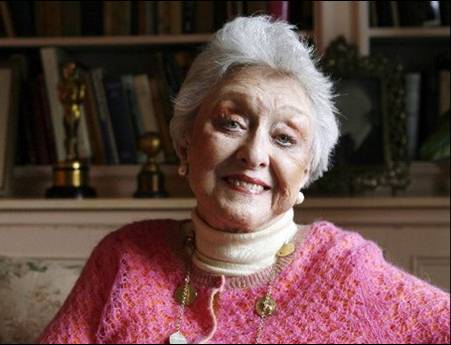
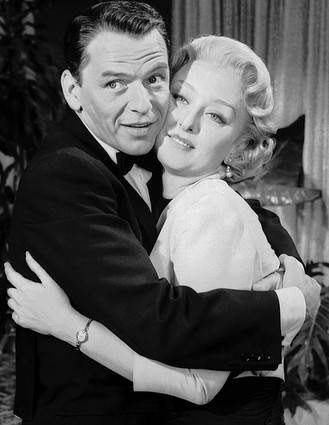
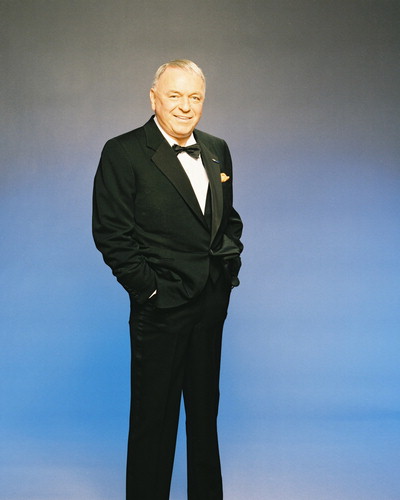
Five years ago, when Papa passed away, Caylor Evans moved in with Sassy, since Sassy had lost her driver’s license due to her poor eyesight. Sassy loves to cook—desserts especially—and there’s a reason why she earned the nickname Sassy in college! Papa (Frank) was a bigwig in the Nashville recording industry and therefore a lover of music—all kinds of music, everything from classical to jazz to 1980s “hair” bands.
Helen (Perty) and Gerald (Gramps) Bradley
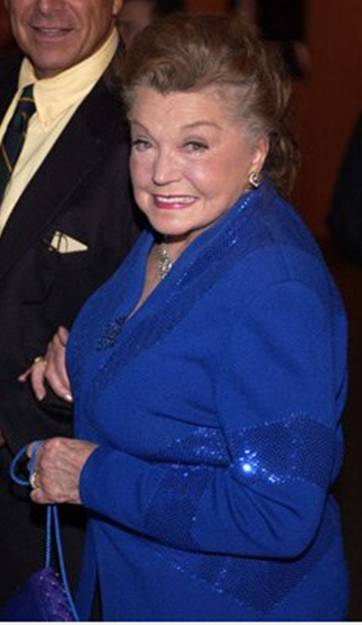
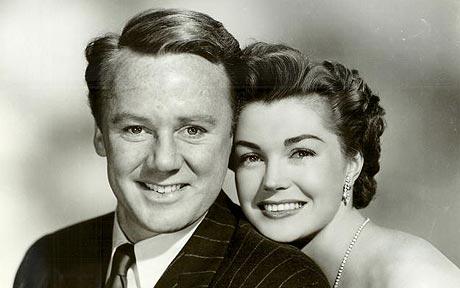
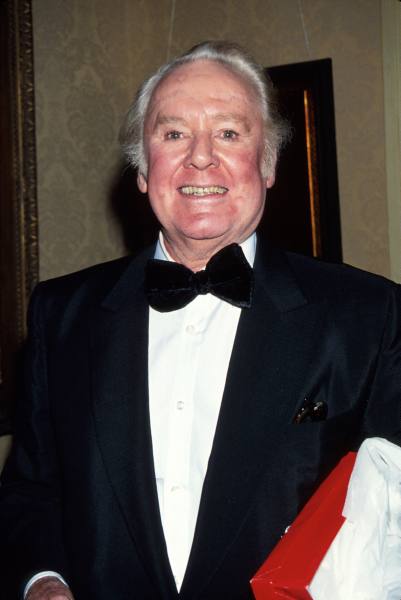
Gerald is a retired civil court judge, and Helen, after twenty years as an English professor, was the first female and longest-tenured president of James Robertson University. Even though she’s retired, Perty still keeps her finger on the pulse of what’s happening at JRU. . .which might lead to some meddling!
Because the book opens right before Christmas, lots of family members are popping up whom I hadn’t expected, primarily Caylor’s parents and sister—and the sister is sticks around for a while, too, which was also totally unexpected.

Dean Evans (Victor Garber), Dr. Susan Kirkwood Evans (Pamela Reed),
Caylor Evans (stock photo), and Felicity Sage Evans (Bryce Dallas Howard)
Caylor’s father is an international banking computer software specialist who, when he’s not traveling all over Europe, works from home—which happens to be Geneva, Switzerland. Dr. Susan Kirkwood Evans is an oncologist who now works with the World Health Organization in Geneva working toward the cure for cancer. Caylor’s younger sister, Felicity Sage, has been living a somewhat transient lifestyle for the past eight or ten years, most recently in Oregon.
In addition to Caylor’s family, I also have Dylan’s immediate family. First, we get to meet his parents:

Davis Bradley (James Read) and Grace Paxton-Bradley (Dana Delany)
Davis is the head of the large law firm his father, Gerald, founded (before Gerald went on to be a judge). Grace started there as a young lawyer (which is how she and Davis met) and now she’s a judge.
All for one and one for all
My brother and my friend
What fun we have
The time we share
Brothers ’til the end.
~Author Unknown
I had SO much fun writing a couple of scenes with Dylan and his three brothers—y’all are going to absolutely love Paxton, Spencer, and Tyler.


Dylan Bradley (Sam Talbot), Paxton “Pax” Bradley (David Alpay),
Spencer Bradley (Evan Lysacek), and Tyler Bradley (Christopher Mintz-Plasse).
Paxton (26) is a Ph.D. candidate in Medical Physics at Vanderbilt University in Nashville. Spencer (23) is about to start his last term as an MBA student at Northwestern in Chicago. And Tyler (21) is a Ph.D. student in math at MIT (yes, he’s one of those boy-genius types).
(Is anyone sensing a future Bradley Brothers series?)
And, of course, we can’t forget the two most important secondary characters:


Zarah and Flannery
Next week—a glimpse at the art in The Art of Romance, and I’ll answer your questions. So in addition to all of your other comments today, please post any questions you’d like for me to answer about The Art of Romance (or The Matchmakers series as a whole) next week.
Thursday Thought Provoker

The Etiquette of Contest Thank-You Notes
Back when I entered writing contests, there was only one option for thank-you notes: handwritten. In 2006, the last time I entered, we were still sending in hard copies of our manuscripts and getting handwritten comments back; so an e-mail thank-you note would have been considered unseemly.
However, now that contests have gone completely electronic, so have thank-you notes. But I’ve seen a few things—publicly and privately in notes addressed to me—that made me want to talk a little bit about the etiquette of writing contest thank-you notes.
Writing thank-you notes is not mandatory, but is something you should consider doing.
Just like following up with an agent or editor after a meeting (whether at a conference or elsewhere), or even someone who interviewed you for a job, sending a thank-you note to each of your contest judges and category coordinator(s) is plain and simple common courtesy.
Make it private, not public.
Just as you wouldn’t send one mass e-mail to everyone who attended your baby shower or wedding with a message saying “thank you all for coming and for giving us presents,” you shouldn’t send a general e-mail out to the mailing list of your writing group thanking your judges. (“Thanks to everyone who judged. I got great feedback on my entry. It really means a lot to me.”) The judges whose feedback you now have spent their time on your entry—taking time away from their own writing, their own family, their own free time to read your entry and give you feedback that will hopefully not only lead to you improving your craft, but eventually getting published.
Write individual thank-you notes for each judge.
Following in the same vein as the above, don’t just write one generic thank you to be sent to all three of your judges. (“Thank you all so much for your hard work judging for the contest. It was a lot of work for you, I know. I really appreciate all your feedback and advice.”) With the amount of time each judge spent on your entry, the least you can do is send a personal, specific message to each one. We’re talking e-mail here, people. It’s not like you’re spending money on paper, envelopes, and stamps—just a few minutes out of your day to show your professionalism and gratitude.
Be sure to include the judge’s number and your entry’s number.
Look at your score sheet. Somewhere on it will be a judge number—HRJ1 or CRJ2 (for Historical Romance Judge 1 or Contemporary Romance Judge 2). The category coordinator will match the judge’s number up with the person’s name and forward your thank-you note on to that judge. By including your entry’s number in the thank-you note, it helps the judge know to what entry you’re referring when you send your thanks.
Remember, this is professional correspondence.
While we’re so accustomed to dashing off an e-mail and clicking send without another thought, a contest thank-you note should be given the same amount of time and effort you’d give a letter you’d send to an editor or agent. Keep it professional. Take the time to make it polished. Proofread it (and then proofread it again!)—and maybe even have someone else proofread it for you. Make sure there are no typos and that it’s punctuated properly. Show the judge that you have pride in yourself and your abilities—and that you have respect for the judge—by making the thank-you note a polished piece of professional correspondence.
Be specific with your thanks.
Even if the judge didn’t have much—or didn’t have much nice—to say, find something in their comments which you plan to implement or which was helpful to you. (“Thank you so much for pointing out to me that I entered this in the wrong category. I will go back and look at the genre guidelines to see where this story would fit.” or “Thank you so much for the information on commas and quotation marks. I’ll visit the websites you listed and make sure I learn the rules.”) Pick out one or two of the constructive pieces of the critique that you plan to apply or that were helpful to you and thank the judge specifically for those.
If needed, wait a little while before sending a thank-you note.
If a judge ripped your entry to shreds and told you, either in so many words or in a round-about way, that you’re an idiot for thinking you could ever write, you might want to wait a few days to a few weeks before composing a thank-you note to that person. Wait until you can approach it with grace and mercy. Thank the judge for his/her time and effort, and leave it at that.
Do NOT get defensive.
Unless you’re receiving across-the-board perfect scores, it’s almost guaranteed you’re going to get a score/comment on your entry with which you don’t agree. It’s also quite possible that you’re going to get a judge who is completely subjective and judges everything based on the fact that you didn’t write this the way she would have written it. One of the quickest ways to show this judge that you aren’t ready to be pursuing publication is if you get defensive in your thank-you note. By its very definition, the note you are writing is to thank the judge for his/her time and effort, not to start an argument with the judge on why the way you did it is right and why the judge should see it the way you do. It doesn’t matter if the judge is outright, blatantly WRONG. That’s not the point of what you’re doing. The point of what you’re doing is to show gratitude toward the people who took time out of their life to judge your contest entry. That’s it. And if you can’t come up with anything nice and non-defensive to say, better not to send a note at all than to prove how much you’re not ready for this industry.
Contest entrants: Do you send thank-you notes? What kinds of things do you say to your judges in the notes? Has a judge ever responded to you—leading to a conversation or possibly even a mentorship (short-term or long-term)?
Judges: Do you expect to receive thank-you notes? Have you ever received an argumentative/defensive note? (Or a passive aggressive one—you gave great advice, and I’ll be sure to pass it along if I ever see someone who needs it?) Do you ever respond to the entrants who send you thank-you notes?
Saturday Special: THE CONSPIRATOR Review

- A riveting thriller, THE CONSPIRATOR tells the powerful story of a woman who would do anything to protect her family, and the man who risked everything to save her.
In the wake of Abraham Lincoln’s assassination, seven men and one woman are arrested and charged with conspiring to kill the President, Vice President, and Secretary of State. The lone woman charged, Mary Surratt (Robin Wright) owns a boarding house where John Wilkes Booth (Toby Kebbell) and others met and planned the simultaneous attacks. Against the ominous back-drop of post-Civil War Washington, newly-minted lawyer, Frederick Aiken (James McAvoy), a 28-year-old Union war-hero, reluctantly agrees to defend Surratt before a military tribunal. Aiken realizes his client may be innocent and that she is being used as bait and hostage in order to capture the only conspirator to have escaped a massive manhunt, her own son, John (Johnny Simmons). As the nation turns against her, Surratt is forced to rely on Aiken to uncover the truth and save her life.
Description from the official film website.
I may have mentioned once or twice that I minored in Civil War history when I was in school at LSU. Well, the last history class I took the semester before I dropped out was the class “The Civil War.” So I haven’t spent any time studying the immediate aftermath of Lincoln’s assassination after the arrest of John Wilkes Booth.
When I first saw the preview for this movie a few weeks ago, I knew I needed to see it. Thankfully, its “limited” April 15 release included Nashville. So fellow writing bud Liz Johnson and I made an evening of it, first with dinner at Panera and then the movie. It was in one of the smaller theaters at the twenty-seven-screen multiplex at 100 Oaks, and very few people were there when we arrived. But by the time the movie started, the room was pretty much full (and overly warm).
Because I knew I wanted to see the movie without knowing the ending, I purposely avoided doing any research into the case against Mary Surratt, mother of one of the Booth conspirators, John Surratt.
From the beginning of the film up to the death of John Wilkes Booth, the movie was spot on with historic accuracy—as well as with costumes, sets, and cast (special shout-out to Kevin Kline as Secretary of War Stanton and Danny Huston as Joseph Holt). So I’m curious to pull several of my favorite Civil War and Reconstruction history books off the shelf and read about the trial and, especially, Frederick Aiken.
 There have been mixed reviews of this film, mostly stemming from the slow, measured pace of the film. This is definitely one of those slow-build stories (the word “thriller” in the description from the official site above threw me a little bit). The audience is asked to take this ride right along with Aiken (McAvoy) as he is asked (ordered) to take on the defense of Mary Surratt, charged with conspiracy to assassinate President Lincoln, Vice President Johnson, and Secretary of State Seward. Mrs. Surratt owned a boarding house in Washington DC. Her son, John, had served as a courier/spy for the Confederacy—so he knew all the best routes out of DC and into Virginia. He and JWB became friends in January 1865, and John Surratt invited Booth and the other co-conspirators to his mother’s boarding house where they planned, originally, to kidnap President Lincoln and ransom him for the Confederate soldiers being held in Union prisons. Because of this—and because of the army’s inability to find and arrest John Surratt, Mary Surratt was arrested and put on trial as an accessory.
 Born in 1832 in Lowell, Massachusetts (making him 32–33, not 28 as said in the movie), Frederick Aiken studied to be a lawyer by apprenticing to his father-in-law (also a discrepancy in the movie, in which he isn’t married—which is weird, because this info as well as the year of his birth are on the movie’s official website) and was admitted to the Vermont Bar Association in 1859. Much about Aiken’s life after this—including his military service—is conjecture (read the movie website’s bio of him—very interesting).
 The movie focuses solely on Mary Surratt’s trial—and Frederick Aiken’s vocal and continued objections to the procedure of a civilian being tried by a military court. There were many times during the trial scenes when there were certain not-very-nice words that wanted to come spewing out of my mouth when the movie showed just how prejudiced against Mary Surratt the court might have been (I hope they studied the transcripts of the trial and took much of the story/dialogue from those records). There are so many themes and questions raised in this film that are still applicable—habeas corpus, innocent until proven guilty, justice versus revenge, etc.
The story unfolds at a slow, methodical pace, as does the relationship between Frederick and Mary as Mary slowly reveals what she knows to Frederick. The one thing that bothered me the most (aside from the lady sitting behind me who crunched on popcorn the first half of the movie and then spent the entire second half loudly sucking the husks out of her teeth) was the choice of the “haloing” effect with the lighting. The cinematographer made great use of the natural light—through windows, diffused through curtains, outside—as well as the candle/lamp light. But there were many scenes when there was so much haloing of the light that the actors took on a transparent effect—as if they were ghosts instead of real people. Maybe director Robert Redford meant that as some kind of psychological statement, but it didn’t work for me.
Costumes were great, but unlike in Jane Eyre, in which we got to see the gorgeous gowns in detail, because this isn’t a “girly” movie, we didn’t get to see much of the absolutely fabulous hoopskirts. My favorite is a dress worn by Sarah (Alexis Bledel), Frederick’s girlfriend, about halfway through the film—it’s an almost teal blue and worn with a beautiful lace collar. I wish they had a photo of it online, and that they’d shown the full dress on screen! Here’s a behind-the-scenes look at the film’s costume design:
Bottom Line: I thoroughly enjoyed the movie, and am looking forward to a second viewing once it comes out on DVD and I can enjoy it in the silence of my own house. It’s not a movie for everyone. If you’re looking for intrigue, thrills, and excitement, this definitely is not the movie for you. It almost feels more like a stage play at times, and it’s definitely a “procedural” in content and in structure. Great historical film, and a fantastic look at an event and two very important people which haven’t been given the attention they deserve until now.
THE ART OF ROMANCE–Character Casting & Character Names
 Last week, I shared the original story idea behind The Art of Romance, as well as the Real World Template who originally gave me the idea for this story, chef Sam Talbot (pictured). As I worked on this idea the first few weeks after that first write up, I knew those placeholder names weren’t going to work, especially for the two main characters.
At the time, I considered casting the heroine with the plus-size model Kate Dillon. I very quickly realized she didn’t fit the image of the character I had in my head. . .but the name stuck. The last name, anyway. Which led me to Dylan for the hero—and the decision that he was going to be a younger hero than I usually write—only twenty-eight years old. Since I knew all three of the girls in the Matchmakers books had gone to school together, and that I didn’t want to make them all that young, I made the choice to try a story in which there’s a seven years age gap between the heroine and hero.
I like mining my family tree for both classic and unusual names. I ended up not going further than my grandmothers: Edith Ethel Bradley Dacus and Julia Katherine Caylor McLellan. Bradley has always been one of my favorite names—and while I considered a moment using it for the first name, I decided it was just a little too common a first name for one of my heroes. So it became Dylan’s last name. Then, there was my heroine. Even though, obviously, in my family Caylor is a surname, I’ve always loved the idea of it as a first name. But I wanted a relatively common last name to go with it. Not sure where Evans came from, but it just seemed to fit.
If you’ve been hanging around here for a while, you know that I use Real World Templates for my characters, which are usually actors or actresses, with the occasional model or reality TV personality thrown in. Well, with the Matchmakers series, because these aren’t characters/stories I’ve been working with for years—as with the characters of all of my previous books—it was a lot easier for me to be slightly more flexible with what my characters look like. After going through a total redesign of the cover for Love Remains when the initial cover featured two people who looked nothing like the characters, my editor told me that they really wanted to use stock photo images for the covers. And since I knew by then that they planned to focus on the heroines, with just a hazy image of the guy in the background, I focused my search on Caylor.
There are several stock photo websites around. The one I happen to prefer using is JupiterImages.com. I like using it because (a) I could sign up for a free user account (to be able to pull images without a watermark across them) and (b) because their search protocols are fantastic—allowing me to really hone my search for specific characteristics/keywords.
After deciding that Kate Dillon wasn’t the right template for Caylor, I ran across a gorgeous redheaded plus-size model on both Nordstrom and Lane Bryant’s websites. I was able to find so many images of her conveying a wide range of emotions, and she fit more of the kind of person I thought Caylor might be.
And then I started writing Love Remains, in which Caylor is a major secondary character. And I realized that I needed to change up Caylor’s personality somewhat to create more contrast between her and Zarah. And besides, someone who lives with her grandmother who goes by the grandma-nickname “Sassy” had to have some of that sassiness rub off on her. So, since I wanted to find stock photos that, maybe, Barbour could use, I went to Jupiter Images and did an image search for young woman–>red hair. After quite a bit of searching and refining (one person only, age 25–30—because their 30-35 year old tagged models looked more like 40–45 years old, caucasian, etc.) I ran across this picture:

There was so much life, so much personality—so much STORY—in that one picture that I knew she was the perfect template for Caylor. So I figured out which photographer/company had posted that picture and refined my search further to find more pictures of that model, which can be seen here. I decided I would still make the character larger than this model, but not so much that it would be obvious if Barbour decided to use more of this model than just her face on the cover. Here’s the description I sent to Barbour, along with several images of this model:
A. Main Character #1: Caylor Evans
 Age—35
Occupation—English professor at a small liberal arts college, published author
Hair Color—Red
Eye Color—Turquoise (bluish-green)
Hair Style—Short, sassy, “stylishly messy”
Clothing Style—Trendy and stylish but professional/understated
Overall Description—Six feet tall, size 14 (which makes her about “average sized” so not too skinny but not plus-sized either). Pretty, with a big smile and twinkling, mischievous eyes. Likes to laugh. Occasionally wears glasses, but not all the time.
B. Main Character #2: Dylan Bradley
 Age—28
Occupation—Artist, art professor
Hair Color—Dark brown/black
Eye Color—Brown
Hair Style—Curly, longish (not “long” hair, but not “clean cut” either)
Clothing Style—very casual—when he’s teaching (only part-time), he’s in nice, dark-wash jeans and an untucked button-down shirt; when he’s not teaching, he’s in paint-splattered jeans and T-shirts; barefoot whenever he can get away with it.
Overall Description—6’3″ and slender, making him look very long limbed. Somewhat “romantic” and “dreamy” while also being totally masculine.
(and I sent them this image as a suggestion for the background image of Dylan, since I knew this guy would be somewhat blurred out in the background.)
So, that’s how Caylor and Dylan got their names and looks.

Next Friday: Another drawing for two more copies of The Art of Romance and a look at some of the secondary characters—including Dylan’s brothers!

 KayeDacus.com