Writer-Talk Tuesday—Writing with Exclamation Points instead of Question Marks

In 2009, the film Man on Wire took home the Academy Award for Best Documentary. It’s a film about the high-wire walker Philippe Petit who walked a wire suspended between the World Trade Center towers in the 1970s. After the film won the award, Petit was interviewed by NPR’s Weekend Edition host Scott Simon, and there was one section of the interview that really resonated with me:
Simon: Can I get you to recall what that first step was like?
Petit: That moment, the slow-motion shifting of my weight, from the position where I have one weight anchored on the building and one weight—one foot touching the cable to turn the page from pedestrian and to open the page to life, to a short life as a bird, is of course for the wire-walker a point of no return. And for me, it was stepping into the live moment of living my dream after six-and-a-half years of dreaming my dream.
Simon: …What would have happened if you’d slipped?
Petit: That’s a very wrong question, because it doesn’t apply to me. I do not put myself in a state of question mark on the wire. Actually, the question mark, I transform it in[to] an exclamation point. And, again, when I say I’m writing in the sky, it’s not a beautiful image, it’s actually exactly what I’m doing. I have composed my text in my head, and I’m just now writing. I force my body to follow my will; and I will never put myself in a state of risk, only a state of ‘I hope the wire is strong enough; I hope I have enough training to do…to walk on that wire.’ And, at the same time, what I am sharing with you, this solidity, I am completely lying because here I am in the most fragile state and the most fragile universe there is. But this combination of extreme, the solidity in my heart and in my body, and the fragility of being a man on a wire, is actually the beauty of the miracle of wire-walking. So let’s not try to explain it further than that.

[The entire interview can be heard here.]
Petit’s statement about turning the question mark into an exclamation point struck me—especially since he reinforced it with the image of himself as a writer (and later in the interview as a poet). How many times when we sit down to write do we do it in a state of Question Mark instead of a mind set of Exclamation Point? For example:
- Can I do this?
Am I really called to be a writer?
What if my story isn’t good?
What if no one likes my writing style?
What if everything I write gets rejected?
What if it’s never good enough?
Am I following the rules?
How am I ever going to get to 50,000 (100,000) words?
Sitting down to write in a state of Question Mark can paralyze us—we, like Petit, are at the point where we have one foot on the solid surface of “real world” (for him, the building) and “writing world” (the high wire). To be able to step out into that writing world, we have to turn those paralyzing questions into Exclamation Points:
- I can do this!
I am called to be a writer!
My story is good!
I like my writing style!
Rejection isn’t the end of the world!
It’s good enough for me!
I can worry about the rules later!
All I have to write today is one page…one paragraph…one sentence…one word!
Self-doubt never led anyone into success. If you read/listen to interviews with successful people—whether they’re successful in business, the arts, raising their families, philanthropy, or whatever area of life in which they’ve applied themselves—you’re going to find out that though doubts may have surfaced, they didn’t listen to them, didn’t give them any ability to take a foothold in their lives.
If Petit stood at the wire thinking, What will happen if I slip?, he would never get that anchor foot off the solid ground. He doesn’t allow himself to think fatalistically—and yet at the same time, he recognizes the fragility of life. He’s not going out on the wire with a casual disregard for his own mortality. For him, it is the combination of the fragility of life and the solidity of the confidence he has generated in his own heart and mind as to his calling that allows him to pull that anchor foot off the building and onto the wire. To live life, as he said, for a short time as a bird in flight.
Yesterday, the Question Marks surfaced for me again. I learned that both of the contemporary romance series proposals I had out have been rejected. Perhaps not fatally—as they were both only with one publisher. But rejected nonetheless. And even as an author with (about to be) nine books out and three more under contract, that rejection is enough to turn the one or two Exclamation Points I had from signing a new contract to curl over into Question Marks again. Was it me? Do they not like me? Is it because my books don’t sell enough copies? What’s wrong with me that they don’t want to work with me anymore? Is it because after so few books, I’m already showing that I’m a hack and can’t come up with new/unique/interesting story ideas?
How quickly the “Yay, they like me! They like my stories so much they’re willing to give me money to write them!” turns into the negative self-talk, the self-doubt, the assurance that I’m washed up as a published author instead of someone who is still, very much, at the beginning of my career as a published author—convincing myself that it’s over.
So my goal for the rest of the week is to recognize the Question Marks and whenever one surfaces turn it into an Exclamation Point.
In closing, I’d like to share this quote from Norman Vincent Peale, author of The Power of Positive Thinking and founder of Guideposts:
Formulate and stamp indelibly on your mind a mental picture of yourself as succeeding. Hold this picture tenaciously. Never permit it to fade. Your mind will seek to develop the picture… Do not build up obstacles in your imagination.
~Norman Vincent Peale
What Question Marks are you dealing with in your life (writing, work, family, etc.)? How can you change them into Exclamation Points?
Book-Talk Monday—Setting a Book Aside

Two weeks ago, we talked about what we like in books—what keeps us reading.
I’ve mentioned on a few blogs and in the comments here recently that after three months and at only 53% of the way through the book (on my Kindle), I finally made the decision to stop reading A Clash of Kings, the second book in The Song of Fire and Ice (a.k.a., The Game of Thrones) series.
This could have been an easier decision to make if the book had either been a free download or checked out from the library (and I didn’t, because the wait list was too long—plus I knew there was no way I’d get through a book that long, even with the option to renew the check-out for an additional two weeks). I have no problem setting aside books I have no financial investment in.
In the three months that I was trying to make it through Clash, I downloaded at least a dozen free books and I don’t even know how many samples (romances, both historical and contemporary, both inspirational and general-market). But I wouldn’t allow myself to start any of them until I finished the book I had purchased specifically to read—because I’d enjoyed the first book so much.
So I was left with a dilemma—should I put aside a book I’d purchased to read books I got for free? Especially since I owned the free books, which means I have all the time in the world to read them.
But then I realized that by forcing myself to try to keep reading Clash, I wasn’t doing much reading at all—because I wasn’t enjoying that book, which meant I didn’t want to read.
So I made the decision. Set the book aside. Indefinitely.
To cleanse my reading “palate,” I decided to ease back into it by re-reading a favorite classic, O Pioneers! by Willa Cather—another book which, yes, I own in hard copy but also have as a free download on my Kindle. I finished it in a couple of days and immediately moved on to a new book from there, and I’m back to looking forward to reading every day again.
So that leads me to today’s book-talk question . . .
How do you make the decision to set aside a book? Does it make a difference if you’ve paid for it or not?
Fun Friday–Virtual Shopping . . . and Virtual Dressing

I admit it . . . I have a shopping problem.
When I have money, I shop too much.
When I don’t have money, I have a problem because I can’t go shopping!
And that second one has been the issue for me for more than a year as the amount of freelance editing work I’ve received has dwindled. And now, even though I’ve taken a part-time job to replace a portion of the income from the freelancing, it still doesn’t give me a whole lot of disposable income to be able to do more than buy most of my necessities.
So I’ve converted that shopping obsession into a virtual shopping experience. I’ve done most of my shopping online for years now. But the kind of online shopping I’m doing now doesn’t cost me anything—and it doesn’t exacerbate the storage issues I already have in my house (I only have two tiny closets which don’t hold even half the clothes and shoes I already own). It also has the added benefit that I don’t have to worry about how things fit—and I’m much thinner in this virtual shopping world!
Here’s my virtual closet:

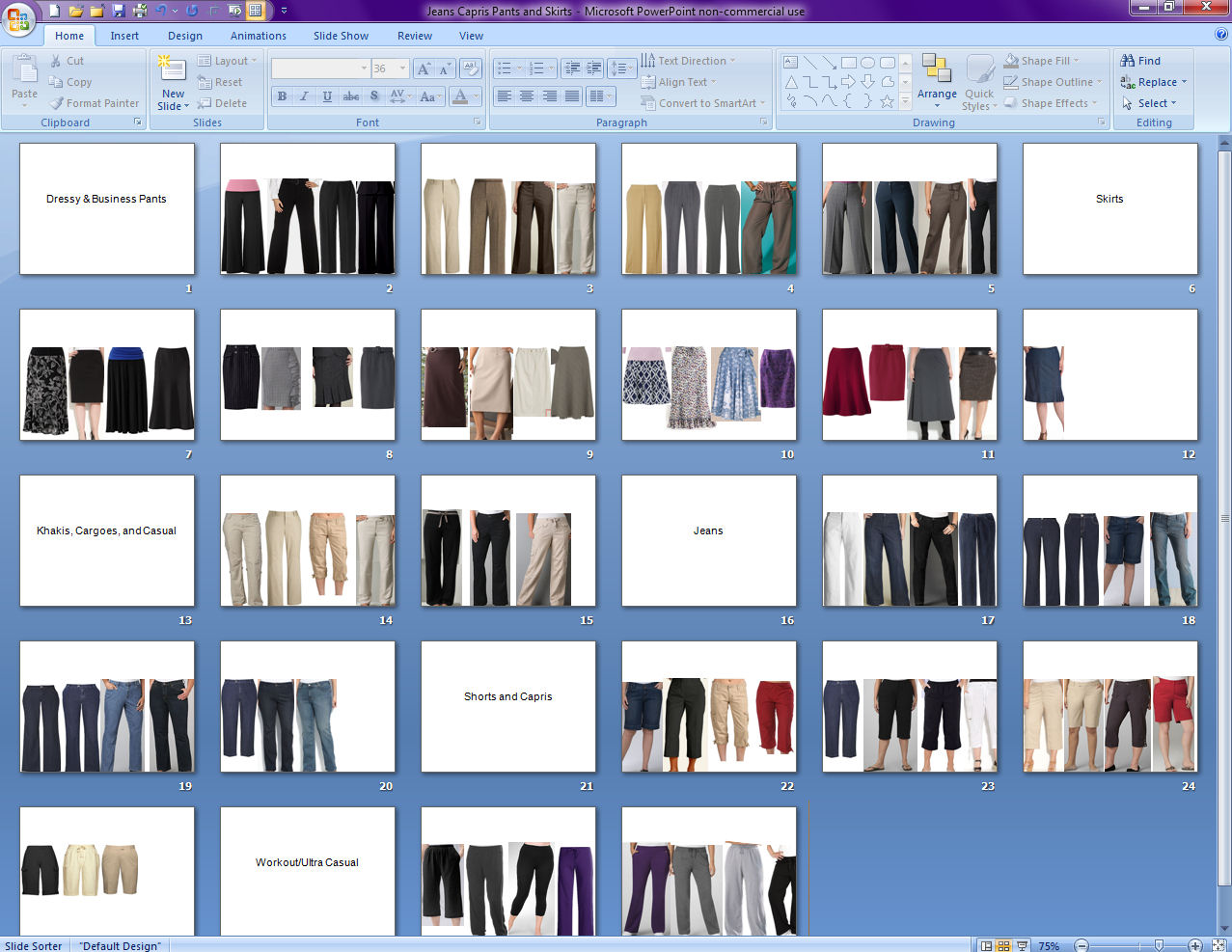
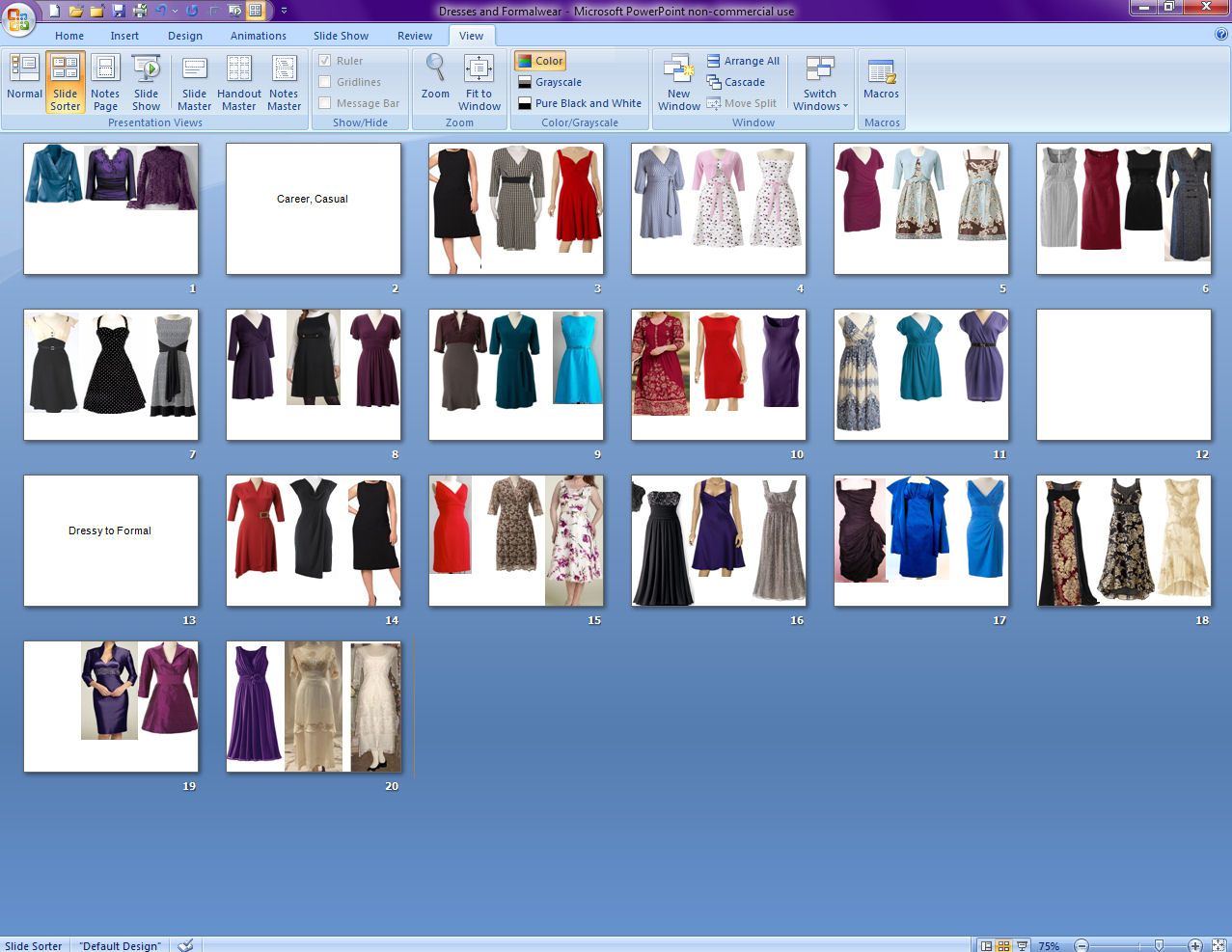

And, of course, there’s my shoe obsession—which, at this point, is very much a virtual obsession for me since I’m still confined to flats only because of my ankle:
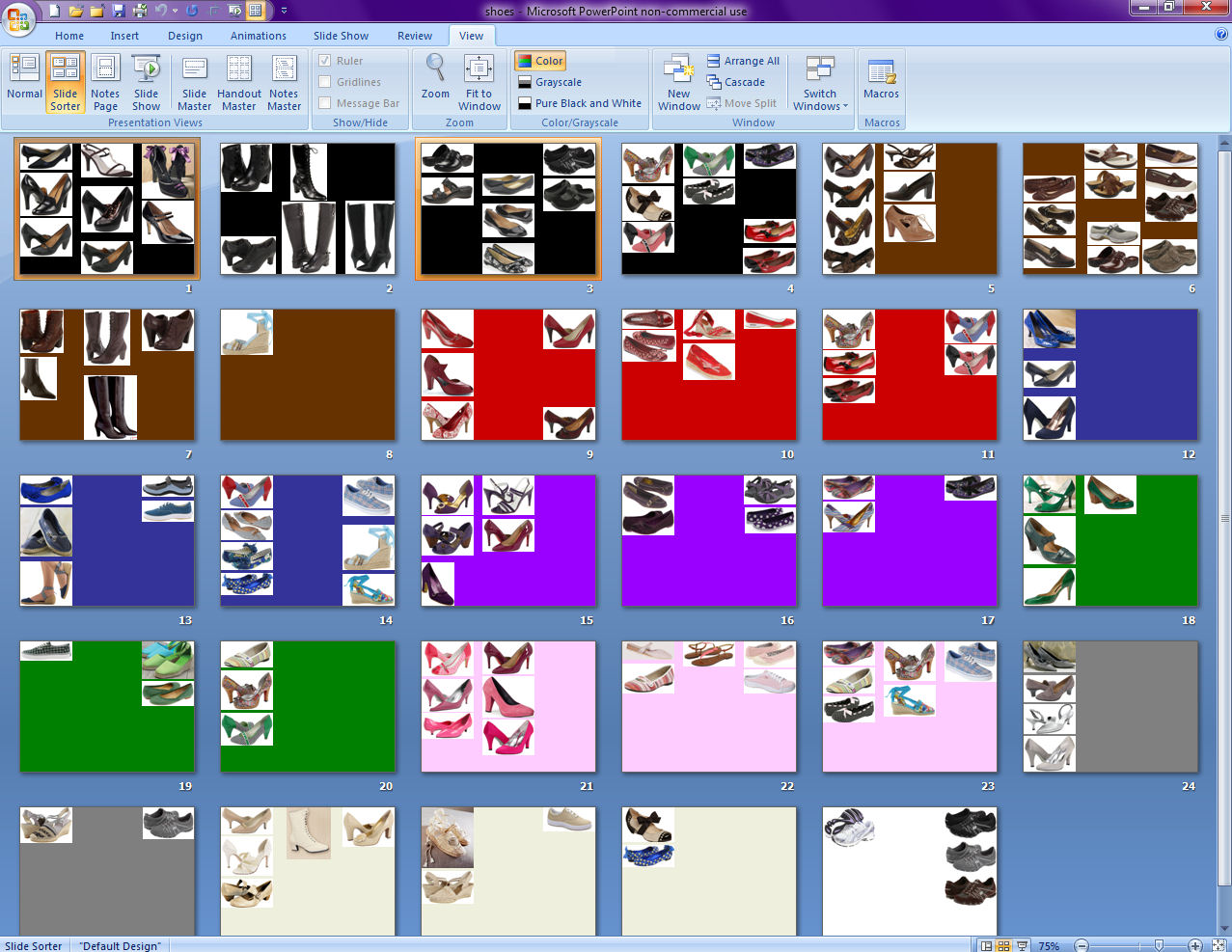
In the last couple of years, I’ve become quite adamant about accessorizing—investing whenever money allowed in bags and jewelry. So, of course, I can’t leave those out of my virtual shopping trips:


But grabbing these images and sorting them into collections is only part of the activity. The most fun part comes from putting together outfits and accessorizing them:

Of course, I call this virtual shopping . . . but really it’s harkening back to my childhood playing with Barbies and dressing/accessorizing them.
Thursday Thought Provoker
Writer-Talk Tuesday: Three Necessities for a Writers’ Conference
Last week, Pepper Basham asked several authors for three pointers for attending a writers’ conference—what would we suggest writers “take” with them to a conference—more than just pens and notebooks and comfy shoes.
Here are my three necessities for a writers’ conference . . .
1. A plan.
 It’s important to go into a writers’ conference with a plan in place—not just for what sessions you want to attend and what editors/agents you’re going to request appointments with, but a plan for what you’re going to do if you don’t get the appointments you want—how will you make sure that you get to talk to that publishing professional? Also, make a plan for which editors’/agents’ tables you want to sit at during hosted meals. Even more importantly, plan ahead to meet up with online friends, new and old, to make sure that you find each other—because sometimes it’s hard to find one person out of seven hundred!
2. A purpose.
 Sure, you have a purpose in attending the conference, but what’s your purpose for why you’re writing? And if your answer is “to get published,” you may need a new purpose. There should be something more to the reason you write than the pursuit of a contract with the “right” agent or the “right” publishing house. What’s your purpose as a writer? Clarify that before you get to the conference. Write it down as a mission statement. (Google “writing a personal mission statement” if you need help.) Carry that mission statement in your pocket/bag with you throughout the conference. Pull it out every couple of hours and read it. Don’t let the craziness and chaos of conference make you lose focus on your purpose as a writer.
3. A perspective.
 Not only do you need to have a perspective on who you are and what makes you and your writing unique, you need to plan ahead for having a positive, pragmatic perspective on what’s going to happen when the conference ends. What will you do if you don’t hear what you want to hear? What will you do if all of the editors and agents you talk to say, “Thanks, but no thanks”? How will you handle the emotional surge of conference, followed by the inherent crash afterward once you’re back home again and not surrounded by seven hundred other writers? Most importantly, though, is determining your overarching perspective of yourself and your writing and your life and making the decision before you leave for conference that no matter what happens, you aren’t going to let it affect your belief in the calling God has put on your heart to be a writer.
~~~~~~~~~~~~~~~~~~~~~~~~~~~~~~~~~~~
If you’ve ever attended a writers’ conference, what three necessities (physical, emotional, and/or spiritual; funny or serious) do you think attendees need?
If you’re planning to attend ACFW in less than two weeks or another conference sometime soon, how are you preparing yourself?
Book-Talk Monday: Surprisingly Enjoyable Assigned Reading
As a kid, I was an avid reader . . . except when it came to the books/stories I was assigned to read for school. I almost always hated assigned readings (with my least favorite to date being Fear and Loathing in Las Vegas, which was assigned for a modern American History class my first semester of college).
So with as often as I balked at actually sitting down and picking up those assigned stories and novels, I occasionally (though not as often as I’d like) found myself actually enjoying the assigned readings.
So that’s what I want to talk about today.
What favorite books/stories/authors have you discovered through assigned readings from school?
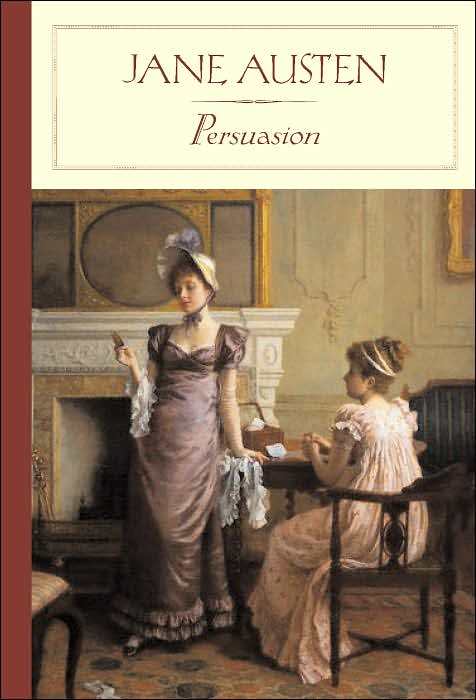 The biggest, and most obvious, one for me is Jane Austen. In eleventh grade, we read Pride and Prejudice. And while I didn’t fall in love with that book or with her as an author then, I did remember ten years later that I didn’t hate it. So in 1998, when I saw the movie Persuasion, I decided to give reading Jane Austen another shot—starting with Persuasion—and I fell in love. (And Persuasion remains my favorite JA book.)
Another author I was forced to read in high school was Willa Cather. And while I wasn’t really a big fan on My Antonia (the book we were assigned), I did go on to fall in love with O Pioneers! (which I just finished re-reading last night).
One of the biggest surprises to me, with as much as I absolutely loathed The Scarlet Letter in tenth grade, was when I got to college and we read a few of Nathaniel Hawthorne’s short stories in American Lit—and I discovered I did actually like NH’s writing (Young Goodman Brown being a favorite).
So, what have been your surprise favorites discovered from assigned reading over the years?
Fun Friday–What Matters Most
I thought it would be fun over the next couple of weeks to share with you some of my old stuff . . . writing I did back before I really knew what I was doing. I’m going to kick it off today with the first scene of my first completed manuscript, What Matters Most.
(And those who have read A Case for Love may recognize these characters’ names.)
What Matters Most
Chapter One
Andrew held the directions in one hand and steered with the other. He should turn around – he’d probably passed the turn-off already. But the woman had said to go ten miles after he turned north onto River Road from Main Street. He’d passed several subdivisions shortly after turning on the road that ran along the river on the opposite side of the city of Bonneterre, Louisiana. Now, he’d been driving for a while without seeing but one other road, and it had been a few miles back.
Weren’t most women directionally challenged?
As a large animal vet, Andrew Blakeley occasionally made house calls when an animal wasn’t in condition to be moved. He’d gotten this page on his day off. When he’d called the office, the assistant had given him a number and a name and said it was an equine emergency.
Andrew had been pleasantly surprised when the client turned out to be Rebekka d’Arcement, the very pretty woman who had just started as the weekend sports anchor on the local news he watched. From seeing her on TV, Andrew had entertained his own imagination with what it would be like to know someone like her. She was one of those girl-next-door types yet had an air of authority and an obvious knowledge of all sports that made Andrew admire her for more than just her pretty face.
He couldn’t stifle a yawn – a yawn so strenuous it threatened to split his jaw from his face. The page had come only four hours after the end of his shift… his shift which had ended at six in the morning. Sometimes – like now – he seriously considered leaving the prestigious animal hospital for a veterinary practice which kept normal hours, instead of being open twenty-four hours a day, seven days a week. As the veterinarian with the least seniority, Andrew was stuck with the graveyard shift.
He sighed when he finally saw the sign for the road where he was supposed to turn. A quick glance at his trip odometer told him it had indeed been almost exactly ten miles to this turn-off. The narrow road was in surprisingly good condition, and old farmhouses sparsely populated the scenery.
The white fence and green mailbox showed Andrew where to turn next, and he pulled his Ford Explorer off the pavement onto a smooth gravel drive. The large expanse of yard was meticulously groomed and landscaped, creating a perfect frame to showcase the light blue, narrow, three-story Victorian house.
A classic, red convertible sat under the protection of the carport at the house, but Andrew followed another branch of the driveway around to the stable, as Rebekka d’Arcement had instructed him to do.
He opened the tailgate of the SUV after he got out, but didn’t pick anything up besides his black bag which had the most rudimentary of utensils in it. He followed the sounds into the stable and stopped at the last enclosure.
A young girl was bent over a horse trying to soothe it as it writhed and groaned with obvious birthing pains. The girl looked a lot like Rebekka d’Arcement.
He’d never considered the thought that Rebekka d’Arcement might be married, much less have a child this old. She didn’t look old enough to have a teenaged daughter, even one in her early teens.
“Excuse me,” he said to get the girl’s attention, while he grabbed his stethoscope out of the bag.
The girl turned and looked over her shoulder at him. “Are you the vet?”
“I am.” Andrew entered the stall and listened first to the heart of the mare, then for the heartbeat of the foal.
Satisfied with what he heard, Andrew rocked back on his heels. “Is your mother here?”
The girl’s mouth dropped open as if she wanted to say something but couldn’t.
“Or your father? No offense, but even if this is your horse, I really need to speak to an adult.”
The girl stood, flipping her dark auburn braid over her shoulder. “My mother and father live in Houston. They moved there my junior year of college… eight years ago. Perhaps I should introduce myself. I’m Rebekka d’Arcement and I’m the one who called for a veterinarian.”
Thursday Thought Provoker
What Makes You Want to Keep Reading?
I never thought I’d be one of those people reading books on an electronic device. Nope—never—not me!
That was, however, until I actually got one. And I discovered one of the greatest pleasures of having a Kindle—book samples. Kindle e-books (and I’m sure this works with other retailers and their devices, too) allow a customer to download a sample of the book to read before making the decision to purchase.
Since I’m coming out of a (work- and) self-imposed reading hiatus of about three or four years—and because the only reading I have done in that time has been “market research”—I have a lot of catching up to do in several genres of fiction, but most especially general-market historical romance. And while Christian publishers are great at offering entire books for free on Kindle, larger general-market publishers typically don’t do that. And since I’ve spent the last eight months pretty well scraping pennies together to buy Ramen noodles, purchasing new books has been out of the question for me.
 However, the e-book sample program works great for me in three distinct ways: (a) it fulfills that need to shop—to get something new, something I didn’t have before—which I can’t otherwise do when I’m sitting on a $5 bank balance at the end of the month; (b) it’s allowed me to try out new and new-to-me authors I might otherwise never have taken a risk on; and (c) it’s allowed me to compile a wishlist of books I know I want to read—not just that I think might be interesting. Why do I know I want to read them? Because I’ve read the sample chapters—and wanted to be able to keep reading when I reached the end of them.
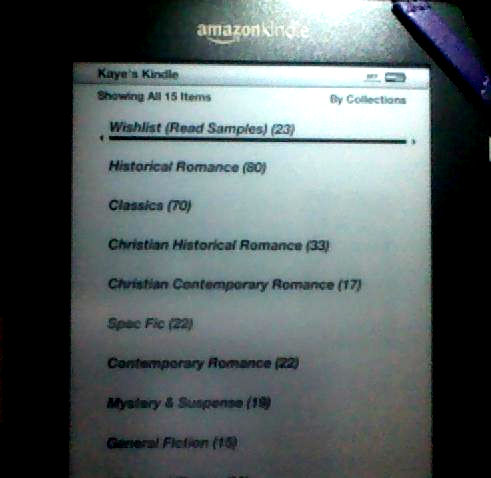
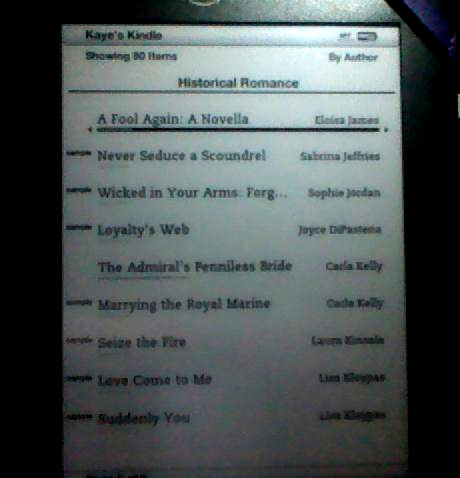
As you can see by the screen capture of my Kindle, I have 80 titles in my Historical Romance collection—of which at least 80% are samples—and only 23 in my Wishlist (Read Samples) collection. I read, on average, three or four samples a week; I’ve had the Kindle since February, which means I’ve read at least 100 samples since getting the device. So why only 23 titles on the wishlist?
Well . . . because only about a quarter of the ones I’ve read have made me want to keep reading (and I should say that while general-market historical romance makes up a good portion of the wishlist, it also includes Christian fiction, general and literary fiction, and speculative and YA fiction).
As most of you know, I judge in a lot of unpublished-author contests in which I get the opening pages of someone’s novel, anywhere from three to thirty pages. And one of the criteria I must judge the book on is whether or not I want to keep reading at the end of the sample. I’ve had some in recent months which I couldn’t wait to finish (and was relieved when I got to that last page) and others with which I wanted to know who the author was so I could get her to e-mail me the rest of the manuscript so I could keep reading.
 Same thing with e-book samples . . . except, of course, when I find one that I don’t enjoy reading, I don’t have to read it to the end—I can just delete the sample from my device and move on to the next one. Then, when I find one that does make me want to keep reading, since I probably won’t have money to purchase it immediately, it gets moved into the Wishlist collection until such a time as I do have a little disposable income and can make those purchases. (Or, with Christian fiction, until it goes up for free to promote the author’s newest release—yes, I must admit, I do take advantage of this—and that’s how far behind I am in keeping up with the Christian market! Though, now that I think about it, most of the Christian books I’ve downloaded free onto my Kindle recently are those I already have hard copies of on my shelves.)
Which leads me to the question I’d like for us to discuss today . . .
After reading the opening chapter(s) of a book, what makes you want to keep reading?
And let’s try to get a little deeper than “because it’s a good story and I like the characters.” Think about books you’ve read recently—those you’ve devoured and those you had to force yourself to continue reading. What was it that made you devour the great books? What was it that made the others so tedious? (And let’s try not to disparage specific books—you never know who might be reading this blog!)
And if you’re a sample reader, like me, what will compel you to spend $5.99, $7.99, $9.99, or even higher, for the privilege of reading the whole book?
Fun Friday–This Guy Just Won’t Leave Me Alone!
Okay, so we all know that I’m supposed to be writing Follow the Heart, the first book of The Great Exhibition series. And with these two guys as the templates for the leading men, it shouldn’t be all that difficult, right?
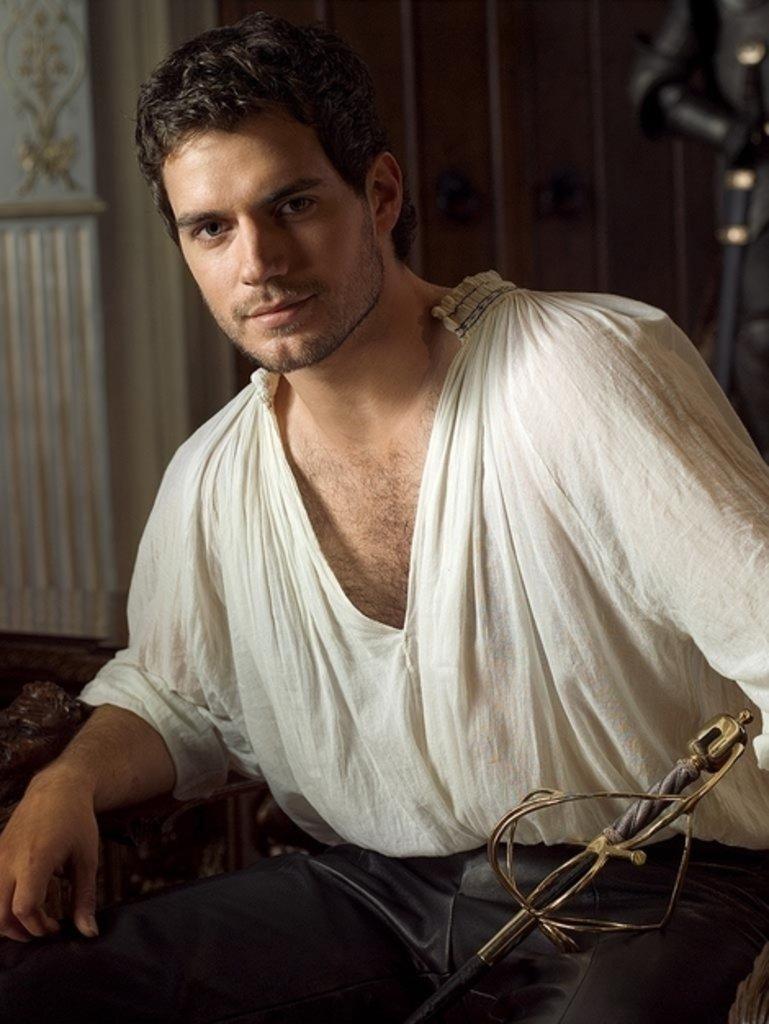

Henry Cavill as Andrew Lawton and Lee Pace as Christopher Dearing
But I have a problem. You see, a week or so ago, I was “template shopping” on my favorite stock photo site, JupiterImages.com and I ran across this guy (click thumbnail to see larger image):









All my creative energy the last few days has been spent on the character that is forming around this template. At first, I thought his name was Preston, but then that didn’t feel right. I went through several other names (Rob, Patrick, Brian, Gary), but none seemed to be working. I think I have a name now, but I’m not sure.
Here’s what this character has revealed to me about himself so far:
He’s forty-four years old. He graduated from Middle Tennessee State University with some kind of engineering degree in addition to his Military Science focus with being in ROTC. He served in the Army for sixteen years, leaving in 2004 after two back-to-back tours in the Middle East with the 101st Airborne (I haven’t researched any of this, so if that’s impossible, please forgive me). He’s now a senior pilot with a charter-jet company flying out of Nashville. He likes to read, obviously. He’s never been married, but dotes on his nieces and nephews. He has four siblings: two older sisters, a younger brother, and a baby sister (he’s right in the middle). His oldest niece (who’s in her early twenties) is getting married in a few months and, because her own father is out of the picture, she asked her doting uncle to give her away. His parents were peace activists during the Vietnam war, so they weren’t really thrilled with his choice to go into the Army. He sings in choir at church (bass) and is good at it.
I think he finally revealed his name to me: Philip Bradford Jacobs IV—going by Brad, since his dad goes by Phil. But his mom calls him Peanut, because of his initials.
And . . . what? Who is this guy? What else does he like/do? What are his big internal and/or external conflicts? What’s the issue from his past he just can’t get over (until he meets the right woman who helps him overcome it)?
Most importantly, who is the woman who would be the right match for a guy with these stellar qualifications and experiences?
Maybe if y’all can help me figure out who he is and what his story is, he’ll finally leave me alone so I can get back to Andrew and Christopher!!!

 KayeDacus.com