NaNo Prep: Dressing Up your Story Bible
Yep. We’ve finally gotten here. Today, it’s time to talk about . . .
COSTUMES!
Whether you’re writing ancient Rome, Regency England, Mars Colony circa 2445, or a world of your own making, your characters will, in most cases, need some kind of garments to wear. (The ones who don’t . . . well, that’s a whole other post.)
And even if you’re writing contemporary, you still need to figure out what is in your characters’ wardrobes. Because what they wear says a lot about them. No, you’re not going to describe every single outfit. But YOU need to know what they wear because what a person chooses to wear not only says a lot about who she/he is, but it also can determine/influence how others react toward him/her.
In preparing for NaNoWriMo, here are some things to consider when it comes to costuming:
What is the appropriate style, fabric, cut, color, etc., of clothing for the time, location, and season in which your story is set? Don’t forget, this is as important for men as it is for women.
Are there any colors, fabrics, styles, cuts (hemlines, necklines, sleeves, etc.) that are inappropriate or even taboo in your storyworld’s culture? In Victorian times, for a gentleman to be seen by a lady in his waistcoat and shirtsleeves (i.e., without his coat on) was considered as shocking as seeing a man in public in his underwear now would be. Throughout the ages, a woman dressed in a certain color signaled certain things about her—for example, in 19th Century British–American culture: black for full mourning, gray/lavender for half-mourning, red for…well, you know what red signals! 😉
What does the clothing say about the character’s culture and socio-economic status? This can be the difference the American cousin’s showing up in a cotton dress when her wealthy, aristocratic British cousins are all wearing silk. No matter if her cotton gown was created by the best seamstress in Philadelphia, it’s never going to stand up to the silk creations. Even small differences can create a vast culture gap between characters.
Are there different articles of clothing/outfits that must be worn for certain ceremonies, events, or even times of day? Let’s not forget the succession of clothing upper-class Victorian women went through in the course of a day: morning gown, day dress, visiting/afternoon dress, tea gown, dinner gown, ballgown, peignoir. You can use whatever of these types of customs that exist in your storyworld to play with your characters—they show up wearing the wrong outfit for the occasion. Is it on purpose to make a statement or by accident because they don’t actually fit in and now everyone else knows?
Where do the clothes in your storyworld come from? Are the fabrics homespun and then cut and sewn by hand in the same home? Does your hero go to a tailor and have his suits and cravats “tailor-made” just for him? Does your upperclass Victorian woman sneak into a department store and buy a ready-made dress because her family is in financial straits but she still wants to look like they have money? Does your explorer have to make-do with only the one outfit he had on when his spaceship crashed on the unknown planet?
————
They say clothes make the man. There’s a reason for that. What your characters wear, what fashion means, and where it comes from say a lot not just about your characters but about the world/cultures they come from.
Now, need I say . . .
Images, images, images!
Again, consider Pinterest for this. It’s wonderful for researching historical eras or fantasy ideas or even for collecting specific images of clothing that would be perfect for one of your characters.
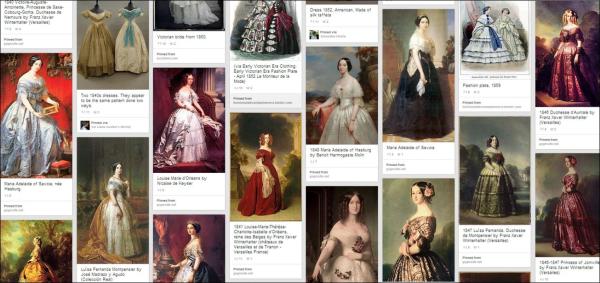
Early Victorian fashion board for FOLLOW THE HEART and AN HONEST HEART
.
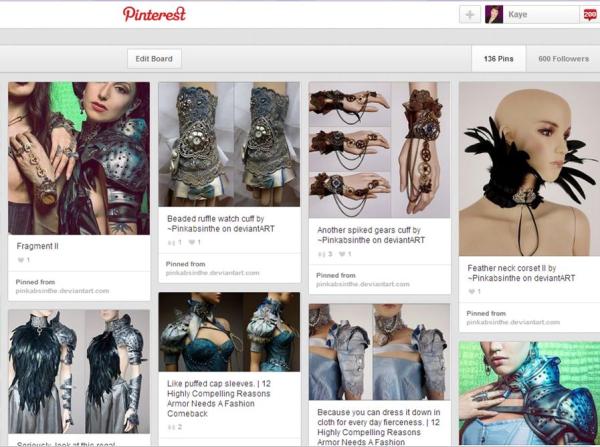
A “Fantasy” board just in case I ever write that genre.
For Discussion:
What do your characters’ choices of clothing say about them?
How do you research/track what costumes you use in your story?
Nano Prep: Propping Up Your Story Bible
 Hopefully you took the weekend to work on adding your character and setting information to your Story Bible. Because today, we’re adding . . .
Props
This is where those writing contemporary fiction set in the real world have it so much easier than those writing historical or otherworldly settings—because not only do we not have to do as much research on what props are appropriate for the time/setting, we don’t have to do as much explaining of what they look like and how they’re used.
A lot of movie DVDs in their behind-the-scenes featurettes talk a lot about the props they use in the movies. And something the prop masters have to do is keep a catalog of all of the props for each scene, as well as those which are unique to each character. And, not only that, they have to make sure that in each take of each scene, props are where they were at that same marker in the previous take so that the editors can seamlessly cut takes together in post production.
As writers, we don’t have quite such an onerous job as these masters (there’s a reason they’re called masters!), because we aren’t necessarily “showing” every single prop in every single scene. But it is important to know where things are, whether or not you’re mentioning them every single time your character is in the same location.
Here are somethings to keep track of (some of these are more “as you write” than in the preparation stage, but it’s a good idea to create a section for this while doing the prep work):
What does each character carry on her/his person?
This can be items in pockets, purses, pouches, etc. What do your characters never leave home without? Think about Doctor Who’s sonic screwdriver. You don’t always see it, but you know it’s there. Just as Han Solo wears his hip/thigh holster for his blaster, and Harry Potter will have his glasses (and, most likely, his wand).
Location of important/key objects in the story.
Think about the Lord of the Rings movies. We don’t go for very long without knowing (or seeing) where the ring is. As the pivotal object in the narrative, it’s important that we know where it is at all times—and how it got from one place (or one person’s possession) to another. You need to determine and track the placement/location of any key objects in your story and make sure your readers know how they get from one spot to another (unless, of course, that’s the crux of your story!).
Furniture, Objet d’Art, Curios, and Knickknacks
Where is all the “stuff”? If the fake Tiffany lamp is on the marble end table beside the plush blue wingchair at the beginning of the scene, it shouldn’t be on the repurposed barrel end table beside the bamboo rocking chair at the end of the scene—unless you show one of the characters moving it. Use your Story Bible to keep track of home and office decor—and this goes for outdoors, too—important landmarks shouldn’t change location either.
Modes of Transportation
I’m including this on the Props post, because what is a vehicle other than big, moving props?
What are the main forms of transportation in your story world?
- If you are writing something otherworldly: How are they constructed? What do they look like? How are they fueled?
- If you are writing contemporary-set fiction: What kinds of automobiles do your characters have? Do they live somewhere with good public transportation and avail themselves of that? If they do have their own cars, are they well kept? What does the brand/model/year of the car your character has say about him/her?
- If you are writing historical fiction: What modes of transportation were available? How fast could they travel? How were they propelled (horses, mules, oxen, steam, petrol, etc.)? Did they have “comforts,” such as padded seats, springs/shock absorption, heating/cooling, protection from the weather? How did they travel at night? And so on. Lots of research to do here—especially if you’re taking your characters off land and onto the water!
————
I’ve mentioned it before, but I’ll say it again . . .
Images, images, images!
I highly recommend Pinterest for this, whether you use a public board or a private board (I still find myself pinning “prop” images to my Ransome Trilogy board—specific things or images that evoke the idea of the items in a setting). It’s a fantastic way to catalog a ton of images (and categorize them if using public boards) while you’re researching. Then, as you really dig into planning and writing, you can visit all of your images in one place and pick and choose the ones you want to use without having to go search for them again—and without having to hog a bunch of space by saving them onto your own computer.
For Discussion: How do you keep track of your props?
NaNo Prep Day 4: Setting the Scene in Your Story Bible
We’re going to move away from characters (don’t worry, we’ll come back before we’re done with the story bibles) and talk about other aspects of the story that you need to include in the SB.
NaNo Prep Day 4 Assignment: Add a Section for Settings
I say to add a “section” because there are various aspects to setting that need to be explored/recorded, and you’re going to need more than a “page” for this part (and probably a whole lot more than just one day).
1. Your Story World: Where does your story take place? Go from the broad (Planet Earth) to the narrow (the Woodbine neighborhood of Nashville) to the specific (77 Elberta Street).

The diverse architecture in downtown Nashville (source)
3. Landscapes, Climates: What does your story world look like? What are the geographic features? What is the weather like? No, you’re not necessarily going to include all of this in your story, but you, the author, need to know as much about this as possible so that you don’t have it snowing on Thanksgiving in Brownsville, Texas. If you’re creating a fantasy/sci-fi world, this is of VITAL importance to know before you start writing.
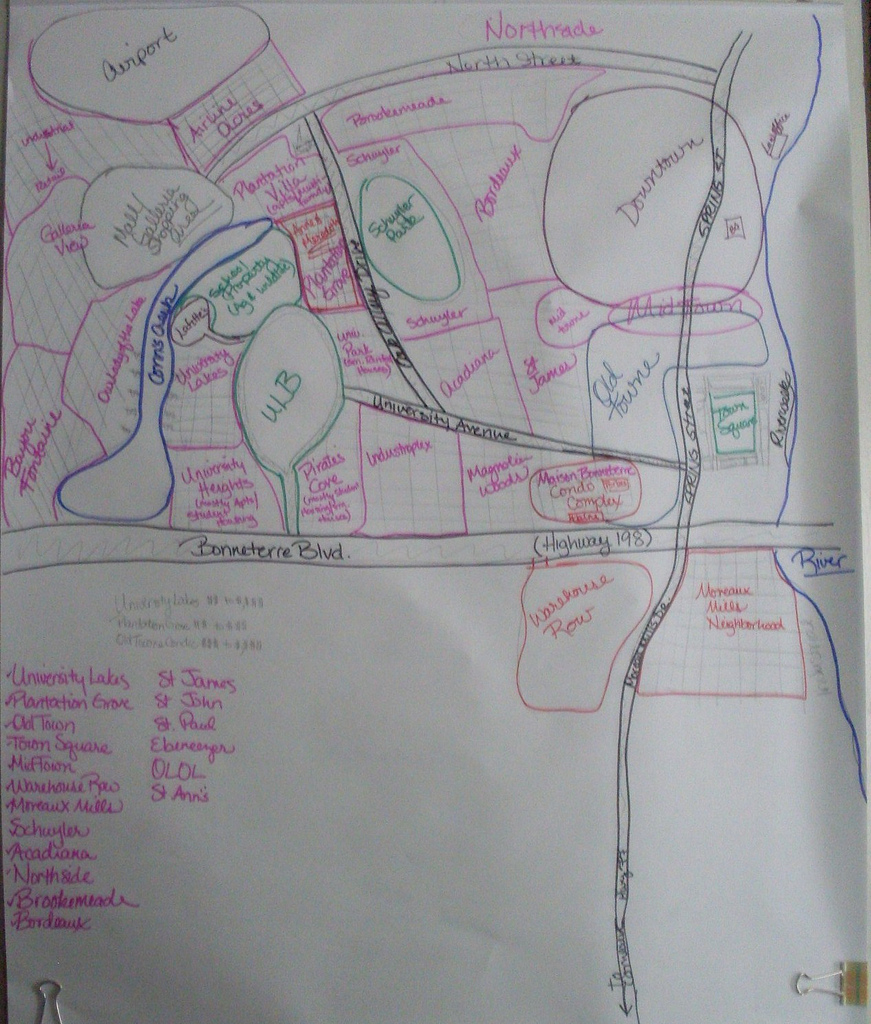
My rough, hand-sketched map of Bonneterre
5. Terminology: Is there a unique terminology to your setting? For example, when I was writing the Ransome series, I had to keep lists of all of the different parts of the ships and sails. Be specific with these (schooner rather than ship; jigger staysail instead of sail, etc.).
6. Historical Background: What’s the history of your storyworld? For those of us writing in either real or fictional cities set in familiar countries (like the US), this isn’t as hard as for those creating their own countries/worlds. But it is important to know why, for example, a person of color might be treated differently in Selma, Alabama, than in Detroit, Michigan, even in the year 2013.
7. Culture and Customs: What are the unique cultures and customs of your story world? “Nashville” has one connotation to the outside world, and a very different one to those of us who live here (and to those who live in different areas of Nashville. What’s culture/custom for me living in Woodbine might be completely different from culture/custom for a 20something hipster living in downtown. What festivals and other celebrations take place in your city? (And what does it mean when someone in Nashville calls CMA Fest “Fan Fair”—or even CMApocalypse?) How do people greet each other? Do they make eye contact and speak with strangers (Nashville), or do they avoid it if at all possible (Washington DC)?
8. Language, Accent, and Regional Slang: Whether real-world or fantasy/sci-fi, people are going to have different vernacular based on their region, their local culture/customs, and their backgrounds.
9. Social/Government Organization: More important for fictional/otherworldly story settings, but it’s good to know what would happen if a character breaks a social taboo or a law (and knowing what those social taboos and laws are).
10. Daily Life: This includes fashion/dress/style, manners, diet, calendar, customs, etc. Again, this is less consuming if you’re writing contemporary/real-world settings, but still something everyone needs to consider when developing your settings.
11. IMAGES, IMAGES, IMAGES: Collect images of settings that inspire, floorplans/images from real estate sites of your characters’ homes, images of the city or countryside or landscape, and so on. This is a great time to employ Pinterest—and you can use a private board if you don’t want to share with the rest of the world just yet.
FOR DISCUSSION:
What is your setting?
How much do you know about it?
How much do you feel like you need to know about it before beginning your manuscript?
Getting Your Characters into SHAPE
Yesterday, we described our main characters’ physicality. Today, we’re going to go deeper with them and write their backstories.
When I start developing a story idea and know who at least one of the main characters is, the first thing I do is figure out where that character came from—literally and figuratively. I know that many people use character “interviews” or worksheets to do this; I write it out like a synopsis, letting the ideas flow as I write and the questions rise as they may.
When working with a series in which my main character appeared in other books as a secondary character, I start by going back and making notes (if I didn’t already) of everything mentioned about this person (goes for physical description as well) and his or her background, personality, demeanor, reactions, actions, schooling, friends, work, etc.
Get Your Characters into SHAPE
 Here’s the easiest way to remember how to do your prep work when it comes to character development. Get your characters into S.H.A.P.E.:
– SPIRITUALITY: Not just for those writing Christian or inspirational fiction, this is something important for all writers to know about all of your main characters, because the characters’ morals and values, and thus their actions, reactions, and decision making, will hinge on what they believe about life and the afterlife and the value of both.
– HEART: What is your character passionate about? What are his desires? Her goals? What does she want to do with her life? What does he want to accomplish by the time he’s 30, 50, 70?
– ABILITIES: This goes beyond their physical abilities (walk, run, talk, etc.). What have they learned to do? Is she a Victorian girl who’s learned to use a typewriter in hopes of getting a job to support herself instead of marrying someone she doesn’t love? Has he learned to train guard dogs and police canines? But then, what are their inborn talents? Those things with which we would say he or she is “gifted”?
– PERSONALITY: What is your character’s personality type? This is where you can really have fun. Find out your character’s Meyers-Briggs type by taking the test as your character. If you don’t want to take the test, you can read about personality types. I recommend the book The Enneagram Made Easy: Discover the 9 Types of People. You can also learn more about the Enneagram types at The Enneagram Institute website. Introverts and Extroverts “recharge” differently and react differently in public and private settings. Thinkers and Feelers come to decisions in totally different ways. Fives and Eights come to decisions in totally different ways. And so on. Make your character more dimensional by giving them a complete personality—including flaws.
– EXPERIENCES: What are your character’s life experiences? What have your characters been through in their lives to make them who they are when they step onto Page 1 of your story? This is the bulk of the backstory, which everything else plays off of and is affected by. This can include:
-
- – Family makeup/background. What size family does he come from? How many siblings? Were both parents present? Did she have a good relationship with them? What was his relationship with his siblings like? Did she love her family or could she not wait to escape? And so on.
– Education. Whether formal or self-taught, one’s education is crucial to who they are as a person. Did they have all the benefits of an upper-class private/Ivy League education? The scrappier, American-dream public school education? Or maybe she had to drop out in eighth grade and go to work to support the family. And even if someone went to school and got a college degree, that doesn’t make them “intelligent” or “learned.” That just means that they have a couple of pieces of paper. How intellectual is your character? How smart? How street-smart? How wise? How knowledgeable? How does this compare to the people around him/her?
– Favorites. Color, food, music, entertainment, etc. What are the things that give your character a good quality of life? (Or would if they had access to them.) Get creative and have fun with these.
Once you have all of this down you should have a good understanding of who your character is. The reason I try to figure as much of this out before writing is that it saves me time in revision after finishing the first draft if I don’t have to go back and edit out long stream-of-consciousness scenes in which I’m inside the character’s head digging into backstory I didn’t know before I started writing. But no matter how detailed I get with this, I always have a few revelations about my characters—things I never would have known about them until they were faced with a crisis and forced to own up to something from the past they kept deeply hidden, even from me.
FOR DISCUSSION:
How does figuring out the SHAPE of your character help you in developing your story?
NaNo Prep Day 2: Creating Your Story Bible–What Do Your Main Characters Look Like?
Now that you’ve decided HOW you’re going to create/keep your Story Bible, it’s time to start filling it.
NaNo Prep Assignment for Tuesday, October 9, 2013:
Today, your assignment is to have some fun!
If you haven’t already done so, it’s time to put the full description of each of your main (POV) characters into your story bible. If you do already have some of this, go back and make sure you have all of it—and see if there are ways in which you can make your characters’ looks more unique.
Create a page/folder/section for each one so that the info isn’t running together and so that they’re easier to find.
Here’s what this part should include for each main/POV character:
Full Name:
Age:
Date of Birth:
Height:
Hair Color:
Eye Color:
Body type: (stocky, muscular, athletic, full-figured, slender, emaciated, etc.)—from the character’s viewpoint and in others’ opinions, if that’s important
Distinguishing marks/features:
Scars/deformities:
Body art/piercings/modifications:
Repetitive/habitual physical quirks: (i.e., biting fingernails, grinds teeth, pops knuckles, rolls neck when stressed, leg bounces/can’t sit still, etc.)
Include image(s) of the Real World Template for the character if you have them. If not, there’s no time like the present to cast your characters.
Here’s mine, using OneNote, for my Story in Progress:

That’s all for this part for today. Don’t do anything else other than look at your characters’ physicality.
FOR DISCUSSION:
What did you learn about your character(s)’ physical appearance that you didn’t know before this exercise?
NaNoWriMo Prep: Creating a Story Bible Step 1–Pick Your Poison (or Software)
National Novel Writing Month (NaNoWriMo or NaNo) starts in 23 days. Now that we’ve taken a reboot look at the processes that go into becoming a writer, let’s get you prepped to actually take that step and write.
I’m going to spend some time over the next few weeks helping you get all your ducks in a row and get everything ready so that you can concentrate on actually writing and knocking out some word count in November. Each one will be a small, bite-sized activity you can do that day. Think of it as your daily training for your marathon.
And the first thing we’re going to do is create a story bible.
What is a story bible?
Something that all writers (should) do is to keep a “bible” for your book/series (even more important in the case of a series) in order to keep up with all the trivial—and not-so-trivial—details going on. This is how you make sure that you’re always spelling unusual names/words the same way. How you keep track of what eye color you assigned to what character. How you know when and where things take place in your story (or your series).
Determine how you will keep/organize your book bible. You can do this the old-fashioned way, in hard copy in a three-ring binder or series of file folders in a drawer. Or you can employ one of a myriad pieces of software and do it electronically.
I personally use OneNote to contain all of my information for my book—and the program I use when I’m figuring out backstory or forward story (i.e., brainstorming), as well as keep all the info about my characters, setting, etc. But I’m getting ahead of myself.
NaNo Prep Assignment for Tuesday, October 8, 2013:
Determine and share with the “class” (i.e., leave a comment) how you intend to keep up with all of the details/background info for your Story in Progress. Will you use a notebook? OneNote? Scrivener? Evernote? Or do you have some other method of keeping track of your story/series details? Tell us what it is—and share links if you use a specific website or software.
What Are You Reading? (October 2013)
Open Book by Dave Dugdale
It’s the first Monday of the month, which means it’s time for your book report. Tell us what you’ve finished, what you’re reading, and what’s on your To Be Read stack/list. (And if you’ve reviewed the books you’ve read somewhere, please include links!)
.
- What book(s) did you finish reading (or listening to) since last month’s update?
- What are you currently reading and/or listening to?
- What’s the next book on your To Be Read stack/list?
In the Kitchen with Kaye: Italian Sausage and Kale Soup Recipe

1 Tbsp Olive oil
16–20 oz. Hot/spicy italian pork sausage, casings removed
1/4 Cup Real bacon bits, or 3–4 slices fried and chopped
1 Large onion, chopped
2 Tbsp Butter
1/2 Tbsp Minced garlic
2–3 Cups Kale or other greens, deveined and chopped
32 oz. Chicken broth
8–12 oz. Heavy cream, half-and-half, or evaporated milk
Salt & pepper to taste
Red pepper flakes (optional)
- In a large soup pot or dutch oven over medium-high heat, add olive oil and brown sausage.
- Remove cooked sausage from pot with slotted spoon into a bowl lined with paper towels, leaving as much oil/fat in pot as possible.
- Lower heat to medium and add bacon, onion, and butter; sauté until onions are soft and turning translucent.
- Add garlic and kale and allow kale to wilt slightly, about 3–4 minutes, taking care that garlic does not burn.
- Add broth and cream, and a pinch of salt and pepper. Increase heat to medium-high and bring to a rolling boil. Let boil, stirring, for 2–3 minutes.
- Add sausage and return to a boil.
- Cover and simmer on low 20 minutes.
- Taste and add additional seasonings if desired, including red pepper flake for a spicier soup.
- Simmer an additional 15–20 minutes before serving.
For a milder soup, use mild sausage and omit red pepper flakes.
Serves 3–4 in entrée size, 6–8 in appetizer size.
I Want to Be a Writer, but How Do I Get Started Writing a Book?
Putting the first words of a story down on page is like someone who’s never sewn anything cutting into an expensive piece of silk to make a dress. If that seamstress doesn’t know how to sew, doesn’t know what a dress pattern looks like or how to read the instructions on it, she’s going to end up ruining the silk and being discouraged from ever trying again. So what is the amateur to do?
Well, in sewing, we start with simple patterns and cheap fabrics, but we still choose to make something that we’ll like in finished form.
Just as the first-time seamstress wouldn’t expect to turn out a perfect red-carpet evening gown on her first attempt, you can’t sit down to start writing expecting to turn out a perfect story/manuscript.
So . . . how do you get started writing a novel?
Well, it depends on what kind of a writer you are. I have to start at the beginning and write through in linear order to the end—even though it means the opening chapters will need some serious work once I finish the first draft.
I have to see the story evolve on page just as if I were reading a book from cover to cover. Upon a rare occasion, when a scene comes to me fully formed, I might write ahead, just to make sure I don’t lose the idea—and many times, this might help me gain momentum in the linear writing, to write toward that scene. However, sometimes I end up not using that scene—but it did teach me something about the characters I might not have otherwise known.
What’s helped me the most in recent years is the fact that other than Stand-In Groom and Ransome’s Honor, which were completed manuscripts when they sold, everything I’ve written was contracted from a synopsis. So when I’d get past that oh-so-exciting, I’m-working-on-something-new opening and I’d get stuck, I could pull my synopsis out and write out scene cards—for those I’d already written (seen at the top) and for those I wanted to include (seen on bottom), whether they were in the synopsis or whether reading back through everything made me think of new scenes to include.

You’re Not Writing “a Book”
The most important thing to keep in mind when you sit down to that Sphinx-like blank page is that you’re not sitting down to write “a book.” You’re writing a Chapter or a Page or a Paragraph or a Sentence. If you sit down at the beginning of a project with the weight of a 90,000-word manuscript hanging on your shoulders, you may find yourself crushed by it.
Think about it this way instead. If you can challenge yourself to write 1,000 words a day, you can have a completed first draft in about three months. If you can only do 500 words a day, you’ll still have completed your draft in six months. And that’s only if you’re writing trade-length fiction. If you’re writing a novella (20,000 to 30,000 words) or category-length (45,000 to 65,000 words), the number of days is even shorter.
So how do you get started writing a book? Easy: the same way you’d eat an elephant. One bite—one word—at a time.
Putting Words on Paper
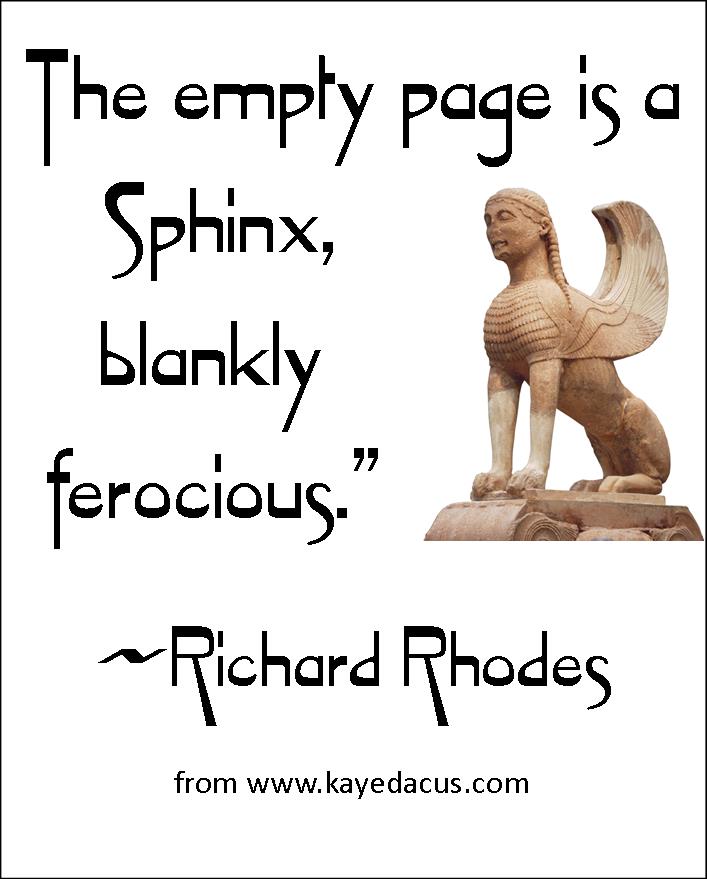 But putting words on the page isn’t all there is to getting started writing a book. Besides passion for your characters and what seems, at the moment, to be an interesting scenario, there’s a lot more that goes into starting a book.
- Know what point of view you’re going to write in (first person, third-person limited, etc.).
- Know which characters are going to be your viewpoint characters (the only ones whose heads you’ll get inside of). This can change as you write (that’s what revisions are for!), but you need to have a pretty solid plan for viewpoint before you start.
- Know what your basic story structure/plot is. If you’re writing a genre like romance or mystery, you pretty much know where you’re going—it’s how you get there that’s leading you to write in the first place. If you’re crossing genres or writing more literary-style fiction, this may take a little more work.
- Allow yourself to make mistakes, to forget “the rules,” to write crap. This is when the parents are out of the house and the Little Sister (creative side of the brain) is completely ignoring what Big Sister (analytical side of the brain) is trying to tell her to do. Let Little Sister out to play while writing your first draft.
- Don’t give up. Writing may seem easy and fun when you’re just getting started, but it gets hard fast. The internal and external critics make us doubt ourselves, our characters, and our stories. We get lost in the middle and are not sure how to get out. We write ourselves into a corner. We run out of creative energy somewhere around the 30,000-word mark. Don’t give up.
.
For Discussion:
What do you need to know about your story before you start writing it?
Have you spent all of your time “planning” your story but haven’t started it yet? What do you need for motivation to get started?
How do you keep yourself motivated after you write the opening of your book?
I Want to Be a Writer, But How Do I Choose Which Story to Write?
As I’m sure you’ve already experienced, there’s a huge difference between “getting an idea” for a story and actually beginning to write that story. So there are two issues we need to examine: how to choose the story idea and how to get started writing it.
How do I choose which story to write?
In a few days, my eleventh published novel will release. Before I started seriously studying the craft of writing and preparing myself to pursue publication, I would write and toy around with whatever I felt like working on at the time. For ten years, I wrote and rewrote a manuscript that grew to almost 200,000 words (though with as much rewriting as I did on it, I probably wrote something more like 500,000 words when all was said and done). It isn’t a complete story—it’s a collection of scenes and vignettes—really just things that I wrote to spend time with the characters I’d come to love so dearly. But before, and even during, the time I worked on that manuscript, I had so many story ideas that I would start writing—and usually got a page or ten into before setting it aside from disinterest.
So how did I choose which stories would be the ones I would spend six, eight, nine, twelve, thirty-six months writing? How do I choose from the many ideas that bombard me day-in and day-out?
For me, the stories I’ve written—either the unfinished ten-year project; the completed, published novels; or the new story-in-progress I’m currently writing—came from ideas that just wouldn’t leave me alone. And for me, it stems from the characters. Characters are where my stories begin. But the unfinished ones are the ones in which the characters turned out not to be interesting enough for me to want to come back to them time and again to see what was going to happen next.
Things to consider when choosing which story idea to pursue:
- Are the characters interesting enough to you, with sufficient mysteries and depth to them, that you’ll want to spend month upon month thinking about and talking to them? Are they real enough? Is there something they’ll need to learn/do that will give your main character(s) a growth-arc over the length of a novel?
- Even if your idea is character-driven, is there sufficient potential for a plot that will drive the story on to a climax and conclusion? If someone asked you what your story is about, would you be able to tell them?
- Is this a story idea that’s been formulating in your mind for a while and just won’t let you go, or is it something you came up with on a whim?
- Is there more than just an interesting character or a flashy plot to your idea? Will it have emotional depth? Spiritual depth (even if it’s not inspirational fiction, the story should have some kind of connection with something greater than the characters)?
- Do you have conflicts beyond the main plot?
Now, not everyone goes through these questions when beginning to write a story. But when you get to a point where you’re ready to give up on an idea after three, ten, or twenty chapters, these questions may come in handy when trying to determine if it wasn’t a good choice or if you just have writer’s block.
For Discussion
How do you choose what story idea you’re going to write?

 KayeDacus.com