Planning for 2019: The Master Plan
I’ve mentioned, and shown photos from, my 2019 life planner—a “not-a-bullet-journal” planner that’s based off of some of the ideas that I’ve gleaned from the professional BuJo-ers out there (I’ll link to a few below).
One of the most important spreads that I incorporated into the planner this year is a Master Plan spread. In this YouTube video, I walk through the Master Plan pages and explain how I’m using them (transcript—well, the script I worked from—is pasted below the video).
Hi, all, and welcome back to my YouTube channel! Today, I’d love to do a quick run-through of the Master Plan section of my planner.
In 2018, I started out the year with “Goals” – and you know that when I talk about goals, I mean being specific, setting measurable, actionable steps with specific results on a pre-determined timeline. And you also know how that can be both motivating and debilitating once those timeline dates come and go without the anticipated results because the steps haven’t been taken.
This year, in studying several professional bullet-journalers’ blogs and videos, one thing that several of them suggested (I’ll provide a few links in the description box below) creating a Master Plan—and breaking it down into categories—or life areas—that I really want to concentrate on this year. Before I even sat down at the computer to start creating my 2019 planner, I started listing the focus areas for me this year.
I came up with . . .
• Personal
• Social Life
• Professional
• Professional Development
• Reading
• Writing
• Blogging (2 blogs)
• Writing Prof. Development
• Online Courses to Teach
• Social Media
• Volunteering
• Self-Care/Mental Health
• Health
• Activity/Exercise
• Self-Improvement
• Online Classes to Take
• Housekeeping
• Friends & Family
• Travel
• Crafts
• Spiritual
After I’d created/printed the pages, I realized that I needed space for Crafts and Spiritual. So I added what bullet-journalers call a “dutch door”—a half-page that gives more space without completely covering up the pages on either side. I used colored paper simply because I had it in my notebook already. And, yes, many of these categories overlap. Pretty much everything in here (except professional) falls under “personal.” Self-Improvement, volunteering, spiritual, activity/exercise, housekeeping, etc., all cross-pollinate with each other. So it looks like there are a whole lot more things to focus on than are really here—because so many things go onto multiple lists. But it’s nice to be able to explore them from a different angle of focus, and to be able to tie some of them together that I might not have thought of as being complementary before.
Then, even with using colored ink, because black type and black grid lines on white paper still isn’t all that interesting, I decorated with different shaped bullets and washi tape to try to match, or at least coordinate, with the color scheme. I also put washi tape down the bottom 2/3 of each Master Plan page to make this section easier to find when I’m working on planning.
And you can probably tell that this isn’t regular, flimsy 20-pound copy paper. I use at least 28-pound bright white, and prefer 32-pound, in order to stop the printer toner and pen ink from ghosting through to the other side.
How am I using this? Well, I’m referring to it quite often, actually. Not only when doing my quarterly and monthly plans, but I’ve also added a weekly tracker in which I can add an activity from one of five chosen categories that I want to do that week. That means that each week, I’m reviewing these and thinking about what I can be doing in order to incorporate these focus areas into my life.
And there you have it. That’s my master plan for using the Master Plan section of my life planner in 2019. If you have any questions, please let me know in the comments. If you like this video and would like to see more content like this, please click through to the video on YouTube, like, and subscribe. See you next time!
Here are two bullet journal blogs I follow:
All About Planners
Little Coffee Fox
And here are some #bujo YouTubers:
Boho Berry (I watch her videos the most!)
Amanda Rach Lee
Little Coffee Fox
All About Planners
Kell of a Plan
– – – – – – – – –
If you like what I do here and want to keep this content ad-free,
consider supporting me and my work by buying me a coffee.

2019 Reading Challenge and Goals
There’s a lot I want to do this year. And that means I might not have as much time for reading. It also means that I don’t want to feel like I’m forcing myself to read just to meet a “challenge” if reading isn’t want I want/need to be doing at the moment. So I’m rolling back the challenge to 2014 levels! (That was the first year I participated in Goodreads’ annual challenge/tracking.)
2019 Challenge by the Numbers
In previous years, I’ve challenged myself by increasing the number of books I read year-over-year. This year, because I’m planning to take some kind of online course each month or so (I just started a course on Mindfulness on Coursera this week, in fact) as well as get back into teaching online—here on the blog, on YouTube, or on SkillShare—I need to be wise about my time and what I’m doing with it.
Considering that we’re finishing out the third week of the year and I’ve finished one book and am about halfway through another, I’m pretty much on track to average about one finished reading per week. Now, because I don’t limit this to full-length (50k+ words) books, reading at least one title per week is doable, as some of those will be short stories, novellas, and (possibly) long-form blog-post series.
2019 Challenge by the Clock
One of my biggest challenges over the past several years, now that I work remotely (from home, but employed full time by a university), is sticking to a regular schedule. I’ve gotten really lax about staying up late and then struggling the next day when I’m sitting at the computer editing for my scheduled eight hours. (It’s really not easy—or good—to edit tired!) One of my biggest goals in my Master Plan for 2019 is to develop the habit of sticking to a daily schedule, from what time I wake up and get up in the morning to what time I turn the bedside lamp off at night. And one of the most important things I’m including in that schedule is 30-45 minutes of daily reading:
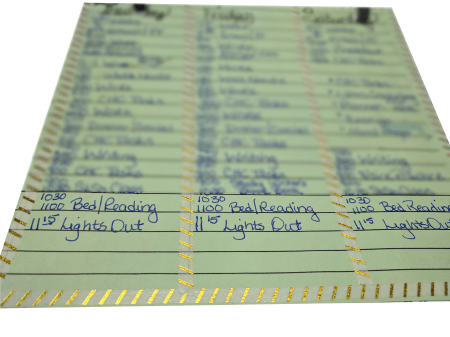
Yes, you’re seeing that right—I built in a fifteen-minute “just one more page” buffer at the end of the reading time. 🙂 As with everything else I’m doing until it all becomes habit, I’m setting a timer, just to make sure I don’t stay up too late if I get caught up in the story.
2019 Challenge by the—
Actually, that’s it. Read 50 titles and read for at least 30 minutes every night before sleeping. I do have a page in my journal on which I’ve listed a bunch of suggested titles that go along with several of my Master Plan categories and the idea of trying to do a one-author A to Z challenge (but that’s not a goal, just something I might do):
And just about the only thing I’m going to make myself stick to on this page is to re-read my own published and unpublished writing as a way of recapturing my storytelling joy. But that’s part of another goal that I’ll write about in another post!
What’s your reading goal(s)/challenge(s) for 2019?
If you’ve set a goal on GoodReads, please share the link to your challenge in the comments!
Books Read in 2018: My Reading Recap | #amreading
Wow, I’m way behind on getting my 2018 recaps posted. My only excuse is that I’ve been so busy planning for 2019 (see here and here for more info on that process).
The Goals
My first goal was to read 60 titles (books, short stories, long-form blog, etc.). My second goal was an A-to-Z author challenge—two authors for each letter. I planned to challenge myself throughout the year—from one writing/craft book per quarter to at least four critical reading to reading books from a list of categories/genres.
Results — By the Numbers
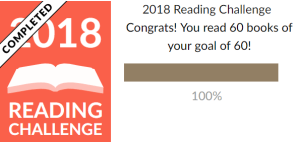
I had a major reading slump the second half of the year, so I really had to push myself to get sixty titles in. But I just managed to do it at the literal eleventh hour.
Those 60 read titles broke down like this:
Physical Book(s): 1
eBook(s): 26
Audiobook(s): 33
Fiction: 43
Nonfiction: 17
Full-Length Books: 45
Short Stories: 15
Critical Reading: 0
Writing Craft Books: 2
Results — By the Letters
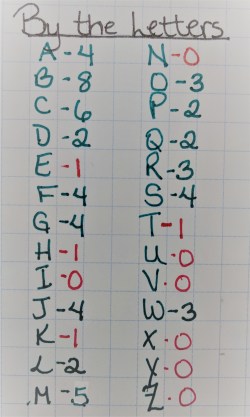
Since I got so far behind on the overall numbers toward the end of the year, I stopped worrying about the authors’ last names and just read. That’s the only way I was able to at least meet one of my challenges.
How did you do on your 2018 reading challenge?
My 2019 Word – RELEASE
Yes, it’s that time of year—time for resolutions and goal setting; time to rehash last year and set new goals and challenges for this year.
And it’s also time for me to jump on the “word of the year” bandwagon and choose a word that will be my theme/focus for 2019.
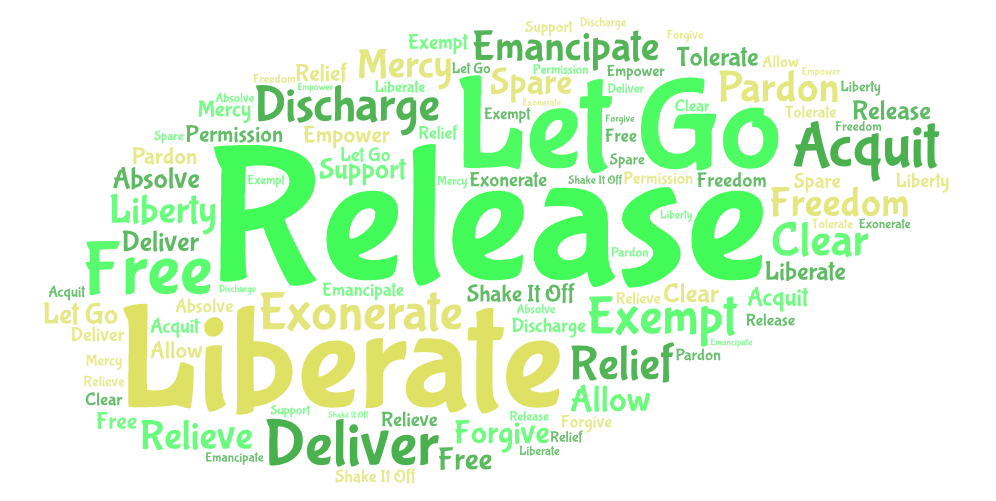
My word—my theme—for 2019 is RELEASE. I know that sounds weird—but as someone who hasn’t written in more than five years because of the stress and trauma caused by my last writing contract/book, there’s a lot that needs to be released before I can regain the joy I once took in writing: release the anxiety, release the stress, release the expectation that I have to do anything with my stories other than write them for myself.
There are a lot of other areas of my life in which release is needed . . . but those are a little too personal to get into online!
Do you have a word/theme for this year?
2018 #NaNoWriMo Results: Did You Hit Your Goal? | #amwriting #NaNo
 I’m not a big fan of the terminology of “winning” NaNo. This isn’t a win/lose situation—any words you write are a win!—and it sets up the mindset of failure if you don’t happen to reach an arbitrary word-count goal.
That said, drumroll please . . .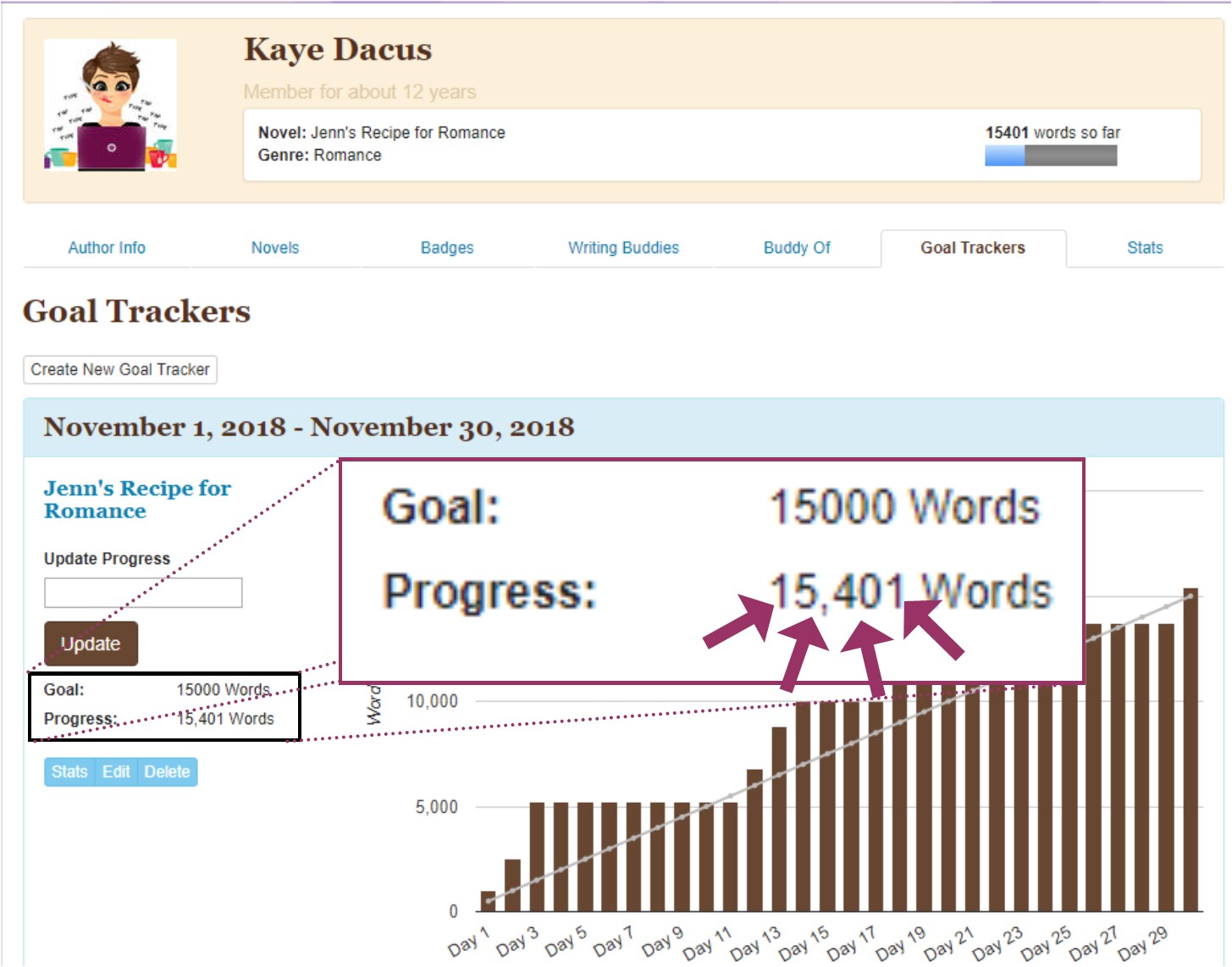
I HIT MY WORD-COUNT GOAL FOR NOVEMBER!!!
I’m still struggling with the desire/motivation to write. More than five years of not writing at all is a long, hard habit to overcome in just four weeks (three, because Thanksgiving week and thereafter was a total washout). But that’s one of the reasons why I set such a realistic goal for myself. Because I know me. And I know that I’m one of those who, when faced with what seems to be an impossible word-count will . . . consider myself a failure and give in to the self-pity, self-deprecation, and depression that comes from not being good enough or perseverant enough to meet a 40-50k goal.
Most of these 15,000+ words stink. Most will have to be revised, rewritten, or removed. BUT! They exist. And that’s 99% of the battle won right there!
How did YOU do?
* * *
If you like what I do here and want to keep this content free,
consider supporting me and my work by buying me a coffee.
#NaNo2018 Half-Month Check-In | #NaNoWriMo #amwriting
Hey, fellow NaNo-ers!
Believe it or not, November is already half over. How are you doing on your goal(s)?
As of yesterday (14 November), I was 2/3 of the way to my personal goal of 15,000 words.

I’ve actually been able to use a lot of the “awful” stuff I wrote years ago, the last two times I tried to write this story. That’s one of the main reasons I printed it all out before I started, so I could do this:
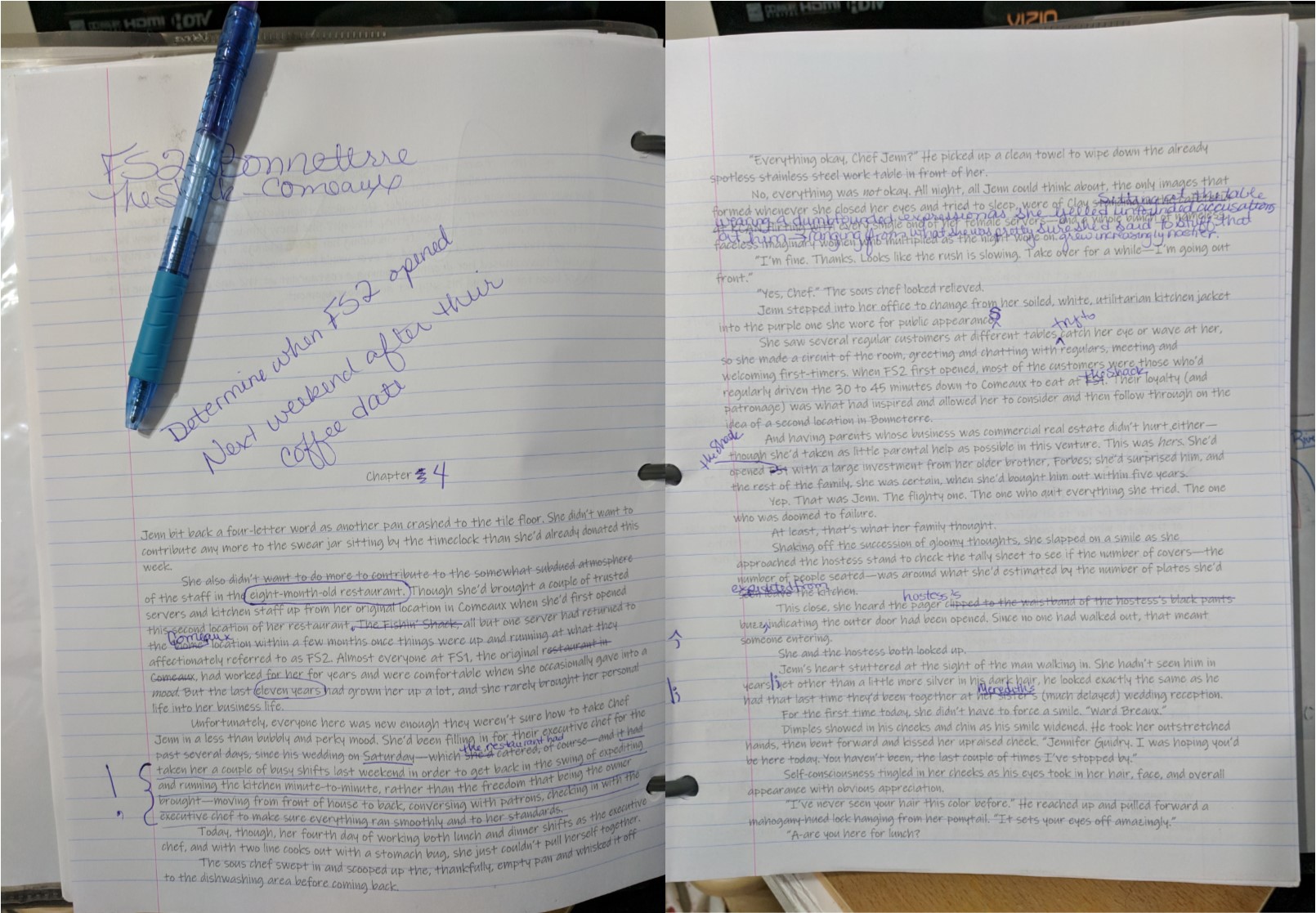
Which turned into this:
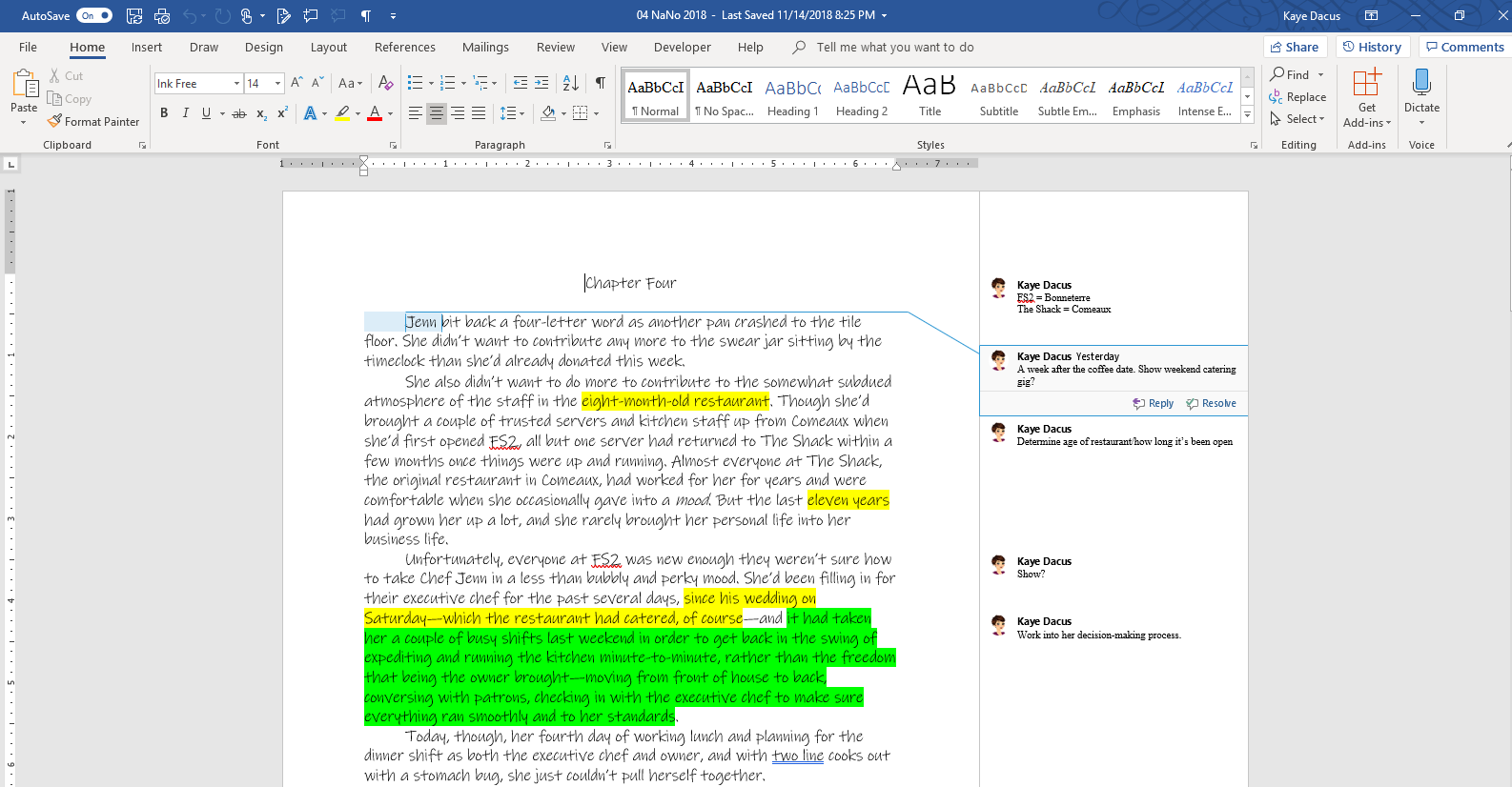
Even on days like today, when I know I have some old stuff to copy/paste over into a new document and revise/rewrite into my current draft, it’s still hard to make myself sit down at the computer to do it. And then that makes me sad, because I shouldn’t have to make myself write—I should want to write. And then when I do, I know that it’s not very good and so I get caught up in a negative loop of self-doubt and anxiety.
And then I remind myself that I’m already making so much progress because of the tiny bit of work I did four or five years ago on this story. So if I work through it now, figure out the characters and conflict as I go and get an entire draft finished, then—in the NEXT draft—I’ll have a whole lotta stuff already written that I can use. And I have learned that I do prefer the revision process to the writing process most of the time anyway. So I have to give myself something to work with!
How is your writing going this month?
Happy #NaNoWriMo Day! Let’s Start Writing! | #NaNo2018 #amwriting
It’s here! November 1! NaNo month blew into Clarksville, Tennessee, with pouring rain and strong winds; and every time I look out a window today, I’ve been humming Stacey Kent’s “‘Tis Autumn,” as there’s just something about the gray rainy chill that makes me happy this time of year. (Give me a few months of this, though, and it’ll be a different story!)
I read a great post this morning by Chuck Wendig on “…How You NaNoWriMo…” This portion struck me as particularly motivational:
You have a choice —
You can leave the page as is, open, unscathed, unmarked, a snowy expanse after a fresh winter storm.
Or you can ruin it.
You can start putting crass LANGUAGE MARKS across it: clumsy, dirty scrawl denoting the gabble-gibber of humantongue. You can write words into sentences into paragraphs. You can stomp your muddy boots all over the damn thing. You can shit it all up. What once was an innocent tract of unbroken order is now a landfill of chaos.
So, that’s your choice.
Keep it perfect and pure.
Or ruin it. . . .
Today, you’re going to ruin one page. You’re going to fill it with words. Some will be amazing words. Some will be brutally inefficient. You will string them together and when read aloud, they will make music just as often as they make the sound of a tuba kicked down a set of steps. And you’re not going to care, because that is what it takes: the willingness to do a thing poorly, the eagerness to ruin an uninterrupted space, the sheer bloody-minded delight of carving your ideas down into rock even though the only desire of the rock is to be left the hell alone.
Chuck Wendig, “Here Is How You NaNoWriMo, You Ruinous Monster, You.” From http://terribleminds.com/ramble/2018/11/01/here-is-how-you-nanowrimo-you-ruinous-monster-you/
As I’ve already mentioned in a previous post, something that’s very important for completing a writing marathon is setting and sticking to a schedule.
Scheduling My NaNo Success
In order to start “ruining” pages with “language marks,” I sat down last week with my calendar and blocked off writing time on all of the days of the month on which I know I’ll have time to write. I even built in extra blocks of time on the weekends, just in case.
But there’s another block of time that I’ve appended to the writing block each time, as well:
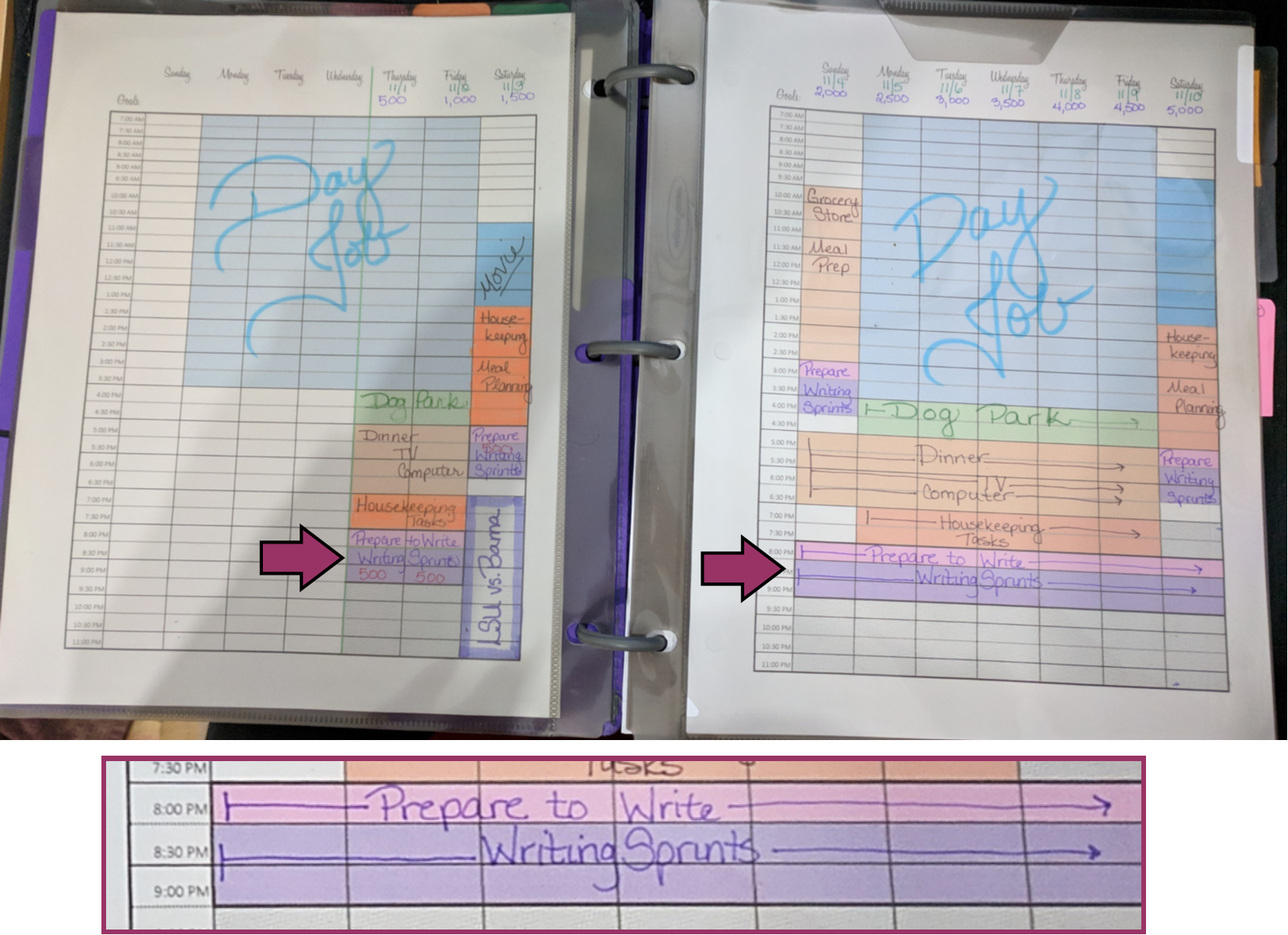
Because I have a tendency to spend so much time on the computer, ether working (I work from home, though I do have a separate work-provided laptop) or for entertainment (watching YouTube subscriptions, reading newsletters/websites/blogs, playing games, engaging in social media, etc.), it’s difficult to make the mental transition from “regular” computer time to “writing” time—even if I’m planning to write longhand and not on the computer.
What Does “Preparing to Write” Entail?
I don’t yet have a set idea for what I’m going to do during that 30-minute block of time. I know I’m going to make sure that my writing space is set up with everything I need—in addition to my writing tools and story information, I’ll need something to drink and maybe a snack; a comfortable, clean writing space; music ready to go; and so on. There is one thing, however, that I know I want to try to do, at least tonight, being the first night—I want to spend at least 10 minutes meditating on why I deserve to write this month. Why I need to write this month. Why writing is joyful. Why writing is healthy. Why writing frees me to be who I really am.
I might journal this, or I might just do this as a mental exercise. But because of the lingering anxiety I have from my bad experiences at the end of my previous publishing experience, there are a lot of mental blocks that have kept me from writing for the last five or six years. Therefore, putting myself in a positive frame of mind and preparing myself to find enjoyment and contentment in the act of writing, rather than stress and anxiety is going to be vital for my success.
What does your schedule for finding writing time for the next 30 days look like? Do you have time to build even just a few “Prepare to Write” minutes into that schedule?
#NaNoWriMo Prep: Take Your Characters on a Road Trip | #amwriting #NaNo2018
Instead of filling out charts and questionnaires and mindmaps and GMC lists, there are many other ways to figure out things about our characters (and, by extension, our stories) that may actually be more creatively fulfilling. One of the things I’m a big proponent of is putting characters in a mundane situation and seeing what happens. And this can happen before the writing begins or when that “stuck” feeling happens in the middle of writing the story.
When I’m writing a contemporary setting, I send the characters to the grocery store to see what they buy, how they go about it (up and down each aisle? with or without a list? impulse buyer?), and whom they might run into. But there’s an even better exercise that I did this weekend that would work for pretty much every genre—and that’s taking the characters on a road trip. There are actually two different ways to do this, and I recommend both of them!
Taking a Literal Road Trip
If you’re like me, sometimes it gets really hard to be creative when you’re staring at the same four walls in the same house for hour after hour. Autumn is my favorite season, and in my area (northern Middle Tennessee), it’s gray and/or rainy a lot. So when I heard that we were supposed to have a rare sunny day yesterday, I knew I had to get out and make the most of it. I’m about a 45-minute drive from Paris Landing State Park and the Land Between the Lakes area, so it seemed like the perfect place to go to enjoy a beautiful fall day. So I loaded the dog up in the car (which isn’t hard—she only weighs 13.5 lbs) and took a drive.

But I didn’t want to lose any time preparing for NaNo, either. So while listening to my characters’ music, I purposely set out to brainstorm about my characters. I knew I’d be stopping frequently enough (to take photos) that if I had any great ideas, I’d have the opportunity to jot them down (mostly using voice notes) on the phone.
Because my characters are coming into this romance story as two people who grew up together and have dated each other off and on their entire teen/adult lives, there’s a lot of history between them that I don’t know yet. Exactly how many times have they dated, what did that entail, how long did it last, how did they get together, how did they break up, etc.? What lingering artifacts/mementos do each of them still have? What are the differences in how each of them remember things that happened in their relationship? Did they go to prom together? Homecoming? And so on. I didn’t come up with a whole lot of definitive answers, but now that I’m thinking along those lines, I’m sure the characters will reveal answers to me once I start writing.
They did, however, reveal one very important thing to me—about which I won’t go into detail, but do have a teaser image:
Taking a Figurative Road Trip
If you don’t have the time or opportunity (or desire) to drive out into the country for a couple of hours, then send your characters out on the road. There’s a reason why there are so many scenes in books and TV/movies that involve the characters being stuck together in a car, carriage, escape pod, scary forest, etc.—because it creates a setup for conflict to happen. The rebooted Hawaii Five-0 TV show even coined a term for the many (many) scenes featuring Danny and Steve in this exact situation: carguments.
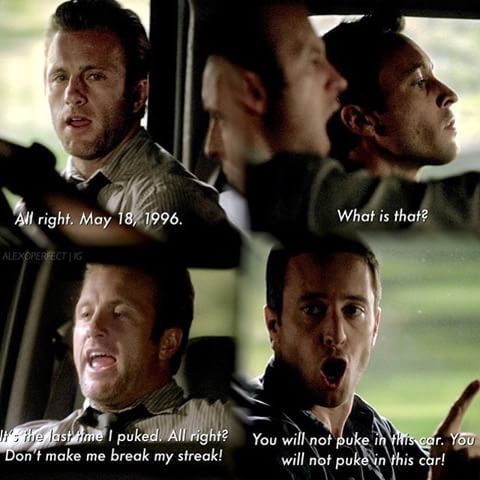
Sending your character(s) on a road trip immediately creates a bunch of questions to write the answers to:
- What’s the mode of transportation? (car, carriage, by foot, etc.)
- Who’s traveling with the character? (friend, foe, romantic interest, enemy, strangers?)
- Do they have a specific destination in mind?
- Do they have a deadline to get where they’re going?
- Do they know how to get where they’re going?
- How long will it take to get there?
- Does this trip put the character in a good mood, bad mood, or are they neutral about it?
- What could go wrong to send this road trip off track?
- What sounds do they hear (are they listening to music? wagon wheels rattling? beeping of electronic sensors?)
- Go into all five senses—sight, smell, sound, touch, taste—yes, even taste!
- And so on…
This is a really good exercise for a writing marathon such as NaNoWriMo, because it’s something you can do if you sit down for your designated writing time but can’t think of anything to write. Sending your characters on a road trip gives you a kickstart to a scene that, even if you don’t end up using it in your final product, should teach you something about your character.
Assignment: If you don’t take an actual road trip, sit down and imagine your characters on a road trip. What can you learn about them that way?
#NaNoWriMo Prep: Preparing for Old-Fashioned Writing by Hand | #amwriting #NaNo2018
 When I was writing books under contract, I did it mainly on the computer—whether at the desk or with a laptop in bed or out at a coffee shop or library. But when I first started writing—and when I would get creatively stuck—I always turned to pen and paper. Getting away from the computer (and, by extension, all the distractions on the computer and Internet), enables me to tap into my creative side in a way that typing doesn’t.
Preparing to Write without Technology
One thing I really want to do during November is take the time at least a couple of times each week to write remotely—away from home. But I don’t want to have to feel obligated to take the laptop with me. Instead, I’d rather take a notebook to write in—but if I do that, I wouldn’t have access to things like the characters’ backstories, the list of locations/businesses in my fictional setting, my hand-drawn map of the city, and so on.
One of the first things I did was pull up the final manuscripts of the three previous novels in the Bonneterre series. I searched for Jenn’s and Clay’s names and copied/pasted the lines or scenes in which they were mentioned or appeared into a new document. I then printed everything I’d written last time I tried working on their story. I went back into the archived folder from back then and put together a couple of collages of ’shopped photos in which I put the two templates together and pulled up the fake book cover I created (I use Corel PaintShop Pro) and printed those. Then, I printed and filled in my calendars.
Putting My Longhand Writing Notebook Together
I put everything together in a three-ring binder, along with plenty of blank college-ruled notebook paper. Then I started adding all the pieces:
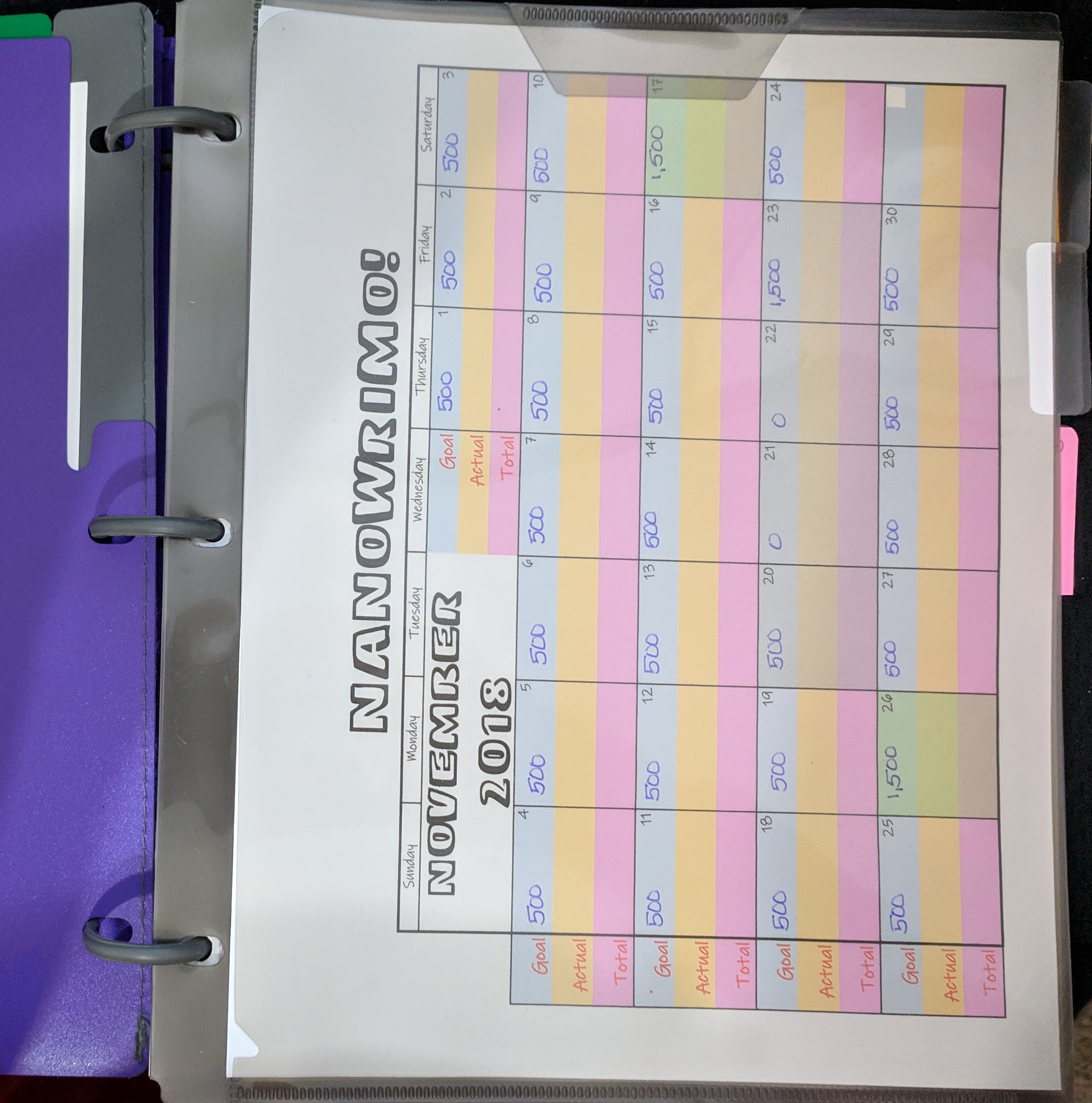
Month-at-a-glance calendar for tracking words
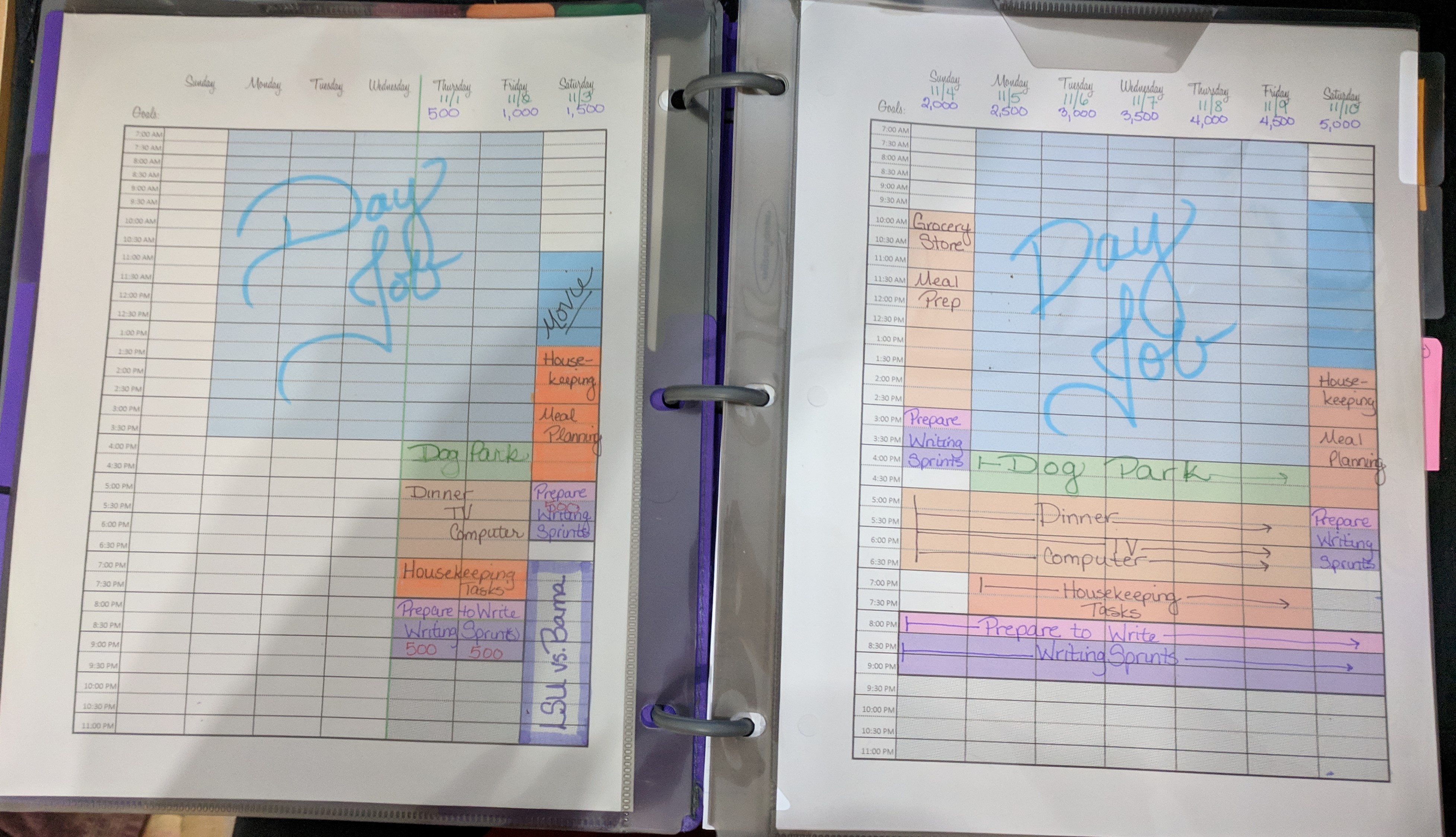
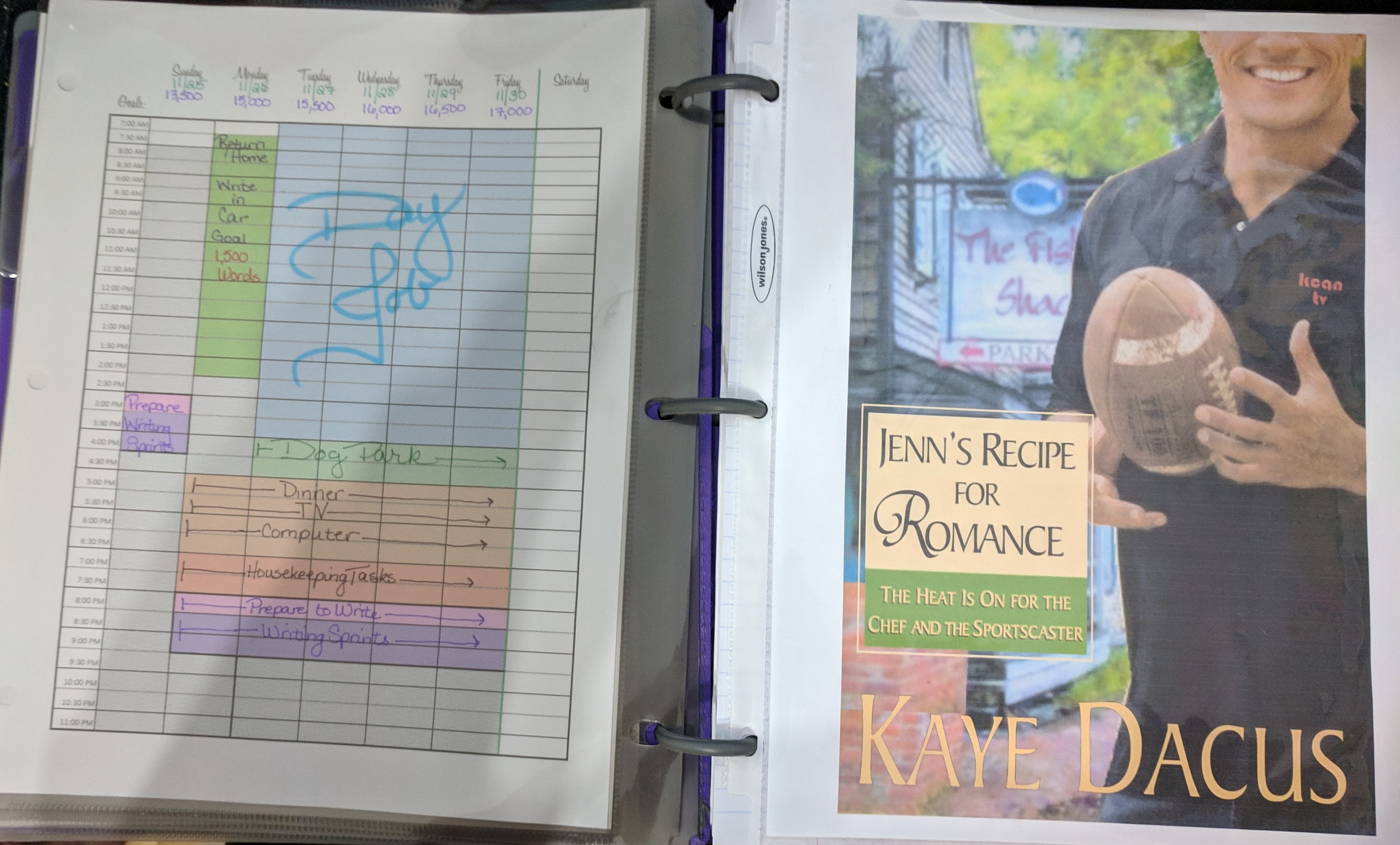
Week-at-a-glance schedules (and the fake book cover)
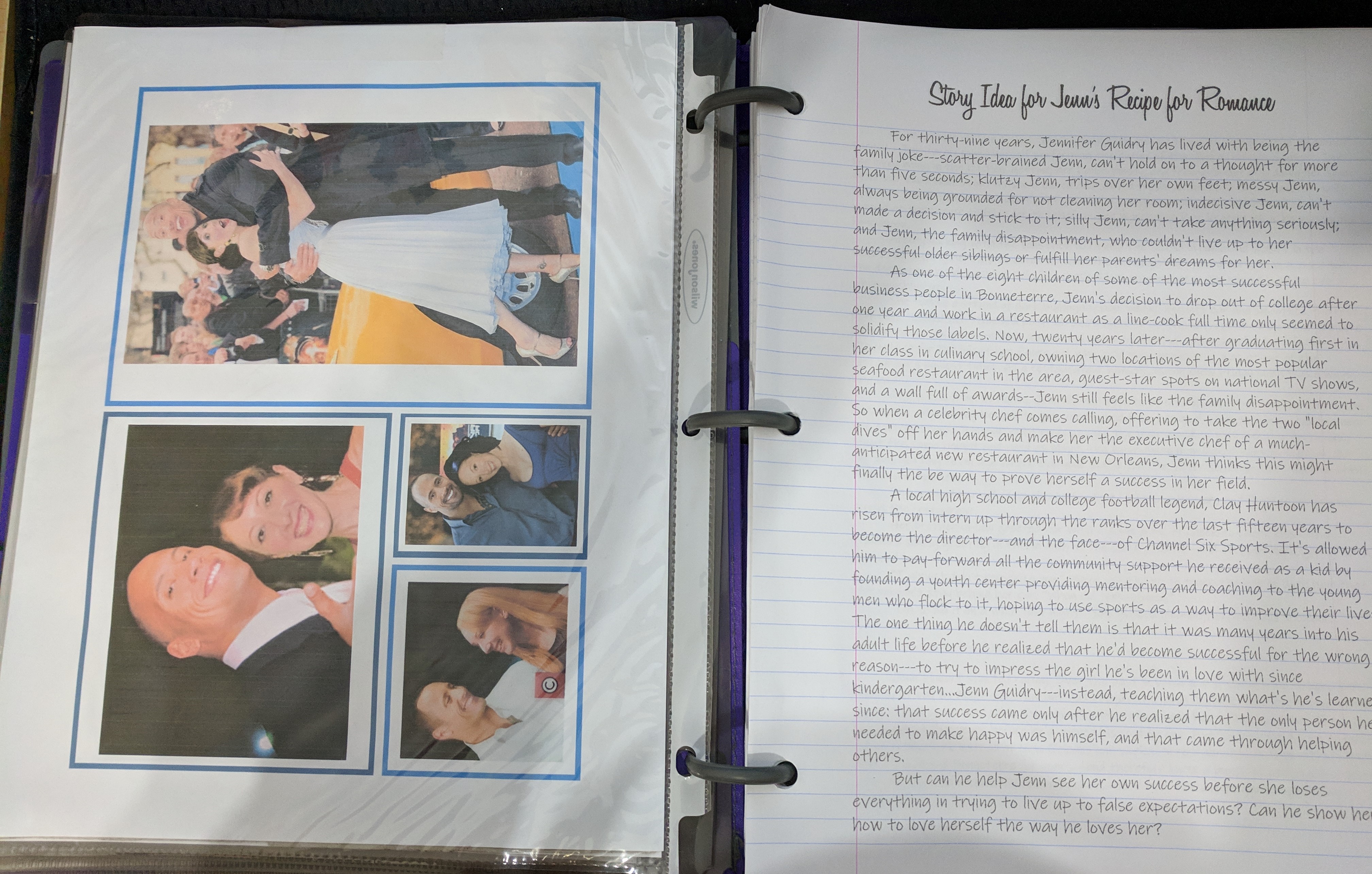
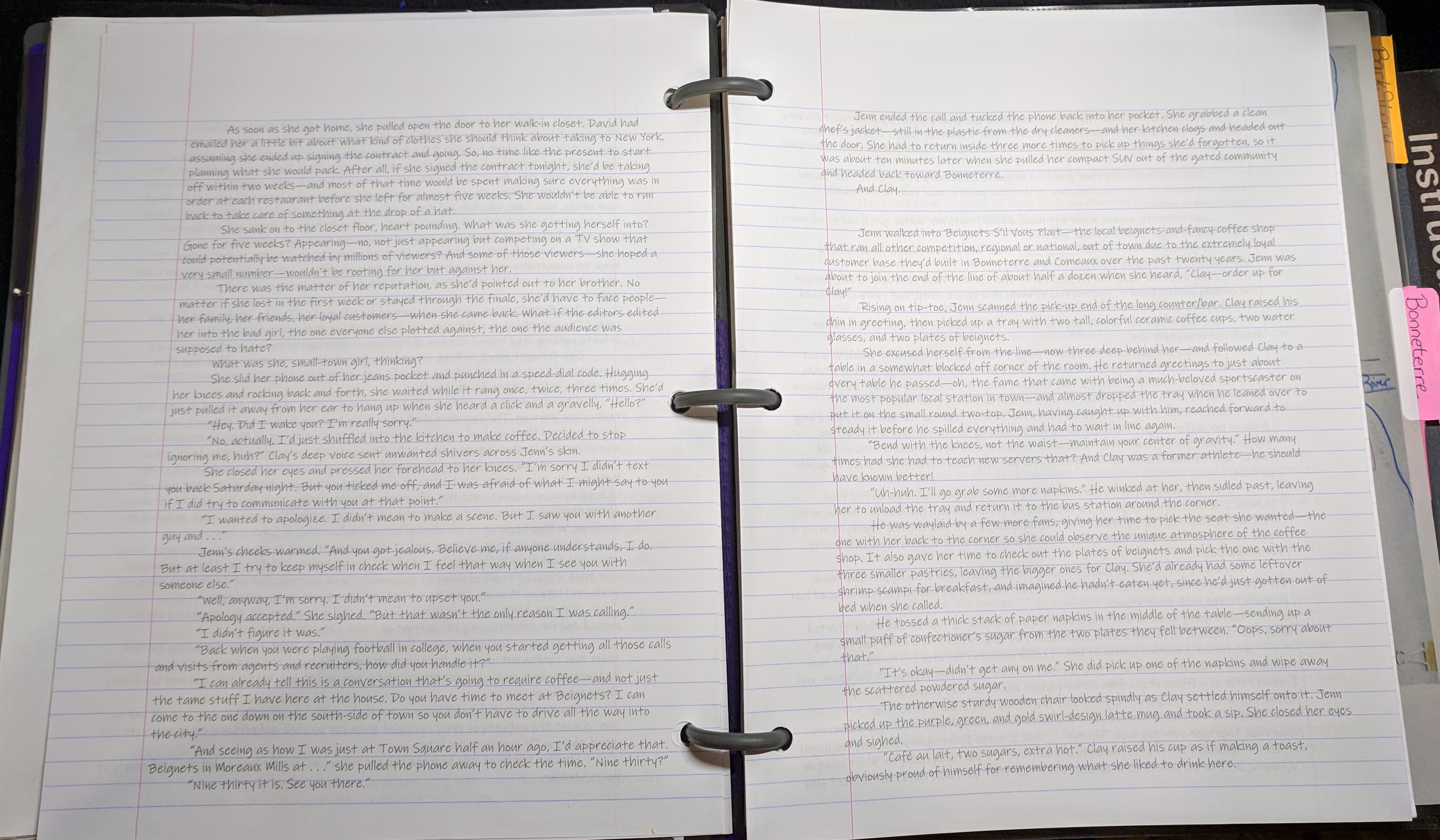
A collage of my templates and the story summary I posted on the NaNo site, followed by everything that I pulled from when I tried writing this story five years ago. And, yes, I printed everything in a handwriting-style font on regular notebook paper.
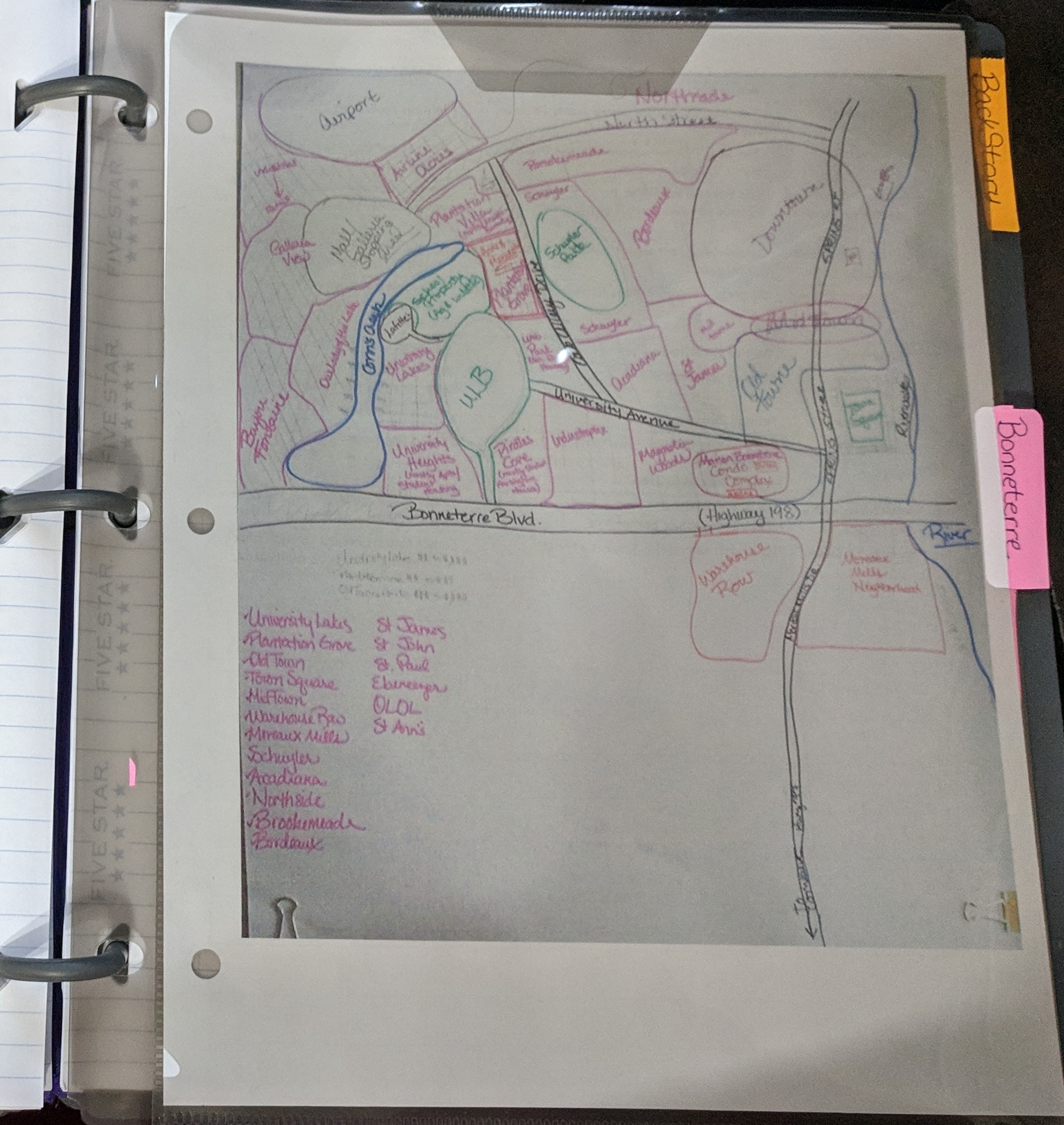
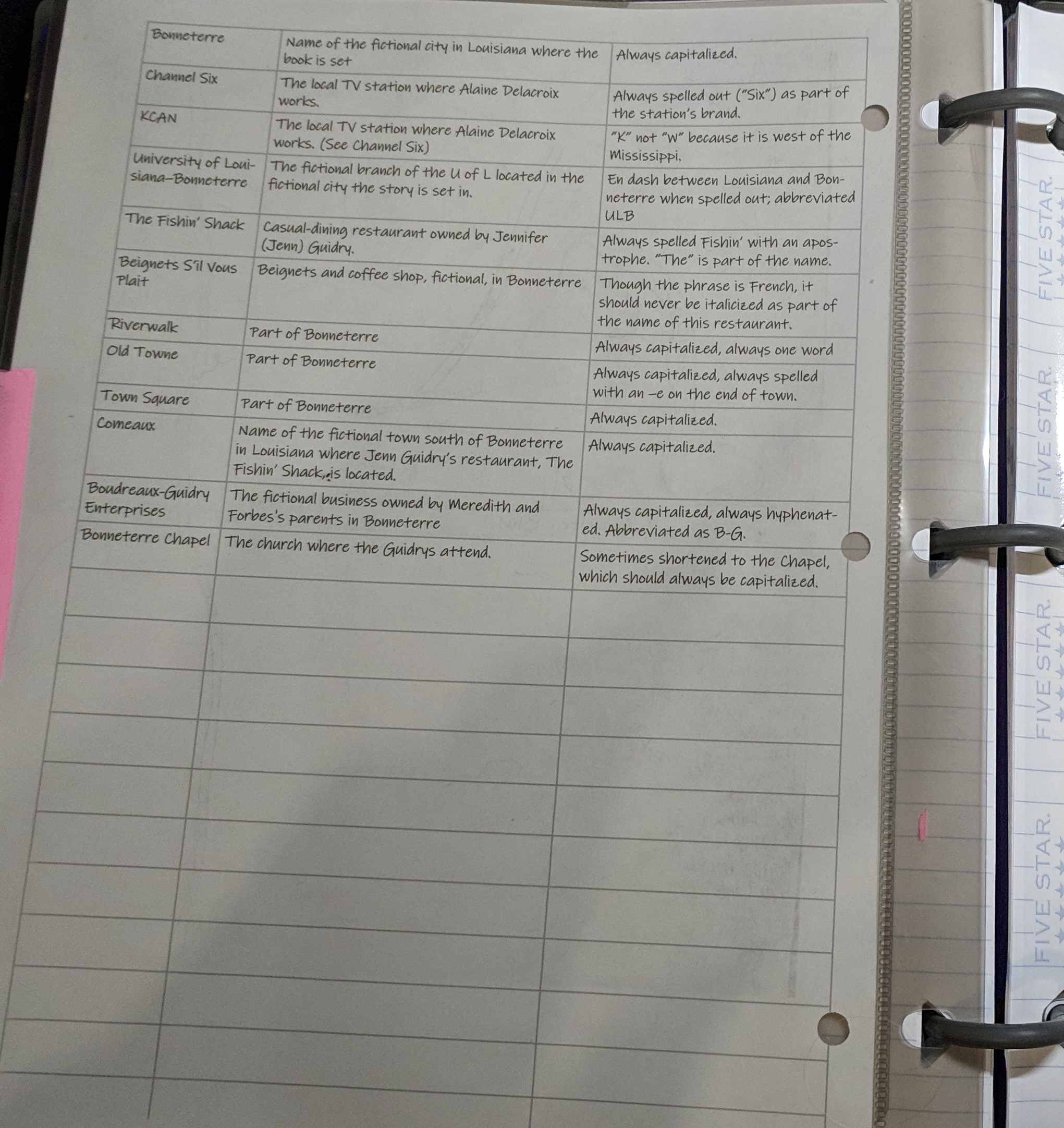
My hand-drawn map of Bonneterre and list of business/setting names.
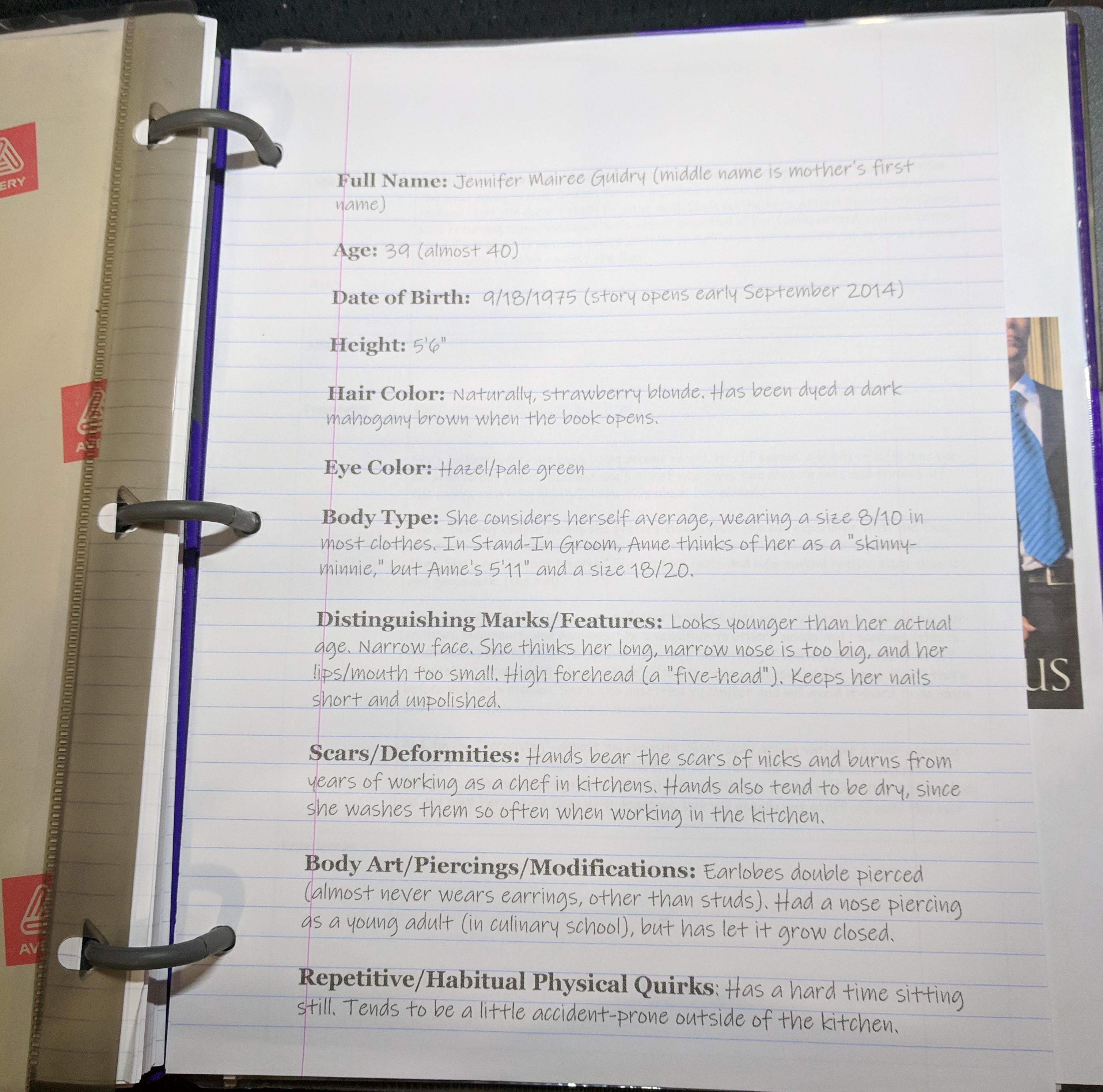
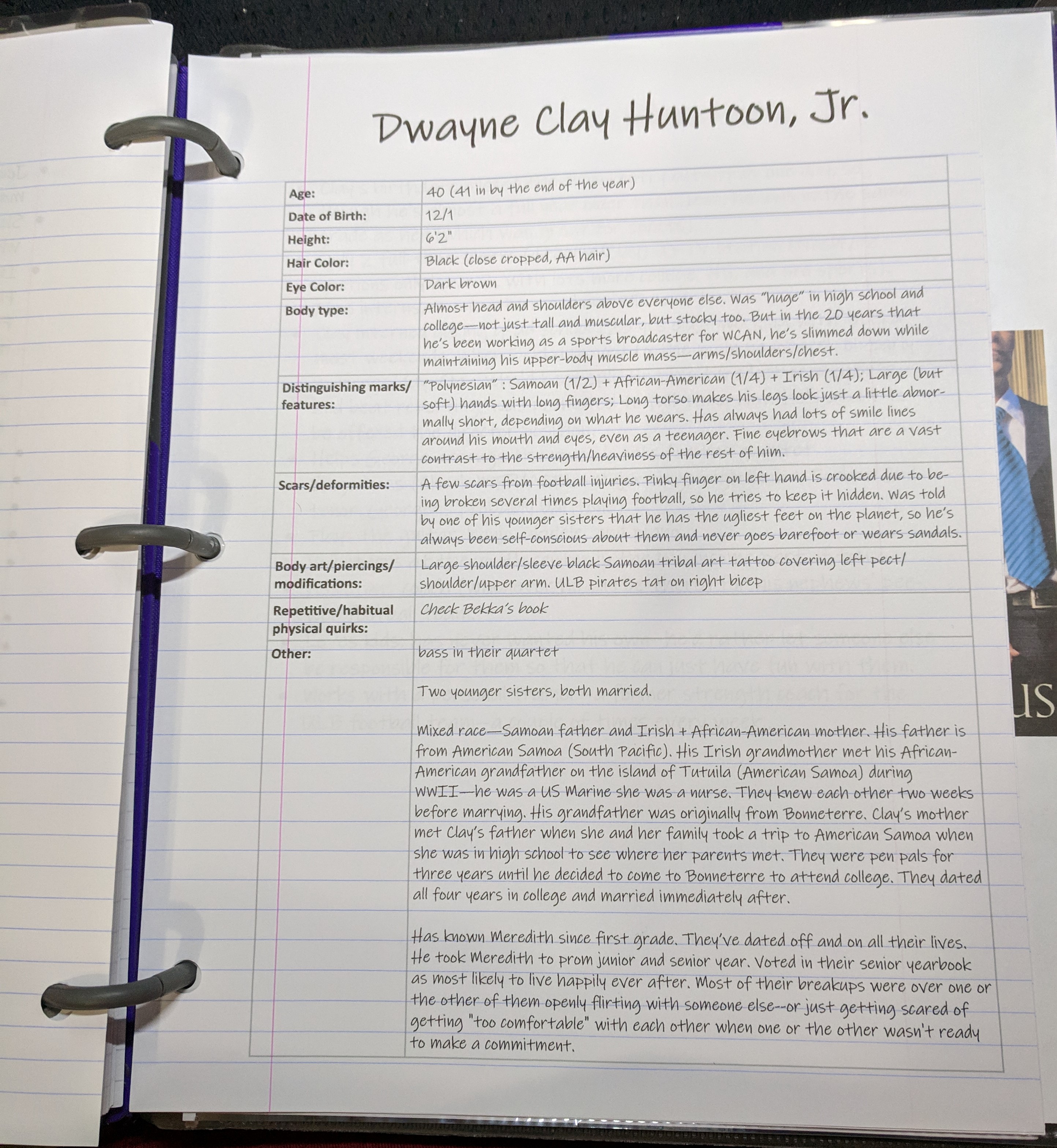
Background info for the characters (from my story bible).
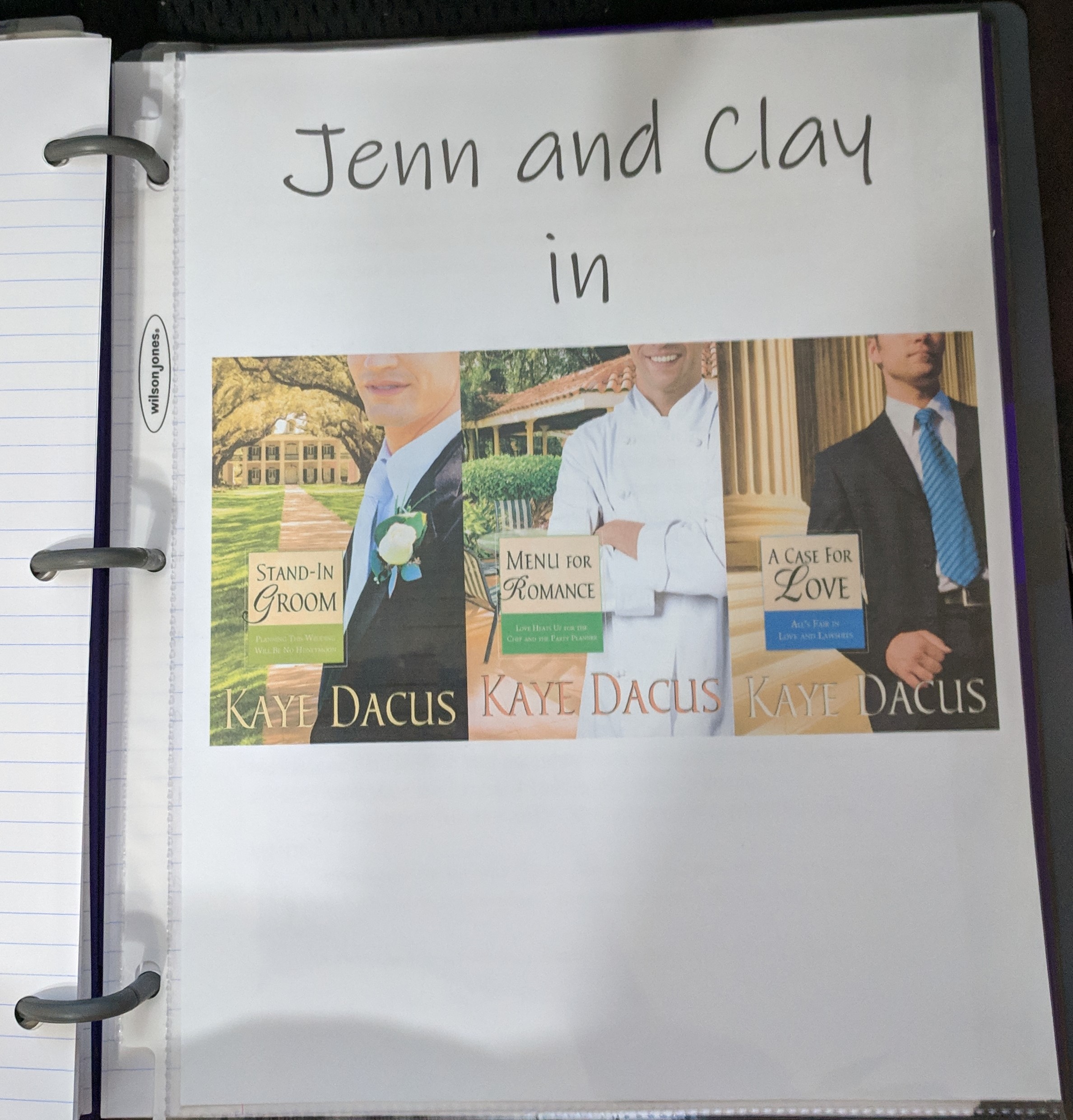
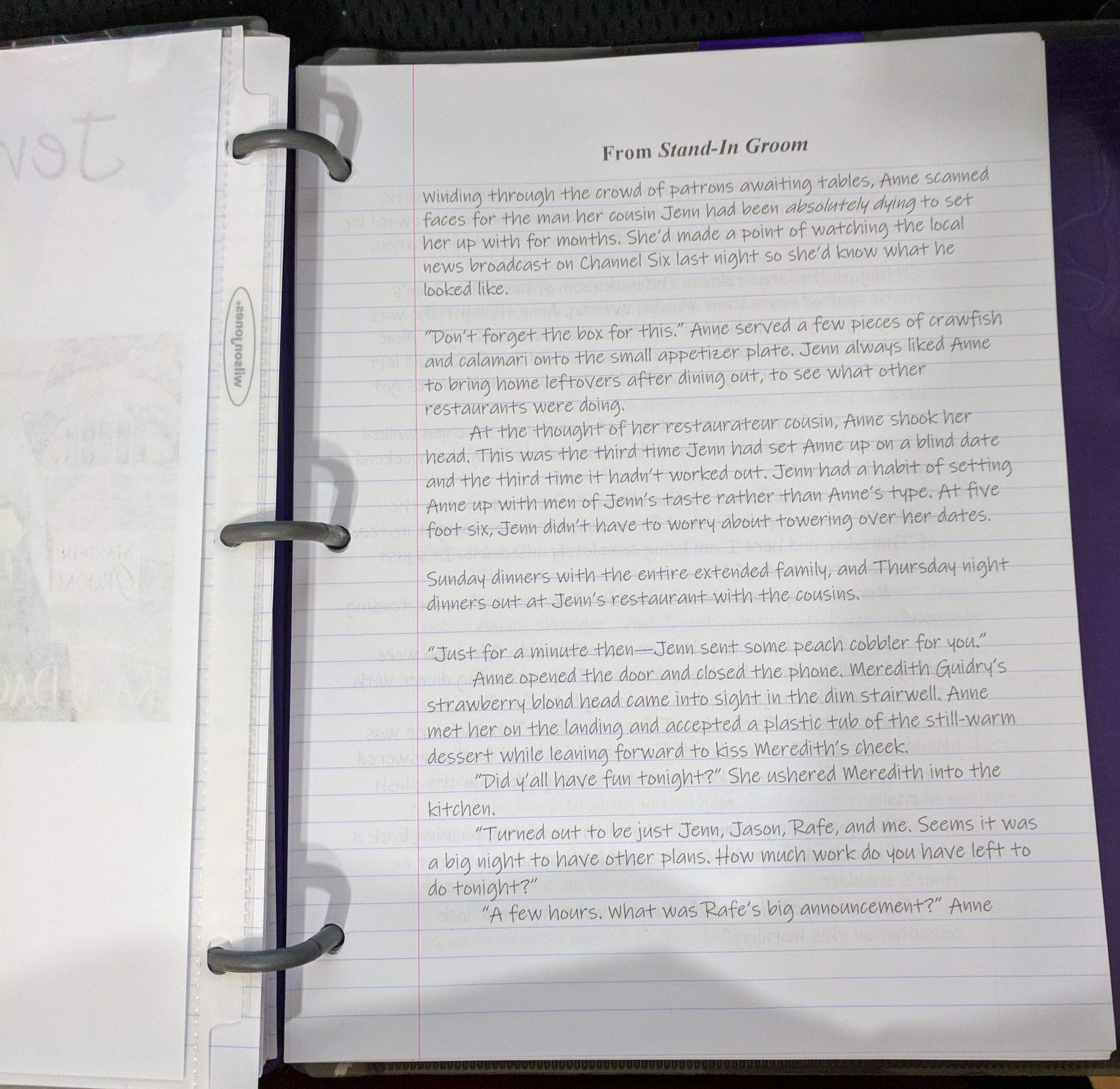
All mentions and scenes from Stand-In Groom, Menu for Romance, and A Case for Love.
Assignment: What kind of “kit” can you put together that will help you to write without the assistance of technology?
#NaNoWriMo Prep: Soundtracks and Soundscapes for Your Characters, Story, and Imagination | #amwriting #NaNo2018
It’s Friday, so it’s time to focus on some of the more fun and creative aspects of prepping for NaNo—and that’s the music and soundscapes for our characters, story, and writing time—to spur our imagination.
In my years of experience hanging out with both published authors and unpublished writers, it’s not unusual to hear writers talking about the “soundtracks” of their stories—the music they listen to to help them get into the world of their stories.
After all . . . there’s a reason TV shows and movies have music.
Music helps set a mood, evoke emotion, and recall imagery.
The Soundtrack Songs Work Their Way into the Story
It’s no secret that when I was writing Stand-In Groom, I had a very specific soundtrack that I listened to to get “in the mood” to write—and very specific songs I listened to over and over as I crafted certain scenes (most especially Dean Martin’s “That’s Amore” and “Return to Me”—and if you’ve read the book, you know which scenes I’m talking about!). These songs became so indelibly linked with Anne and George that they’re mentioned by name in the book. I even still have a playlist featuring all thirteen that are mentioned (if you are an Amazon Prime member, you should be able to listen to it).
For Menu for Romance, it was less about specific music and more about specific movies—and all about one specific song from one specific John Wayne movie.
With A Case for Love, it was all about the Waltz—it’s one-two-three, one-two-three, Forbes.
While I was almost always listening to music while writing the Matchmakers series, it was more just to have something in the background that matched the mood of the scenes I was writing—predominantly instrumental, usually movie soundtracks.
Music that Evokes Setting, Time Period, and Story
For my historical series, especially The Ransome Trilogy, I set out to find music I knew would evoke the setting and characters I was writing about. I started with movie soundtracks I already owned, such as Pirates of the Caribbean, Jane Austen adaptation movies, and the classical pieces used in Master and Commander.
From those, Amazon suggested a whole host of other music that fit into the same general sounds, including soundtracks from the age of the swashbuckler movies (Captain Blood and The Seahawk, among many more). Again, here’s the playlist listened to while writing The Ransome Trilogy.
For the Great Exhibition series, it was a little harder to find soundtrack music that fits. The tracks from the Austen film adaptations were okay—though they did call to mind the empire-waisted white gowns of the early 19th century and not the bell-shaped skirts and long, pointed waistlines of 1851. The two I listened to the most were the soundtracks of The Young Victoria and North & South. Follow the Heart was the first book I wrote for which I chose theme songs for each character and for the book itself. I also researched the music that would have been popular at a country-house ball. You can read more about it in the post FOLLOW THE HEART: The “Soundtrack”. As you’ll see, I didn’t limit myself to music written in the era or for something about the era. I chose music based on what inspired my imagination.
Evocative Soundscapes
In researching this prep series, I’ve come across a whole lot of new-to-me technologies that today’s young writers are using to spur their creativity and expedite their writing. Most of them aren’t things I’d find helpful—I’d spend more time trying to learn how to use them than I would writing.
But one website that I’ve now heard mentioned several times is Ambient Mixer. This site is all about sounds—not music. For example, here’s a soundscape I wish I’d had when writing The Ransome Trilogy:
https://ship.ambient-mixer.com/sailing-ship-with-ship-squeak
There’s also one of a Victorian street in the rain, which might have been helpful for me with writing certain scenes in the Great Exhibition series. I highly recommend checking it out!
Assignment:Spend some time this weekend choosing the theme songs, soundtrack, and/or soundscape(s) for your characters and story—and create a playlist that will inspire you to as you write.

 KayeDacus.com