Dreams vs. Goals: What if my Writing Goals Change? What if I Fail?
Participate in an online version of me teaching the Dreams vs. Goals class on SkillShare.
Yesterday, one of the things I mentioned is that you must write down your goals. Writing your goals—handwritten in a journal, typed on the computer, emailed to yourself as a list, however you want to do it—makes them real. By having them written down, it gives you the opportunity not only to go back and check things off that you’ve accomplished or completed, but also to remind yourself of the other steps you promised yourself you’d be taking.
Yes, by setting goals, you’re making yourself promises. You promise yourself that you are going to take this journey and that you’re going to help yourself succeed.
The Risk of Failure

One of the reasons why I believe most dreamers are hesitant to actually sit down and go through the process I’ve described over the last few days—setting goals, writing them down, and setting a timeline—is not only because doing that makes it more concrete, more real, but also because by defining exactly what it is that we want to accomplish, we are defining exactly the ways in which we can fail.
For anyone who’s set a self-imposed deadline and missed it. For anyone who’s stated a certain number of words to be written every day and not done it. For anyone who’s submitted manuscripts to editors and/or agents and been rejected. For anyone who’s joyously told family and friends that we’ve decided to write novels and get them published, only to have those same people lose faith in—or even mock—you when you can’t show tangible results. We know what failure feels like, and we don’t want to be there again.
HOWEVER, by breaking the dream down into a personally achievable goal with short-term and long-term actionable steps, you have more opportunity to show how you’ve succeeded when you—or others around you—deride you and call you a failure because you still aren’t published. Remember, it may be your dream to be a published author; it’s your goal to do all of the work that gives you the ability to chase that dream. And if you do the work, if you write the manuscripts, work with critique partners, go to conferences and workshops, rewrite and revise, edit and re-edit, do your market research, enter contests, network, and get those appointments to pitch your work, then you’re successful. Because you’ve met all of your goals, and you’ve done everything you can to chase your dream.
What if my writing goals change?
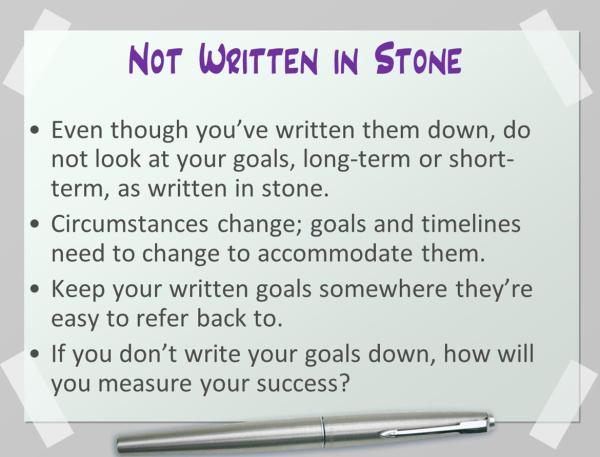
Just because you’ve written your goals down (even if you used pen!), doesn’t mean that they’re written in stone—as your circumstances change, as issues arise, as it becomes apparent that the timelines you set don’t work, then, by all means, re-evaluate and, if necessary, change your goals. But when you change them, make sure to write the new/revised goals down, too—after all, how will you measure your success if you don’t have it written down so you can check/cross it off?
Should I share my goals with others?
Some goals should be kept private. Sometimes, though, we need accountability to help us meet our goals. This is when we need to carefully analyze who the people are that will support and encourage us—who will rejoice with our successes and support us when we feel like we’ve failed. Just as you’ll have many smaller or short-term goals/steps you want to take and many larger or long-term ones, there are multiple levels at which to consider the ramifications of sharing:
- Family members
- Friends
- Critique partners
- Writing group
- Blog/social media
It is a very personal decision, whether or not to make a goal, a set of goals, or even a dream public. While many self-help books and inspirational speakers will encourage you to share your dreams and goals with others so that you have support and accountability, I think when it comes to writing and the dream of being published, you must weigh very carefully, first, with whom you share it; and, second, if you are strong enough to handle the risks that come with sharing this particular part of our lives with others.
When we share our dreams and goals about writing with others, we make ourselves vulnerable to criticism (for the goals themselves or for our thinking we could achieve them) or to ridicule if we don’t reach the goals—or if we have to change them when circumstances change. So be sure that if you go public, whether to one person or hundreds through a blog or social media, you know you will be able to handle any negative comments that may come your way. Don’t go public and then let the naysayers keep you from working on achieving your goals so that, one day, you can attain whatever dream it is you have for your writing.
Dreams vs. Goals: Setting Goals to Achieve Our Writing Dreams
Participate in an online version of me teaching the Dreams vs. Goals class on SkillShare.
Yesterday, we looked at the idea that to achieve our dreams, we must give them marching orders—we must set goals. So let’s look at how to go about setting those goals to give us the best chances of success.
Don’t Be Vague
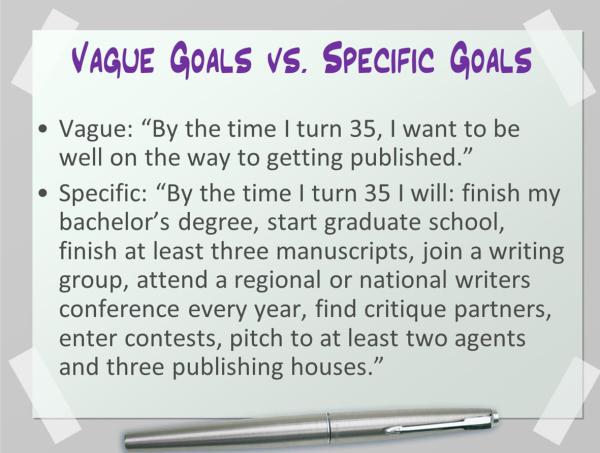
The first, very vague, statement was my “goal” that I set for myself at the age of 30, shortly after I’d returned to finish my undergrad degree and right after attending my first writing conference in 2001. Then, after I’d been a member of a national writing organization for a few months, I sat down and wrote down the second set of goals—the specific, actionable ones—so that I knew what I needed to do in order to achieve that vague goal (dream).
In 2002, I attended my first national writers’ conference and I entered a writing contest. In 2003, I not only finished my bachelor’s degree, I found and started working with my first critique partners—and entered two more manuscripts into contests. In 2004, I started grad school. I became an officer with the national writing organization, serving in two successive positions in which I got to know many publishing industry professionals who would, years later, become vital cobblestones in my path to publication. I went to at least one national conference every year. I started my own local writers’ group here in Nashville.
I turned 35 in May 2006. About a month after my birthday, I walked across the stage, got “hooded,” and received my master’s degree. A few weeks after that, I learned Stand-In Groom (my master’s thesis novel) was a finalist in a national writers’ group contest. In September, I went to the conference and, while there, asked two agents if I could submit my book proposal to them. I’d already pitched the book a few years before (when it wasn’t ready); and, over the next year, I’d pitch Stand-In Groom and the Ransome Trilogy to editors from two different publishing houses.
Actionable items. Personally achievable. And completed.
In January 2007 (while I was still 35), I signed with MacGregor Literary. Then, in early December 2007, a little more than six months after I turned 36, I signed my first book contract.
The result of my setting/achieving specific goals was attaining my dream of becoming a published author.
What does “Actionable Items” mean?
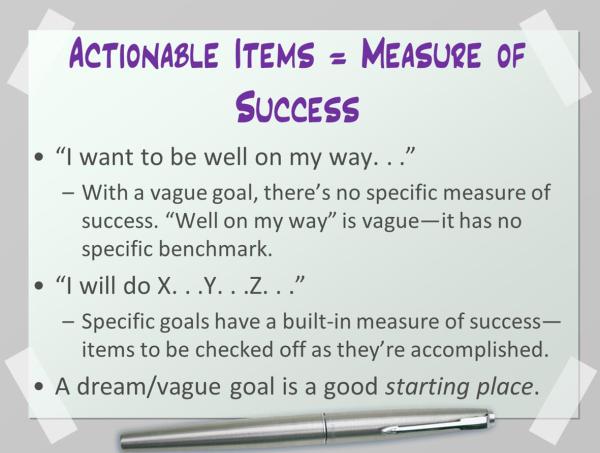
While starting out with a vague goal (still something achievable, but without “legs” to walk through all the way to the end result) is a good starting place, setting specific goals with actionable items is going to be how you measure your success.
When you set specific goals with actionable items, it gives you a built-in method to measure whether or not you’re successful and meeting/achieving your goals. And this is where being a list-maker can really come in handy. There’s nothing like starting out with a long to-do list and having the enormous pleasure of crossing out completed items. That, in a way, is almost as satisfying as actually having attained/completed the item being scratched off.
One of the best ways to break your goal down into actionable items is to set both short-term and long-term steps.
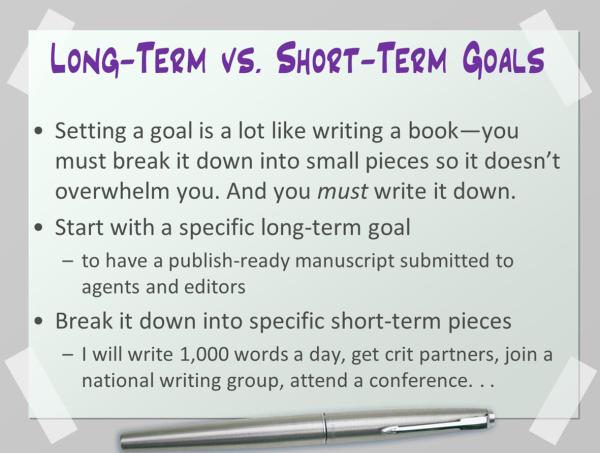
One of the reasons I label these “short-term” and “long-term” instead of “little” and “big” or something else like that is because creating actionable items to reach your overall goal requires setting a timeline and sticking to it.
Writing down your goals makes them more real—and gives you the opportunity to review them from time to time and remember their specifics. If you don’t write your goals down, how will you know if you’ve achieved them?
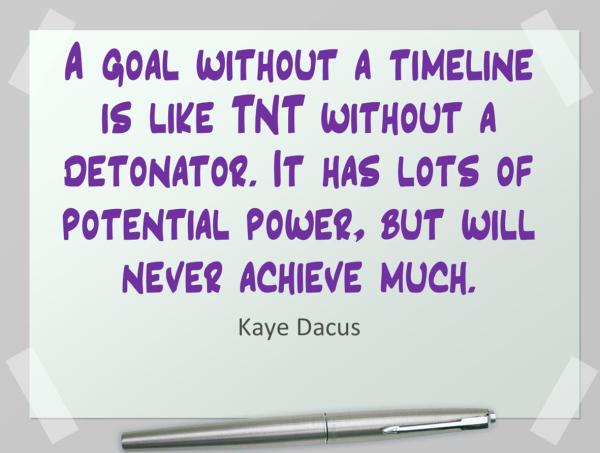
As you come up with your list of actionable items, create a timeline:
- I will write 1,000 words a day until I reach a completed manuscript length of 90,000 words, and I will have a completed first-draft of Novel A by January 31
- I will find at least two critique partners and start working with them by March.
- I will join Mystery Writers of America in January.
- I will attend the Killer Nashville conference next August.
- I will have the second draft of Novel A completed and to my critique partners in May.
- I will begin Novel B in June.
- I will write my proposal, create my one-sheet, and develop my pitch for Novel A in July.
- I will have my polished draft of Novel A completed by August 15.
- I will pitch Novel A to Editor A, Agent B, and Editor C at Killer Nashville in August.
And so on.
Then, even if it seems silly, cross each item off the list as you complete it. It may seem daunting at first all of the small steps that go into working to achieve the dream of becoming a published writer. But once you start seeing more items crossed off than remain, you’ll realize just how much you’ve accomplished and how successful you already are.
Tomorrow: Risk, Failure, and Re-evaluation of Set Goals
Dreams vs. Goals: Give Your Writing Dreams Marching Orders
Participate in an online version of me teaching the Dreams vs. Goals class on SkillShare.
If you don’t know where you are going,
you will probably end up somewhere else.
~Lawrence J. Peter
Yesterday, we looked at what it means to be a dreamer—to dream about being a writer. As a reminder, here’s how dictionaries define dream:
- a visionary creation of the imagination
- a state of mind marked by abstraction or release from reality
- a cherished hope; ambition; aspiration
- a vain hope
And I know we all agree that dreams can be good things. But if we want to accomplish something, we’re going to have to do something more than dream about it. That’s where goals come into play.
What Is a Goal?
If we once again turn toward the dictionary for a technical definition, a goal is:
- the result or achievement toward which effort is directed; aim; end
- target; purpose, object, objective, intent, intention
- the aim or object toward which an endeavor is directed
- the terminal point of a journey or race
Do you notice a difference in the words that define these two terms? The definitions for “dream” are largely passive while the definitions for “goal” are active. You have dreams; you set goals.
In other words . . .
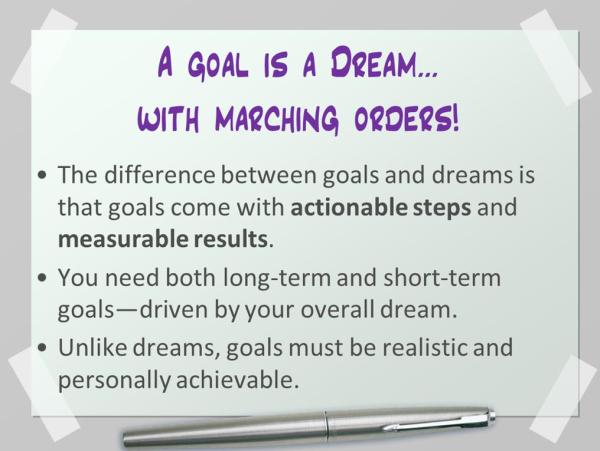
Dreams are hopes. Dreams are wishes. Dreams are visions of an outcome . . . without a visualization of the steps needed to reach that outcome.
Goals are what we need in order to figure out how to reach the end we’re dreaming of.
I dream of being a traditionally published author.
Great. Now, what part of that dream can you actually control or influence? What can you realistically do in order to move toward the fulfillment of that dream? In other words, what part of your dream is personally achievable?
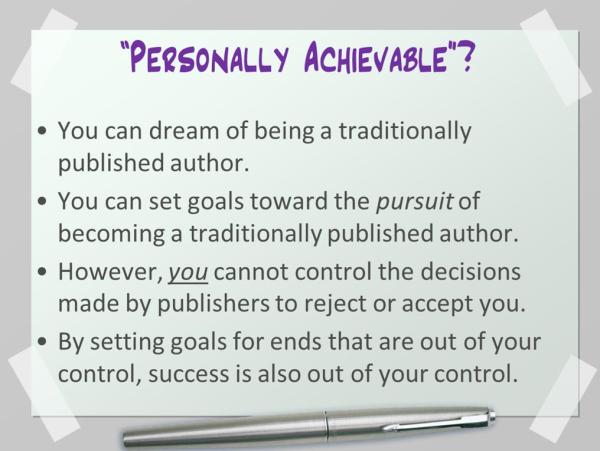
It’s fine—wonderful—to dream of becoming a traditionally published author (i.e., being paid an advance/royalty by a traditional publishing house so they can have the privilege of making money by selling your book). It gives you an end toward which to set goals. However, aside from setting goals for daily/weekly/monthly word counts, learning everything you can about craft, finding and working with critique partners, attending conferences, pitching your work to agents and editors, and polishing your manuscript to a fine sheen, there is one major part of the equation you cannot control. You cannot control the decisions made by publishers to reject or accept you. You have now taken away your own ability to control whether or not you achieve your goal. This is what I mean by realistic and personally achievable—you must be able to affect and control the outcome in order for it to be a viable goal, not just a dream.
You dream of being a traditionally published author.
Your goal is to do everything within your ability to create a publish-ready manuscript and pitch it to editors.
So, dream away! But then step back into reality and look at your dream to see what parts of it you, personally, can achieve.
Tomorrow: Let’s Start Setting Some Goals!
Dreams vs. Goals: Do You Dream of Being a Writer?
Participate in an online version of me teaching the Dreams vs. Goals class on SkillShare.
We all have dreams. Things we want. Things we hope for.
But will the dream of “being a writer” actually get you there? Is it something that’s as nebulous, as insubstantial, as the stories that run through our heads when we’re asleep? Or is the dream attainable?
Well, it just so happens that I have a workshop that I teach on this very subject, and, as it’s been a few years since I’ve had the opportunity to teach it at a conference or writers’ group meeting, I thought we’d delve into it here. So let’s get started.
“A Dream Is a Wish Your Heart Makes…”

Beyond the sometimes-bizarre movies that play out in our heads when we’re sleeping, beyond the fleeting fantasies that flitter through our minds when they’re wandering, what are dreams?
Well, as the slide above says, they’re more than just thoughts or night visions. Dreams are those “cherished hopes; ambitions; aspirations” that can both enrich and enrage us—enrich us by giving us hope that there’s something beyond what we currently have/are, and enrage us by being (seemingly) out of reach.
But what about dreams when it comes to writing?
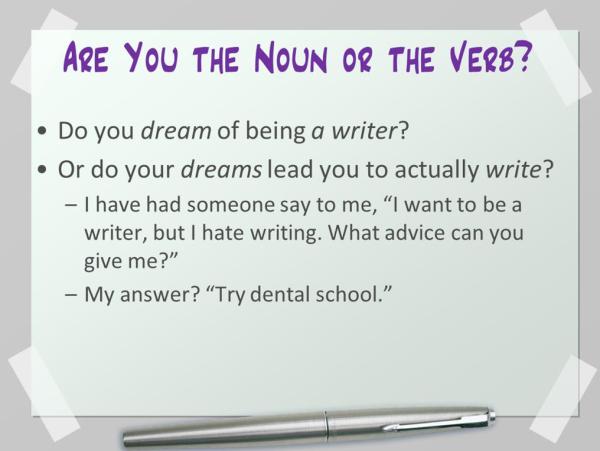
Do you dream of being a writer, or do you actually write?
One of the most common things heard by professional writers (and those working to become professional writers) is, “I have this story I’ve always dreamed of writing…” This is usually quickly followed by “but” and an excuse for never doing it, or “so why don’t you write it for me.”
You can dream all you want to about writing. You can stare at a wall and make up all the stories you desire. You can picture yourself standing up in front of a room of hundreds of writers and publishing professionals accepting the Nobel prize for literature or the Pulitzer or the Christy or the Bram Stoker or the Nebula . . . or whatever award it is. Don’t stop dreaming, even if those dreams seem impossible! (You’re welcome for the earworm.)

But, see, here’s the thing—if you never actually write anything, you’ll always just be a dreamer and not a writer. Writers are people who put words down on paper. (Lots of words…MILLIONS of words!)
If you want to be a writer and not just a dreamer, then it’s time to stop being the noun (“a writer”) and start doing it (“writing”).

Tomorrow: Giving Your Dreams Marching Orders
What Are You Reading? (October 2014)
Happy First Monday of October, everyone.
Wait . . . what do you mean I missed
the first Monday of the month?
Well, no matter what day it is, it’s Reading Report time!

Open Book by Dave Dugdale
.
Tell us what you’ve finished over the last month, what you’re currently reading, and what’s on your To Be Read stack/list. And if you’ve reviewed the books you’ve read somewhere, please include links! (To format your text, click here for an HTML cheat-sheet. If you want to embed the links in your text (like my “click here” links) instead of just pasting the link into your comment, click here.)
.
- What book(s) did you finish reading (or listening to) since the last update?
- What are you currently reading and/or listening to?
- What’s the next book on your To Be Read stack/list?
The ABCs of Literature — A Listlet
I wrote my own “quiz”/listlet (yes, I just made up that word) a couple of years ago and thought it would be fun to revisit it. If you like it, feel free to re-post on your blog or Facebook page, and be sure to come back and share the link in a comment!
My ABCs of Literature
List your favorite . . .
Austen (Jane) novel: Persuasion
Brontë sister’s novel: Jane Eyre
Clancy or Crichton novel and/or movie: Jurassic Park (book & film adaptation)
Dickens novel and/or film: Bleak House (it’s the only one I’ve read through, and I love the 2006 miniseries adaptation)
English class you took: History of the English Language
Frequently read author: Currently, Courtney Milan
Grisham novel and/or movie: Novel—The Rainmaker; film—A Time to Kill
Historical novel*: The Boleyn Inheritance by Philippa Gregory
*Written at a time well after that in which it’s set.
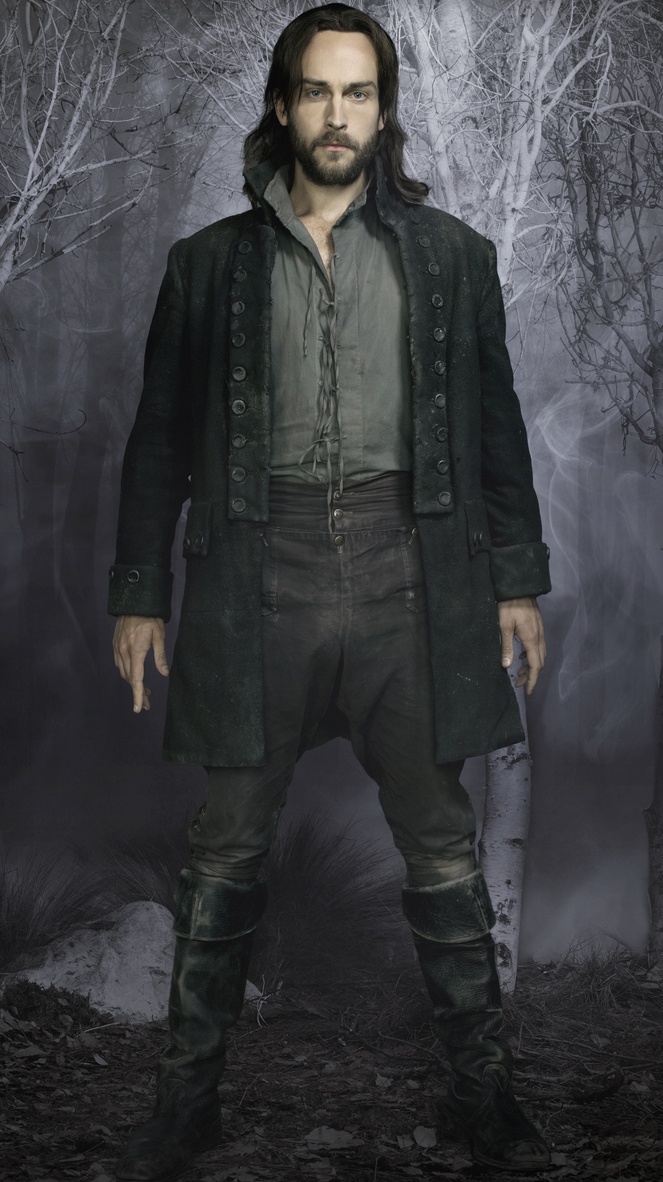
Iconic fictional character: Ichabod Crane 😉
James Joyce or Henry James? Henry James—Turn of the Screw especially
King in literature (i.e., a character who’s a king, real or fictional): King Henry V of England (Shakespeare’s version)
Lord of the Rings character: Éomer (was there any doubt?)
Movie made from classic literature: Persuasion 1995
Newberry Medal–winning book: Sarah, Plain and Tall (1986)
Oldest book you own (not necessarily “favorite,” just oldest): The entire Harvard Classics set, © 1909
Pirate in literature: Tie: “El Salvador” and “Shaw” (Ransome’s Quest)
Quiet place to read: In bed
Robin Hood version (which film/TV series?): Disney’s animated version
Shakespeare play or poem: Much Ado about Nothing
Twain (Mark) novel/story/essay: “The Celebrated Jumping Frog of Calaveras County” (short story)

USA Today Bestseller: Harry Potter and the Goblet of Fire
Villain: Loki
Walt Whitman or William Wordsworth? Whitman (Leaves of Grass is one of my favorite works of literature)
Xanthippe (an ill-tempered woman; a shrew): Lady Beatrice from Much Ado About Nothing
Yawn-inducing bedtime read: Something by Dickens
Zealously protected book you’ll never part with: Victoria by Willo Davis Roberts—I’ve had it since I was fourteen or fifteen, it was what really got me motivated to start writing, it’s taped together, and I haven’t read it in years, but I’ll never part with it.
Creating Characters–Is the Devil in the Details?
 A somewhat controversial topic has been raised on one of my writers’ loops: the poster posed the question of whether giving specific descriptions of characters’ clothing and age is a convention of the romance genre, stating that she finds it annoying to have to read what color someone’s sweater is, and that a character’s specific age isn’t important unless it’s significant to the plot (i.e., a May–December romance). Several other people responded in agreement.
Here’s my take on it:
Because I’m a visually oriented person, I prefer to have more concrete descriptions of what people are wearing and what they look like. As an author, I have to know what my characters are wearing whenever they walk into the scene. Do I always mention it? No. But the specific details of what someone is wearing can say a lot about the character and who they are. A man who is almost never seen out of a full suit—designer, tailored for a custom fit—is different from a man who wears shapeless polos and worn-in jeans. Plus there’s the emotional (and sometimes physical) reaction we have when we see what someone’s wearing: we think he’s sexy or dignified or wealthy or poor or sloppy or clueless or nerdy or whatever. We all judge those around us not just by what they look like physically, but by the clothes they choose to wear—even if we’re not aware that we’re making those judgments—and it affects how we interact with people sometimes. That’s why I include descriptions of clothing in my writing, and why I prefer reading authors who do the same.
I also want to know how old the characters are—the age of the hero/heroine and approximate ages of those people around them. Age, like clothing, is a way of giving the reader a wealth of subconscious information about the character without having to spell it out. A thirty-eight-year-old is going to have a totally different outlook on life than a twenty-eight-year-old or an eighteen-year-old. From whom would you be more likely to seek advice on which investments to make in your 401k? On where the hottest place is to meet other young professionals? On what is of interest to today’s college student? Having the POV character estimate the age of someone they don’t know—whether they appear around the same age, much older, much younger—allows the reader to make certain assumptions about the secondary character along these same lines.
Now, all that said, I will say that I DO NOT believe that every character who walks into the scene needs to have a name, full physical description, and backstory, as I suffered through in Julie Garwood’s Shadow Music. She had characters crawling out of the woodwork, and then, after a paragraph or two (hopping into their POV), never showing up again. So there is an art to learning how much description is enough.
I touched on this subject in the Showing vs. Telling series (Mirror, Mirror on the Wall and In the Eye of the Beholder) with examples from different authors who have woven the description of the character’s clothing in so that it becomes a description of the character. When used right, specific details of what the character chooses to wear can help set the scene, create a certain tone or mood surrounding the character, and give subconscious clues to who the character is.
You’re also going to find that the amount of detail that readers are expecting varies from genre to genre. Romance (especially historical), sci-fi, and fantasy tend to have a lot more physical description of the characters, and, to a lesser extent, the costuming and other personal details. Other genres, like mystery, thriller, or horror, may give only the details that are pertinent for the reader to know to draw certain conclusions or to get the feel for the peril or action the characters are experiencing.
What do you think? Do you like specific descriptions? I’m not talking about over descriptions, where each character’s outfit has to be described down to the last detail every time they walk on stage, but a few well-placed descriptions here and there.
Creating Characters—What’s in a Name?
The longer I’m around writers, the more I realize that there are as many ways to come up with characters and characters’ names as there are writers.
When I start developing a character, the first thing I have to do is cast him or her with a Real World Template. Most of the time, the character’s name is an integral part of “who” he or she is by this point in the process. But at times, I have trouble coming up with just the right name.
The problem with that is, I’m the type who can’t start writing until I have the names for my characters; even when I introduce a very minor character, I have to stop and work out some kind of background for that person—including a first and last name—before I can have them walk onto the “stage.”
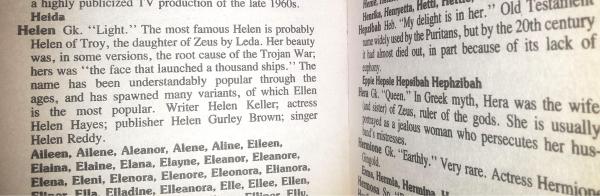
To me, names, as much as words, have connotations. There are certain images I conjure when I hear the names Bambi, Brittany, or Courtney. There is a totally different image in my mind for the names Edna, Edith, or Gertrude. Or what about how various spellings of a name can change the connotation:
Kelley, Kelly, Kelli.
Francis, Frances, Francois.
Louis, Lewis, Luis.
Shawn, Shaun, Sean.
John, Jon, Johann, Juan.
Marsha, Marcia, Martia!
And, just as with that last example, there are cultural connotations that come with certain names. Think about some of the most recognizable names in TV or Movie lore:
Andy and Opie Taylor
James T. Kirk / Jean Luc Picard
Dana Scully & Fox Mulder
Mike, Carol, Greg, Marcia, Peter, Jan, Bobby, or Cindy Brady
Jack Bauer
James Bond
These names have reached iconic standing—most Americans would recognize any name off this list before they’d recognize Grover Cleveland or William Taft or Millard Fillmore. But with these aforementioned characters we have one major advantage: we’ve seen them in action.
When you read the names, did you picture the characters in your head? (Was it Sean Connery or Daniel Craig?) What makes these characters memorable? Their names? Or the personalities the actors bring to the roles? We remember Fox Mulder for his determined belief in UFOs and alien life; Jean Luc Picard’s bald head and British accent as he commanded, “Make it so!”; Jack Bauer hiding around a corner whispering into a cell phone while trying to save the world; or Andy and Opie walking along with their fishing rods. And of course, James Bond’s signature tuxedo and cocktail.
Names do make quite a difference to the connotation readers associate with our characters. And sociological research has proven this is true.
I once read somewhere—probably in one of the many name books I have—that before a name for a child is decided upon, the parent-to-be should perform a “playground test”: go to a crowded playground and call the full name (first-middle-last) three times. If (a) you aren’t embarrassed yelling it three times in public and (b) all of the little kids around you don’t immediately start mocking it, it’s probably a good name. “Reader test” your characters’ names. Read it out loud; just because it looks good on the page doesn’t mean it’ll sound good on the audiobook or even in your reader’s head. Have a conversation with someone (preferably another writer or someone familiar with our disease) and use the name several times. Pretend you’re introducing the character to someone important in the character’s chosen profession. What will that VIP think of your character just based on that first impression of learning his or her name?
If you read the name Scarlett in a book, whom will you immediately think of—Scarlett O’Hara or Scarlett Johansson? If you’ve never seen Gone With The Wind or read the book, you’re probably either a Millennial (born between 1980 and 2000) or you didn’t have an older sister whose favorite movie was GWTW. Utilizing the name Scarlett in the 2014 carries with it unique connotations to different demographics of readers—those over the age of 40 are more likely to think about Margaret Mitchell’s fiddle-dee-dee saying southern belle—while those under 40 will picture a redhead who likes to kick ass and holds her own with demigods and superheroes.
What about the name George? What image does it bring to your mind? George Clooney? George Takei? George Strait? George Washington? George R. R. Martin? Curious George?
When I first started writing Follow the Heart, I’d named my heroine Margaret (and called her Meg) and her maid’s name was Joan. Both serviceable names. I was having a little trouble connecting with Meg, but I figured that was because I just hadn’t spent enough time developing her character. (Joan was named Joan because the Real World Template for her character is Joanne Froggatt, best known as Anna from Downton Abbey.) But then I picked up Julie Klassen’s book The Maid of Fairbourne Hall, and not only was her main character named Margaret and called Meg, but Meg’s maid was also named Joan! (Great minds . . ., right?) So, back to the drawing board for me.
When I’d found the template I ended up using for my main character, I hadn’t yet cast her (I was template shopping and had added her to my casting book). But I had made a note—Looks like a Kate. I figured since she wasn’t a well known actress nor someone I could get lots of images and/or video of, I’d probably only ever use her as a secondary character—and for a secondary character, I could use a name that was so close to my own.
But as soon as I knew I needed to rename her, Katharine, who went by Kate, was the only name that worked. And immediately, upon making the decision to rename her, I came up on the idea of “Katharine” being, in her mind, a different persona than “Kate”—and that to find a wealthy husband, she must set unconventional, gardening-loving “Kate” aside and become straight-laced, socially acceptable “Katharine” instead. (And the reason her full name is spelled differently from mine—KathArine rather than KathErine—is in honor of my favorite actress of all time, Katharine Hepburn.)
I went through a similar process in naming the heroine in Stand-In Groom, which you can read about here. In the Ransome series, Julia started life as Elizabeth. In the original idea for what became The Art of Romance, the two main characters were Jason and Angie, and Angie’s grandmother’s nickname was Manna. Thankfully, in further working with the story and their characters, they became Dylan, Caylor, and Sassy.
An Exercise in Building Characters With and Without Names
First, try building characters from the name up.
- Choose a name generator from this website (or find another one by Googling “name generator”)—or use favorite names of yours from childhood, interesting ethnic names you’ve heard, family names, anything—and come up with a list of five to ten names. (Just try not to pick names you already associate with a specific person, like a close family member.)
- In a notebook (or in One Note or however you want to do this), write one name on the top of each page for however many on your list. You can stick just with first names, or you can do first-middle-last . . . whatever strikes your fancy.
- For each one, do some free-association writing with that name:
–What color hair does this character have?
–How old is this character?
–What time period does this character live in?
–What is this character’s favorite color?
–What kind of accent does this character have?
–And so on.
Then, turn it around. Deliberately build a character without giving him or her a name.
- Do not label your page.
- Start writing about a character.
–Gender
–Age
–Time Period
–The same thing as above—but remember, do not name the character yet. - Only after you have about a full page of character info and you have a pretty good “picture” of him or her on the page, come up with a name.
Which was harder? Building a character from a name or naming an established character?
For Discussion: What are your favorite character names from something you’ve read or TV/movies you’ve seen? What do the names mean to you? What are your favorite names you’ve come up with for your own characters? How did you come up with them?
Fun Friday: Literature’s Most Desirable Heroes (IMO)
Reposted from 2012
I got this idea from a blog post on Mental Floss. These are my picks. Feel free to post yours in the comments!
 10. Dr. Peter Blood, Captain Blood, Rafael Sabatini
. . . there entered now into his presence a spruce and modish gentleman, dressed with care and sombre richness in black and silver, his swarthy, clear-cut face scrupulously shaven, his long black hair in ringlets that fell to a collar of fine point. In his right hand the gentleman carried a broad black hat with a scarlet ostrich-plume, in his left hand an ebony cane. His stockings were of silk, a bunch of ribbons masked his garters, and the black rosettes on his shoes were finely edged with gold.
For a moment M. de Rivarol did not recognize him. For Blood looked younger by ten years than yesterday. But the vivid blue eyes under their level black brows were not to be forgotten, and they proclaimed him for the man announced even before he had spoken.
 9. James Percy, The Inheritance, Louisa May Alcott
When the first greetings were over, Amy looked again at the face that had smiled so kindly on her as he took her hand.
It was calm and pale, as Arthur had said, with dark hair parted on a high, white brow, beneath which shone a pair of clear, soft eyes. He was tall and finely formed, with a certain stately grace that well became him. A quiet smile lit up his face and, as the soft light of the evening sun shone on it, Amy thought a beautiful and noble soul must lie within.
 8. Joe Blomfield, Miss Pettigrew Lives for a Day, Winifred Watson
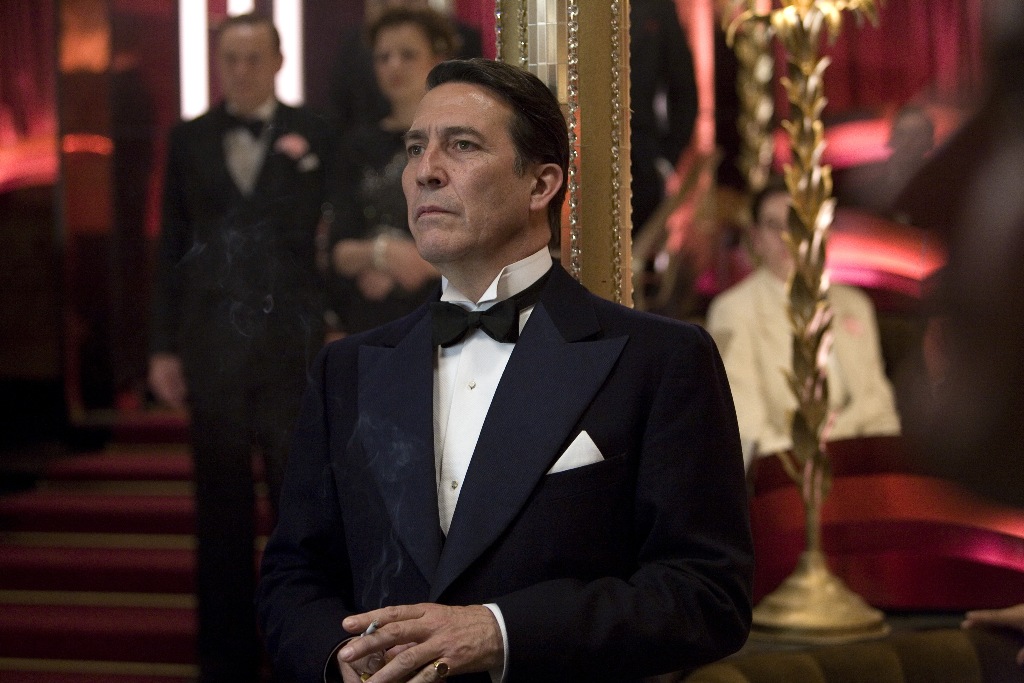
Joe was looking down at her: a big man, not a young man, possibly the early fifties. No sign of middle-aged spread. What might be called a well-preserved figure. A man looked better with a well-covered body in the fifties. He was immaculate in evening clothes: shirt-front gleaming, flower in the button hole. Massive head, powerful jaw, humorous eyes, no-fooling-me mouth, hair greying a little, bluff manner, genial, red face.
His gaze lighted on Miss Pettigrew’s face with surprise. Then his lips parted, his eyes lit, his face expanded, with a surprised, warm, friendly smile.
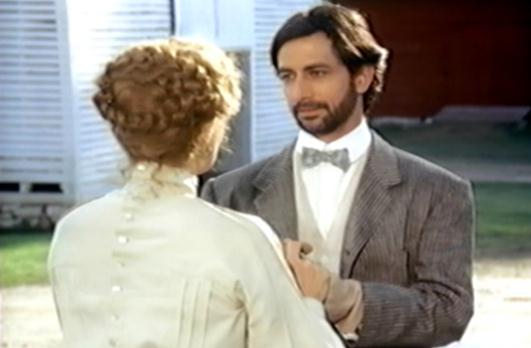 7. Carl Linstrum, O Pioneers!, Willa Cather
Carl had changed, Alexandra felt, much less than one might have expected. He had not become a trim, self-satisfied city man. There was still something homely and wayward and definitely personal about him. Even his clothes, his Norfolk coat and his very high collars, were a little unconventional. He seemed to shrink into himself as he used to do; to hold himself away from things, as if he were afraid of being hurt. In short, he was more self-conscious than a man of thirty-five is expected to be. He looked older than his years and not very strong. His black hair, which still hung in a triangle over his pale forehead, was thin at the crown, and there were fine, relentless lines about his eyes. His back, with its high, sharp shoulders, looked like the back of an over-worked German professor off on his holiday. His face was intelligent, sensitive, unhappy.
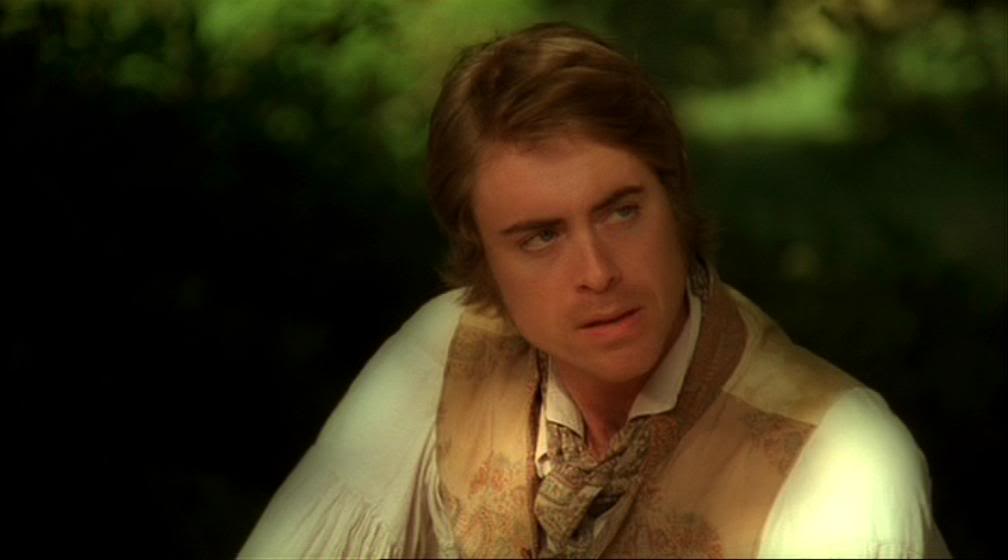 6. Dick Dewy, Under the Greenwood Tree, Thomas Hardy
Dick Dewy faced about and continued his tune in an under-whistle, implying that the business of his mouth could not be checked at a moment’s notice by the placid emotion of friendship.
Having come more into the open he could now be seen rising against the sky, his profile appearing on the light background like the portrait of a gentleman in black cardboard. It assumed the form of a low-crowned hat, an ordinary-shaped nose, an ordinary chin, an ordinary neck, and ordinary shoulders. What he consisted of further down was invisible from lack of sky low enough to picture him on.
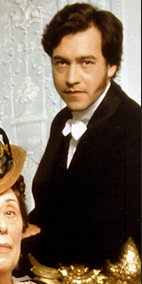 5. Mortimer Lightwood, Our Mutual Friend, Charles Dickens
Reflects a certain ‘Mortimer’, another of Veneering’s oldest friends; who never was in the house before, and appears not to want to come again, who sits disconsolate on Mrs Veneering’s left, and who was inveigled by Lady Tippins (a friend of his boyhood) to come to these people’s and talk, and who won’t talk. . . .
Mortimer raises his drooping eyelids, and slightly opens his mouth. But a faint smile, expressive of ‘What’s the use!’ passes over his face, and he drops his eyelids and shuts his mouth. . . .
There is that in the indolent Mortimer, which seems to hint that if good society might on any account allow itself to be impressible, he, one of good society, might have the weakness to be impressed by what he here relates. It is hidden with great pains, but it is in him.
 4. Fitzwilliam Darcy, Pride and Prejudice, Jane Austen
Mr. Darcy soon drew the attention of the room by his fine, tall person, handsome features, noble mien, and the report which was in general circulation within five minutes after his entrance, of his having ten thousand a year. The gentlemen pronounced him to be a fine figure of a man, the ladies declared he was much handsomer than Mr. Bingley, and he was looked at with great admiration for about half the evening, till his manners gave a disgust which turned the tide of his popularity; for he was discovered to be proud; to be above his company, and above being pleased; and not all his large estate in Derbyshire could then save him from having a most forbidding, disagreeable countenance, and being unworthy to be compared with his friend.
 3. Allan Woodcourt, Bleak House, Charles Dickens
I have omitted to mention in its place that there was someone else at the family dinner party. It was not a lady. It was a gentleman. It was a gentleman of a dark complexion—a young surgeon. He was rather reserved, but I thought him very sensible and agreeable. At least, Ada asked me if I did not, and I said yes. . . .
I believe—at least I know—that he was not rich. All his widowed mother could spare had been spent in qualifying him for his profession. It was not lucrative to a young practitioner, with very little influence in London; and although he was, night and day, at the service of numbers of poor people and did wonders of gentleness and skill for them, he gained very little by it in money. He was seven years older than I. Not that I need mention it, for it hardly seems to belong to anything.
I think—I mean, he told us—that he had been in practice three or four years and that if he could have hoped to contend through three or four more, he would not have made the voyage on which he was bound. But he had no fortune or private means, and so he was going away. He had been to see us several times altogether. We thought it a pity he should go away. Because he was distinguished in his art among those who knew it best, and some of the greatest men belonging to it had a high opinion of him.
 2. John Thornton, North & South, Elizabeth Gaskell
Now, in Mr. Thornton’s face the straight brows fell low over the clear, deep-set earnest eyes, which, without being unpleasantly sharp, seemed intent enough to penetrate into the very heart and core of what he was looking at. The lines in the face were few but firm, as if they were carved in marble, and lay principally about the lips, which were slightly compressed over a set of teeth so faultless and beautiful as to give the effect of sudden sunlight when the rare bright smile, coming in an instant and shining out of the eyes, changed the whole look from the severe and resolved expression of a man ready to do and dare everything, to the keen honest enjoyment of the moment, which is seldom shown so fearlessly and instantaneously except by children. Margaret liked this smile; it was the first thing she had admired in this new friend of her father’s; and the opposition of character, shown in all these details of appearance she had just been noticing, seemed to explain the attraction they evidently felt towards each other.
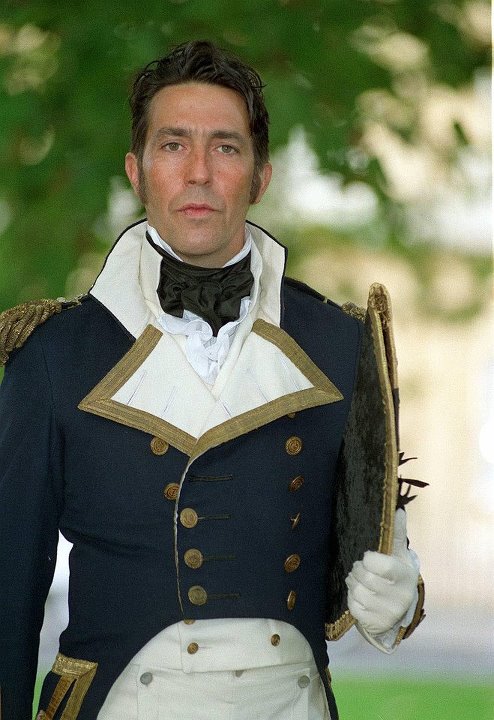 1. Captain Frederick Wentworth, Persuasion, Jane Austen
“I can listen no longer in silence. I must speak to you by such means as are within my reach. You pierce my soul. I am half agony, half hope. Tell me not that I am too late, that such precious feelings are gone for ever. I offer myself to you again with a heart even more your own than when you almost broke it, eight years and a half ago. Dare not say that man forgets sooner than woman, that his love has an earlier death. I have loved none but you. Unjust I may have been, weak and resentful I have been, but never inconstant. You alone have brought me to Bath. For you alone, I think and plan. Have you not seen this? Can you fail to have understood my wishes? I had not waited even these ten days, could I have read your feelings, as I think you must have penetrated mine. I can hardly write. I am every instant hearing something which overpowers me. You sink your voice, but I can distinguish the tones of that voice when they would be lost on others. Too good, too excellent creature! You do us justice, indeed. You do believe that there is true attachment and constancy among men. Believe it to be most fervent, most undeviating, in F. W.
I must go, uncertain of my fate; but I shall return hither, or follow your party, as soon as possible. A word, a look, will be enough to decide whether I enter your father’s house this evening or never.”
__________________________________________
Works Cited:
Alcott, Louisa May. Inheritance (The). New York: Dutton, 1997. Print.
Austen, Jane. Persuasion: Norton Critical Edition. Ed. Patricia Meyer Spacks. New York: W.W. Norton, 1995 (first published 1817). Print.
Austen, Jane. Pride and Prejudice: Norton Critical Edition. Ed. Donald J. Gray. 3rd ed. New York: W.W. Norton, 2001 (first published 1813). Print.
Cather, Willa. O, Pioneers! New York, N.Y.: New American Library, 1989 (first published 1913). Print.
Dickens, Charles. Bleak House. New York, NY: Bantam, 1989 (first published 1853). Print.
Dickens, Charles. Our Mutual Friend. New York: Bantam, 1990 (first published 1864). Print.
Gaskell, Elizabeth Cleghorn. North and South: Norton Critical Edition. Ed. Alan Shelston. New York: W.W. Norton, 2005 (first published 1855). Print.
Hardy, Thomas. Under the Greenwood Tree. Oxford, England: Oxford University Press, 1985 (first published 1872). Print
Sabatini, Rafael. Captain Blood: His Odyssey. Cutchogue, NY: Buccaneer, 1950 (first published 1922). Print.
Watson, Winifred. Miss Pettigrew Lives for a Day. London: Persephone, 2008 (first published 1938). Print.
Costume Drama Thursday: The Making of a Lady

Earlier this year, I posted a review of The Making of a Marchioness/The Methods of Lady Walderhurst, written by Frances Hodgson Burnett. And the reason I read the book is because of this film, which aired Stateside in the winter.
Title: The Making of a Lady
Historical Setting: England, Late Victorian/Early Edwardian Era
Starring: Lydia Wilson, Linus Roache, Hasina Haque, James D’Arcy
Original Release Year: 2012 (UK), 2014 (US)
.
.
.

 KayeDacus.com