Finding Your Beginning in “The End”: Dreaming of Writing a Perfect Opening
Or, How NOT to Begin Your Story

Never, ever, ever begin a narrative with action and then reveal the character’s merely dreaming it all. Not unless you’d like your manuscript hurled across the room, accompanied by a series of curses. Followed by the insertion of a form rejection letter into your SASE and delivered by the minions of our illustrious postal service.
(Edgerton, HOOKED, Kindle Location 2101)
.
Last night I dreamt I went to Manderley again.
One of the most tempting things for beginning writers—and one thing absolutely certain to flag them as newbies—is to take the instruction to “open with a bang” as permission to generate a hugely intense and captivating opening by throwing the readers into the middle of the character’s dream.
No. No. No. No. No. No. No. No. No. No. No. No. No. No. No. No. No. No. No. No. No. No. No. No. No. No. No. No. No. No. No. No. No. No. No. No. No. No. No. No. No. No. No. No. No. No. No. No. No. No. No. No. No. No. No. No. No. No. No. No. No. No. No. No. No. No. No. No. No. No. No. No. No. No. No. No. No. No. No. No. No. No. No. No. No. No. No. No. No. No. No. No. No. No. No. No. No. No. No. No. No. No. No. No. No. No. No. No. No. No. No. No. No. No. No. No. No. No. No. No.
No!
But why not?
Remember yesterday when we talked about how the trust of the reader is earned or lost in your opening pages? That’s why.
When you open with a dream sequence that the reader knows is a dream sequence (because it’s in italics), there are no real stakes, there’s no genuine tension (because the reader knows it’s not real), and no real risk to the character. It’s not real—so there’s no reason for the reader to care.
If the reader doesn’t know it’s a dream, the reader gets invested in what’s happening, and then the author says, “Nyah, nyah; I fooled you; you’ve been punked; it didn’t really happen,” and the reader throws the book at the wall or, at the very least, is reluctant to believe anything the author says thereafter. It’s a practical joke at the reader’s expense and without the reader’s consent. And that’s not the trusting author-reader relationship we want to build.
.
The Impossible Dream
When you open with a dream sequence, you now have two beginnings to your story: one is the dream and the other is (most likely) the dreamer waking up from the dream. And nothing REAL, nothing that matters or invests the reader in the story has happened yet.
The reason newbie writers love starting with dream sequences is so they start the story off with a bang. A dream sequence isn’t a bang—it’s a FALSE BANG.
The dream is usually followed by the character waking up, going through their morning routine. This bores readers to tears.
.
Wake Me Up Before You Go-Go
Why is the “morning routine” scene so bad?
Because there is no conflict, nothing to get the plot moving.
If your opening is a “wake up” scene,
your character better be waking up to the
world falling apart around him
and immediately jumping into the fray.
Instead, wake-up scenes are usually filled with nothing but internal monologue and/or backstory as the character ruminates about his/her life up until this point or his/her philosophical or metaphysical musings on life in general (newbies believe this is “character building” but all it is, really, is “reader boring”).
- And filling the opening pages with narrative on the backstory of the character means you probably didn’t do enough preparation work before you started writing because you’re using your “opening” to figure out your character’s backstory instead of already knowing it before you started writing.
Don’t let your opening scene get stuck inside your character’s head. The reader will quickly lose interest if nothing is happening. Thoughts, ideas, ruminations, revelations, contemplation—all of these are telling/passive, not showing/active. And we want our writing, especially our openings, to be as active as possible.
.
Here Comes Trouble
If stories are always about one thing and one thing only—trouble—then the story shouldn’t really begin at any time other than when the trouble begins. The story simply doesn’t exist before that point.
(Edgerton, Kindle Location 586)
I’ve said it before and I’ll probably never stop saying it in the right situations: your plot should start AT THE BEGINNING of your story. Otherwise, there’s no reason for a reader to be reading your story. Give your readers a reason to turn the page—give them characters and conflicts to invest their interest and time and emotions in. Don’t give them a passive scene full of backstory or philosophizing that doesn’t take the reader anywhere.
Start in the middle of a scene. The Law & Order franchises changed the way in which scenes were structured in police procedurals on TV—instead of showing the detectives arriving at the house of the witness (or suspect), walking up to the door, knocking, being invited in, then sitting down and starting to talk, L&O opened scenes (after the kunk-kunk sound) with the detectives already in the middle of an interview, sometimes already in the middle of a sentence—or with the dialogue coming over the black screen as it faded into the scene. It’s a formula that works, obviously, since it’s the longest running franchise on TV, and most other shows have picked up on this so that it now seems the most natural way for stories to be told on TV.
Try starting with dialogue. Start in the middle of a conflict (that matters to the plot) between the main character and someone else. Start with action. Whatever it is, get the reader involved in what’s going on immediately. Just make sure that it ties into your overall plot and is consistent with the tone and theme of the remainder of the story.
.
Your First Date with Your Reader
I always compare the opening chapter(s) to a first date—do you want to go on a first date with someone who is going to spend three hours telling you his entire life story, and then fill you in on what he thinks about the current world situation, religion, the economy, the condition of his skin, the fact his house needs to be cleaned, and that he thinks his car might be due for an oil change?
No. Part of the thrill of beginning a relationship (even a friendship) is that you get to spend time getting to know the other person a little bit at a time. And what you do get to know fastest is who that person is now—how they interact with you, how they treat others around them, whether or not they show up early or late, how they handle rude people, how they treat service people at restaurants or movie theaters, whether or not they spend the entire time texting or answering their phone every time it rings. Do you have to know where they were born, went to school, and what they studied to learn who a person is right now and whether or not you want to spend more time with them?
To ensure you have more than one “date” with your reader, you must make sure that your beginning ties in with and sets up your ending. Remember, your opening scene is nothing more than a promise of what’s to come throughout the rest of the story. So make it as beguiling and intriguing as possible.
.
Tomorrow: Making Your Readers an Offer They Can’t Refuse
Works Cited:
Edgerton, Les. Hooked: Write Fiction That Grabs Readers at Page One & Never Lets Them Go. Cincinnati, OH: Writer’s Digest Books, 2007. Kindle Edition.
Finding Your Beginning in “The End”: Are You a Trustworthy Writer?
Have you ever picked up a book, read a few paragraphs, and then put it down (or thrown it down) in disgust or disappointment because there was a historical error or a page and a half of backstory or head hopping?
What happened is that you discovered you couldn’t trust the author.
Something to keep in mind as you’re thinking about, planning, crafting, and (later) revising your opening:
The reader’s trust is earned or lost on the first page.
Have you done your research before you started writing?
- Even if you think you know a topic, always find backup sources. Someone else will always know more about it than you do and will tear you (as the author) and your story apart for any mistakes.
Are you being consistent?
- While this is something you want to worry about after you finish your first draft and are in the revision stage, as you set out to write, think about the rules of your storyworld (whether realistic or fantastical), the tone of the story (humorous, serious. tense, horrific, etc.), the voices of the POV characters, the flow of time, transitions between scenes/characters, establishment of POV characters, etc. Consistency is key. A reader wants to know you are in command, that you’ve put in the time necessary to make this book worth her time (and money), and that she’s in good hands.
No one knows our storyworlds better than we do. So it’s tempting to want to spoon-feed it to our readers. However, one thing that makes us trustworthy as authors is knowing how to trust our reader’s intelligence to understand without explanation—and how to explain without really explaining. It’s all about showing and developing context. So RUE—Resist the Urge to Explain!
Also, as an author, you must trust that your reader is intelligent enough to understand that you’re not going to reveal everything about your character(s) in the first chapter. They don’t need the full backstory of your heroine. They don’t need the unique, quaint, small town’s entire history. (And they probably don’t want it.) And your reader is more likely to stay with you longer if you don’t try to reveal everything in the opening pages.
Or, in other words, let your reader make inferences from what you imply.
Thanks, but No Thanks, for the Memories
The incorrect placement of backstory stems from the mistaken belief that readers won’t know what’s going on unless the author fleshes out the characters or provides some of the protagonist’s history and at least part of the journey that brought the protagonist to this crucial place. This is the single biggest mistake writers make. A setup that very (very!) briefly lets readers know who the characters are and where they are is usually fine; a setup that includes excruciating minutiae of a long backstory usually isn’t. Give only the amount of setup or backstory that’s absolutely necessary, and not a word more. More often than not, no backstory is even needed. Try to create setups that include necessary backstory concisely, and trust the reader to get what’s going on.
(Edgerton, Kindle Locations 934-940)
Just say NO to backstory!
Backstory is not the same thing as setup. Setup briefly tells us who and where the characters are right now. Backstory (lengthily) tells the reader who and where the characters were before the story began.
Along this same vein—don’t time travel in your opening. Your story should follow a forward linear path, not start, then go back to show/tell something that happened before the opening.
I’ll never forget the ARC of a book I was sent for possible endorsement once. It opened with a bang and drew me right in on the first two pages . . . and then the author time-traveled to about a few hours (days?) before that event began and, in several LOOOOOONNNNNNGGGGGGG pages of narrative told me what had happened to the character to bring about the event that I’d read about in the opening.
And you know what? I didn’t finish reading the book (much less endorse it). And the sad thing was that the author should have trusted her readers—the backstory wasn’t necessary to understand what was going on. Only one or two things were mentioned in it that might be important later in the story—and they could have been brought up later in the story when they were important!
To ensure your reader will trust you right from the very beginning (and then continue trusting you throughout the story), remember what Jack Bickham says about readers:
1. They are fascinated and threatened by significant change;
2. They want the story to start with such a change;
3. They want to have a story question to worry about;
4. They want the story question answered in the story ending;
5. They will quickly lose patience with everything but material that relates to the story question.(Bickham, Kindle Locations 150-154)
For Discussion:
Will your story’s opening build your reader’s trust? Once you’ve moved from the beginning into the middle, and finally the end, will you have rewarded your reader for placing her trust in you?
__________________________________________
Works Cited:
Edgerton, Les. Hooked: Write Fiction That Grabs Readers at Page One & Never Lets Them Go. Cincinnati, OH: Writer’s Digest Books, 2007. Kindle Edition.
Bickham, Jack. Elements of Fiction Writing: Scene & Structure. Cincinnati, OH: Writer’s Digest Books, 1999. Kindle Edition.
Finding Your Beginning in “The End”: Is Writing the Perfect First Line Really a Big Deal?
At the end of the previous post, I posed a few questions:
- Why are first lines more memorable than last lines?
- Are first lines more important than last lines?
- Why are there so many more books, articles, blog posts, etc., published about writing first lines/openings than there are about writing last lines/endings?
- What’s your favorite last line of a book?
The truth of the matter is, first lines are more easily recognizable, more easily remembered, and, possibly, make a greater impact than last lines. Why?
Well, there’s probably a PhD dissertation to be written on that question. Part of it, I believe, is because it’s the first impression a book makes. A first impression is generally better remembered. Another part is because of our “blurb” or “soundbite” mentality—how can I recognize and/or remember something in the fewest words possible? Another part may be our literature teachers’/professors’ penchant for making a big deal out of studying the opening lines of the works they teach. And, finally, I think part of it is that most of us haven’t actually read most classic literature all the way through, so we’ve never actually read the last lines of most of them. 😉
What’s the Big Deal about First Lines?
According to Sol Stein in Stein on Writing, there are three goals that the opening of a story or novel must meet:
- To excite the reader’s curiosity, preferably about a character or a relationship.
- To introduce a setting.
- To lend resonance to the story.
In Hooked, Les Edgerton takes it one step further with four goals for a story or novel’s opening:
- To successfully introduce the story-worthy problem.
- To hook the readers.
- To establish the rules of the story.
- To forecast the ending of the story.
How much more time and effort is given to the study and practice of “crafting the perfect opening” of our novels? After all, not only must we intrigue readers with it, our first few opening lines may be all that our dream agent or editor might ever read. It’s drilled into our heads over and over and over and over that we must make a good first impression by writing the perfect opening line/paragraph/page.
And there is a lot that hangs in the balance that means we should spend time and energy on crafting our opening lines.
The question becomes WHEN should we spend the time on our openings?
No matter how carefully you have the project planned, first chapters tend to demand rewriting. Things happen. New ideas suggest themselves, new possibilities intrude. Slow to catch on, I collected a manila folder full of perfect, polished, exactly right, pear-shaped first chapters before I learned this lesson. Their only flaw is that they don’t fit the book I finally wrote. Thus Hillerman’s First Law: Never polish the first chapter until the last chapter is written.
–Tony Hillerman, quoted in The Writer magazine, May 2007
In other (my) words:
Don’t spend time trying to craft “the perfect first line” (or first page or first chapter) until you’ve finished writing your first draft!
When you’re writing your story, what’s more important: Worrying about making your opening “perfect,” or actually writing your first draft?
I know you know what the “right” answer to that question is—and we’re going to look at why finishing the first draft is important to creating a great opening throughout this series.
But first, let’s talk about those openings.
I’ve said it before, and I’ll say it until the day I die: The only thing you can’t fix is a blank page. Which, if you think about it, really isn’t true—you can fix a blank page by writing on it! Once you do start filling that blank page, just write. Let the ideas for your opening scene(s) flow organically. Don’t force anything. And, yes, give yourself permission to write more than one opening scene. Play with it. Write the opening from your different viewpoint characters’ POVs.
But as you’re writing your opening, don’t think about the opening—think about where the story is going. If you’re writing a romance novel, is your opening setting up the happy ending to come? If it’s a mystery, are you dropping hints and clues that will lead to the final reveal at the end of the book?
Key Components of Opening Scenes
Here are some things you should focus on as you’re crafting your opening scenes:
- Characters
- Immediate conflict—make your character want something
- Promise of what’s to come
- Emotional resonance—readers need to care in order to continue reading
- Clear, understandable, but not overwhelming story world
You also want to focus on grounding your reader into the story world right off the top by using specific details and all five senses, anchoring your story in concrete reality (a specific time, a specific day, a specific action—shown, not told), and using details that are unique to your characters and setting.
Don’t have your characters who live in Nashville meet at Starbucks for coffee—send them to Fido’s or The Frothy Monkey instead.
Use your knowledge and experience to bring unique details to your characters and settings—don’t go for the most obvious choice (Starbucks) but do some research and make your storyworld and, by extension, your characters unique, specific, and layered. Doing this will ensure that you’re not imitating others but that you’re finding your own individual style and technique.
But above all else when it comes to writing effective opening scenes: Don’t write what you would find boring to read in someone else’s book!
For Discussion:
In reviewing your current opening scene, does it meet Stein’s three or Edgerton’s four goals?
What about your opening is unique—what in it tells the reader who you are as a writer?
Have you spent so much time trying to make your opening fabulous that you’ve forgotten that there’s “the rest” of the story to write?
Tomorrow: Building your reader’s trust by avoiding common pitfalls in your opening scene.
__________________________________________
Works Cited:
Edgerton, Les. Hooked: Write Fiction That Grabs Readers at Page One & Never Lets Them Go. Cincinnati, OH: Writer’s Digest Books, 2007. Print.
Stein, Sol. Stein On Writing: A Master Editor of Some of the Most Successful Writers of Our Century Shares His Craft Techniques and Strategies. New York, NY: St. Martin’s Press, 1995. Print.
There and Back Again: Finding Your Beginning in “The End” (new series)
Match up the First Line, Last Line, and Book Title from these ten works of classic literature:
|
First Lines |
Last Lines |
Books |
| 1. All children, except one, grow up. | A. “…my life now, my whole life apart from anything that can happen to me, every minute of it is no more meaningless, as it was before, but it has the positive meaning of goodness, which I have the power to put into it.” |
1984 |
| 2. Call me Ishmael. | B. “After all, tomorrow is another day.” |
A Tale of Two Cities |
| 3. Happy families are all alike; every unhappy family is unhappy in its own way. | C. And, to our bitter grief, with a smile and in silence, he died, a gallant gentleman. |
Adventures of Huckleberry Finn |
| 4. I am by birth a Genevese, and my family is one of the most distinguished of that republic. | D. But I reckon I got to light out for the Territory ahead of the rest, because Aunt Sally she’s going to adopt me and sivilize me, and I can’t stand it. I been there before. |
Anna Karenina |
| 5. It is a truth universally acknowledged, that a single man in possession of a good fortune, must be in want of a wife. | E. He loved Big Brother. |
Dracula |
| 6. It was a bright cold day in April, and the clocks were striking thirteen. | F. He was soon borne away by the waves and lost in darkness and distance. |
Frankenstein |
| 7. It was the best of times, it was the worst of times, it was the age of wisdom, it was the age of foolishness, it was the epoch of belief, it was the epoch of incredulity, it was the season of Light, it was the season of Darkness, it was the spring of hope, it was the winter of despair. | G. Now small fowls flew screaming over the yet yawning gulf; a sullen white surf beat against its steep sides; then all collapsed, and the great shroud of the sea rolled on as it rolled five thousand years ago. |
Gone With The Wind |
| 8. Left Munich at 8:35 P.M., on 1st May, arriving at Vienna early next morning; should have arrived at 6:46, but train was an hour late. | H. When Margaret grows up she will have a daughter, who is to be Peter’s mother in turn; and thus it will go on, so long as children are gay and innocent and heartless. |
Moby Dick |
| 9. Scarlett O’Hara was not beautiful, but men seldom realized it when caught by her charm as the Tarleton twins were. | I. …they were both ever sensible of the warmest gratitude towards the persons who, by bringing her into Derbyshire, had been the means of uniting them. |
Peter Pan |
| 10. You don’t know about me without you have read a book by the name of The Adventures of Tom Sawyer; but that ain’t no matter. | J. It is a far, far, better thing that I do, than I have ever done; it is a far, far, better rest that I go to, than I have ever known. |
Pride and Prejudice |
.
How many of the first lines did you recognize as soon as you read them?
.
How many of the last lines?
.
How many of them did you recognize and were able to put together because of the context—because you are familiar with the story and/or characters—but not because you actually recognized the specific first or last line itself?
.
I’ll post the answers tomorrow, but I wanted to do this exercise as an introduction to the new series we’ll be diving into this week:

A few questions to ponder before we begin:
- Why are first lines more memorable than last lines?
- Are first lines more important than last lines?
- Why are there so many more books, articles, blog posts, etc., published about writing first lines/openings than there are about writing last lines/endings?
- What’s your favorite last line of a book?
Fun Friday: AVENGERS: AGE OF ULTRON teaser trailer!!!

So, this happened this week . . .
Costume-Drama Thursday: Stardust
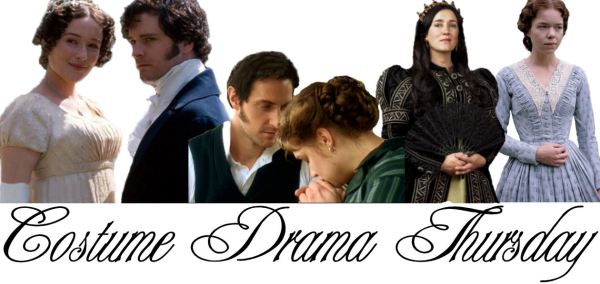
While this is not a typical “period” piece, it’s still a costume drama—and one that I adore. I didn’t realize until a recent re-viewing that it’s based on a Neil Gaiman book. So, now I’m going to have to find that and read it!
Title: Stardust
Historical Setting: (Real-World) England, Late Victorian Era
Starring: Claire Danes, Charlie Cox, Michelle Pfeiffer, Mark Strong, Robert De Niro, Nathaniel Parker, Sienna Miller, and a very young, very unknown Henry Cavill
Original Release Year: 2007
.
.
.
Books Read in 2014: BETTER HOMES AND HAUNTINGS by Molly Harper
Better Homes and Hauntings by Molly Harper
Audiobook read by Amanda Ronconi
Book Blurb:
When Nina Linden is hired to landscape a private island off the New England coast, she sees it as her chance to rebuild her failing business after being cheated by her unscrupulous ex. She never expects that her new client, software mogul Deacon Whitney, would see more in her than just a talented gardener. Deacon has paid top dollar to the crews he’s hired to renovate the desolate Whitney estate—he had to, because the bumps, thumps, and unexplained sightings of ghostly figures in 19th-century dress are driving workers away faster than he can say “Boo.”Nina shows no signs of being scared away, even as she experiences some unnerving apparitions herself. And as the two of them work closely together to restore the mansion’s faded glory, Deacon realizes that he’s found someone who doesn’t seem to like his fortune more than himself—while Nina may have finally found the one man she can trust with her bruised and battered heart.
But something on the island doesn’t believe in true love . . . and if Nina and Deacon can’t figure out how to put these angry spirits to rest, their own love doesn’t stand a ghost of a chance.
My Review:
Ratings:
- Story: 4.25 stars
Narrator: 4.5 stars
- Goodreads bookshelves: books-read-in-2014, contemporary-romance, paranormal, audiobook
Read from July 06 to 15, 2014
What a fun story! I’d love to see someone like Joss Whedon or Eric Kripke make this into a movie. It was both snarky and (slightly) creepy at the same time, just like what those two create.
I’m not the world’s greatest at solving mysteries (which is why I rarely read them), but even I’d figured out the “twist” at the end of this romantic ghost story. But that’s okay, because it was fun watching the characters figure it out.
Harper did a great job developing the characters, too. It seems like she started with the typical two-dimensional stereotype characters (the rich frat boy; the nerdy tech billionaire; the emotionally abused shrinking violet; the hates-all-rich-people, up-by-her-bootstraps sassy girl; and the hippy-dippy bohemian) and then built from there–and then made all of them sympathetic, relatable, and three-dimensional.
I really enjoyed the author’s humor, evident throughout the prose—and even the chapter titles had me grinning or outright laughing.
I look forward to reading more books by this new-to-me author!
______________________________________________
My rating matrix:
5 STARS = one of the best I’ve ever read
4 STARS = a great read, highly recommended
3 STARS = it was okay/not a favorite
2 STARS = I didn’t enjoy it all that much, not recommended
1 STAR/DNF = I hated it and/or Did Not Finish it
Books Read in 2014: THE CAPTAIN AND THE WALLFLOWER by Lyn Stone
The Captain and the Wallflower by Lyn Stone

Book Blurb:
Badly scarred captain Caine Morleigh must marry to inherit. Who better than the homeliest young woman left over at the end of the London season? After all, she will require little attention to keep her happy.Lady Grace Renfair leaps at the only chance to escape her emotionally abusive uncle and accepts Caine’s proposal. Soon she blooms with confidence and beauty, causing her husband’s forbidding exterior to crumble.
If she could only reach beyond his scars to the gentleman beneath…
My Review:
Rating: 3.5 stars
- Goodreads bookshelves: books-read-in-2014, hist-19th-c-georgian-regency-napoleonic, historical-romance
Read from May 19 to 21, 2014
**Slight Spoiler**
This is the first marriage-of-convenience (MoC) story I’ve ever read in which the h/hn don’t actually get married until the end of the book.
There was so much potential in this story, aside from the MoC trope: a wounded, scarred war hero; an unattractive wallflower; an ultimatum to marry from the hero’s uncle. It’s a standard setup for what has the potential to be both a humorous and emotionally engaging story.
Unfortunately, this story didn’t quite live up to that potential.
Caine Morleigh, a captain in the Royal Army, was injured in battle right at the end of the war. It scarred his eyes and possibly blinded him. The prologue opens on the day he’s to have his bandages removed for the first time. He doesn’t know if he’ll be able to see, but it’s the moment of truth. A moment that is made all the more important by the arrival of his intended. When the bandages are removed, Caine is relieved to be able to see—but the twit of a girl he’s supposed to be marrying screams and faints . . . and then goes about town telling everyone how he’s a deformed, horrendous beast.
A month later (chapter one), Caine has received an ultimatum from his uncle, to whom he is heir, that Caine must marry or he’ll only receive the title while all the unentailed lands and wealth will go to his wastrel cousin (who has recently married). With his best friend, Trent, as his accomplice, Caine goes to the last ball at the end of the season and tells Trent to find him the ugliest, stupidest, most desperate spinster there to arrange an introduction so Caine can marry her. He wants a marriage in name with someone who will leave him alone and because she’s just so content at the change in her status/name. (At this point, he’s wearing an eye patch over one eye, while there is still visible scarring around the other.)
This, of course, is where our heroine comes in. Homely, dressed in a shapeless, ugly yellow gown, and looking as if she’s not long for the world, Lady Grace is only at the ball because her guardian/uncle has trotted her out to ensure the world that he hasn’t done away with her. (Do you sense where this is going?)
Long story short, Caine makes a public proposal in front of everyone at the assembly so that her uncle cannot gainsay them.
It’s at this point that the story starts failing in its potential. While Grace is set up to be an ugly duckling who must learn to become a swan, it’s quickly (almost immediately) apparent that she’s actually just a swan who stepped in a mud puddle and simply needed a quick rinse to be back to her majestic, beautiful (Mary Sue) self. She can do absolutely no wrong.
Carriage with her and two other women attacked on the highway by an armed assailant? No problem. She’ll kick him in the family jewels and save the day.
Country house in disarray when she arrives? No problem. She’ll whip everyone into shape (and set guards about the estate at the same time for protection)—and they will all love her for it.
Major General of a housekeeper? No problem! Grace will win her over and have her eating out of her hand in no time.
Fiance with an eye patch and horrible scarring? No problem! Grace will remove the eye patch to discover he still has his eye (and sight) and that he’s just being vain and covering up the worst of the scarring, which, of course, isn’t nearly as bad as he thought once she doesn’t react negatively to it.
Uncle with a failing heart and not much more time to live? No problem. Grace knows how to use foxglove to treat him and bring about what seems a miraculous recovery.
Suffice it to say . . . Grace not only meets every challenge she faces in this book head-on, she easily overcomes it.
Oh, and once she’s away from her evil guardian/uncle and can start eating again without fear of being poisoned and, thus, regains her health, it turns out she’s physically beautiful, too.
As far as Caine and his scars/injuries go—it’s a convenient plot device in the beginning to set him up as a “beast,” yet it doesn’t actually seem to affect his life at all. There’s no lingering social stigma from it, nor is there any lingering physical effects or emotional trauma from it. A good example of a hero with PTSD this is not.
Then, there were all of the attempts by the villain of the piece to kill Grace and/or Caine. Shootings, stabbings, and explosions, oh my! And how this mystery was solved and the perpetrator brought to “justice” in the end . . . ridiculous. I’ve read multiple stories with almost the exact same trope—the villain has done something evil and is either blackmailing the heroine into marrying someone of his choosing, keeping her from marrying someone she loves (the hero), or is trying to kill her in a way that won’t throw suspicion onto the villain. As a matter of fact, Julia Quinn used this same type of situation (pretty much down to what the villain had done) in On the Way to the Wedding.
Toward the end of the book, I found myself skimming (after the villain had been revealed and he’d pontificated about his motivations/other crimes) just waiting for the wedding to actually happen and the book to end (which it did at 92% on the Kindle—there was a sample chapter for another book that, along with the backmatter, took up the remaining 8%).
I never really liked or connected with either of the main characters—nor did they really seem to have true chemistry between them. The story takes place over the course of about three or four weeks (hard to tell since they kept postponing the wedding, which was supposed to take place three weeks after the opening, but then after postponing it, they then sped it up at the end). For at least half of that time, Grace was out at the country house and Caine was in London. Not a great setup for relationship building. But, oh, it was instalove, once Grace was no longer the ugly duckling wallflower and had put her Mary Sue powers to work in making everyone else around her adore her.
Caine has the personality of a wet paper towel, and is about as useful. If he’s not confined to bed recovering from a bullet wound, he’s just sitting around thinking about how hard his life is going to be as an earl and how he needs a wife who isn’t going to put any additional expectations on him and who isn’t going to want any kind of a social life whatsoever and who will be content living in the country while he stays in London and how Grace is so exquisite now and so vivacious that she’s not the right woman for him even though he wants her and how someone is trying to kill either her or him or both of them. If it weren’t for his best friend and cousin, he’d never have figured anything out or been able to make any decisions on his own.
All of that said, it was an entertaining read—for the sheer quackery of it if nothing else.
______________________________________________
My rating matrix:
5 STARS = one of the best I’ve ever read
4 STARS = a great read, highly recommended
3 STARS = it was okay/not a favorite
2 STARS = I didn’t enjoy it all that much, not recommended
1 STAR/DNF = I hated it and/or Did Not Finish it
Books Read in 2014: THE SECRET DIARY OF LIZZIE BENNET by Bernie Su and Kate Rorick
The Secret Diary of Lizzie Bennet by Bernie Su and Kate Rorick (a.k.a., Kate Noble)
Audiobook performed by Ashley Clements
Book Blurb:
A modern adaptation of Pride and Prejudice based on the Emmy Award-winning and hugely popular YouTube series and transmedia project The Lizzie Bennet Diaries.There is a great deal that goes into making a video blog. Lizzie Bennet should know, having become a YouTube sensation over the course of her year-long video diary project. The Lizzie Bennet Diaries may have started as her grad student thesis, but it grew into so much more, as the videos came to inform and reflect her life and that of her sisters: beautiful Jane and reckless Lydia. When rich, handsome Bing Lee comes to town, along with his stuck-up friend William Darcy, things really start to get interesting for the Bennets—and for Lizzie’s viewers. People watched, debated, Tweeted, Tumblr’d, and suddenly Lizzie—who always considered herself a fairly normal young woman—was a public figure. But not everything happened on-screen. Luckily for us, Lizzie kept a secret diary.
Following the structure of the Jane Austen classic, with each chapter also complementing the addictive videos, this standalone novel has plenty of fresh twists to delight fans and hook new readers. The Secret Diary of Lizzie Bennet expands on the phenomenon that captivated a generation and reimagines the Pride and Prejudice story like it’s never been done before.
My Review:
Rating:
Story: 5 stars
Narrator: 5 stars
- Goodreads bookshelves: books-read-in-2014, audiobook, contemporary-romance, lifetime-favorites
Read from July 01 to 06, 2014
Loved this novelization of the webseries as much as I hoped and then some! I love getting the “behind the scenes” scenes—Lizzie with her parents, more of Dizzie and Jing, and more of Lizzie’s thoughts, reactions, and insights on everything that happened, but, most especially, her relationship with Lydia.
And, of course, it was wonderful to hear it all in the voice of Ashley Clements, Lizzie Bennet herself. She did a pretty good job of imitating all of her costars from the series in the major roles. And, of course, her reprisal of the voices of Mr. and Mrs. Bennet.
It was also fascinating to get more information about Lizzie’s “independent study” projects that she mentions from time to time in the webseries and to “see” more of Dr. Gardiner (and to read/listen between the lines to know that Dr. G was probably also playing matchmaker right along with Gigi).
Excellent, excellent way to round out this modern retelling of Pride & Prejudice.
IF YOU HAVEN’T WATCHED THE WEBSERIES—do that first! You’ll enjoy the book even more afterward.
______________________________________________
My rating matrix:
5 STARS = one of the best I’ve ever read
4 STARS = a great read, highly recommended
3 STARS = it was okay/not a favorite
2 STARS = I didn’t enjoy it all that much, not recommended
1 STAR/DNF = I hated it and/or Did Not Finish it
Fun Friday – The “Meet Cute”
These videos are the very definition of what we call the “meet cute” in romance-writing circles. Enjoy—and have a great weekend!
.

 KayeDacus.com