Writing Fiction: Going Outside the Box for Story Inspiration
Last week, I posted about how I was using book blurbs to spark my own story ideas (and, as the ideas I posted hopefully show, I have definitely not been merely copying those ideas!). I’ve done a few more of those, but after a while, the ideas (like the book blurbs) just got repetitive. (And as someone who has worked as a blurb writer in the past, I will say that the blurbs, even the best written ones, are not necessarily indicative of the quality of the story between the covers—and there is quite a bit of a formula that goes into writing them, which is why they all sound familiar.)
This week, I’m trying to think outside of my normal “idea-generating box” (romantic films, books, stories, etc.) to see if there are other places where I might find story inspiration.
And one of the places (that I’ve never used, personally, though a lot of romance authors do) is looking at fairy/folktales. I started with a list of the usual suspects (Cinderella, Sleeping Beauty, Beauty & the Beast, Rapunzel, Snow White, etc.). But then I remembered a book I’ve had my entire life (published in 1970, it’s actually older than I am, slightly).
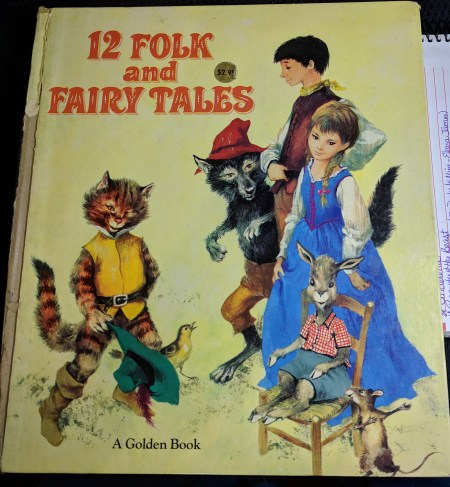
The two stories, which start the book off, that I would consider the most well-known/usual suspects are “Little Red Riding Hood” and “The Princess and the Pea.” It also includes (in simplified versions for young children):
- “The Nightingale”
- “The Brave Little Tailor”
- “The Wolf and the Seven Kids”
- “The Flying Tortoise”
- “The Three Wishes”
- “Toads and Diamonds”
- “Thumbelina”
- “Puss-in-Boots”
- “The Clever Farmer”
This is a really cute story, but I cannot seem to find an original for it anywhere online! It’s a story about a poor farmer with a hungry family and how he uses his family’s last possession—a duck—and some clever mind games to save his family and farm. - “The Ball of the Flowers”
And now, by looking for the originals of all of those stories online, I have more rich resources to peruse for story seeds during my writing time this week!
Hans Andersen’s Fairy Tales: First Series, by Hans Christian Andersen
Hans Andersen’s Fairy Tales: Second Series, by Hans Christian Andersen
Grimms’ Fairy Tales, by The Brothers Grimm
Because I could go on doing this “searching for story seeds” forever, I’m putting myself on a timeline. Starting next week (Sunday), I will stop looking for story ideas and start on the “cultivating seedlings” part of the writing process, by going back through the ideas I’ve written down and starting to flesh out the ideas into characters (with names!) and plots.
But for this week . . .
What is one of your favorite fairy/folktales that you feel needs a romance retelling set in Portsmouth, England, in 1802–1803, featuring a hero connected to the Royal Navy?
Fiction Writing: Finding Seeds to Grow Ideas
 About a week ago, I posted on my Facebook Page about a new series idea that was percolating in my imagination. Since I’ve never really recorded my process of coming up with story ideas (mostly because it’s been a different process each time), I thought I’d record this journey as I take it. [For lack of an official series title, I’m just calling it the Peace of Amiens series.]
Finding Story Seeds
It seems counter-intuitive and like a really bad idea to look to other authors’ books for story inspiration, but that’s exactly what I decided to do. I got on Goodreads and clicked on my Historical Romance list, sorting it by highest average rating. I’m currently going through the list during my writing time each evening, reading the book description and seeing if it sparks a story idea for me.
Here are some examples (with a link to the story that inspired it) of what I came up with—some are more fleshed out than others! I also don’t have names for these characters yet…
Idea 1
- Having suffered severe burns over half his face during battle, he is far from home (Gibraltar) when the Peace of Amiens begins.
- She’s an admiral’s daughter sailing back to England with her sister on her brother-in-law’s (Captain) ship.
- Inspiration from: A Kiss of Lies by Bronwyn Evans.
Idea 2
- Her fiance goes off to war but promises to write. Through “his” letters, she gets to know him in an entirely new way—she’d been trying to come up with a good reason to cry off the engagement, realizing she wasn’t in love with him, before he left. But after three years of letters, she is so irrevocably in love, she’s not sure how she can live from one letter to the next.
- Plot Option 1: Original Fiance Dies
The fiance’s friend, who was actually writing the letters, finds her to offer his sympathies (and the “fiance’s last letter”?). As they spend time in the same social circles, she slowly comes to realize he’s the one who was writing the letters when she figures out she didn’t know the man whom all of his friends/fellow officers talk about—but feels like she knows his friend intimately. - Plot Option 2: Fiance Comes Back
Similar to Option 1, but she figures out the fiance wasn’t the one writing the letters from his behavior now that he’s back and the only interest he shows is in her father’s money/social standing. - Inspiration from: Till Next We Meet by Karen Ranney
- Also inspired by Cyrano de Bergerac (obviously)
Idea 3
- As headmistress of a girls’ finishing school, she knows better than to allow even the slightest hint of dalliance with a man.
- When a bored naval captain turned out on land during the Peace sets his sights on her, will he be able to crack through her shell of self- and professional-preservation and make her fall in love with him?
- Inspiration from: Night Song by Beverly Jenkins
Idea 4
- After losing the first ship he commanded (and on his first mission!) to the French at the Chesapeake Bay in 1781, then being a prisoner of war until it officially ended in 1783, then facing a court martial for losing his ship (and being acquitted but discharged from the Royal Navy), he swore he’d never set foot on a ship again.
- In 1793, with the outbreak of the French Revolution, the Admiralty came calling; but he refused the commission they offered. Then they offered him a letter of marque and a ship/crew—and the chance to revenge himself time and time again on the French as a privateer. How could he refuse that offer?
- By Amiens in 1802, he is one of the most notorious—and wealthiest—British privateers. Now in his mid-forties, he’s been thinking about retiring for a few years now, so the Peace came at just the right time.
- Back on dry land, when he hears a rumor that an earl is looking for someone to marry the earl’s only daughter in order to give the earl a grandson/heir, at first, the former privateer isn’t interested. But then he meets her and realized she could be the greatest prize he’s ever captured.
- Will he have more trouble convincing her or her father that he’s the right man for the “job”?
- Inspiration from: Crimson Rapture by Jennifer Horsman
If you read the book summaries at the links provided, you’ll see that while there’s one or two threads of similarity, I really did just take “seeds” from these book blurbs in order to allow my imagination to germinate my own story ideas. (Yes, I’ve also been thinking that it’s just about time to get my garden seeds started, too.)
Fun Friday: Social Media Wrap-Up for February
Happy March, everyone! Just in case you don’t follow me on my other social media sites, here’s some of what’s been happening in my world recently.
.
.
.
.
.
.
Have a fantastic weekend!
Old Story Ideas: A Love to Remember | #amwriting #amwritingromance
Unlike the other story ideas I’ve shared so far, this one was one I purposely came up with and wrote as part of a book proposal in 2010, when I was looking at trying to sell another contemporary trilogy after The Matchmakers.
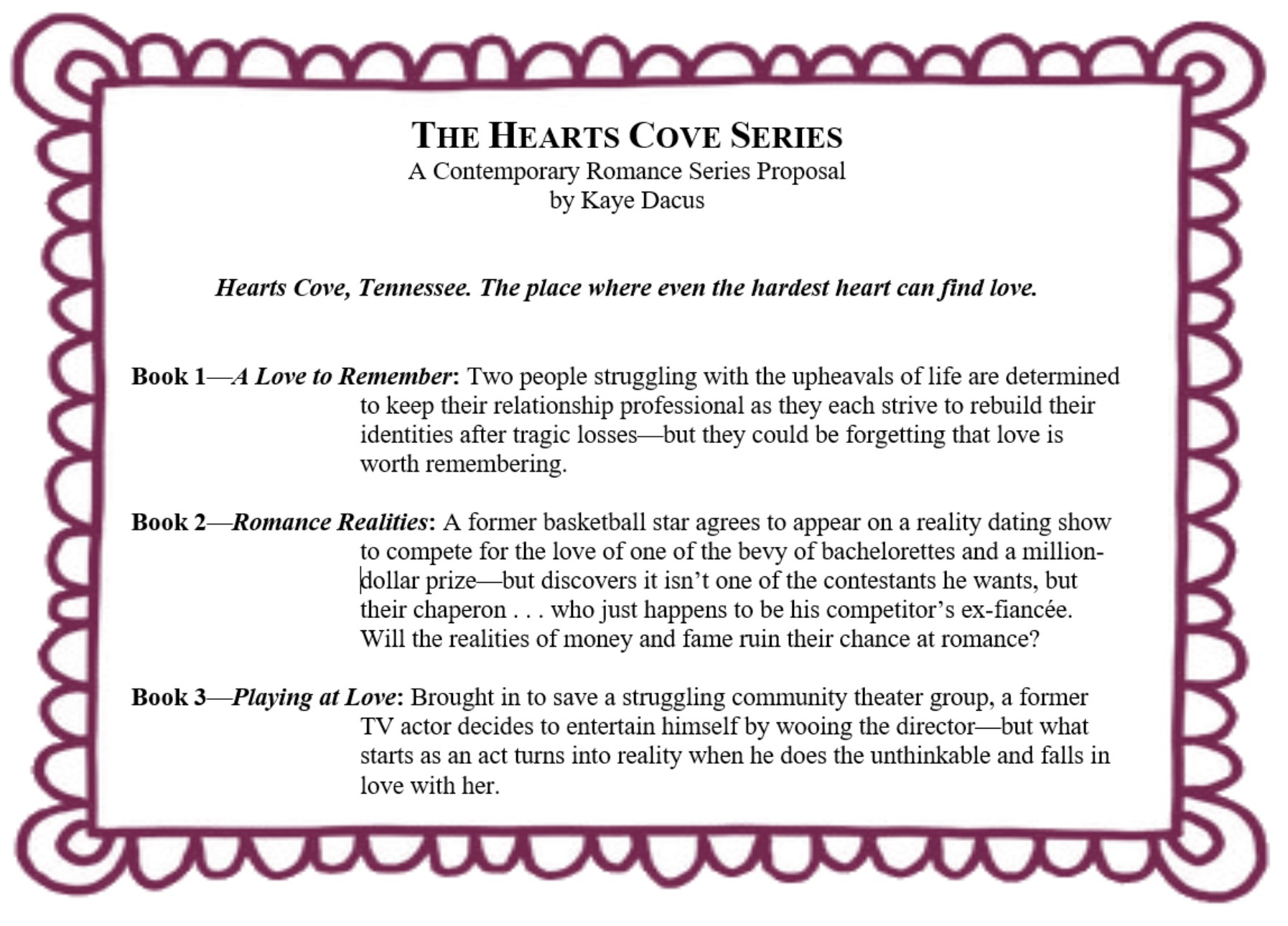
I do have three- to five-page synopses written for each of these stories, but the first one was my favorite. Here’s part of it (I omitted the ending, just in case I do ever decide to go back and write this):
A Love to Remember [2010]
What happens when two people who have determined never to marry fall in love with each other?
At forty-seven years old, Karl Siebold has spent the last twenty-five years of his life determined to report the news with no prejudice, no bias, no agenda. This focused determination led him up through the ranks, first as a sportscaster then investigative reporter at local stations in his native Chicago, then quickly on to larger stations in New York. He quickly moved on to cable news, where he made a name for himself nationally from his impassioned coverage of the September 11 attacks.
Two years ago, he achieved his dream—a one-hour evening program of his own. Just when his show started hitting #1 in its time-slot every night, Karl was in a massive car accident that left him in the hospital in a coma for almost six months with a traumatic brain injury. Miraculously, he recovered, though with his vision irreparably damaged. He can see well enough to function in his daily life: reading, writing, watching TV/movies, using the computer. But he couldn’t read a teleprompter, and his short-term memory was damaged to the point where he couldn’t remember the stories he’d written himself well enough to present them on air without the aid of a teleprompter (which he couldn’t read)—and he couldn’t just read them off paper. So, even though the network was eager to make accommodations for him (and he had been in a company car/working when the accident happened, so they bent over backwards to cover everything financially and keep him employed to avoid a high-profile lawsuit), he found himself unable to do the job that had consumed him for his entire adult life. And once he left his job, he also found himself unwilling to stay in New York City any longer. So he sold his million-dollar condo and moved to the small farm in Tennessee left to him by a great uncle, to do what he’d always dreamed of: writing historical nonfiction books. However, since he can’t drive, and there is no such thing as public transportation in the small town, he needs to hire a personal assistant/secretary.
After the Nashville-based music executive for whom she’s worked as a personal assistant for the past fifteen years goes to prison for embezzlement, sexual harassment/assault, and running his record label into the ground (leaving more than fifty people unemployed and with no benefits/retirement), forty-four-year-old Edith “Edie” Maclaren is desperate for a job—because the freelance writing she’s been doing (travel magazines, ghostwriting for her boss and several of their recording artists, historical society journals, and short stories and poetry) doesn’t bring in enough money to support her. Then her brother mentions that someone who’s recently retired to their hometown of Hearts Cove, Tennessee, and wants to become a writer is looking for an assistant; Edie jumps at the chance and has her brother pass along her resume, expecting an older, retired man who’s writing his memoirs.
Karl is expecting to meet an “Eddie” Maclaren—a man. But when a tall, striking-looking woman walks into the diner, where he usually spends his afternoons, he’s surprised . . . and a bit intrigued.
Edie can’t believe her eyes. It’s Karl Siebold, the cable news anchor she used to watch every night for years (and always harbored a crush on).
The interview goes well, especially once Karl learns Edie has quite a bit of experience ghostwriting. He offers her the guesthouse on his farm as part of her compensation package. He has a housekeeper/cook who comes in every day, so Edie will be able to focus only on helping him with tasks related to writing and research. But Karl isn’t one who wants to stay put. He’ll be traveling regularly, and Edie will be going with him—first and foremost to New York to visit with the agents and publishers who want a book about his recovery from the injury, and then to make the rounds of all the talk shows.
Karl begins to rely heavily upon Edie as he starts to make more and more public appearances. Edie has talked to several therapists and learned techniques to work with Karl on his short-term memory—and as long as she’s within sight when he’s doing the interviews, all he has to do is look her direction and he seems to remember more and better each time.
Because Karl is still somewhat of a celebrity, pictures of Karl and Edie start surfacing online and in tabloids/celebrity magazines with rumors of a romance for one of America’s most eligible bachelors. As soon as that happens, the talk-show hosts start asking him about Edie—who she is, if she’s his girlfriend. Frustrated at not wanting to reveal his memory problems and his need for someone to drive him around, or help him remember simple things, Karl informs the interviewer that he decided long ago that he would never marry and that Edie is just his personal secretary.
While Edie never figured to marry either, she’s started genuinely falling for Karl—started to come to think of their relationship not just as boss/employee, but as a life-long companionship. So when she hears Karl’s statement, she’s very hurt and starts pulling away from him.
Once Karl has signed his book contract, when they meet with the senior editor, it’s Edie who does most of the talking about the book, since she is ghostwriting it for Karl. Before they leave New York, the editor—a single man in his forties—asks Edie to come back in to the office for a private meeting. He offers her a job as an editor, including all expenses to move to Manhattan.
Edie doesn’t want to leave her life with Karl, but believing he’ll never feel the same way about her, she agrees to take the job, on the condition that she doesn’t start until Karl’s book is finished in about three or four months. . . .
Character Casting

“Edie” and “Karl” (stock photos from a site that has disappeared since I pulled these images in 2010)—just imagine them aged up about 10 or so years, because I had to increase their ages when posting this, since Karl needed to be old enough to have covered 9/11. In 2010, being in his late 30s would have been old enough!
Old Story Ideas: Seven Brides for Seven Highland Brothers | #amwriting #amwritingromance
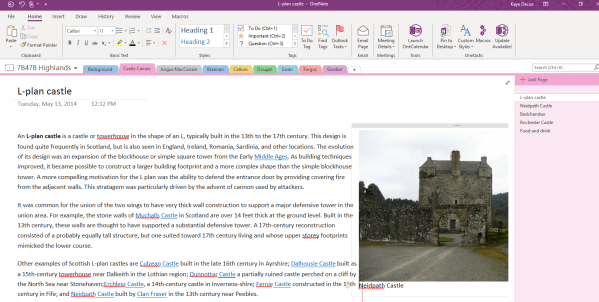
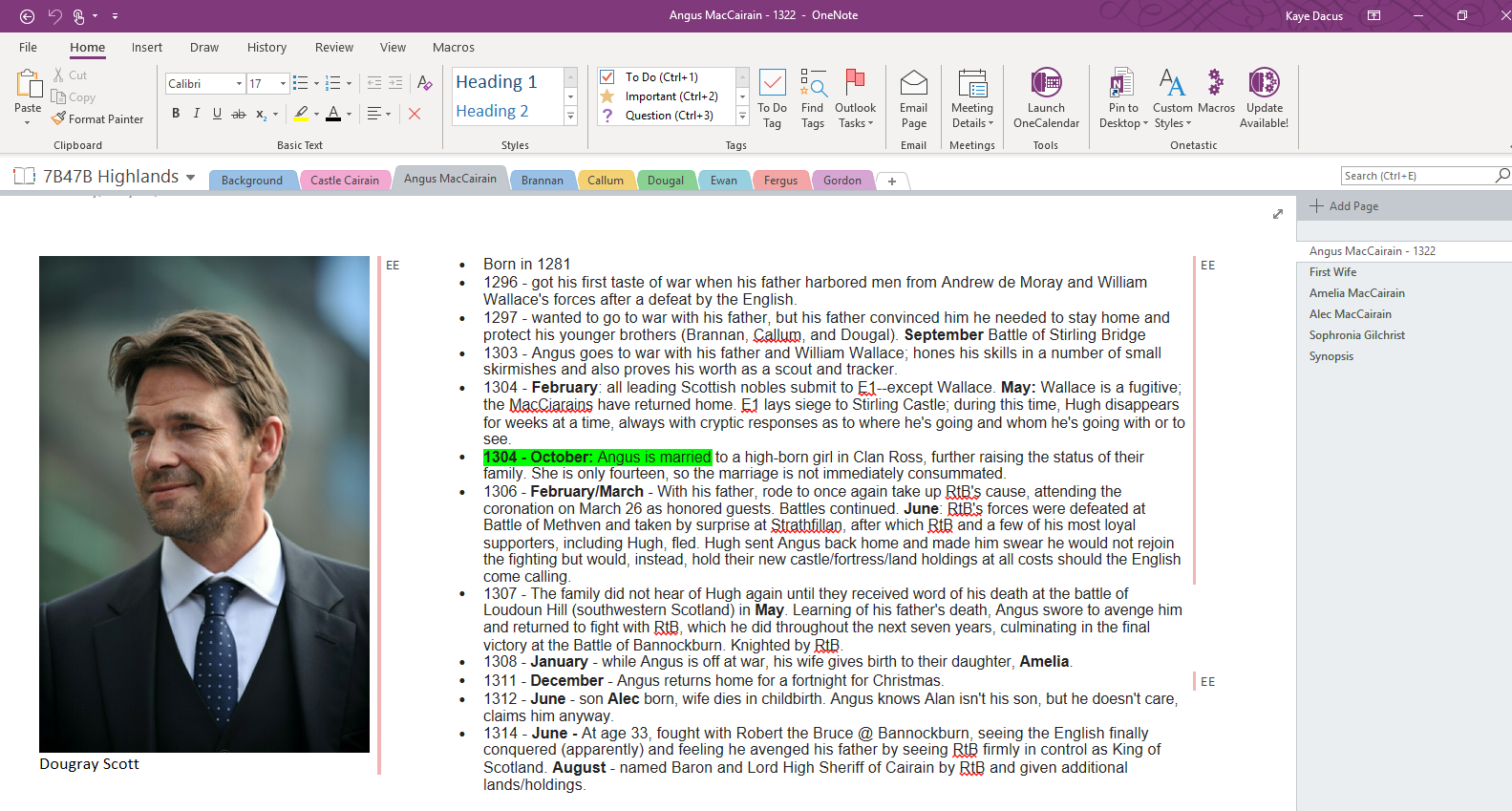
In keeping with my February theme of raiding my old writing archives, here’s a partial synopsis for the first of what was supposed to be seven stories (novels, novellas?) inspired by the musical Seven Brides for Seven Brothers, transported to the 14th century Scottish Highlands. From 2013–2014.
This time, I’ve also included the images of the actors cast in the roles of the main characters, as that was a major part of developing the idea!
Seven Brides for Seven Highland Brothers: Sophie and Angus
Sophronia Gilchrist’s father died 12 months ago, and her younger brother is now anxious to get rid of her because the woman he wants to marry refuses to go through with it as long as Sophie is still there. So he puts word out (medieval Scottish Craigslist?) that he has doubled her dowry and will accept all comers. And many do come—mostly fortune seekers—but she manages to run them all off.
When an offer comes in from Sir Angus MacCairain to take her, sight unseen, the brother accepts, given Sir Angus’s standing, wealth, favor with King Robert, and distance from the Borderlands.
When Sophie refuses, he has her starved and beaten (this is new—a tendency that her father kept in check while he was alive, knowing it would be even harder to get rid of her if she showed signs of having to be beaten into submission) until she relents just to get away from him, though she fully expects to face the same, or worse, at the hands of her Highlander betrothed.
On the trip to Wester Ross, the Gilchrist men give Sophie little food and keep her tied to her horse at her brother’s orders, to stop her from running away—which strengthens her resolve to do just that.
When they arrive at Castle Cairain, she is shocked to find not only a large, imposing fortress, but that inside, even though the buildings look in good repair and the keep is being expanded with a new tower being built, it is unkempt, disorganized, and dirty. Though she fought against her mother’s, and then aunt’s, attempts to teach her the household arts, the lessons stuck and she much prefers a clean, organized home over the chaos now surrounding her.
A history of being denied food and/or verbally abused by her father and, more recently, beaten by her brother’s man at arms, Sophie has grown even more stubborn and resolute and determines that she will escape and try to make her own way in the world, possibly even disguised as a man. She’s done it before, and was gone for almost a month before her father/brother found her.
The elderly woman who shows Sophie to her room seems as if she’ll be easy enough to slip past when she offers to stay and help Sophie bathe and change clothes. More than anything, Sophie is hungry, but refuses to say anything, not wanting to show any vulnerability. Plus, she’s accustomed to being starved, so what’s a few more hours without food? She’ll wait until after supper to sneak away—to learn the layout of the castle better and to eat and sneak away some food.
She’s surprised to learn from the old crone that the crone is one of the only women living in the keep—that the men have managed to run the women off, either back to their cottages outside the keep or back to their own families with their children. Not ever having been close with any of the women at home, this doesn’t bother Sophie, but it does explain the unkemptness of the castle. She is worried to learn Angus has a fourteen-year-old daughter and ten-year-old son. She doesn’t know how to deal with children and has never felt called to being a motherly type.
The crone implies that there is some issue with Angus’s son, Alec, but won’t say what, intriguing Sophie before she remembers she’s not going to be around long enough to care.
After being bathed and dressed and having her thick, long blonde hair exclaimed over—before it’s covered with an appropriately modest veil—Sophie follows the crone down to the great hall, where the smell of food nearly makes her pass out.
When the six men gathered by the hearth turn to greet her, she sees the familiar expressions of shock and surprise at her height, but the expected disappointment isn’t there. Meaning none of them is Angus. Sure enough, a few minutes later, another man enters. He looks older than she expected, hardened and scarred from battle, with silver at his temples.
At his uncle’s suggestion, Angus has agreed to marry. He doesn’t need children, and he doesn’t really need a wife. But, as his uncle pointed out, his brothers do. And they need wives with land/money so that they can make their own ways in the world. So when word reached him of a Lowlands heiress whose brother seemed extremely anxious to get rid of her, Angus agreed, knowing it wouldn’t matter what she looked like or how she behaved. He would marry her no matter what, invest her dowry in the expansion of the keep and hiring/training/outfitting more soldiers should King Robert have need of them again, and do his level best to ignore her should she be unpleasant in form or figure.
When he enters the great hall the night of her arrival, he first sees his brothers, gathered at the hearth, smiling at each other with curiously happy expressions. Angus comes fully into the room and stops short upon seeing the woman standing at the other end of the trestle table, if he can truly call her a woman. While the old crone beside her isn’t tall, she is dwarfed by the seeming giantess.
Steeling himself for a very unpleasant evening, given the severity of the expression on his bride-to-be’s face, Angus crosses the room to greet her, realizing as he approaches that she is a full three inches taller than he, at least, and he is no dwarf at six feet tall. He welcomes her and, when she greets him in return, he is pleased to find her soft- and well-spoken.
Introducing Sophie to his brothers, he sees that only Brannan is as tall as this woman, but as each greets her with joviality, her expression begins to ease.
That is, until the food is served. Angus, his brothers, and the soldiers fall upon the food like ravenous wolves. Sophie pushes back from the table a few inches to avoid having food splashed on her only dress (her only other clothes being men’s tunics and braies). While she may have spent her life railing against the “feminine arts,” she is disgusted by the behavior of these men. By the time she has acclimated herself to this display of poor manners (though Angus seems least ill-behaved) and reaches for a dish to serve stew into her own trencher, she discovers that it is all gone—either eaten or spilled out on the table with the rough way the dishes were grabbed and slid/tossed down/across the table. . . .
[And that’s as far as I got!]
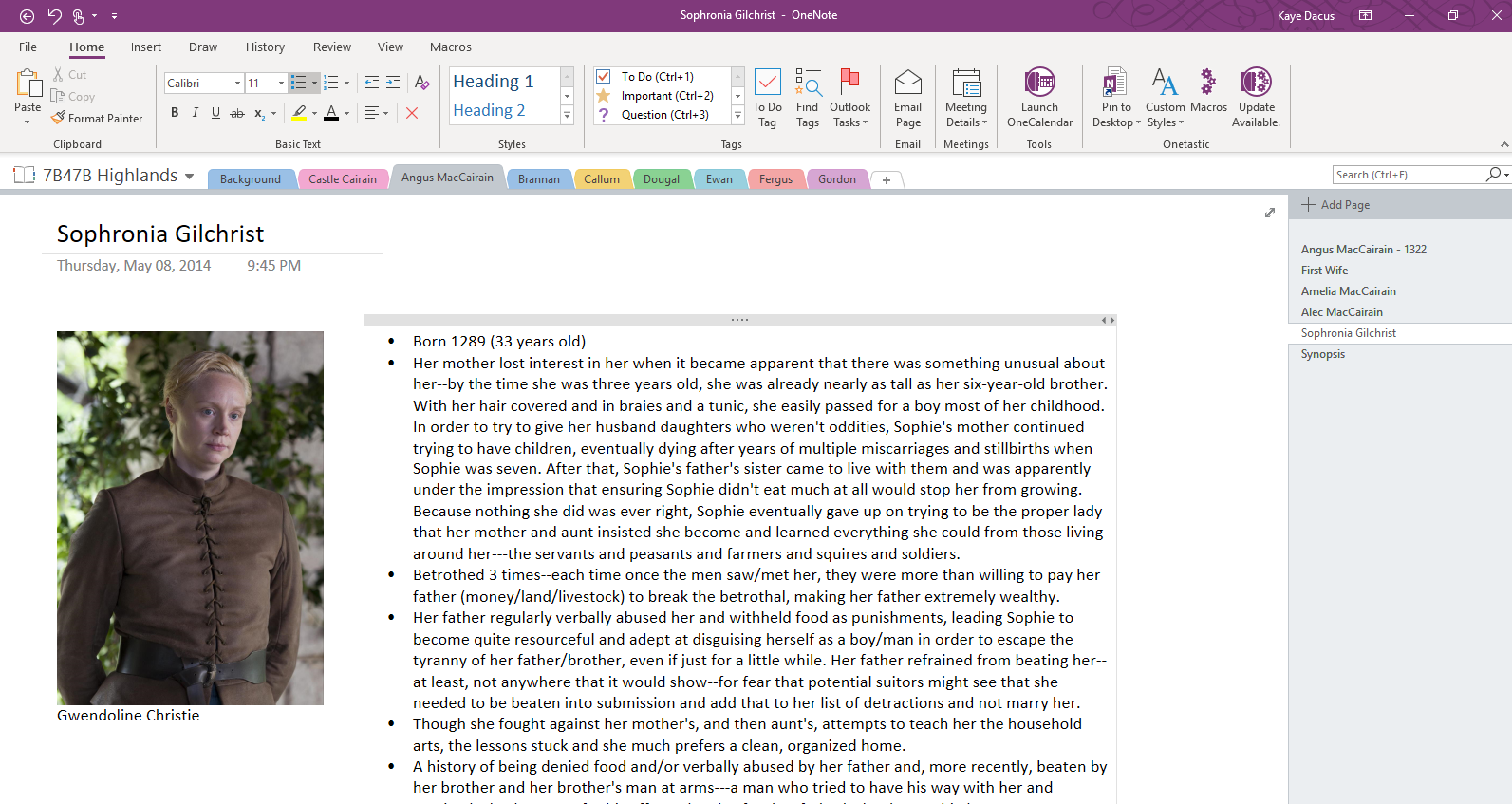
Sophronia Gilchrist = Gwendoline Christie
Angus MacCairain = Dougray Scott
Brannan MacCairain = Gerard Butler
Callum MacCairain = Alastair Mackenzie
Dougal MacCairain = Ewan McGregor
Ewan MacCairain = James McAvoy
Fergus MacCairain = Sean Biggerstaff
Gordon MacCairain = Richard Madden
Library Haul for February 2019 | #amreading #library
 I don’t know about you, but when it’s time to check books out from the library, it’s kind of like a Lay’s potato chip thing—I can never “eat” just one. And since I never know for sure exactly what I’m going to feel like reading at any given moment, I always check out multiple options at a time.
These days, this entails hours spent on the part of my local library’s website where all of the digital items are cataloged, as I’m going to be checking out ebooks and/or audiobooks. Not only is it easier to carry around ten library books/audiobooks when they’re digital, but since they return themselves automatically when the due-date arrives, I never have to worry about overdue books anymore!
Since I just returned a bunch of books and checked out another group this weekend, I thought it might be fun to share my haul. And I’d love to see yours, too!
My Library Haul for February 2019
Currently Reading
Mercury Striking (Scorpius Syndrome #1) by Rebecca Zanetti
- With nothing but rumors to lead her, Lynn Harmony has trekked across a nightmare landscape to find one man—a mysterious, damaged legend who protects the weak and leads the strong. He’s more than muscle and firepower—and in post-plague L.A., he’s her only hope. As the one woman who could cure the disease, Lynn is the single most volatile—and vulnerable—creature in this new and ruthless world. But face to face with Jax Mercury…
Danger has never looked quite so delicious.
The English and Their History by Robert Tombs, audiobook narrated by James Langton
- In The English and their History, the first full-length account to appear in one volume for many decades, Robert Tombs gives us the history of the English people, and of how the stories they have told about themselves have shaped them, from the prehistoric ‘dreamtime’ through to the present day.
My most recent GR update for The English and Their History:
February 12, 2019 –
48.0% “At not quite half-way through (and I do understand there’s about 100pp of back-matter included in the book’s total length), I’m at “Dickensian England, c. 1815 – c. 1850.” So, the first 50% of the book covers the first 1,400 years of English history, and the last 50% covers around 200 years. Sounds balanced. (Wut?)”
Other Checkouts
Library #1:
- Someone to Hold (Westcott #2) by Mary Balogh (Historical Romance | Regency)
- 3 AM Epiphany by Brian Kiteley (Nonfiction | Writing Development)
- The Captain’s Daughter (London Beginnings Series, Book 1) by Jennifer Delamere (Historical Inspirational Romance | Victorian)
- Jane, The Woman Who Loved Tarzan by Robin Maxwell (Historical Fiction/Classical Retelling | Edwardian)
- An Elegant Façade (Hawthorne House #2) by Kristi Ann Hunter (Historical Inspirational Romance | Regency)
- Her Master and Commander (Just Ask Reeves #1) by Karen Hawkins (Historical Romance | Regency)
- A Dangerous Legacy (Empire State #1) by Elizabeth Camden (Historical Inspirational Romance | Edwardian)
- The Lady Travelers Guide to Scoundrels & Other Gentlemen (The Lady Travelers Society #1) by Victoria Alexander
Library #2:
- The Sound on the Page: Great Writers Talk about Style and Voice in Writing by Ben Yagoda (Nonfiction | Writing Development)
- Splinter of the Mind’s Eye (Star Wars Universe) by Alan Dean Foster (Fiction | Star Wars)
- Queen of the Conqueror: The Life of Matilda, Wife of William I by Tracy Joanne Borman (Nonfiction | Historical Biography)
- Dread Nation by Justina Ireland (YA Historical Paranormal | US 19th Century)
- The Black Country (Scotland Yard’s Murder Squad #2) by Alex Grecian (Historical Mystery/Suspense | Victorian)
- A Wizard of Earthsea (Earthsea Cycle #1) by Ursula K. Le Guin (Fantasy)
- The Best Man (Blue Heron #1) by Kristan Higgins (Contemporary Romance)
- 1st to Die (Women’s Murder Club #1) by James Patterson
- 14 (Taylor Jackson #2) by J.T. Ellison (Contemporary Suspense/Thriller)
What do you have checked out from the library right now?
Writing Ghosts from the Past: ‘The Bride’s Spinster Aunt’
This one isn’t quite as old as the one I posted last week, and I do actually remember writing it this time!
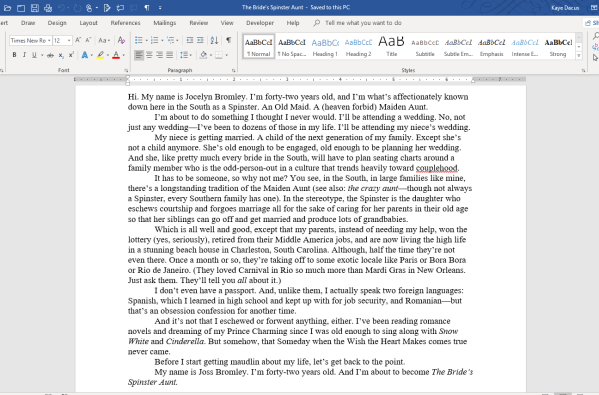
Here’s the text:
The Bride’s Spinster Aunt
(A Story Idea by Kaye Dacus | Word file is dated 16 Feb. 2014)
Hi. My name is Jocelyn Bromley. I’m forty-two years old, and I’m what’s affectionately known down here in the South as a Spinster. An Old Maid. A (heaven forbid) Maiden Aunt.
I’m about to do something I thought I never would. I’ll be attending a wedding. No, not just any wedding—I’ve been to dozens of those in my life. I’ll be attending my niece’s wedding.
My niece is getting married. A child of the next generation of my family. Except she’s not a child anymore. She’s old enough to be engaged, old enough to be planning her wedding. And she, like pretty much every bride in the South, will have to plan seating charts around a family member who is the odd-person-out in a culture that trends heavily toward couplehood.
It has to be someone, so why not me? You see, in the South, in large families like mine, there’s a longstanding tradition of the Maiden Aunt (see also: the crazy aunt—though not always a Spinster, every Southern family has one). In the stereotype, the Spinster is the daughter who eschews courtship and forgoes marriage all for the sake of caring for her parents in their old age so that her siblings can go off and get married and produce lots of grandbabies.
Which is all well and good, except that my parents, instead of needing my help, won the lottery (yes, seriously), retired from their Middle America jobs, and are now living the high life in a stunning beach house in Charleston, South Carolina. Although, half the time they’re not even there. Once a month or so, they’re taking off to some exotic locale like Paris or Bora Bora or Rio de Janeiro. (They loved Carnival in Rio so much more than Mardi Gras in New Orleans. Just ask them. They’ll tell you all about it.)
I don’t even have a passport. And, unlike them, I actually speak not just one but two foreign languages: Spanish, which I learned in high school and kept up with for job security, and Romanian—but that’s an obsession confession for another time.
And it’s not that I eschewed or forwent anything, either. I’ve been reading romance novels and dreaming of my Prince Charming since I was old enough to sing along with Snow White and Cinderella. But somehow, that Someday when the Wish the Heart Makes Comes True never came.
Before I start getting maudlin about my life, let’s get back to the point.
My name is Joss Bromley. I’m forty-two years old. And I’m about to become The Bride’s Spinster Aunt.
Not Remembering Your Own Ideas | #amwriting #unboxing
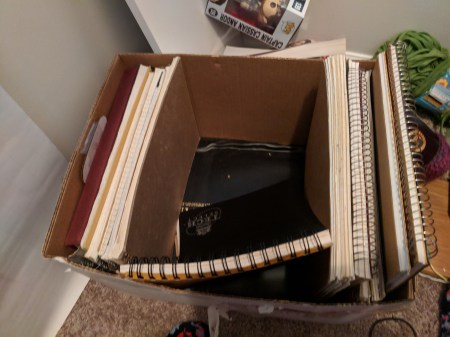
Y’all!!! I’m finally (almost two years after moving) getting around to unboxing all of my old manuscripts and notebooks, which have been sitting in my office closet all this time.
.
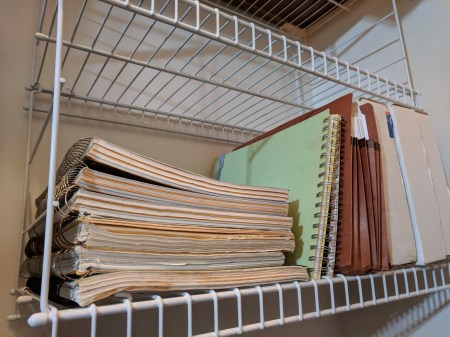
.
There are lots and lots of notebooks.
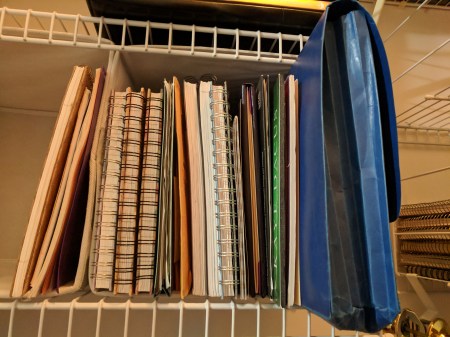
.
Did I mention there are lots of notebooks? (30+ and counting…)
In flipping through these notebooks to see which ones still have usable space in them (20+ blank pages), I found something amazing—the original series idea for what became the Brides of Bonneterre series!!!
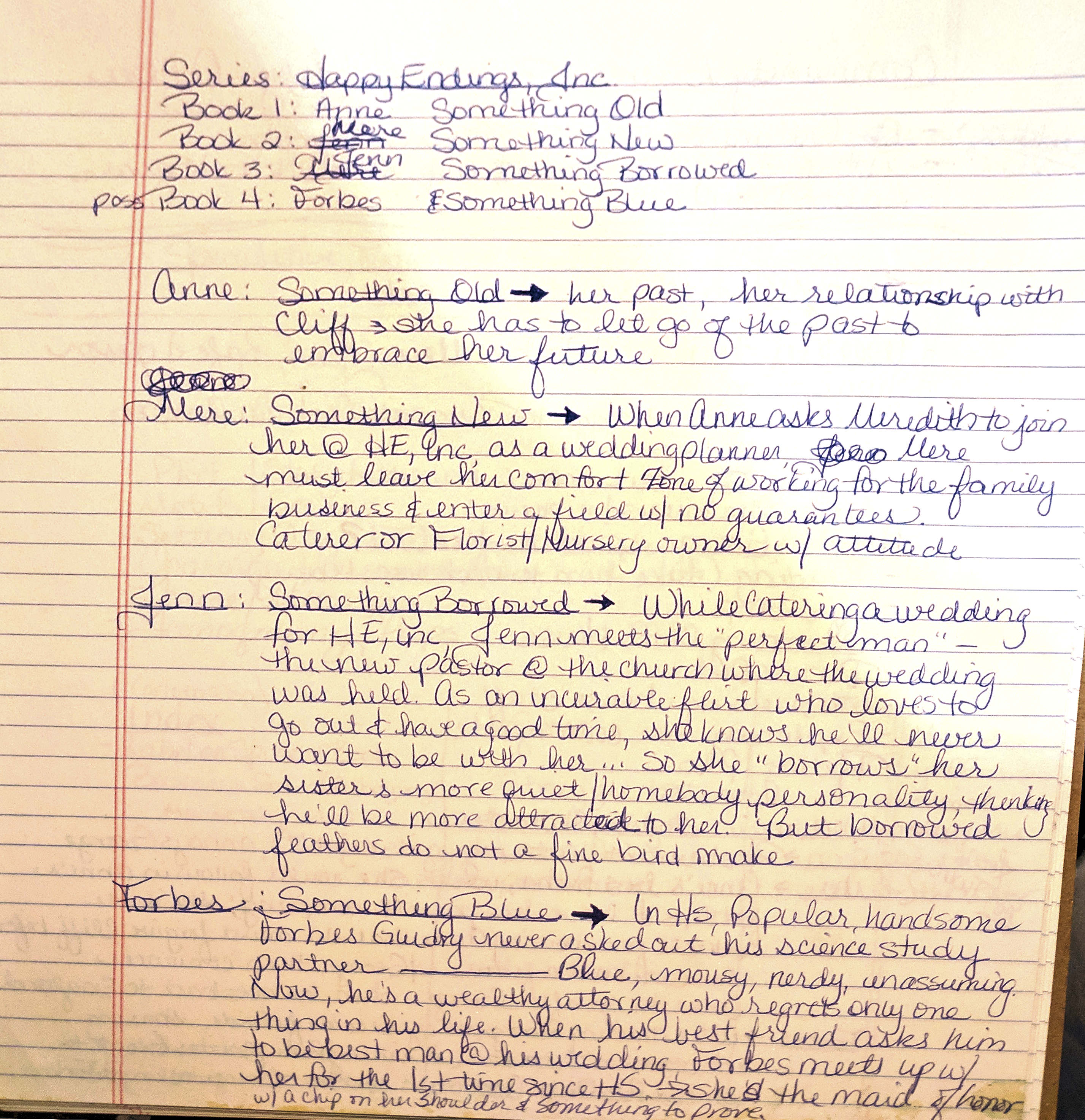
I probably wrote this for a grad school assignment, as there are course/workshop notes in the same notebook, so that means it was written some time between June 2004 and June 2006. And I have no memory of writing this! Definitely keeping this notebook out to serve as inspiration/motivation for getting Jenn’s book written this year!
And this, in turn, gave me an idea for my theme for February. Since one of my writing professional development master plans for this year is to re-read as much of my old writing as I can, I thought I’d share some snippets and samples of ideas that never made it past that stage or scenes that got cut from the published stories.
If you’re a writer, do you go back and re-read your old, never-see-the-light-of-day-again writing? As a reader, what author(s) would you love to see share their unpublished work?
Planning for 2019: Weekly Planning
Now it’s time to get into the nitty-gritty of what my planner is designed for—planning out my weeks so that I can be productive daily.
In this YouTube video, I walk through setting up my weekly planning spreads (the script I worked from is pasted below the video).
Hi, all! Welcome back to the channel! Today, I’m going to show you how I set up my weekly planning spreads!
A few people have asked me how I set up the computer files, so here’s a quick, sped-up look at the layout and design process. I didn’t show it from the beginning, where I set up all of the tables and modules in Publisher and Excel, because that would have taken hours, even on four-times speed like this is. But this should at least give you an idea of what I do when I’m designing my planner. As I mentioned in a previous video, once I found the snowflake border that I really liked, I went ahead and added it to all January pages because I like consistency and continuity. And, as also mentioned, it drove the color scheme for January. But since this week includes days for next month, I decided to go ahead and introduce the banner art and color for February on those days as well.
I discovered in the design process that having the weekly spread set up in a separate file works better for me—it’s easier to go in and make the date and art and color changes in this file rather than in the one that has all of the quarter, month-at-a-glance calendar, and monthly planning spreads for the whole year. Now, because I only print out the weekly spreads a month or so in advance, in case I decide I want to make changes to a layout or box for that month, I’m only printing eight to ten pages at a time—but I do have all of the quarterly and monthly pages already printed and in the notebook to help with future planning.
Once I’m happy with the way the week-at-a-glance looks, I save it as an image and then insert that into the main Planner document—that’s the file where all the rest of the planner pages live—it makes it easier to turn it into the landscape orientation without messing up the layout of any of the elements. I then do this for each week of the month and print them all out at the same time.
In another separate file, I have my dutch-door notes and to-do list. Because it’s half a page, I can print two weeks on one sheet of paper, so I don’t usually print more than that, since there’s no point in having those just lying around loose. Then it’s time to get planning!
Before I start, I make sure I have all the supplies I need—the correct colored gel pens (here I’m using PaperMate InkJoy in Pink, Light Blue, and Aqua, some store-brand colored pencils in Mediterranean teal, bubbly blue, and—not pictured—berry; and a Pilot Precise V5RT fine-point black gel ink pen—along with a pencil. I have several different sticker books I’ve picked up in various places—from Amazon to Target to JoAnn. And I’m ready to get started.
The first part of the process is adding a little color to the module headers as well as adding in the dates.
I use the colored pencils to color the headers, as anything else just makes a mess of the ink-jet toner. My food blog, LowCarbKaye.com, is on hold until at least March. So, I used some stickers to repurpose that three-day block for a priority project I do have going on right now. Then, I used some stickers in the modules for my main blog, KayeDacus.com, where I’m only posting three days a week right now, as well as for my writing schedule, which is also on hold for the time being.
Then it’s time to decorate my Notes half-page. I outline the text boxes in pen, then colored in around them with pencil. I also included some banners from the stencils as well as some stickers, just to make it fun. Oh, and I added a metallic gold gel ink pen to this, too.
On the back of that dutch-door is my to-do list for the week.
I start by going back to last week’s list to see what I didn’t get done and needs to be moved forward to this week.
I also look at my month-at-a-glance calendar and add anything important from there, as well as any additional Post-it notes I’ve written to myself. I make sure to leave room for more to-dos as the week goes on.
Since my Quarter 1 goal is sticking to a structured daily schedule for the work-day part of the day, that part of my week-at-a-glance is pretty easy to fill out. Here’s where I do bring in the coded colors—such as blue for work and orange for breaks or personal tasks or errands. Sunday is a much less structured day, but with multiple tasks that need to at least be started if not completed, so it gets its own to-do list.
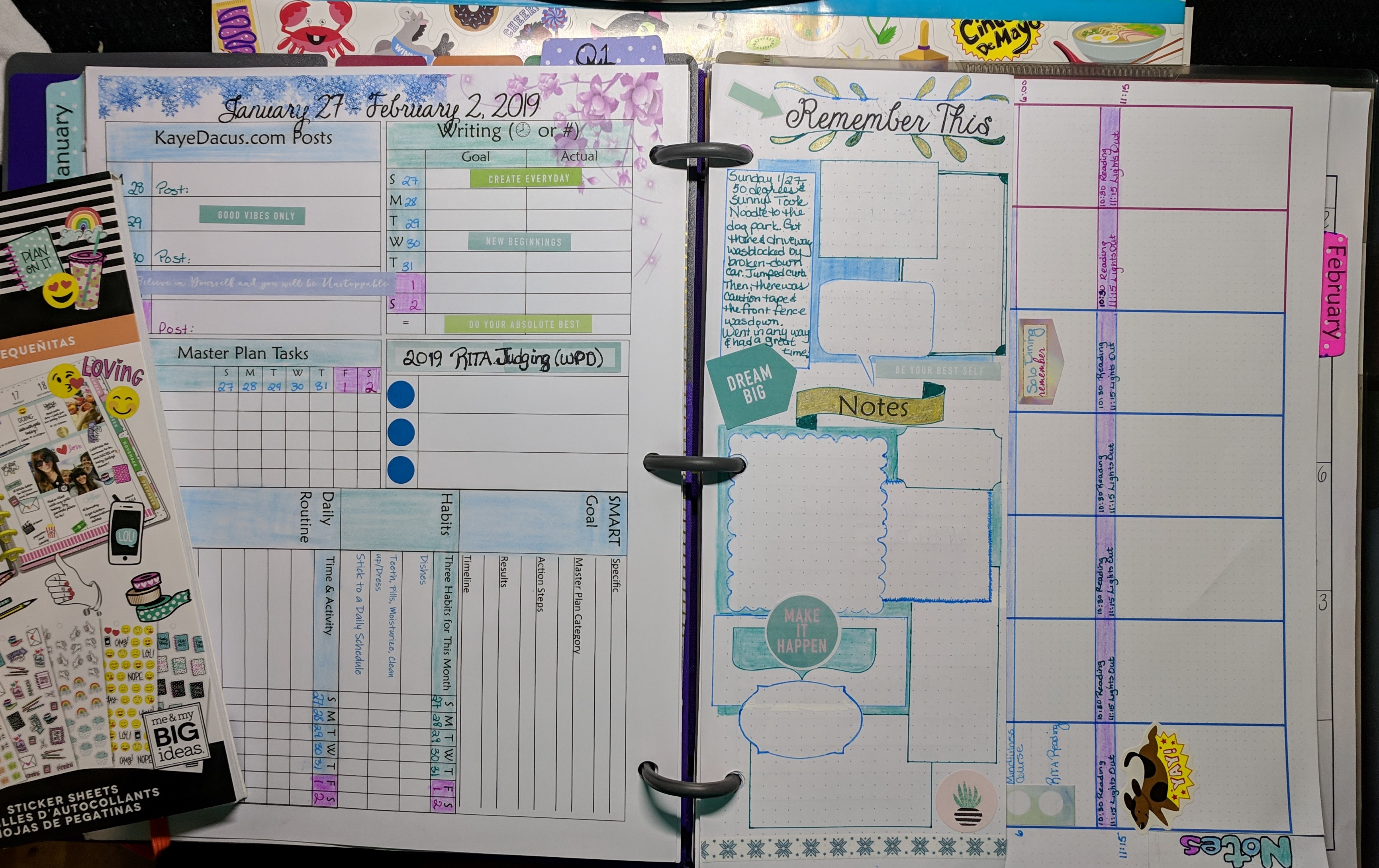
And that’s it. There’s a lot more I need to fill in, but since a lot of that is of a personal nature—or it’s things like blog post ideas that I haven’t figured out yet—I won’t bore you with all those details.
Remember, if you like this content and would enjoy seeing more videos like this, please click that thumbs-up and hit the subscribe button—and don’t forget to ring the bell to make sure you get updates whenever I upload a new video.
See ya later!
Planning for 2019: Quarterly and Monthly Planning
Now that I’ve covered the overview of my Master Plan for 2019, I want to get into the actual planning part of my planner. In this YouTube video, I walk through planning a quarter and a month (the script I worked from is pasted below the video).
Hey, all, and welcome back to my YouTube channel. Today I want to talk about quarterly and monthly planning.
The Quarterly Plan
Because I worked in a corporate environment for the first decade-and-a-half of my adult life, I got very accustomed to the year being broken down into not just months, but also quarters. And there’s something about being able to plan something that needs to happen within the next three months rather than the next four weeks that makes it feel more attainable. Plus, sometimes there are things that we need two or three months for—like building and breaking habits.
So after my Master Plan spreads, I get to my Quarter 1 planning spread. There are a few things that I know will have to be done each quarter, so I went ahead and put those in on the computer before printing the pages—car maintenance and housekeeping. Yes, there’s a daily housekeeping list, too, but these are the big things, the tasks that only need to be done between one and four times per year rather than every month or every week or every day. Same thing with the car maintenance. And just for kicks, I added a quarterly car loan tracker. It’ll be paid off in July, so it’ll be really exciting to see that number dwindle for Quarter 2 and Quarter 3!
The other two boxes on this page are more for brainstorming/brain dumping. Some of the Things to Do and See are ideas of things I’d like to do, and some are must-dos. And, of course, there’s no way I can afford to eat at all the restaurants listed here in the next two months (since we’re already near the end of January and I haven’t eaten out once yet this month). Again, it’s more of a wish list than a to-do list.
The big piece for quarterly planning is my SMART goal for the quarter (I’ll link to my class on goal setting in the description box below). This is something that ties in with my master plan focus areas and something that can be completed in a three-month span of time. This first quarter, it’s getting myself onto a structured schedule for the work day. More than just “my work hours are 9 to 6, but actually following a plan for blocks of productivity time with scheduled breaks—with a plan for what to do during those scheduled breaks. And in addition to tying it back to several Master Plan categories, I’ve also written out specific action steps for myself to keep it top of mind as I go through the quarter planning my months and weeks—including a weekly review and evaluation of what worked and what didn’t, how I did with the schedule, and making revisions if necessary. All of this with specific results in mind—the main ones being the schedule becoming a habit, my work and overall productivity levels increasing, and my body clock resetting to the specific sleep and wake times.
Month-at-a-Glance Calendar
I like having a month-at-a-glance planner. But as you can see, I don’t write a whole lot on it. Everything on here are personal appointments or activities. I keep everything for work on my work Outlook calendar—and I also put in any appointment that fall during work hours into that calendar as well. I’m very much the kind of person that if I don’t write it down and give myself a visual reminder, I’m likely to miss it. (I also have all of my personal stuff in my personal Gmail calendar as well—for the electronic reminders when I don’t have the planner right in front of me.)
At the end of each month, I sit down at the computer and pull up the events calendar from the local newspaper as well as the Events section of Facebook and look for activities coming up to do the upcoming month. Because I moved to this city only a little more than a year ago, I’m still trying to plug in to the community. And I enjoy knowing what kinds of events and presentations the local museums, historic sites and society, and theater are doing that I might be interested in going to. All of that gets put on this monthly calendar.
Monthly Planning
The last week of the previous month, I also sit down and start filling in my monthly plan spread. For January, because I got really excited (and had a lot of time over Christmas break), I used my blank graph box for a whole bunch of Master Plan ideas for the month—more than I actually have been able to keep up with.
From my Master Plan, I narrow down three habits to build and three milestones—with rewards. Habits are things that I need to be doing daily and need to continue doing once this month ends. Milestones can be things that I can do all month—such as giving up fast food (except coffee shops, of course!)—or specific things I need to get accomplished that month, such as finding a local chiropractor and eye doctor, which I’d been putting off since I moved here. And each milestone comes with a reward, from something small, like buying stickers and decoration for the planner, eating out, or buying a ticket to a production at the theater that I want to see—making the reward commensurate with the milestone.
Then the rest of the spread is going back and looking at my Master Plan and coming up with specific tasks to do during the month. A lot of my Master Plan areas are things that I know I’ll be doing each month, so that’s why they’re printed instead of blank boxes. The only thing that I didn’t do on this page for January was the recap of the previous month, and that’s because I’d stopped using last year’s planner long before December. So I’ll do that at the beginning of February for the first time, since I’ve been using this all month.
Oh, and you may have noticed that I have a color theme for the month. I decided that instead of color-coding each category, which was making me crazy having to either look up the colors or memorize them, I’d go with a color scheme that matched the borders I dropped into the calendar pages before printing. Since my January snowflake border is in shades of blue and aqua, I decided to use those colors. And I really like the way that it’s turned out—which you’ll see more of in another video.
Because that’s how I plan my quarter and month. Next time, I’ll show not only how I plan my week, but how I designed the pages, if I can get the screencast to work!
If you like this content and would like to see more videos like this, please like and subscribe. If you have any questions about my planner or my process (or anything else!), please let me know in the comments! See ya next time.
My SMART Goal Planning course:
– – – – – – – – –
If you like what I do here and want to keep this content ad-free,
consider supporting me and my work by buying me a coffee.


 KayeDacus.com