Writing Series Spotlight: Beyond the First Draft and Manuscript 101
It has lately come to my attention that those of you who are visiting the blog regularly might not be familiar with some of the writing series I’ve taught. So I thought I might highlight some of them this week.
Beyond the First Draft is a series I ran in August 2007 as something to help out those who might be preparing to attend the ACFW conference that year. It tries to answer the question, “I’ve finished my first draft, now what?” But I think it also has a lot of good information that can help out writers who have finished several first drafts . . . and second drafts . . . and third drafts and are in the process of figuring out how to prepare a manuscript for submission.
Manuscript 101 is a guide to the basics of punctuation when it comes to editing your own work, so it should be read along with Beyond the First Draft.
Without further ado, here are the series:
Beyond the First Draft—Revising, Rewriting, and Submitting (August 2007). See also Critiquing, Manuscript 101
The Down-and-Dirty Guide to Critiquing
Beyond the First Draft—Reviewing, Revising, Readjusting
Beyond the First Draft–The Four Secrets
Beyond the First Draft–Clarity
Beyond the First Draft–Starting the Revision Process
Beyond the First Draft–One Revision or Multiple Passes?
Beyond the First Draft–The Cutting Room Floor
Beyond the First Draft–More on Cutting
Beyond the First Draft–The Dreaded Synopsis
Beyond the First Draft—The Query Letter
Beyond the First Draft–Preparing the Perfect Proposal
Beyond the First Draft—The Pitch Sheet and One-Sheet
Beyond the First Draft–Face-to-Face Pitch Sessions
Manuscript 101 (May/June 2007)
Manuscript 101–the Book List
Manuscript 101–Introduction & Basic Manuscript Format
Manuscript 101–Commas Pop Quiz
Manuscript 101–Commas Pop Quiz Answers 1-5
Manuscript 101–Commas Pop Quiz Answers 6-10
Manuscript 101–Comma, wherefore art thou?
Manuscript 101–The Apostrophe’s Dilemma
Manuscript 101–Where do I put the “quotation marks”? (includes info on ellipses and em dashes)
Single Spotlight: Mary Lyon
In the late eighteenth and early nineteenth centuries, it was hard for a woman to get a formal education. As early as 1647, the Massachusetts colony made education compulsory, with “common” (public) schools started in most towns in the colony. The school year of ten months was typically divided into two terms: the longer winter term, and the shorter summer term. Boys attended during the winter but not typically in summer when they were needed at home for farm work; the girls who were allowed to attend typically went during the summer, when the boys weren’t there to fill the seats. Most girls, however, were not encouraged or even allowed to attend school, as education was not considered necessary for the keeping of the home and the raising of the children. Most learned how to read, but that was about it.
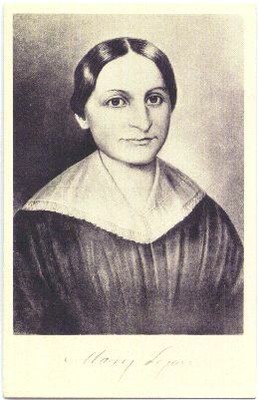 It was into this world that Mary Lyon was born in 1797. One of seven children, Mary Lyon began attending school when she was four years old, walking with her older siblings about one mile into the nearby village school. Three years later, however, the school was moved to a further-away location. Mary was fortunate that she was allowed to continue her education by going to live with relatives located near the school, working basically as a part-time maid to pay for her room and board.
In 1803, Mary’s father died. When her mother remarried in 1810 and moved away from the family farm, Mary, age thirteen, had to leave school and help her older brother, Aaron, run the farm and care for their siblings. He paid his sister one silver dollar a week for this.
By this time, Mary, with nine years of schooling, had more education that most women. Four years after having to leave school, the school board in the neighboring town of Shelburn Falls offered Mary their school—by 1814, women were coming much more in demand as teachers as the male population who weren’t tied to the land as farmers were starting to migrate westward. Mary’s reputation as an excellent student brought her to the school board’s attention, and in the day and age when no formal training was needed to teach school, it was normal for someone who’d only had a rudimentary education herself to become a teacher. During a winter term, a male teacher typically made between $10 and $12 per month; Mary made 75¢ per week. She “boarded around,” staying with the parents of her students for a few days to a few weeks at a time.
The challenges of teaching stirred the banked fire in Mary to continue her own education; but as a woman of limited means, she couldn’t even dream of attending one of the several “female seminaries” that had started popping up throughout New England—and even if she could have afforded it, she probably wouldn’t have gone. The “female seminaries” of the time weren’t much more than “finishing schools” teaching needlework and drawing, not the subjects that men’s colleges taught, like geometry and calculus, Latin and Greek, science, philosophy, and history—the subjects Mary wanted to study.
Mary began to find ways to enhance what she could learn on her own by attending lectures—sometimes driving three days to get there—which she financed by cashing in the small inheritance her father had left her. The inheritance that should have served as her dowry when she married. Ever frugal, though, Mary saved as much of her teaching salary as she could and made coverlets and blankets which she traded for her room and board.
Mary’s reputation as a teacher grew and spread throughout Massachusetts and into New Hampshire. She became an outspoken advocate for and leading authority on women’s education, eventually becoming the assistant principal at Ipswich Female Seminary.
In 1834, at age thirty-seven, Mary took a leap of faith. She left the school at Ipswich to focus all of her time and energy on the dream she’d had her whole life: founding an academic college for women. Though the U.S. was in the midst of a severe economic depression, Mary persevered. For three years, she raised funds, wrote pamphlets and circulars to raise awareness and support, developed a curriculum, garnered the support of influential men, visited schools, and corresponded with educators from as far away as Detroit. Finally, she chose the school’s location, supervised the design and construction of the building, hired a faculty, equipped the building, and selected the students.
 Mount Holyoke Female Seminary opened on November 8, 1837. Mary was forty years old.
Exhausted by her efforts, Mary now faced ridicule. The majority of people in the country still believed that higher education was wasted on women. At that time, there were 120 academic colleges for men, but none for women. Mount Holyoke was the first.
Mary’s belief in her mission never failed. Mount Holyoke Female Seminary offered: an education for women equivalent to that which men received at college; affordable tuition—only $60 per year—so women of modest means could attend; rigorous standardized entrance examinations to keep the quality of education high and ensure the readiness of the students for the subjects and levels at which they would be studying; a required work-study program—students were expected to perform domestic work at the college to offset operating expenses and keep tuition low; and support from those of modest means, through the collection of donations of clothing, bedding, or other items as support, rather than cash, so they might do more than dream of one day sending their daughters to the school.
The success of Mount Holyoke opened the doors of higher education for women in the United States. Graduates of Mount Holyoke took the ideals and teaching methods and education they gained from Mary Lyon’s college and eventually spread it all over the world—from places like Minnesota and Alabama to Turkey, Hawaii, South Africa, and Japan. One alumna founded the first public school in Oklahoma; Wellesley College was founded by a trustee of Mount Holyoke, and its first president was a Mount Holyoke alumna; yet another alumna helped found Mills College in California.
Mary Lyon never married. She passed away in 1849, twelve years after seeing her dream of higher education for women come true.
More than 160 years after Mount Holyoke’s first class of eighty students enrolled, Mary Lyon’s legacy continues to live and breathe. Mount Holyoke College now enrolls more than two thousand students annually from the U.S. and forty-seven other countries, offering nearly a thousand classes and thirty-eight different majors. But on an even grander scale . . . in the twenty-first century, more women than men are enrolled in college. In 2007, more than 10.4 million women were enrolled in higher education institutions across the U.S.—57% of total enrollment. That’s just the enrollment from one year. Can you imagine the hundreds of millions of women, in the U.S. alone, who’ve been able to attend college because of this one woman? Quite some legacy, huh?
Because one woman persevered with the passion God gave her, the ministry and mission He put in her heart, women have access to the same kind of education men do and the world has been made a better place. And I for one am truly thankful.
“Sing, O barren woman,
you who never bore a child;
burst into song, shout for joy,
you who were never in labor;
because more are the children of the barren woman
than of she who has a husband,”
says the LORD.
“Enlarge the place of your tent,
stretch your tent curtains wide,
do not hold back;
lengthen your cords,
strengthen your stakes.
“For you will spread out to the right and to the left;
your spiritual descendants will dispossess nations
and settle in their desolate cities.
“Do not be afraid; you will not suffer shame.
Do not fear disgrace; you will not be humiliated.
You will forget the shame of your youth
and remember no more the reproach of your singleness.
“For your Maker is your husband—
the LORD Almighty is his name—
the Holy One of Israel is your Redeemer;
he is called the God of all the earth.”
~Isaiah 54:1–5
Fun Friday–Deserted Island Meme

Believe it or not, with all the stress I was under this week, I actually came up with an idea for a meme for Fun Friday. It hit me Monday night, the first time I was able to get out of the house since the whole car-breaking-down fiasco, as I was running my hand over the cover of the single-volume, hardcover copy of The Complete Novels of Jane Austen.
This is one of those posts that you can do yourself—either here in the comments or on your own blog or FB notes page (just be sure to come back and post a link if you do yours elsewhere).
So here’s what I came up with . . .
 If I were stuck on a deserted island (not one with smoke monsters and Others and time travel), I would want:
Book (other than the Bible):
Person:
Food item:
Beverage (other than water—there’s plenty):
Celebrity Chef:
Three CDs*:
Three Movies*:
Two Personal Care Products:
Three Articles of Clothing (other than underwear):
Piece of Technology*:
Wild Card:
*Because, of course, you’d have a CD/DVD player and a mysterious source of unlimited electricity and/or batteries!
Here are mine:
Book (other than the Bible): Norton Anthology of British Literature
Person: My Mom
Food item: Beef, any variety
Beverage (other than water—there’s plenty): Tea (cuz I can drink it cold or hot)
Celebrity Chef: Robert Irvine, of course!
Three CDs*: Italian Love Songs (Dean Martin), Unaccompanied Cello Suites (Yo-Yo Ma–because I need music to sleep at night), and The Very Best of Dean Martin (by um . . . Dean Martin!)
Three Movies*: De-Lovely, Star Trek (2009), and The Philadelphia Story
Two Personal Care Products: Toothpaste and toothbrush
Three Articles of Clothing (other than underwear): Favorite pair of jeans, LSU 2007 Championship T-Shirt, long-sleeved denim shirt
Piece of Technology: Laptop!
Wild Card: Air mattress—because I don’t sleep on the ground!
What Would You Do?
I think we’re all in need of a little de-stressing. And dreaming is a good way to do that. So, if you could stop the world and do one totally selfish thing today—no worrying about expense, distance, childcare, etc.—what would you do?

I’m actually doing it March 8—I’ll be getting a wonderful, relaxing hour-long massage!
My Car-Dying and Car-Buying Experience
 As I posted, at great length, on Sunday night (good grief, was that really less than 48 hours ago?) and then updated on Monday, I learned that my car, which I’ve had since 2001 and which has been paid off since 2004, is in terminal condition. Head gaskets, camshafts, antifreeze leaking into the fuel lines, cracked radiator, bad O2 sensors—you name it, the car had that problem.
When I bought this car in 2001 as a two-year-old, it had everything I could possibly have imagined wanting: leather seats, 3.5L V-6 engine, great cassette/CD stereo—with controls on the steering wheel, cruise control—again, with controls on the steering wheel, sunroof . . . everything.
In the nine years I’ve had the car, I’ve only had to have minor, maintenance-type of work done on it—replace the battery, replace the alternator, replace the tires, replacing burned-out bulbs, and regular oil and filter changes. Great car, right?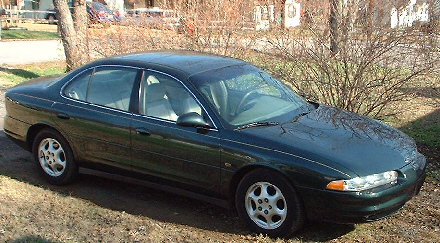
Sure except . . .
- The sunroof quit working (won’t open, leaks during heavy downpours) in 2004.
- The passenger-side sun visor broke in 2005—and has to be tucked up under the “Oh my goodness, we’re all going to die” handle above the door to keep from flopping around.
- Cassette #1 of the unabridged audiobook of Mansfield Park has been stuck in the cassette player since around 2005 or 2006.
- The outdoor temperature gauge works only when the outdoor temperature is below 60 degrees or above 100 degrees. (When it’s between 60 and 99 degrees outside, the gauge reads anywhere between 20 and 40 degrees below the actual temperature.)
- The rear-view mirror fell off the windshield in 2008. Since the reading lights for the front seats are built into the mirror (due to having a sunroof), it dangled by the electrical cord until I was able to get over to Home Depot and get some epoxy putty to stick it back up with. You know that scene in Menu for Romance when Meredith goes to the hardware store for wood epoxy? Guess when I thought of that scene.
- The leather on the driver’s seat is worn down to the mesh liner underneath in a couple of places and looks pretty decrepit overall.
- The carpet under the pedals, in a tan-interior car, is nearly black and has several holes in it.
- The passenger-side front door sticks and is hard to open.
- Several of the knobs on the stereo have cracked and fallen off over the years.
- The power window motor in the driver’s side front door had to be replaced in 2007 (at the tune of $600). When the motor went out in the passenger-side back door the middle of 2009 and the window wouldn’t stay closed, I took my clear packing tape out there and taped the window shut rather than spend the money to get it fixed (mainly because I was broke—but still hadn’t gotten around to it this year because I didn’t want to part with the money).
- And let’s not get into just how nasty and dirty the car is, both inside and out (that happens when you don’t have a paved driveway or sidewalk and track grass, mud, and gravel into the car every single time).
(Stick with me, this is part of the healing process.)
Monday, after I got home from getting the fatal diagnosis, I applied for a car loan through my bank.
Denied.
I applied at two other major lenders.
Denied. Denied.
Put out a few feelers at a couple of the major car dealerships in the area that advertise they work with hard-to-finance customers.
Got a rental car so I could (finally) get out of the house. (Yes, I went to Starbucks while I was out and got a caramel Frappuccino. It’s amazing what one of those things can do for my psyche!)
Talked to my parents who offered to help me out, and asked me not to make any decisions about a purchase before talking to them. Then we talked about how I was thinking I might just wait until I got to Arkansas next week to go car shopping.
Watched the finals of ice dancing.
Phone started ringing and e-mails started coming in Tuesday morning, early. Sales reps from the auto dealers I’d queried the night before.
E-mailed back and forth with a couple of them only to discover that they didn’t have any inventory that suited my needs (financially, qualitatively, or aesthetically). Was not looking forward to going out in the 35-degree, wet, nasty weather to test drive cars when I was pretty sure I wasn’t going to get financed—at least not at an interest rate I was willing to pay. Didn’t want to have to clear out half of my savings for a down-payment.
Looked online at used cars in Arkansas and found a few options.
Went to the post office and UPS to send books to people. (Yes, contest winners, your books are finally on their way to you!) Picked up lunch. Decided to wait until I got to Arkansas to look at any cars. Came home, worked for a little while. Wasn’t very productive. Then my dad called.
He found a car for me.
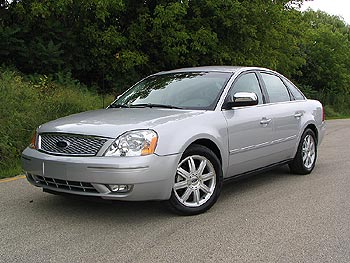 It’s a 2005 Ford 500 (reference image to the right, not the actual vehicle), light green, fully loaded—including heated leather seats!—with a stereo that not only plays MP3 CDs but also has an auxiliary port to plug in my MP3 player. It has a great maintenance record, and comes from a trusted source.
I have a rental car for the rest of the week, and then I’ll be getting another car, a one-way rental, to drive to Arkansas next Monday. Monday evening, I’ll be signing the paperwork on the new-to-me car—which just happens to be sitting in my parents’ garage at this very moment.
You see, my dad is selling me his car! Which means I don’t have to dip into my savings for a down-payment. I don’t have to go through the headache of trying to find financing. All I had to do was figure out how to get to Arkansas—a trip I’ve been planning since late last year when I learned I would be teaching at the writers’ conference in Shreveport the first weekend in March.
Aren’t parents wonderful? And isn’t God’s timing uncanny?
Cast Yourself!
A couple of weeks ago on FaceBook, it was “Doppelgänger Week” during which people were supposed to change their profile picture to the image of a celebrity people have told them (or they think) they look like.
Here’s the one I ended up using:

But here are two I could have used:


“Casting” ourselves is partially objective—we have certain features like face shape, eye color, skin tone, hair color, eyebrow heaviness :-)—but mostly subjective. Whom do we want to look like?
It’s a lot like how for writers, a piece of us ends up in every character we write. It’s all about the fantasy of being someone else, of living a different life, of having made different choices.
So it’s time for you to cast yourself. What celebrity would you choose as your Doppelgänger?
Don’t forget, tomorrow is Open Mic day. Be thinking about what you want to discuss! (NOT American Idol, though. My blog, my rules!)
On a Happier Note . . .
 To keep Monday from being a total drag, here are a couple of fun things to pass along . . .
The Realities of Being a “Full-Time” Writer
 It’s almost enough to make me want to go back to work full-time and forget this whole writing gig.
I did my taxes Sunday night.
But let’s go back a little bit, shall we?
Friday night, after spending all week wrapped up in a stressful editing job and not getting much accomplished on my own book—which is now twenty-two days LATE—I decided I needed to treat myself to a night out of the house. Now, you have to understand: with the exception of a quick run to Kroger to get a few necessities on Wednesday, I hadn’t left the house since Sunday. So I was starting to get pretty stir-crazy. I needed to get out. I needed a change of scenery. I needed human interaction. I needed to recharge.
So I got dressed—nice jeans, favorite top, favorite jacket, favorite black boots—and went out and got in the car. I wasn’t sure where I was going—probably down to the mall in Cool Springs, maybe Barnes & Noble, and then somewhere to eat. But as soon as I turned the key, I knew I wasn’t going anywhere. My car started—but it didn’t sound, feel, or smell good. I drove it around the block, and every time I slowed or stopped, it acted like it was going to die. Oh, and the Service Engine Soon light was on.
No getting away from the house for me. Oh, yay.
Saturday morning, I got up early. Went to the Valvoline Instant Oil Change place that’s only about half a mile from my house—and the only service station anywhere nearby that I knew of that would be open on Saturday. They plugged the diagnostic computer into my car. And it came back with eight (count them, eight) malfunctions/errors. None of which they could handle there. No, they didn’t know of any mechanics who were open on Saturday in the immediate vicinity. I was back home again within fifteen minutes of leaving the house.
Stuck. In the house. For the entire weekend.
At least the weather turned out beautiful, and I did get to spend time sitting on the front porch just drinking in the warmth and the sunshine for several hours. Hours in which I should have been writing or working on a freelance project that’s due next week. But I just couldn’t get anything accomplished.
By the time Sunday evening rolled around, I’d gotten a few thousand words written, but couldn’t really concentrate on it, because the question kept running through my mind: do I want to know how much I’m going to owe in taxes before or after I find out how much it’s going to cost to fix the car?
I figured I’d better know what my tax bill would be before finding out how much it was going to cost to fix the car. So after Extreme Home Makeover, I sat down with all of my 1099s, last year’s tax folder, and this year’s expense spreadsheets and started my tax return. (Of course this year, I had to purchase the Home & Business version of Turbo Tax, which is the most expensive, rather than Deluxe which I was able to use for Schedule-C last year.) I had lots of expenses to deduct. I had student-loan interest to deduct. I’d paid just over $2,800 in quarterly estimates in 2009. Surely I wouldn’t owe much more than that, right?
WRONG!
After all deductions, standard and otherwise, as well as the standard exemption, my taxable income was $23,975. With both income tax and self-employment tax, I still owe $5,551 to the IRS. And, based on my 2009 income, my quarterly estimated tax for 2010 is $2,055. So, with more than $7,600 due, I’m really not looking forward to April 15, 2010!
And I still have to get my car fixed.
I know, this is very much of a “bummer” kind of post. But one of my promises to my blog readers is that I’ll never sugar-coat what it’s like to be a full-time writer. Broken-down cars are a reality. Missed deadlines are a reality. Having to spend time working to make money to live on is a reality. Taxes, as we all know too well, are a reality.
Unfortunately for me, they all happened to hit at the same time.
All of that to say . . . if I’m not “around” online much this week, that’s why—because I need to focus on writing, editing, getting my car fixed, and—hopefully, just a little bit—relaxing.
UPDATE: MONDAY, 8:45 A.M.
Well, I’m home from the car place, and it’s not good news. There are tons more problems than I was initially told, including the head gaskets, antifreeze leaking into the fuel, and other things that make it so that the repairs would cost more than the car is worth, so they’re not even going to try to fix it. I don’t know what I’m going to do because, as you can imagine, I can’t afford to buy another car right now. So your prayers are much appreciated.
Fun Friday–Random Lines from Books
This is probably the lamest Fun Friday I’ve ever done, but it’s 2 a.m., I just finished a big editing project (and went ahead and started the next one that’s due on March 1!), and it’s the only thing I can think of—aside from saying Woohoo! Evan Lysacek won the Olympic gold medal!!!
Now, for the lame “game” I’m playing today. If you’d like to play along, here are the rules I just made up.
Today is 2/19/2010
So on page 219 of 10 books (chosen by pulling every 10th book from each of my ten shelves of fiction—counting from left or right, whichever I deem fitting at the moment), I’m going to randomly quote the sentence(s) that falls on the 20th line of the page.
 1. “If you cannot bear an uncle’s admiration, what is to become of you? You must really begin to harden yourself to the idea of being worth looking at. You must try not to mind growing up into a pretty woman.” (Jane Austen, Mansfield Park)
2. “I know of no passage in Holy Scripture that prohibits this particular human weakness,” the Catholic said. And besides, wine was part of the Catholic liturgy. (Tom Clancy, The Bear and the Dragon)
 3. “Not dead! He feared us so much—and within reason—that he caused himself to be represented as dead, and had a grand mock-funeral.” (Charles Dickens, A Tale of Two Cities)
4. There were kids making rash decisions to bring guns to school, to use them, and somewhere out there was a missing gun and another kid who had to be an emotional mess right now. (Dee Henderson, The Healer)
 5. He turned and stared at her for a long minute. “This really isn’t a con, is it?” The muscles clenched and twitched beneath his skin. (John Olson, Powers)
6. Senora Favores lay sprawled just inside the dining room, her face contorted in pain, as Don Ramon and Luis knelt on each side of her to bring her to a sitting position. “It was the cat.” (Willo Davis Roberts, Victoria)
 7. She struck the cue ball with side English. It caromed off the side rail, whispering past the eight ball, and striking the six with just enough force to send it careening the length of the table. (Michael Snyder, My Name is Russell Fink)
8. “Grace went above? Sous la pluie?” Rafe glanced at the porthole where streaks of rain flattened beneath a prevailing wind. (M.L. Tyndall, The Raven Saint)
 9. She’d made the right decision in keeping on her armor and leine rather than changing into the dress Delwynn ap Emrys had given her. This was a place for warriors, not women. (Linda Windsor, Maire)
10. “It may be best,” she said. “They will be sure to reach Minnesota before snow falls.” (Laura Ingalls Wilder, These Happy Golden Years
If this strikes your fancy, feel free to use it on your own blog and come back and post the link. Or if you just want to pull one random sampling, you can post that as your comment. Of if you’d rather post a comment that doesn’t have anything to do with this, that’s fine too. It’s 2:45 a.m. I really am beyond being particular at this moment.
And here’s this, just for kicks and giggles.
The Olympics of Dedication
 If you follow me on Twitter, you know that I’m a huge fan of the Olympics and have been watching as much of it as I can, in and around trying to get Love Remains written and some freelance projects finished.
So here are some thoughts and questions I may or may not have Tweeted, which have crossed my mind over the past week.
- Why are all of the male snowboarders’ pants falling off?
- Why would a woman athlete wear a tiara to the medal ceremony to receive her silver medal?
- Why is biathalon so strangely mesmerizing?
- Shani Davis is AWESOME!
- Why does Bob Costas get more and more annoying each Olympics?
- Why are the “innings” in Curling called “ends”?
- Why did only 90% of the male figure skaters get the memo to wear solid black for their short program?
- Do the US female skiiers have someone doing their hair and makeup before the medal ceremonies? Lindsay Vonn’s and Julia Mancuso’s hair and makeup styles looked nearly identical last night.
- I love Curling. I don’t always understand it, but I love it.
- Short-track speed skating stresses me out. Therefore, I only watch the medal rounds, not the qualifying and semifinal rounds.
- Isn’t a luge something teenage boys spit off the tops of tall buildings?
- Love listening to Scotty Hamilton and Debbie Flemming commentate the figure skating events. When Peggy gasps, you know something bad just happened. And Scotty’s excitement over the good stuff is contagious.
- Cris Collinsworth cracks me up with his attempts to be “hip” well beyond his advanced years when he covers snowboarding.
- Evan Lysacek is the cutest thing on the ice. AND the boy can skate!
- Why do the men and women individual figure skaters get a day off between their long and short programs, but the pairs don’t?
Okay, so enough of that.
Last night, as I tuned in and out of the Olympics coverage while working on an editing project, I started thinking about all of the training and preparation that the athletes go through to get to the Olympics—and of course started relating that to writing.
In the Christian writing community, we hear all the time of unpublished authors who refuse to take critiques or rejections and come back with, “But of course this is going to be published. God told me to write it.”
Now, could you imagine someone walking up to the U.S. Olympic Committee and saying, “You need to put me on the snowboarding team because God told me I’m going to win a gold medal in the half-pipe”?
Naturally, the USOC would ask, “What experience do you have? What competitions have you won? What’s your practice schedule like? Show us something.”
If all the person has ever done is ride a snowboard recreationally on a couple of ski trips and they get out in the half-pipe and can barely get six inches of air above the sides and fall more than they land on their board, is the USOC going to put them on the team? No, of course not!
Someone who wants to be an Olympic-class athlete has to practice, learn, compete, hone, learn, take criticism, try, fall, learn, tweak, study, readjust, try, fall, learn, tweak, study, readjust, try, succeed, learn, tweak, study, readjust, try, fall, learn, tweak, study, readjust, try, succeed, learn, tweak, study, readjust, start winning competitions, etc., before they’d even make it to the Olympic trials.
So why should we, in writing or with any area of our life that God has called us to, figure we can skate by with a “God told me to do it, therefore I’m going to succeed at it without having to work hard” kind of attitude? When did God say that the things He calls us to do are going to come easily to us?
For me, right now, where this lesson is hitting hardest is in my self-employed status. I sleep late, work whenever I want to, and get my work done when I feel like it—until it comes down to deadline, and then I practically have to kill myself to get my work done. Am I truly living up to the expectation God had of me when He gave me this opportunity? Am I living by this exhortation, from Colossians 3:22–24?
- In all things obey those who are your masters on earth, not with external service, as those who merely please men, but with sincerity of heart, fearing the Lord. Whatever you do, do your work heartily, as for the Lord rather than for men, knowing that from the Lord you will receive the reward of the inheritance. It is the Lord Christ whom you serve.
Should I not be as dedicated—nay, more dedicated to the work God has given me than those athletes I’m watching on TV this week?
As we enter this season of Lent, whether you observe it or not, examine your life to see if there’s something God has called you to do to which you are not applying yourself with the same dedication as those world-class athletes dedicate themselves to their sports. What can you do in the next thirty-nine days to “do your work heartily, as for the Lord”?


