Fun Friday–Stuck in Tudor England

Up until a few years ago, my fascination with British history didn’t extend much further back than about 1800—except to be entertained by “medieval” romance novels (most set in the Middle Ages—or between the retreat of the Romans from the British Isles to the earliest beginnings of the Renaissance era, or the 5th through 15th centuries).
- And when I say entertained by them, I mean that many of the ones I so thoroughly enjoyed in the 1980s and 1990s bear little historical accuracy. I re-read one a couple of months ago in which the men in the late 11th century (around 1098–99) are depicted with the sun glinting off their plate armor, which didn’t exist until the 14th or 15th century. So it’s really more the “feel” of history, not the actual history, that worked for me in those books.
But then Cate Blanchett made a little movie called Elizabeth. Which was followed a few years later by Elizabeth: The Golden Age.
 And I remembered enough of my British history to recall Henry VIII and his six wives and that Elizabeth was the daughter of the most infamous one of them all, Anne Boleyn. (And it took me a few years to actually be able to spell Boleyn without having to look it up!)
At that point, though, I wasn’t interested enough in it to pick up/read any of Philippa Gregory’s books on the subject. However, I did make the mistake of renting The Other Boleyn Girl when it came out on video. (Talk about lack of historical accuracy! Not to mention poor casting choices and horrible fake British accents. But the costumes were gorgeous.) That got me a little more interested in the history of that era. But really just enough to look Henry VIII up on Wikipedia and read the overview of his reign and marriages. (Divorced, Beheaded, Died; Annulled, Beheaded, Survived)
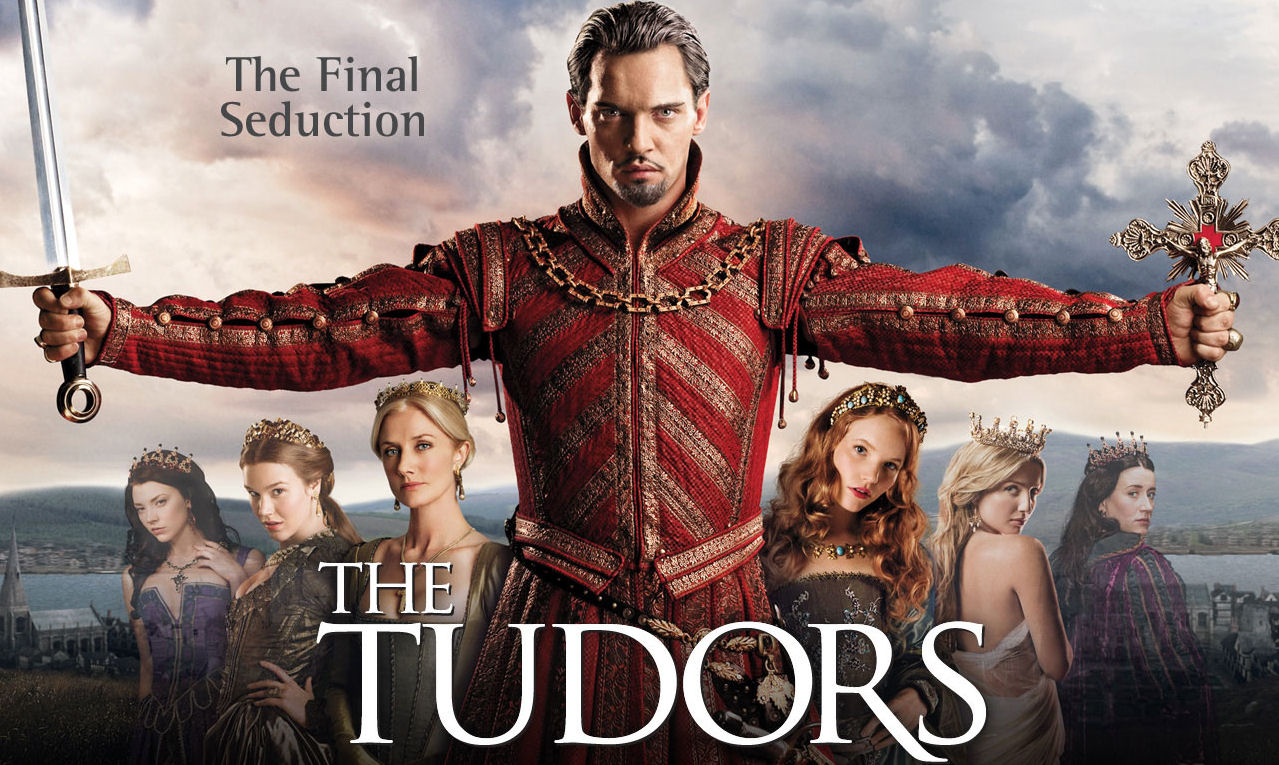
Then . . . The Tudors, the epic series from Showtime about Henry VIII and his wives (and the religious/political turmoil of his reign) came out . . . and I was addicted.
Sure, I knew it wasn’t historically accurate—some of the timelines were shrunk while others were stretched; major “characters” were given tasks to do/credit for things that were done by others in real life. A few real people were rolled into one character. Dropping real events or conflating minor events into major ones. Tweaking the history to make it “more interesting.”
Even after seeing all four seasons of The Tudors, while I know knew so much more about those times and how they changed the history and shape of the world in which we now live (because I would look up the real history as I watched), I still wasn’t seeking out reading materials set during that time or involving any of those historical figures. Of course, I was trying to write six books of my own in under two years, so that rather stunted my ability to follow through on that.
That’s changed recently, though. It began with a re-watch of The Tudors, followed by:
Lady Jane
 Elizabeth
Elizabeth: The Golden Age
The Other Boleyn Girl (the made-for BBC-TV version)
The Six Wives of Henry VIII
Elizabeth R
The Princes in the Tower
Elizabeth (Documentary)
Henry VIII (with Ray Winstone as Henry and crazy-eyes Helena Bonham Carter as Anne Boleyn)
(and a few others I can’t find the titles of in my Netflix backlist right now)
And now that I actually have time to read (with much of that coming in the form of audiobooks during my commute and at the gym), I’m once again delving into the era with:
The Tudor Secret by C.W. Gortner
The Lady Elizabeth by Alison Weir
To Die For by Sandra Byrd (which I just finished last week)
The Boleyn Inheritance by Philippa Gregory (which I’m listening to now—in fact, I listened to it for a couple of hours this afternoon while cleaning the kitchen)
 The figure I find most fascinating in all of this, though, is one who is a central focus of The Boleyn Inheritance—Anne of Cleves. She’s always the least-mentioned of the six wives; granted, she was only married to Henry for seven months and she was gently set aside with an annullment, called the King’s Beloved Sister, receiving Richmond Palace and Hever Castle—the former home of the Boleyns—and being given precedence over all women in England except Henry’s wife and daughters. After the annullment, she never remarried. She died at age forty-two, still beloved by and close to both Mary (then queen) and Elizabeth. While I personally have done no research on her to know how much is available, I can’t believe there’s much—after all, except for about one year, she led a very private life. Which is probably why she fascinates me—because there’s so much more left to the imagination with someone like that.
So now . . . is it any wonder I haven’t been able to make any progress on my Victorian-set Follow the Heart? But at least I have the excuse that whenever I hear the name Charles Brandon, Duke of Suffolk, I’m picturing this:
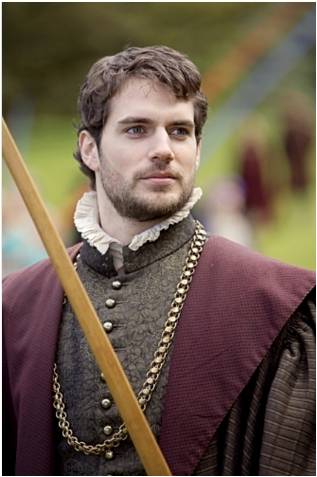
He is, after all, the template for Andrew in FTH!
Comments are closed.

 KayeDacus.com
Okay, here’s some more books to listen to! Philippa Gregory’s White Queen and the sequel Red Queen. It’s the War of the Roses story and is about Henry VIII’s grandparents and great-grandparents. Really, really good!
LikeLike
And I just looked up the other Other Boleyn Girl and it’s DVD only. Our Netflix is streaming only. Curse you, Perry the Platypus!
I’ve listened to several Philippa Gregory books and they’re so enthralling. I doubt I’d be able to read them because they’re first person but I have no trouble listening to them.
I’m not making much progress on my editing either. I blame the Riley Covington thrillers. I once told you I have a football player in my head. Well, I devoured all four of the Riley books and he won’t shut up! It is incredibly hard to think about plantations when your brain is finally figuring out football can be very fascinating.
LikeLike
Oh! Was The Tudor Secret good? I have the sample on my Nook but haven’t let myself read it yet.
LikeLike
Loved, loved, loved The Tudor Secret! Can’t wait for the second book in the series to come out.
And here’s my friend Ruth’s review of it:
http://booktalkandmore.blogspot.com/2011/02/review-tudor-secret-by-cw-gortner.html
LikeLike
There was a tremendous series done by PBS in the early seventies, ‘The Six Wives of Henry VIII’ that is just wonderful. I watched it when it was first made and I’ve rented it several times since at the library. I’d like to own it but the cost is still prohibitive. They also did one titled ‘Elizabeth R’ starring Glenda Jackson and it is still the best mini series about Elizabeth I and Glenda Jackson is the best ever.
I have long been a student of the British monarchy and have a TON of books on the subject in my personal library. Anything written by Alison Weir is wonderful. She does awesome research and I own several of her books.
If you can, watch those two miniseries. You won’t regret it.
LikeLike
Thanks, Susan—I actually have both of those miniseries (The Six Wives… and Elizabeth R) in the list of those I’ve seen above. But it might be time to watch them again!
LikeLike
Loved the post. I love the Tudor era myself although I haven’t done much research on that period. Thank you for sharing it with us. I must look into it.
Glenda Parker
LikeLike